
Manufacturing: Reshoring   21-slide PPT PowerPoint presentation slide deck (PPTX)
$29.00

Manufacturing: Reshoring (21-slide PPT PowerPoint presentation slide deck (PPTX)) Preview Image
Log in to unlock full preview.
Manufacturing: Reshoring (21-slide PPT PowerPoint presentation slide deck (PPTX)) Preview Image
Arrow   Click main image to view in full screen.

Manufacturing: Reshoring (PowerPoint PPTX Slide Deck)

PowerPoint (PPTX) 21 Slides FlevyPro Document

#3 in Manufacturing $29.00
FlevyPro price: FREE (included in subscription)
This framework is developed by a team of former McKinsey and Big 4 consultants. The presentation follows the headline-body-bumper slide format used by global consulting firms.
Add to Cart


Immediate download
Free lifetime updates

MANUFACTURING PPT DESCRIPTION

Editor Summary Manufacturing: Reshoring is a 21-slide PowerPoint presentation (PPTX) developed by LearnPPT Consulting and former consultants from McKinsey and the Big 4, providing a strategic framework for returning manufacturing operations domestically. Read more

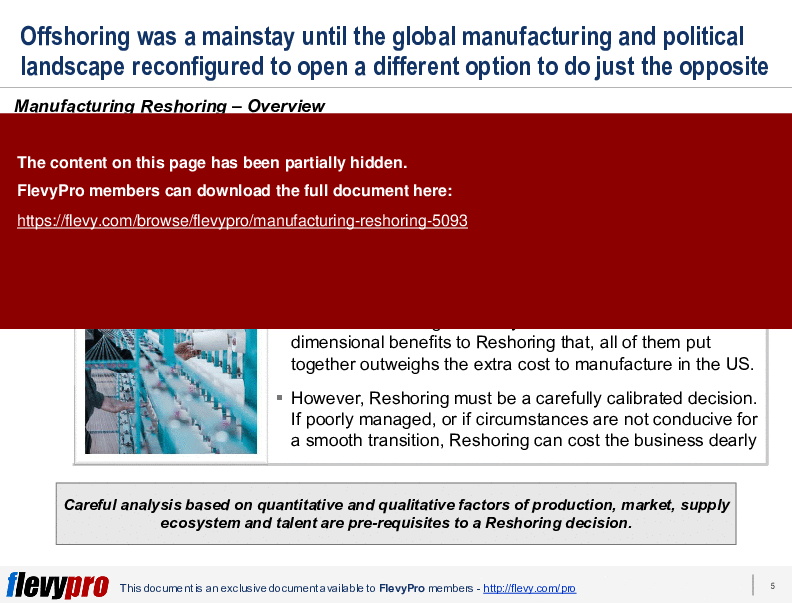
Offshoring from the US and other high cost economies to low cost emerging market countries was a dominant theme of manufacturing in the late 1990s and 2000s.

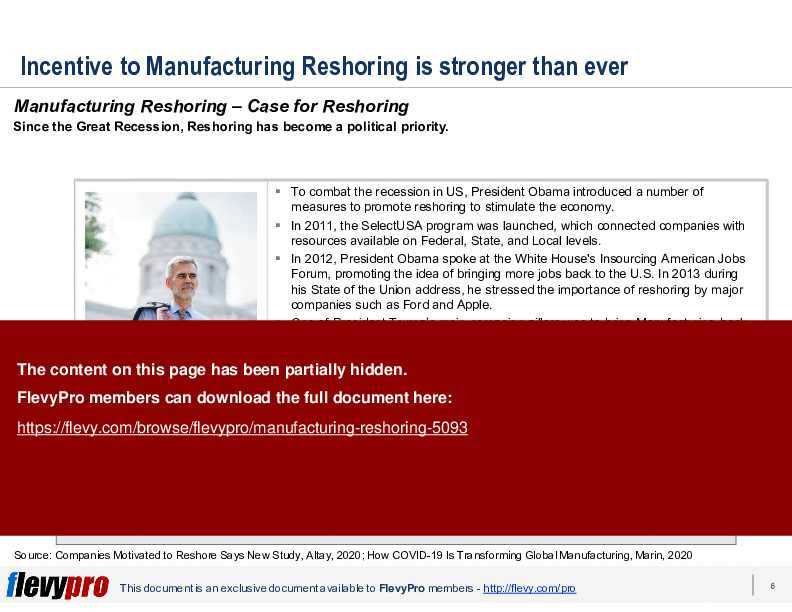
Now, Reshoring offers the promise of re-establishing the link between product design and manufacturing, between original equipment manufacturers and strategic supplier ecosystem. Reshoring is also a political topic, as it presents the prospect of bringing overseas manufacturing jobs back to the company’s own country. Reshoring also allows for risk mitigation in the case where there is a disruption to the global Supply Chain, as experienced by most companies with Offshore Manufacturing during the COVID-19 crisis.

The big picture is drifting away from the centrality of labor-cost-arbitrage as a driver of location decisions. Instead, it is moving towards proximity models driven by a supplier ecosystem, with additional focus on people, skills and organizational capabilities.

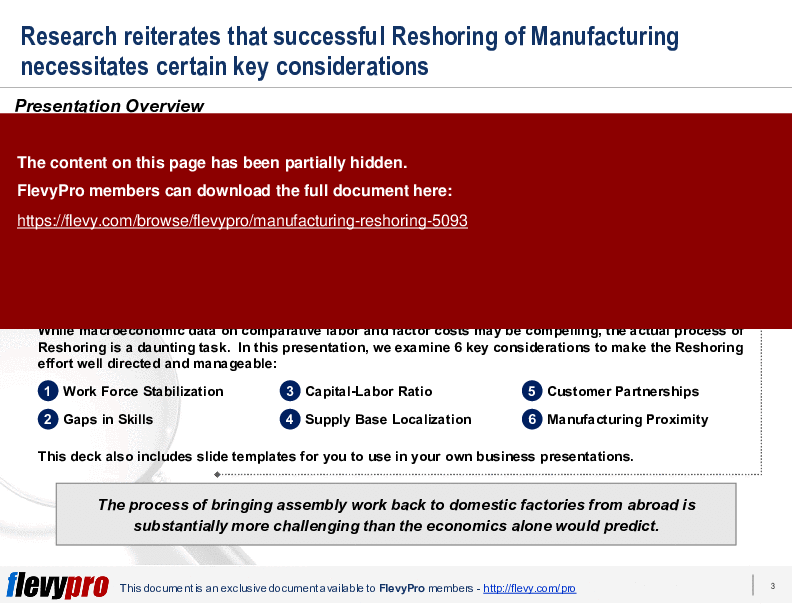
While macroeconomic data on comparative labor and factor costs may be compelling, the actual process of Reshoring is a daunting task. The process of bringing assembly work back to domestic factories from abroad is substantially more challenging than the economics alone would predict.

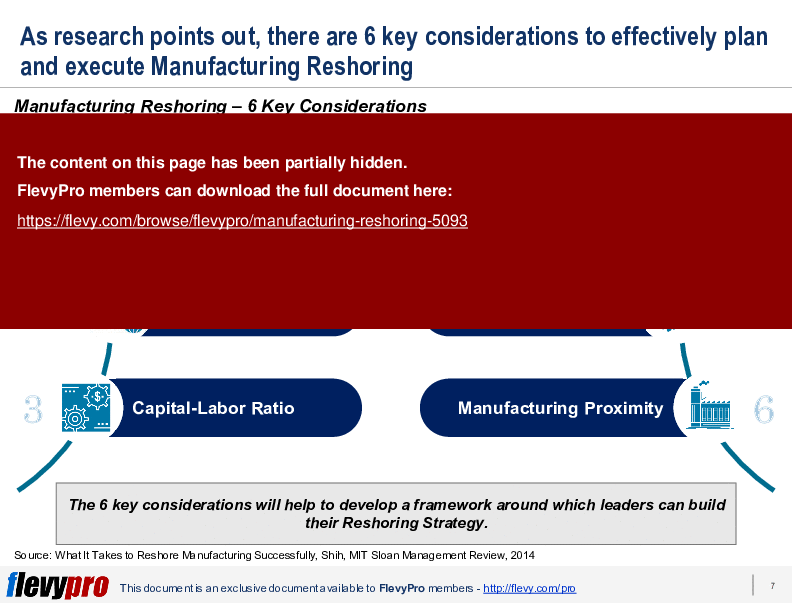
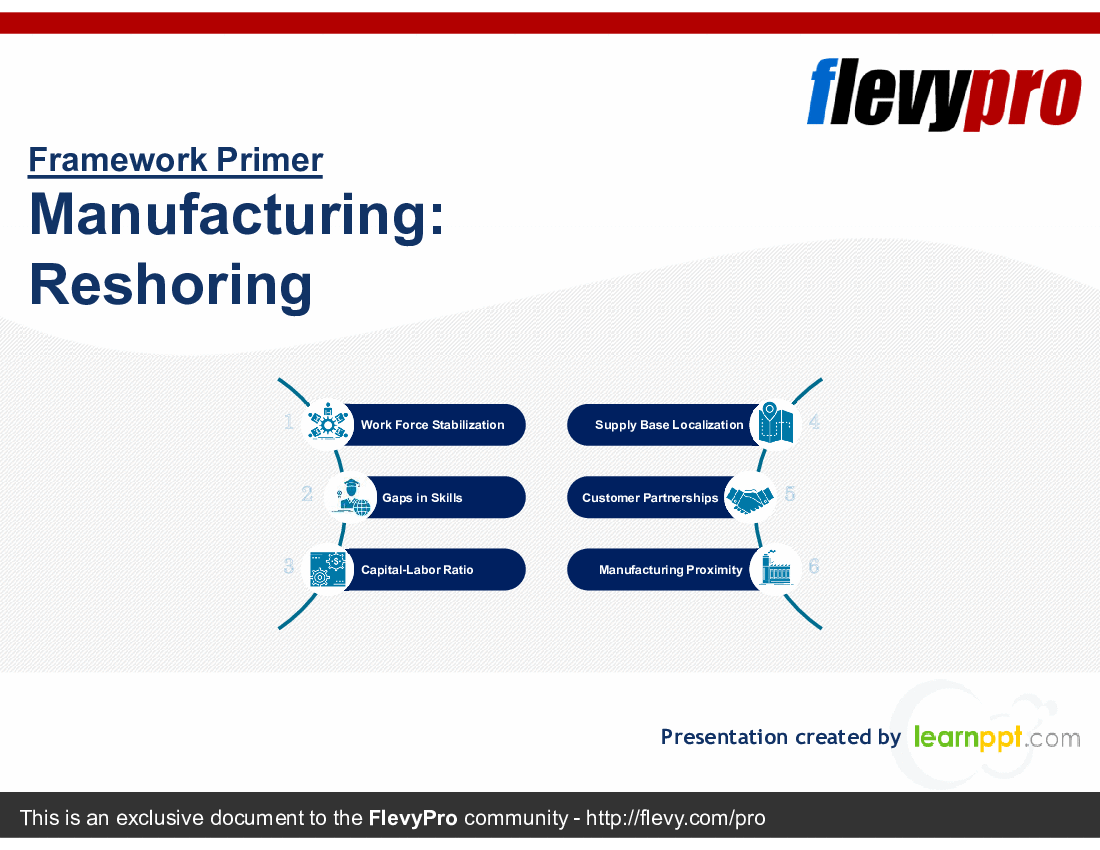
In this presentation, we examine 6 key considerations to make the Reshoring effort well directed and manageable:

1. Work Force Stabilization
2. Gaps in Skills
3. Capital-Labor Ratio
4. Supply Base Localization
5. Customer Partnerships
6. Manufacturing Proximity

This deck also includes slide templates for you to use in your own business presentations.

This presentation provides a comprehensive analysis of the strategic and operational factors critical to successful reshoring. It delves into workforce stabilization, addressing skills gaps, and optimizing the capital-labor ratio. The PPT also emphasizes the importance of localizing the supply base and fostering customer partnerships to enhance manufacturing proximity. The insights and templates included are designed to equip executives with actionable strategies and practical tools for navigating the complexities of reshoring. This resource is essential for leaders aiming to make informed decisions and achieve sustainable competitive advantages through reshoring initiatives.

Got a question about this document? Email us at flevypro@flevy.com.

MARCUS OVERVIEW

This synopsis was written by Marcus [?] based on the analysis of the full 21-slide presentation.


Executive Summary
The "Manufacturing: Reshoring" presentation provides a strategic framework for organizations considering the return of manufacturing operations to domestic locations. Developed by former consultants from McKinsey and the Big 4, this deck addresses critical aspects of reshoring, including workforce stabilization, skills gaps, capital-labor ratios, supply base localization, customer partnerships, and manufacturing proximity. Executives will gain actionable insights to navigate the complexities of reshoring, ensuring a well-directed and manageable transition that mitigates risks associated with global supply chain disruptions.

Who This Is For and When to Use
•  Corporate executives overseeing manufacturing strategy and operations
•  Supply chain leaders focused on optimizing local supply chains
•  HR professionals addressing workforce challenges in manufacturing
•  Business consultants advising on reshoring strategies
•  Operations managers responsible for implementing manufacturing processes

Best-fit moments to use this deck:
•  During strategic planning sessions focused on reshoring initiatives
•  In workshops aimed at addressing workforce and skills challenges
•  When evaluating the feasibility of localizing supply chains
•  For discussions on building customer partnerships to enhance manufacturing efficiency

Learning Objectives
•  Define reshoring and its implications for manufacturing strategy
•  Analyze the key considerations for successful reshoring initiatives
•  Develop a workforce stabilization plan to reduce turnover
•  Identify and address skills gaps in the manufacturing workforce
•  Optimize the capital-labor ratio for cost-effective production
•  Establish a localized supply base to enhance operational efficiency
•  Foster customer partnerships to improve supply chain responsiveness
•  Leverage manufacturing proximity to drive innovation and product development

Table of Contents
•  Overview (page 3)
•  Manufacturing Reshoring (page 5)
•  Key Considerations (page 7)
•  Templates (page 17)

Primary Topics Covered
•  Work Force Stabilization - Focuses on strategies to maintain a stable workforce, addressing high turnover and job abandonment issues.
•  Gaps in Skills - Discusses the generational skills deficiencies in technical areas and how to bridge these gaps through targeted recruitment and training.
•  Capital-Labor Ratio - Evaluates the balance between manual and automated processes to optimize production costs while maintaining flexibility.
•  Supply Base Localization - Emphasizes the importance of developing a localized supply chain to reduce logistics costs and enhance responsiveness.
•  Customer Partnerships - Highlights the role of strategic partnerships with customers to improve supply chain efficiency and demand forecasting.
•  Manufacturing Proximity - Explores the benefits of proximity between design and manufacturing to facilitate innovation and product development.

Deliverables, Templates, and Tools
•  Workforce stabilization plan template to address turnover and job abandonment
•  Skills gap analysis framework to identify training needs
•  Capital-labor ratio assessment tool for production optimization
•  Supply base localization strategy template
•  Customer partnership engagement plan
•  Manufacturing proximity assessment checklist

Slide Highlights
•  Overview of reshoring and its significance in the current economic landscape
•  Key considerations for successful reshoring, illustrated with case examples
•  Detailed analysis of workforce stabilization challenges and solutions
•  Insights into bridging skills gaps through targeted recruitment strategies
•  Framework for optimizing capital-labor ratios in manufacturing processes
•  Strategies for developing a localized supply base to enhance operational efficiency

Potential Workshop Agenda
Understanding Reshoring (60 minutes)
•  Define reshoring and its implications for manufacturing
•  Discuss the economic and strategic rationale for reshoring

Workforce Stabilization Strategies (90 minutes)
•  Analyze workforce challenges and turnover rates
•  Develop a stabilization plan with actionable steps

Skills Gap Analysis (60 minutes)
•  Identify critical skills gaps in the workforce
•  Create a training and development roadmap

Customization Guidance
•  Tailor the workforce stabilization plan to align with specific organizational needs
•  Adjust the skills gap analysis framework based on industry-specific requirements
•  Modify the capital-labor ratio assessment tool to reflect unique production processes
•  Customize the supply base localization strategy to fit local market conditions

Secondary Topics Covered
•  The impact of political factors on reshoring decisions
•  Technological advancements facilitating reshoring initiatives
•  Risk mitigation strategies for global supply chain disruptions
•  The role of government incentives in promoting reshoring efforts

Topic FAQ

What are the main strategic considerations when evaluating a reshoring decision?

Key strategic considerations include workforce stabilization, gaps in skills, the capital‑labor ratio, supply base localization, customer partnerships, and manufacturing proximity. These elements balance labor‑cost analysis with operational, skills, and supplier-ecosystem factors, summarized as 6 core considerations for reshoring evaluations.

What is reshoring and how does it differ from offshoring in practice?

Reshoring is the process of returning manufacturing operations to a company’s original country, whereas offshoring relocates production to lower-cost countries. Reshoring prioritizes proximity between design and production and aims to mitigate global supply‑chain disruption, contrasted with labor-cost arbitrage under offshoring.

How can organizations assess and address skills gaps when bringing production back onshore?

Organizations can identify critical technical deficiencies using a skills gap analysis framework, then address them via targeted recruitment, internal training programs, and partnerships with educational institutions. The Manufacturing: Reshoring deck provides a skills gap analysis framework to structure identification and training roadmaps.

What should I look for when choosing a reshoring toolkit or presentation for executive briefings?

Look for diagnostic coverage of workforce stabilization, skills gaps, capital‑labor tradeoffs, supply base localization, customer partnerships, and manufacturing proximity, plus ready-to-use templates and customization guidance. A useful toolkit will include templates such as a workforce stabilization plan and a supply base localization strategy template.

How should companies weigh costs versus benefits when considering reshoring?

Compare macroeconomic labor and factor-cost data against operational challenges like workforce turnover, skills shortages, and supplier ecosystem readiness. Also factor potential reductions in logistics costs and improved responsiveness from local suppliers when estimating net value, including impacts on capital‑labor balance.

After COVID-related supply disruptions, what initial steps should operations leaders take to evaluate reshoring feasibility?

Begin with a structured diagnostic: define reshoring implications, assess workforce stabilization needs, map skills gaps, evaluate capital‑labor tradeoffs, and analyze supply base localization and customer partnerships. Manufacturing: Reshoring includes a suggested workshop agenda and templates to guide these initial feasibility steps.

What operational factors determine the optimal capital‑labor ratio for onshore manufacturing?

Key factors include length of product runs, frequency of changeovers, and the required flexibility between manual and automated processes. Organizations should use a capital‑labor ratio assessment tool to evaluate cost‑effectiveness and operational flexibility when designing onshore production.

Can templates support running a reshoring workshop and what does a sample agenda include?

Yes; templates can structure sessions and outputs. A sample agenda in the Manufacturing: Reshoring deck includes a 60‑minute "Understanding Reshoring" session, a 90‑minute "Workforce Stabilization Strategies" workshop, and a 60‑minute "Skills Gap Analysis" session, with accompanying templates and tools.

Document FAQ
These are questions addressed within this presentation.

What is reshoring?
Reshoring is the process of returning manufacturing operations to a company's original country, contrasting with offshoring, which involves relocating production to lower-cost countries.

Why is workforce stabilization important in reshoring?
A stable workforce is crucial for consistent production output and quality. High turnover can disrupt operations and increase costs associated with recruiting and training new employees.

How can organizations address skills gaps in manufacturing?
Organizations can address skills gaps by implementing targeted recruitment strategies, offering training programs, and developing partnerships with educational institutions to build a skilled workforce.

What factors should be considered in optimizing the capital-labor ratio?
Key factors include the length of product runs, frequency of changeovers, and the balance between manual and automated processes to ensure flexibility and cost-effectiveness.

How does supply base localization enhance reshoring efforts?
Localized supply bases reduce logistics costs and improve responsiveness to market demands, enabling companies to better manage their supply chains and enhance operational efficiency.

What role do customer partnerships play in reshoring?
Customer partnerships can improve supply chain efficiency by facilitating better demand forecasting and collaboration on product development, ultimately leading to faster response times.

What are the benefits of manufacturing proximity?
Manufacturing proximity allows for closer collaboration between design and production teams, fostering innovation and enabling quicker responses to market changes.

How can organizations ensure successful reshoring initiatives?
Successful reshoring requires careful planning, addressing workforce challenges, optimizing supply chains, and fostering strong relationships with customers and suppliers.

Glossary
•  Reshoring - The process of bringing manufacturing operations back to the original country.
•  Offshoring - Relocating production to lower-cost countries.
•  Workforce Stabilization - Strategies to maintain a consistent and reliable workforce.
•  Skills Gap - The disparity between the skills needed for a job and the skills possessed by the workforce.
•  Capital-Labor Ratio - The balance between capital investment in automation and labor costs.
•  Supply Base Localization - Developing a local supply chain to enhance efficiency and reduce costs.
•  Customer Partnerships - Collaborative relationships with customers to improve supply chain efficiency.
•  Manufacturing Proximity - The physical closeness of manufacturing operations to design and development teams.

MANUFACTURING PPT SLIDES

Strategic Insights on Supply Base Localization

Critical Considerations for Manufacturing Reshoring Strategy

Workforce Stability: Addressing Turnover and Engagement

Addressing Skill Gaps for Effective Reshoring

Source: Best Practices in Manufacturing, Reshoring PowerPoint Slides: Manufacturing: Reshoring PowerPoint (PPTX) Presentation Slide Deck, LearnPPT Consulting


$29.00
FlevyPro price: FREE (included in subscription)
This framework is developed by a team of former McKinsey and Big 4 consultants. The presentation follows the headline-body-bumper slide format used by global consulting firms.
Add to Cart
  

Did you need more documents?

Consider a FlevyPro subscription from $39/month. View plans here.

For $10.00 more, you can download this document plus 2 more FlevyPro documents. That's just $13 each.

ABOUT FLEVYPRO

This document is part of the FlevyPro Library, a curated knowledge base of documents for our FlevyPro subscribers.

FlevyPro is a subscription service for on-demand business frameworks and analysis tools. FlevyPro subscribers receive access to an exclusive library of curated business documents—business framework primers, presentation templates, Lean Six Sigma tools, and more—among other exclusive benefits.

Click here to learn more about FlevyPro and its benefits.

Did you know?
The average daily rate of a McKinsey consultant is $6,625 (not including expenses). The average price of a Flevy document is $65.


Trusted by over 10,000+ Client Organizations
Since 2012, we have provided business templates to over 10,000 businesses and organizations of all sizes, from startups and small businesses to the Fortune 100, in over 130 countries.
AT&T GE Cisco Intel IBM Coke Dell Toyota HP Nike Samsung Microsoft Astrazeneca JP Morgan KPMG Walgreens Walmart 3M Kaiser Oracle SAP Google E&Y Volvo Bosch Merck Fedex Shell Amgen Eli Lilly Roche AIG Abbott Amazon PwC T-Mobile Broadcom Bayer Pearson Titleist ConEd Pfizer NTT Data Schwab


Read Customer Testimonials

 
"As a young consulting firm, requests for input from clients vary and it's sometimes impossible to provide expert solutions across a broad spectrum of requirements. That was before I discovered Flevy.com.

Through subscription to this invaluable site of a plethora of topics that are key and crucial to consulting, I "

– Nishi Singh, Strategist and MD at NSP Consultants
 
"As a small business owner, the resource material available from FlevyPro has proven to be invaluable. The ability to search for material on demand based our project events and client requirements was great for me and proved very beneficial to my clients. Importantly, being able to easily edit and tailor "

– Michael Duff, Managing Director at Change Strategy (UK)
 
"Flevy is now a part of my business routine. I visit Flevy at least 3 times each month.

Flevy has become my preferred learning source, because what it provides is practical, current, and useful in this era where the business world is being rewritten.

In today's environment where there are so "

– Omar Hernán Montes Parra, CEO at Quantum SFE
 
"As a niche strategic consulting firm, Flevy and FlevyPro frameworks and documents are an on-going reference to help us structure our findings and recommendations to our clients as well as improve their clarity, strength, and visual power. For us, it is an invaluable resource to increase our impact and value."

– David Coloma, Consulting Area Manager at Cynertia Consulting
 
"The wide selection of frameworks is very useful to me as an independent consultant. In fact, it rivals what I had at my disposal at Big 4 Consulting firms in terms of efficacy and organization."

– Julia T., Consulting Firm Owner (Former Manager at Deloitte and Capgemini)
 
"I have used FlevyPro for several business applications. It is a great complement to working with expensive consultants. The quality and effectiveness of the tools are of the highest standards."

– Moritz Bernhoerster, Global Sourcing Director at Fortune 500
 
"My FlevyPro subscription provides me with the most popular frameworks and decks in demand in today’s market. They not only augment my existing consulting and coaching offerings and delivery, but also keep me abreast of the latest trends, inspire new products and service offerings for my practice, and educate me "

– Bill Branson, Founder at Strategic Business Architects
 
"I have found Flevy to be an amazing resource and library of useful presentations for lean sigma, change management and so many other topics. This has reduced the time I need to spend on preparing for my performance consultation. The library is easily accessible and updates are regularly provided. A wealth of great information."

– Cynthia Howard RN, PhD, Executive Coach at Ei Leadership


Customers Also Bought These Documents


Customers Also Like These Documents

Explore Templates on Related Management Topics


Your Recently Viewed Documents
Receive our FREE presentation on Operational Excellence

This 50-slide presentation provides a high-level introduction to the 4 Building Blocks of Operational Excellence. Achieving OpEx requires the implementation of a Business Execution System that integrates these 4 building blocks.