
This framework is developed by a team of former McKinsey and Big 4 consultants. The presentation follows the headline-body-bumper slide format used by global consulting firms.
Editor Summary
Robotic Process Automation (RPA) is a 36-slide PowerPoint (PPTX) by PPT Lab that introduces software-robot and AI-based process automation and presents a 6-phase RPA deployment approach: Define RPA Perimeter; Optimize Existing Processes; Choose the Appropriate RPA Solution; Define Required Span of Control; Study Impacts on the Target Operating Model (TOM); Build a Deployment Plan.
Read moreTarget users include CIOs, RPA program managers, finance and accounting managers, customer service leaders, compliance officers, and process consultants. Sold as a digital download on Flevy.
Use this presentation when an organization is evaluating or piloting process automation to reduce repetitive manual work, improve compliance, accelerate productivity, or redeploy staff as part of a digital transformation initiative.
CIOs and IT/MIS leaders assessing automation architecture and studying impacts on the Target Operating Model (TOM) by defining required span of control.
RPA program managers sequencing pilots and building a deployment plan and governance framework.
Process improvement leads and operations managers optimizing workflows and defining the RPA perimeter before automation.
Finance and accounting managers identifying high-volume reconciliation or reporting tasks for automation and compliance validation.
The 6-phase approach—scoping, process optimization, solution selection, governance, TOM impact analysis, and deployment planning—aligns with structured, phase-gated enterprise transformation practice.
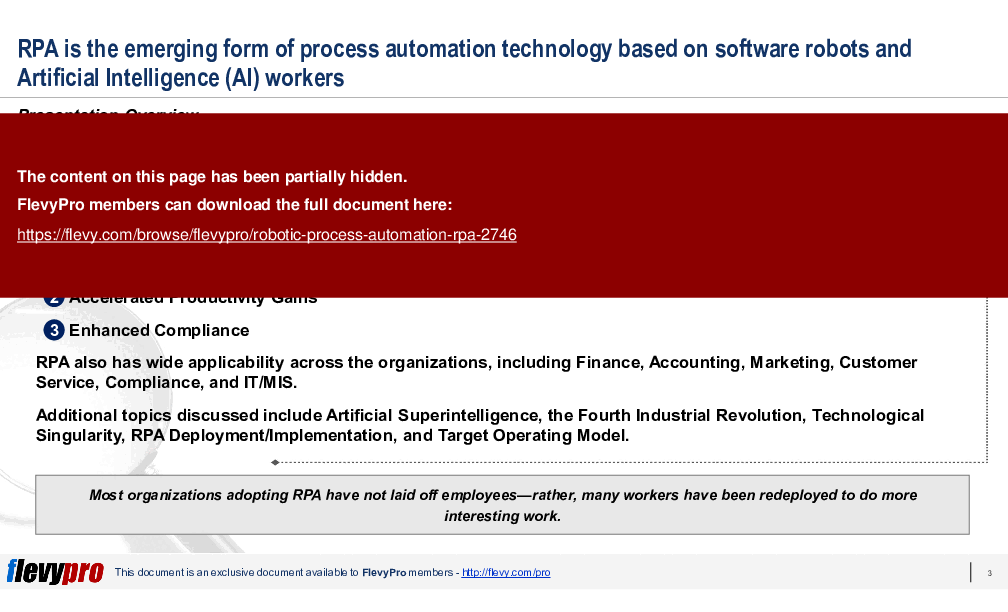
Robotic Process Automation (RPA), also referred to as Robotic Transformation and Robotic Revolution, refers to the emerging form of process automation technology based on software robots and Artificial Intelligence (AI) workers.
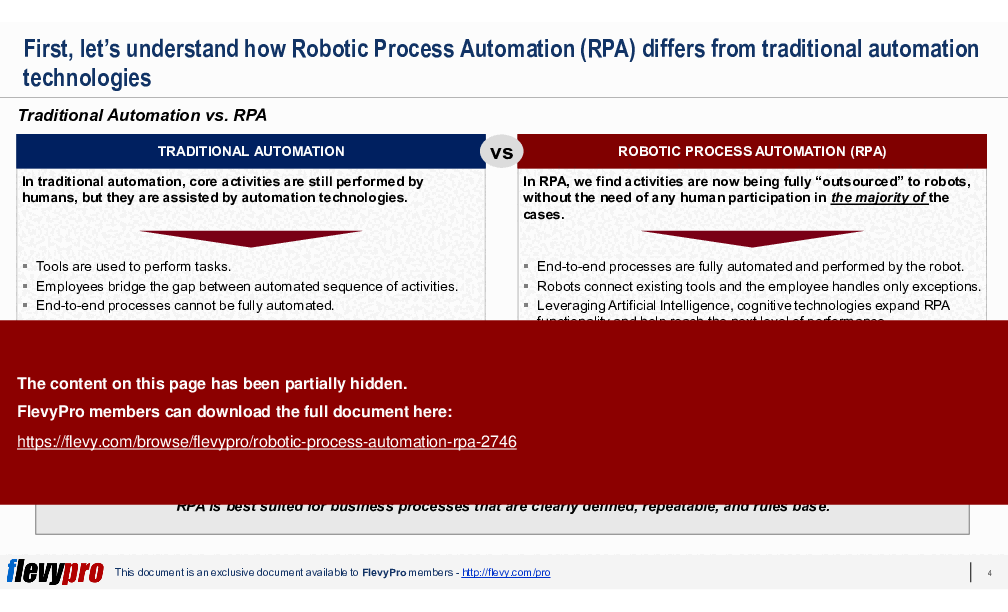
In traditional automation, core activities are still performed by humans, but they are assisted by automation technologies. However, in RPA, we find activities are now being fully "outsourced" to "robots," without the need of any human participation in the majority of the cases.
RPA also has wide applicability across the organizations, including Finance, Accounting, Marketing, Customer Service, Compliance, and IT/MIS. Furthermore, most organizations adopting RPA have not laid off employees. Rather, many workers have been redeployed to do more interesting and fulfilling work.
RPA represents a tremendous opportunity for organizations to increase performance, improve productivity, decrease costs, among a plethora of other financial and non-financial business benefits. The benefits from RPA are immediate, plentiful, and significant—and can be grouped into 3 core areas:
These 3 RPA benefit areas are elaborated on in this RPA PowerPoint presentation. Of the Digital Transformation initiatives your organization may be assessing, RPA typically represents the lowest hanging fruit with ease of deployment, while realizing fast, measurable, and tangible benefits.
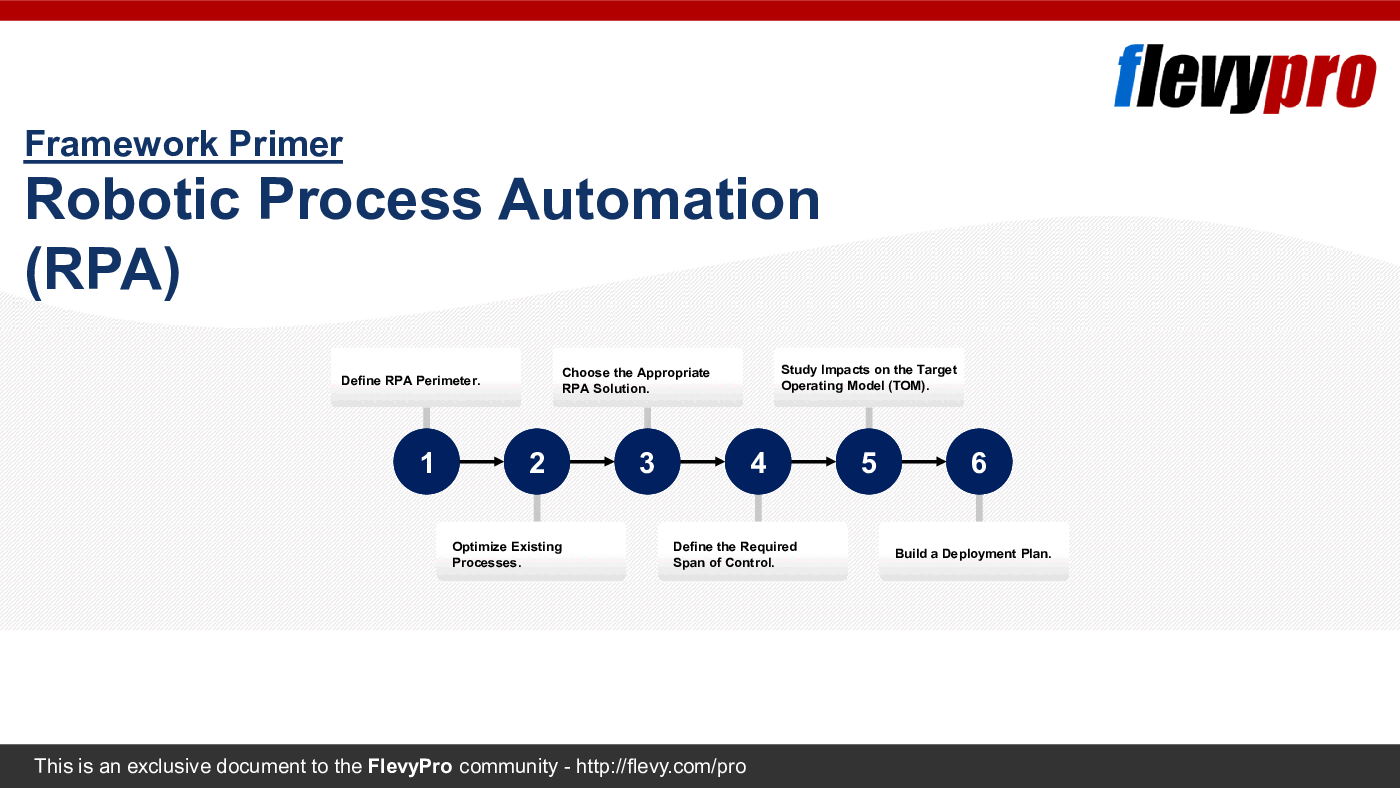
This Robotic Process Automation PPT presentation also introduces a 6-phase approach to RPA Deployment:
1. Define RPA Perimeter
2. Optimize Existing Processes
3. Choose the Appropriate RPA Solution
4. Define the Required Span of Control
5. Study Impacts on the Target Operating Model (TOM)
6. Build a Deployment Plan
Additional topics discussed in this RPA PPT download include Artificial Superintelligence, the Fourth Industrial Revolution, Technological Singularity, TOM Analysis, among others. This RPA presentation (PPT) provides an introduction to the topic of Robotic Process Automation with slides you can easily customize and incorporate into your own business presentations.
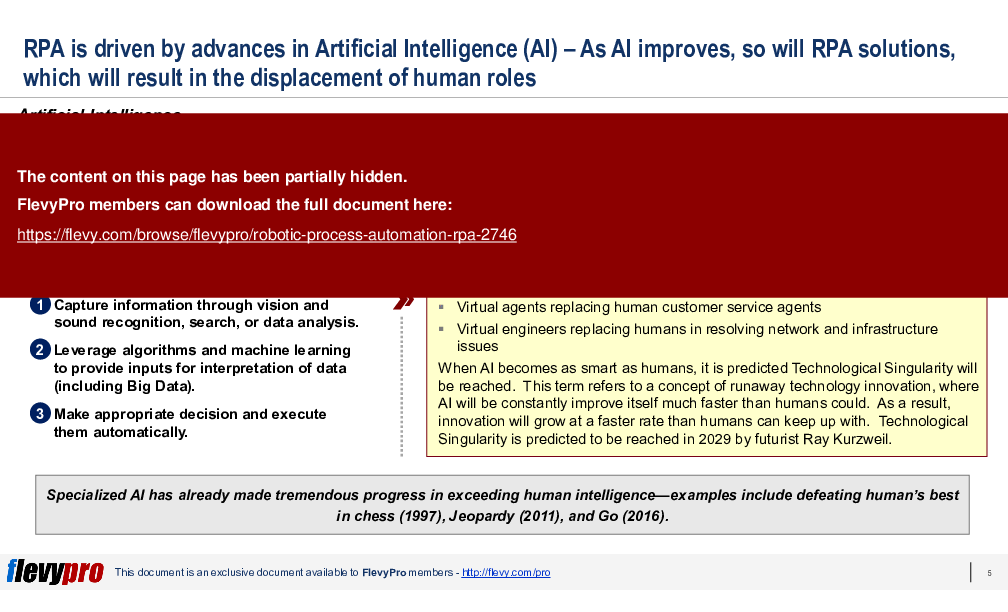
The presentation delves into the impact of the Fourth Industrial Revolution on RPA, highlighting its transformative potential. It also discusses the role of AI advancements in enhancing RPA capabilities and displacing human roles.
What is Robotic Process Automation and how does it differ from traditional automation?
RPA is process automation driven by software robots and AI workers that can perform activities without human participation in many cases. Traditional automation typically leaves humans performing core activities assisted by tools; RPA enables activities to be outsourced to robots using software robots and AI workers.
What business benefits can organizations expect from RPA deployments?
The overview groups RPA benefits into 3 core areas: improved employee and customer satisfaction, accelerated productivity gains, and enhanced compliance. It also notes benefits tend to be fast and measurable, with many organizations redeploying staff rather than laying them off, grouped into 3 core benefit areas.
Which corporate functions are most commonly targeted for RPA?
The document identifies broad applicability across Finance, Accounting, Marketing, Customer Service, Compliance, and IT/MIS, indicating those functions are commonly targeted for automation. These functions are explicitly listed as RPA use cases in the overview: Finance, Accounting, Marketing, Customer Service, Compliance, and IT/MIS.
What are the typical phases of an RPA deployment program?
The presentation outlines a six-phase deployment approach: Define RPA Perimeter; Optimize Existing Processes; Choose the Appropriate RPA Solution; Define the Required Span of Control; Study Impacts on the Target Operating Model (TOM); and Build a Deployment Plan, reflecting a six-phase approach.
How should an organization approach choosing an RPA solution?
The overview highlights solution selection as a discrete phase; organizations should assess fit to targeted processes, deployment ease, and governance needs as part of a structured evaluation. The selection step is captured in the methodology as Phase 3: Choose the Appropriate RPA Solution.
What timeline and effort should I expect for an initial RPA pilot?
The document characterizes RPA as often offering ease of deployment with fast, measurable benefits, implying pilots can be relatively quick if scoped and optimized. Recommended practice in the presentation is to follow a 6-phase deployment plan to scope, optimize, and roll out pilots.
After a merger, how should I prioritize which back-office processes to automate first?
The recommended approach is to first define the RPA perimeter and optimize existing processes to reduce exceptions, then assess TOM impacts and governance before full rollout. Flevy's Robotic Process Automation (RPA) presentation lays out this stepwise, 6-phase approach for prioritization and piloting.
Are slide toolkits useful for presenting an RPA business case and deployment plan?
Slide decks can summarize RPA concepts, benefits, and a phased deployment approach for stakeholders and be customized into executive presentations. Flevy's Robotic Process Automation (RPA) is presented as a 36-slide PPTX by PPT Lab intended for that purpose, specifically as a 36-slide PPTX.
This PPT slide features a Process Assessment Chart for evaluating processes suitable for Robotic Process Automation (RPA). It categorizes factors into RPA Suitability and Cost of Implementation, emphasizing Return on Investment (ROI). The chart uses a scale from 1 to 5, where 1 indicates favorable conditions for RPA and 5 indicates unfavorable conditions. Criteria influencing RPA suitability include rule-based processes, structured vs. unstructured data, and process consistency. Favorable conditions, such as standardized processes, are on the left, while unfavorable conditions, like frequent changes, are on the right. The chart visually represents where each factor falls on the scale, aiding organizations in identifying processes ready for automation and those needing refinement. This assessment tool enhances decision-making for investments in automation technology, improving operational efficiency.
This PPT slide outlines the suitability of Robotic Process Automation (RPA) for corporate functions characterized by repetitive, rule-based, and transactional activities, including Finance & Accounting, Compliance, Treasury, Marketing, Customer Service, and IT Support. RPA enhances employee and customer satisfaction by reducing manual workloads and errors, leading to faster response times and accurate service delivery. It accelerates productivity gains by automating routine tasks, allowing human resources to focus on higher-value activities, thus increasing overall efficiency. Additionally, RPA ensures enhanced compliance by maintaining consistent execution of tasks, reducing the risk of non-compliance, particularly in highly regulated industries. The potential benefits of RPA are immediate and extensive, transforming operational efficiency and service quality.
This PPT slide outlines a six-phase approach for selecting and implementing a Robotic Process Automation (RPA) solution. The first phase, "Define RPA Perimeter," establishes boundaries for RPA application, clarifying suitable processes for automation. The second phase, "Optimize Existing Processes," refines workflows to maximize RPA effectiveness. The third phase, "Choose the Appropriate RPA Solution," evaluates various RPA tools to align with organizational needs and infrastructure. The fourth phase, "Study Impacts on the Target Operating Model (TOM)," analyzes how RPA affects the operational framework, aligning initiatives with business objectives. The fifth phase, "Define the Required Span of Control," determines governance for effective RPA management and risk mitigation. Finally, "Build a Deployment Plan" outlines execution steps for a smooth transition from planning to implementation. This structured approach serves as a comprehensive roadmap for leveraging RPA effectively.
This PPT slide outlines the dual benefits of Robotic Process Automation (RPA) on employee and customer satisfaction. RPA alleviates tedious tasks, allowing employees to focus on intellectually stimulating work, enhancing job satisfaction and empowerment. The correlation between employee happiness and customer satisfaction is significant; satisfied employees deliver better service, positively impacting customer experiences. RPA enhances customer satisfaction through immediate solutions and proactive issue prevention, streamlining processes that affect customer interactions. Notably, back-office employees spend up to 80% of their time on repetitive tasks, presenting substantial efficiency gains through RPA. This highlights the need for strategic consideration of the evolving roles of human workers in an increasingly automated environment.
Source: Best Practices in Digital Transformation, Fourth Industrial Revolution, Artificial Intelligence, Robotic Process Automation, RPA PowerPoint Slides: Robotic Process Automation (RPA) PowerPoint (PPTX) Presentation Slide Deck, PPT Lab
This framework is developed by a team of former McKinsey and Big 4 consultants. The presentation follows the headline-body-bumper slide format used by global consulting firms.
For $10.00 more, you can download this document plus 2 more FlevyPro documents. That's just $13 each.
ABOUT FLEVYPRO
This document is part of the FlevyPro Library, a curated knowledge base of documents for our FlevyPro subscribers.

FlevyPro is a subscription service for on-demand business frameworks and analysis tools. FlevyPro subscribers receive access to an exclusive library of curated business documents—business framework primers, presentation templates, Lean Six Sigma tools, and more—among other exclusive benefits.
The average daily rate of a McKinsey consultant is $6,625 (not including expenses). The average price of a Flevy document is $65.
Trusted by over 10,000+ Client Organizations
Since 2012, we have provided business templates to over 10,000 businesses and organizations of all sizes, from startups and small businesses to the Fortune 100, in over 130 countries.
"As an Independent Management Consultant, I find Flevy to add great value as a source of best practices, templates and information on new trends. Flevy has matured and the quality and quantity of the library is excellent. Lastly the price charged is reasonable, creating a win-win value for
the customer, Flevy and the various authors. This is truly a service that benefits the consulting industry and associated clients. Thanks for providing this service.
"
– Jim Schoen, Principal at FRC Group
"As a niche strategic consulting firm, Flevy and FlevyPro frameworks and documents are an on-going reference to help us structure our findings and recommendations to our clients as well as improve their clarity, strength, and visual power. For us, it is an invaluable resource to increase our impact and value."
– David Coloma, Consulting Area Manager at Cynertia Consulting
"FlevyPro has been a brilliant resource for me, as an independent growth consultant, to access a vast knowledge bank of presentations to support my work with clients. In terms of RoI, the value I received from the very first presentation I downloaded paid for my subscription many times over! The
quality of the decks available allows me to punch way above my weight – it's like having the resources of a Big 4 consultancy at your fingertips at a microscopic fraction of the overhead.
"
– Roderick Cameron, Founding Partner at SGFE Ltd
"Flevy is our 'go to' resource for management material, at an affordable cost. The Flevy library is comprehensive and the content deep, and typically provides a great foundation for us to further develop and tailor our own service offer."
– Chris McCann, Founder at Resilient.World
"As a consulting firm, we had been creating subject matter training materials for our people and found the excellent materials on Flevy, which saved us 100's of hours of re-creating what already exists on the Flevy materials we purchased."
– Michael Evans, Managing Director at Newport LLC
"The wide selection of frameworks is very useful to me as an independent consultant. In fact, it rivals what I had at my disposal at Big 4 Consulting firms in terms of efficacy and organization."
– Julia T., Consulting Firm Owner (Former Manager at Deloitte and Capgemini)
"One of the great discoveries that I have made for my business is the Flevy library of training materials.
As a Lean Transformation Expert, I am always making presentations to clients on a variety of topics: Training, Transformation, Total Productive Maintenance, Culture, Coaching, Tools, Leadership Behavior, etc. Flevy
It is well worth the money to purchase these presentations. Sure, I have the knowledge and information to make my point. It is another thing to create a presentation that captures what I want to say. Flevy has saved me countless hours of preparation time that is much better spent with implementation that will actually save money for my clients.
"
– Ed Kemmerling, Senior Lean Transformation Expert at PMG
"I am extremely grateful for the proactiveness and eagerness to help and I would gladly recommend the Flevy team if you are looking for data and toolkits to help you work through business solutions."
Download our FREE Digital Transformation Templates
Download our free compilation of 50+ Digital Transformation slides and templates. DX concepts covered include Digital Leadership, Digital Maturity, Digital Value Chain, Customer Experience, Customer Journey, RPA, etc.