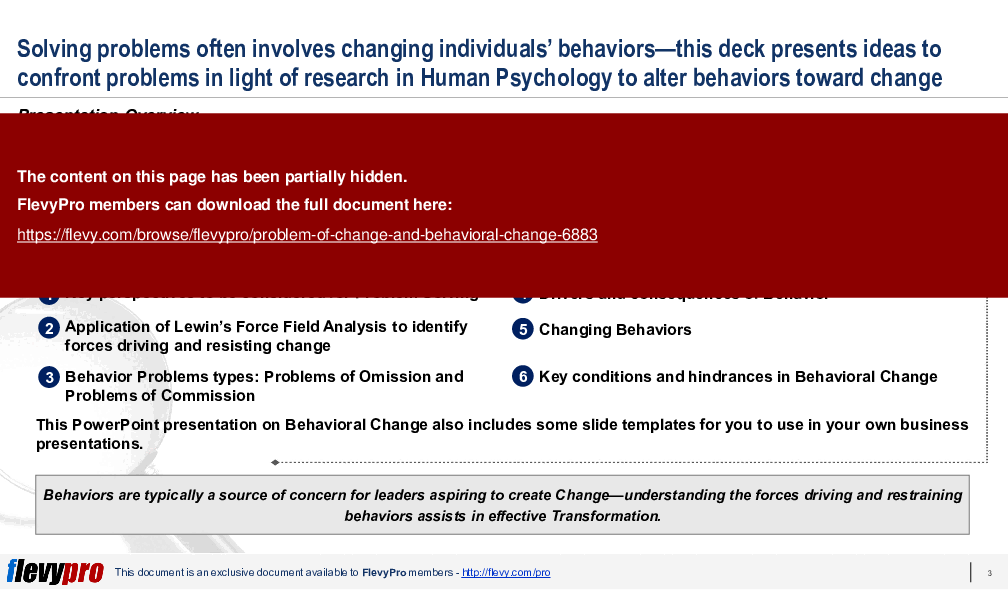

Solving problems often involves changing individuals' behaviors. This PowerPoint presentation discusses ideas to confront problems in light of research in Human Psychology to alter behaviors toward Change.
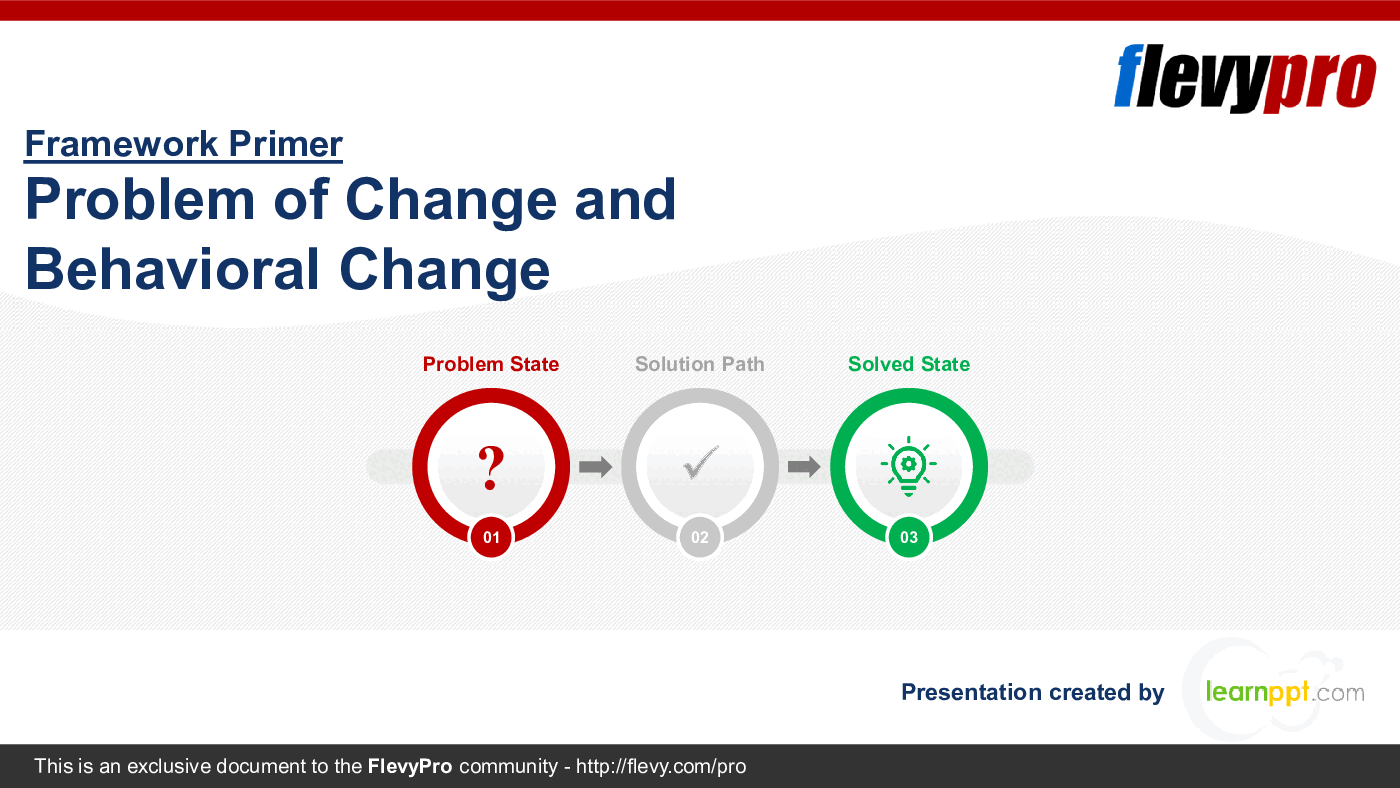
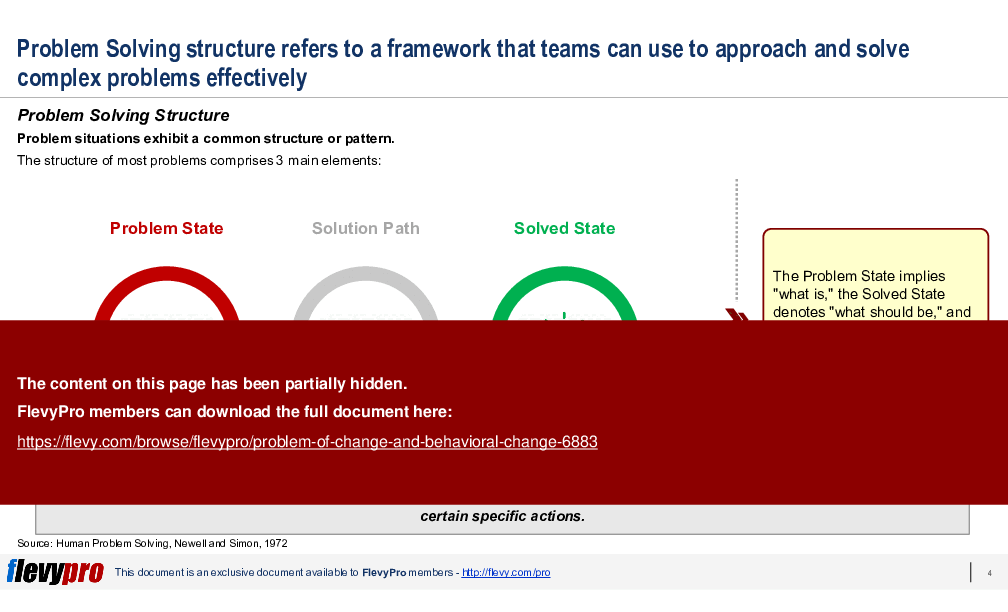
Problem situations exhibit a common structure, consisting of 3 main elements:
1. Problem State
2. Solved State
3. Solution Path
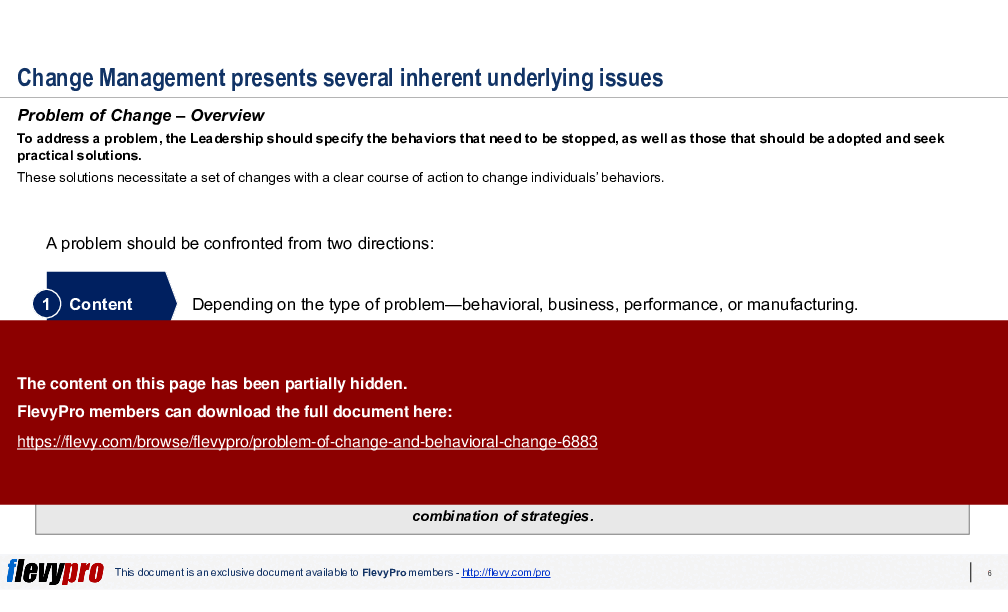
To confront a problem, Leadership should specify the behaviors that need to be stopped, as well as those that should be adopted and seek practical solutions.
This presentation integrates concepts drawn from the Theory of Human Problem Solving, Force Field Theory, and Reinforcement Theory to aid in confronting Behavioral Change issues. The topics covered here include:
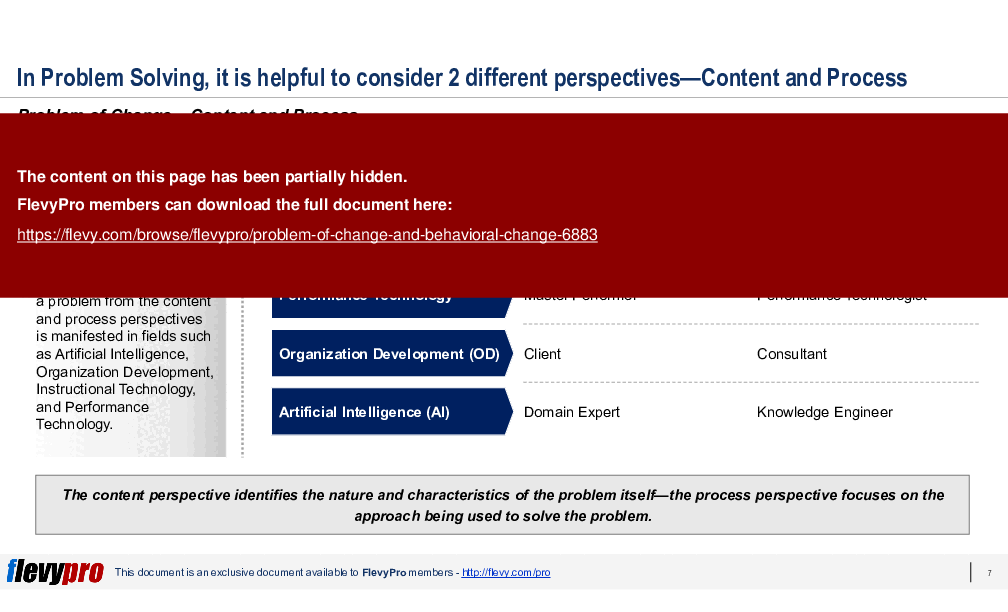
• Key perspectives to be considered for Problem Solving
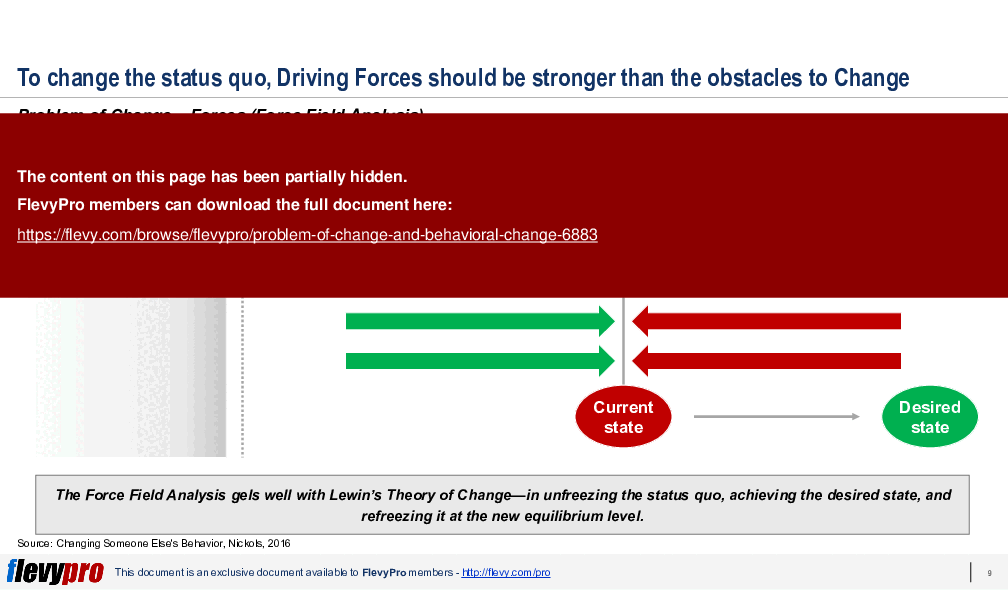
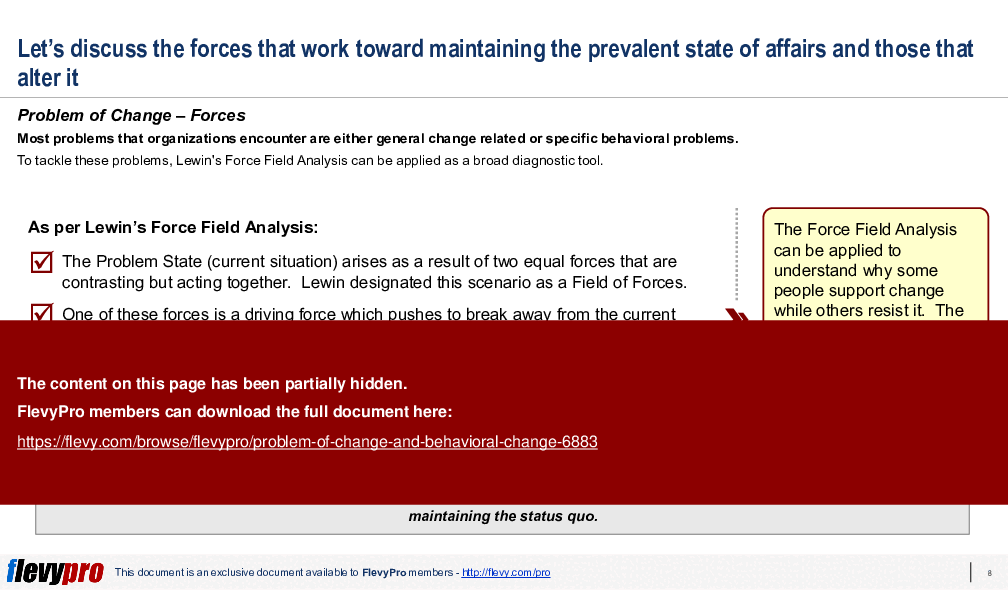
• Application of Lewin's Force Field Analysis to identify forces driving and resisting change
• Behavior Problems types: Problems of Omission and Problems of Commission
• Drivers and consequences of Behavior
• Changing Behaviors
• Key conditions and hindrances in Behavioral Change
Behaviors are typically a source of concern for leaders aspiring to create Change. Understanding the forces driving and restraining behaviors assists in effective Transformation.
This PowerPoint presentation on Changing Behaviors also includes some slide templates for you to use in your own business presentations.
The presentation delves into the dual nature of behavior problems, distinguishing between issues of omission and commission. It provides actionable strategies to address each type, leveraging Force Field Analysis to enhance or reduce specific driving forces. This nuanced approach ensures that leaders can tailor their interventions to the specific behavioral challenges they face.
The PPT also includes a comprehensive slide design guide, adhering to the standard consulting presentation framework. This ensures that your presentations are not only content-rich, but also visually consistent and professional. The templates provided can be seamlessly integrated into your existing presentations, saving you time and enhancing your communication effectiveness.
Got a question about this document? Email us at flevypro@flevy.com.
Executive Summary
The "Problem of Change and Behavioral Change" presentation provides a structured approach to addressing behavioral challenges within organizations. Developed by former consultants from McKinsey and Big 4 firms, this deck integrates psychological theories to facilitate effective problem-solving. It outlines a framework for identifying problem states, defining desired outcomes, and establishing actionable solution paths. By leveraging insights from Human Psychology, this presentation equips leaders with the tools needed to drive meaningful behavioral change and enhance organizational transformation.
Who This Is For and When to Use
• Change management leaders seeking to implement effective behavioral strategies
• Organizational development teams focused on enhancing employee engagement
• HR professionals aiming to address behavioral issues in workforce dynamics
• Executives looking to foster a culture of continuous improvement
Best-fit moments to use this deck:
• During organizational change initiatives to align behaviors with strategic goals
• In workshops aimed at enhancing team dynamics and communication
• When addressing specific behavioral problems that hinder performance
Learning Objectives
• Define the Problem State and Solved State in the context of behavioral change
• Apply Lewin’s Force Field Analysis to identify driving and restraining forces
• Distinguish between Problems of Omission and Problems of Commission
• Develop strategies to enhance desired behaviors and mitigate negative actions
• Implement reinforcement techniques to support behavioral transformation
• Recognize key conditions that facilitate or hinder behavioral change
Table of Contents
• Overview (page 1)
• Problem of Change (page 6)
• Behavior Problems (page 11)
• Drivers of Behavior (page 15)
• Changing Behaviors (page 19)
• Slide Design Guide & Templates (page 22)
Primary Topics Covered
• Problem State - The current situation that necessitates change, characterized by specific behavioral challenges.
• Solved State - The desired outcome that reflects successful behavioral transformation within the organization.
• Solution Path - The actionable steps required to transition from the Problem State to the Solved State.
• Force Field Analysis - A diagnostic tool to assess the forces driving and resisting change, aiding in strategic planning.
• Behavior Problems - Classification of issues into Problems of Omission (neglecting necessary actions) and Problems of Commission (engaging in harmful actions).
• Reinforcement Theory - Application of positive and negative reinforcement to encourage desired behaviors and discourage undesirable ones.
Deliverables, Templates, and Tools
• Problem State and Solved State framework template
• Force Field Analysis template for assessing change dynamics
• Problems of Omission and Commission matrix for behavioral classification
• Slide design guidelines for effective presentation structure
• Behavioral change strategy development toolkit
• Reinforcement and punishment framework for behavior modification
Slide Highlights
• Overview of the Problem of Change and its implications for leadership
• Detailed explanation of Force Field Analysis and its application
• Visual representation of the Problems of Omission and Commission matrix
• Strategies for enhancing driving forces and mitigating restraining forces
• Templates for structuring presentations and facilitating workshops
Potential Workshop Agenda
Understanding Behavioral Change (60 minutes)
• Introduce the Problem State and Solved State concepts
• Discuss the importance of identifying driving and restraining forces
Applying Force Field Analysis (90 minutes)
• Conduct a group exercise using the Force Field Analysis template
• Identify specific behaviors to address and strategize solutions
Developing Behavioral Strategies (60 minutes)
• Explore reinforcement techniques to support desired behaviors
• Create action plans for implementing behavioral change initiatives
Customization Guidance
• Tailor the Problem State and Solved State definitions to fit specific organizational contexts
• Adjust the Force Field Analysis framework to reflect unique driving and restraining forces
• Incorporate company-specific examples in the Problems of Omission and Commission matrix
• Modify the reinforcement strategies to align with organizational culture and values
Secondary Topics Covered
• The role of leadership in facilitating behavioral change
• Psychological factors influencing employee behavior
• Best practices for communicating change initiatives
• Measurement and evaluation of behavioral change outcomes
• Case studies illustrating successful behavioral transformation
Topic FAQ
Document FAQ
These are questions addressed within this presentation.
What is the Problem State?
The Problem State refers to the current situation characterized by specific behavioral challenges that need to be addressed for effective change.
How does Force Field Analysis work?
Force Field Analysis identifies the driving forces that promote change and the restraining forces that resist it, allowing organizations to strategize effectively.
What are Problems of Omission?
Problems of Omission occur when individuals neglect to perform necessary actions, leading to missed opportunities and negative consequences.
What strategies can be used to address Problems of Commission?
Strategies include reducing the factors supporting negative behaviors and increasing constraints on those behaviors to encourage compliance with desired actions.
How can reinforcement techniques support behavioral change?
Reinforcement techniques, such as positive reinforcement, can motivate individuals to adopt desired behaviors by providing rewards for compliance.
What key conditions facilitate behavioral change?
Key conditions include creating new favorable circumstances, maintaining existing favorable conditions, and removing adverse situations that hinder change.
How can this presentation be customized for my organization?
Customization can involve adapting the Problem State and Solved State definitions, using company-specific examples, and aligning strategies with organizational culture.
What templates are included in this presentation?
The presentation includes templates for the Problem State and Solved State framework, Force Field Analysis, and the Problems of Omission and Commission matrix.
Glossary
• Problem State - The current situation requiring change.
• Solved State - The desired outcome post-change.
• Solution Path - The steps to transition from the Problem State to the Solved State.
• Force Field Analysis - A tool for assessing driving and restraining forces in change.
• Problems of Omission - Neglecting necessary actions.
• Problems of Commission - Engaging in harmful actions.
• Reinforcement Theory - A behavioral modification approach using rewards and punishments.
• Driving Forces - Factors that promote change.
• Restraining Forces - Factors that resist change.
• Behavioral Transformation - The process of changing individual behaviors within an organization.
• Positive Reinforcement - Adding positive conditions to encourage desired behavior.
• Negative Reinforcement - Removing negative conditions to promote desired behavior.
• Positive Punishment - Adding negative conditions to discourage undesired behavior.
• Negative Punishment - Removing positive conditions to discourage undesired behavior.
Source: Best Practices in Change Management, Behavioral Economics, Organizational Behavior PowerPoint Slides: Problem of Change and Behavioral Change PowerPoint (PPTX) Presentation Slide Deck, LearnPPT Consulting
Did you need more documents?
Consider a FlevyPro subscription from $39/month. View plans here.
For $10.00 more, you can download this document plus 2 more FlevyPro documents. That's just $13 each.
|
Download our FREE Organization, Change, & Culture, Templates
Download our free compilation of 50+ slides and templates on Organizational Design, Change Management, and Corporate Culture. Methodologies include ADKAR, Burke-Litwin Change Model, McKinsey 7-S, Competing Values Framework, etc. |