
The e-commerce market continues to grow exponentially. More people are opting for the convenience of online shopping.
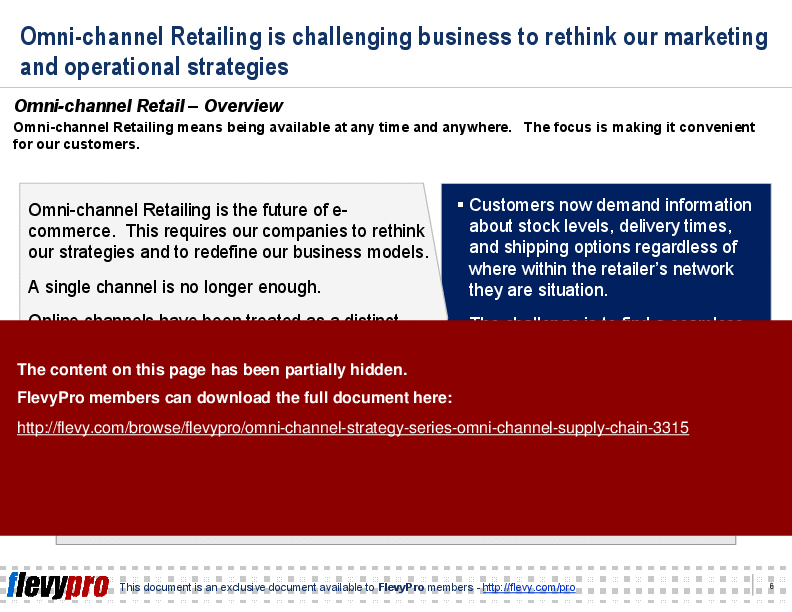
The future of e-commerce is Omni-channel Retailing. A single channel is no longer enough. The challenge is to find a seamless solution for both the customer experience and internal processes.
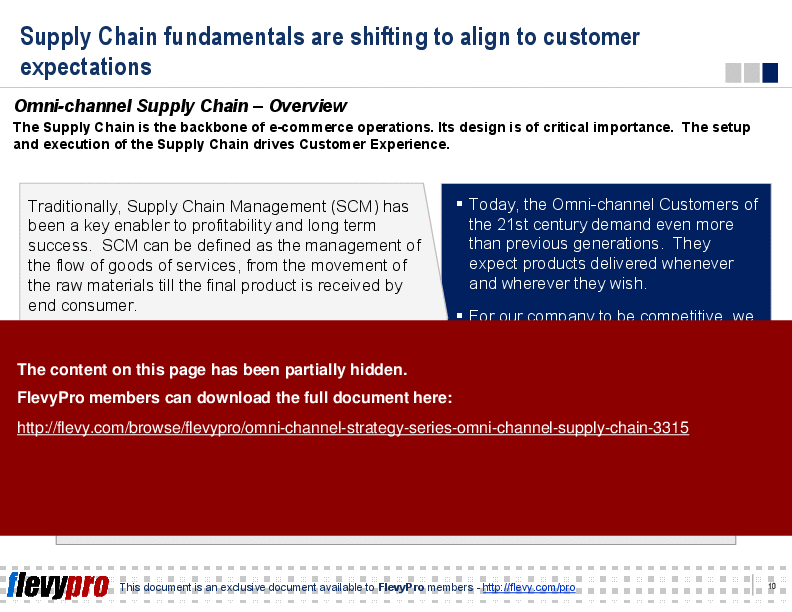
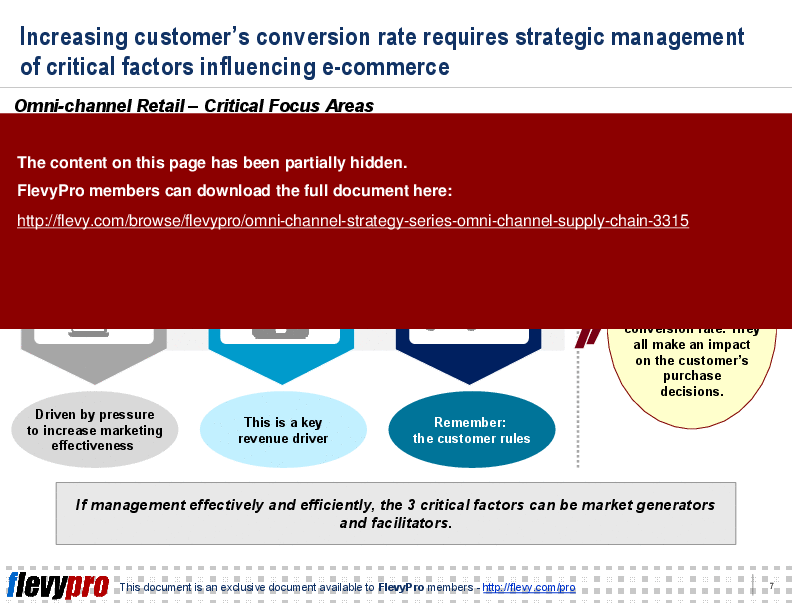
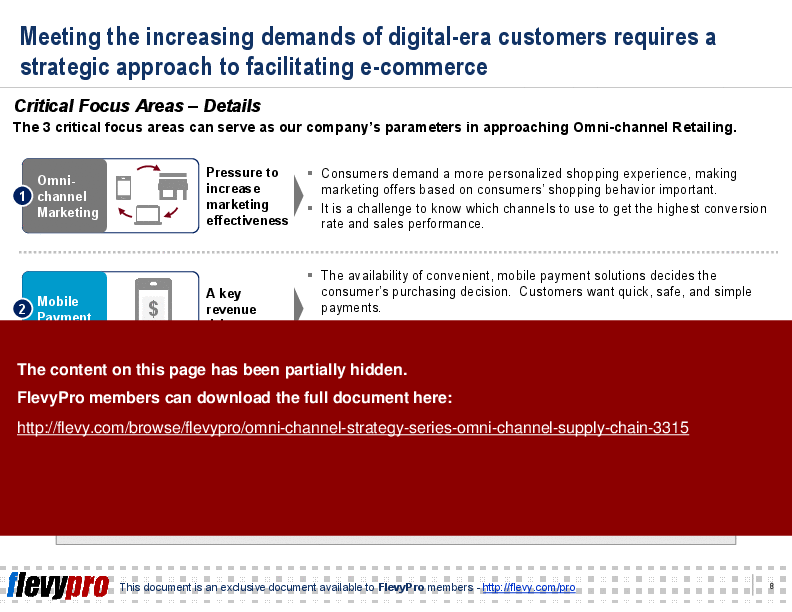
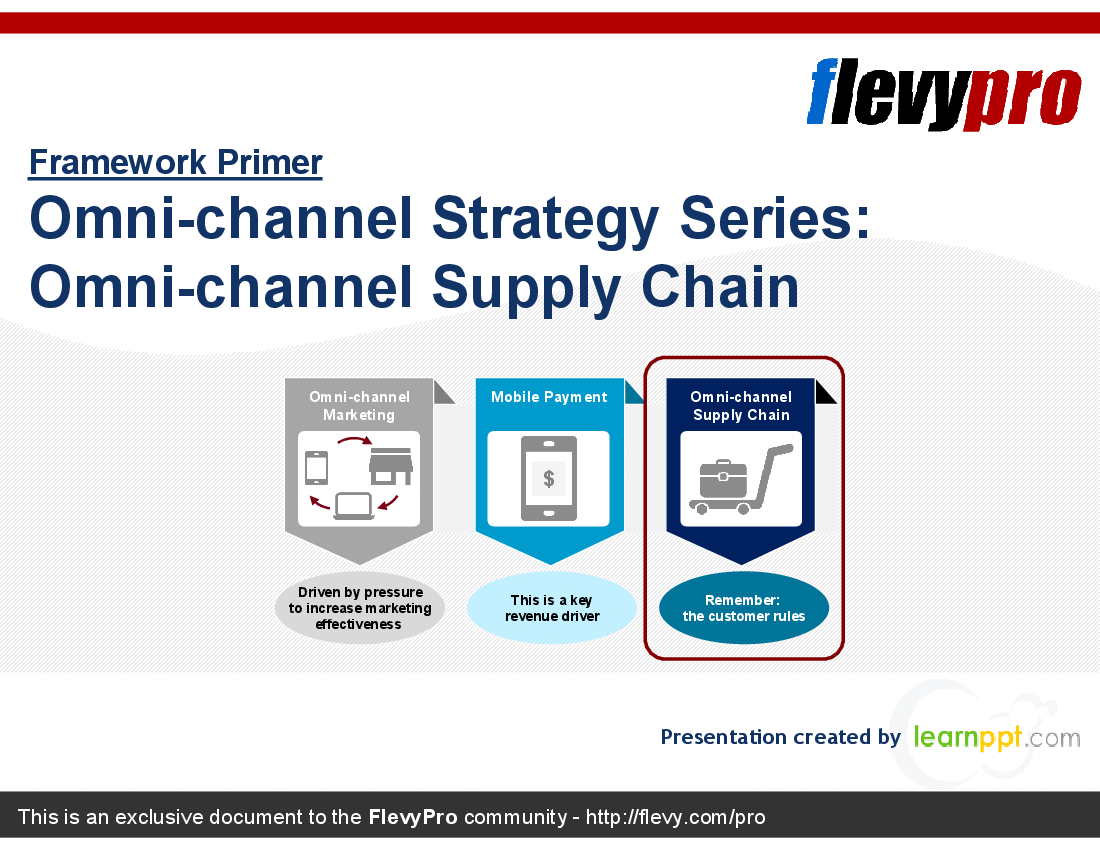
Omni-channel Retailing means being available at any time and anywhere, making it convenient for the customer. In this changing landscape, 3 critical focus areas are now challenging our company's performance:
1. Omni-channel Marketing
2. Mobile Payment
3. Omni-channel Supply Chain
This presentation provides an overview to all 3 areas and then a deeper dive into the third focus area, Omni-channel Supply Chain. Topics covered include Delivery & Return Strategies, Order Management Systems (OMS), next steps, relevant benchmarks, among other topics.
This presentation has been adapted from the broader framework, Omni-channel Retail Strategy, which covers all 3 focus areas.
This deck also includes slide templates for you to use in your own business presentations.
This PPT delves into the intricacies of the Omni-channel Supply Chain, emphasizing the critical role of a robust Order Management System (OMS). The OMS is pivotal in ensuring seamless integration between physical and digital channels, providing real-time inventory visibility and enhancing overall operational efficiency. The presentation also outlines various delivery and return strategies, including drop-shipping, click-and-collect, and delivery lockers, each tailored to optimize logistical efficiency and customer satisfaction.
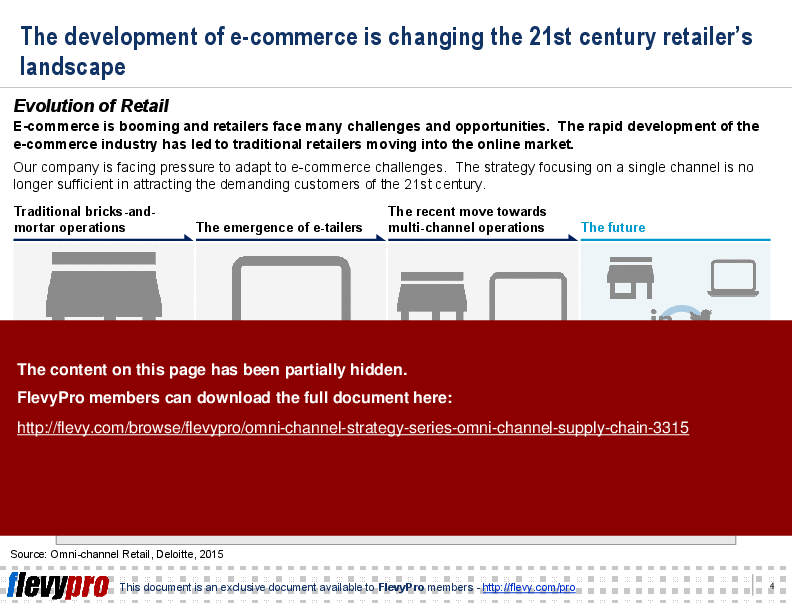
The evolution of retail is thoroughly examined, highlighting the shift from traditional brick-and-mortar operations to the emergence of e-tailers and the recent move towards multi-channel operations. The future of retail is Omni-channel, demanding a strategic approach to meet the increasing expectations of the 21st-century customer. This deck equips you with actionable insights and benchmarks to navigate this complex landscape, ensuring your supply chain remains competitive and customer-centric.
Got a question about this document? Email us at flevypro@flevy.com.
Executive Summary
The "Omni-channel Supply Chain" presentation provides a strategic framework for businesses navigating the complexities of modern e-commerce. It emphasizes the necessity for companies to integrate their supply chain operations across multiple channels to meet the evolving demands of customers. This deck, crafted by former consultants from McKinsey and the Big 4, outlines critical areas such as Order Management Systems (OMS), delivery strategies, and benchmarks essential for achieving e-commerce success. By leveraging this presentation, executives can enhance operational efficiency, improve customer satisfaction, and drive revenue growth.
Who This Is For and When to Use
• Supply Chain Executives and Managers responsible for optimizing logistics and fulfillment strategies.
• E-commerce Leaders looking to refine their omni-channel strategies and improve customer experience.
• Marketing Teams aiming to align their strategies with supply chain capabilities for better customer engagement.
• Consultants and Advisors working with businesses to enhance their operational frameworks in e-commerce.
Best-fit moments to use this deck:
• During strategic planning sessions focused on enhancing omni-channel capabilities.
• When assessing current supply chain performance against industry benchmarks.
• In workshops aimed at developing or refining delivery and return strategies.
Learning Objectives
• Define the components and importance of an omni-channel supply chain.
• Build an integrated strategy that aligns supply chain operations with customer expectations.
• Establish effective delivery and return strategies tailored to customer preferences.
• Optimize the use of Order Management Systems (OMS) for improved operational efficiency.
• Identify key performance indicators (KPIs) for measuring supply chain success.
• Develop a roadmap for implementing omni-channel strategies in retail operations.
Table of Contents
• Overview (page 3)
• Omni-channel Retail (page 6)
• Omni-channel Supply Chain (page 10)
• Delivery & Return Strategies (page 11)
• Order Management System (OMS) (page 14)
• Customer Feedback & Opportunities (page 13)
• Returns Management (page 16)
• Next Steps in Supply Chain Management (page 17)
• Benchmarks for Supply Chain Performance (page 18)
• Templates (page 19)
Primary Topics Covered
• Omni-channel Supply Chain Overview - An introduction to the omni-channel supply chain concept, emphasizing its role in modern e-commerce and customer satisfaction.
• Delivery & Return Strategies - A detailed exploration of various delivery and return strategies, including dropshipping, same-day delivery, and click-and-collect options.
• Order Management System (OMS) - Insights into the critical role of OMS in facilitating seamless integration across channels and improving customer service.
• Customer Feedback Mechanisms - Strategies for gathering and utilizing customer feedback to enhance delivery and return processes.
• Returns Management - Discussion on managing return costs effectively while maintaining customer satisfaction.
• Performance Benchmarks - Key performance indicators (KPIs) for evaluating supply chain effectiveness and operational efficiency.
Deliverables, Templates, and Tools
• Template for developing omni-channel supply chain strategies.
• Example framework for delivery and return strategies.
• Order Management System (OMS) integration checklist.
• Customer feedback collection and analysis template.
• Benchmarking tool for evaluating supply chain performance.
• Presentation slides for internal workshops on omni-channel strategies.
Slide Highlights
• Overview of the omni-channel supply chain and its importance in e-commerce.
• Visual representation of delivery and return strategies with customer-centric focus.
• Detailed breakdown of Order Management System functionalities and benefits.
• Customer feedback opportunities slide emphasizing the importance of aligning with customer expectations.
• Performance benchmarks comparing key metrics across industry standards.
Potential Workshop Agenda
Omni-channel Strategy Development Session (90 minutes)
• Discuss the current state of supply chain operations and customer expectations.
• Identify gaps in delivery and return strategies.
• Brainstorm potential improvements and innovations in the supply chain.
Order Management System Optimization Workshop (60 minutes)
• Review current OMS capabilities and limitations.
• Develop action items for enhancing OMS integration across channels.
• Set KPIs for measuring OMS effectiveness.
Customer Feedback Integration Session (45 minutes)
• Analyze existing customer feedback mechanisms.
• Develop strategies for improving customer engagement and satisfaction.
• Plan next steps for implementing feedback-driven changes.
Customization Guidance
• Tailor the delivery and return strategies to fit specific customer demographics and preferences.
• Adjust the OMS framework to align with existing technology and operational processes.
• Incorporate company-specific benchmarks into the performance evaluation tools.
• Modify templates to reflect unique branding and messaging for internal presentations.
Secondary Topics Covered
• Omni-channel marketing strategies and their impact on supply chain operations.
• The role of mobile payment solutions in enhancing customer experience.
• Challenges faced by traditional retailers transitioning to omni-channel models.
• Strategies for integrating physical and digital retail environments.
Topic FAQ
Document FAQ
These are questions addressed within this presentation.
What is an omni-channel supply chain?
An omni-channel supply chain integrates various channels to provide a seamless customer experience, ensuring that products are available whenever and wherever customers want them.
Why is an Order Management System (OMS) important?
An OMS facilitates the integration of order and delivery channels, providing real-time visibility into inventory and improving customer service.
What are some effective delivery strategies?
Effective strategies include dropshipping, same-day delivery, click-and-collect, reserve-and-collect, and delivery lockers, tailored to customer preferences.
How can customer feedback improve supply chain performance?
Customer feedback helps identify misalignments between service offerings and customer expectations, guiding investments in areas that enhance satisfaction.
What KPIs should be tracked for supply chain performance?
Key performance indicators include fulfillment cost per order, return rates, customer service costs, and inventory turnover.
How can we optimize returns management?
Optimizing returns involves analyzing costs, improving product information, and offering flexible return options to enhance customer satisfaction.
What next steps should we take to implement an omni-channel strategy?
Next steps include assessing current capabilities, identifying gaps, and developing a roadmap for integrating supply chain operations across channels.
How do we measure the success of our omni-channel supply chain?
Success can be measured through established benchmarks and KPIs that evaluate operational efficiency, customer satisfaction, and overall performance.
Glossary
• Omni-channel Supply Chain - An integrated supply chain that operates across multiple channels to enhance customer experience.
• Order Management System (OMS) - A system that manages order processing, inventory visibility, and delivery options.
• Delivery Strategies - Various methods employed to fulfill customer orders, including dropshipping and same-day delivery.
• Returns Management - The process of handling product returns efficiently while maintaining customer satisfaction.
• Key Performance Indicators (KPIs) - Quantifiable measures used to evaluate the success of supply chain operations.
• Customer Feedback - Information gathered from customers regarding their experiences and expectations.
• Benchmarking - The process of comparing performance metrics against industry standards to identify areas for improvement.
• Fulfillment Cost - The total cost associated with delivering a product to the customer.
• Inventory Visibility - The ability to track and manage inventory levels across all channels in real-time.
• Customer Experience - The overall perception and satisfaction of customers based on their interactions with a brand.
Source: Best Practices in Supply Chain Management, Omnichannel Marketing, Retail Strategy PowerPoint Slides: Omni-channel Strategy Series: Omni-channel Supply Chain PowerPoint (PPT) Presentation Slide Deck, LearnPPT Consulting
Did you need more documents?
Consider a FlevyPro subscription from $39/month. View plans here.
For $10.00 more, you can download this document plus 2 more FlevyPro documents. That's just $13 each.
This document is available as part of the following discounted bundle(s):
Save %!
Omni-channel Strategy - Full Series
This bundle contains 3 total documents. See all the documents to the right.

|
Download our FREE Strategy & Transformation Framework Templates
Download our free compilation of 50+ Strategy & Transformation slides and templates. Frameworks include McKinsey 7-S, Balanced Scorecard, Disruptive Innovation, BCG Curve, and many more. |