
This framework is developed by a team of former McKinsey and Big 4 consultants. The presentation follows the headline-body-bumper slide format used by global consulting firms.
Explore the core pillars of Next-gen Learning Organizations, crafted by ex-McKinsey and Big 4 consultants. Enhance digital transformation and AI-driven decision-making. Next-gen Learning Organization: Core Pillars is a 30-slide PPT PowerPoint presentation slide deck (PPTX) available for immediate download upon purchase.
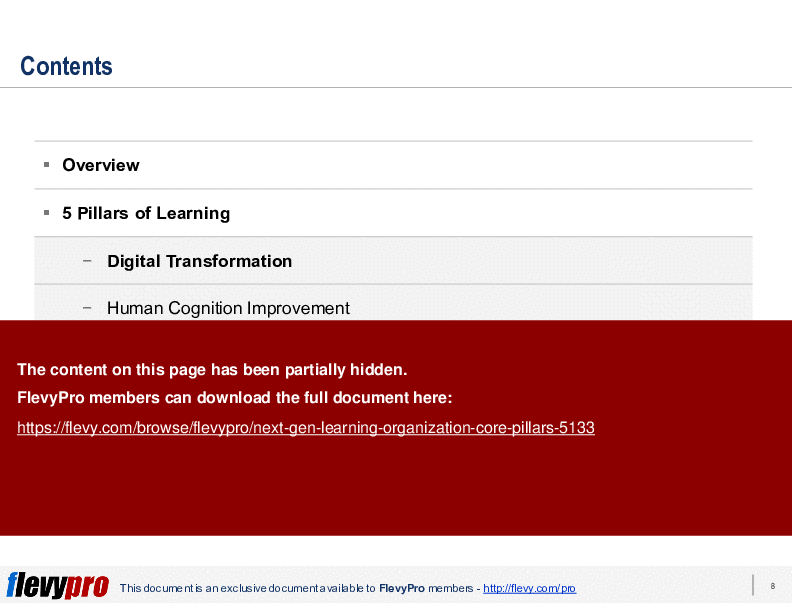
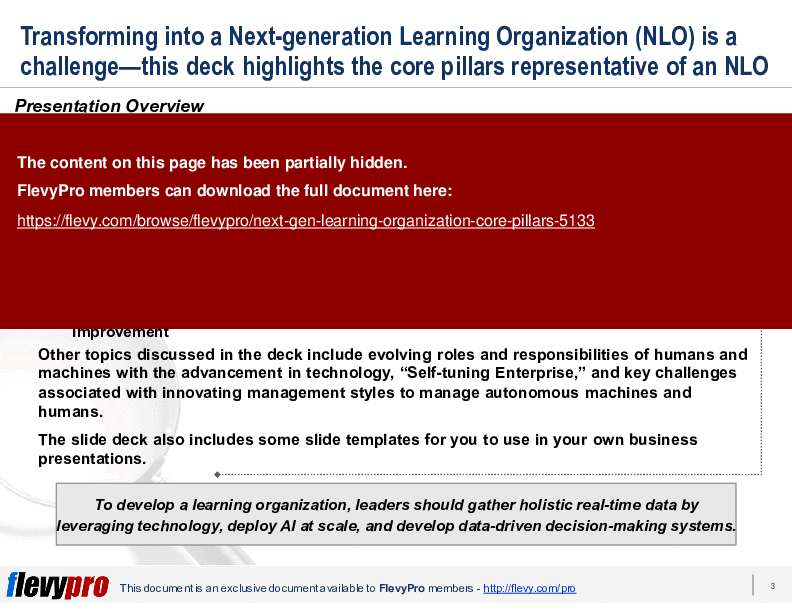
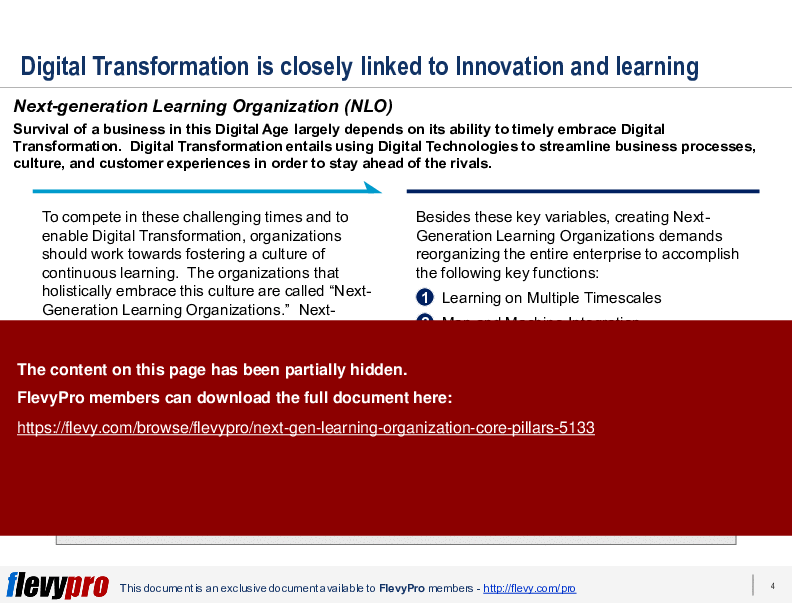
Next-generation Learning Organizations (NLOs) are characterized by their adoption of Digital Transformation, speed of learning, and their adeptness to take action based on new insights. They use emerging technologies to automate as well as "autonomize" their businesses. By autonomizing, the NLOs enable machines to learn, take action, and evolve on their own.
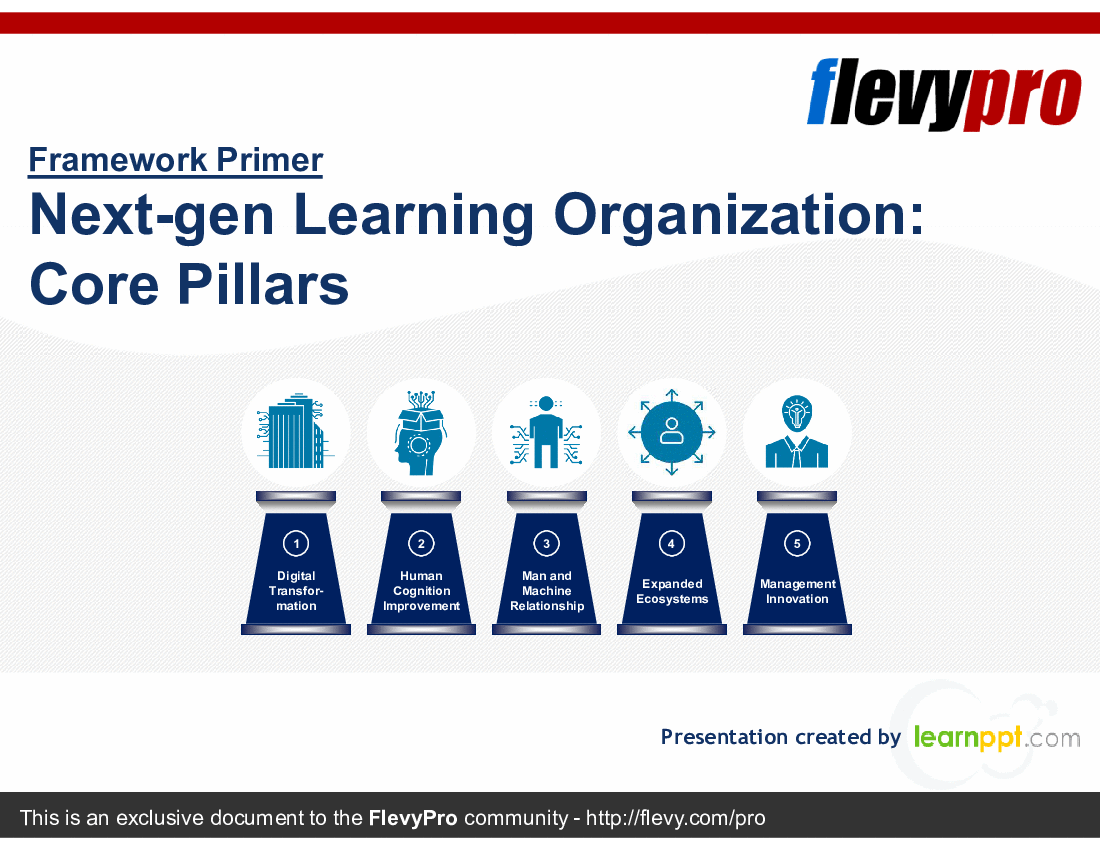
To develop a Learning Organization, leaders should gather holistic real-time data by leveraging technology, deploy AI at scale, and develop data-driven decision-making systems. This deck provides a detailed overview of the 5 core pillars of Learning that are essential for the creation of a Next-generation Learning Organization:
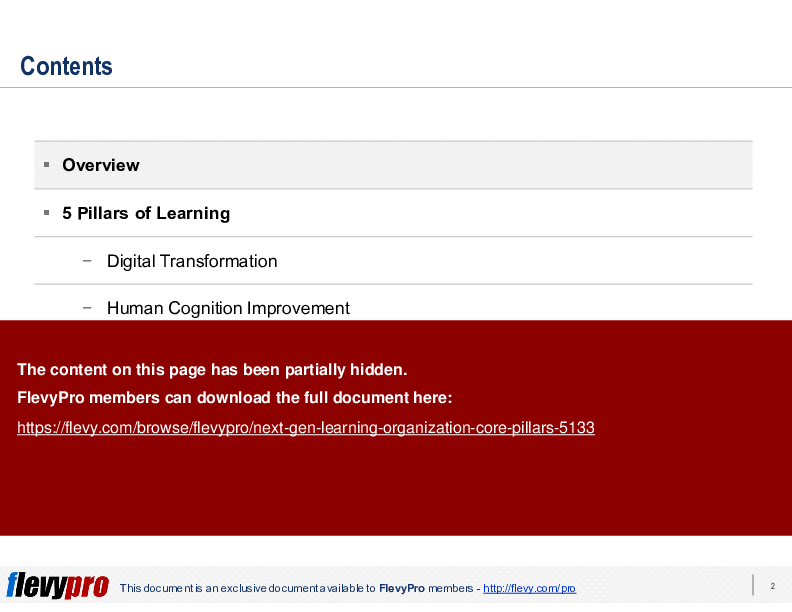
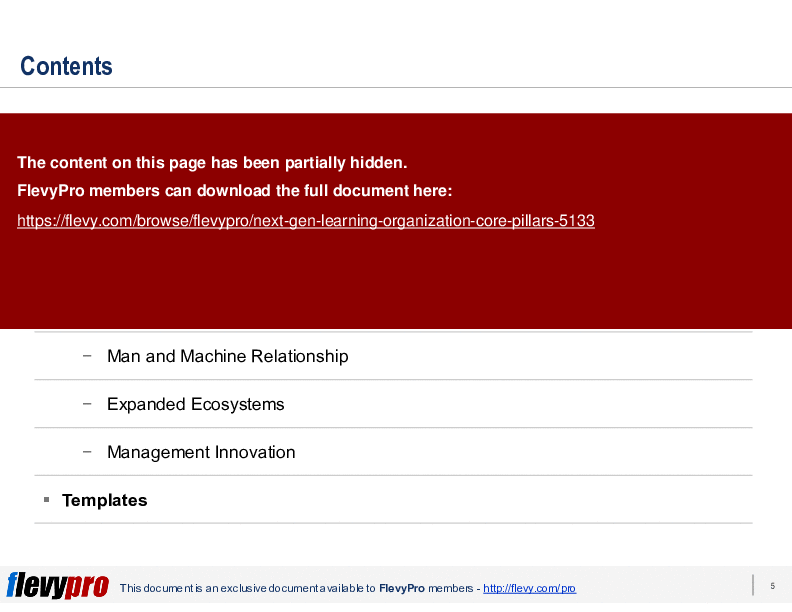
1. Digital Transformation
2. Human Cognition Improvement
3. Man and Machine Relationship
4. Expanded Ecosystems
5. Management Innovation
Other topics discussed in the deck include evolving roles and responsibilities of humans and machines with the advancement in technology, "Self-tuning Enterprise," and key challenges associated with innovating management styles to manage autonomous machines and humans.
The slide deck also includes some slide templates for you to use in your own business presentations.
This presentation delves into the intricate relationship between man and machine, emphasizing the importance of collaborative efforts to harness the full potential of both. It outlines how organizations can bifurcate responsibilities, assigning tasks based on the strengths of humans and machines. This approach ensures that each entity operates at its optimal capacity, driving efficiency and innovation.
The PPT also highlights the necessity of expanded ecosystems, where organizations leverage networks of companies to enhance value and dynamism. By adopting flexible business models and fostering collaboration across industries, organizations can navigate complex environments and scale effectively. This comprehensive guide is essential for any executive looking to drive their organization towards becoming a Next-generation Learning Organization.
The concept of a "Self-tuning Enterprise" adapts dynamically to market changes by establishing a network of companies to manage complexity and scale. Key imperatives include creating a shared vision among external partners, building APIs and platforms for collaboration, and implementing flexible, data-driven processes. The quadrant chart categorizes organizations from "Classical organization" to "Algorithmic organization," with "Self-tuning organization" positioned at the intersection of high complexity and dynamism. This indicates their capability to handle rapid market changes. A Self-tuning Enterprise continuously learns and evolves, ensuring efficient resource allocation and maintaining relevance in a fast-paced environment. This adaptability serves as a proactive strategy for enhancing organizational agility and responsiveness.
NLOs enhance collaboration between humans and machines through effective human-machine interfaces. They innovate to optimize resource utilization and address limitations of current AI systems, which struggle with complex scenarios. By implementing systems where humans guide AI, NLOs ensure clear recommendations and accurate task assignments based on risk assessments, effectively bifurcating responsibilities. An example is Google's DeepMind AI, which operates in phases to recognize features linked to eye diseases and diagnose conditions, showcasing the collaborative model's effectiveness and building trust among medical professionals. Developing sophisticated interfaces is essential for leveraging AI while maintaining human oversight in decision-making.
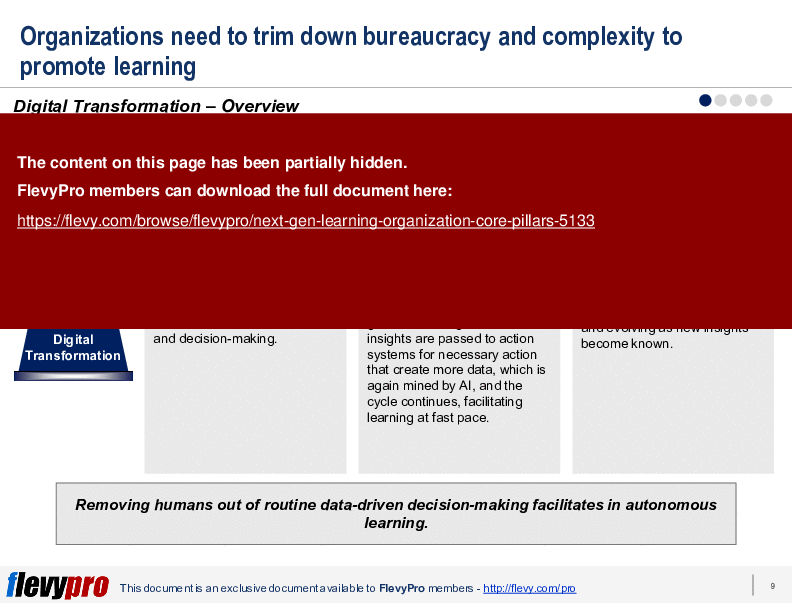
Next-generation Learning Organizations (NLOs) excel in learning speed and adaptability within the framework of digital transformation. They reduce bureaucracy and complexity to enhance learning capabilities, leveraging advanced technologies to autonomize operations and minimize human intervention in decision-making. NLOs create integrated learning loops that facilitate continuous feedback, allowing machines to learn and evolve autonomously. Data flows from digital platforms into AI algorithms that mine real-time data, generating insights that inform necessary actions, which is critical for maintaining a competitive edge. An example is Amazon's use of integrated AI systems for pricing and product recommendations, illustrating how organizations can implement NLO principles to enhance operational efficiency and responsiveness.
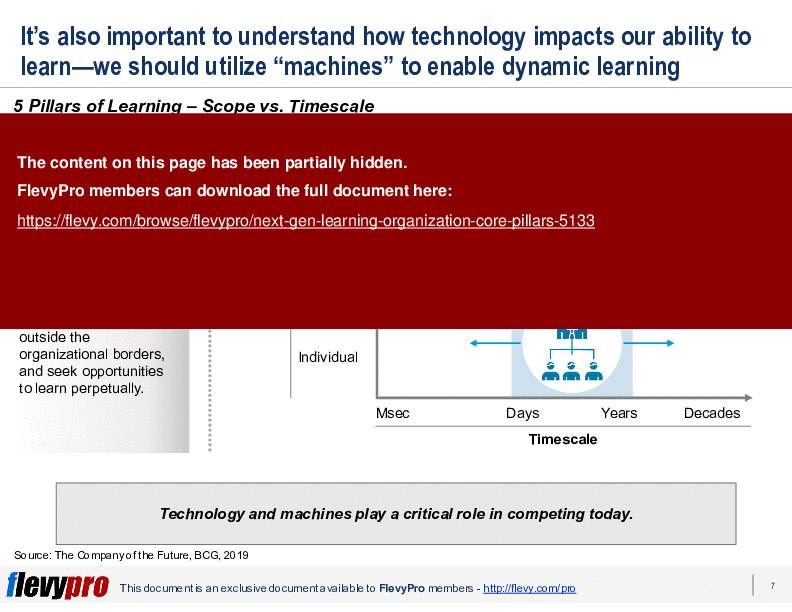
This PPT slide presents the "5 Pillars of Learning – Scope vs. Timescale" framework, illustrating how next-generation learning organizations leverage technology to enhance learning capabilities. The "Scope" concept includes 3 levels: Individual, Company, and Ecosystem, indicating that learning occurs at personal, organizational, and environmental scales. The "Timescale" aspect categorizes learning into milliseconds, days, years, and decades, highlighting that different learning types suit various timeframes, with machines processing information faster than traditional organizations. The graphic contrasts "Machines" with "Traditional Organizations" and "Humans," emphasizing the need for a mindset shift and infrastructure adaptation to fully harness technology in learning, enabling dynamic learning and competitive advantage.
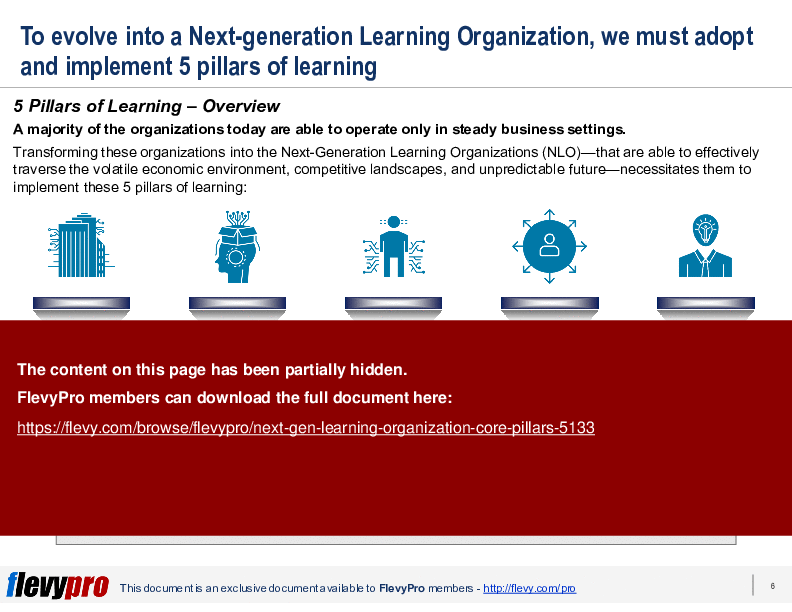
Organizations aiming to evolve into Next-Generation Learning Organizations (NLO) must embrace 5 key pillars of learning.
1. Digital Transformation involves leveraging technology to enhance operations and decision-making, rethinking business models and workflows for efficiency and innovation.
2. Human Cognition Improvement requires investment in workforce cognitive skills to navigate challenges and make informed decisions in dynamic environments.
3. Man and Machine Relationship emphasizes integrating human intelligence with machine capabilities to boost productivity and innovation.
4. Expanded Ecosystems necessitates building broader networks and partnerships to access diverse resources and expertise, enhancing adaptability and resilience.
5. Management Innovation calls for new leadership approaches and organizational structures to foster a learning and agile environment.
Focusing on these pillars positions organizations for sustainable growth in uncertain environments.
Next-generation Learning Organizations (NLOs) require a transformative approach to organizational design, structure, and management practices. This shift necessitates a comprehensive overhaul of senior leadership roles, moving away from traditional management methods. NLOs inspire creativity through unique management styles and robust governance models, particularly in relation to artificial intelligence and automated systems. Continuous learning is essential for professional development, emphasizing ongoing education and adaptability. Management in an NLO should adopt an experimental approach, transitioning from direct decision-making to a coaching and improvisational mindset, fostering a dynamic organizational culture. Several global organizations are implementing management structures that effectively address the dual challenge of managing people and machines, integrating innovative practices to enhance organizational effectiveness and inspire continuous learning.
Source: Best Practices in Digital Transformation, Innovation, Learning Organization PowerPoint Slides: Next-gen Learning Organization: Core Pillars PowerPoint (PPTX) Presentation Slide Deck, LearnPPT Consulting
This framework is developed by a team of former McKinsey and Big 4 consultants. The presentation follows the headline-body-bumper slide format used by global consulting firms.
For $10.00 more, you can download this document plus 2 more FlevyPro documents. That's just $13 each.
ABOUT FLEVYPRO
This document is part of the FlevyPro Library, a curated knowledge base of documents for our FlevyPro subscribers.

FlevyPro is a subscription service for on-demand business frameworks and analysis tools. FlevyPro subscribers receive access to an exclusive library of curated business documents—business framework primers, presentation templates, Lean Six Sigma tools, and more—among other exclusive benefits.
Since 2012, we have provided business templates to over 10,000 businesses and organizations of all sizes, from startups and small businesses to the Fortune 100, in over 130 countries.
"As an Independent Management Consultant, I find Flevy to add great value as a source of best practices, templates and information on new trends. Flevy has matured and the quality and quantity of the library is excellent. Lastly the price charged is reasonable, creating a win-win value for
the customer, Flevy and the various authors. This is truly a service that benefits the consulting industry and associated clients. Thanks for providing this service.
"
– Jim Schoen, Principal at FRC Group
"Last Sunday morning, I was diligently working on an important presentation for a client and found myself in need of additional content and suitable templates for various types of graphics. Flevy.com proved to be a treasure trove for both content and design at a reasonable price, considering the time I
saved. I encountered a download issue during the ordering process. However, a quick email to Flevy's support team, even on a Sunday (!!!), resulted in assistance within less than an hour, allowing me to download the content I needed. Fantastic job, Flevy! I give 5 stars for both content/price and customer service. Thank you!
"
– M. E., Chief Commercial Officer, International Logistics Service Provider
"I am extremely grateful for the proactiveness and eagerness to help and I would gladly recommend the Flevy team if you are looking for data and toolkits to help you work through business solutions."
– Trevor Booth, Partner, Fast Forward Consulting
"As a consulting firm, we had been creating subject matter training materials for our people and found the excellent materials on Flevy, which saved us 100's of hours of re-creating what already exists on the Flevy materials we purchased."
– Michael Evans, Managing Director at Newport LLC
"I have found Flevy to be an amazing resource and library of useful presentations for lean sigma, change management and so many other topics. This has reduced the time I need to spend on preparing for my performance consultation. The library is easily accessible and updates are regularly provided. A wealth of great information."
– Cynthia Howard RN, PhD, Executive Coach at Ei Leadership
"The wide selection of frameworks is very useful to me as an independent consultant. In fact, it rivals what I had at my disposal at Big 4 Consulting firms in terms of efficacy and organization."
– Julia T., Consulting Firm Owner (Former Manager at Deloitte and Capgemini)
"I have used FlevyPro for several business applications. It is a great complement to working with expensive consultants. The quality and effectiveness of the tools are of the highest standards."
– Moritz Bernhoerster, Global Sourcing Director at Fortune 500
"Flevy is our 'go to' resource for management material, at an affordable cost. The Flevy library is comprehensive and the content deep, and typically provides a great foundation for us to further develop and tailor our own service offer."
– Chris McCann, Founder at Resilient.World
Save with Bundles
This document is available as part of the following discounted bundle(s):
Download our free compilation of 50+ slides and templates on Organizational Design, Change Management, and Corporate Culture. Methodologies include ADKAR, Burke-Litwin Change Model, McKinsey 7-S, Competing Values Framework, etc.