
This framework is developed by a team of former McKinsey and Big 4 consultants. The presentation follows the headline-body-bumper slide format used by global consulting firms.
Explore a comprehensive Low Cost Strategy framework by ex-McKinsey and Big 4 consultants. Gain insights on operating models, value propositions, and market dynamics. Low Cost Strategy is a 24-slide PPT PowerPoint presentation slide deck (PPT) available for immediate download upon purchase.
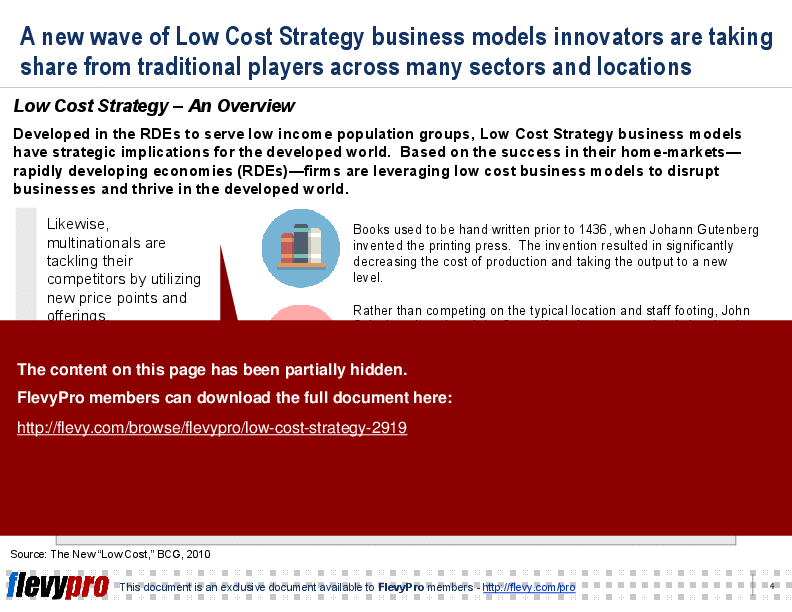
Based on the success in the rapidly developing economies (RDEs), Low Cost Strategy players are now increasingly becoming a norm in the developed world. Large organizations are initiating new cost strategies and applications in the developed world with a "low cost" value proposition designed for RDEs.
This deck expounds on how innovative low cost players are spending in innovation targeted at the large, low income segments of the population.
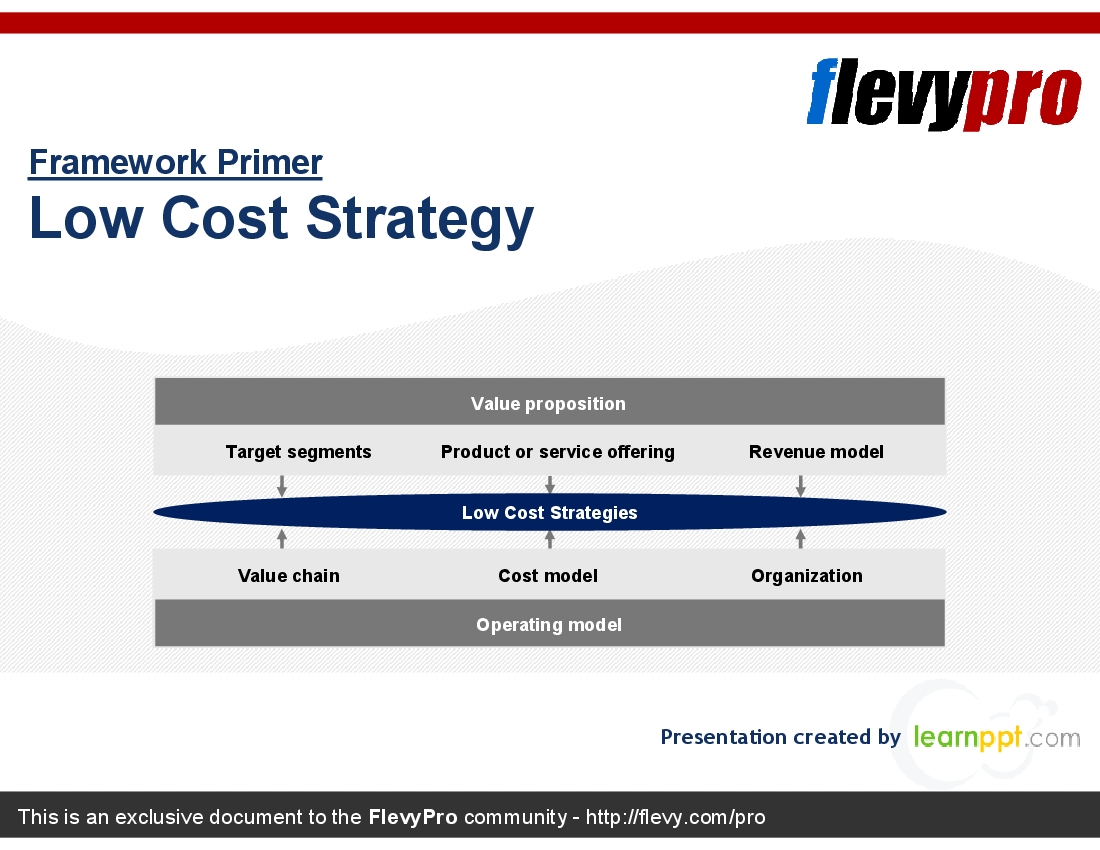
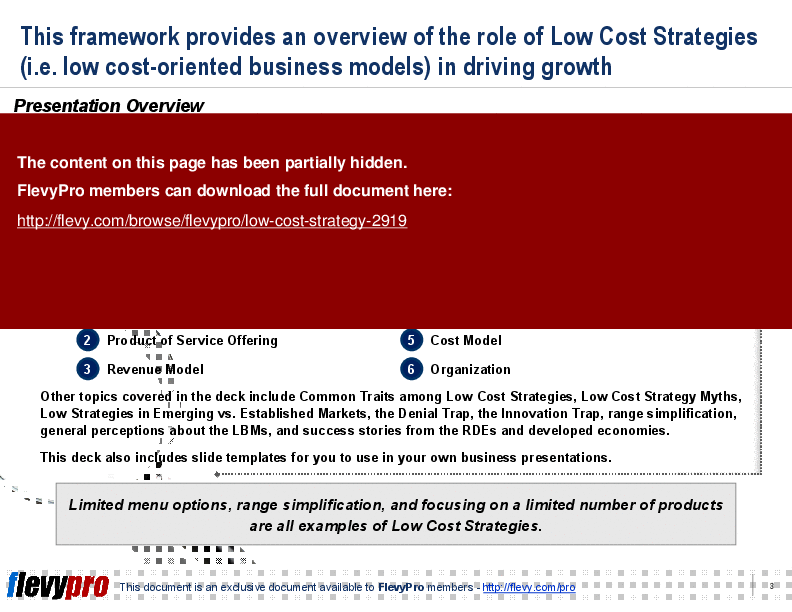
A Low Cost Strategy is based on an integrated model with availability of 6 elements across the areas of Operating Model and Value Proposition:
OPERATING MODEL
1. Target Segments
2. Product of Service Offering
3. Revenue Model
VALUE PROPOSITION
4. Value Chain
5. Cost Model
6. Organization
Other topics covered in the deck include Common Traits among Low Cost Strategies, Low Cost Strategy Myths, Low Strategies in Emerging vs. Established Markets, the Denial Trap, the Innovation Trap, range simplification, general perceptions about the LBMs, and success stories from the RDEs and developed economies.
This deck also includes slide templates for you to use in your own business presentations.
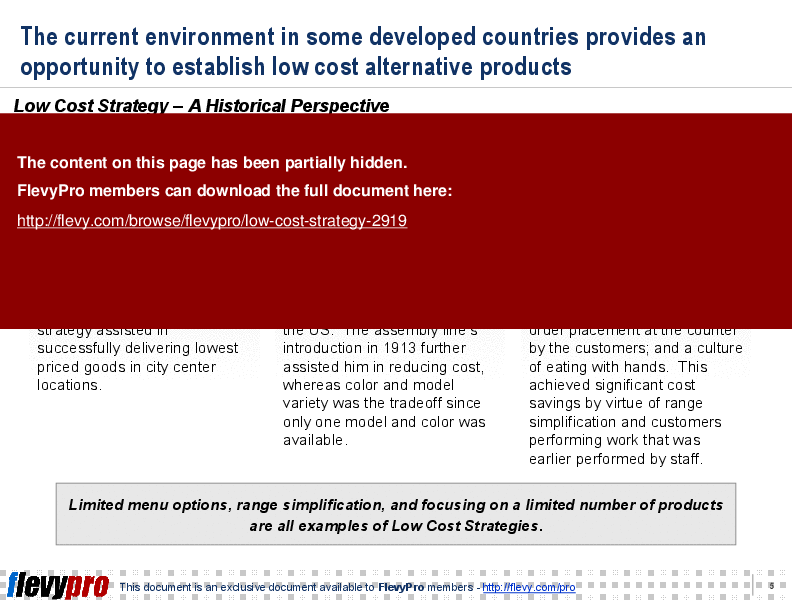
This presentation delves into the historical evolution of Low Cost Strategies, showcasing how pivotal innovations like the printing press and assembly line have revolutionized cost structures. It highlights the strategic shifts multinational corporations are making to compete with low-cost disruptors by adopting new price points and streamlined offerings. The PPT also explores the common misconceptions surrounding Low Cost Strategies, emphasizing that they can indeed coexist with high margins and quality.
The framework provides actionable insights into how companies can avoid the Denial and Innovation Traps when competing against low-cost players. It includes case studies of successful low-cost innovations through both organic development and acquisitions, offering a balanced perspective on strategic growth. This deck is an invaluable resource for executives looking to refine their cost strategies and drive sustainable growth in both emerging and established markets.
This PPT slide outlines low-cost strategies, focusing on key components: target segments, value proposition, revenue model, value chain, cost model, and organization. Target segments highlight the need to define price-sensitive customer groups and understand their business priorities. The value proposition emphasizes creating a compelling, simple product offering while maintaining high service standards and strong brand presence. The revenue model suggests a pricing strategy based on core value with options for additional charges, appealing to cost-conscious consumers. The value chain stresses optimizing core versus non-core activities and deciding between in-house and outsourced functions. The cost model advocates for low costs across the value chain, aligning sourcing and distribution with cost targets. Finally, the organization component focuses on operational efficiency, limiting overhead, and fostering entrepreneurial thinking.
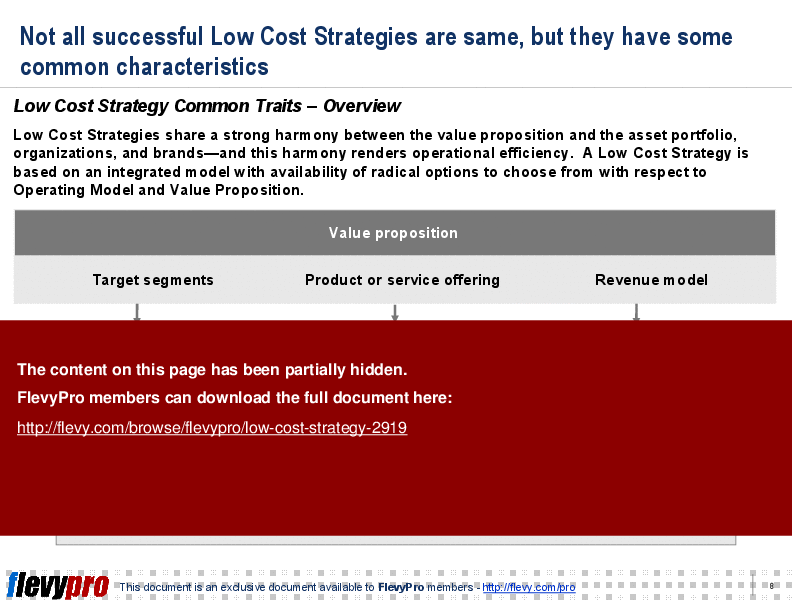
This PPT slide outlines common traits of successful low-cost strategies, emphasizing the alignment between value proposition and operational elements. Key components of the Value Proposition include target segments, product or service offerings, and revenue models, which are interconnected for effective customer targeting. The Operating Model encompasses the value chain, cost model, and organizational structure, indicating that these frameworks must optimize processes to support a low-cost strategy. Flexibility in low-cost strategies allows organizations to tailor approaches to specific contexts, enhancing cost efficiency while transforming service offerings. Understanding the harmony between value propositions and operational models is essential for implementing low-cost strategies effectively.
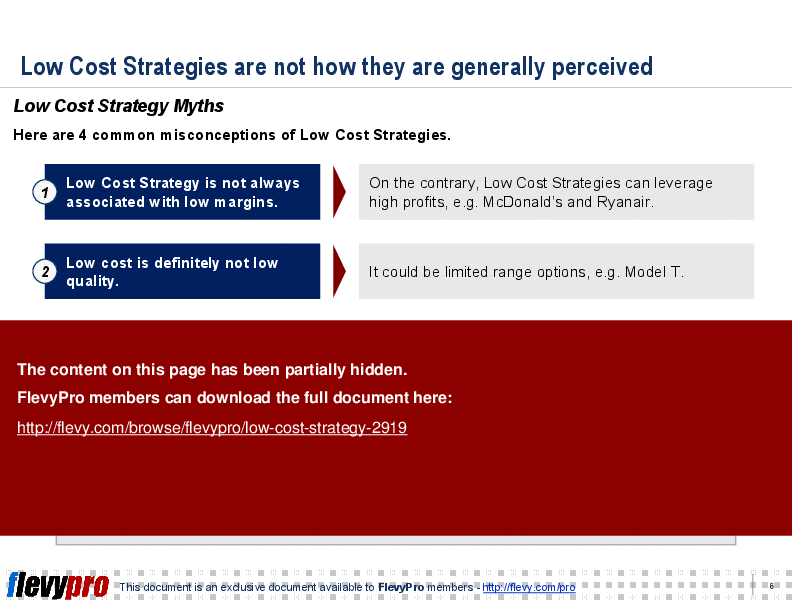
This PPT slide addresses misconceptions about low-cost strategies, presenting 4 key myths. First, low-cost strategies are not synonymous with low margins; companies like McDonald's and Ryanair leverage low-cost models to achieve substantial profits. Second, low cost does not imply low quality, as exemplified by the Ford Model T, which maintained reliability while revolutionizing the automotive industry. Third, successful low-cost strategies are rooted in innovation, not imitation, as demonstrated by industry leaders like Ford and McDonald's. Finally, low-cost business models can create strong brand equity, as seen with the Ford Model T and the Big Mac, countering the belief that they lack market visibility.
This PPT slide contrasts traditional organizations with smart low-cost players in innovation and market targeting. Traditional firms often fall into the "Innovation Trap," where R&D focuses on developing sophisticated, expensive products, leading to a cycle of midrange or bottom-tier new launches that discount previous offerings. This strategy can limit growth and market reach among lower-income segments. In contrast, smart low-cost players target low-income populations by leveraging innovative technologies and business models, effectively competing against traditional players. Organizations should avoid price wars and low-cost substitutes, instead refining their models and exploring innovative strategies aligned with low-cost principles to maintain competitiveness and unlock new growth avenues.
This PPT slide outlines key characteristics of low-cost strategies, focusing on 2 main sections: Value Proposition and Operating Model. In the Value Proposition, businesses must identify price-sensitive target segments and understand their priorities. A compelling product offering should resonate with these segments, emphasizing simplicity, uniformity, and high core-service standards. The Revenue Model advocates for pricing strategies that deliver basic core value, eliminating unnecessary features and charging for additional options. The Operating Model discusses optimizing the value chain by distinguishing core from non-core activities and utilizing standardized assets. It stresses operational efficiency, limiting overhead, and matching new hires with job profiles. The Cost Model emphasizes achieving low costs throughout the value chain, ensuring alignment with the low-cost strategy.
Source: Best Practices in Strategy Development, Value Proposition, Operating Model, Low Cost Strategy PowerPoint Slides: Low Cost Strategy PowerPoint (PPT) Presentation Slide Deck, LearnPPT Consulting
This framework is developed by a team of former McKinsey and Big 4 consultants. The presentation follows the headline-body-bumper slide format used by global consulting firms.
For $10.00 more, you can download this document plus 2 more FlevyPro documents. That's just $13 each.
ABOUT FLEVYPRO
This document is part of the FlevyPro Library, a curated knowledge base of documents for our FlevyPro subscribers.

FlevyPro is a subscription service for on-demand business frameworks and analysis tools. FlevyPro subscribers receive access to an exclusive library of curated business documents—business framework primers, presentation templates, Lean Six Sigma tools, and more—among other exclusive benefits.
The average daily rate of a McKinsey consultant is $6,625 (not including expenses). The average price of a Flevy document is $65.
Trusted by over 10,000+ Client Organizations
Since 2012, we have provided business templates to over 10,000 businesses and organizations of all sizes, from startups and small businesses to the Fortune 100, in over 130 countries.
"I like your product. I'm frequently designing PowerPoint presentations for my company and your product has given me so many great ideas on the use of charts, layouts, tools, and frameworks. I really think the templates are a valuable asset to the job."
– Roberto Fuentes Martinez, Senior Executive Director at Technology Transformation Advisory
"As a consultant requiring up to date and professional material that will be of value and use to my clients, I find Flevy a very reliable resource.
The variety and quality of material available through Flevy offers a very useful and commanding source for information. Using Flevy saves me time, enhances my expertise and ends up being a good decision."
– Dennis Gershowitz, Principal at DG Associates
"As an Independent Management Consultant, I find Flevy to add great value as a source of best practices, templates and information on new trends. Flevy has matured and the quality and quantity of the library is excellent. Lastly the price charged is reasonable, creating a win-win value for
the customer, Flevy and the various authors. This is truly a service that benefits the consulting industry and associated clients. Thanks for providing this service.
"
– Jim Schoen, Principal at FRC Group
"I have found Flevy to be an amazing resource and library of useful presentations for lean sigma, change management and so many other topics. This has reduced the time I need to spend on preparing for my performance consultation. The library is easily accessible and updates are regularly provided. A wealth of great information."
– Cynthia Howard RN, PhD, Executive Coach at Ei Leadership
"One of the great discoveries that I have made for my business is the Flevy library of training materials.
As a Lean Transformation Expert, I am always making presentations to clients on a variety of topics: Training, Transformation, Total Productive Maintenance, Culture, Coaching, Tools, Leadership Behavior, etc. Flevy
It is well worth the money to purchase these presentations. Sure, I have the knowledge and information to make my point. It is another thing to create a presentation that captures what I want to say. Flevy has saved me countless hours of preparation time that is much better spent with implementation that will actually save money for my clients.
"
– Ed Kemmerling, Senior Lean Transformation Expert at PMG
"As a consulting firm, we had been creating subject matter training materials for our people and found the excellent materials on Flevy, which saved us 100's of hours of re-creating what already exists on the Flevy materials we purchased."
– Michael Evans, Managing Director at Newport LLC
"I have used FlevyPro for several business applications. It is a great complement to working with expensive consultants. The quality and effectiveness of the tools are of the highest standards."
– Moritz Bernhoerster, Global Sourcing Director at Fortune 500
"As a niche strategic consulting firm, Flevy and FlevyPro frameworks and documents are an on-going reference to help us structure our findings and recommendations to our clients as well as improve their clarity, strength, and visual power. For us, it is an invaluable resource to increase our impact and value."
– David Coloma, Consulting Area Manager at Cynertia Consulting
Download our free compilation of 50+ Strategy & Transformation slides and templates. Frameworks include McKinsey 7-S, Balanced Scorecard, Disruptive Innovation, BCG Curve, and many more.