
This framework is developed by a team of former McKinsey and Big 4 consultants. The presentation follows the headline-body-bumper slide format used by global consulting firms.
Explore the Levers of Control (LoC) framework, developed by ex-McKinsey & Big 4 consultants, to enhance organizational control and creativity. Levers of Control (LoC) is a 31-slide PPT PowerPoint presentation slide deck (PPTX) available for immediate download upon purchase.
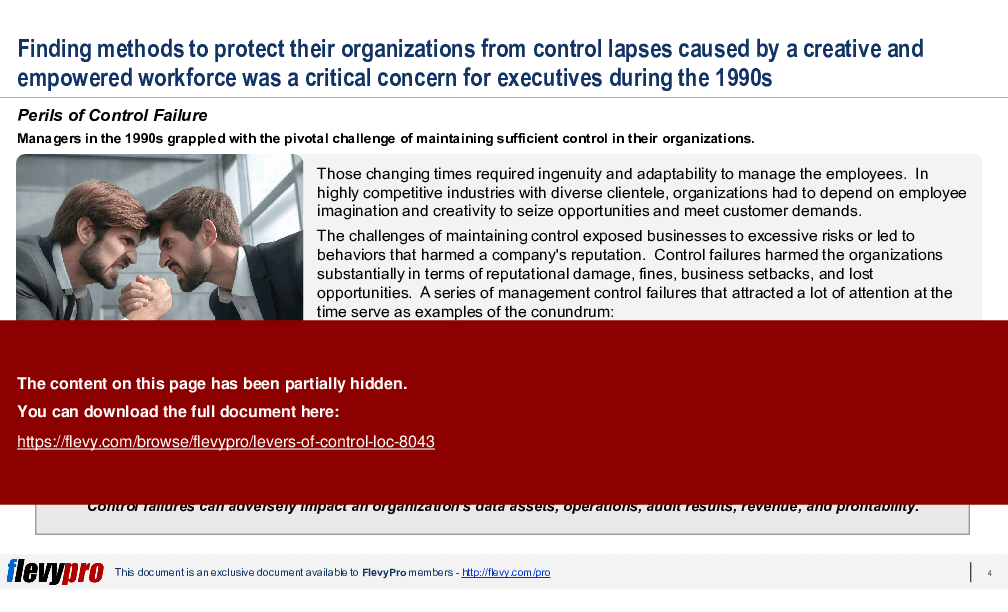
Managers in the 1990s grappled with the pivotal challenge of maintaining sufficient control in their organizations. Those changing times required ingenuity and adaptability to manage the employees. In highly competitive industries with diverse clientele, organizations had to depend on employee imagination and creativity to seize opportunities and meet customer demands.
The challenges of maintaining control exposed businesses to excessive risks or led to behaviors that harmed an organization's reputation. Control failures harmed the organizations substantially in terms of reputational damage, fines, business setbacks, and lost opportunities.
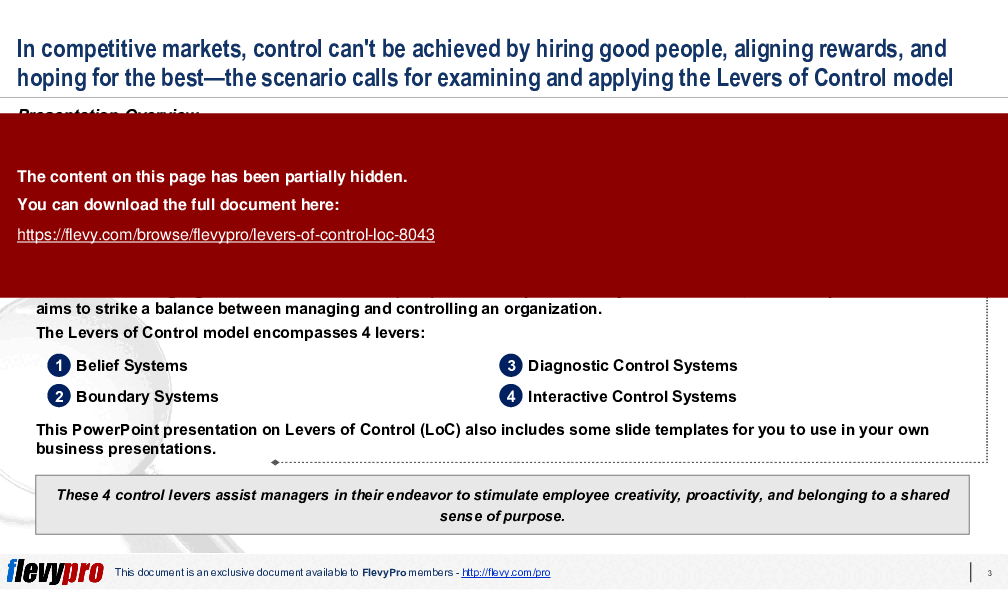
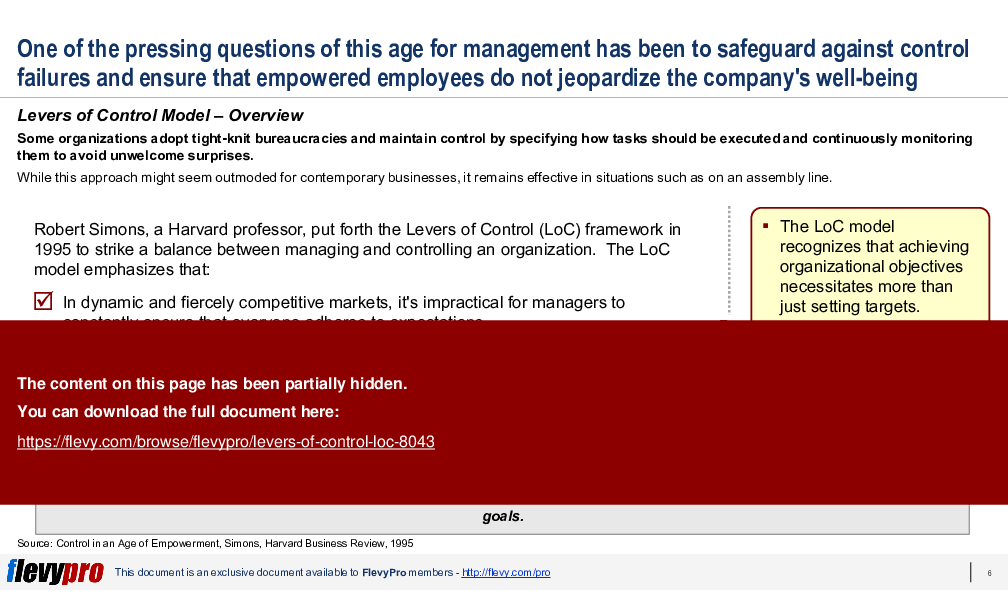
This PowerPoint presentation explains the Levers of Control (LoC) framework postulated by Robert Simons, a Harvard professor. LoC aims to strike a balance between managing and controlling an organization.
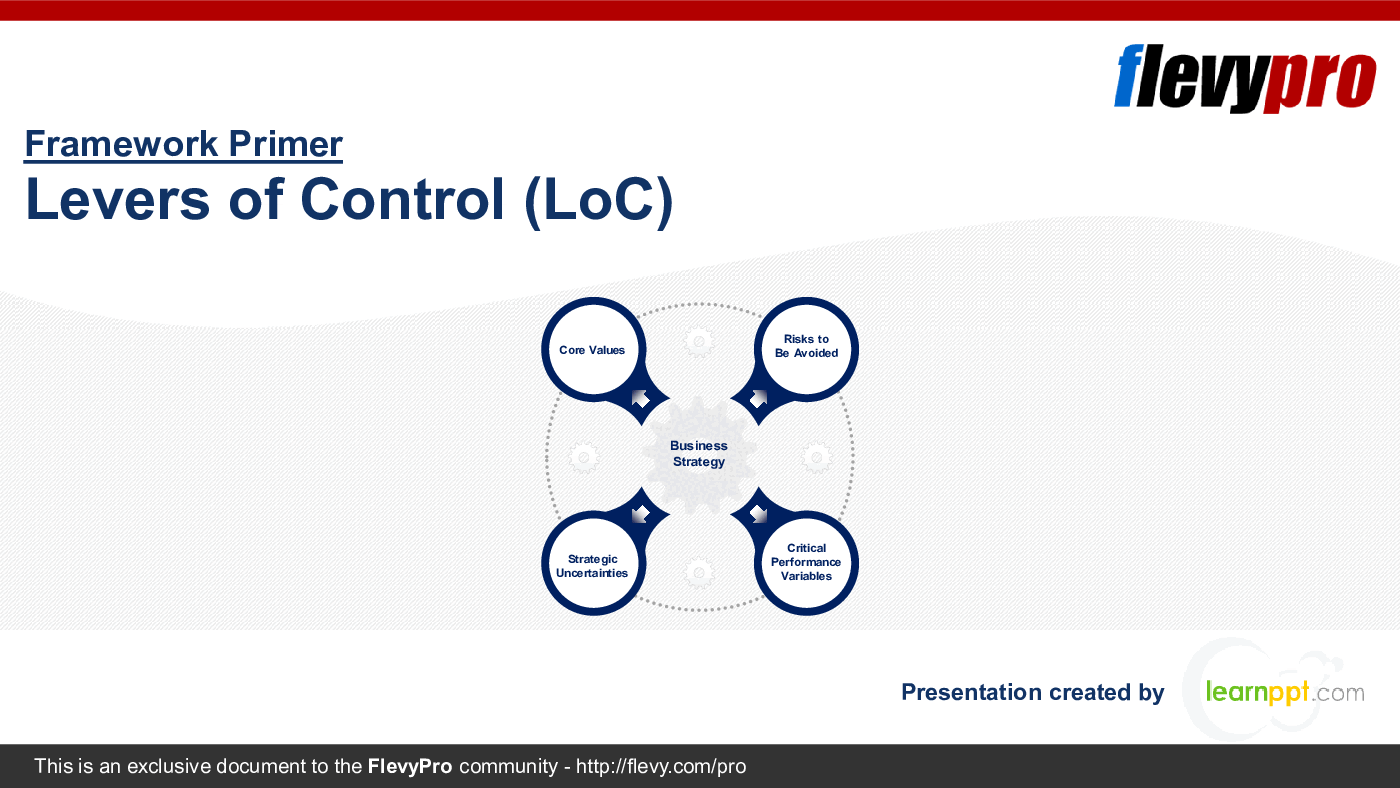
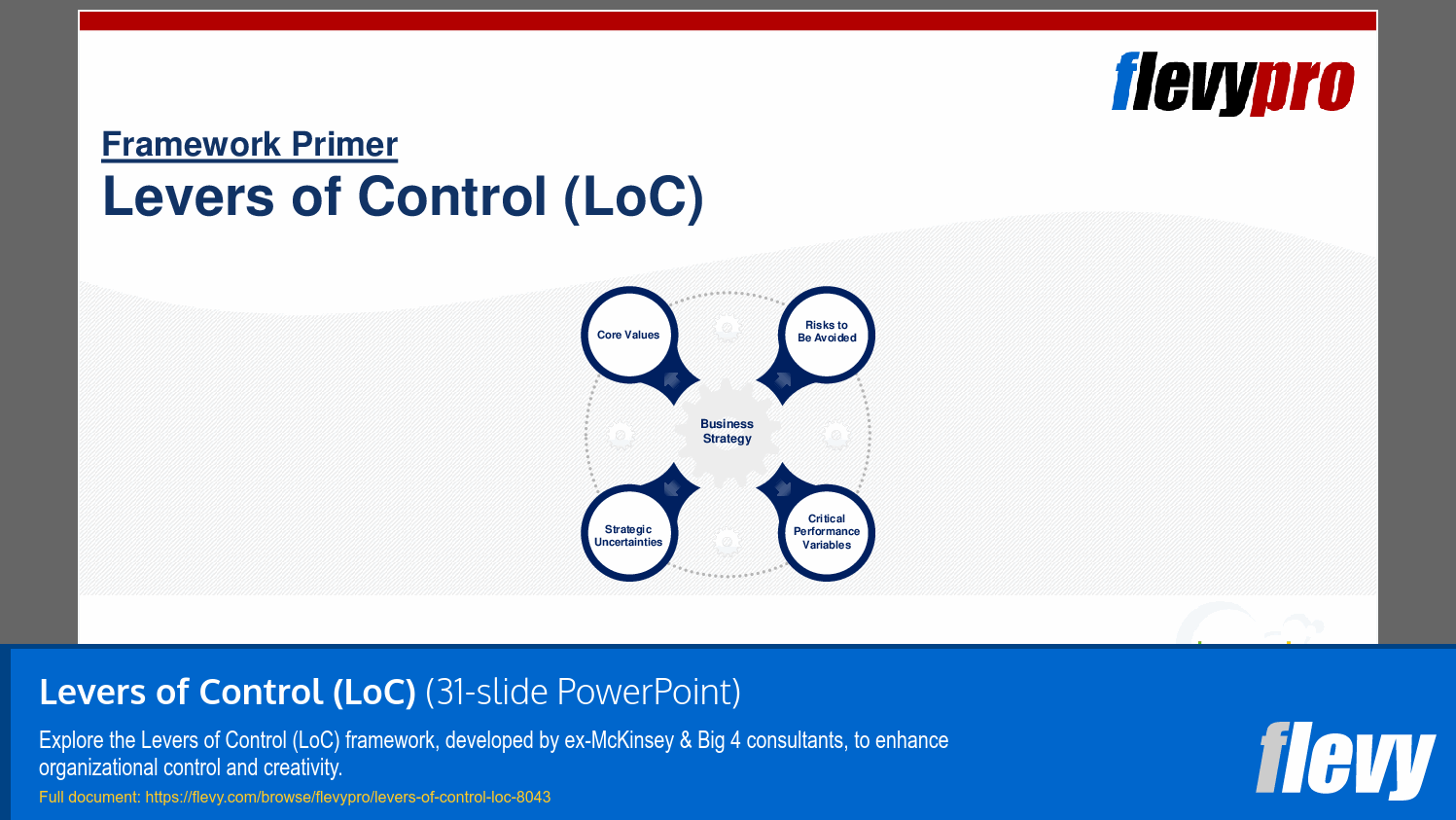
The Levers of Control model encompasses 4 levers:
1. Belief Systems – These convey core values and prompt people to support the company's mission.
2. Boundary Systems – These establish limits and guide people about undesirable, intolerable behaviors.
3. Diagnostic Control Systems – These measure and track strategy execution and inform resource allocation.
4. Interactive Control Systems – These entail dynamic information flow and the engagement of leadership across all ranks of the organization to tackle ambiguities and insecurities.
These 4 control levers assist managers in their endeavor to stimulate employee creativity, proactivity, and belonging to a shared sense of purpose. Each lever of the LoC model serves different purposes in connection with the organization's Business Strategy and goals.
This presentation discusses each Lever of Control in detail, including identifying compatible management styles and the appropriate business strategy. Additional topics discussed include the 6 influential factors (within the organizational environment), several LoC case studies, objectives & behaviors, among others.
This PowerPoint presentation on the Levers of Control (LoC) also includes some slide templates for you to use in your own business presentations.
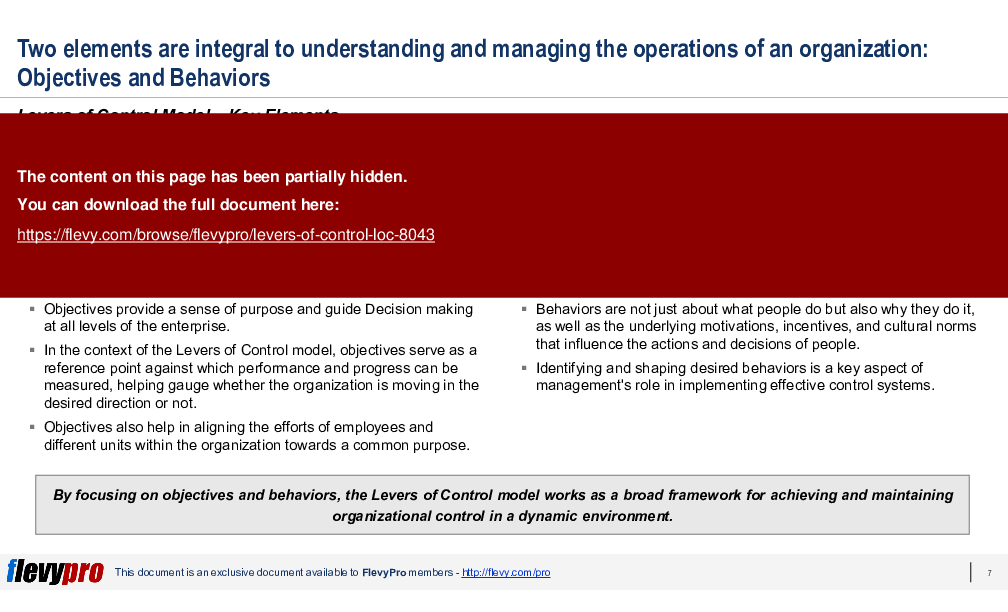
This PPT slide outlines the Levers of Control model, focusing on 2 critical elements: Objectives and Behaviors. Objectives represent the strategic goals organizations aim to achieve, guiding decision-making and providing a framework for measuring performance and progress. They align efforts across various units, ensuring a common purpose. Behaviors pertain to the actions and decisions of individuals within the organization, emphasizing the interactions among employees, managers, and external stakeholders. This section explores the motivations and cultural norms that shape these behaviors, which are essential for implementing effective control systems. A balanced focus on both objectives and behaviors is vital for maintaining organizational control in a dynamic environment.
This PPT slide presents a case study of General Electric (GE) and its implementation of the Levers of Control framework to enhance organizational performance. Under Jack Welch's leadership, GE fostered a performance-driven culture to address challenges in its financial services division. The framework includes 4 key areas: Belief Systems, Boundary Systems, Interactive Control Systems, and Diagnostic Control Systems.
Belief Systems emphasize a cultural shift towards excellence and customer focus. Boundary Systems establish clear performance thresholds, leading to the reorganization or divestment of underperforming units while reinforcing ethical conduct. Interactive Control Systems involve "Session C" reviews that challenge assumptions and maintain alignment. Finally, Diagnostic Control Systems highlight GE's adoption of the Six Sigma Quality Management program to identify and eliminate defects, supported by financial performance metrics. This structured approach facilitated a robust performance culture, driving efficiency and excellence.
Diagnostic Control Systems are essential for organizations pursuing cost leadership strategies, serving as management tools to monitor performance against standards. They track metrics like goals, revenue growth, and market share, ensuring outputs align with cost targets and operational efficiency. These systems are best suited for large, mature organizations with consistent processes and measurable objectives. They align with results-oriented management styles, such as Management by Objectives (MBO), emphasizing the importance of feedback mechanisms for adjusting inputs and processes. However, over-reliance on Diagnostic Control Systems can pressure employees and undermine other controls, highlighting the need for a balanced approach to management controls. Overall, these systems drive efficiency and cost control within organizations.
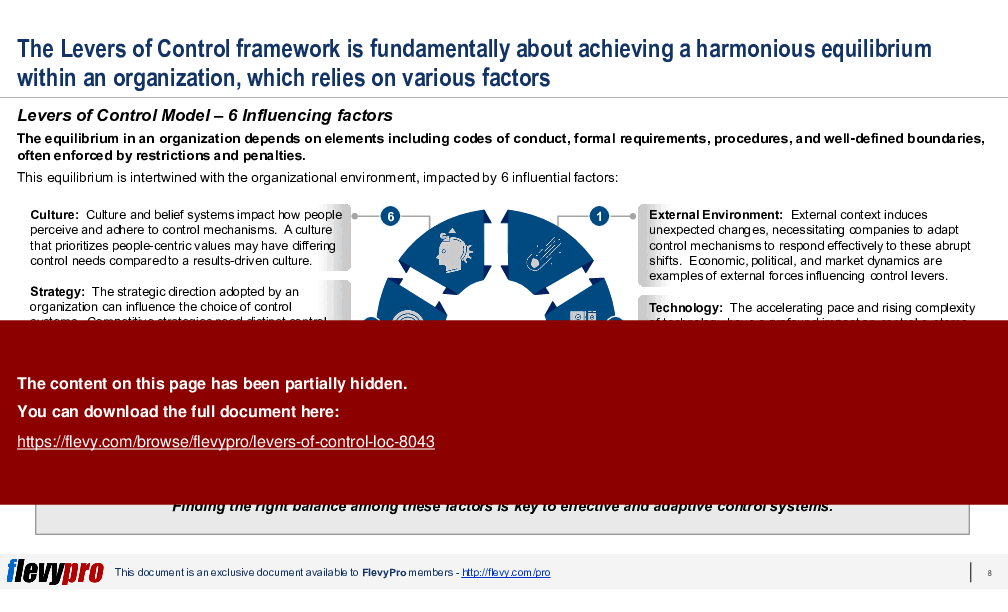
The "Levers of Control Model" identifies 6 critical factors influencing organizational control mechanisms: Culture, Strategy, Scope, External Environment, Technology, and Organizational Structure. Culture shapes employee engagement with control systems, necessitating tailored approaches based on cultural values. Strategy dictates the choice of control systems, aligning them with competitive objectives. Scope highlights challenges in large organizations, requiring customized control systems for different divisions. The External Environment emphasizes the need for agility in control mechanisms to adapt to market dynamics. Rapid technological evolution demands constant adjustments in control systems. Finally, Organizational Structure affects power distribution and the implementation of control levers. Balancing these factors is essential for effective and adaptive control systems that drive performance.
Belief systems within organizations are essential for fostering innovation and adaptability to evolving customer demands. They serve as a lever that communicates core values, mission, and purpose, guiding employee behavior to align with company objectives. These systems articulate commitments to stakeholders, including employees and customers. Organizations aiming to cultivate strong cultures, particularly startups or those undergoing transformation, benefit from well-defined belief systems that unify actions under shared ideals. Belief systems thrive in participative and transformational management environments, enhancing employee engagement and motivation, which leads to improved performance and innovation. Additionally, they are suitable for differentiation strategies that rely on innovation and robust company cultures, indicating that clear belief systems are vital for organizations seeking to stand out in competitive markets.
Source: Best Practices in Leadership, Controls and Planning, Control PowerPoint Slides: Levers of Control (LoC) PowerPoint (PPTX) Presentation Slide Deck, LearnPPT Consulting
This framework is developed by a team of former McKinsey and Big 4 consultants. The presentation follows the headline-body-bumper slide format used by global consulting firms.
For $10.00 more, you can download this document plus 2 more FlevyPro documents. That's just $13 each.
ABOUT FLEVYPRO
This document is part of the FlevyPro Library, a curated knowledge base of documents for our FlevyPro subscribers.

FlevyPro is a subscription service for on-demand business frameworks and analysis tools. FlevyPro subscribers receive access to an exclusive library of curated business documents—business framework primers, presentation templates, Lean Six Sigma tools, and more—among other exclusive benefits.
The average daily rate of a McKinsey consultant is $6,625 (not including expenses). The average price of a Flevy document is $65.
Trusted by over 10,000+ Client Organizations
Since 2012, we have provided business templates to over 10,000 businesses and organizations of all sizes, from startups and small businesses to the Fortune 100, in over 130 countries.
"One of the great discoveries that I have made for my business is the Flevy library of training materials.
As a Lean Transformation Expert, I am always making presentations to clients on a variety of topics: Training, Transformation, Total Productive Maintenance, Culture, Coaching, Tools, Leadership Behavior, etc. Flevy
It is well worth the money to purchase these presentations. Sure, I have the knowledge and information to make my point. It is another thing to create a presentation that captures what I want to say. Flevy has saved me countless hours of preparation time that is much better spent with implementation that will actually save money for my clients.
"
– Ed Kemmerling, Senior Lean Transformation Expert at PMG
"If you are looking for great resources to save time with your business presentations, Flevy is truly a value-added resource. Flevy has done all the work for you and we will continue to utilize Flevy as a source to extract up-to-date information and data for our virtual and onsite presentations!"
– Debbi Saffo, President at The NiKhar Group
"FlevyPro has been a brilliant resource for me, as an independent growth consultant, to access a vast knowledge bank of presentations to support my work with clients. In terms of RoI, the value I received from the very first presentation I downloaded paid for my subscription many times over! The
quality of the decks available allows me to punch way above my weight – it's like having the resources of a Big 4 consultancy at your fingertips at a microscopic fraction of the overhead.
"
– Roderick Cameron, Founding Partner at SGFE Ltd
"I am extremely grateful for the proactiveness and eagerness to help and I would gladly recommend the Flevy team if you are looking for data and toolkits to help you work through business solutions."
– Trevor Booth, Partner, Fast Forward Consulting
"I have found Flevy to be an amazing resource and library of useful presentations for lean sigma, change management and so many other topics. This has reduced the time I need to spend on preparing for my performance consultation. The library is easily accessible and updates are regularly provided. A wealth of great information."
– Cynthia Howard RN, PhD, Executive Coach at Ei Leadership
"[Flevy] produces some great work that has been/continues to be of immense help not only to myself, but as I seek to provide professional services to my clients, it gives me a large "tool box" of resources that are critical to provide them with the quality of service and outcomes they are expecting."
– Royston Knowles, Executive with 50+ Years of Board Level Experience
"Last Sunday morning, I was diligently working on an important presentation for a client and found myself in need of additional content and suitable templates for various types of graphics. Flevy.com proved to be a treasure trove for both content and design at a reasonable price, considering the time I
saved. I encountered a download issue during the ordering process. However, a quick email to Flevy's support team, even on a Sunday (!!!), resulted in assistance within less than an hour, allowing me to download the content I needed. Fantastic job, Flevy! I give 5 stars for both content/price and customer service. Thank you!
"
– M. E., Chief Commercial Officer, International Logistics Service Provider
"As a consultant requiring up to date and professional material that will be of value and use to my clients, I find Flevy a very reliable resource.
The variety and quality of material available through Flevy offers a very useful and commanding source for information. Using Flevy saves me time, enhances my expertise and ends up being a good decision."
Download our free compilation of 50+ slides and templates on Organizational Design, Change Management, and Corporate Culture. Methodologies include ADKAR, Burke-Litwin Change Model, McKinsey 7-S, Competing Values Framework, etc.