Your AI assistant becomes a Flevy-powered consultant, with direct access to our full library of frameworks, templates, and case studies. Free to connect. No account, sign-in, or API key required.
STEP 1 · CHOOSE YOUR ASSISTANT
STEP 2 · CONNECT
1
No copying needed. Flevy is in the official Claude Connectors Directory.
2
Click the button below, then click Connect on the Flevy listing.
This framework is developed by a team of former McKinsey and Big 4 consultants. The presentation follows the headline-body-bumper slide format used by global consulting firms.
Editor Summary
25-slide PowerPoint on Leavitt's Diamond by LearnPPT Consulting, explaining Harold J.
Read moreLeavitt’s 1965 systems model for Change Management and its 4 interdependent components: Structure, Tasks, People, and Technology. The deck outlines how isolated change efforts can fail, shows how analyzing mutual interactions informs implementation strategy, and includes slide templates and key questions for practitioner use. Sold as a digital download on Flevy; intended for change managers, HR leaders, executives, and management consultants conducting organizational change.
Use this deck when an organization is launching reengineering, restructuring, or other change initiatives and needs a systems-based method to avoid isolated, failing interventions.
Change managers conducting impact analysis across Structure, Tasks, People, and Technology to inform implementation sequencing.
HR business partners mapping role and people changes while assessing downstream effects on tasks and structure.
CIOs evaluating how technology changes will affect tasks and people during rollout.
Management consultants preparing client presentations that connect diagnostic findings to a change strategy using ready-made slides.
The four-component, systems-based approach reflects systems-thinking practice in organizational change by requiring analysis of mutual interactions among components.
An epidemic of Change is happening globally—reengineering, restructuring, and revamping! Workplaces seem to be launching one Change initiative after another. Yet, the hard truth is that many Change initiatives fail.
Change initiatives fail because of the way organizations view Change. Often, Change is seen as an isolated process. Organizations tend to focus on only one part of the organization in isolation. This can be a fatal error.
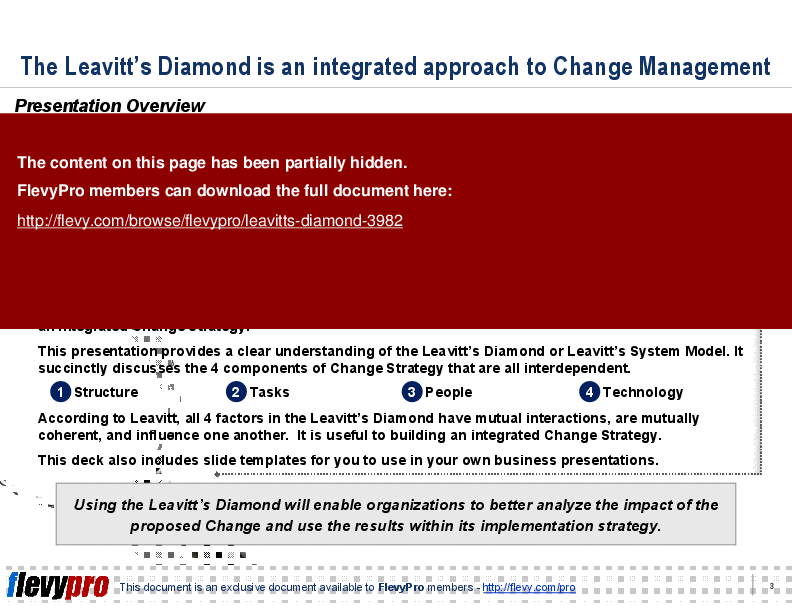
Everything in an organization is connected, and changing one piece can impact another. Hence, Change can only be successful if all interconnected pieces are considered. In 1965, Harold J. Leavitt designed an integrated approach to Change Management, known as Leavitt's Diamond. This is a framework for understanding the connection between the key factors in an organization, and building an integrated Change Strategy. Using the Leavitt's Diamond will enable organizations to better analyze the impact of the proposed Change and use the results within its implementation strategy.
This presentation provides a clear understanding of the Leavitt's Diamond or Leavitt's System Model. It succinctly discusses the 4 components of Change Strategy that are all interdependent.
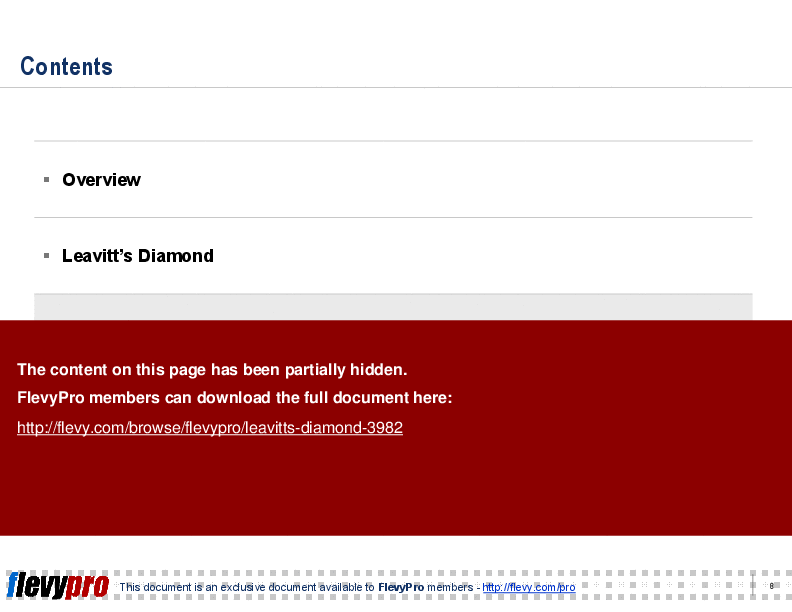
1. Structure
2. Tasks
3. People
4. Technology
According to Leavitt, all 4 factors in the Leavitt's Diamond have mutual interactions, are mutually coherent, and influence one another. It is useful to building an integrated Change Strategy.
This deck also includes slide templates for you to use in your own business presentations.
This presentation delves into the practical application of Leavitt's Diamond, emphasizing the criticality of analyzing each component—Structure, Tasks, People, and Technology—before implementing changes. It provides step-by-step guidance on defining and managing these elements to ensure a holistic approach to Change Management. The deck includes actionable templates and key questions to facilitate your strategic planning and execution. This resource is essential for executives aiming to drive effective organizational transformation.
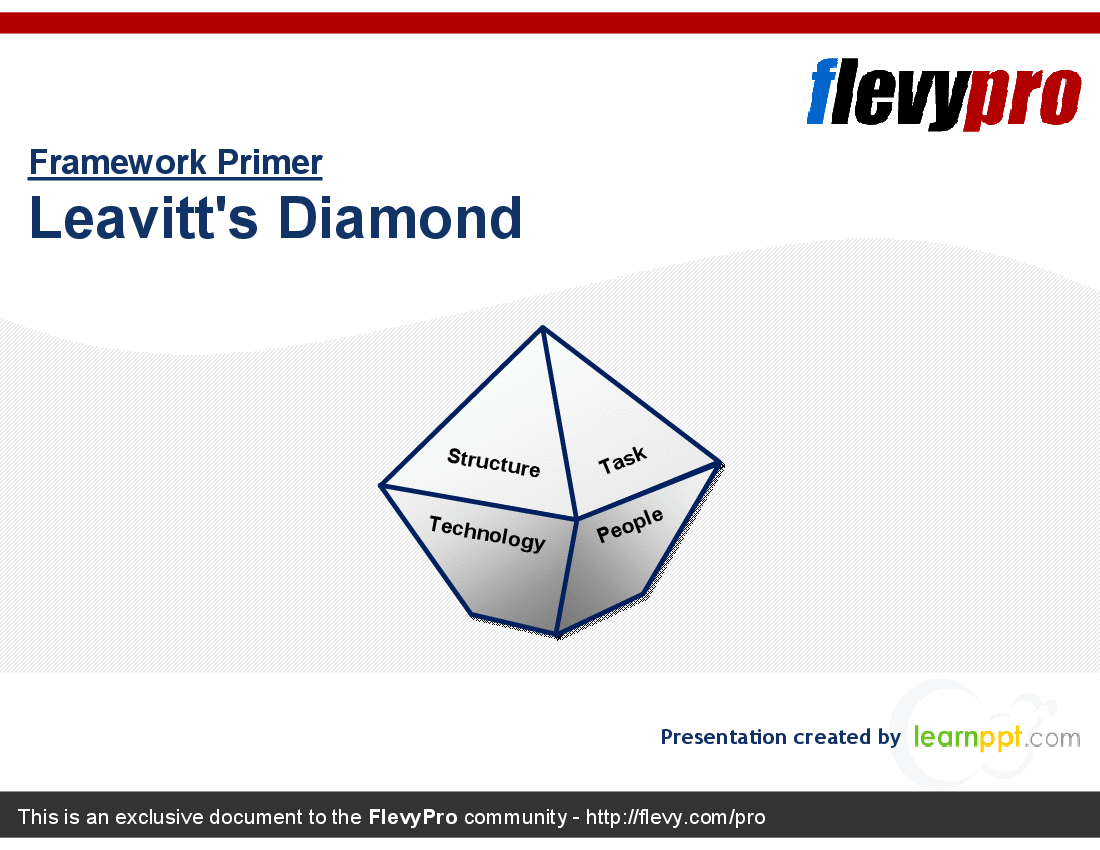
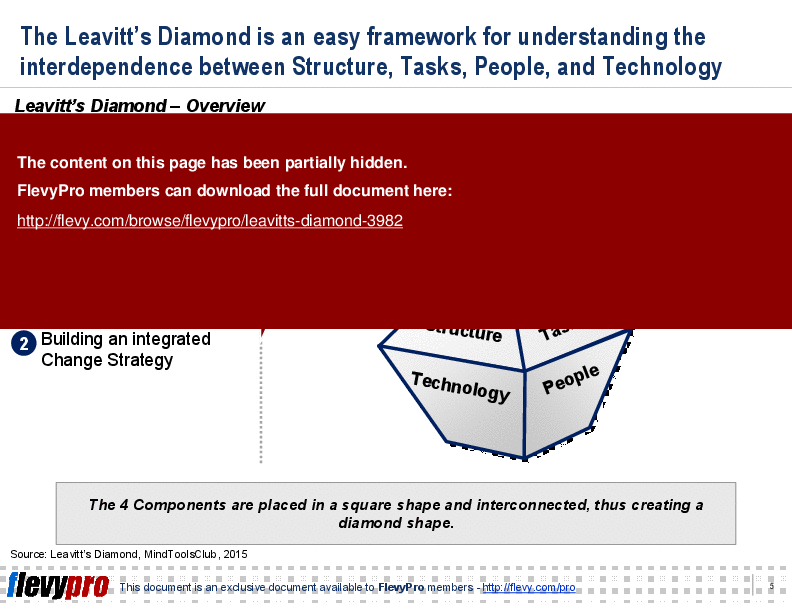
Leavitt's Diamond, developed by Harold J. Leavitt in 1965, is a systems model for Change Management that frames organizations as 4 interconnected elements. It is designed to show how changes to one element affect the others, centering on Structure, Tasks, People, and Technology as the 4 components.
Why do change initiatives often fail according to this model?
The model explains failures as a consequence of treating change as isolated rather than systemic; focusing on one element without assessing impacts on others can create unintended consequences. Successful change requires considering mutual interactions among the model’s 4 components.
What are the 4 components of Leavitt's Diamond and why analyze each?
The 4 components are Structure, Tasks, People, and Technology. Analyzing each ensures coherence across the organization and helps predict cross-effects before implementation, reducing the risk of initiatives collapsing due to overlooked interdependencies among the 4 components.
How can I use the model to build an integrated change strategy?
Use the model to map proposed changes against each of the 4 components, identify interdependencies and likely impacts, then incorporate those findings into sequencing and implementation decisions. Flevy's Leavitt's Diamond provides step-by-step guidance, key questions, and presentation templates to support that process.
What should I look for when choosing a Change Management template based on this model?
Choose templates that prompt impact analysis across Structure, Tasks, People, and Technology, include diagnostic questions for each area, and allow you to translate findings into implementation steps and stakeholder slides. The essential attribute is explicit mapping to the 4 components.
Will prebuilt slides and templates save time when preparing a change presentation?
Prebuilt slides reduce preparation time by providing ready formats for diagnostic mapping, key questions, and implementation planning, helping teams focus on analysis rather than slide design. Flevy's Leavitt's Diamond package includes slide templates within a 25-slide deck.
I’ve had repeated failed initiatives; how can applying this model change my approach?
Applying the model broadens diagnosis beyond single-point fixes, forcing assessment of how proposed changes to tasks, technology, or structure will affect people and other elements, which can alter sequencing and mitigation plans. Practical aids such as key questions and templates support that broader analysis.
How does the model treat Technology in organizational change?
Technology is one of the 4 interdependent components and should be analyzed for how it changes tasks, affects roles and skills (people), and interacts with organizational structure; neglecting these links can undermine implementation, since Technology is treated as a core component alongside Structure, Tasks, and People.
This PPT slide template outlines the impact of organizational change on productivity through 3 components: Change in Tasks, Change in Structure, and Change in Technology.
Change in Tasks requires employees to adapt to new responsibilities, necessitating motivation and potential training to ensure readiness for different tasks.
Change in Structure involves restructuring divisions and job positions, often introducing a new TAR package—Tasks, Authorities, and Responsibilities. Effective communication and training on new roles are essential for a smooth transition and improved performance.
Change in Technology focuses on integrating new tools and systems, demanding extensive training for effective operation. Hiring experienced individuals can facilitate this transition.
Managing these components is crucial for maintaining optimal organizational function during change initiatives.
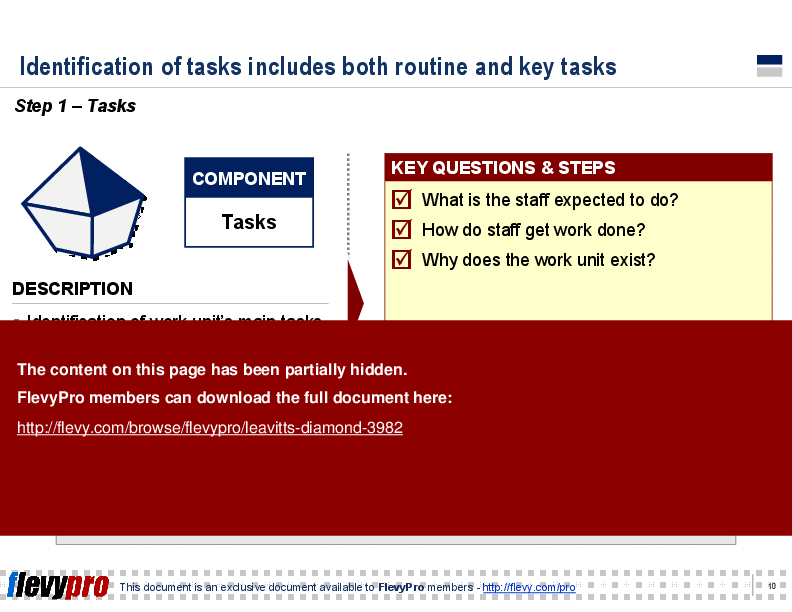
This PPT slide template outlines the first step in organizational analysis, focusing on defining 4 key components: tasks, people, structure, and technology. Identifying the main tasks establishes the operational focus, while defining the people involved allows for evaluating skills, roles, and responsibilities. Determining how people are grouped addresses organizational structure and dynamics, impacting efficiency and collaboration. Identifying the technology in use is critical as it influences task execution and overall effectiveness. By defining these components, organizations gain insights for informed analysis of potential changes, identifying strengths and weaknesses, and creating a roadmap for future improvements.
This PPT slide template outlines a systematic approach to identifying technology within a work unit, emphasizing its role in supporting business functions. Key steps include listing essential equipment and processes, such as computer systems, software, and communication devices, to enhance operational efficiency. The second step focuses on identifying tools for implementing changes, including technology, training materials, and seminars. A thorough understanding of existing technology serves as a benchmark for assessing necessary organizational changes. This framework helps executives align technology with business processes and underscores the need for comprehensive training and support during transitions, ensuring technological investments drive performance and achieve strategic objectives.
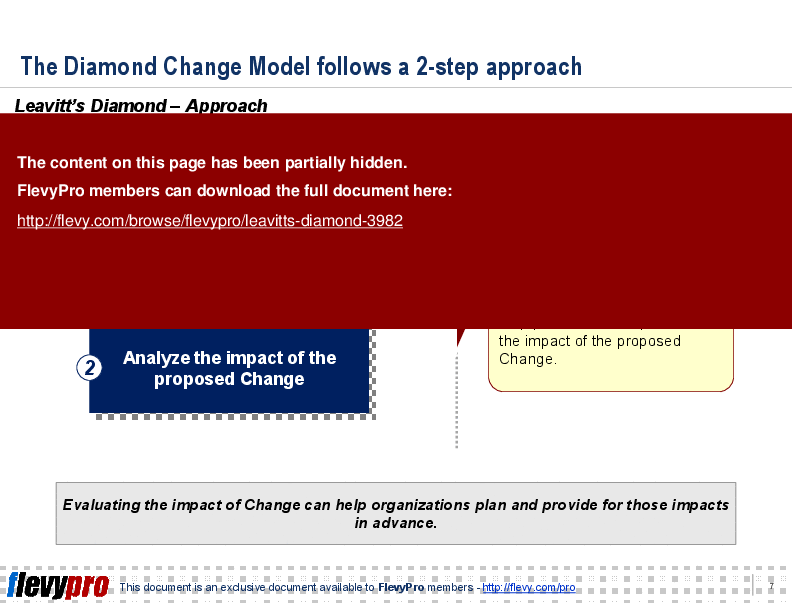
This PPT slide template outlines a structured approach to change management using Leavitt's Diamond Model, consisting of a two-step process. The first step involves defining the model's components: tasks, people, structure, and technology, which are essential for understanding organizational dynamics. The second step analyzes the impact of proposed changes, evaluating how modifications in one area affect others. This analysis is vital for assessing implications, whether for minor process redesigns or significant organizational restructures. Planning for these impacts proactively helps mitigate risks associated with change initiatives, enabling leaders to make informed decisions and prepare their teams effectively. Leavitt's Diamond Model serves as a practical tool for navigating organizational change.
Defining people within a work unit is essential for successful organizational change. This involves identifying individuals and their capabilities, which influences effectiveness in the workplace. Key questions address beliefs, attitudes, behaviors, and responses to change, allowing for tailored strategies that resonate with the workforce. Understanding skill levels and training is vital for aligning tasks with capabilities. Additionally, recognizing motivational factors and work culture informs leadership decisions and change initiatives. The skills and attitudes of individuals are pivotal to the success of any change effort, making this slide a foundational tool for navigating organizational dynamics.
This PPT slide template outlines the critical role of managing technological change within organizations, focusing on 3 components: People, Tasks, and Structure. The "People" component emphasizes hiring staff with specific qualifications to leverage new technologies effectively. The "Tasks" component highlights how existing employees, especially in customer service, may take on additional responsibilities due to technological advancements, necessitating investment in robust systems like CRM. The "Structure" component addresses potential organizational restructuring, where departments may merge or become obsolete as a result of technology integration. Automation and streamlined processes are essential for maintaining productivity during these changes.
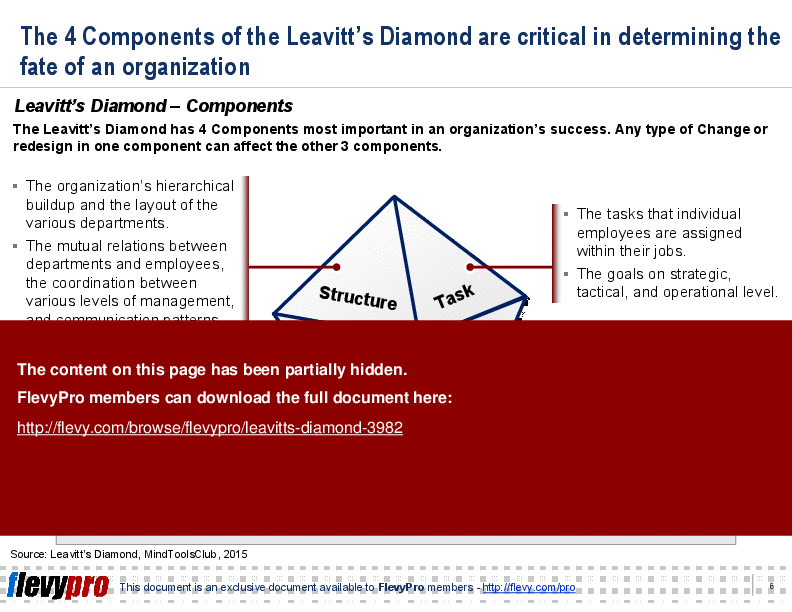
Leavitt’s Diamond framework outlines 4 critical components: Structure, Task, Technology, and People. Structure refers to the hierarchical arrangement of departments and their interactions, essential for effective communication. Task involves specific assignments that align individual efforts with organizational goals, addressing strategic, tactical, and operational objectives. Technology encompasses tools and systems, including machines and software, that enhance productivity and efficiency. People represent the workforce, highlighting the importance of skills, knowledge, and competencies in achieving goals. Balancing these components is crucial during organizational change, as alterations in one area can ripple through the others, impacting overall success.
Source: Best Practices in Change Management PowerPoint Slides: Leavitt's Diamond PowerPoint (PPT) Presentation Slide Deck, LearnPPT Consulting
This framework is developed by a team of former McKinsey and Big 4 consultants. The presentation follows the headline-body-bumper slide format used by global consulting firms.
For $10.00 more, you can download this document plus 2 more FlevyPro documents. That's just $13 each.
ABOUT FLEVYPRO
This document is part of the FlevyPro Library, a curated knowledge base of documents for our FlevyPro subscribers.
FlevyPro is a subscription service for on-demand business frameworks and analysis tools. FlevyPro subscribers receive access to an exclusive library of curated business documents—business framework primers, presentation templates, Lean Six Sigma tools, and more—among other exclusive benefits.
The average daily rate of a McKinsey consultant is $6,625 (not including expenses). The average price of a Flevy document is $65.
Trusted by over 10,000+ Client Organizations
Since 2012, we have provided business templates to over 10,000 businesses and organizations of all sizes, from startups and small businesses to the Fortune 100, in over 130 countries.
"Flevy is our 'go to' resource for management material, at an affordable cost. The Flevy library is comprehensive and the content deep, and typically provides a great foundation for us to further develop and tailor our own service offer."
– Chris McCann, Founder at Resilient.World
"Last Sunday morning, I was diligently working on an important presentation for a client and found myself in need of additional content and suitable templates for various types of graphics. Flevy.com proved to be a treasure trove for both content and design at a reasonable price, considering the time I
saved. I encountered a download issue during the ordering process. However, a quick email to Flevy's support team, even on a Sunday (!!!), resulted in assistance within less than an hour, allowing me to download the content I needed. Fantastic job, Flevy! I give 5 stars for both content/price and customer service. Thank you!
"
– M. E., Chief Commercial Officer, International Logistics Service Provider
"As a young consulting firm, requests for input from clients vary and it's sometimes impossible to provide expert solutions across a broad spectrum of requirements. That was before I discovered Flevy.com.
Through subscription to this invaluable site of a plethora of topics that are key and crucial to consulting, I
have been able to exceed expectations and deliver quality advice and solutions to my clients. The quality and expertise of the authors are exemplary and gives me great confidence to use as part of my service offerings.
I highly recommend this company for any consultant wanting to apply international best practice standards in their service offerings.
"
– Nishi Singh, Strategist and MD at NSP Consultants
"I have used Flevy services for a number of years and have never, ever been disappointed. As a matter of fact, David and his team continue, time after time, to impress me with their willingness to assist and in the real sense of the word. I have concluded in fact
that it is not at all just a repository of documents/resources but, in the way that David and his team manage the firm, it is like dealing with consultants always ready to assist, advise and direct you to what you really need, and they always get it right.
I am an international hospitality accomplished senior executive who has worked and lived during the past 35 years in 23 countries in 5 continents and I can humbly say that I know what customer service is, trust me.
Aside from the great and professional service that Flevy's team provide, their wide variety of material is of utmost great quality, professionally put together and most current.
Well done Flevy, keep up the great work and I look forward to continue working with you in the future and to recommend you to a variety of colleagues around the world.
"
– Roberto Pelliccia, Senior Executive in International Hospitality
"As a small business owner, the resource material available from FlevyPro has proven to be invaluable. The ability to search for material on demand based our project events and client requirements was great for me and proved very beneficial to my clients. Importantly, being able to easily edit and tailor
the material for specific purposes helped us to make presentations, knowledge sharing, and toolkit development, which formed part of the overall program collateral. While FlevyPro contains resource material that any consultancy, project or delivery firm must have, it is an essential part of a small firm or independent consultant's toolbox.
"
– Michael Duff, Managing Director at Change Strategy (UK)
"As a niche strategic consulting firm, Flevy and FlevyPro frameworks and documents are an on-going reference to help us structure our findings and recommendations to our clients as well as improve their clarity, strength, and visual power. For us, it is an invaluable resource to increase our impact and value."
– David Coloma, Consulting Area Manager at Cynertia Consulting
"As a consulting firm, we had been creating subject matter training materials for our people and found the excellent materials on Flevy, which saved us 100's of hours of re-creating what already exists on the Flevy materials we purchased."
– Michael Evans, Managing Director at Newport LLC
"As a consultant requiring up to date and professional material that will be of value and use to my clients, I find Flevy a very reliable resource.
The variety and quality of material available through Flevy offers a very useful and commanding source for information. Using Flevy saves me time, enhances my expertise and ends up being a good decision."

 Click main image to view in full screen. Unlock all 10 preview images: