
This framework is developed by a team of former McKinsey and Big 4 consultants. The presentation follows the headline-body-bumper slide format used by global consulting firms.
Explore Lean Product Development & Innovation, crafted by ex-McKinsey and Big 4 consultants. Enhance creativity, reduce costs, and elevate quality with proven methodologies. Lean Product Development & Innovation is a 27-slide PPT PowerPoint presentation slide deck (PPTX) available for immediate download upon purchase.
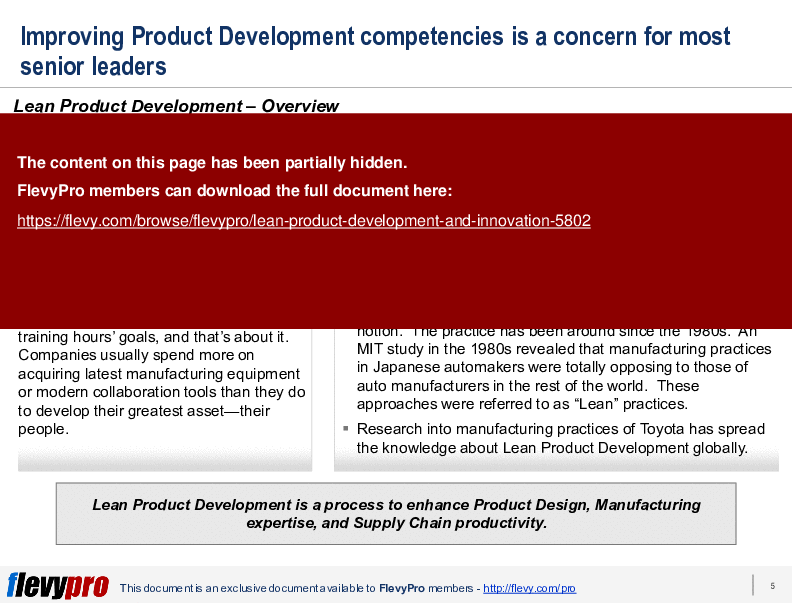
Organizations are eager to understand Lean principles and practices and their impact on enhancing creativity, reducing costs, and raising the quality bar. However, their approach to developing human resources does not go beyond staffing the cream from the leading global educational institutes and sending their people to attend workshops. Companies usually spend more on acquiring latest manufacturing equipment or modern collaboration tools than they do to develop their greatest asset—their people.
Lean Product Development concept isn't a new notion. The practice has been around since the 1980s. An MIT study in the 1980s revealed that manufacturing practices in Japanese automakers were totally opposing to those of auto manufacturers in the rest of the world. These approaches were referred to as "Lean" practices.
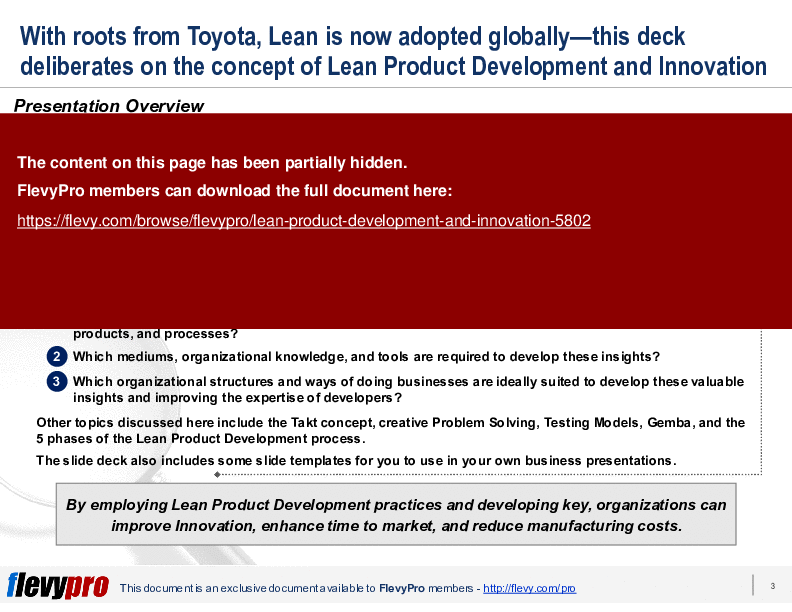
By employing Lean Product Development practices and developing key, organizations can improve Innovation, enhance time to market, and reduce manufacturing costs.
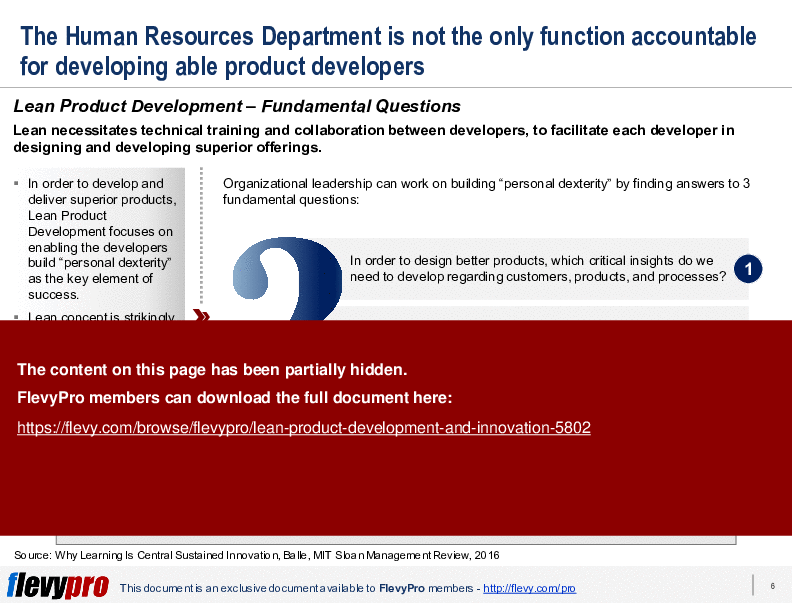
This presentation provides a detailed overview of the 3 fundamental questions that leadership should seek answers to before embarking on the Lean Product Development journey:
1. In order to design better products, which critical insights do we need to develop regarding customers, products, and processes?
2. Which mediums, organizational knowledge, and tools are required to develop these insights?
3. Which organizational structures and ways of doing businesses are ideally suited to develop these valuable insights and improving the expertise of developers?
Other topics discussed here include the Takt concept, creative Problem Solving, Testing Models, Gemba, and the 5 phases of the Lean Product Development process.
The slide deck also includes some slide templates for you to use in your own business presentations.
The presentation emphasizes the importance of "Action Learning" and underscores the significance of technical problem-solving skills. It also highlights the role of standards in enabling development teams to make optimal choices based on past experiences.
Lean Product Development is essential for cultivating capable product developers, emphasizing that superior product creation requires both technical skills and personal dexterity. This approach challenges the notion that only the Human Resources Department should develop designers’ capabilities, advocating for cross-organizational collaboration.
Three key questions guide leadership in enhancing product design: identifying essential insights about customers, products, and processes; determining the necessary mediums, knowledge, and tools for gathering these insights; and examining organizational structures and business practices that support insight development and developer expertise. Addressing these questions can lead to the creation of skilled product designers and developers, enhancing overall product development capabilities and fostering innovation.
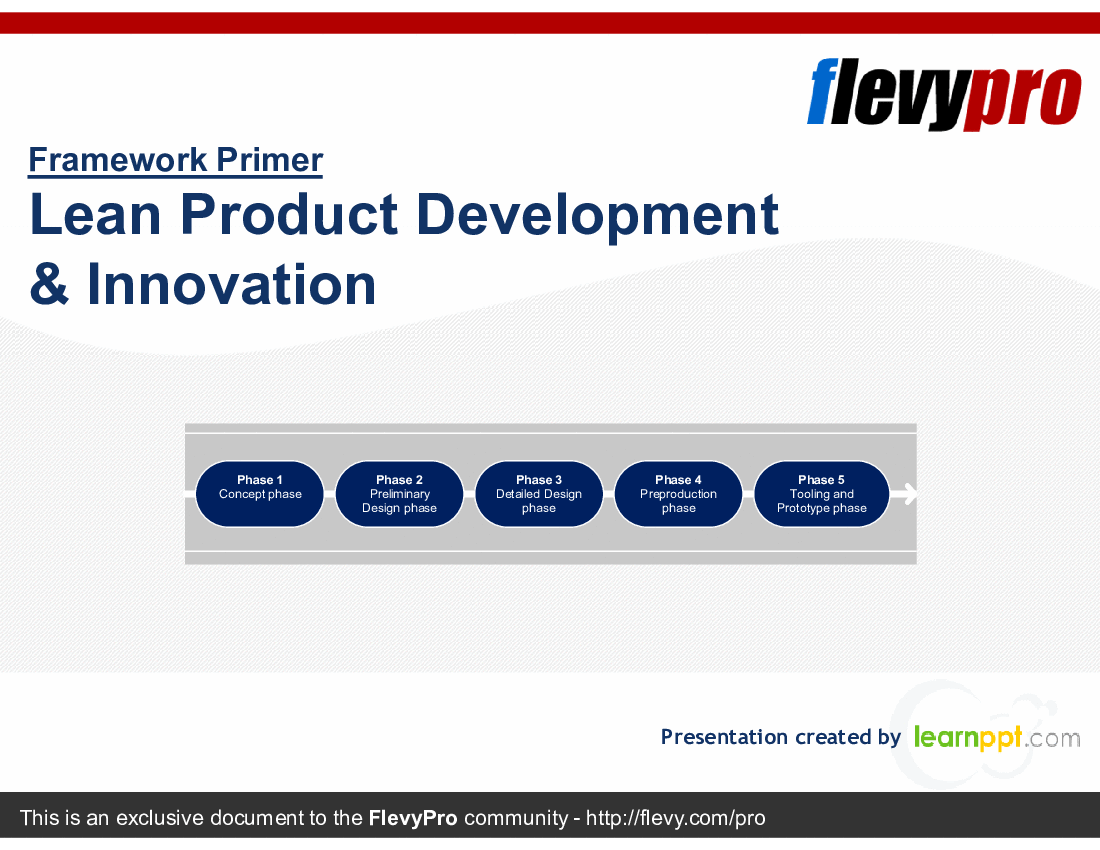
This PPT slide outlines critical components for successful new product development, focusing on the Lean Product Development process, which consists of 5 interconnected phases: Concept, Preliminary Design, Detailed Design, Preproduction, and Tooling and Prototype. Each phase builds on insights from the previous one, creating a continuous learning cycle essential for collaboration and knowledge enhancement among developers. The development process requires active engagement and knowledge sharing, maximizing the potential of each phase and ensuring insights are integrated into subsequent stages. Organizations aiming to innovate must establish supportive structures and processes that encourage learning, thereby enhancing developer capabilities and improving product development outcomes.
This PPT slide outlines the phases of product development, focusing on the Detailed Design and Preproduction phases. In the Detailed Design phase, gathering necessary knowledge is critical to advance or abandon ideas, with alternate solutions required if initial designs fail to meet expectations. High standards enhance collaboration and minimize uncertainties. The Preproduction phase organizes manufacturing and supply chain processes, with the chief engineer acting as the product architect overseeing technical specifications. This phase fosters a culture of learning and collaboration across departments, ensuring alignment among marketing, manufacturing, and purchasing. Robust organizational structures are essential for effective learning and collaboration in this phase, streamlining product development and enabling teams to adapt and innovate.
This PPT slide focuses on testing models within Lean Product Development, highlighting the importance of simulations, sketches, and 3-D representations for assessing design performance limits and viability. Quality testing models facilitate timely creation of effective solutions, evaluate feasibility, and analyze concepts swiftly. However, overreliance on models can lead to issues; thus, developers must rigorously assess models against real-world scenarios. Experienced designers should identify weaknesses in designs, supporting the learning of less experienced developers. Computer simulations illustrate design behavior,, but the Gemba concept emphasizes observing designs in context to consider critical variables. Prototypes are essential for understanding product construction, and early physical testing verifies design specifications. Balancing virtual models with practical testing and real-world validation is crucial for successful product development.
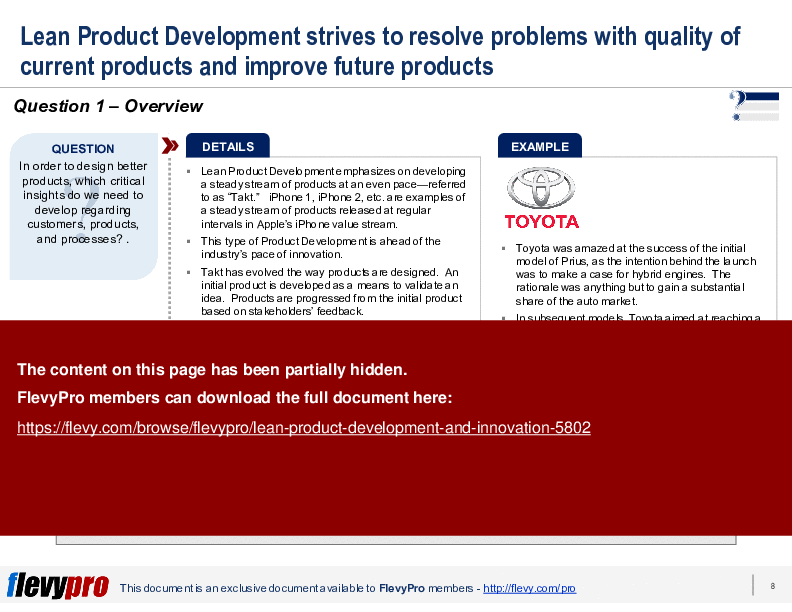
This PPT slide outlines Lean Product Development principles, focusing on "Takt," which ensures timely product releases. Maintaining a steady stream of launches is crucial, as illustrated by Apple's iPhone series, to adapt to rapid industry innovation. Takt transforms product design through iterative development, where initial products are refined based on stakeholder feedback, enhancing offerings to meet customer needs while reducing manufacturing costs. An example from Toyota's Prius demonstrates these principles, showing how initial success can lead to market share growth through hybrid technology adoption. Lean Product Development emphasizes evolving existing products to align with customer demands and market trends, aiding organizations in innovation while managing costs and improving quality.
Source: Best Practices in Innovation, Lean Management, Product Management PowerPoint Slides: Lean Product Development & Innovation PowerPoint (PPTX) Presentation Slide Deck, LearnPPT Consulting
This framework is developed by a team of former McKinsey and Big 4 consultants. The presentation follows the headline-body-bumper slide format used by global consulting firms.
For $10.00 more, you can download this document plus 2 more FlevyPro documents. That's just $13 each.
ABOUT FLEVYPRO
This document is part of the FlevyPro Library, a curated knowledge base of documents for our FlevyPro subscribers.

FlevyPro is a subscription service for on-demand business frameworks and analysis tools. FlevyPro subscribers receive access to an exclusive library of curated business documents—business framework primers, presentation templates, Lean Six Sigma tools, and more—among other exclusive benefits.
Since 2012, we have provided business templates to over 10,000 businesses and organizations of all sizes, from startups and small businesses to the Fortune 100, in over 130 countries.
"FlevyPro has been a brilliant resource for me, as an independent growth consultant, to access a vast knowledge bank of presentations to support my work with clients. In terms of RoI, the value I received from the very first presentation I downloaded paid for my subscription many times over! The
quality of the decks available allows me to punch way above my weight – it's like having the resources of a Big 4 consultancy at your fingertips at a microscopic fraction of the overhead.
"
– Roderick Cameron, Founding Partner at SGFE Ltd
"As a young consulting firm, requests for input from clients vary and it's sometimes impossible to provide expert solutions across a broad spectrum of requirements. That was before I discovered Flevy.com.
Through subscription to this invaluable site of a plethora of topics that are key and crucial to consulting, I
have been able to exceed expectations and deliver quality advice and solutions to my clients. The quality and expertise of the authors are exemplary and gives me great confidence to use as part of my service offerings.
I highly recommend this company for any consultant wanting to apply international best practice standards in their service offerings.
"
– Nishi Singh, Strategist and MD at NSP Consultants
"I have used FlevyPro for several business applications. It is a great complement to working with expensive consultants. The quality and effectiveness of the tools are of the highest standards."
– Moritz Bernhoerster, Global Sourcing Director at Fortune 500
"My FlevyPro subscription provides me with the most popular frameworks and decks in demand in today’s market. They not only augment my existing consulting and coaching offerings and delivery, but also keep me abreast of the latest trends, inspire new products and service offerings for my practice, and educate me
in a fraction of the time and money of other solutions. I strongly recommend FlevyPro to any consultant serious about success.
"
– Bill Branson, Founder at Strategic Business Architects
"As a niche strategic consulting firm, Flevy and FlevyPro frameworks and documents are an on-going reference to help us structure our findings and recommendations to our clients as well as improve their clarity, strength, and visual power. For us, it is an invaluable resource to increase our impact and value."
– David Coloma, Consulting Area Manager at Cynertia Consulting
"If you are looking for great resources to save time with your business presentations, Flevy is truly a value-added resource. Flevy has done all the work for you and we will continue to utilize Flevy as a source to extract up-to-date information and data for our virtual and onsite presentations!"
– Debbi Saffo, President at The NiKhar Group
"The wide selection of frameworks is very useful to me as an independent consultant. In fact, it rivals what I had at my disposal at Big 4 Consulting firms in terms of efficacy and organization."
– Julia T., Consulting Firm Owner (Former Manager at Deloitte and Capgemini)
"As a small business owner, the resource material available from FlevyPro has proven to be invaluable. The ability to search for material on demand based our project events and client requirements was great for me and proved very beneficial to my clients. Importantly, being able to easily edit and tailor
the material for specific purposes helped us to make presentations, knowledge sharing, and toolkit development, which formed part of the overall program collateral. While FlevyPro contains resource material that any consultancy, project or delivery firm must have, it is an essential part of a small firm or independent consultant's toolbox.
"
– Michael Duff, Managing Director at Change Strategy (UK)
Save with Bundles
This document is available as part of the following discounted bundle(s):
Download our free compilation of 50+ Strategy & Transformation slides and templates. Frameworks include McKinsey 7-S, Balanced Scorecard, Disruptive Innovation, BCG Curve, and many more.