
Kano Customer Satisfaction Model   28-slide PPT PowerPoint presentation slide deck (PPT)
$29.00

Kano Customer Satisfaction Model (28-slide PPT PowerPoint presentation slide deck (PPT)) Preview Image
Log in to unlock full preview.
Kano Customer Satisfaction Model (28-slide PPT PowerPoint presentation slide deck (PPT)) Preview Image
Arrow   Click main image to view in full screen.

Kano Customer Satisfaction Model (PowerPoint PPT Slide Deck)

PowerPoint (PPT) 28 Slides FlevyPro Document

#3 in Customer Satisfaction $29.00
FlevyPro price: FREE (included in subscription)
This framework is developed by a team of former McKinsey and Big 4 consultants. The presentation follows the headline-body-bumper slide format used by global consulting firms.
Add to Cart


Immediate download
Free lifetime updates

PRODUCT STRATEGY PPT DESCRIPTION

Editor Summary 28-slide PowerPoint presentation of the Kano Customer Satisfaction Model by PPT Lab, explaining the 1980s Kano theory and its 2-dimensional Satisfaction vs. Read more

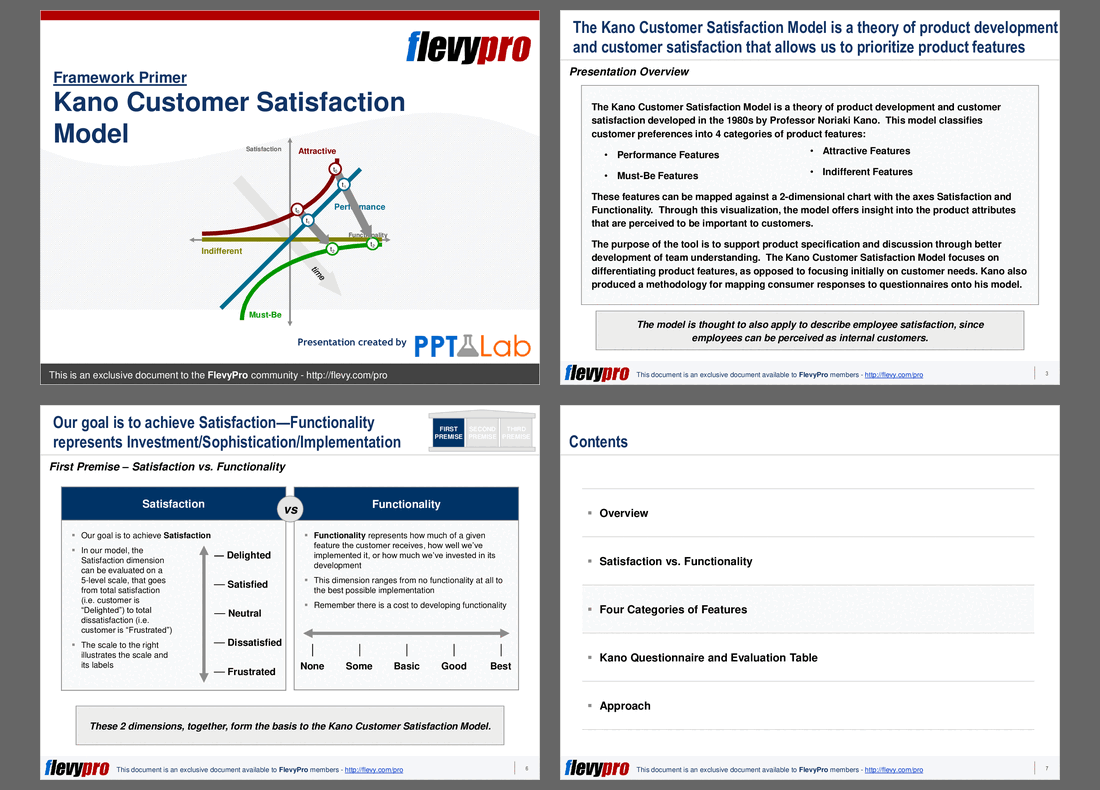
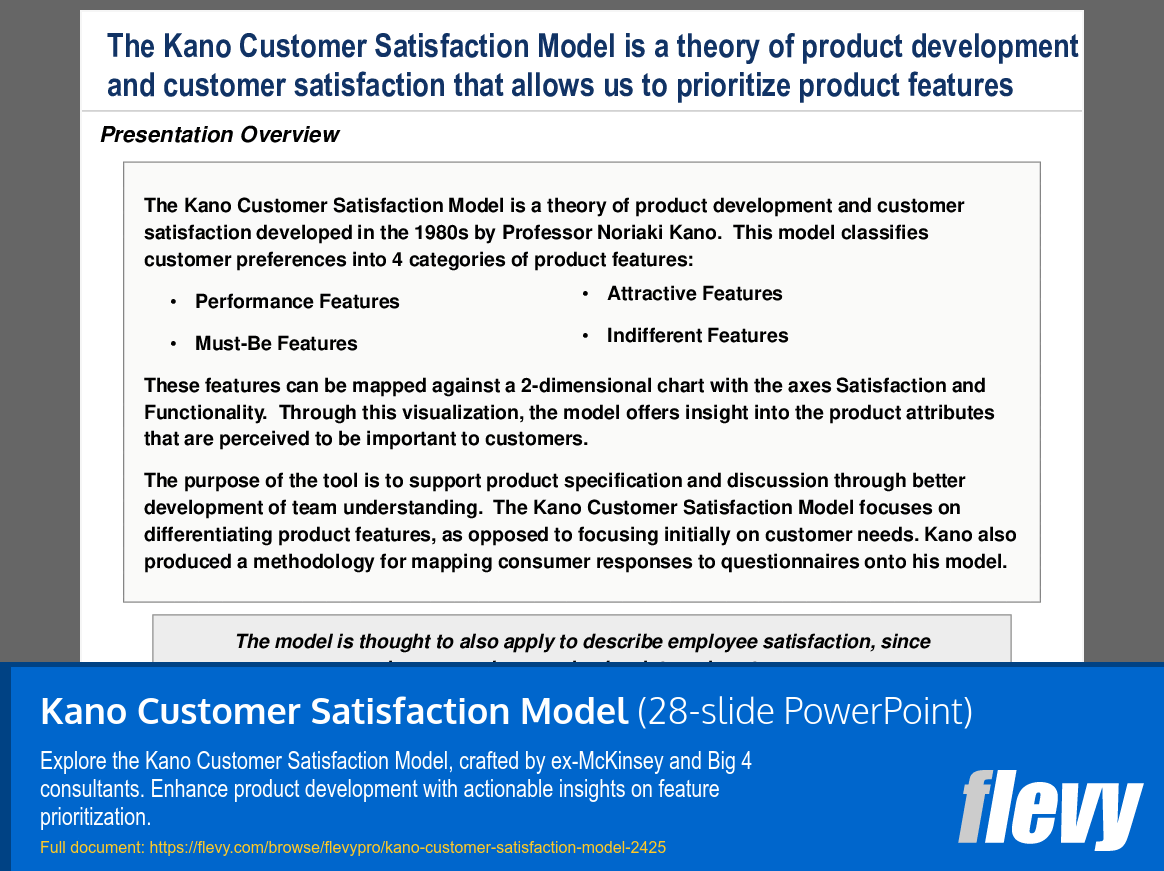
The Kano Customer Satisfaction Model is a theory of product development and customer satisfaction developed in the 1980s by Professor Noriaki Kano. This model classifies customer preferences into 4 categories of product features:

Performance Features
Must-Be Features
Attractive Features
Indifferent Features

These features can be mapped against a 2-dimensional chart with the axes Satisfaction and Functionality. Through this visualization, the model offers insight into the product attributes that are perceived to be important to customers.

The purpose of the tool is to support product specification and discussion through better development of team understanding. The Kano Customer Satisfaction Model focuses on differentiating product features, as opposed to focusing initially on customer needs. Kano also produced a methodology for mapping consumer responses to questionnaires onto his model.

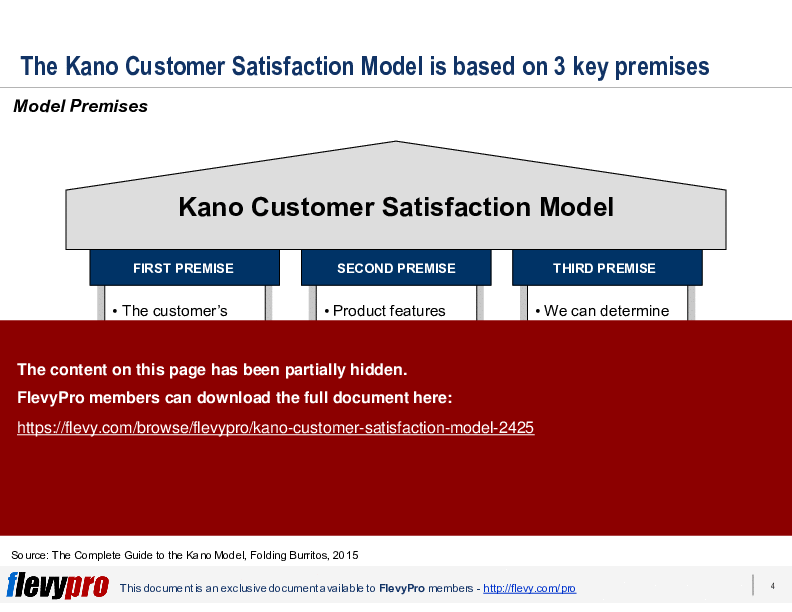
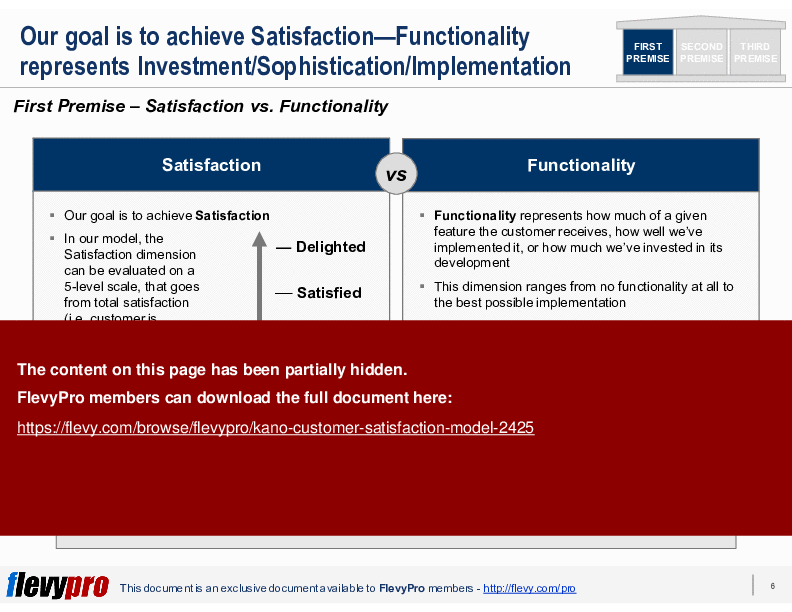
The Kano Customer Satisfaction Model is built on three key premises that guide its application. The first premise emphasizes the relationship between satisfaction and functionality, highlighting how different levels of functionality impact customer satisfaction. The second premise categorizes features into four types: Performance, Must-Be, Attractive, and Indifferent, each influencing customer satisfaction differently. The third premise involves using the Kano Questionnaire to map customer responses, providing actionable insights into which features to prioritize.

This PPT also delves into the natural decay of delight, explaining how features that initially attract customers can become expected over time. This shift necessitates continuous innovation to maintain customer satisfaction. The model's visual representation helps in understanding how features evolve from being attractive to must-be, ensuring that product development aligns with changing customer expectations.

The document includes practical steps for implementing the Kano Model, from selecting target features and users to analyzing customer data. It provides a comprehensive approach to using the Kano Questionnaire and Evaluation Table, ensuring that your team can effectively prioritize features that maximize customer satisfaction. This resource is essential for any organization aiming to enhance its product development strategy through a deeper understanding of customer needs and preferences.

Got a question about this document? Email us at flevypro@flevy.com.

MARCUS OVERVIEW

This synopsis was written by Marcus [?] based on the analysis of the full 28-slide presentation.


Executive Summary
The Kano Customer Satisfaction Model presentation provides a structured approach to understanding customer preferences in product development. Developed by Professor Noriaki Kano in the 1980s, this model categorizes product features into 4 distinct types: Performance, Must-Be, Attractive, and Indifferent. By utilizing this model, teams can prioritize product features effectively, ensuring that customer satisfaction is maximized. This deck serves as a comprehensive guide for product managers and development teams to align their offerings with customer expectations, ultimately enhancing product specifications and discussions.

Who This Is For and When to Use
•  Product Managers seeking to enhance customer satisfaction through feature prioritization
•  Development Teams focused on aligning product features with customer needs
•  Marketing Professionals aiming to understand customer preferences and behaviors
•  Consultants advising organizations on product development strategies

Best-fit moments to use this deck:
•  During product development planning sessions to identify key features
•  In customer feedback analysis to categorize and prioritize product attributes
•  For workshops aimed at aligning cross-functional teams on customer satisfaction goals

Learning Objectives
•  Define the Kano Customer Satisfaction Model and its application in product development
•  Identify and categorize product features using the Kano framework
•  Analyze customer feedback to prioritize features effectively
•  Develop actionable insights for enhancing customer satisfaction
•  Create a strategic roadmap for product feature implementation
•  Utilize the Kano Questionnaire to gather customer perceptions

Table of Contents
•  Overview (page 3)
•  Satisfaction vs. Functionality (page 6)
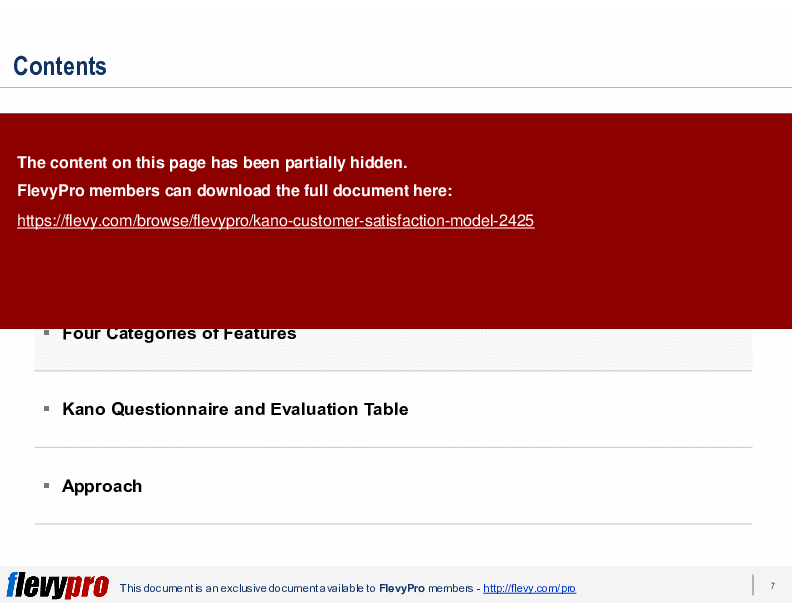
•  Four Categories of Features (page 8)
•  Kano Questionnaire and Evaluation Table (page 15)
•  Approach (page 20)

Primary Topics Covered
•  Overview of the Kano Model - Introduction to the Kano Customer Satisfaction Model and its significance in product development.
•  Satisfaction vs. Functionality - Exploration of how customer satisfaction is influenced by the level of functionality provided in product features.
•  Four Categories of Features - Detailed classification of features into Performance, Must-Be, Attractive, and Indifferent categories based on customer reactions.
•  Kano Questionnaire - Methodology for assessing customer perceptions of product features through targeted questioning.
•  Kano Evaluation Table - Framework for mapping customer responses to categorize features effectively.
•  Analysis Approach - Steps for analyzing survey results to derive strategic insights for product development.

Deliverables, Templates, and Tools
•  Kano Questionnaire template for assessing customer perceptions
•  Kano Evaluation Table for categorizing product features
•  Feature prioritization matrix for aligning product development with customer needs
•  Strategic roadmap template for implementing prioritized features
•  Customer feedback analysis framework for continuous improvement

Slide Highlights
•  Visual representation of the Kano Model illustrating the relationship between satisfaction and functionality
•  Detailed breakdown of the 4 categories of features with real-world examples
•  Step-by-step guide on how to conduct the Kano Questionnaire
•  Insights into the importance of analyzing customer feedback for product development
•  Framework for prioritizing features based on customer satisfaction metrics

Potential Workshop Agenda
Kano Model Introduction Session (60 minutes)
•  Overview of the Kano Customer Satisfaction Model
•  Discussion on the importance of customer satisfaction in product development
•  Interactive Q&A on feature categorization

Kano Questionnaire Workshop (90 minutes)
•  Hands-on session to develop and refine the Kano Questionnaire
•  Group activity to simulate customer feedback collection
•  Analysis of sample responses using the Kano Evaluation Table

Feature Prioritization Strategy Session (60 minutes)
•  Review of feature prioritization techniques
•  Collaborative exercise to prioritize features based on customer feedback
•  Development of a strategic roadmap for implementation

Customization Guidance
•  Tailor the Kano Questionnaire to reflect specific product features relevant to your organization
•  Adjust the evaluation criteria in the Kano Evaluation Table based on industry standards
•  Incorporate company-specific terminology and metrics for clarity in communication

Secondary Topics Covered
•  The impact of customer satisfaction on product lifecycle management
•  Strategies for continuous improvement in product development
•  Case studies demonstrating successful implementation of the Kano Model
•  Best practices for conducting customer feedback surveys

Topic FAQ

What are the 4 categories of features in the Kano Model?

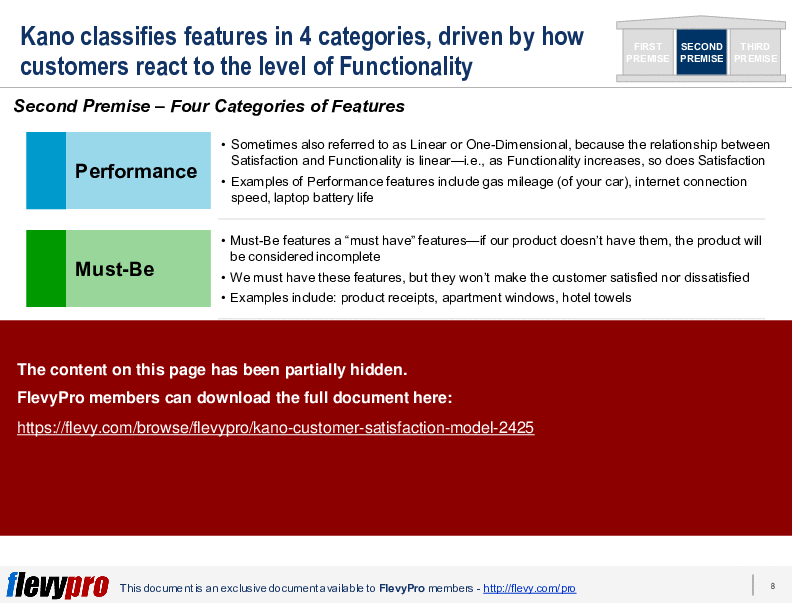
The Kano Model classifies features into Performance, Must-Be, Attractive, and Indifferent categories, each describing different customer reactions as functionality changes. Performance features increase satisfaction with better functionality, Must-Be avoid dissatisfaction when present, Attractive create delight, and Indifferent have little impact, totaling 4 categories.

How does the Kano Model map satisfaction against functionality?

Kano uses a two-dimensional chart with Satisfaction on one axis and Functionality on the other to visualize how feature performance affects customer satisfaction. This mapping helps show nonlinear effects—such as diminishing returns and shifting expectations—using a 2-dimensional chart.

What is the Kano Questionnaire and how is it applied?

The Kano Questionnaire asks paired functional and dysfunctional questions to capture customer reactions, then maps responses using the Kano Evaluation Table to classify features. Organizations use it to translate survey responses into feature categories via the Kano Questionnaire and Kano Evaluation Table.

How does "decay of delight" influence product strategy?

Decay of delight describes how Attractive features that initially delight customers can become expected over time, shifting toward Must-Be status; this requires periodic innovation and reassessment to maintain differentiation. The concept highlights the need for continuous analysis of feature lifecycle and customer expectations.

What should I look for when choosing a Kano Model toolkit?

Choose a toolkit that provides a ready-made Kano Questionnaire, a Kano Evaluation Table for mapping responses, a prioritization matrix to rank features, and a roadmap template to translate results into implementation plans. Flevy's Kano Customer Satisfaction Model includes all these templates: questionnaire, evaluation table, prioritization matrix, and roadmap template.

How much time and meeting structure is recommended to run a Kano workshop?

The product outlines a workshop agenda split into discrete sessions: a 60-minute Kano Model introduction, a 90-minute Kano Questionnaire workshop for hands-on development and sample analysis, and a 60-minute feature prioritization strategy session, totaling structured sessions of 60, 90, and 60 minutes.

I have customer feedback—what steps should I follow to prioritize features?

Select target features and user segments, deploy a Kano Questionnaire to capture functional and dysfunctional reactions, map responses using the Kano Evaluation Table to categorize features, then use a prioritization matrix to build a strategic roadmap from those categories. Key steps use the Kano Questionnaire and Evaluation Table.

Can the Kano Model be applied to services as well as products?

Yes. The Kano Model focuses on customer satisfaction and feature/attribute prioritization across offerings, so it can be applied to both products and services to categorize attributes and prioritize development for products and services.

Document FAQ
These are questions addressed within this presentation.

What is the Kano Customer Satisfaction Model?
The Kano Customer Satisfaction Model is a framework that categorizes product features based on customer preferences, helping organizations prioritize features that enhance customer satisfaction.

How can I apply the Kano Model in my organization?
Utilize the Kano Questionnaire to gather customer feedback, categorize features using the Kano Evaluation Table, and prioritize development efforts based on customer satisfaction metrics.

What are the 4 categories of features in the Kano Model?
The 4 categories are Performance, Must-Be, Attractive, and Indifferent, each representing different customer reactions to product features.

How do I analyze customer feedback using the Kano Model?
Segment responses using the Kano Evaluation Table, tally results for each feature, and prioritize based on the most frequent responses.

Can the Kano Model be used for services as well as products?
Yes, the Kano Model can be applied to both products and services, as it focuses on customer satisfaction and feature prioritization.

What is the importance of Must-Be features?
Must-Be features are essential for product completion; their absence can lead to customer dissatisfaction,, but their presence does not necessarily increase satisfaction.

How often should I update my analysis using the Kano Model?
Regular updates are recommended to keep pace with changing customer expectations and market dynamics.

What is the role of Attractive features in customer satisfaction?
Attractive features can significantly enhance customer satisfaction by exceeding expectations,, but they are not essential for product functionality.

How do I ensure effective participation in the Kano Questionnaire?
Limit the number of features included in the survey, ensure questions are clear and concise, and consider testing the questionnaire with internal stakeholders before deployment.

Glossary
•  Kano Model - A framework for categorizing customer preferences in product development.
•  Performance Features - Features where increased functionality leads to higher customer satisfaction.
•  Must-Be Features - Essential features that must be present for a product to be considered complete.
•  Attractive Features - Unexpected features that delight customers and enhance satisfaction.
•  Indifferent Features - Features that do not significantly impact customer satisfaction.
•  Kano Questionnaire - A tool for assessing customer perceptions of product features.
•  Kano Evaluation Table - A framework for categorizing features based on customer feedback.
•  Customer Satisfaction - A measure of how well a product meets customer expectations.
•  Feature Prioritization - The process of determining which product features to develop based on customer needs.
•  Feedback Analysis - The examination of customer responses to inform product development decisions.
•  Segmentation - The practice of dividing customers into groups based on shared characteristics for targeted analysis.
•  Continuous Improvement - Ongoing efforts to enhance products and services based on customer feedback.
•  Market Dynamics - The forces that impact the supply and demand of products and services in the marketplace.
•  Customer Expectations - The anticipated value or performance level customers seek from a product.
•  Product Lifecycle Management - The process of managing a product's lifecycle from inception to retirement.
•  Survey Participation - The involvement of customers in providing feedback through surveys.
•  Strategic Roadmap - A plan outlining the steps to achieve specific goals in product development.
•  Customer-Centric Design - An approach that prioritizes customer needs and preferences in product development.
•  Feature Analysis - The evaluation of product features to determine their impact on customer satisfaction.
•  Trade-off Analysis - The assessment of the balance between feature functionality and associated costs.
•  Innovation - The introduction of new ideas or products that enhance customer satisfaction.

PRODUCT STRATEGY PPT SLIDES

Kano Model: Categorizing Customer Feature Reactions

Understanding Attractive Features in Customer Satisfaction

Kano Questionnaire: Understanding Customer Feature Perceptions

Understanding Customer Satisfaction and Functionality Dynamics

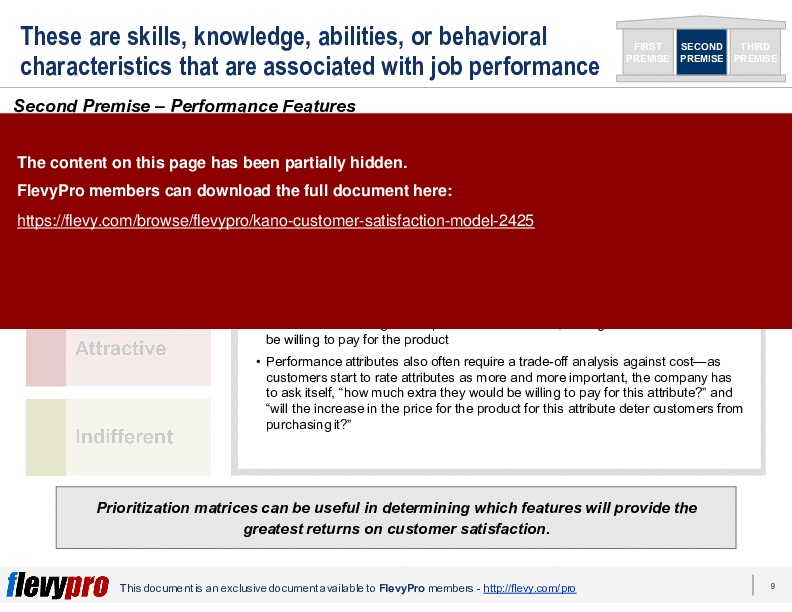
Understanding Performance Features and Customer Satisfaction

Evolution of Customer Feature Expectations Over Time

Source: Best Practices in Customer Satisfaction, Kano Customer Satisfaction Model, Noriaki Kano PowerPoint Slides: Kano Customer Satisfaction Model PowerPoint (PPT) Presentation Slide Deck, PPT Lab


$29.00
FlevyPro price: FREE (included in subscription)
This framework is developed by a team of former McKinsey and Big 4 consultants. The presentation follows the headline-body-bumper slide format used by global consulting firms.
Add to Cart
  

Did you need more documents?

Consider a FlevyPro subscription from $39/month. View plans here.

For $10.00 more, you can download this document plus 2 more FlevyPro documents. That's just $13 each.

ABOUT FLEVYPRO

This document is part of the FlevyPro Library, a curated knowledge base of documents for our FlevyPro subscribers.

FlevyPro is a subscription service for on-demand business frameworks and analysis tools. FlevyPro subscribers receive access to an exclusive library of curated business documents—business framework primers, presentation templates, Lean Six Sigma tools, and more—among other exclusive benefits.

Click here to learn more about FlevyPro and its benefits.

Did you know?
The average daily rate of a McKinsey consultant is $6,625 (not including expenses). The average price of a Flevy document is $65.


Trusted by over 10,000+ Client Organizations
Since 2012, we have provided business templates to over 10,000 businesses and organizations of all sizes, from startups and small businesses to the Fortune 100, in over 130 countries.
AT&T GE Cisco Intel IBM Coke Dell Toyota HP Nike Samsung Microsoft Astrazeneca JP Morgan KPMG Walgreens Walmart 3M Kaiser Oracle SAP Google E&Y Volvo Bosch Merck Fedex Shell Amgen Eli Lilly Roche AIG Abbott Amazon PwC T-Mobile Broadcom Bayer Pearson Titleist ConEd Pfizer NTT Data Schwab


Read Customer Testimonials

 
"FlevyPro provides business frameworks from many of the global giants in management consulting that allow you to provide best in class solutions for your clients."

– David Harris, Managing Director at Futures Strategy
 
"As a niche strategic consulting firm, Flevy and FlevyPro frameworks and documents are an on-going reference to help us structure our findings and recommendations to our clients as well as improve their clarity, strength, and visual power. For us, it is an invaluable resource to increase our impact and value."

– David Coloma, Consulting Area Manager at Cynertia Consulting
 
"FlevyPro has been a brilliant resource for me, as an independent growth consultant, to access a vast knowledge bank of presentations to support my work with clients. In terms of RoI, the value I received from the very first presentation I downloaded paid for my subscription many times over! The "

– Roderick Cameron, Founding Partner at SGFE Ltd
 
"My FlevyPro subscription provides me with the most popular frameworks and decks in demand in today’s market. They not only augment my existing consulting and coaching offerings and delivery, but also keep me abreast of the latest trends, inspire new products and service offerings for my practice, and educate me "

– Bill Branson, Founder at Strategic Business Architects
 
"[Flevy] produces some great work that has been/continues to be of immense help not only to myself, but as I seek to provide professional services to my clients, it gives me a large "tool box" of resources that are critical to provide them with the quality of service and outcomes they are expecting."

– Royston Knowles, Executive with 50+ Years of Board Level Experience
 
"As an Independent Management Consultant, I find Flevy to add great value as a source of best practices, templates and information on new trends. Flevy has matured and the quality and quantity of the library is excellent. Lastly the price charged is reasonable, creating a win-win value for "

– Jim Schoen, Principal at FRC Group
 
"As a young consulting firm, requests for input from clients vary and it's sometimes impossible to provide expert solutions across a broad spectrum of requirements. That was before I discovered Flevy.com.

Through subscription to this invaluable site of a plethora of topics that are key and crucial to consulting, I "

– Nishi Singh, Strategist and MD at NSP Consultants
 
"If you are looking for great resources to save time with your business presentations, Flevy is truly a value-added resource. Flevy has done all the work for you and we will continue to utilize Flevy as a source to extract up-to-date information and data for our virtual and onsite presentations!"

– Debbi Saffo, President at The NiKhar Group


Customers Also Bought These Documents


Customers Also Like These Documents

Explore Templates on Related Management Topics


Your Recently Viewed Documents
Download our FREE Strategy & Transformation Framework Templates

Download our free compilation of 50+ Strategy & Transformation slides and templates. Frameworks include McKinsey 7-S, Balanced Scorecard, Disruptive Innovation, BCG Curve, and many more.