
This framework is developed by a team of former McKinsey and Big 4 consultants. The presentation follows the headline-body-bumper slide format used by global consulting firms.
Explore the IT4IT Reference Architecture, crafted by ex-McKinsey & Big 4 consultants. Understand its 4 pillars for optimizing IT processes and enhancing business value. IT4IT Reference Architecture is a 37-slide PPT PowerPoint presentation slide deck (PPTX) available for immediate download upon purchase.
In this presentation, we'll discuss the core pillars and processes of IT4IT to understand how it helps organizations achieve IT excellence.
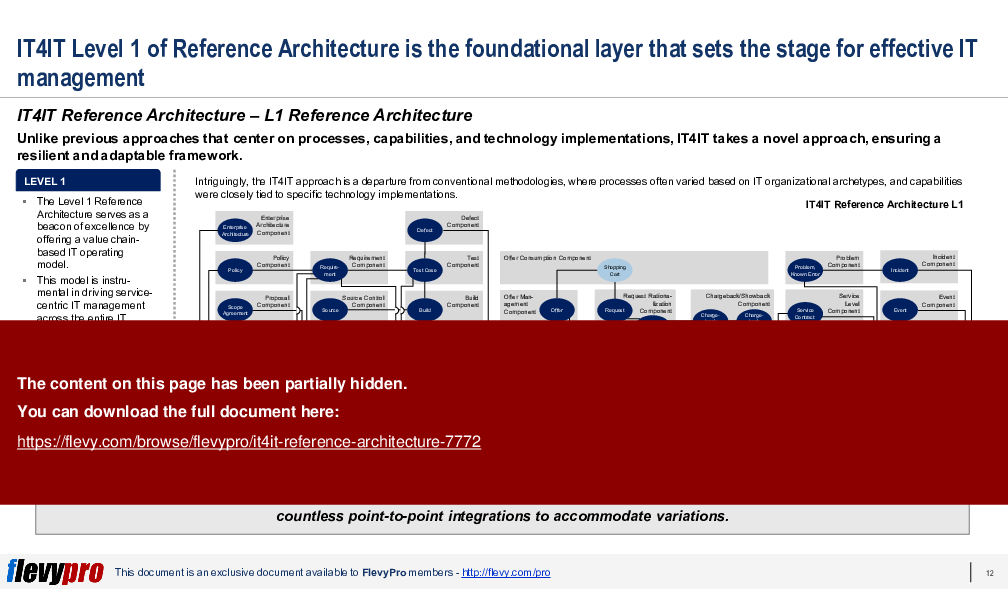
At its heart, IT4IT embraces a Value Chain approach, dissecting IT functions into actionable components that drive business competitiveness. It serves as a beacon for organizations seeking to optimize IT execution, offering a vendor-neutral, technology-agnostic, and industry-agnostic reference architecture.
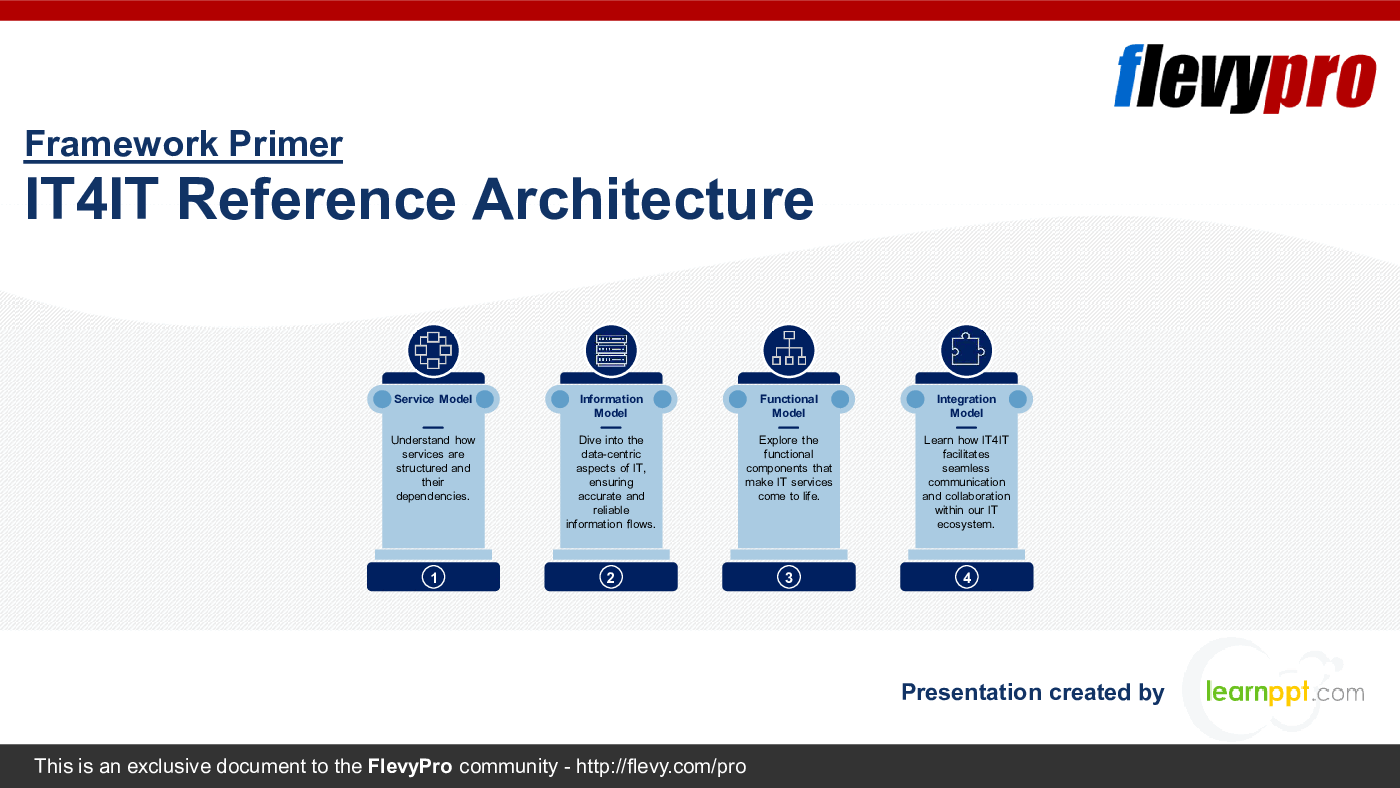
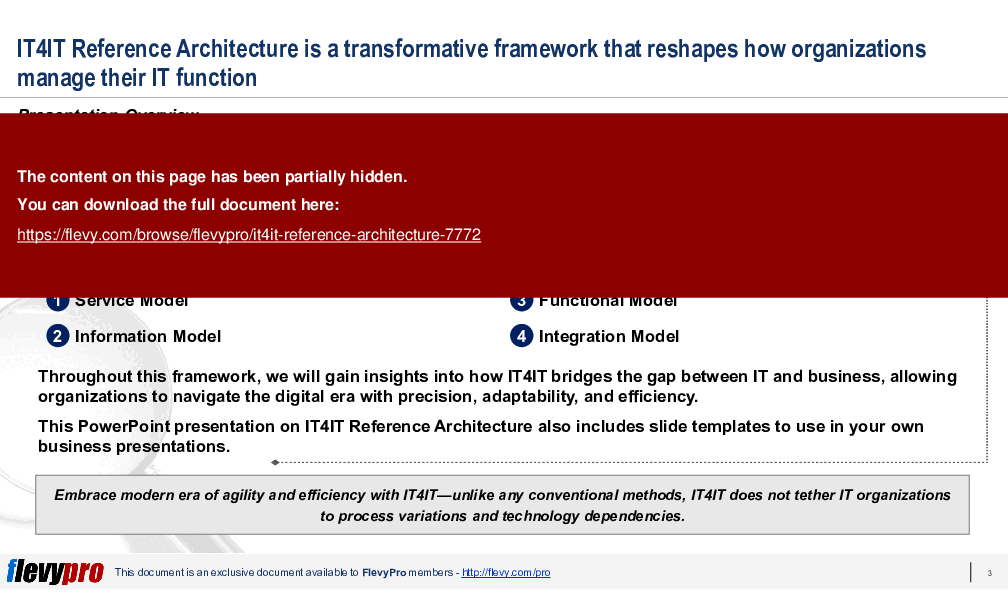
IT4IT introduces a fresh approach that is anchored to its 4 pillars, each contributing uniquely to the efficiency and effectiveness of IT processes:
1. Service Model – Understand how services are structured and their dependencies.
2. Information Model – Dive into the data-centric aspects of IT, ensuring accurate and reliable information flows.
3. Functional Model – Explore the functional components that make IT services come to life.
4. Integration Model – Learn how IT4IT facilitates seamless communication and collaboration within our IT ecosystem.
Each of these models is discussed in detail.
Throughout this presentation, we will gain insights into how IT4IT bridges the gap between IT and business, allowing organizations to navigate the digital era with precision, adaptability, and efficiency.
Additional topics discussed include the IT Value Chain, IT Value Streams, L1 Reference Architecture, among others.
This PowerPoint presentation on IT4IT Reference Architecture also includes slide templates to use in your own business presentations.
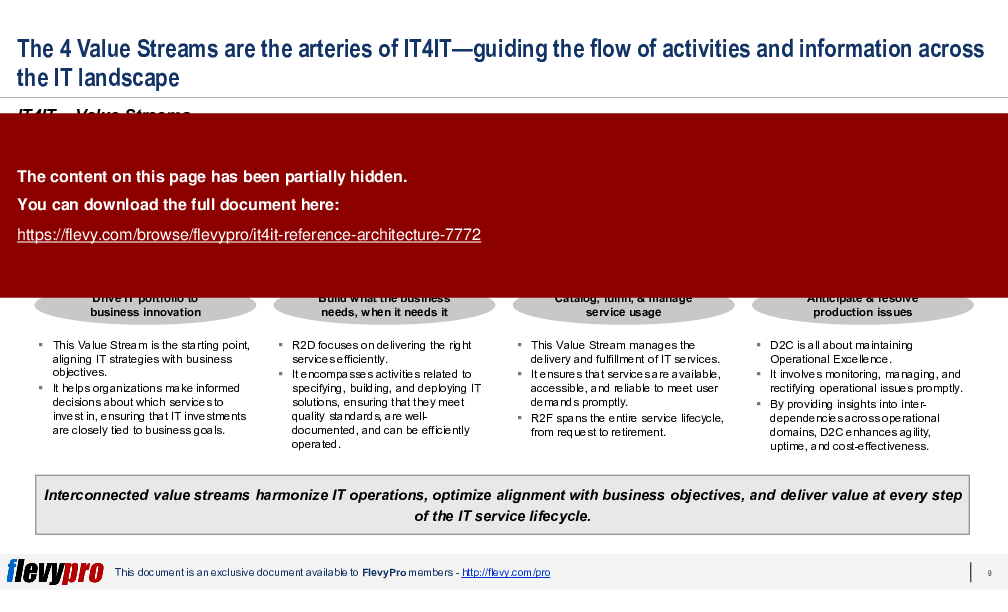
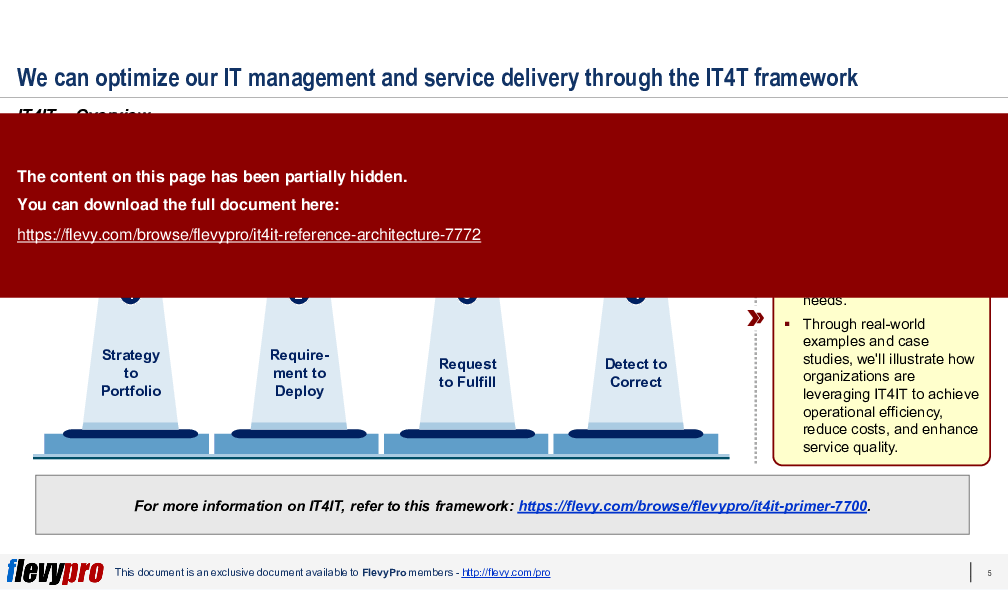
The IT4IT framework outlines 4 key value streams for managing IT services. The first phase, Strategy to Portfolio (S2P), aligns IT strategies with business goals, guiding IT investment decisions to support innovation and growth. The second phase, Requirement to Deploy (R2D), focuses on the efficient delivery of IT services, emphasizing quality standards and thorough documentation in the specification, building, and deployment processes. The third phase, Request to Fulfill (R2F), manages IT service delivery, ensuring services are available and reliable throughout their lifecycle, highlighting effective cataloging and fulfillment. Lastly, Detect to Correct (D2C) centers on operational excellence, involving proactive monitoring and management of production issues to enhance agility and cost-effectiveness, maintaining service quality and uptime. These interconnected value streams provide a structured approach to harmonizing IT operations with business objectives.
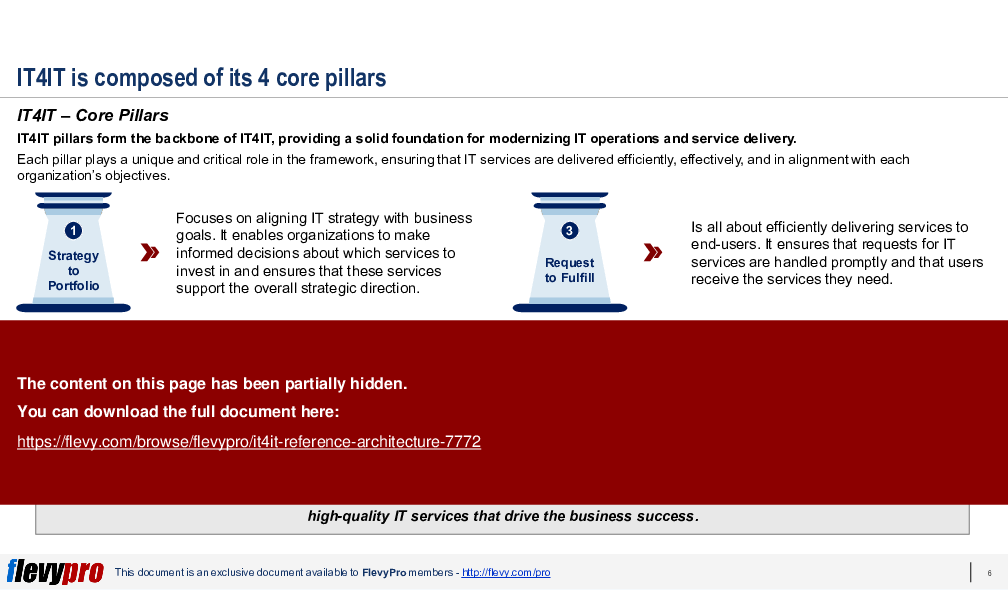
The IT4IT framework consists of 4 core pillars essential for modernizing IT operations and service delivery. The first pillar, "Strategy to Portfolio," aligns IT strategy with business goals, enabling informed service investment decisions. The second pillar, "Requirement to Deploy," outlines the process of transforming requirements into deployed services, covering needs definition, development, testing, and release management. "Request to Fulfill," the third pillar, focuses on efficiently delivering services to end-users, ensuring timely support and maintaining user satisfaction. Lastly, "Detect to Correct" emphasizes monitoring and managing operational issues to swiftly resolve problems, maintaining service quality. Together, these pillars enhance IT-business alignment, streamline service delivery, and improve operational resilience.
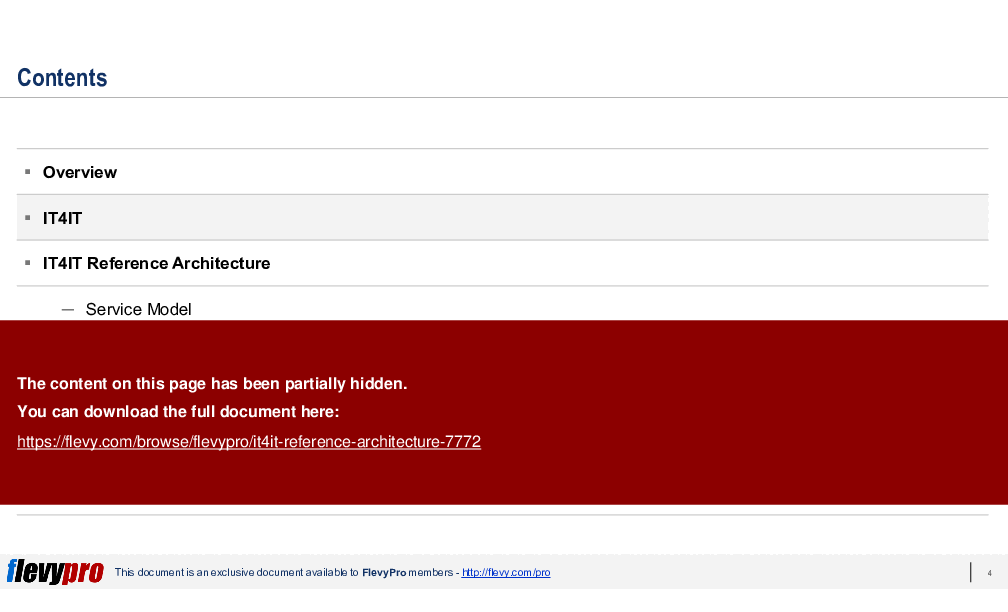
The IT4IT Reference Architecture is a strategic framework for optimizing IT operations and enhancing value within organizations, structured around 4 pillars: Service Model, Information Model, Functional Model, and Integration Model. The Service Model addresses the structure and interdependencies of IT services, crucial for streamlining service delivery. The Information Model focuses on data-centric elements, emphasizing accurate information flows for decision-making and operational efficiency. The Functional Model examines the components that enable IT services, detailing their interactions in service delivery. Lastly, the Integration Model ensures seamless communication and collaboration within the IT ecosystem. This framework aligns IT operations with broader business objectives, empowering organizations to manage IT more effectively.
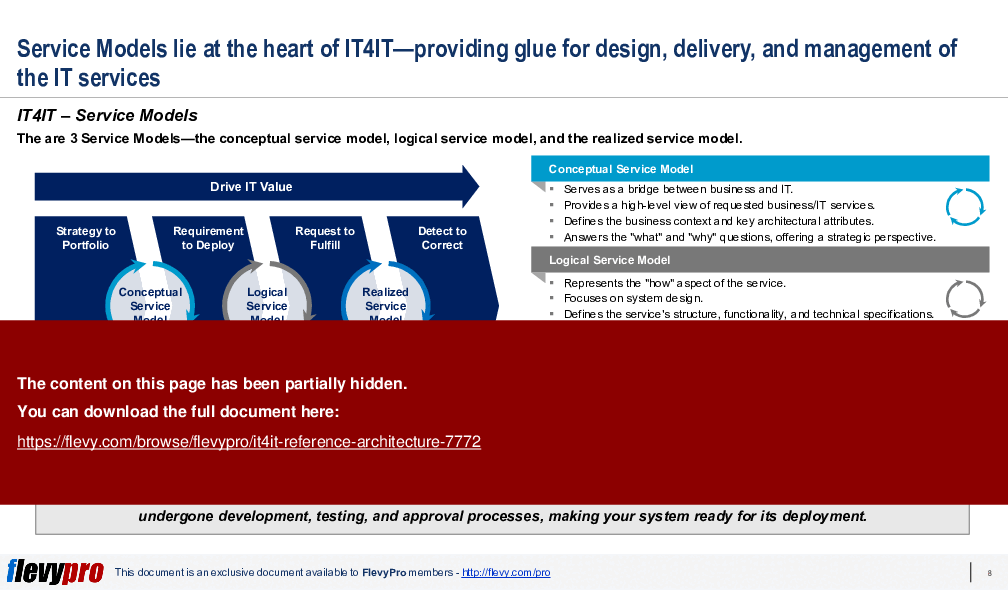
This PPT slide outlines 3 critical service models within the IT4IT framework: the Conceptual Service Model, Logical Service Model, and Realized Service Model. The Conceptual Service Model bridges business and IT, providing a high-level overview of requested services and defining the business context. The Logical Service Model details the "how" of service delivery, focusing on system design and translating conceptual ideas into a feasible design, culminating in a Logical Service Blueprint. The Realized Service Model represents the fully implemented service, encompassing all technical and operational components required for service operation. These models collectively optimize IT service management processes and enhance IT strategy alignment.
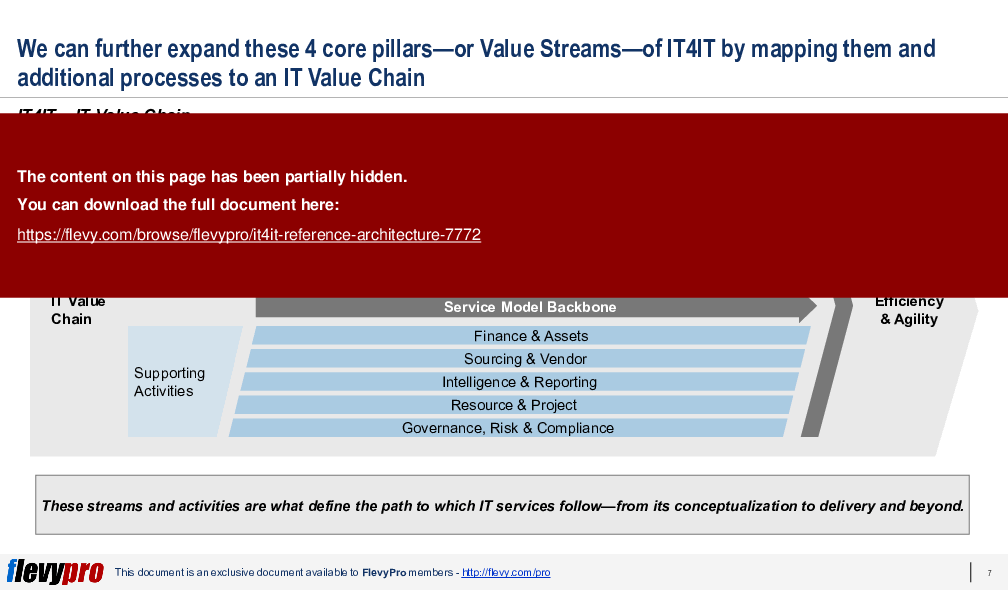
The IT4IT framework outlines the IT service value chain, categorizing activities into primary and supporting segments. Primary activities, known as Value Streams, consist of 4 phases: Strategy to Portfolio (PLAN), Requirement to Deploy (BUILD), Request to Fulfill (DELIVER), and Detect to Correct (RUN), each critical to IT service management. Supporting activities form the Service Model Backbone, including Finance & Assets, Sourcing & Vendor, Intelligence & Reporting, Resource & Project, and Governance, Risk & Compliance, which underpin the primary activities. Key themes of Efficiency & Agility emerge, highlighting the importance of optimizing IT operations for enhanced performance and alignment with business goals. This structured approach aids in identifying gaps and opportunities within the IT service lifecycle, facilitating informed decision-making and strategic planning.
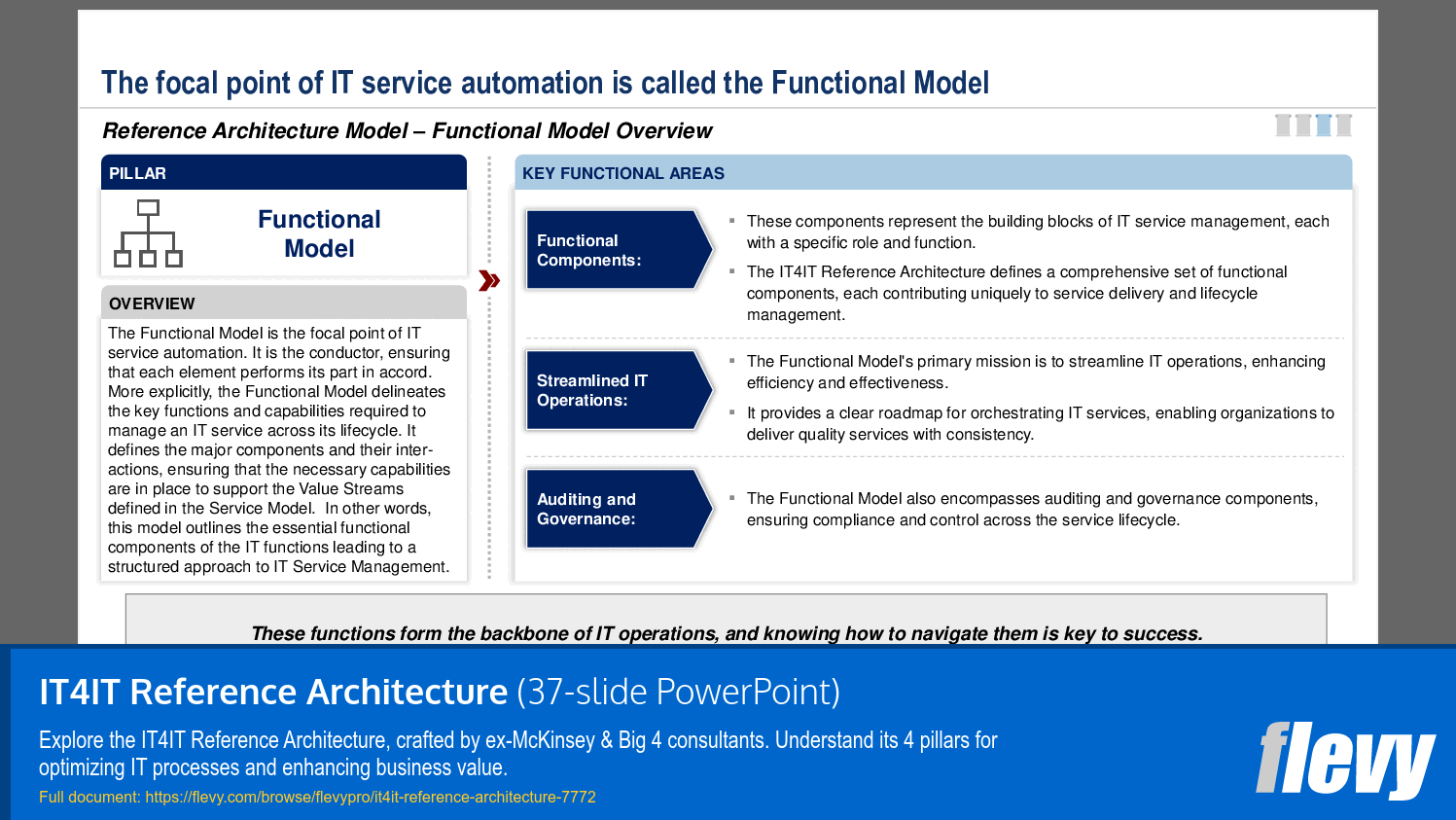
The Functional Model is central to IT service automation, orchestrating components to ensure harmonious IT service delivery. It defines key functions and capabilities that support Value Streams in the Service Model. Key Functional Areas include Functional Components, Streamlined IT Operations, and Auditing and Governance. Functional Components serve as building blocks of IT service management, crucial for effective service delivery and lifecycle management. Streamlined IT Operations enhance efficiency and effectiveness, providing a structured roadmap for consistent quality service delivery. Auditing and Governance incorporate compliance and control measures throughout the service lifecycle, essential for maintaining regulatory standards and internal governance. Understanding the Functional Model is vital for navigating IT operations complexities and improving IT service management.
The Service Model Backbone aligns IT operations with business objectives by harmonizing data entities, attributes, and relationships, ensuring promised outcomes match actual deliverables. End-to-end traceability is vital for maintaining trust and accountability in service delivery. Data Entities serve as critical building blocks encapsulating essential information about the service lifecycle, enabling data-driven decision-making and visibility. Attributes enhance these entities, providing depth in tracking and management, ensuring alignment with business goals. Relationships create a network among data entities, facilitating traceability and ensuring promised outcomes align with consumer expectations. This structured approach emphasizes clarity and alignment in delivering value to consumers.
The Information Model within the IT4IT Reference Architecture facilitates service automation by defining relationships between data objects essential for IT administration. It categorizes these relationships into 3 types: one-to-one (1:1), one-to-many (1:n), and many-to-many (n:m). A one-to-one relationship connects 2 data objects, while one-to-many indicates a single object can relate to multiple others. Many-to-many illustrates complex interactions where both objects can connect to multiple entities. For example, an Event can relate to a single Configuration Item (CI), with a CI potentially connecting to multiple Events, and Events can relate to Incidents in a one-to-one manner. This flexible relationship management is vital for optimizing IT processes.
This PPT slide focuses on the Engagement Experience Portal within the IT4IT Reference Architecture, serving as a central interface for user interactions with IT services. It includes a service catalog, collaboration tools, knowledge access, and self-service support, enhancing user experience and streamlining service requests. The slide also details data flows in the IT4IT framework, illustrating the transition of incident data from incident management to problem management, which is essential for root cause analysis. Understanding these components and their interactions enables organizations to manage IT services effectively, improving service delivery and operational efficiency.
Source: Best Practices in IT Strategy, Enterprise Architecture PowerPoint Slides: IT4IT Reference Architecture PowerPoint (PPTX) Presentation Slide Deck, LearnPPT Consulting
This framework is developed by a team of former McKinsey and Big 4 consultants. The presentation follows the headline-body-bumper slide format used by global consulting firms.
For $10.00 more, you can download this document plus 2 more FlevyPro documents. That's just $13 each.
ABOUT FLEVYPRO
This document is part of the FlevyPro Library, a curated knowledge base of documents for our FlevyPro subscribers.

FlevyPro is a subscription service for on-demand business frameworks and analysis tools. FlevyPro subscribers receive access to an exclusive library of curated business documents—business framework primers, presentation templates, Lean Six Sigma tools, and more—among other exclusive benefits.
The average daily rate of a McKinsey consultant is $6,625 (not including expenses). The average price of a Flevy document is $65.
Trusted by over 10,000+ Client Organizations
Since 2012, we have provided business templates to over 10,000 businesses and organizations of all sizes, from startups and small businesses to the Fortune 100, in over 130 countries.
"As an Independent Management Consultant, I find Flevy to add great value as a source of best practices, templates and information on new trends. Flevy has matured and the quality and quantity of the library is excellent. Lastly the price charged is reasonable, creating a win-win value for
the customer, Flevy and the various authors. This is truly a service that benefits the consulting industry and associated clients. Thanks for providing this service.
"
– Jim Schoen, Principal at FRC Group
"As a niche strategic consulting firm, Flevy and FlevyPro frameworks and documents are an on-going reference to help us structure our findings and recommendations to our clients as well as improve their clarity, strength, and visual power. For us, it is an invaluable resource to increase our impact and value."
– David Coloma, Consulting Area Manager at Cynertia Consulting
"The wide selection of frameworks is very useful to me as an independent consultant. In fact, it rivals what I had at my disposal at Big 4 Consulting firms in terms of efficacy and organization."
– Julia T., Consulting Firm Owner (Former Manager at Deloitte and Capgemini)
"FlevyPro has been a brilliant resource for me, as an independent growth consultant, to access a vast knowledge bank of presentations to support my work with clients. In terms of RoI, the value I received from the very first presentation I downloaded paid for my subscription many times over! The
quality of the decks available allows me to punch way above my weight – it's like having the resources of a Big 4 consultancy at your fingertips at a microscopic fraction of the overhead.
"
– Roderick Cameron, Founding Partner at SGFE Ltd
"[Flevy] produces some great work that has been/continues to be of immense help not only to myself, but as I seek to provide professional services to my clients, it gives me a large "tool box" of resources that are critical to provide them with the quality of service and outcomes they are expecting."
– Royston Knowles, Executive with 50+ Years of Board Level Experience
"I have used Flevy services for a number of years and have never, ever been disappointed. As a matter of fact, David and his team continue, time after time, to impress me with their willingness to assist and in the real sense of the word. I have concluded in fact
that it is not at all just a repository of documents/resources but, in the way that David and his team manage the firm, it is like dealing with consultants always ready to assist, advise and direct you to what you really need, and they always get it right.
I am an international hospitality accomplished senior executive who has worked and lived during the past 35 years in 23 countries in 5 continents and I can humbly say that I know what customer service is, trust me.
Aside from the great and professional service that Flevy's team provide, their wide variety of material is of utmost great quality, professionally put together and most current.
Well done Flevy, keep up the great work and I look forward to continue working with you in the future and to recommend you to a variety of colleagues around the world.
"
– Roberto Pelliccia, Senior Executive in International Hospitality
"I am extremely grateful for the proactiveness and eagerness to help and I would gladly recommend the Flevy team if you are looking for data and toolkits to help you work through business solutions."
– Trevor Booth, Partner, Fast Forward Consulting
"One of the great discoveries that I have made for my business is the Flevy library of training materials.
As a Lean Transformation Expert, I am always making presentations to clients on a variety of topics: Training, Transformation, Total Productive Maintenance, Culture, Coaching, Tools, Leadership Behavior, etc. Flevy
It is well worth the money to purchase these presentations. Sure, I have the knowledge and information to make my point. It is another thing to create a presentation that captures what I want to say. Flevy has saved me countless hours of preparation time that is much better spent with implementation that will actually save money for my clients.
"
– Ed Kemmerling, Senior Lean Transformation Expert at PMG
Download our FREE Digital Transformation Templates
Download our free compilation of 50+ Digital Transformation slides and templates. DX concepts covered include Digital Leadership, Digital Maturity, Digital Value Chain, Customer Experience, Customer Journey, RPA, etc.