
This framework is developed by a team of former McKinsey and Big 4 consultants. The presentation follows the headline-body-bumper slide format used by global consulting firms.
Editor Summary
Galbraith Star Model is a 24-slide PowerPoint presentation by LearnPPT Consulting that explains the Star Model framework for organization design.
Read moreThe deck documents 5 controllable design policies—Strategy, Structure, Processes, Rewards, People—and shows how management can identify negatives of a chosen structure and design complementary policies to offset them. Includes ready-to-use slide templates for business presentations. Target users include HR leaders, organizational designers, strategy executives, and management consultants. Sold as a digital download on Flevy with immediate download.
Use the Galbraith Star Model presentation when an organization needs to align strategic choices with other design policies to build capabilities or mitigate the downsides of a preferred structure.
HR leaders designing reward and people policies to align incentives and behaviors with a new strategy, using the model to map rewards to desired outcomes.
Strategy executives mapping strategic priorities to structure and processes to ensure capabilities support competitive goals.
Management consultants diagnosing misalignment across structure, processes, and rewards and recommending policy adjustments during redesign engagements.
Change managers preparing stakeholder communications and workshop slides using the included templates to explain the five-component logic.
The approach treats design choices as interconnected policy levers across Strategy, Structure, Processes, Rewards, and People, reflecting standard organization-design practice.
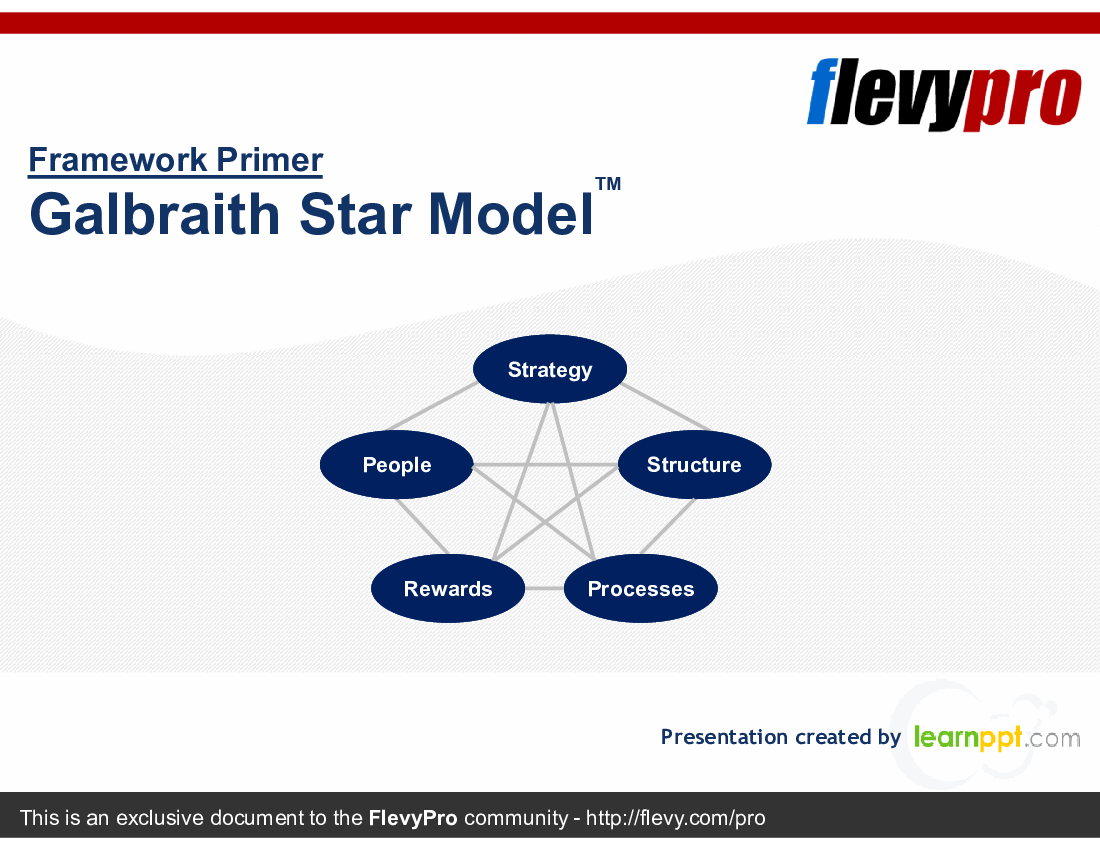
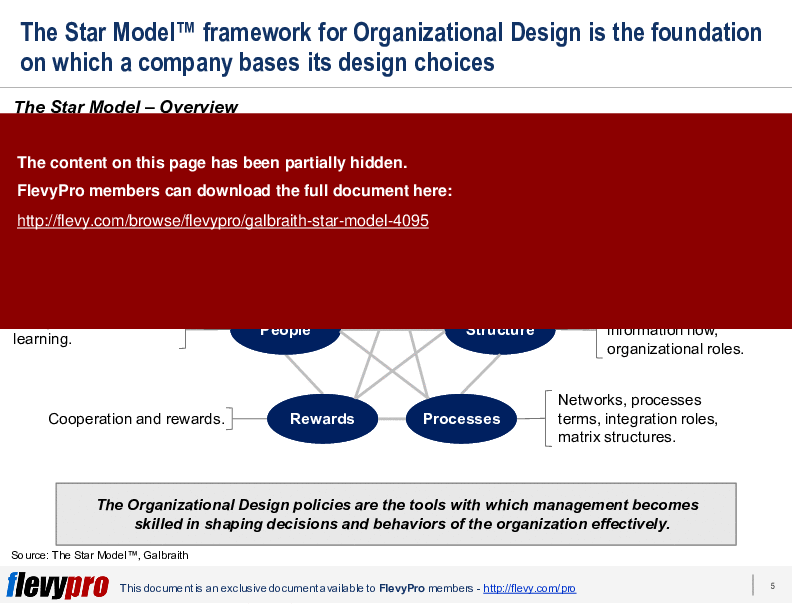
The Star Model™ framework for organization design is the foundation on which a company basis its design choice. The framework consists of a series of design policies that are controllable by management and can influence employee behavior.
Organizations use the Star Model™ framework to overcome the negatives of any structural design. Every organizational structure has positives and negatives associated with it. If management can identify the negatives of its preferred option, it can better design other policies around the Star Model™ to counter the negatives while achieving the positives.
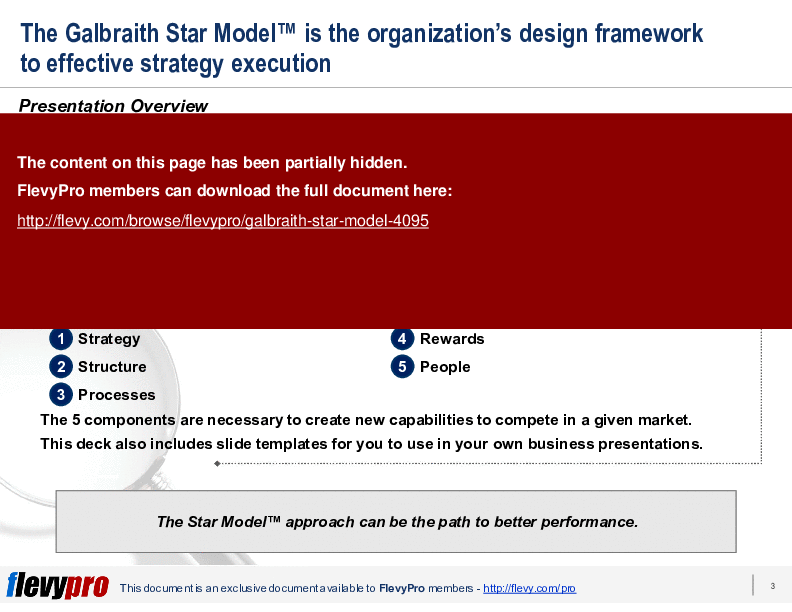
This presentation provides organizations an operative understanding of Galbraith Star Model™. The Star Model™ consist of 5 components essential in this learning.
1. Strategy
2. Structure
3. Processes
4. Rewards
5. People
The 5 components are necessary to create new capabilities to compete in a given market.
This deck also includes slide templates for you to use in your own business presentations.
Gain a competitive edge with the Galbraith Star Model™ framework. This comprehensive presentation dives deep into the five critical components of organizational design: Strategy, Structure, Processes, Rewards, and People. Each section is meticulously detailed, providing actionable insights and practical templates to help you align your organizational policies with your strategic goals.
The deck emphasizes the importance of integrating these components to foster a cohesive and efficient organizational structure. It showcases how to leverage the Star Model™ to enhance decision-making, streamline processes, and drive employee engagement. Equip your leadership team with the tools they need to navigate complex organizational challenges and achieve sustainable growth.
What are the 5 components of the Galbraith Star Model and how do they work together?
The Star Model defines 5 controllable design policies—Strategy, Structure, Processes, Rewards, and People—that management can adjust to influence employee behavior and build capabilities. The framework is used to align these components so a chosen structure’s negatives can be countered by changes in the other 4 areas, totaling 5 components.
How can the Star Model help fix problems caused by a chosen organizational structure?
The model advises identifying the negatives of a preferred structural option and deliberately designing other policies—processes, rewards, people, and strategy alignment—to offset those negatives while keeping intended positives. It is explicitly framed as a tool to counter structure-related downsides using the Star Model’s 5 components.
How should I assess misalignment between strategy and structure using this framework?
Assess whether the current structure enables the capabilities required by strategy; if it does not, map gaps to the other policy levers—processes, rewards, and people—and redesign those areas to support the strategy. The Star Model frames this assessment across its 5 policy components.
What does “processes” refer to in the Star Model context?
In the Star Model, “Processes” is one of 5 design policies that management controls to influence behavior and create organizational capabilities. Processes are considered alongside Strategy, Structure, Rewards, and People as essential components for designing how work gets done, referenced as the Processes component.
What should I look for when selecting an organizational design presentation or toolkit?
Look for a resource that explains the multi-component alignment logic—how strategy, structure, processes, rewards, and people interact—and provides ready materials to communicate that logic, such as slide templates. Flevy’s Galbraith Star Model presentation explicitly covers the 5 components and includes slide templates and five-component coverage.
Do slide templates in a Star Model deck provide measurable value versus building slides from scratch?
Slide templates can accelerate preparation and help communicate the Star Model’s five-component argument consistently across stakeholders. The specific deck referenced offers prebuilt slides and templates to present the framework and findings, packaged in a 24-slide PowerPoint.
I need to redesign rewards after a reorganization—how would the Star Model approach this?
Use the Star Model to identify how current rewards either reinforce or counter the intended strategy and behaviors; then redesign reward policies to support the chosen structure and strategy while mitigating structure-related negatives. The presentation includes guidance and templates focused on the Rewards component.
How can consultants use a Star Model presentation in client engagements?
Consultants can use the presentation to explain interdependencies among strategy, structure, processes, rewards, and people, to diagnose misalignment, and to present alternative policy combinations to clients. The referenced resource provides ready-to-use slides and templates in a 24-slide deck.
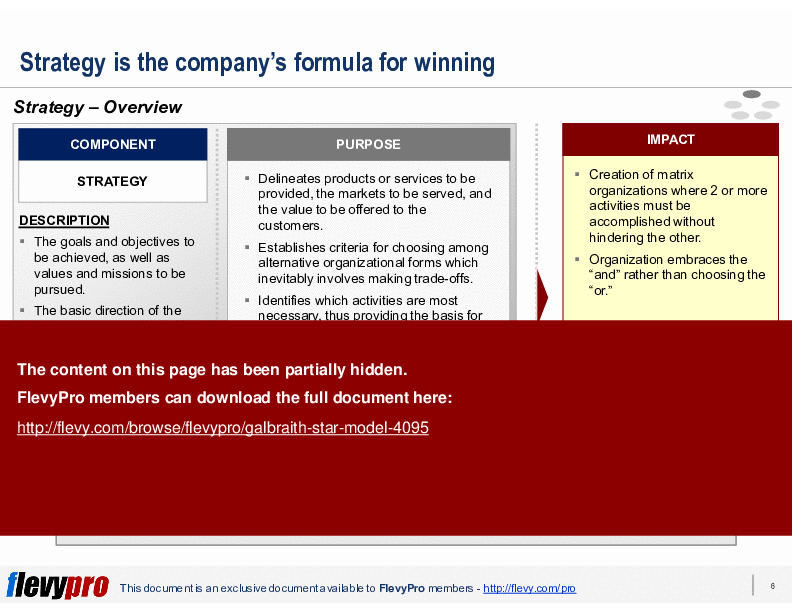
This PPT slide outlines the concept of strategy in organizations, structured into Description, Purpose, and Impact. The Description defines strategy as encompassing organizational goals, objectives, core values, and mission, guiding the company's approach to success. The Purpose highlights the functions of strategy, including delineating products or services, identifying target markets, articulating value propositions, and establishing criteria for selecting organizational forms, which involves trade-offs and essential activities for resource allocation. The Impact section discusses matrix organizations, emphasizing the need for concurrent execution of activities and a mindset that embraces both/and scenarios rather than either/or decisions. Overall, strategy is presented as a foundational element for organizational success, guiding decisions and shaping operational frameworks.
This PPT slide outlines the distinction between vertical and lateral management processes. Vertical processes focus on business planning and budgeting, allocating limited resources like funds and talent to meet strategic objectives efficiently. Lateral processes enhance workflow across functions, facilitating collaboration and communication among team members, particularly in new product development and customer order fulfillment. As organizations face increasing complexity and the need for agility, understanding the interplay between vertical and lateral processes is essential. This duality enables organizations to maintain control while fostering collaboration, ultimately driving better performance and responsiveness to market demands. Recognizing the importance of both processes can enhance operational effectiveness.
The Galbraith Star Model™ addresses organizational design challenges, highlighting that each structural option has advantages and disadvantages. Centralizing internet-related activities can streamline operations and enhance management of resources, reducing duplication and improving customer-facing operations. However, this centralization may distance decision-making from core work, creating an internal monopoly and reducing responsiveness to departments relying on internet services. To mitigate these issues, organizations should design processes and staffing policies aligned with structural goals, present a service plan during planning, and ensure leadership involvement in service level agreements. Performance measurement against planned goals is essential, as is staffing the central unit with a mix of permanent and rotating managers to foster diverse perspectives, increasing the likelihood of achieving desired outcomes while minimizing negatives.
The "People" component of the Galbraith Star Model is essential for shaping individual mindsets and skills within an organization. It encompasses human resource policies related to recruiting, selection, rotation, training, and development, establishing how HR functions within the organizational framework. The component serves 2 primary purposes: producing talent aligned with organizational strategy and structure, and cultivating skills and mindsets necessary for implementing strategic direction. Effective management of the People component directly influences organizational capabilities, enabling the execution of strategic objectives. This integration underscores the importance of aligning HR policies with overall business strategy.
Source: Best Practices in Organizational Design PowerPoint Slides: Galbraith Star Model PowerPoint (PPTX) Presentation Slide Deck, LearnPPT Consulting
This framework is developed by a team of former McKinsey and Big 4 consultants. The presentation follows the headline-body-bumper slide format used by global consulting firms.
For $10.00 more, you can download this document plus 2 more FlevyPro documents. That's just $13 each.
ABOUT FLEVYPRO
This document is part of the FlevyPro Library, a curated knowledge base of documents for our FlevyPro subscribers.

FlevyPro is a subscription service for on-demand business frameworks and analysis tools. FlevyPro subscribers receive access to an exclusive library of curated business documents—business framework primers, presentation templates, Lean Six Sigma tools, and more—among other exclusive benefits.
The average daily rate of a McKinsey consultant is $6,625 (not including expenses). The average price of a Flevy document is $65.
Trusted by over 10,000+ Client Organizations
Since 2012, we have provided business templates to over 10,000 businesses and organizations of all sizes, from startups and small businesses to the Fortune 100, in over 130 countries.
Read Customer Testimonials
"FlevyPro provides business frameworks from many of the global giants in management consulting that allow you to provide best in class solutions for your clients."
– David Harris, Managing Director at Futures Strategy
"If you are looking for great resources to save time with your business presentations, Flevy is truly a value-added resource. Flevy has done all the work for you and we will continue to utilize Flevy as a source to extract up-to-date information and data for our virtual and onsite presentations!"
– Debbi Saffo, President at The NiKhar Group
"As a consultant requiring up to date and professional material that will be of value and use to my clients, I find Flevy a very reliable resource.
The variety and quality of material available through Flevy offers a very useful and commanding source for information. Using Flevy saves me time, enhances my expertise and ends up being a good decision."
– Dennis Gershowitz, Principal at DG Associates
"The wide selection of frameworks is very useful to me as an independent consultant. In fact, it rivals what I had at my disposal at Big 4 Consulting firms in terms of efficacy and organization."
– Julia T., Consulting Firm Owner (Former Manager at Deloitte and Capgemini)
"I am extremely grateful for the proactiveness and eagerness to help and I would gladly recommend the Flevy team if you are looking for data and toolkits to help you work through business solutions."
– Trevor Booth, Partner, Fast Forward Consulting
"I have used Flevy services for a number of years and have never, ever been disappointed. As a matter of fact, David and his team continue, time after time, to impress me with their willingness to assist and in the real sense of the word. I have concluded in fact
that it is not at all just a repository of documents/resources but, in the way that David and his team manage the firm, it is like dealing with consultants always ready to assist, advise and direct you to what you really need, and they always get it right.
I am an international hospitality accomplished senior executive who has worked and lived during the past 35 years in 23 countries in 5 continents and I can humbly say that I know what customer service is, trust me.
Aside from the great and professional service that Flevy's team provide, their wide variety of material is of utmost great quality, professionally put together and most current.
Well done Flevy, keep up the great work and I look forward to continue working with you in the future and to recommend you to a variety of colleagues around the world.
"
– Roberto Pelliccia, Senior Executive in International Hospitality
"FlevyPro has been a brilliant resource for me, as an independent growth consultant, to access a vast knowledge bank of presentations to support my work with clients. In terms of RoI, the value I received from the very first presentation I downloaded paid for my subscription many times over! The
quality of the decks available allows me to punch way above my weight – it's like having the resources of a Big 4 consultancy at your fingertips at a microscopic fraction of the overhead.
"
– Roderick Cameron, Founding Partner at SGFE Ltd
"One of the great discoveries that I have made for my business is the Flevy library of training materials.
As a Lean Transformation Expert, I am always making presentations to clients on a variety of topics: Training, Transformation, Total Productive Maintenance, Culture, Coaching, Tools, Leadership Behavior, etc. Flevy
It is well worth the money to purchase these presentations. Sure, I have the knowledge and information to make my point. It is another thing to create a presentation that captures what I want to say. Flevy has saved me countless hours of preparation time that is much better spent with implementation that will actually save money for my clients.
"
– Ed Kemmerling, Senior Lean Transformation Expert at PMG
Download our free compilation of 50+ slides and templates on Organizational Design, Change Management, and Corporate Culture. Methodologies include ADKAR, Burke-Litwin Change Model, McKinsey 7-S, Competing Values Framework, etc.









