
This framework is developed by a team of former McKinsey and Big 4 consultants. The presentation follows the headline-body-bumper slide format used by global consulting firms.
Editor Summary
Fit Transformation: Strong, Agile, Lean is a 24-slide PowerPoint presentation (PPT) by LearnPPT Consulting that outlines a 3-phase business transformation approach: Translate the Corporate Strategy, Align the Operating Model, and Manage the Transformation.
Read moreThe deck discusses decentralized IT governance, leadership and cultural embedding, workforce participation, and continuous improvement methodologies, and includes reusable slide templates. Target users include CEOs, transformation leads, strategy and operations executives, HR and IT leaders. Sold as a digital download on Flevy.
Use this presentation when an organization must realign its operations to a changed strategy or address competitive, financial, or disruption-driven performance gaps. The content supports programs that need a structured, phased approach to change rather than ad hoc initiatives.
CEOs and strategy executives translating corporate strategy into operational priorities and initiatives across functions.
Transformation leads and program managers designing and sequencing transformation activities and governance to manage delivery.
IT leaders creating a decentralized IT governance model to preserve interoperability and control costs across business units.
HR leaders engaging the workforce in diagnostics, change discussions, and embedding cultural principles through implementation.
The 3-phase structure—translating strategy, aligning the operating model, managing transformation—reflects staged program-management and operating-model alignment practices common in management consulting.
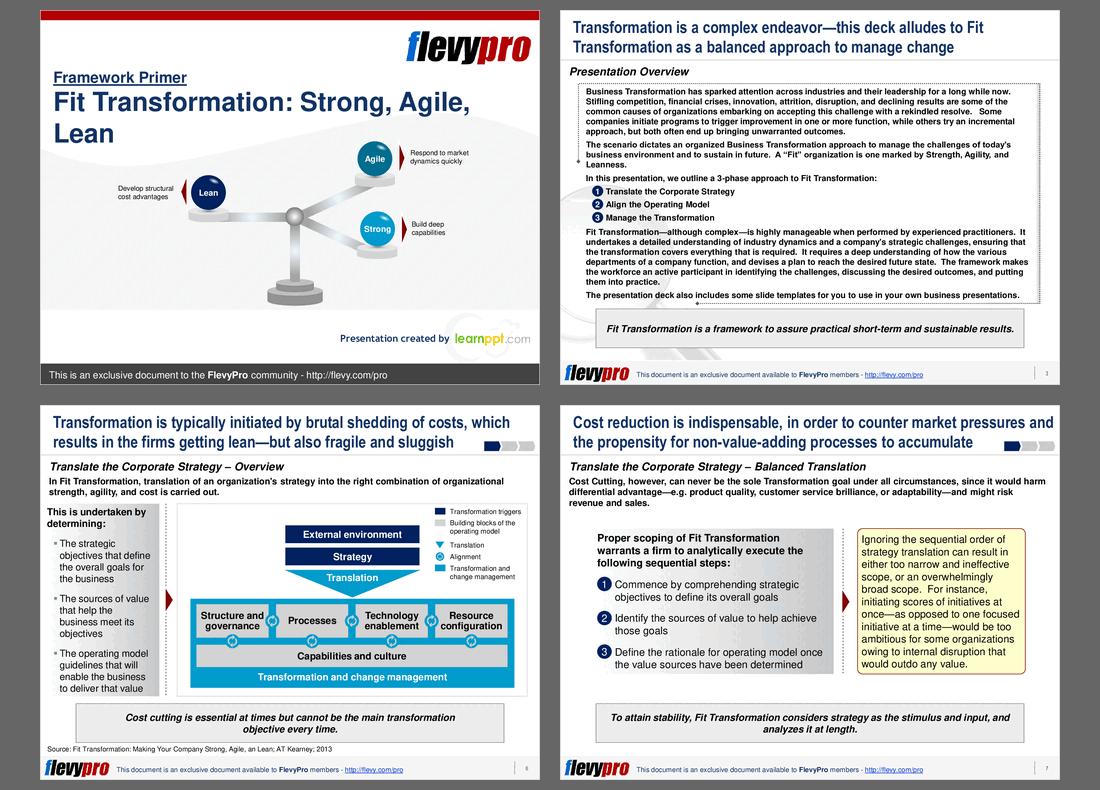
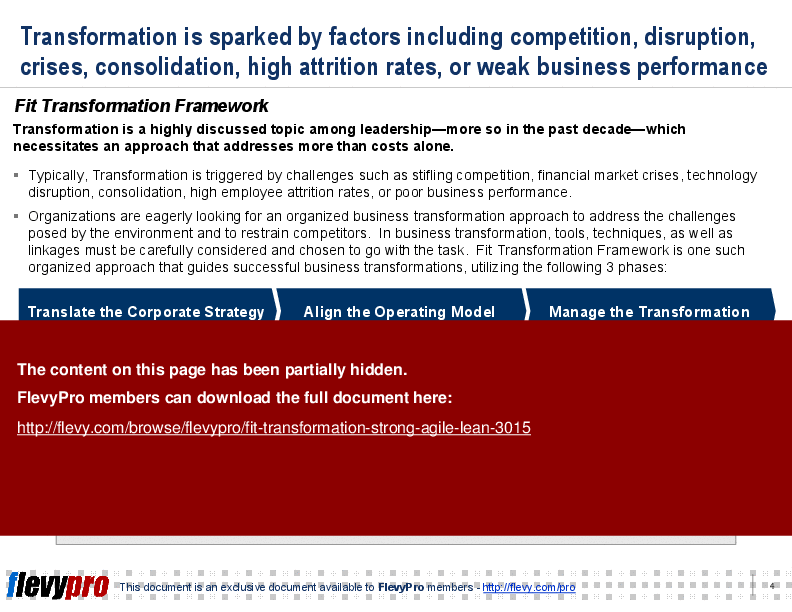
Business Transformation has sparked attention across industries and their leadership for a long while now. Stifling competition, financial crises, innovation, attrition, disruption, and declining results are some of the common causes of organizations embarking on accepting this challenge with a rekindled resolve. Some companies initiate programs to trigger improvement in one or more function, while others try an incremental approach, but both often end up bringing unwarranted outcomes.
The scenario dictates an organized Business Transformation approach to manage the challenges of today’s business environment and to sustain in future. A "Fit" organization is one marked by Strength, Agility, and Leanness. It is a framework to assure practical short-term and sustainable results.
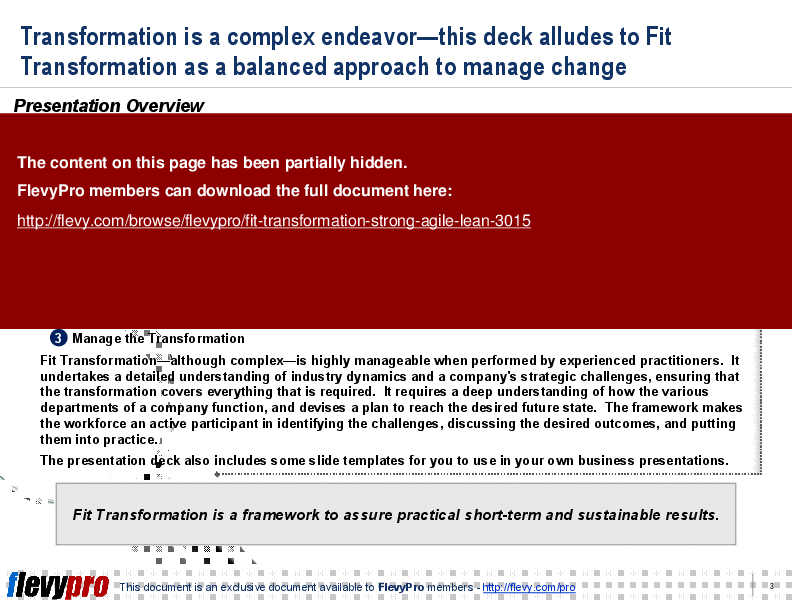
In this presentation, we outline a 3-phase approach to Fit Transformation:
1. Translate the Corporate Strategy
2. Align the Operating Model
3. Manage the Transformation
Fit Transformation—although complex—is highly manageable when performed by experienced practitioners. It undertakes a detailed understanding of industry dynamics and a company's strategic challenges, ensuring that the transformation covers everything that is required. It requires a deep understanding of how the various departments of a company function, and devises a plan to reach the desired future state. The framework makes the workforce an active participant in identifying the challenges, discussing the desired outcomes, and putting them into practice.
The presentation deck also includes some slide templates for you to use in your own business presentations.
This PPT delves into the intricacies of aligning the operating model with corporate strategy, emphasizing the importance of coherence across various functional units. It highlights the necessity of a decentralized IT governance model to ensure interoperability and cost control. The framework also addresses the critical role of leadership in driving change, embedding cultural principles, and sustaining transformation through continuous improvement methodologies. This comprehensive approach ensures that every aspect of the organization is geared towards achieving a state of strength, agility, and leanness, making it a valuable resource for any executive aiming to steer their company through a successful transformation.
What are the common phases of a business transformation program?
A common staged approach begins by translating corporate strategy into operational priorities, then aligning the operating model across functions, and finally managing delivery and sustainment through change management and continuous improvement. The referenced presentation organizes this as a 3-phase approach.
How do you align an operating model with corporate strategy?
Alignment requires mapping functional roles, decision rights, and processes to strategic objectives, ensuring coherence across departments, and addressing enabling elements such as IT governance and leadership behaviors. The Fit Transformation deck emphasizes operating-model alignment alongside decentralized IT governance.
What role does leadership play in sustaining transformation outcomes?
Leadership drives change by setting direction, embedding cultural principles, sponsoring initiatives, and sustaining momentum through continuous improvement methodologies. The presentation highlights leadership as critical for embedding culture and maintaining transformation gains using continuous improvement methodologies.
When should a company consider decentralized IT governance during transformation?
Decentralized IT governance is appropriate when interoperability and cost control across business units are priorities and when local autonomy must be balanced with enterprise standards. The Fit Transformation materials specifically call out a decentralized IT governance model for interoperability and cost control.
What should I look for in a business transformation slide deck or toolkit?
Look for a clear approach that translates strategy to operations, guidance on operating-model alignment, change and leadership considerations, and usable presentation assets such as slide templates. The Fit Transformation product is a 24-slide PowerPoint that includes slide templates and a 3-phase framework.
How much time or budget is typically needed to run a Fit-style transformation?
The document overview does not specify timelines or budgets; it notes that Fit Transformation is complex, but manageable with experienced practitioners and detailed industry understanding. The resource structures work into a 3-phase approach rather than prescribing a specific timeline.
I need to restructure after a merger—what framework helps ensure functional coherence?
A useful framework starts with translating the new corporate strategy, then aligns the operating model across functions, and finally manages integration and change with governance and leadership oversight. Flevy's Fit Transformation: Strong, Agile, Lean presents that sequence in a 3-phase framework.
How can I involve employees effectively in a transformation program?
Involve the workforce in diagnostics, identify challenges with their input, engage them in defining desired outcomes, and include them in implementation to build ownership. The presentation describes workforce participation across diagnosis and implementation and supplies slide templates to support engagement.
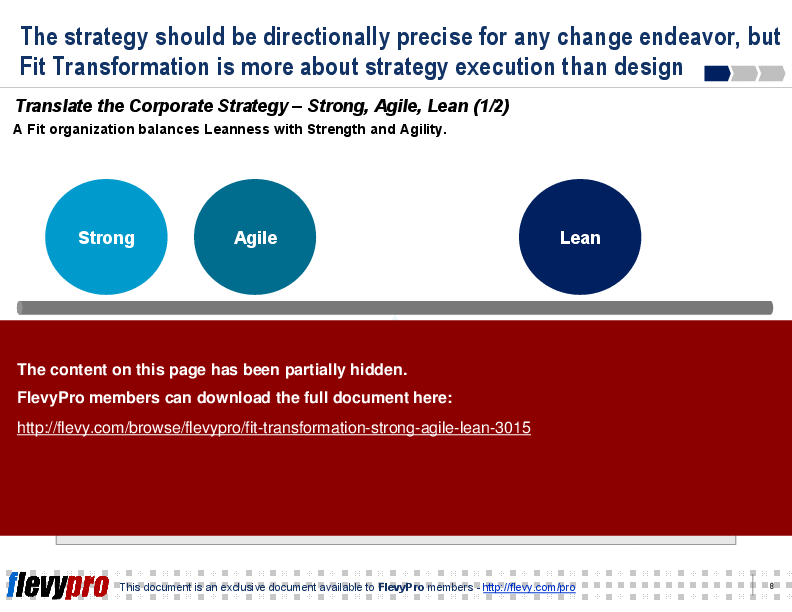
This PPT slide presents a framework for translating corporate strategy through 3 dimensions: Strong, Agile, and Lean. The "Strong" aspect emphasizes building deep capabilities and competencies to withstand market fluctuations and drive sustained growth. "Agile" highlights the necessity for organizations to respond quickly to market dynamics, enabling them to seize opportunities and mitigate risks. The "Lean" component focuses on developing structural cost advantages by streamlining operations and eliminating waste to enhance efficiency. The trade-offs among these dimensions must be carefully considered at organizational, divisional, and business unit levels to ensure effective strategy execution. Integrating strength, agility, and lean principles is essential for navigating modern business complexities.
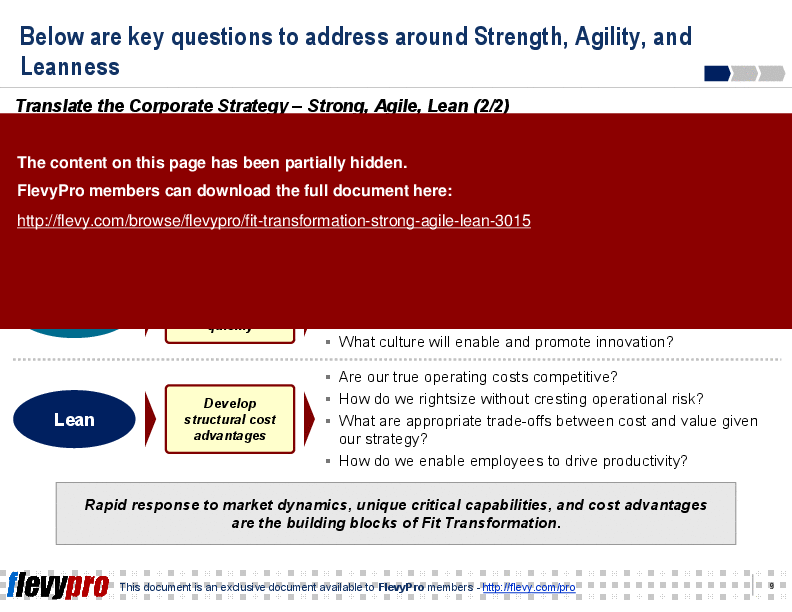
This PPT slide outlines essential questions for enhancing organizational capabilities in 3 key areas: Strength, Agility, and Lean operations. The "Strong" section focuses on building deep capabilities, clarifying optimal operating models, differentiating capabilities, and strategies for high-value partnerships and talent retention. The "Agile" section emphasizes responding swiftly to market dynamics, gaining customer insights, process responsiveness, workforce flexibility, and fostering a culture of innovation. The "Lean" category addresses developing structural cost advantages, assessing operating costs, rightsizing without risks, and evaluating cost-value trade-offs. This framework encourages organizations to align strategies with operational excellence, fostering continuous improvement and adaptability for sustainable growth.
This PPT slide outlines a framework for managing organizational transformation, emphasizing 4 key dimensions: Spread, Shift, Sustain, and Deepen. The Spread dimension focuses on top-down leadership to communicate the mandate for change, ensuring a clear direction. Shift empowers individuals at all levels to take ownership of the change process, fostering engagement and accountability. Sustain involves embedding changes into daily operations through ongoing performance management, making change a permanent fixture. Lastly, Deepen addresses cultural aspects, emphasizing employee commitment by reinforcing cultural principles and modifying behavioral norms. These dimensions collectively enhance change initiatives within organizations navigating complex transformations.
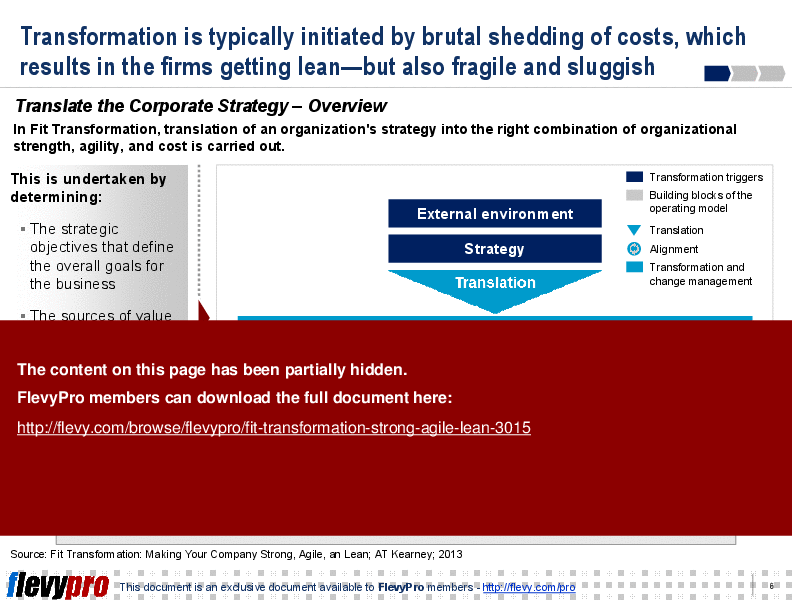
Fit Transformation focuses on translating corporate strategy into actionable elements that enhance strength, agility, and cost efficiency. Transformation often begins with cost reductions, leading to a leaner structure, but potentially making the organization fragile. Key components include defining strategic objectives aligned with business goals and understanding sources of value that enable objective achievement. Clear operating model guidelines serve as a roadmap for delivering value. The transformation process encompasses external environment, strategy, and translation, which involves structuring governance, refining processes, enabling technology, and configuring resources. While cost-cutting is essential, it should not be the sole focus; a balanced approach is necessary for immediate financial health and long-term strategic alignment.
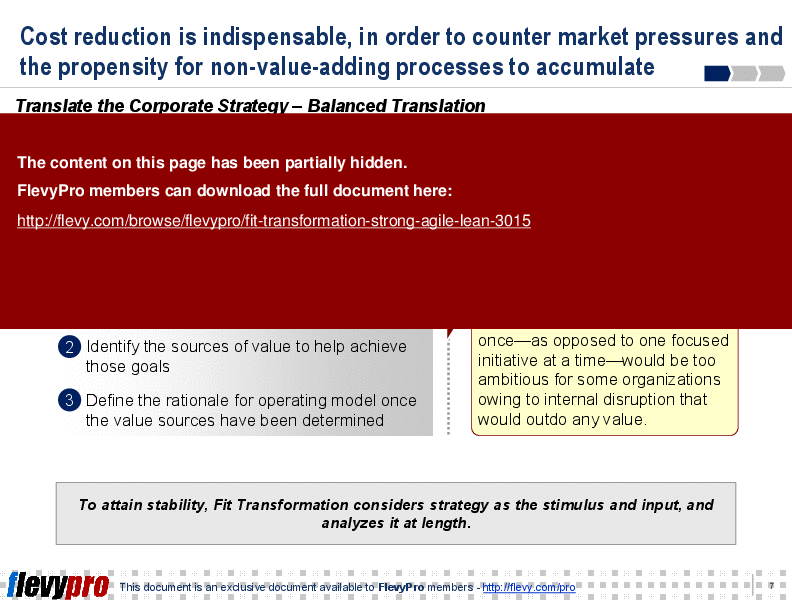
Cost reduction is critical in response to market pressures and non-value-adding processes. However, transformation efforts should not solely focus on cost-cutting, as neglecting product quality, customer service, and adaptability can jeopardize overall business performance. A structured approach to "Fit Transformation" aligns corporate strategy with operational execution through 3 steps: 1) Understand strategic objectives to define overarching goals, ensuring alignment with the company's vision. 2) Identify sources of value through analysis to drive targeted initiatives that enhance performance. 3) Define the rationale for the operating model based on identified value sources to optimize structure and processes. Neglecting the sequence of these steps can lead to ineffective initiatives; focusing on one initiative at a time maintains clarity and effectiveness, essential for achieving stability and tangible results.
This PPT slide outlines the alignment of the operating model through 2 dimensions: Building Blocks and Functions. The "Building Blocks" section highlights the integration of structure, processes, technology, and culture, emphasizing cohesive operation and governance issues for accountability. A decentralized IT governance model is suggested for coordination, with committees ensuring interoperability and managing support costs. Interdependencies among operating model components are essential for facilitating change. The "Functions" section focuses on breaking down silos across organizational functions, utilizing cross-functional workshops and team-weighted goals during transformation initiatives. It discusses rationalizing product development by organizing teams around products, enhancing collaboration among designers, engineers, and marketers, and vetting candidates through interviews with related department managers to reinforce cross-functional understanding. Aligning both building blocks and functional aspects is critical for organizational transformation.
Source: Best Practices in Change Management, Strategy Execution, Operating Model, Agile, Transformation PowerPoint Slides: Fit Transformation: Strong, Agile, Lean PowerPoint (PPT) Presentation Slide Deck, LearnPPT Consulting
This framework is developed by a team of former McKinsey and Big 4 consultants. The presentation follows the headline-body-bumper slide format used by global consulting firms.
For $10.00 more, you can download this document plus 2 more FlevyPro documents. That's just $13 each.
ABOUT FLEVYPRO
This document is part of the FlevyPro Library, a curated knowledge base of documents for our FlevyPro subscribers.

FlevyPro is a subscription service for on-demand business frameworks and analysis tools. FlevyPro subscribers receive access to an exclusive library of curated business documents—business framework primers, presentation templates, Lean Six Sigma tools, and more—among other exclusive benefits.
The average daily rate of a McKinsey consultant is $6,625 (not including expenses). The average price of a Flevy document is $65.
Trusted by over 10,000+ Client Organizations
Since 2012, we have provided business templates to over 10,000 businesses and organizations of all sizes, from startups and small businesses to the Fortune 100, in over 130 countries.
"As a niche strategic consulting firm, Flevy and FlevyPro frameworks and documents are an on-going reference to help us structure our findings and recommendations to our clients as well as improve their clarity, strength, and visual power. For us, it is an invaluable resource to increase our impact and value."
– David Coloma, Consulting Area Manager at Cynertia Consulting
"As a consulting firm, we had been creating subject matter training materials for our people and found the excellent materials on Flevy, which saved us 100's of hours of re-creating what already exists on the Flevy materials we purchased."
– Michael Evans, Managing Director at Newport LLC
"I have found Flevy to be an amazing resource and library of useful presentations for lean sigma, change management and so many other topics. This has reduced the time I need to spend on preparing for my performance consultation. The library is easily accessible and updates are regularly provided. A wealth of great information."
– Cynthia Howard RN, PhD, Executive Coach at Ei Leadership
"One of the great discoveries that I have made for my business is the Flevy library of training materials.
As a Lean Transformation Expert, I am always making presentations to clients on a variety of topics: Training, Transformation, Total Productive Maintenance, Culture, Coaching, Tools, Leadership Behavior, etc. Flevy
It is well worth the money to purchase these presentations. Sure, I have the knowledge and information to make my point. It is another thing to create a presentation that captures what I want to say. Flevy has saved me countless hours of preparation time that is much better spent with implementation that will actually save money for my clients.
"
– Ed Kemmerling, Senior Lean Transformation Expert at PMG
"As an Independent Management Consultant, I find Flevy to add great value as a source of best practices, templates and information on new trends. Flevy has matured and the quality and quantity of the library is excellent. Lastly the price charged is reasonable, creating a win-win value for
the customer, Flevy and the various authors. This is truly a service that benefits the consulting industry and associated clients. Thanks for providing this service.
"
– Jim Schoen, Principal at FRC Group
"As a small business owner, the resource material available from FlevyPro has proven to be invaluable. The ability to search for material on demand based our project events and client requirements was great for me and proved very beneficial to my clients. Importantly, being able to easily edit and tailor
the material for specific purposes helped us to make presentations, knowledge sharing, and toolkit development, which formed part of the overall program collateral. While FlevyPro contains resource material that any consultancy, project or delivery firm must have, it is an essential part of a small firm or independent consultant's toolbox.
"
– Michael Duff, Managing Director at Change Strategy (UK)
"The wide selection of frameworks is very useful to me as an independent consultant. In fact, it rivals what I had at my disposal at Big 4 Consulting firms in terms of efficacy and organization."
– Julia T., Consulting Firm Owner (Former Manager at Deloitte and Capgemini)
"As a young consulting firm, requests for input from clients vary and it's sometimes impossible to provide expert solutions across a broad spectrum of requirements. That was before I discovered Flevy.com.
Through subscription to this invaluable site of a plethora of topics that are key and crucial to consulting, I
have been able to exceed expectations and deliver quality advice and solutions to my clients. The quality and expertise of the authors are exemplary and gives me great confidence to use as part of my service offerings.
I highly recommend this company for any consultant wanting to apply international best practice standards in their service offerings.
"
– Nishi Singh, Strategist and MD at NSP Consultants
Download our FREE Digital Transformation Templates
Download our free compilation of 50+ Digital Transformation slides and templates. DX concepts covered include Digital Leadership, Digital Maturity, Digital Value Chain, Customer Experience, Customer Journey, RPA, etc.
Download our FREE Digital Transformation Templates
Get Our FREE Product.
Download our free compilation of 50+ Digital Transformation slides and templates. DX concepts covered include Digital Leadership, Digital Maturity, Digital Value Chain, Customer Experience, Customer Journey, RPA, etc.