
This product (Five Beliefs of Agile Development) is a 18-slide PPT PowerPoint presentation slide deck (PPT), which you can download immediately upon purchase.
Agile Adoption is a journey that transforms the ways the IT organization and the business operate. Successfully traveling the transformational path calls for enormous effort in managing various forms of change—changes in the organization's structure, people's behavior, team dynamics, tools, processes, stakeholder interactions, and so forth.

This presentation focuses on Change Management aspects of an Agile Adoption Journey. Agile Transformation does not mean prescribing to a methodology.
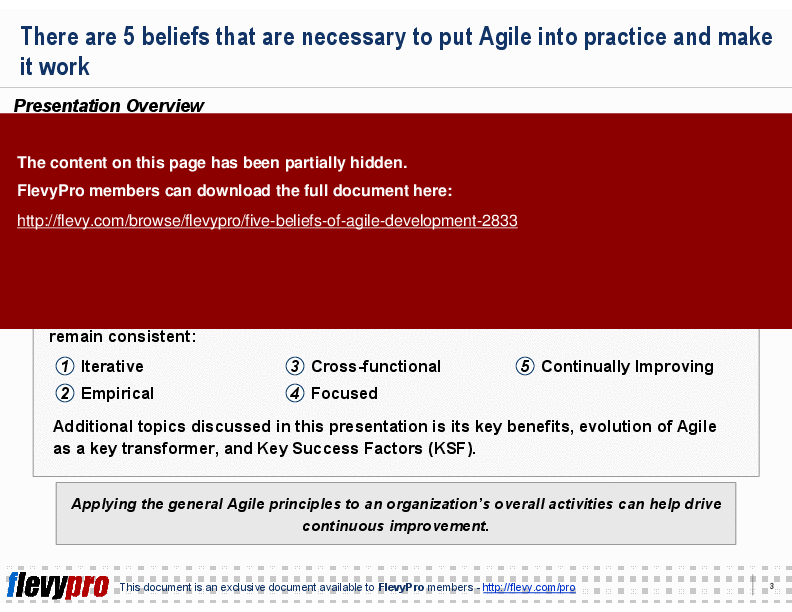
Many forms of Agile have been developed. At its core, the following set of beliefs remain consistent:
Applying the general Agile principles to an organization’s overall activities can help drive continuous improvement.
Additional topics discussed in this presentation is its key benefits, evolution of Agile as a key transformer, and Key Success Factors (KSF). This document also include slide templates for you to use in your own business presentations.
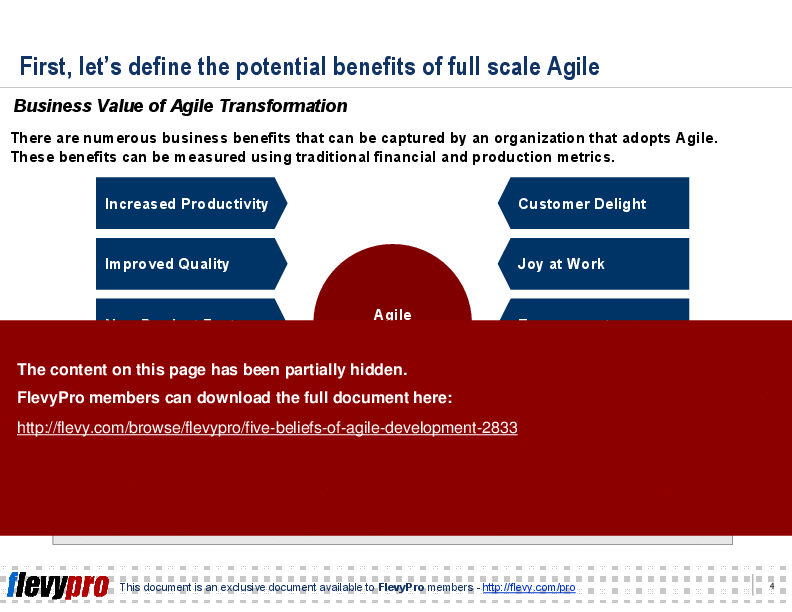
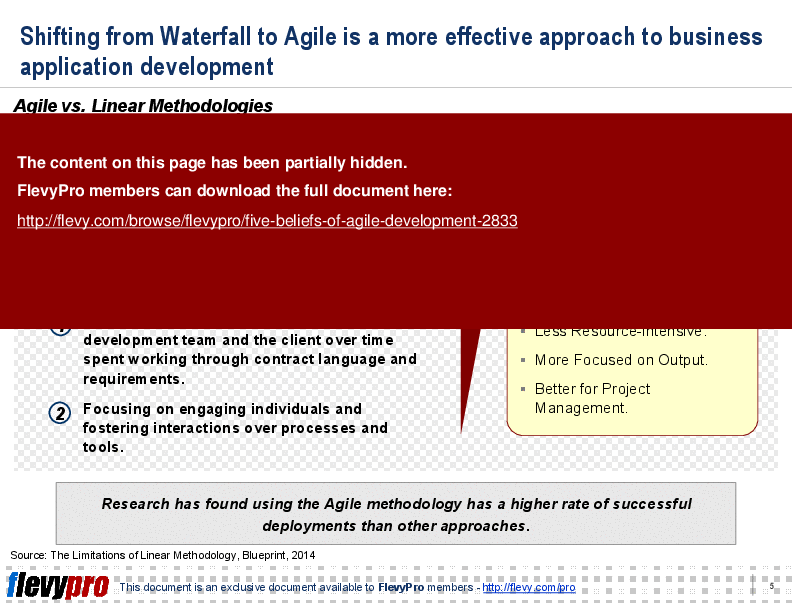
This presentation delves into the tangible business value of Agile Transformation, highlighting benefits such as increased productivity, improved quality, and enhanced customer satisfaction. It provides a comprehensive comparison between Agile and traditional linear methodologies, emphasizing Agile's effectiveness in fostering better project management and higher success rates in deployments.
The PPT also outlines critical success factors (KSFs) necessary for implementing Agile, including leadership accountability, the role of change agents, and managing integration within the organization. These insights are crucial for senior leaders aiming to drive significant organizational change and achieve sustainable improvements.
Source: Best Practices in Change Management, Agile, Agile Management PowerPoint Slides: Five Beliefs of Agile Development PowerPoint (PPT) Presentation Slide Deck, PPT Lab
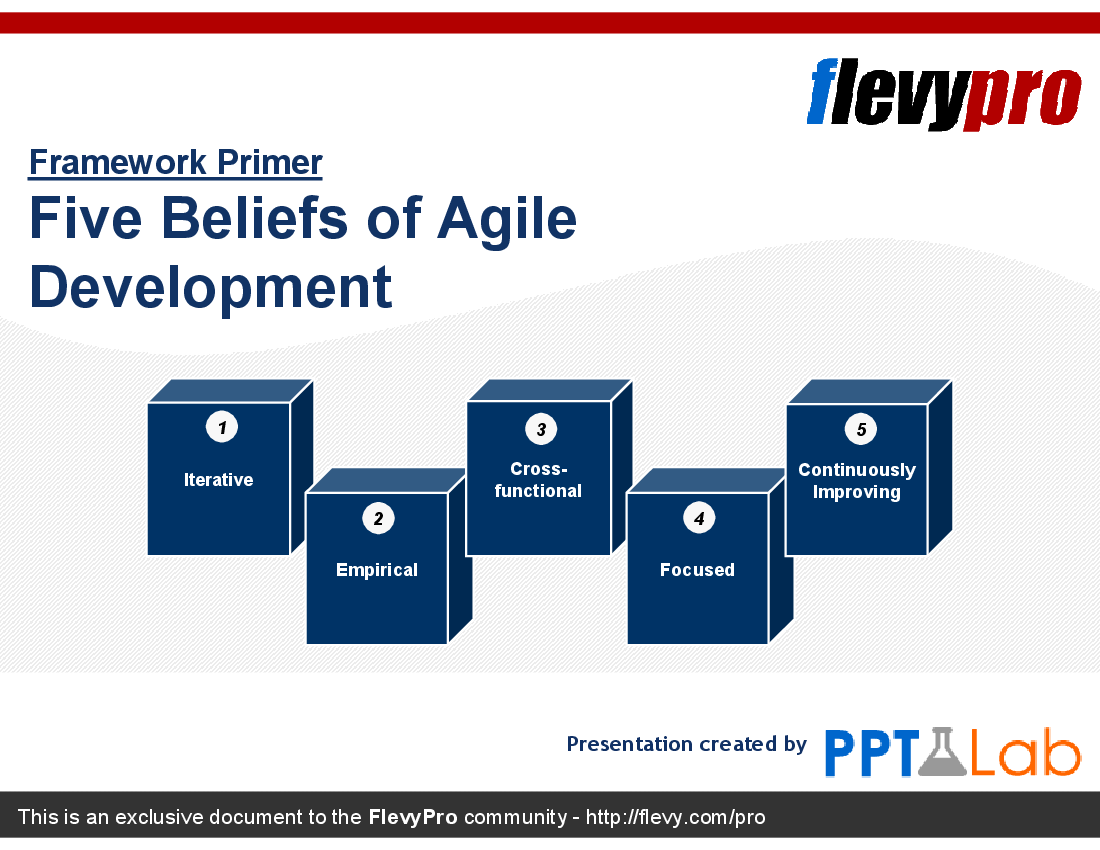
This PPT slide presents a structured overview of the Agile framework, emphasizing its 5 core principles. Each principle is encapsulated in a distinct box, suggesting a modular approach to understanding Agile methodologies. The principles listed are: Iterative, Empirical, Cross-functional, Focused, and Continuously Improving.
The term "Iterative" implies a cyclical process where development occurs in small, manageable increments. This allows teams to adapt and refine their work based on feedback, enhancing responsiveness to change. "Empirical" highlights the importance of data-driven decision-making, suggesting that teams should rely on real-world evidence rather than assumptions. This principle encourages a culture of experimentation and learning.
"Cross-functional" indicates the necessity for diverse skill sets within teams, promoting collaboration across various functions. This principle is crucial for breaking down silos and fostering innovation. The term "Focused" suggests that teams should maintain clarity on their objectives, ensuring that efforts are aligned with overarching goals. This focus helps to streamline processes and enhance productivity.
Lastly, "Continuously Improving" underscores a commitment to ongoing enhancement of processes and outcomes. This principle reflects a mindset that values feedback and iterative learning, which is essential for long-term success in Agile environments. The concluding statement on the slide suggests that integrating these principles is vital for successful Agile implementation. This integration is not merely about adopting practices, but fostering a culture that embraces these values. For organizations considering Agile, understanding and applying these core principles can drive significant improvements in project delivery and team dynamics.
This PPT slide outlines 5 best practices essential for implementing Agile methodologies effectively within large organizations. Each practice is presented in a structured format, emphasizing its significance in fostering a productive Agile environment.
The first practice, "Iterative," highlights the importance of developing prototypes within a flexible timeline. This approach allows teams to adapt based on feedback, ensuring that the final product aligns closely with user needs and expectations. The emphasis on iteration suggests a commitment to continuous refinement rather than a rigid adherence to initial plans.
Next, the "Empirical" practice focuses on the necessity of testing to maintain high software quality. It underscores that development activities must be efficient, implying that regular assessments are crucial for identifying issues early and optimizing processes.
The "Cross-functional" practice stresses the need for diverse team compositions. Teams should consist of members with specific skills that contribute to achieving the final objectives. This diversity is presented as a way to enhance problem-solving capabilities while managing the complexities that come with large-scale projects.
"Focused" refers to the role of the product owner, who is pivotal in decision-making regarding scope, timing, and budget allocation. This practice highlights the importance of clear responsibilities and the need for a dedicated individual to steer the project, ensuring alignment with organizational goals.
Lastly, "Continuously Improving" emphasizes the role of Agile retrospectives. These sessions are vital for teams to reflect on their processes and identify areas for improvement, fostering a culture of learning and adaptation.
Overall, these practices are framed as integral components of a successful Agile implementation, particularly in large organizations where complexity and scale can pose significant challenges.
This document is part of the FlevyPro Library, a curated knowledge base of documents for our FlevyPro subscribers.
FlevyPro is a subscription service for on-demand business frameworks and analysis tools. FlevyPro subscribers receive access to an exclusive library of curated business documents—business framework primers, presentation templates, Lean Six Sigma tools, and more—among other exclusive benefits.
The average daily rate of a McKinsey consultant is $6,625 (not including expenses). The average price of a Flevy document is $65.
Trusted by over 10,000+ Client Organizations
Since 2012, we have provided best practices to over 10,000 businesses and organizations of all sizes, from startups and small businesses to the Fortune 100, in over 130 countries.
"FlevyPro provides business frameworks from many of the global giants in management consulting that allow you to provide best in class solutions for your clients."
– David Harris, Managing Director at Futures Strategy
"Flevy is our 'go to' resource for management material, at an affordable cost. The Flevy library is comprehensive and the content deep, and typically provides a great foundation for us to further develop and tailor our own service offer."
– Chris McCann, Founder at Resilient.World
"[Flevy] produces some great work that has been/continues to be of immense help not only to myself, but as I seek to provide professional services to my clients, it gives me a large "tool box" of resources that are critical to provide them with the quality of service and outcomes they are expecting."
– Royston Knowles, Executive with 50+ Years of Board Level Experience
"I like your product. I'm frequently designing PowerPoint presentations for my company and your product has given me so many great ideas on the use of charts, layouts, tools, and frameworks. I really think the templates are a valuable asset to the job."
– Roberto Fuentes Martinez, Senior Executive Director at Technology Transformation Advisory
"The wide selection of frameworks is very useful to me as an independent consultant. In fact, it rivals what I had at my disposal at Big 4 Consulting firms in terms of efficacy and organization."
– Julia T., Consulting Firm Owner (Former Manager at Deloitte and Capgemini)
"I am extremely grateful for the proactiveness and eagerness to help and I would gladly recommend the Flevy team if you are looking for data and toolkits to help you work through business solutions."
– Trevor Booth, Partner, Fast Forward Consulting
"As a niche strategic consulting firm, Flevy and FlevyPro frameworks and documents are an on-going reference to help us structure our findings and recommendations to our clients as well as improve their clarity, strength, and visual power. For us, it is an invaluable resource to increase our impact and value."
– David Coloma, Consulting Area Manager at Cynertia Consulting
"As a consulting firm, we had been creating subject matter training materials for our people and found the excellent materials on Flevy, which saved us 100's of hours of re-creating what already exists on the Flevy materials we purchased."
Download our FREE Digital Transformation Templates
Download our free compilation of 50+ Digital Transformation slides and templates. DX concepts covered include Digital Leadership, Digital Maturity, Digital Value Chain, Customer Experience, Customer Journey, RPA, etc.
Download our FREE Digital Transformation Templates
Get Our FREE Product.
Download our free compilation of 50+ Digital Transformation slides and templates. DX concepts covered include Digital Leadership, Digital Maturity, Digital Value Chain, Customer Experience, Customer Journey, RPA, etc.









