
In every organization, there is a consistent need to make timely crucial decisions at all levels. This is critical more so at the executive level. However, this isn't simple and there isn't a straight path either. Executives have to make tradeoffs, assessing different available options. In most cases, Chief Executive Officers have to develop their own on-the-job training programs for executives to sharpen their strategic thinking and judgmental skills.
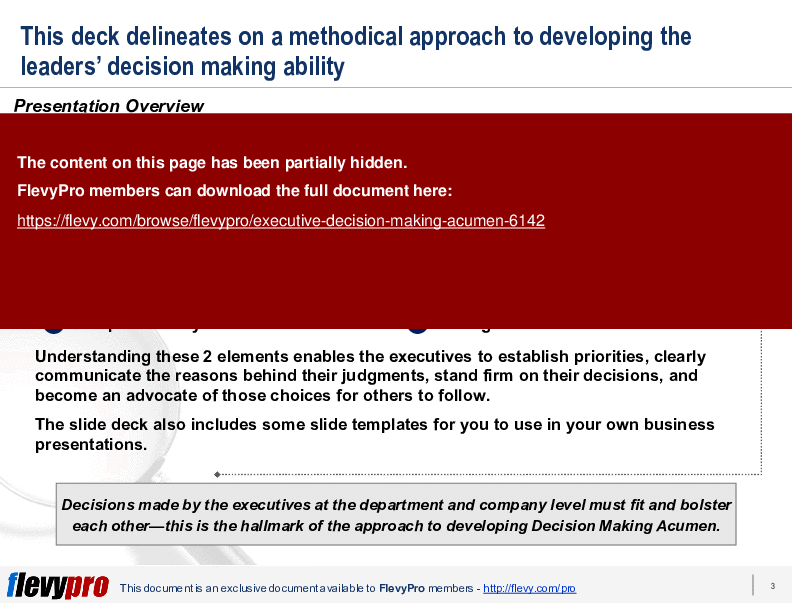
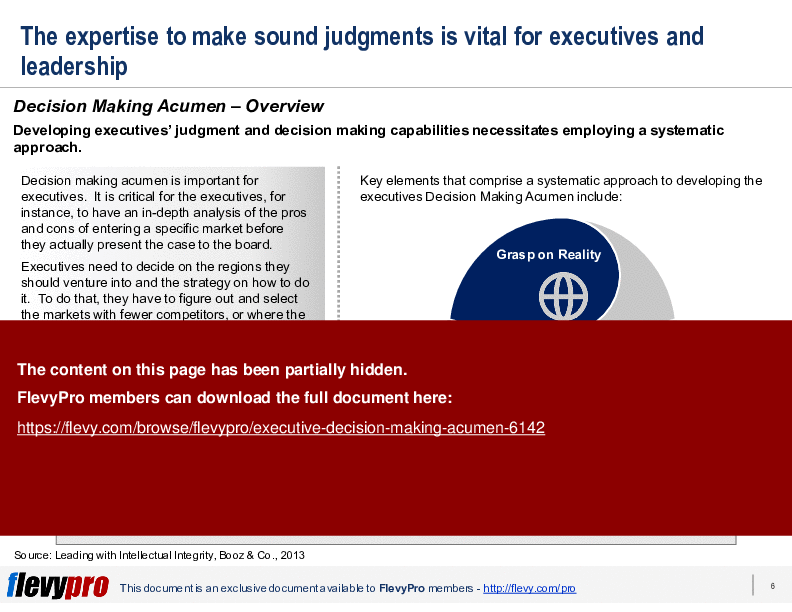
Developing executives' judgment and decision making capabilities necessitates employing a systematic approach. This approach involves 2 key elements:
1. Grasp on Reality
2. Strategic Choice Cascade
Understanding these 2 elements enables the executives to establish priorities, clearly communicate the reasons behind their judgments, stand firm on their decisions, and become an advocate of those choices for others to follow.
Decisions made by the executives at the department and company level must fit and bolster each other. This is the hallmark of the approach to developing Decision Making Acumen.
The slide deck also includes some slide templates for you to use in your own business presentations.
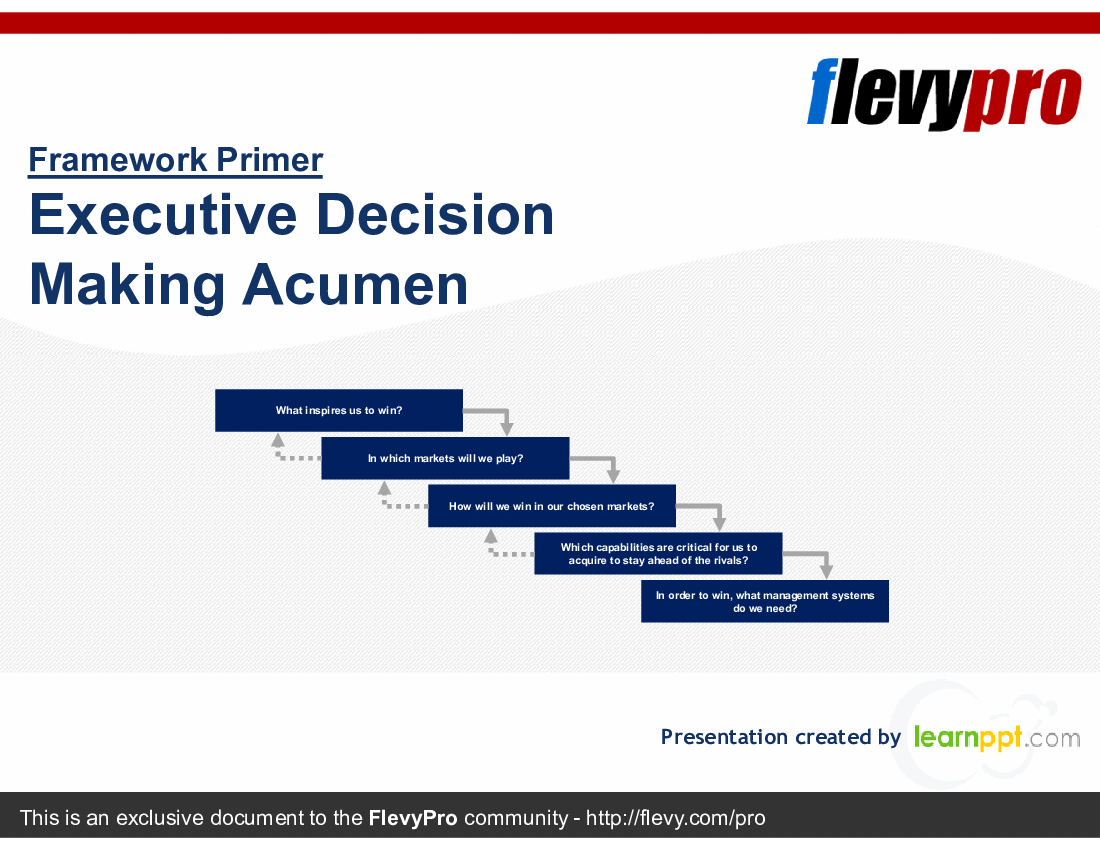
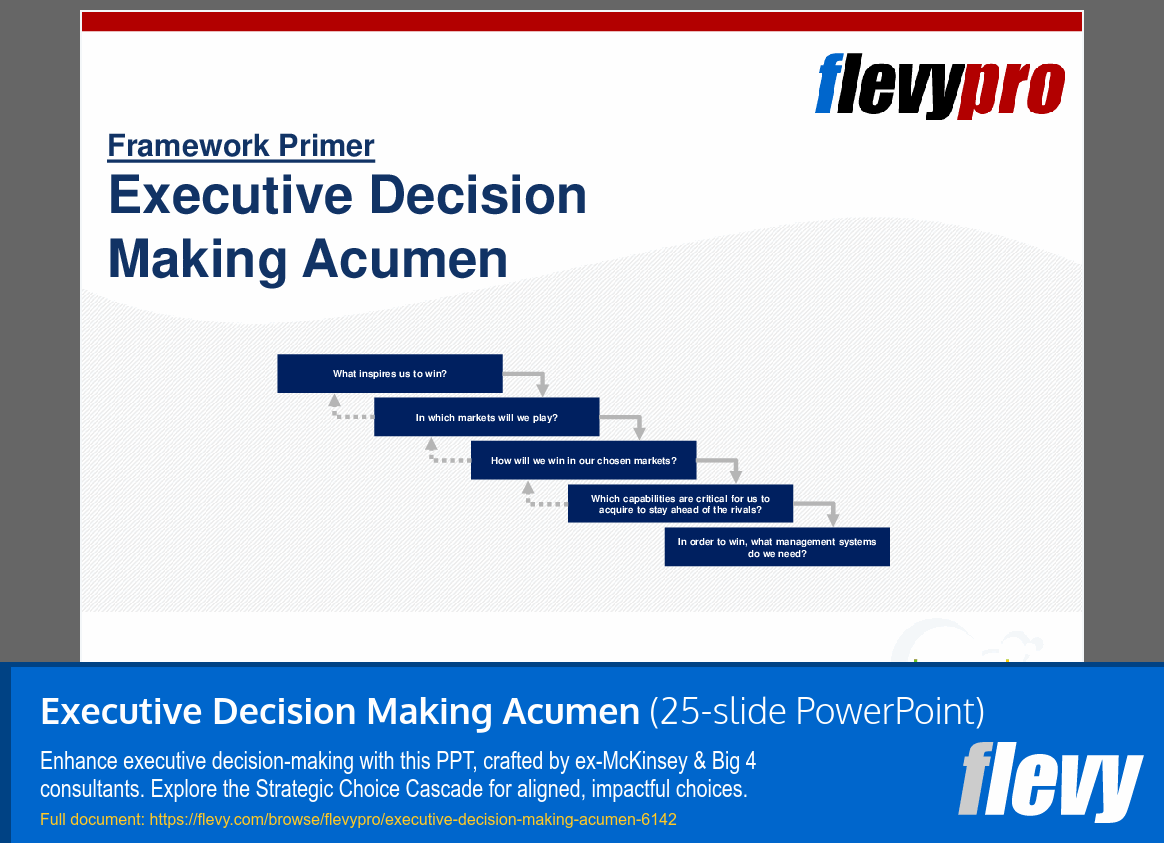
This presentation provides a comprehensive exploration of the Strategic Choice Cascade, a methodology designed to enhance decision-making acumen at the executive level. The framework, adopted by industry leaders like P&G, integrates five critical strategic choices that are essential for aligning departmental and company-wide decisions. These choices include defining winning aspirations, selecting target markets, strategizing how to win, identifying critical capabilities, and establishing necessary management systems.
The slide deck includes detailed templates and practical examples to help you implement the Strategic Choice Cascade in your organization. These resources are invaluable for executives looking to refine their strategic thinking and judgment skills, ensuring that all decisions are coherent and mutually reinforcing. This PPT is a must-have for leaders committed to driving their organizations towards sustained success and competitive advantage.
Got a question about this document? Email us at flevypro@flevy.com.
Executive Summary
The "Executive Decision Making Acumen" presentation is designed to enhance the decision-making capabilities of executives by employing a systematic approach. Developed by former McKinsey and Big 4 consultants, this deck introduces the Strategic Choice Cascade framework, which guides leaders in making aligned and impactful decisions. By focusing on critical questions regarding market selection, competitive advantage, and necessary capabilities, executives can improve their strategic thinking and judgment skills. This resource includes templates for practical application, ensuring that decision-making processes are both structured and effective.
Who This Is For and When to Use
• Corporate executives seeking to refine their decision-making skills
• Integration leaders responsible for aligning strategic initiatives
• Consultants advising organizations on strategic planning
• Senior management teams focused on enhancing organizational effectiveness
Best-fit moments to use this deck:
• During strategic planning sessions to align executive decisions
• In workshops aimed at developing leadership decision-making skills
• When evaluating market entry strategies and competitive positioning
• For training programs aimed at enhancing executive judgment
Learning Objectives
• Define the key components of effective decision-making acumen
• Build a structured approach to decision-making using the Strategic Choice Cascade
• Establish priorities that align with organizational goals
• Communicate decisions clearly and advocate for chosen strategies
• Analyze market opportunities and assess competitive advantages
• Identify critical capabilities necessary for organizational success
Table of Contents
• Overview (page 1)
• Decision Making Acumen (page 3)
• Strategic Choice Cascade (page 6)
• Templates (page 17)
Primary Topics Covered
• Decision Making Acumen - A systematic approach to developing executive judgment and decision-making capabilities, focusing on critical analysis and prioritization.
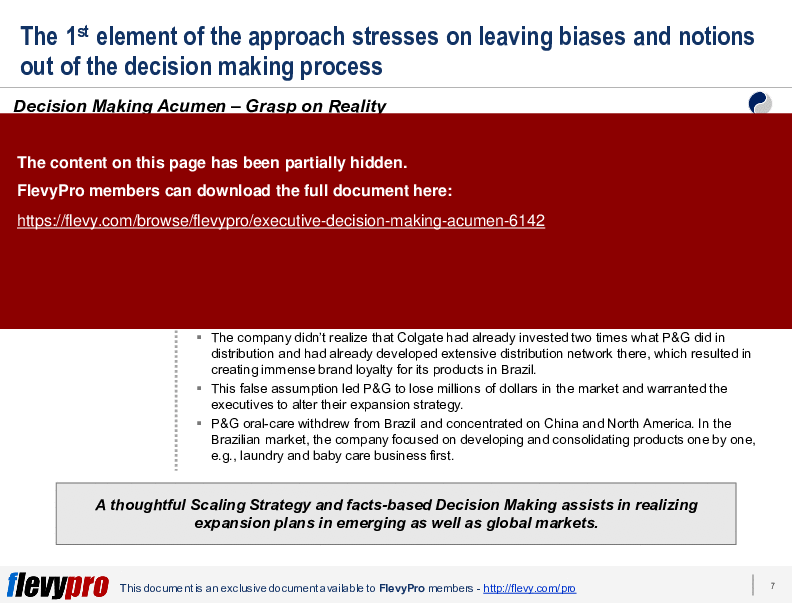
• Grasp on Reality - Emphasizes the importance of objective evaluation in decision-making, avoiding biases and preconceived notions.
• Strategic Choice Cascade - A structured framework that guides executives through 5 interdependent strategic choices essential for effective decision-making.
• Market Selection - Criteria for choosing markets based on competitive analysis and strategic fit.
• Competitive Advantage - Strategies for establishing and maintaining a competitive edge in selected markets.
• Capability Development - Identifying and building essential capabilities to support strategic objectives.
Deliverables, Templates, and Tools
• Template for assessing market opportunities and competitive positioning
• Framework for the Strategic Choice Cascade to guide decision-making processes
• Checklist for evaluating organizational capabilities
• Presentation templates for communicating strategic decisions
• Tools for tracking decision outcomes and refining strategies
Slide Highlights
• Overview of the Strategic Choice Cascade framework
• Key questions that drive effective decision-making
• Case studies illustrating successful application of decision-making acumen
• Visual aids that depict the relationship between strategic choices
• Templates designed for immediate use in business presentations
Potential Workshop Agenda
Introduction to Decision Making Acumen (30 minutes)
• Overview of decision-making importance
• Discussion of common challenges faced by executives
Strategic Choice Cascade Overview (60 minutes)
• Detailed exploration of the 5 strategic choices
• Group exercises to apply the framework to real-world scenarios
Market Analysis and Competitive Positioning (90 minutes)
• Workshop on identifying market opportunities
• Case studies on successful competitive strategies
Customization Guidance
• Tailor the Strategic Choice Cascade framework to fit specific organizational contexts
• Adjust templates to reflect company terminology and metrics
• Incorporate industry-specific examples into presentations
Secondary Topics Covered
• Psychological biases in decision-making
• The role of leadership in fostering a culture of effective decision-making
• Techniques for communicating decisions across the organization
• Methods for tracking and evaluating decision outcomes
Topic FAQ
Document FAQ
These are questions addressed within this presentation.
What is the Strategic Choice Cascade?
The Strategic Choice Cascade is a structured framework that helps executives make systematic decisions by addressing 5 interdependent strategic questions.
How can this presentation improve decision-making skills?
This presentation provides a systematic approach, practical templates, and real-world examples to enhance executives' judgment and strategic thinking.
Who developed this framework?
The framework was developed by former consultants from McKinsey and Big 4 firms, ensuring a high level of rigor and practical applicability.
What are the key components of decision-making acumen?
Key components include objective evaluation, clear communication, strategic prioritization, and the ability to advocate for decisions.
How can I implement the templates provided?
Templates can be customized to fit your organization's specific needs and can be used in strategic planning sessions, workshops, or training programs.
What types of decisions does this framework address?
The framework addresses strategic decisions related to market entry, competitive positioning, and capability development.
Can this presentation be used for team training?
Yes, it is designed to facilitate workshops and training sessions aimed at enhancing decision-making skills among executives and leaders.
How do I measure the effectiveness of decisions made using this framework?
Tracking decision outcomes and aligning them with strategic objectives will help measure effectiveness and inform future decision-making processes.
Glossary
• Decision Making Acumen - The ability to make informed, strategic decisions that align with organizational goals.
• Strategic Choice Cascade - A framework for guiding executives through critical decision-making processes.
• Market Selection - The process of choosing which markets to enter based on strategic fit and competitive analysis.
• Competitive Advantage - The unique attributes or capabilities that allow an organization to outperform its competitors.
• Capability Development - The process of identifying and building essential skills and resources within an organization.
• Grasp on Reality - The ability to evaluate situations objectively, free from biases and preconceived notions.
• Templates - Pre-designed frameworks and tools for facilitating decision-making processes.
• Executive Judgment - The capacity of leaders to make sound decisions based on analysis and experience.
• Strategic Objectives - The specific goals that guide an organization's strategy and decision-making.
• Organizational Alignment - The process of ensuring that decisions and actions are consistent with the overall strategy and objectives of the organization.
• Stakeholder Engagement - The practice of involving relevant parties in the decision-making process to ensure buy-in and support.
• Performance Metrics - Quantitative measures used to assess the effectiveness of decisions and strategies.
• Bias - A tendency to favor one perspective or outcome over others, potentially leading to flawed decision-making.
• Training Programs - Structured learning initiatives aimed at enhancing skills and knowledge in specific areas.
• Strategic Planning - The process of defining an organization's direction and making decisions on allocating resources to pursue that direction.
• Market Entry Strategy - A plan for entering a new market, including considerations of competition, customer needs, and operational capabilities.
• Long-term Growth - The sustained increase in an organization's market share, revenue, or profitability over time.
• Consumer Knowledge - Understanding consumer preferences, behaviors, and needs to inform strategic decisions.
• Operational Frameworks - Structured guidelines that outline processes and practices for achieving organizational objectives.
• Institutional Knowledge - The collective knowledge and expertise held within an organization, often passed down through experience.
Source: Best Practices in Leadership, Strategic Dialogue, Decision Making PowerPoint Slides: Executive Decision Making Acumen PowerPoint (PPTX) Presentation Slide Deck, LearnPPT Consulting
Did you need more documents?
Consider a FlevyPro subscription from $39/month. View plans here.
For $10.00 more, you can download this document plus 2 more FlevyPro documents. That's just $13 each.
|
Download our FREE Strategy & Transformation Framework Templates
Download our free compilation of 50+ Strategy & Transformation slides and templates. Frameworks include McKinsey 7-S, Balanced Scorecard, Disruptive Innovation, BCG Curve, and many more. |