
MBB/Big 4 style presentation that provides a holistic approach for undertaking strategic planning. While covering the traditional strategic planning approach, the document touches on adaptations that may be used in an unpredictable environment.
Helps to structure the strategic planning process in clear steps
Provides a brief overview of key frameworks commonly used throughout the planning process
STRATEGIC PLANNING PPT DESCRIPTION
Editor Summary
Strategic Planning: Process, Key Frameworks, and Tools is a 79-slide PowerPoint deck by ILMAM - Strategy & Management Consulting presented in a McKinsey/Bain/BCG-quality style, covering 6 core planning stages (Strategic Intent; Situation Analysis; Strategy Formulation/Goal Setting; Implementation/Operational Planning; Monitoring, Review & Control; Adaptation).
Read moreIncludes 6 deliverables/templates (situation analysis template, SMART goal framework, action plan, monitoring checklist, contingency planning guide, resource allocation model) and multiple frameworks (VRIO, PESTEL, Porter’s Five Forces, BCG, McKinsey/GE, Balanced Scorecard). Sold as a digital download on Flevy with immediate digital download. Target users: corporate executives, integration leaders, consultants, and business analysts for strategic planning and adaptation work.
Use this deck when an organization must develop, refresh, or adapt strategy — for annual planning cycles, responses to market disruption, or workshops to boost strategic agility.
Corporate executives running annual strategic planning sessions and aligning long-term vision with short-term objectives using SMART goals and resource allocation.
Integration leaders creating operational plans and allocating resources during post-merger or cross-functional execution.
Consultants facilitating situation analyses and alternatives evaluation with VRIO, PESTEL, and Porter’s Five Forces.
Business analysts conducting market and portfolio assessments using BCG and McKinsey/GE matrices.
The multi-stage, hypothesis-driven breakdown from analysis through implementation and monitoring parallels consulting practice at McKinsey, Bain, and BCG.
This document provides a holistic approach for undertaking strategic planning. While covering the traditional strategic planning approach, the document touches on adaptations that may be used in an unpredictable environment.
Contents:
1. Strategic Planning Overview
• Key questions and associated stages
• Key stages and associated elements
• Adaptation in an unpredictable environment
• Strategy approaches
2. Strategic Planning Process
• Main planning phases
• Breakdown of main phases
• Key planning activities and methods
• Typical timeline for traditional strategic planning
3. Strategic Intent
• Key elements of the Strategic Direction Statement
• Strategy and culture
• Goals vs objectives
• Big Hairy Audacious Goal (BHAG)
• Big Hairy Audacious Goal (BHAG) – examples
4. Stakeholder Analysis
• Mapping the key stakeholders
5. Internal Analysis
• Sources of competitive advantage
• VRIO analysis
• Porter's value chain
7. Industry Analysis
• Porter's five forces analysis
• Porter's five forces analysis – key factors to consider
• Porter's five forces analysis – summary slide
• Industry life cycle
• Industry life cycle with Porter's five forces
8. Market Analysis
• The BCG portfolio matrix
• The BCG portfolio matrix with characteristics
• The BCG portfolio matrix – plotted
• McKinsey/GE matrix
• McKinsey/GE matrix – potential actions
• McKinsey/GE matrix – plotted
9. Competitor Analysis
• Competitor identification
• Competitive benchmarking by relevant industry indicators
• Competitive profile matrix (CPM)
11. Strategy Formulation
• Strategy levels – a typical large company
• Strategy levels – a typical small company
• Porter's generic strategies
• Strategy types
• SPACE matrix
• Ansoff's matrix
• Ansoff's matrix – potential actions
• Blue ocean strategy
• Risk management process
• Risk rating matrix
• Risks and contingencies
12. Strategy Implementation
• McKinsey 7S model
• Balanced scorecard
• Balanced scorecard – cause and effect
• Balanced scorecard – cascading strategies and objectives
• Strategy map – strategic theme
• Strategy map – sample objective, measures, targets and initiatives
• Objectives vs goals
• Objectives – SMART
• Initiative action plan
The PPT includes a detailed breakdown of strategic planning phases, from vision and mission evaluation to operational planning. It also provides comprehensive tools for internal and external analysis, including VRIO, PESTEL, and Porter's Five Forces.
Got a question about the product? Email us at support@flevy.com or ask the author directly by using the "Ask the Author a Question" form. If you cannot view the preview above this document description, go here to view the large preview instead.
MARCUS OVERVIEW
This synopsis was written by Marcus [?] based on the analysis of the full 79-slide presentation.
Executive Summary
This presentation titled "Strategic Planning: Process, Key Frameworks, and Tools" offers a structured approach to strategic planning, emphasizing the need for adaptability in unpredictable environments. It is crafted in a McKinsey, Bain, or BCG-quality style (consulting-grade; not affiliated). The document guides corporate executives and consultants through the strategic planning process, detailing essential frameworks, tools, and methodologies. Users will learn to conduct situation analyses, formulate strategies, and implement actionable plans, ensuring alignment with both long-term and short-term objectives.
Who This Is For and When to Use
• Corporate executives overseeing strategic initiatives
• Integration leaders managing cross-functional strategy execution
• Consultants advising on strategic planning frameworks
• Business analysts conducting market and competitive assessments
Best-fit moments to use this deck:
• During annual strategic planning sessions to align organizational goals
• When adapting strategies in response to market changes or disruptions
• For workshops aimed at enhancing strategic agility and responsiveness
Learning Objectives
• Define the strategic planning process and its key components
• Analyze internal and external environments to identify strengths and weaknesses
• Formulate strategic goals and objectives that are SMART (Specific, Measurable, Achievable, Relevant, Time-bound)
• Develop actionable plans that include resource allocation and contingency measures
• Implement monitoring and evaluation frameworks to track progress
• Adapt strategies based on ongoing environmental assessments
Table of Contents
• Strategic Intent (page 1)
• Situation Analysis (page 2)
• Strategy Formulation/Goal Setting (page 3)
• Strategy Implementation/Operational Planning (page 4)
• Monitoring, Review, and Control (page 5)
• Adaptation in an Unpredictable Environment (page 6)
• Strategy Approaches (page 7)
• Breakdown of Main Phases (page 8)
Primary Topics Covered
• Situation Analysis - A comprehensive review of internal strengths and weaknesses alongside external opportunities and threats to establish a baseline for strategic planning.
• Alternatives Analysis - Evaluation of strategic alternatives based on situational insights, leading to the selection of a preferred strategy.
• Recommendations - Development of long-term and short-term plans that include SMART objectives, resource allocation, and monitoring mechanisms.
• Adaptation in Unpredictable Environments - Emphasizes the importance of ongoing monitoring and flexibility in strategy formulation to respond to market volatility.
• Strategic Intent - Establishes the vision, mission, and values that guide the strategic planning process.
• Monitoring and Control - Frameworks for evaluating corporate, departmental, and individual performance against strategic objectives.
Deliverables, Templates, and Tools
• Situation analysis template for assessing internal and external factors
• Strategic goal-setting framework incorporating SMART criteria
• Action plan template for operationalizing strategic objectives
• Monitoring and evaluation checklist to track progress and adapt strategies
• Contingency planning guide for addressing potential risks and challenges
• Resource allocation model to ensure effective implementation of strategies
Slide Highlights
• Visual representation of the strategic planning process phases, illustrating the iterative nature of planning.
• Breakdown of situation analysis elements, highlighting key internal and external factors.
• Adaptation strategies for unpredictable environments, emphasizing the need for flexibility.
• Overview of various strategic approaches tailored to different market conditions.
• Framework for monitoring and control, detailing performance management at multiple levels.
Potential Workshop Agenda
Strategic Planning Overview (60 minutes)
• Introduce the strategic planning process and its importance
• Discuss key components of situation analysis
• Explore the significance of adaptability in strategy
Goal Setting and Strategy Formulation (90 minutes)
• Define SMART objectives and their role in strategic planning
• Conduct a group exercise on formulating strategic goals
• Develop action plans based on selected strategies
Monitoring and Evaluation Techniques (60 minutes)
• Review frameworks for tracking strategic performance
• Discuss contingency planning and risk management strategies
• Share best practices for ongoing strategy adaptation
Customization Guidance
• Tailor the situation analysis template to reflect specific industry dynamics and organizational context.
• Adjust strategic goals and objectives to align with current business priorities and market conditions.
• Incorporate company-specific metrics into the monitoring and evaluation framework for better alignment with organizational goals.
• Modify action plans to include relevant resources and timelines that fit the organization’s operational capabilities.
Secondary Topics Covered
• Competitive positioning and market attractiveness assessment
• Long-term vs. short-term strategic planning considerations
• The role of vision and mission in guiding strategic initiatives
• Frameworks for evaluating strategic alternatives and making recommendations
• Importance of stakeholder analysis in the strategic planning process
Topic FAQ
What are the typical phases of a strategic planning process?
A common structure begins with Strategic Intent (vision, mission, values), then Situation Analysis, Strategy Formulation/Goal Setting, Strategy Implementation/Operational Planning, Monitoring/Review/Control, and Adaptation to changing conditions. The described approach organizes work across these 6 core stages.
How should I conduct a situation analysis for strategic planning?
Situation analysis combines internal assessments (strengths, weaknesses, VRIO, value chain) with external scans (PESTEL, PEST factors, Porter’s Five Forces) to establish a baseline for strategy. Practical tools include a situation analysis template to capture internal/external factors and map key scenarios.
When should I use Porter’s Five Forces versus portfolio matrices like BCG or McKinsey/GE?
Use Porter’s Five Forces for industry structure and competitive pressure analysis, then apply portfolio matrices (BCG, McKinsey/GE) to prioritize business units or product lines and guide resource allocation and potential actions. The frameworks serve complementary roles in industry and portfolio analysis.
How can organizations adapt their strategies in unpredictable environments?
Adaptation relies on ongoing monitoring, scenario identification, and impact/uncertainty analysis to detect shifts, coupled with contingency planning and flexible resource allocation. Practically, use scenario identification slides, an impact/uncertainty matrix, and a contingency planning guide to prepare response options.
What should I look for when choosing a strategic planning toolkit or PPT template?
Prioritize templates that support situation analysis, SMART goal-setting, operational action plans, monitoring and evaluation checklists, contingency planning, and resource allocation modeling. Flevy's Strategic Planning: Process, Key Frameworks, and Tools explicitly includes these 6 templates to support end-to-end planning.
How much time and team capacity is typically required to run a traditional strategic planning process?
Time and capacity vary by organization and scope; the materials include a "Typical timeline for traditional strategic planning" slide to help estimate sequencing and resource needs. Use that timeline slide along with the deck’s phase breakdown to map required workshops and stakeholder involvement.
I need to align long-term vision with short-term operational plans — which tools should I use?
Start with a Strategic Intent statement (vision/mission), translate to SMART objectives, build a strategy map and Balanced Scorecard to cascade objectives, and create initiative action plans to operationalize priorities. The Balanced Scorecard and strategy map templates support this linkage.
How do I combine SWOT with IFE and EFE matrices to produce actionable recommendations?
Use IFE and EFE matrices to quantify and prioritize internal strengths/weaknesses and external opportunities/threats; synthesize results into a SWOT to identify strategic implications and recommended actions. The approach is supported by IFE/EFE slides and SWOT synthesis tools for prioritizing initiatives.
Document FAQ
These are questions addressed within this presentation.
What is the strategic planning process?
The strategic planning process involves defining an organization’s vision, conducting situation analyses, formulating goals, implementing strategies, and monitoring progress to ensure alignment with objectives.
How do I conduct a situation analysis?
A situation analysis includes assessing internal strengths and weaknesses, as well as external opportunities and threats, to inform strategic decision-making.
What are SMART objectives?
SMART objectives are Specific, Measurable, Achievable, Relevant, and Time-bound goals that guide strategic planning and execution.
How can strategies be adapted in unpredictable environments?
Strategies can be adapted through ongoing monitoring of market conditions, allowing organizations to pivot and adjust their approaches as necessary.
What is the importance of monitoring and evaluation in strategic planning?
Monitoring and evaluation ensure that organizations track their progress against strategic objectives, allowing for timely adjustments and improved performance outcomes.
What frameworks can be used for competitive analysis?
Common frameworks include SWOT analysis, Porter's Five Forces, and the BCG Matrix, which help assess market dynamics and competitive positioning.
How do I ensure alignment between long-term and short-term plans?
Align long-term goals with short-term action plans by ensuring that immediate objectives contribute to overarching strategic aims.
What role does stakeholder analysis play in strategic planning?
Stakeholder analysis helps identify key individuals or groups that can influence or are impacted by the strategic plan, ensuring their needs and concerns are addressed.
Glossary
• Situation Analysis - Assessment of internal and external factors influencing an organization’s strategic position.
• SMART Objectives - Specific, Measurable, Achievable, Relevant, and Time-bound goals guiding strategic initiatives.
• Strategic Intent - The overarching vision, mission, and values that direct an organization’s strategy.
• Monitoring and Evaluation - Processes for tracking performance and adapting strategies based on results.
• Competitive Positioning - The process of defining how a company differentiates itself in the marketplace.
• Adaptation - The ability to modify strategies in response to changing market conditions.
• Stakeholder Analysis - Identification and assessment of individuals or groups that affect or are affected by strategic decisions.
• Long-Term Plans - Strategic objectives and initiatives aimed at achieving sustained success over time.
• Short-Term Plans - Immediate action steps and objectives that support long-term goals.
• Resource Allocation - The process of distributing resources effectively to implement strategies.
• Contingency Planning - Preparing alternative strategies to address potential risks and uncertainties.
• Performance Management - The systematic process of improving organizational performance through goal setting and evaluation.
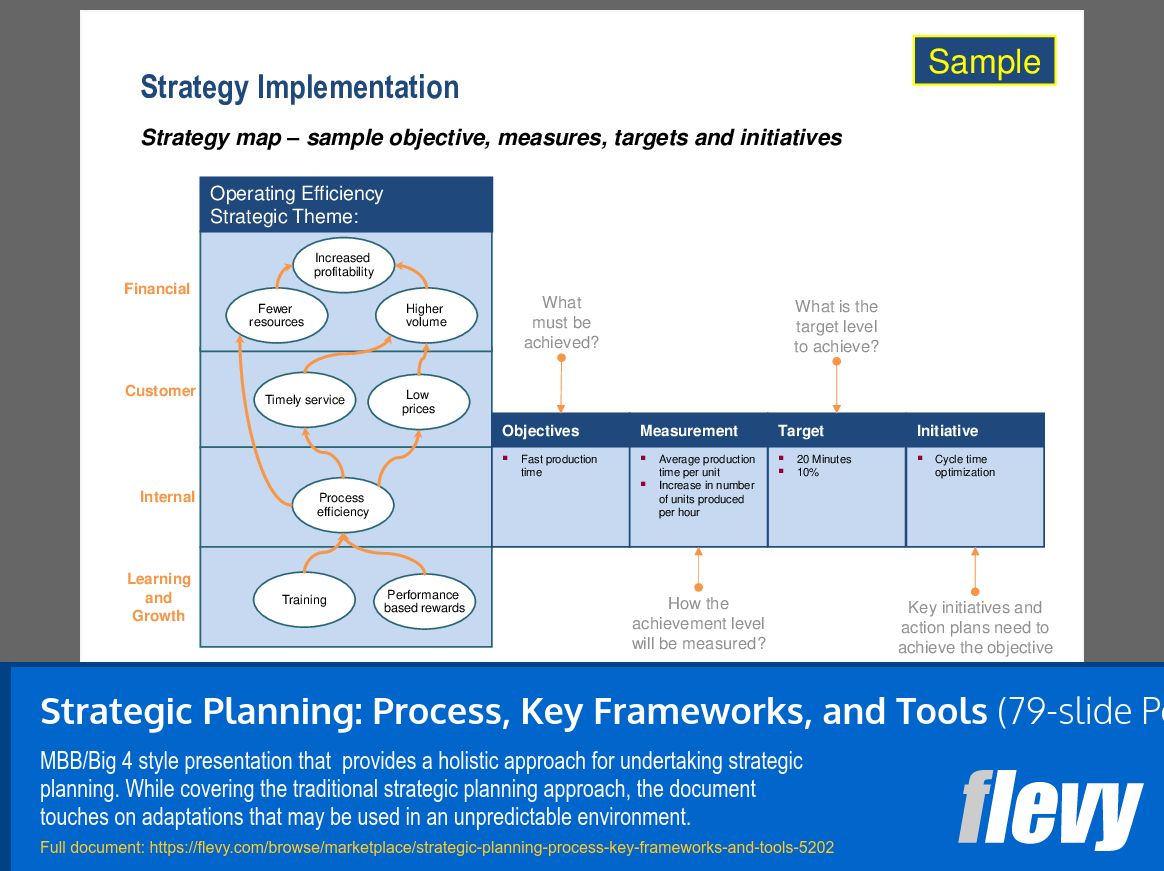
This PPT slide presents a structured approach to strategy implementation, focusing on Operating Efficiency. Key components are categorized into 4 perspectives: Financial, Customer, Internal, and Learning and Growth. The Financial perspective emphasizes increased profitability through resource optimization and higher volume. The Customer perspective highlights the correlation between operational efficiency and customer satisfaction, stressing timely service and low prices. The Internal perspective suggests streamlined operations are essential for meeting strategic goals. The Learning and Growth perspective underscores the importance of training and performance-based rewards for continuous improvement. Specific objectives include achieving fast production time, measured by average production time per unit and a target of 20 minutes with a 10% increase in units produced per hour through cycle time optimization. This framework provides a roadmap for enhancing operational efficiency with measurable objectives and actionable initiatives.
This PPT slide outlines a structured timeline for the strategic planning process, spanning from June to November. Key phases include evaluating the organization's vision, mission, and values, followed by a situation analysis using SWOT analysis to assess strengths, weaknesses, opportunities, and threats. This informs the strategy review for corporate and strategic business units (SBUs). Departmental operational planning aligns departmental objectives with the overall strategy. In August and September, departmental strategies are presented for alignment across functions. The review of operational plans and budget presentations occurs in October, ensuring effective allocation of financial resources. The process culminates in November with the presentation of finalized plans to the board for approval, emphasizing the need for leadership buy-in. Flexibility in the timeline may be necessary based on organizational readiness and complexity.
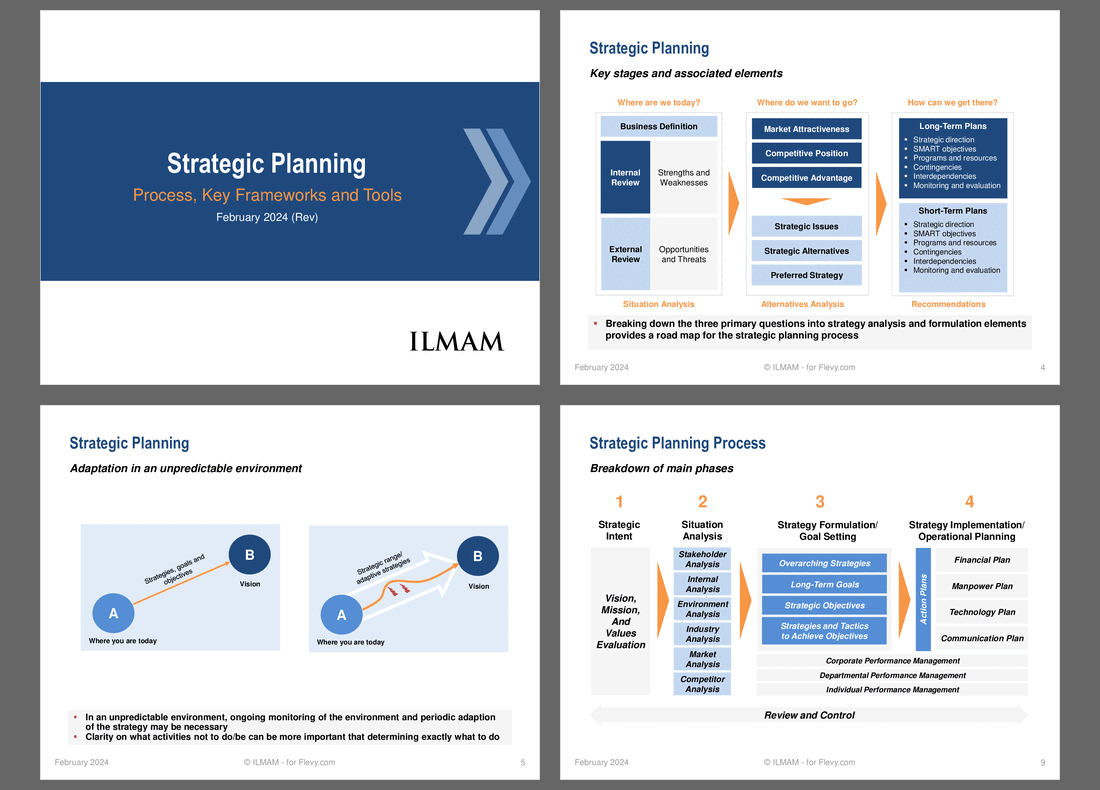
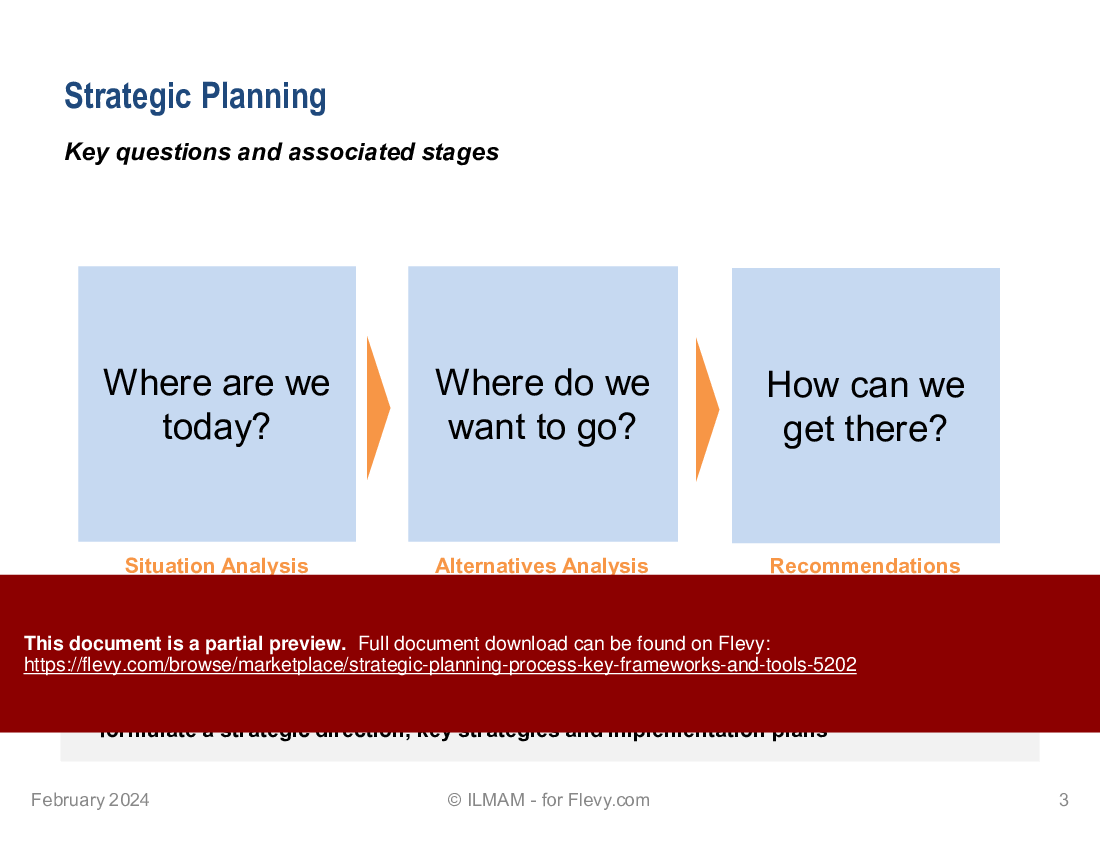
This PPT slide outlines a structured approach to strategic planning, divided into 3 sections: "Where are we today?", "Where do we want to go?", and "How can we get there?". The first section focuses on a comprehensive situation analysis through an "Internal Review" of strengths and weaknesses and an "External Review" of opportunities and threats. The second section emphasizes defining future objectives with concepts like "Market Attractiveness," "Competitive Position," and "Strategic Issues," guiding organizations in selecting preferred strategies aligned with internal capabilities and external market conditions. The final section details long-term and short-term planning, including strategic direction, SMART objectives, and resource allocation, highlighting the importance of monitoring and evaluation to maintain strategy relevance and effectiveness.
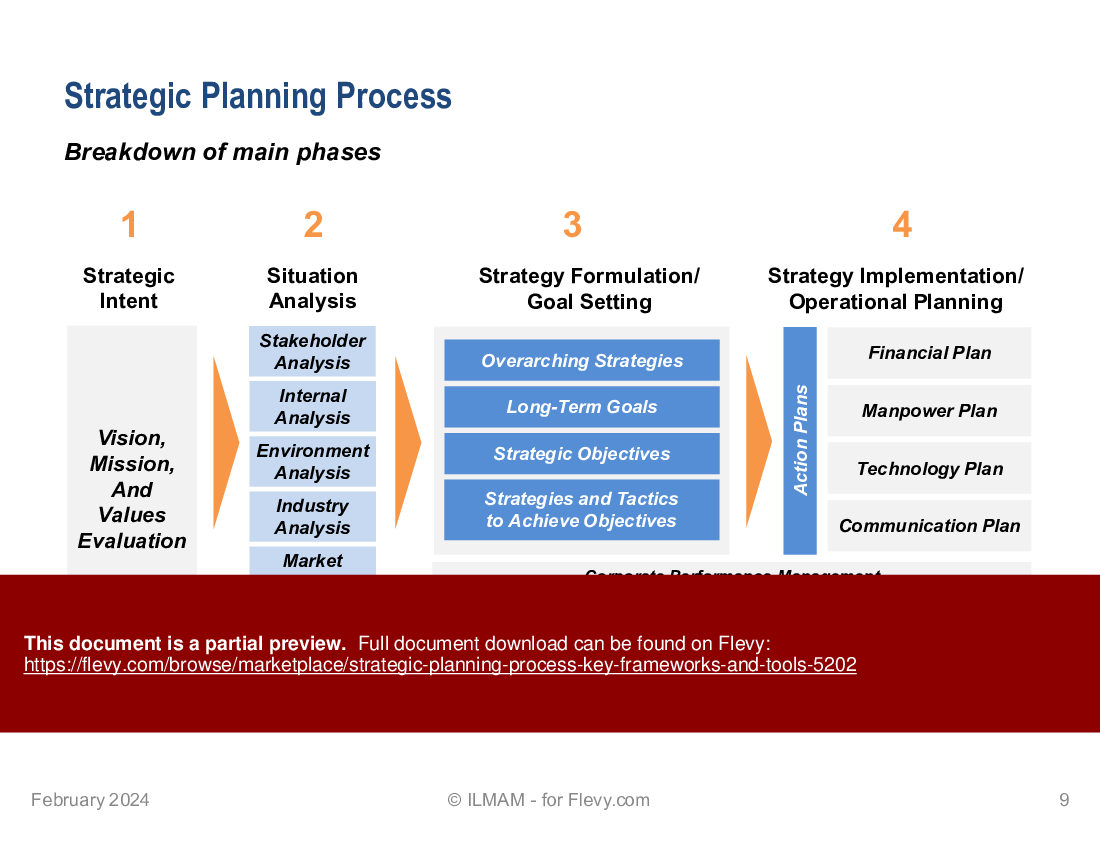
This PPT slide outlines a structured approach to the strategic planning process, divided into 4 phases. The first phase, "Strategic Intent," involves evaluating the organization's vision, mission, and values. The second phase, "Situation Analysis," includes stakeholder analysis, internal analysis, and environmental assessments, with components like industry and market analysis to inform strategic direction. The third phase, "Strategy Formulation/Goal Setting," focuses on establishing overarching strategies and long-term goals, defining strategic objectives, and the tactics to achieve them. The final phase, "Strategy Implementation/Operational Planning," emphasizes executing strategies through specific action plans across financial, manpower, technology, and communication domains, along with performance management to monitor and adjust strategies.
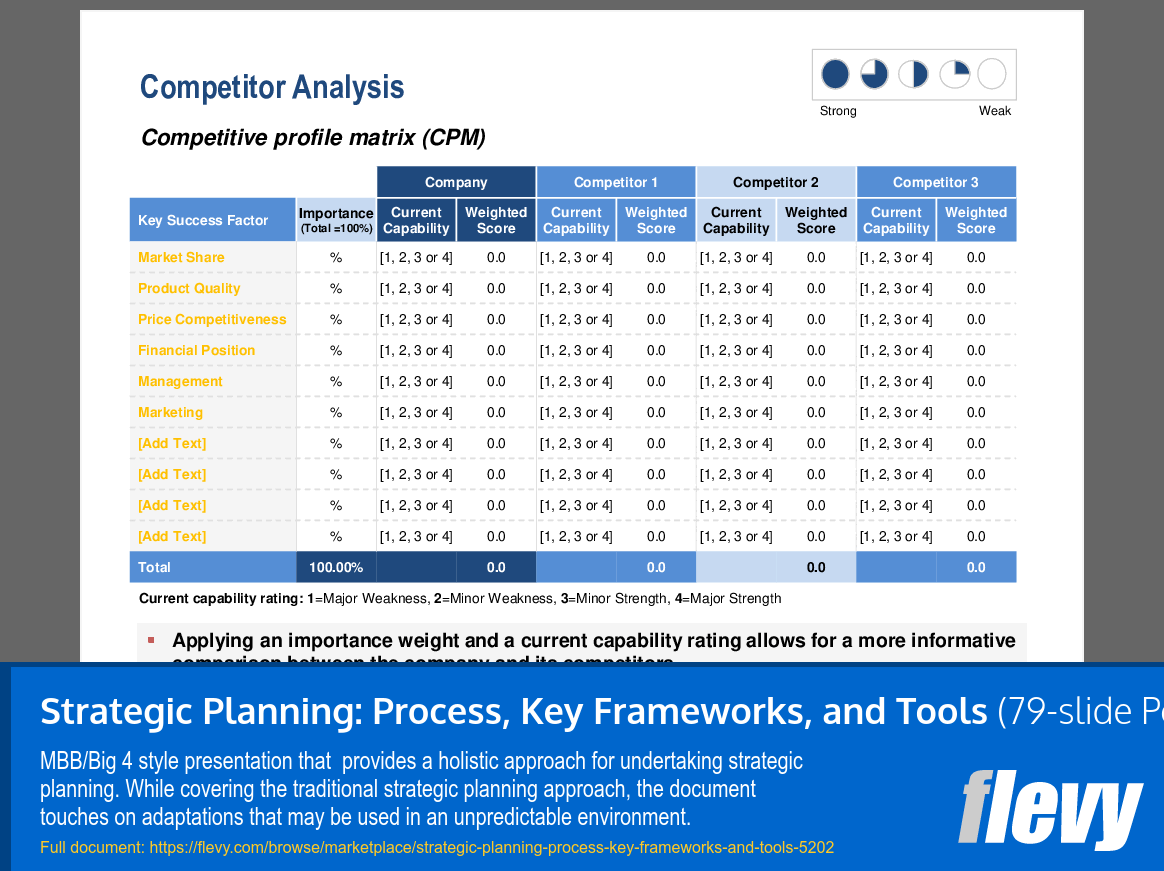
The Competitive Profile Matrix (CPM) evaluates a company against competitors across key success factors: Market Share, Product Quality, Price Competitiveness, Financial Position, Management, and Marketing. Each factor is assigned an importance weight summing to 100%, reflecting its industry significance. Companies are rated on a scale from 1 to 4, indicating current capabilities, with weighted scores calculated for comparison. The total row aggregates scores, providing an overall performance snapshot. This matrix serves as a strategic tool for decision-makers to identify improvement areas and prioritize actions aligned with competitive strategy, enhancing market positioning through analysis of weighted scores.
This PPT slide presents a comparative analysis of 2 strategic approaches: Blue Ocean Strategy and Red Ocean Strategy. Red Ocean Strategy focuses on competing within existing market spaces, necessitating the need to beat competition, exploit existing demand, and make trade-offs between value and cost. It emphasizes a choice between differentiation or low cost, suggesting a zero-sum game. In contrast, Blue Ocean Strategy aims to create uncontested market spaces, making competition irrelevant by capturing new demand and breaking the value/cost trade-off. Central to this is "Value Innovation," allowing companies to pursue both differentiation and low cost. This strategy encourages identifying opportunities in untapped markets for sustainable growth and a stronger market position.
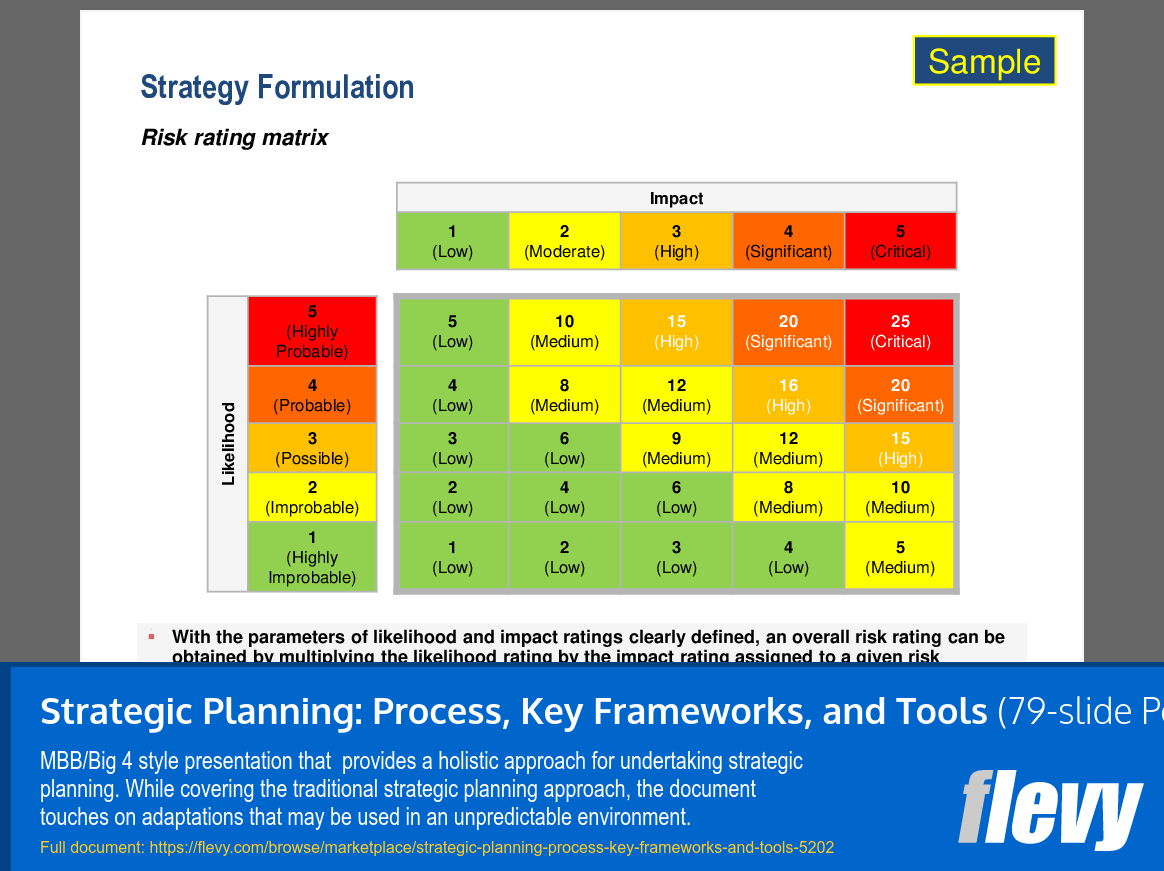
This PPT slide presents a risk rating matrix for strategic formulation, assessing risks based on likelihood and impact. The matrix categorizes risks with likelihood rated from 1 (Highly Improbable) to 5 (Highly Probable) on the vertical axis, and impact from 1 (Low) to 5 (Critical) on the horizontal axis. Each cell represents a numerical risk rating derived by multiplying likelihood by impact. For instance, a highly probable risk with significant impact scores 25, indicating critical risk, while a highly improbable risk with low impact scores 1, suggesting minimal concern. Clearly defined parameters for likelihood and impact enable effective risk quantification, aiding in prioritization and resource allocation for decision-makers. This matrix enhances strategic decision-making and improves risk management capabilities.
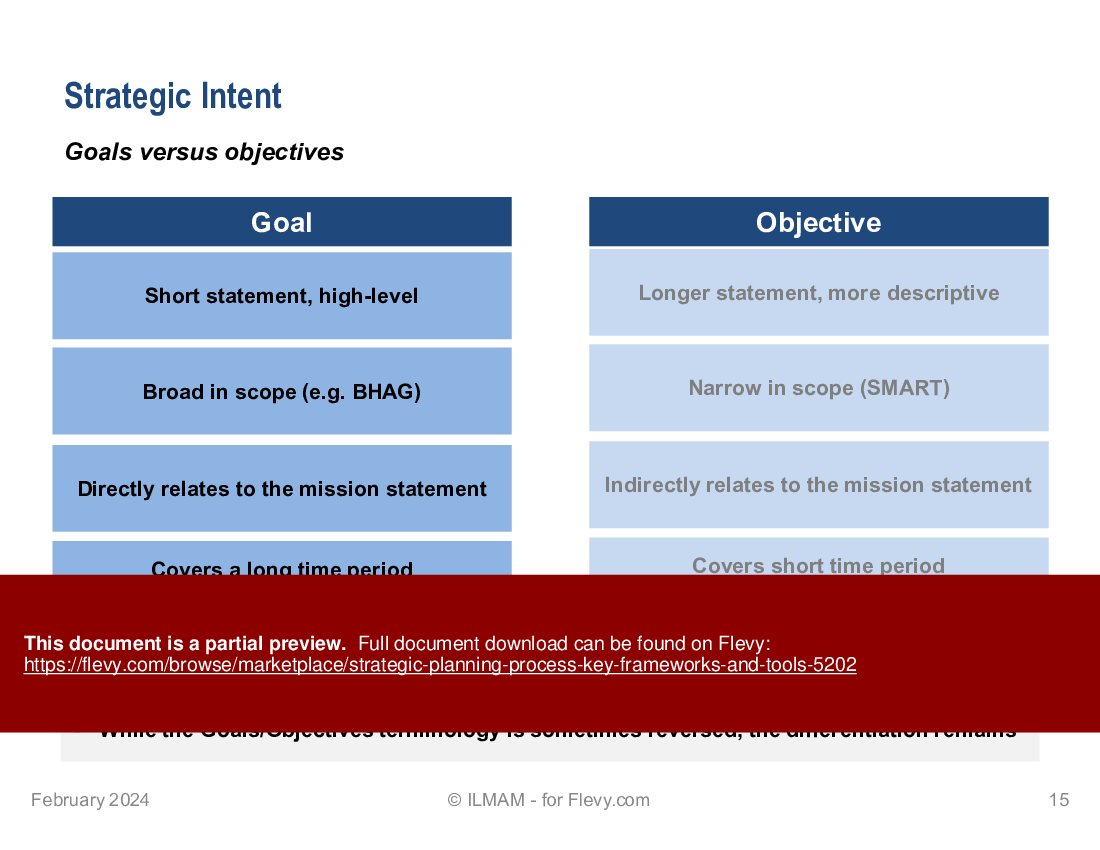
This PPT slide focuses on the relationship between strategy and culture in organizations, emphasizing the alignment of these elements to achieve desired outcomes. It presents a strategic framework comprising 5 components: Strategy, Goals, Objectives, Activities, and Outcome, each accompanied by reflective questions. For example, the Strategy component asks, "How to get there?" Goals represent the desired state upon realizing the vision, while Objectives are interim aims guiding progress. Activities are the specific actions needed to meet these objectives, and Outcome defines the ultimate organizational aim. Additionally, the slide prompts an examination of foundational beliefs and values, questioning cultural alignment with strategy and the influence of beliefs on daily operations. Effective strategy necessitates alignment between strategy and culture, enhancing organizational effectiveness and driving sustainable growth.
This PPT slide presents a McKinsey/GE matrix outlining strategic actions based on industry attractiveness and competitive position. The matrix features nine cells with strategies: in high attractiveness, "Build Selectively," "Build," and "Grow" focus on leveraging strengths for market leadership; the middle row suggests "Limited Expansion," "Hold," and "Build Selectively," advocating cautious growth and risk management; the bottom row includes "Harvest," "Manage," and "Protect," emphasizing cost-cutting and avoiding new investments in low attractiveness scenarios. Various factors influence assessments of industry attractiveness and competitive position, necessitating further validation of strategic directions. This matrix serves as a framework for executives to evaluate positioning and make informed decisions aligned with market dynamics.
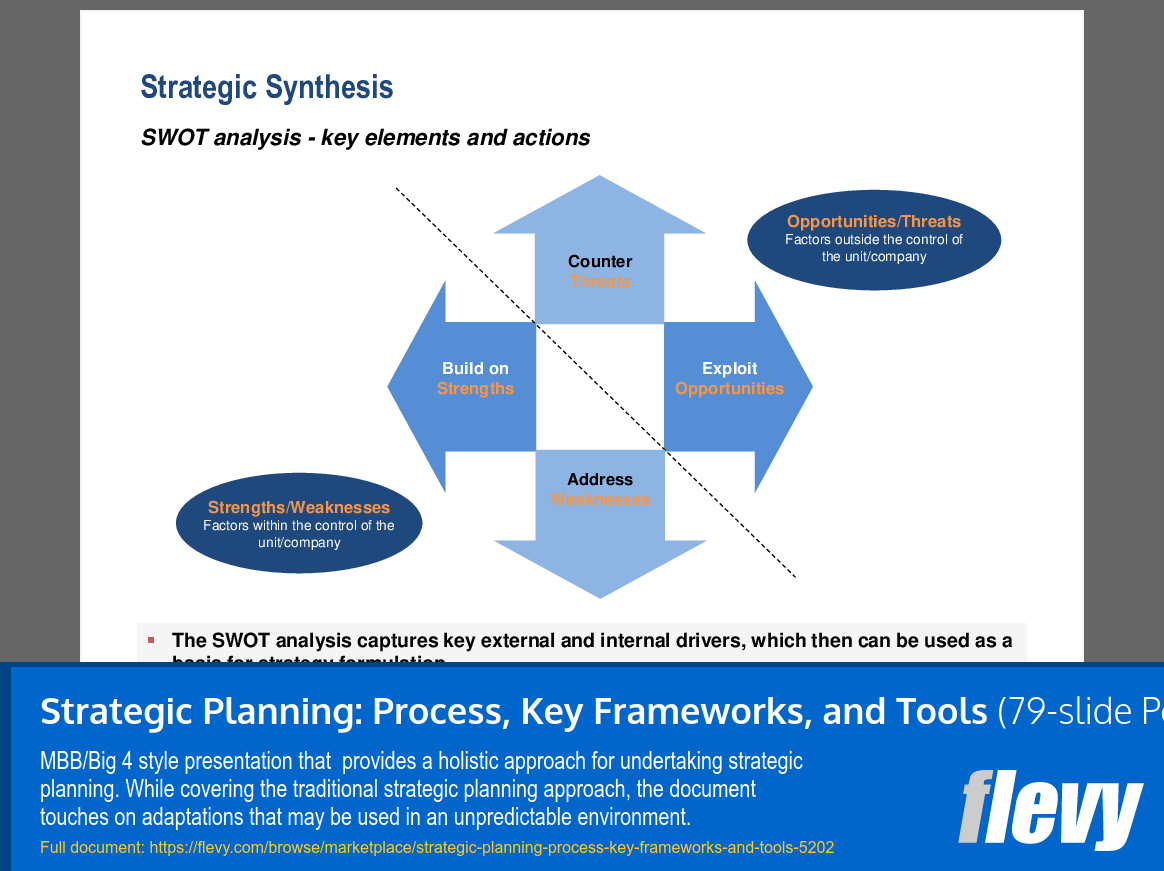
This PPT slide outlines a SWOT analysis framework, divided into 4 quadrants: "Build on Strengths," "Address Weaknesses," "Exploit Opportunities," and "Counter Threats." The SWOT analysis captures essential internal factors (strengths and weaknesses) and external factors (opportunities and threats) that influence strategic decisions. Organizations should leverage strengths to enhance performance while addressing weaknesses that may hinder progress. Exploiting opportunities requires proactive engagement with market dynamics, while the "Counter Threats" quadrant emphasizes risk management to mitigate external challenges. The SWOT framework serves as a strategic guide for decision-making and aligns internal capabilities with external market conditions, aiding in the formulation of robust strategies.
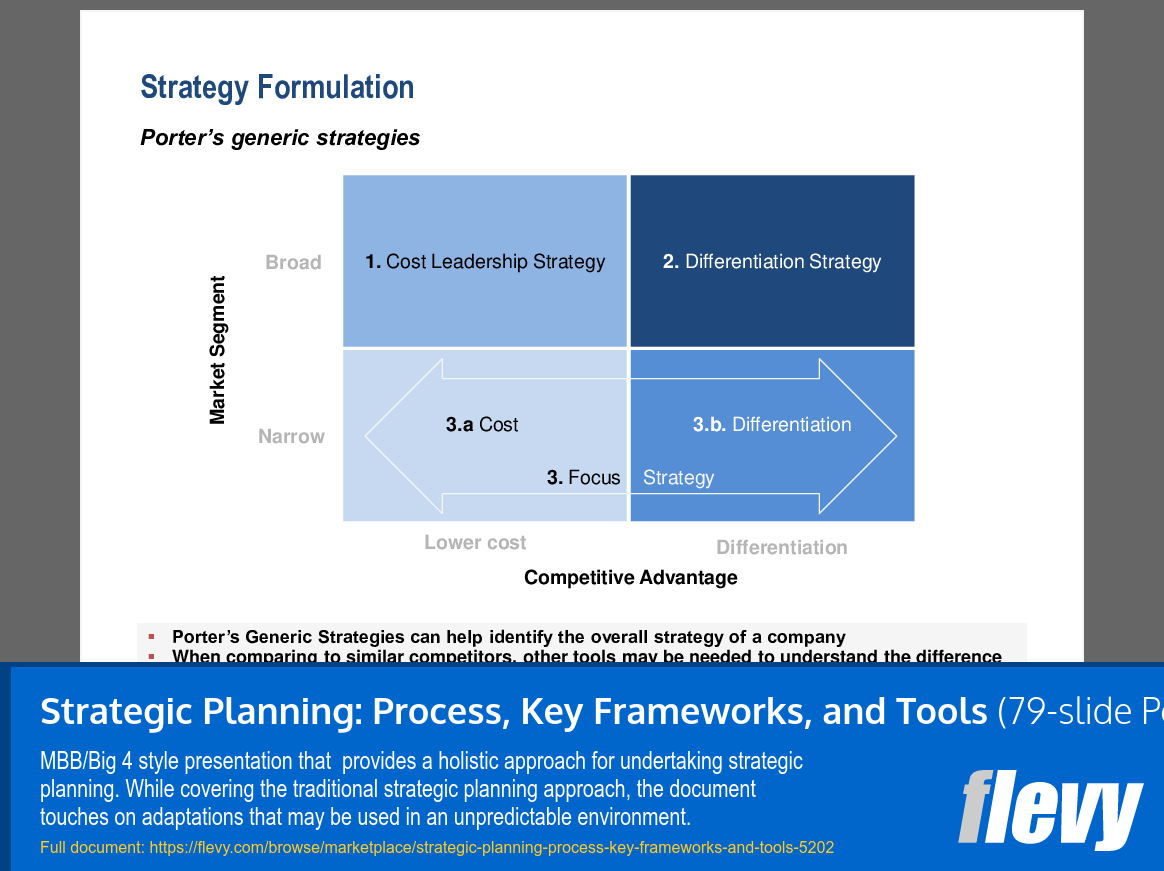
This PPT slide provides an overview of Porter's generic strategies framework, categorizing strategies by market segment focus and differentiation. The vertical axis represents market segments from broad to narrow, while the horizontal axis distinguishes between cost leadership and differentiation. The "Cost Leadership Strategy" quadrant targets broad markets, aiming to be the lowest-cost producer to attract price-sensitive customers. The "Differentiation Strategy" quadrant focuses on unique products or services that command premium prices, appealing to quality-conscious consumers. The lower half introduces a focus strategy, divided into cost focus and differentiation focus, targeting narrow market segments. While Porter's framework is valuable, organizations may require additional tools for competitive analysis.
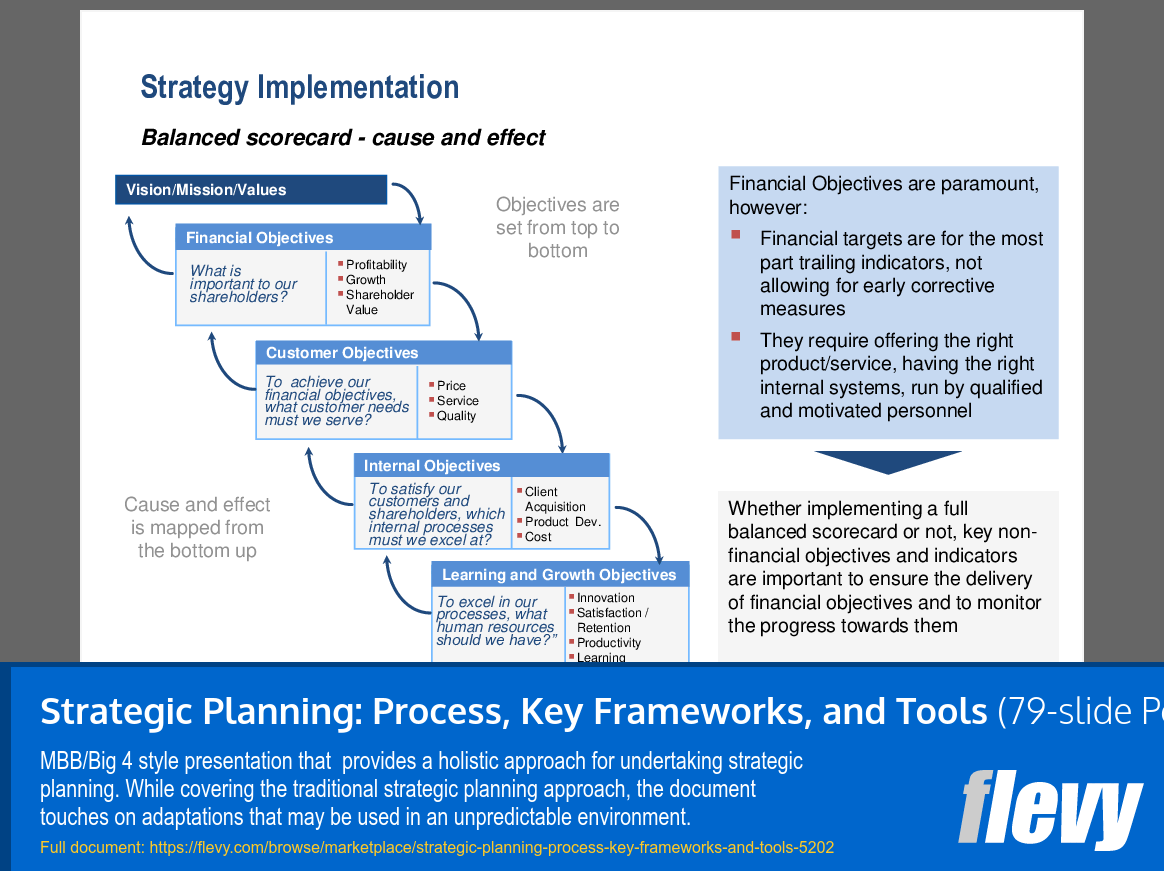
This PPT slide outlines a structured approach to strategy implementation using the balanced scorecard framework, highlighting cause-and-effect relationships among objectives. It begins with vision, mission, and values that guide strategic direction. Financial objectives prioritize profitability, growth, and shareholder value. Customer objectives focus on identifying customer needs aligned with financial goals, emphasizing price, service, and quality. Internal objectives address essential processes for customer and shareholder satisfaction, including client acquisition, product development, and cost management. Learning and growth objectives stress continuous improvement in human resources and processes, with key components like innovation, satisfaction, retention, and productivity. While financial objectives are crucial, they often serve as trailing indicators, necessitating effective internal systems and motivated personnel. Non-financial objectives are vital for tracking progress toward financial goals, ensuring organizational alignment and success.
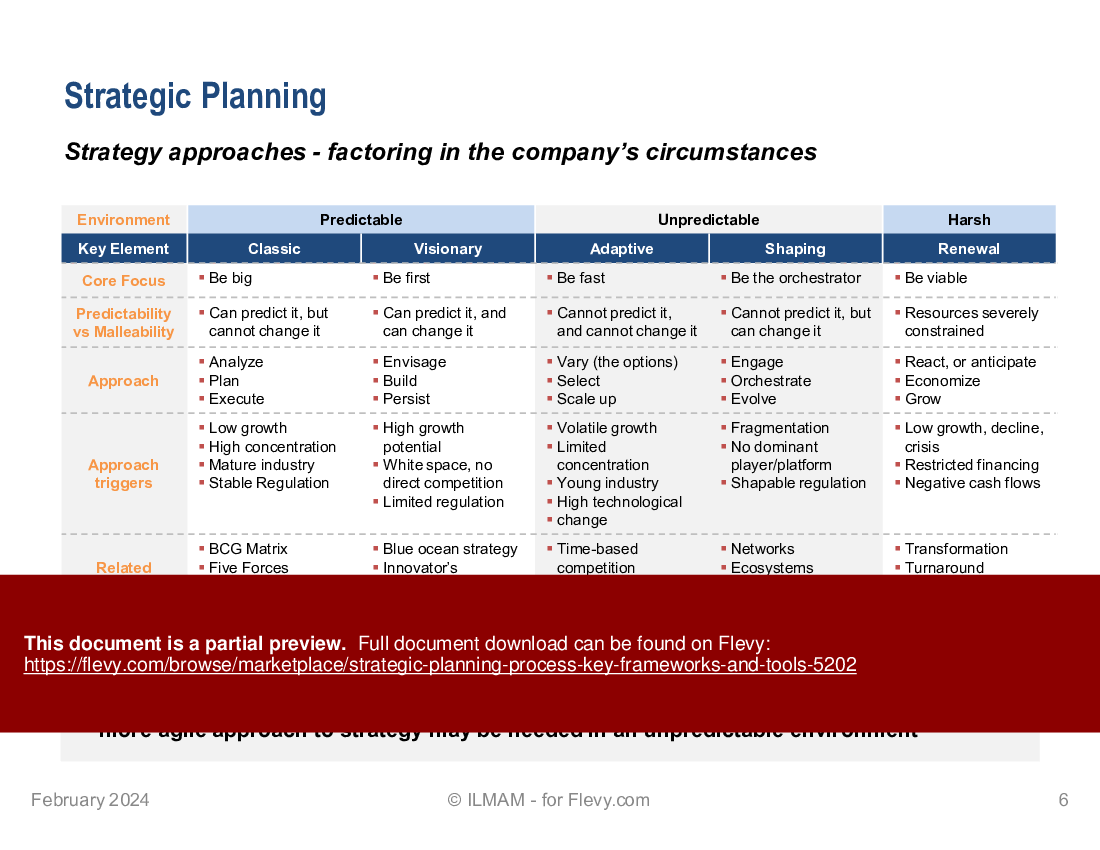
This PPT slide presents a framework for strategic planning in unpredictable environments, contrasting 2 approaches to achieve a defined vision. The left side illustrates a linear path with clearly defined strategies, goals, and objectives from "Where you are today" (A) to the "Vision" (B), suitable for stable conditions. The right side depicts a dynamic approach incorporating a "strategic range" and "adaptive strategies," recognizing the need for organizations to adjust their strategies in response to changing circumstances. Ongoing environmental monitoring and periodic strategy adaptation are essential, as rigid plans may fail in volatile conditions. Embracing agility and responsiveness is crucial for informed strategic decisions and achieving long-term goals.
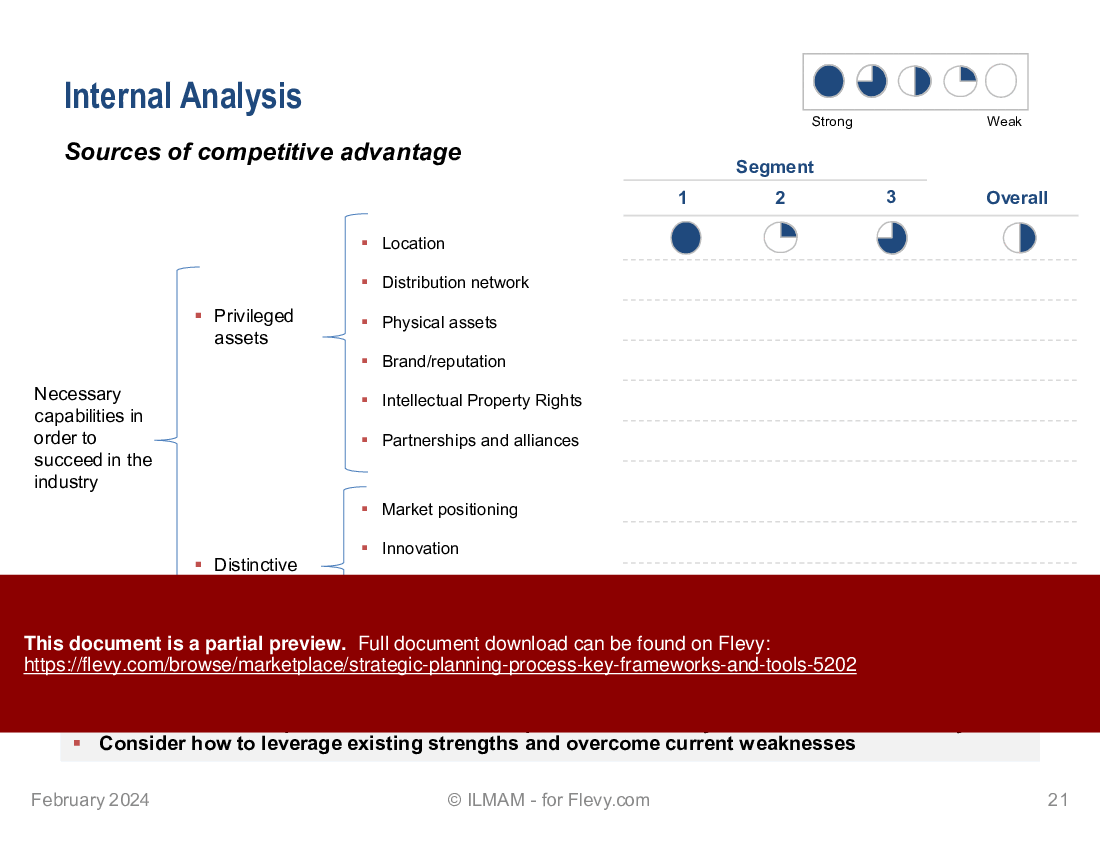
This PPT slide analyzes key sources of competitive advantage categorized into "Privileged assets" and "Distinctive competencies." Privileged assets include location, distribution network, physical assets, brand reputation, and intellectual property rights, which are often difficult for competitors to replicate. Strategic partnerships and alliances enhance a firm's capabilities. Distinctive competencies encompass market positioning, innovation, and cross-functional coordination, which differentiate a company from its competitors. Cost efficiency and talent development are critical for operational excellence and sustaining a competitive edge. A visual representation with a rating scale assesses performance across these areas, guiding decision-making and strategic planning by identifying strengths and weaknesses.
MBB/Big 4 style presentation that provides a holistic approach for undertaking strategic planning. While covering the traditional strategic planning approach, the document touches on adaptations that may be used in an unpredictable environment.
ILMAM is a strategy and management consulting provider that specializes in:
• Strategic management, including strategic planning and performance management
• Strategy enablers, such as key business processes and governance
Select top quality guides and tools are offered through to enable you to perform work at your company or support your clients effectively and
... [read more] efficiently.
The average daily rate of a McKinsey consultant is $6,625 (not including expenses). The average price of a Flevy document is $65.
Trusted by over 10,000+ Client Organizations
Since 2012, we have provided business templates to over 10,000 businesses and organizations of all sizes, from startups and small businesses to the Fortune 100, in over 130 countries.
Read Customer Testimonials
"I am extremely grateful for the proactiveness and eagerness to help and I would gladly recommend the Flevy team if you are looking for data and toolkits to help you work through business solutions."
– Trevor Booth, Partner, Fast Forward Consulting
"If you are looking for great resources to save time with your business presentations, Flevy is truly a value-added resource. Flevy has done all the work for you and we will continue to utilize Flevy as a source to extract up-to-date information and data for our virtual and onsite presentations!"
– Debbi Saffo, President at The NiKhar Group
"As a niche strategic consulting firm, Flevy and FlevyPro frameworks and documents are an on-going reference to help us structure our findings and recommendations to our clients as well as improve their clarity, strength, and visual power. For us, it is an invaluable resource to increase our impact and value."
– David Coloma, Consulting Area Manager at Cynertia Consulting
"As a young consulting firm, requests for input from clients vary and it's sometimes impossible to provide expert solutions across a broad spectrum of requirements. That was before I discovered Flevy.com.
Through subscription to this invaluable site of a plethora of topics that are key and crucial to consulting, I
have been able to exceed expectations and deliver quality advice and solutions to my clients. The quality and expertise of the authors are exemplary and gives me great confidence to use as part of my service offerings.
I highly recommend this company for any consultant wanting to apply international best practice standards in their service offerings.
"
– Nishi Singh, Strategist and MD at NSP Consultants
"As a consultant requiring up to date and professional material that will be of value and use to my clients, I find Flevy a very reliable resource.

The variety and quality of material available through Flevy offers a very useful and commanding source for information. Using Flevy saves me time, enhances my expertise and ends up being a good decision."

– Dennis Gershowitz, Principal at DG Associates
"Flevy.com has proven to be an invaluable resource library to our Independent Management Consultancy, supporting and enabling us to better serve our enterprise clients.
The value derived from our [FlevyPro] subscription in terms of the business it has helped to gain far exceeds the investment made, making a subscription a no-brainer for any growing consultancy – or in-house strategy team."
– Dean Carlton, Chief Transformation Officer, Global Village Transformations Pty Ltd.
"I have used FlevyPro for several business applications. It is a great complement to working with expensive consultants. The quality and effectiveness of the tools are of the highest standards."
– Moritz Bernhoerster, Global Sourcing Director at Fortune 500
"I have found Flevy to be an amazing resource and library of useful presentations for lean sigma, change management and so many other topics. This has reduced the time I need to spend on preparing for my performance consultation. The library is easily accessible and updates are regularly provided. A wealth of great information."
– Cynthia Howard RN, PhD, Executive Coach at Ei Leadership
Download our free compilation of 50+ Strategy & Transformation slides and templates. Frameworks include McKinsey 7-S, Balanced Scorecard, Disruptive Innovation, BCG Curve, and many more.