
This framework is developed by a team of former McKinsey and Big 4 consultants. The presentation follows the headline-body-bumper slide format used by global consulting firms.
Explore our CSR framework on the Circular Economy, crafted by ex-McKinsey and Big 4 consultants. Gain insights, case studies, and templates for sustainable practices. Corporate Social Responsibility (CSR): Circular Economy is a 24-slide PPT PowerPoint presentation slide deck (PPT) available for immediate download upon purchase.
The global economy is currently producing nearly 300MM tons of plastic every year. Half of these are for single use. With population growing at a fast rate, we are requiring more resources than ever before. Yet, our finite resources are diminishing
Our economy has been built on the concept of a Linear Economy. This is Extract, Manufacture, Distribute, Use, and Dispose. However, over the past few decades we have transitioned to a disposable society as we generate waste at an unmanageable rate.
There is a call to shift to a Reuse Economy or the Circular Economy. Moving towards a more Circular Economic activity could deliver benefits such as reducing pressure on the environment, improving the security of the supply of raw materials, increasing competitiveness, stimulating innovation, and others. Moving into a Circular Economy also means that companies are considering sustainable approaches to balance out opportunities for business and the preservation of the environment.
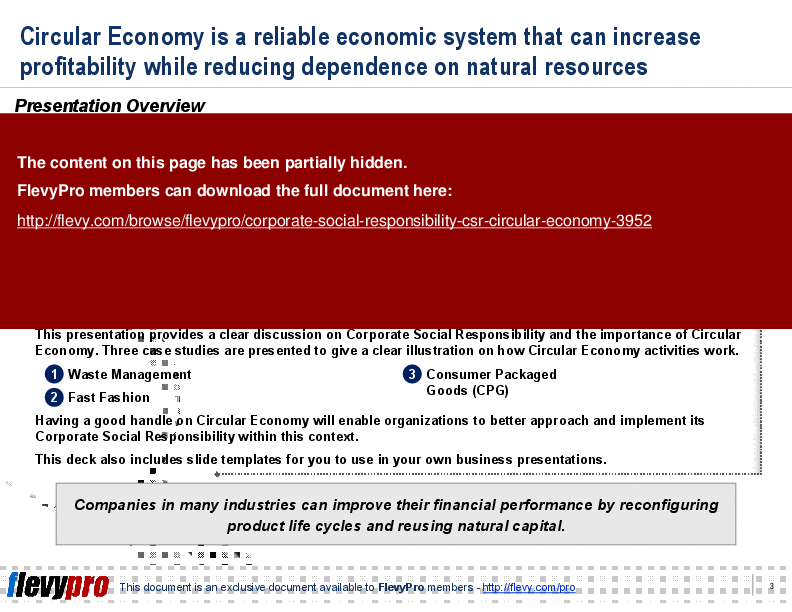
This presentation provides a clear discussion on Corporate Social Responsibility and the importance of Circular Economy. Three case studies are presented to give a clear illustration on how Circular Economy activities work.
Having a good handle on Circular Economy will enable organizations to better approach and implement its Corporate Social Responsibility within this context.
This deck also includes slide templates for you to use in your own business presentations.
This comprehensive deck delves into six core activities essential for a Circular Economy, offering a systematic approach to problem-solving without unintended consequences. It features a global cross-industry study demonstrating significant boosts in resource productivity and cost savings. The case studies on waste management, fast fashion, and consumer packaged goods provide vivid examples of converting challenges into profitable opportunities. This resource is indispensable for executives aiming to integrate sustainable practices into their business strategies, ensuring long-term viability and competitive advantage.
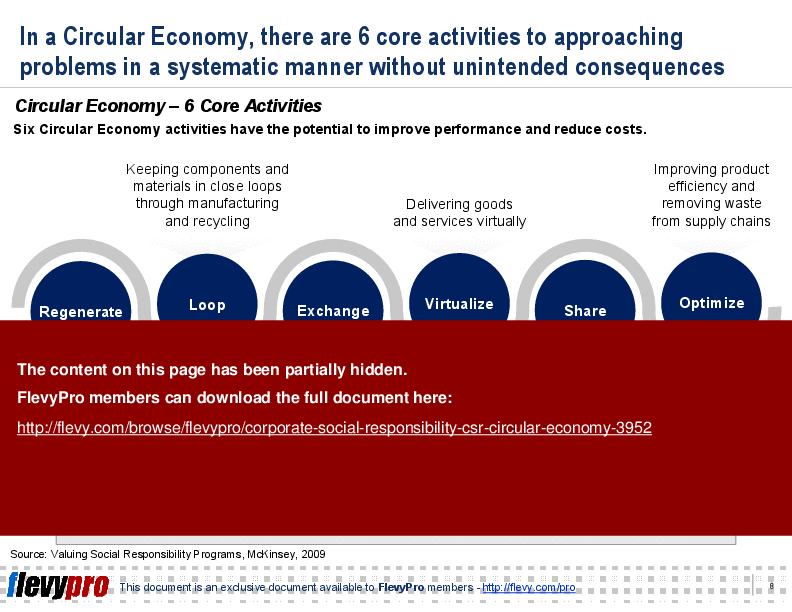
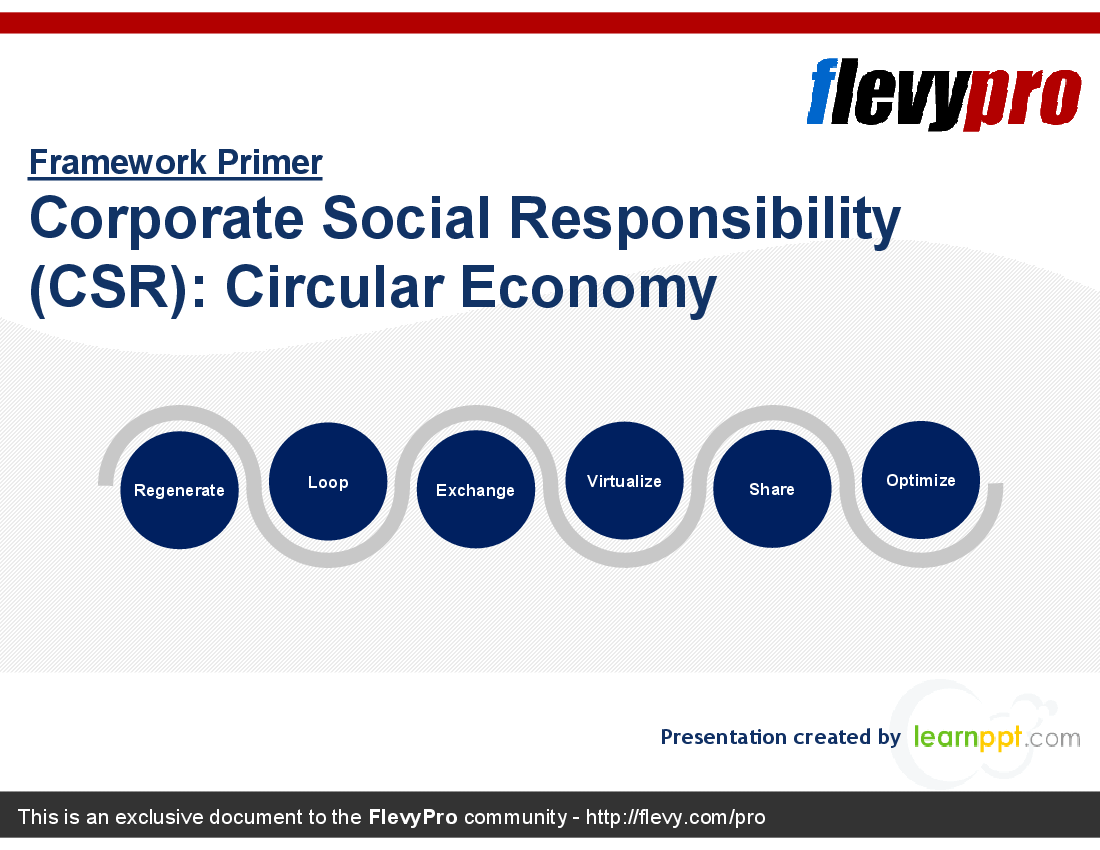
This PPT slide outlines 6 core activities for engaging with the circular economy: "Regenerate," "Loop," "Exchange," "Virtualize," "Share," and "Optimize." "Regenerate" focuses on maintaining materials in continuous use through effective manufacturing and recycling, fostering sustainability. "Loop" emphasizes keeping materials in circulation to reduce waste. "Exchange" highlights transitioning to advanced renewable materials, while "Virtualize" advocates for digital delivery of goods and services to minimize physical resource needs. "Share" promotes extending product life through sharing and maintenance strategies, decreasing consumption and waste. "Optimize" enhances product efficiency and eliminates waste in supply chains. Companies prioritizing environmental and social performance can uncover unique opportunities for innovation and differentiation in a rapidly evolving market.
This PPT slide presents a case study on Circular Economy principles in waste management, focusing on 3 waste categories: discarded PET bottles, waste tires, and electronic waste, evaluated at Basic, Advanced, and Full levels. For discarded PET bottles, profits range from -105 to -145 dollars per metric ton at the Basic level, improving to 155-315 dollars at Advanced, and reaching 360-590 dollars at Full, indicating that enhanced sorting and processing yield economic benefits. Waste tires show minimal socioeconomic benefits at Basic (10-15 dollars), increasing to 75-130 dollars at Advanced and 165-295 dollars at Full, suggesting sophisticated recovery methods enhance returns. Electronic waste has the highest potential, with value extraction ranging from 1,375 to 2,280 dollars at Basic, jumping to 4,955-5,420 dollars at Advanced, and remaining high at 3,850-4,850 dollars at Full, highlighting the importance of advanced recovery techniques like hydrometallurgical processes. A balanced approach is necessary to attract investment from downstream waste users while optimizing operations.
This PPT slide analyzes the environmental impact of the consumer sector, focusing on the food and beverage industry. It reveals that the supply-chain impact of this sector is 24 times greater than its direct operational impact. The environmental impact comparison shows food and beverage leading, followed by personal and household goods at 19 times and retail at 11.5 times. Notably, 80% of greenhouse gas emissions originate from supply chains, while only 20% are from direct operations. Furthermore, only 25% of companies engage suppliers to address embedded emissions, highlighting a significant gap in sustainability practices. Focusing on supply chain emissions can help organizations achieve their environmental goals.
This PPT slide presents 3 case studies illustrating Circular Economy principles across sectors. The first case study on Waste Management highlights strategies for optimizing waste processes, enhancing sustainability through reduced waste generation and improved recycling rates. The second case study focuses on Fast Fashion, demonstrating how Circular Economy practices can transform the industry by promoting sustainable materials and extending garment lifecycles, aligning with consumer preferences for sustainability. The third case study addresses Consumer Packaged Goods (CPG), emphasizing redesigning packaging for recyclability and adopting refillable systems to drive sustainability in everyday products. These case studies validate the positive impact of Circular Economy activities on business operations, enhancing sustainability metrics, brand reputation, and customer loyalty.
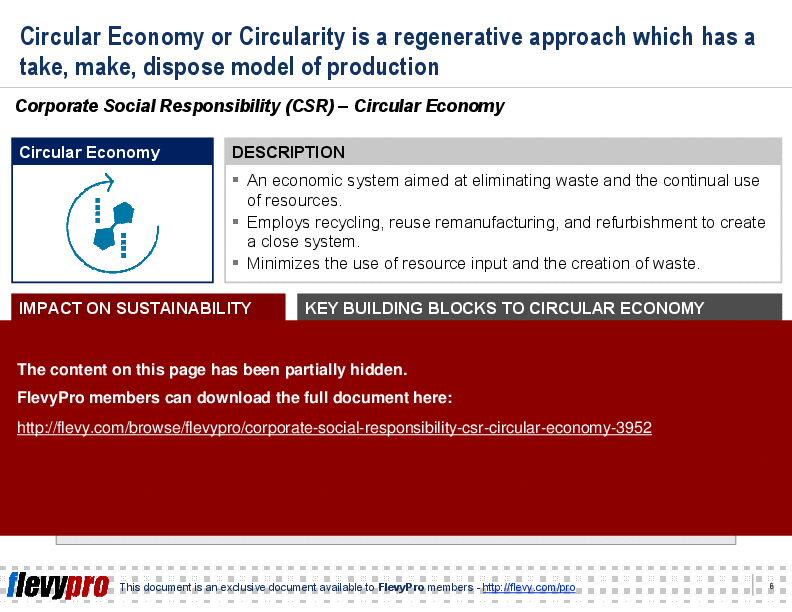
The Circular Economy is a regenerative approach to production, shifting from the linear model of "take, make, dispose" to a system focused on resource efficiency and sustainability. It aims to eliminate waste and promote continual resource use through recycling, remanufacturing, and refurbishment, minimizing resource input and waste generation. Key benefits include resource conservation and environmental pollution reduction, aligning with corporate social responsibility goals. Essential building blocks for implementation involve skills in circular design, new business models, and expertise in cascades and reverse cycles. Cross-sector collaboration is necessary for successful adoption. The Circular Economy enhances profitability while reducing reliance on natural resources, positioning it as a strategic business opportunity.
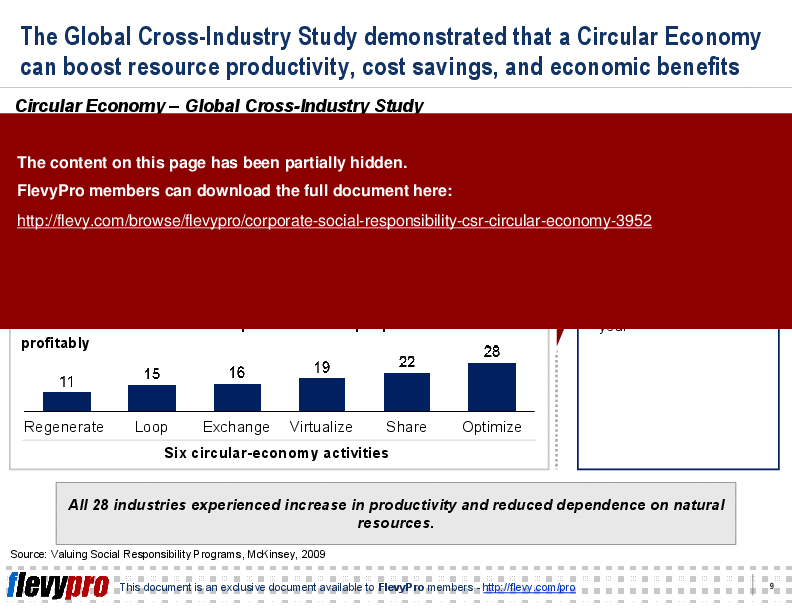
This PPT slide presents findings from the Global Cross-Industry Study on circular economy practices across 28 industries. It identifies that all industries can benefit from implementing at least 3 or 4 circular activities, with 10 industries able to adopt 5 or 6 activities profitably. The 6 distinct circular economy activities are: Regenerate, Loop, Exchange, Virtualize, Share, and Optimize, with "Optimize" having the highest potential at 28 industries and "Regenerate" the lowest at 11. Projected economic benefits include a 3% increase in resource productivity by 2030, resulting in annual cost savings of €600 billion and overall economic benefits of €1.8 trillion. These insights provide a rationale for investment in circular strategies, highlighting financial viability and growth potential.
Source: Best Practices in Sustainability, Corporate Social Responsibility, Circular Economy PowerPoint Slides: Corporate Social Responsibility (CSR): Circular Economy PowerPoint (PPT) Presentation Slide Deck, LearnPPT Consulting
This framework is developed by a team of former McKinsey and Big 4 consultants. The presentation follows the headline-body-bumper slide format used by global consulting firms.
For $10.00 more, you can download this document plus 2 more FlevyPro documents. That's just $13 each.
ABOUT FLEVYPRO
This document is part of the FlevyPro Library, a curated knowledge base of documents for our FlevyPro subscribers.

FlevyPro is a subscription service for on-demand business frameworks and analysis tools. FlevyPro subscribers receive access to an exclusive library of curated business documents—business framework primers, presentation templates, Lean Six Sigma tools, and more—among other exclusive benefits.
The average daily rate of a McKinsey consultant is $6,625 (not including expenses). The average price of a Flevy document is $65.
Trusted by over 10,000+ Client Organizations
Since 2012, we have provided business templates to over 10,000 businesses and organizations of all sizes, from startups and small businesses to the Fortune 100, in over 130 countries.
"Flevy.com has proven to be an invaluable resource library to our Independent Management Consultancy, supporting and enabling us to better serve our enterprise clients.
The value derived from our [FlevyPro] subscription in terms of the business it has helped to gain far exceeds the investment made, making a subscription a no-brainer for any growing consultancy – or in-house strategy team."
– Dean Carlton, Chief Transformation Officer, Global Village Transformations Pty Ltd.
"FlevyPro provides business frameworks from many of the global giants in management consulting that allow you to provide best in class solutions for your clients."
– David Harris, Managing Director at Futures Strategy
"As a consultant requiring up to date and professional material that will be of value and use to my clients, I find Flevy a very reliable resource.
The variety and quality of material available through Flevy offers a very useful and commanding source for information. Using Flevy saves me time, enhances my expertise and ends up being a good decision."
– Dennis Gershowitz, Principal at DG Associates
"As a small business owner, the resource material available from FlevyPro has proven to be invaluable. The ability to search for material on demand based our project events and client requirements was great for me and proved very beneficial to my clients. Importantly, being able to easily edit and tailor
the material for specific purposes helped us to make presentations, knowledge sharing, and toolkit development, which formed part of the overall program collateral. While FlevyPro contains resource material that any consultancy, project or delivery firm must have, it is an essential part of a small firm or independent consultant's toolbox.
"
– Michael Duff, Managing Director at Change Strategy (UK)
"I have found Flevy to be an amazing resource and library of useful presentations for lean sigma, change management and so many other topics. This has reduced the time I need to spend on preparing for my performance consultation. The library is easily accessible and updates are regularly provided. A wealth of great information."
– Cynthia Howard RN, PhD, Executive Coach at Ei Leadership
"I have used FlevyPro for several business applications. It is a great complement to working with expensive consultants. The quality and effectiveness of the tools are of the highest standards."
– Moritz Bernhoerster, Global Sourcing Director at Fortune 500
"FlevyPro has been a brilliant resource for me, as an independent growth consultant, to access a vast knowledge bank of presentations to support my work with clients. In terms of RoI, the value I received from the very first presentation I downloaded paid for my subscription many times over! The
quality of the decks available allows me to punch way above my weight – it's like having the resources of a Big 4 consultancy at your fingertips at a microscopic fraction of the overhead.
"
– Roderick Cameron, Founding Partner at SGFE Ltd
"I like your product. I'm frequently designing PowerPoint presentations for my company and your product has given me so many great ideas on the use of charts, layouts, tools, and frameworks. I really think the templates are a valuable asset to the job."
– Roberto Fuentes Martinez, Senior Executive Director at Technology Transformation Advisory
Download our free compilation of 50+ slides and templates on Organizational Design, Change Management, and Corporate Culture. Methodologies include ADKAR, Burke-Litwin Change Model, McKinsey 7-S, Competing Values Framework, etc.