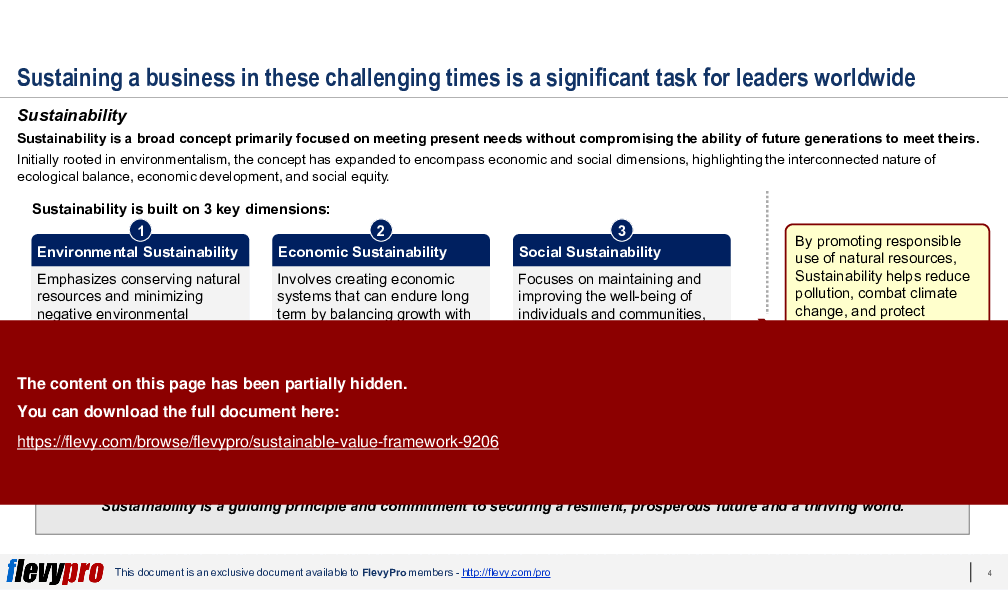

Sustainability is a broad term primarily focused on meeting the needs of the present without compromising the ability of future generations to meet their own needs. Initially rooted in environmentalism, Sustainability has expanded to encompass economic and social dimensions.
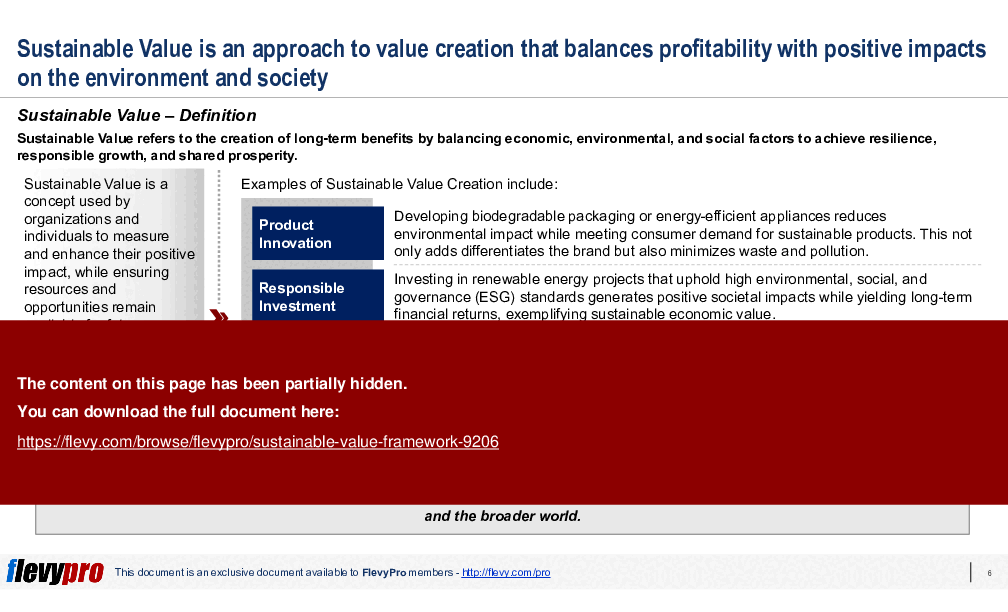
Sustainable Value is a concept used by organizations and individuals to measure and enhance their positive impact while ensuring that resources and opportunities remain available for future generations.
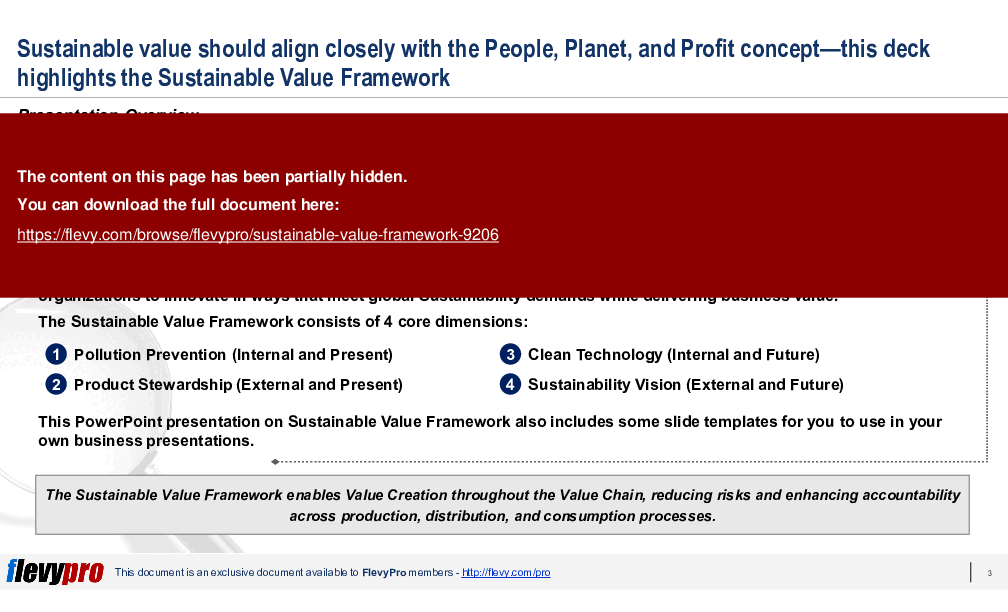
This PowerPoint presentation highlights the Sustainable Value Framework, which underscores the role of Sustainability in driving long-term growth and competitive advantage by creating value through internal and external practices. The framework challenges organizations to innovate in ways that meet global Sustainability demands while delivering business value.
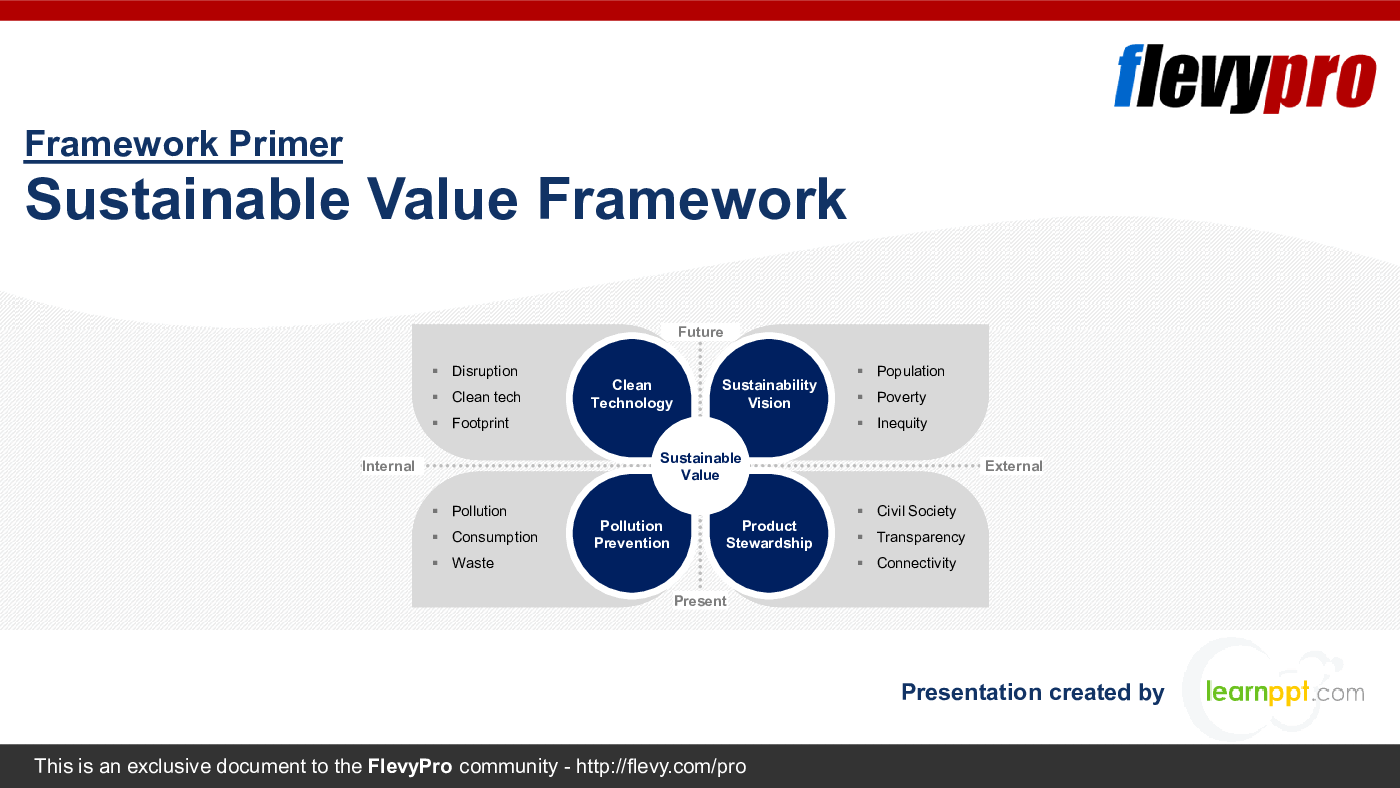
The Sustainable Value Framework consists of 4 core dimensions:
1. Pollution Prevention (Internal and Present) – This dimension focuses on minimizing pollution and waste within an organization, emphasizing internal efforts like upgrading equipment, improving production processes, and adopting cleaner technologies. These actions are fully within the organization's control.
2. Product Stewardship (External and Present) – This dimension extends beyond the organization's boundaries, emphasizing relationships with external stakeholders to enhance reputation and reduce environmental impacts.
3. Clean Technology (Internal and Future) – By adopting clean technology, organizations position themselves as Sustainability leaders, mitigate risks, gain a competitive advantage, and achieve environmental and financial success.
4. Sustainability Vision (External and Future) – This fourth dimension addresses global challenges like economic disparity and environmental degradation by integrating underserved communities into business models.
Each of these dimensions is discussed in detail. The Sustainable Value Framework enables Value Creation throughout the Value Chain, reducing risks and enhancing accountability across production, distribution, and consumption processes.
This PPT deck on Sustainable Value Framework also includes some slide templates for you to use in your own business presentations.
Got a question about this document? Email us at flevypro@flevy.com.
Executive Summary
The Sustainable Value Framework presentation offers a strategic approach to integrating sustainability into organizational practices, emphasizing the balance between economic, environmental, and social factors. Designed by experienced consultants, this framework aids organizations in creating long-term value while addressing pressing global sustainability challenges. Users will learn to implement core dimensions of sustainable strategy, including pollution prevention, product stewardship, clean technology, and a sustainability vision, ultimately driving growth and competitive advantage.
Who This Is For and When to Use
• Corporate executives seeking to embed sustainability into their organizational strategy
• Sustainability officers responsible for implementing eco-friendly practices
• Business consultants advising clients on sustainable practices
• Project managers overseeing sustainability initiatives
Best-fit moments to use this deck:
• During strategic planning sessions focused on sustainability
• When developing corporate social responsibility (CSR) initiatives
• For training sessions on sustainable business practices
• In workshops aimed at enhancing stakeholder engagement in sustainability efforts
Learning Objectives
• Define sustainable value and its importance in modern business
• Build a comprehensive sustainability strategy that aligns with organizational goals
• Establish metrics for tracking sustainability performance
• Identify opportunities for innovation through sustainable practices
• Engage stakeholders effectively in sustainability initiatives
• Implement the Sustainable Value Framework across various business functions
Table of Contents
• Overview (page 3)
• Sustainable Value (page 5)
• Sustainable Value Framework (page 10)
• Dimensions of Sustainable Strategy (page 12)
• Sustainable Value Framework Implementation (page 18)
• Slide Design Structure & Templates (page 23)
Primary Topics Covered
• Sustainable Value Definition - Sustainable value refers to the creation of long-term benefits by balancing economic, environmental, and social factors to achieve resilience and responsible growth.
• Sustainable Value Framework Overview - A strategic approach that helps organizations align sustainability with value creation, promoting growth through internal and external practices.
• Pollution Prevention - Focuses on minimizing waste and emissions through improved operational efficiency and cleaner technologies.
• Product Stewardship - Emphasizes managing the environmental and social impacts of products throughout their lifecycle by collaborating with stakeholders.
• Clean Technology - Highlights the importance of adopting innovative technologies to reduce environmental impacts and prepare for future sustainability challenges.
• Sustainability Vision - Encourages organizations to develop a long-term vision that addresses global challenges and integrates underserved communities into business models.
Deliverables, Templates, and Tools
• Sustainability strategy framework template
• Pollution prevention action plan template
• Product stewardship lifecycle assessment tool
• Clean technology investment roadmap
• Stakeholder engagement plan template
• Sustainability vision statement template
Slide Highlights
• Overview of the Sustainable Value Framework with core dimensions
• Detailed breakdown of pollution prevention strategies
• Case studies on successful product stewardship initiatives
• Visual representation of clean technology adoption benefits
• Framework for developing a sustainability vision
Potential Workshop Agenda
Sustainability Strategy Development (90 minutes)
• Discuss the importance of sustainable value
• Identify current sustainability practices within the organization
• Brainstorm actionable steps for integrating sustainability
Stakeholder Engagement Session (60 minutes)
• Review stakeholder mapping techniques
• Develop engagement strategies for sustainability initiatives
• Create a communication plan for sustainability updates
Implementation Planning (120 minutes)
• Set measurable goals for sustainability performance
• Draft an action plan for pollution prevention and product stewardship
• Assign responsibilities and establish timelines
Customization Guidance
• Tailor the sustainability vision statement to reflect organizational values and goals
• Adjust the pollution prevention action plan based on specific operational needs
• Incorporate relevant metrics for tracking sustainability performance aligned with industry standards
• Modify stakeholder engagement strategies to fit organizational culture and structure
Secondary Topics Covered
• The role of corporate social responsibility in sustainability
• Trends in clean technology and their implications for businesses
• Best practices for measuring sustainability impact
• Regulatory compliance related to environmental sustainability
• Community engagement strategies for sustainable development
Topic FAQ
Document FAQ
These are questions addressed within this presentation.
What is the Sustainable Value Framework?
The Sustainable Value Framework is a strategic approach that integrates sustainability into business operations, promoting value creation while addressing environmental and social challenges.
How can organizations implement the Sustainable Value Framework?
Organizations can implement the framework by assessing their current practices, setting measurable sustainability goals, and engaging stakeholders in the process.
What are the core dimensions of sustainable strategy?
The core dimensions include pollution prevention, product stewardship, clean technology, and sustainability vision.
Why is stakeholder engagement important in sustainability?
Engaging stakeholders fosters collaboration, builds trust, and ensures that sustainability initiatives align with community needs and expectations.
How does clean technology contribute to sustainability?
Clean technology reduces environmental impacts, enhances operational efficiency, and positions organizations for future regulatory compliance.
What metrics should be used to track sustainability performance?
Metrics may include reductions in waste, emissions, resource consumption, and improvements in stakeholder engagement.
Can the framework be customized for different industries?
Yes, the framework can be tailored to fit the specific needs and challenges of various industries.
What are the benefits of adopting sustainable practices?
Benefits include enhanced brand reputation, cost savings, improved risk management, and access to capital from ESG-focused investors.
Glossary
• Sustainable Value - Long-term benefits from balancing economic, environmental, and social factors.
• Pollution Prevention - Strategies to minimize waste and emissions.
• Product Stewardship - Managing product impacts throughout their lifecycle.
• Clean Technology - Innovative technologies that reduce environmental impacts.
• Sustainability Vision - A long-term plan addressing global challenges.
• Stakeholder Engagement - Involving stakeholders in sustainability initiatives.
• Corporate Social Responsibility (CSR) - Business practices that promote social good.
• ESG - Environmental, Social, and Governance criteria for responsible investing.
• Lifecycle Assessment - Evaluating environmental impacts throughout a product's lifecycle.
• Resource Efficiency - Optimizing resource use to reduce waste and costs.
• Regulatory Compliance - Adhering to environmental laws and standards.
• Community Engagement - Involving local communities in sustainability efforts.
• Innovation - Developing new ideas and technologies for sustainable practices.
• Cost Savings - Reductions in operational costs through sustainable practices.
• Brand Reputation - Public perception of a company's commitment to sustainability.
• Risk Management - Identifying and mitigating risks associated with sustainability challenges.
• Sustainable Practices - Actions taken to promote environmental and social responsibility.
• Transparency - Openness in communicating sustainability efforts and impacts.
• Biodiversity - The variety of life in the world, crucial for ecosystem health.
• Circular Economy - An economic system aimed at eliminating waste and promoting resource reuse.
Source: Best Practices in Sustainability, Corporate Social Responsibility PowerPoint Slides: Sustainable Value Framework PowerPoint (PPTX) Presentation Slide Deck, LearnPPT Consulting
Did you need more documents?
Consider a FlevyPro subscription from $39/month. View plans here.
For $10.00 more, you can download this document plus 2 more FlevyPro documents. That's just $13 each.
|
Download our FREE Organization, Change, & Culture, Templates
Download our free compilation of 50+ slides and templates on Organizational Design, Change Management, and Corporate Culture. Methodologies include ADKAR, Burke-Litwin Change Model, McKinsey 7-S, Competing Values Framework, etc. |