
Strategic positioning and value differentiation are pivotal for organizational success. Industries ranging from retail to services and manufacturing face significant challenges in distinguishing themselves and maintaining market share.
This challenge has led strategists to refine traditional models like Porter's Generic Strategies. At the forefront of this evolution, Cliff Bowman developed Bowman's Strategy Clock, a sophisticated framework that extends beyond simple cost-leadership or differentiation. Recognizing that traditional models often fail to address the nuances of a true competitive advantage, Bowman introduced a more defined strategic positioning that assesses price and perceived value comprehensively.
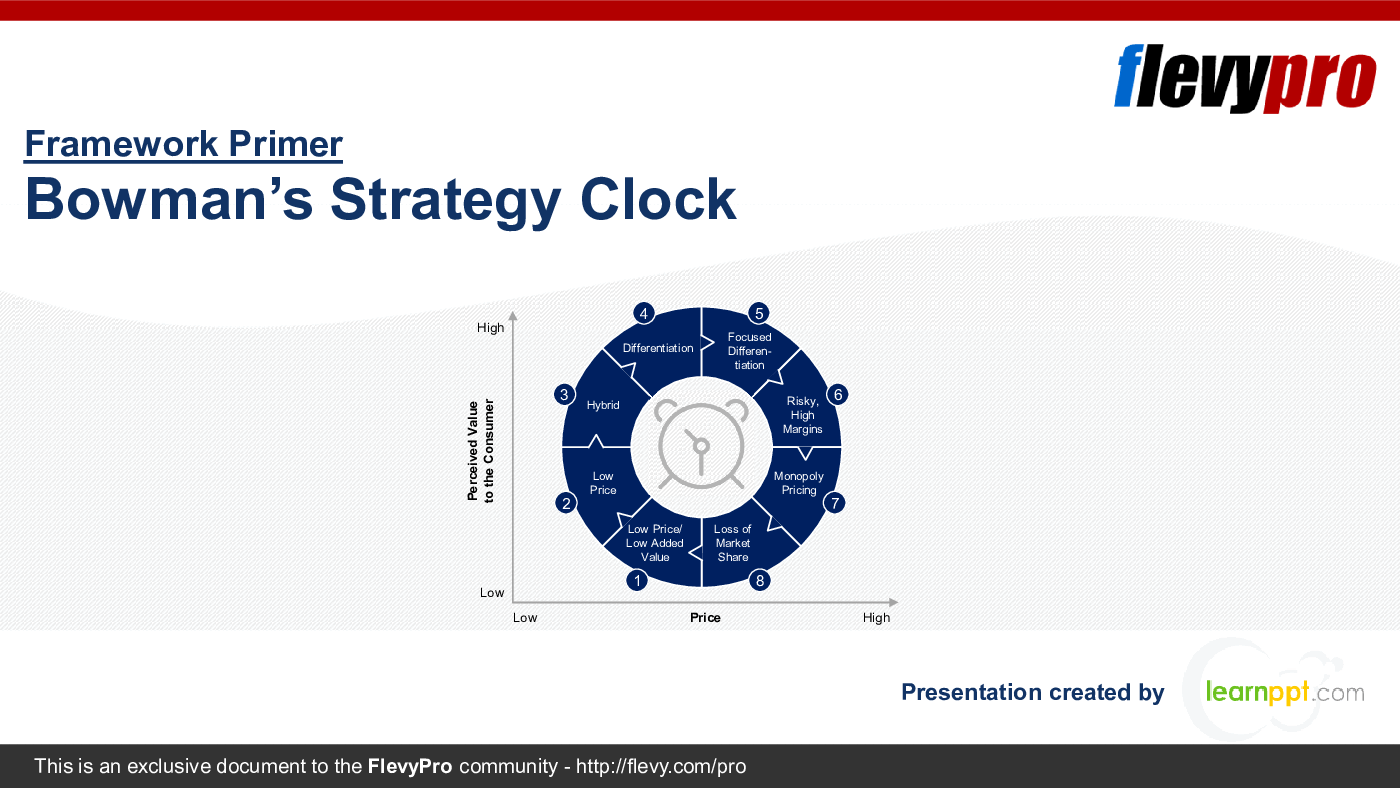
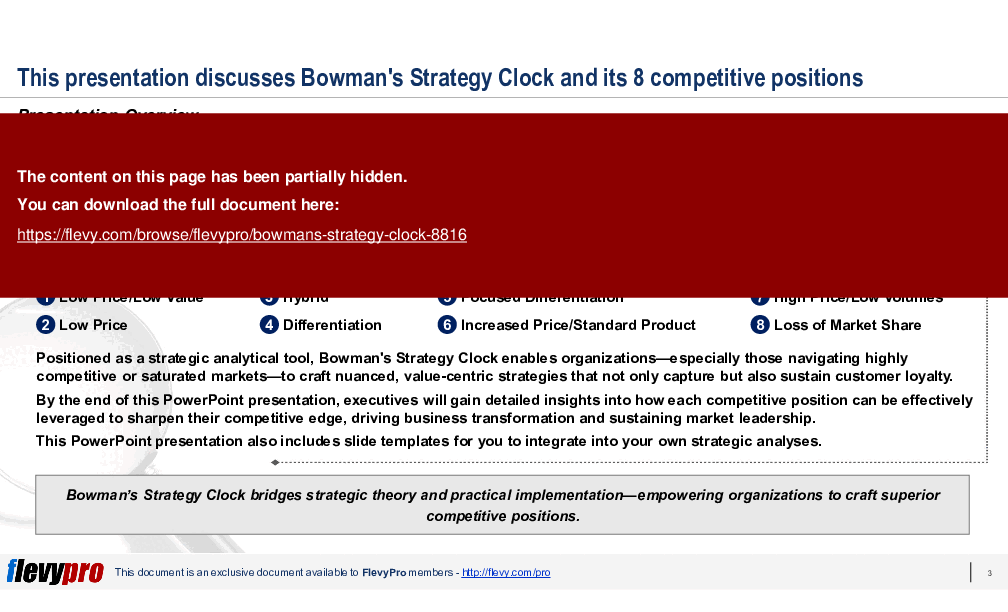
In this PowerPoint presentation, we will dissect Bowman's Strategy Clock and its varied strategic positions:
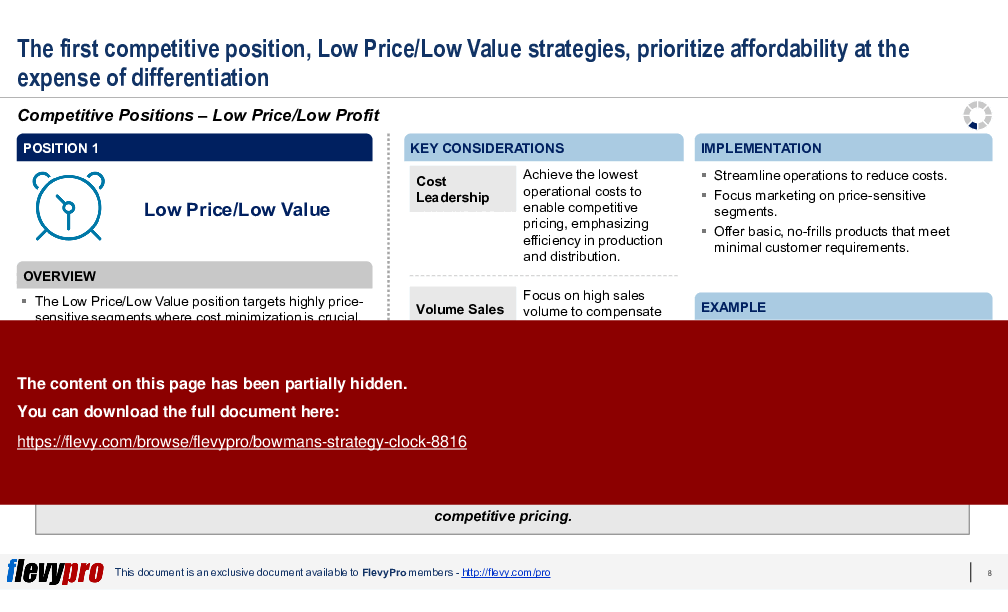
1. Low Price/Low Value
2. Low Price
3. Hybrid
4. Differentiation
5. Focused Differentiation
6. Increased Price/Standard Product
7. High Price/Low Volumes
8. Loss of Market Share
Each of these competitive positions is discussed in detail, including key considerations, implementation guidelines, and examples. Bowman's Strategy Clock bridges strategic theory and practical implementation—empowering organizations to craft superior competitive positions.
Positioned as a strategic analytical tool, Bowman's Strategy Clock enables organizations—especially those navigating highly competitive or saturated markets—to craft nuanced, value-centric strategies that not only capture but also sustain customer loyalty.
By the end of this PowerPoint presentation, executives will gain detailed insights into how each competitive position can be effectively leveraged to sharpen their competitive edge, driving business transformation and sustaining market leadership.
This PowerPoint presentation also includes slide templates for you to integrate into your own strategic analyses.
Got a question about this document? Email us at flevypro@flevy.com.
Executive Summary
Bowman's Strategy Clock presentation offers a comprehensive exploration of strategic positioning in competitive markets. Developed by renowned strategists, this framework enhances traditional models by integrating price and perceived value, enabling organizations to craft nuanced strategies that capture and sustain customer loyalty. Executives will learn to leverage the eight competitive positions outlined in the clock to sharpen their competitive edge and drive business transformation. This PowerPoint also includes templates for practical application in strategic analyses.
Who This Is For and When to Use
• Corporate executives seeking to refine competitive strategies.
• Business consultants aiming to enhance client engagements with strategic frameworks.
• Marketing teams focused on positioning products effectively in the market.
• Strategy development teams looking for structured approaches to market analysis.
Best-fit moments to use this deck:
• During strategic planning sessions to align on market positioning.
• In workshops aimed at developing competitive strategies.
• When analyzing market trends and consumer behavior for strategic adjustments.
Learning Objectives
• Define Bowman's Strategy Clock and its relevance in strategic positioning.
• Analyze competitive landscapes using the eight positions of the Strategy Clock.
• Develop actionable strategies to enhance market positioning based on identified gaps.
• Implement frameworks for continuous market assessment and strategy adaptation.
• Create a roadmap for executing strategic initiatives aligned with market demands.
• Foster stakeholder engagement through effective communication of strategic plans.
Table of Contents
• Overview (page 3)
• Bowman’s Strategy Clock (page 5)
• Competitive Positions (page 6)
• Strategy Clock Implementation (page 17)
• Slide Design Structure & Templates (page 23)
Primary Topics Covered
• Overview of Bowman's Strategy Clock - An introduction to the framework that integrates price and perceived value for competitive analysis.
• Competitive Positions - Detailed exploration of the eight strategic positions that define market choices based on pricing and value.
• Implementation Strategies - A structured approach to applying the Strategy Clock in organizational contexts for strategic advantage.
• Case Studies - Real-world applications of the Strategy Clock in various industries, illustrating successful strategic positioning.
• Future Trends - Insights into how emerging trends will influence the application of Bowman's Strategy Clock in strategic planning.
• Slide Design Guidelines - Best practices for structuring and designing presentation slides to enhance clarity and impact.
Deliverables, Templates, and Tools
• Slide templates for each competitive position within Bowman's Strategy Clock.
• Framework for conducting market analysis and positioning assessments.
• Actionable checklists for implementing strategic initiatives based on the clock.
• Case study examples illustrating successful applications of the framework.
• Guidelines for stakeholder engagement and communication of strategic plans.
• Metrics for measuring the effectiveness of implemented strategies.
Slide Highlights
• Overview slide detailing the significance of strategic positioning in competitive markets.
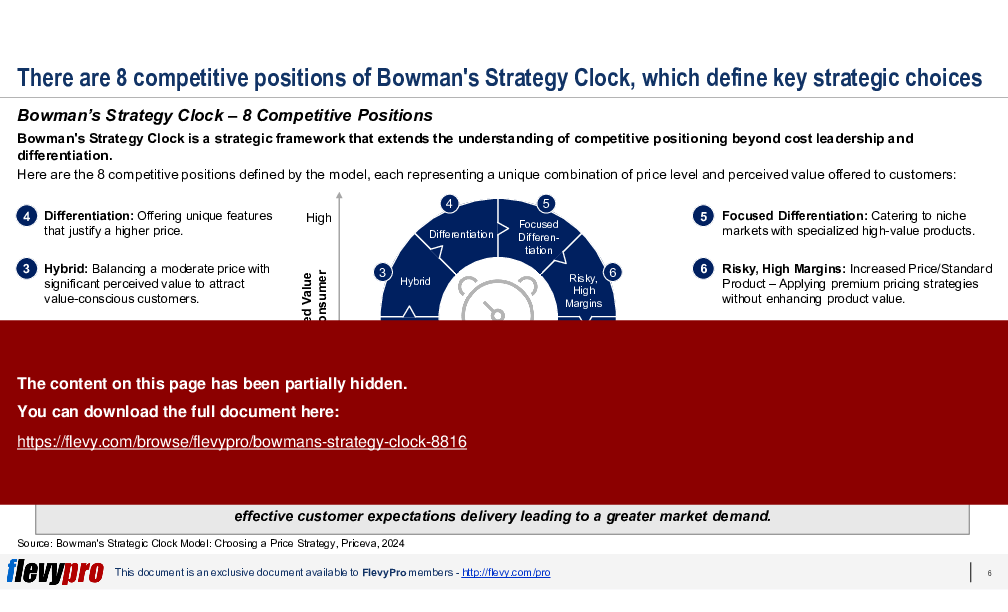
• Visual representation of the eight competitive positions within Bowman's Strategy Clock.
• Implementation roadmap outlining the steps for applying the framework in strategic planning.
• Case study slides showcasing successful applications in retail and technology sectors.
• Future trends slide highlighting key factors influencing strategic adaptations.
Potential Workshop Agenda
Introduction to Bowman's Strategy Clock (30 minutes)
• Overview of the framework and its relevance in strategic positioning.
• Discussion on the importance of price and perceived value in market strategies.
Competitive Position Analysis (60 minutes)
• Breakout sessions to analyze current market positions using the Strategy Clock.
• Group presentations on findings and strategic recommendations.
Implementation Planning (90 minutes)
• Develop actionable strategies based on identified competitive positions.
• Create a roadmap for executing strategic initiatives and measuring success.
Customization Guidance
• Tailor slide templates to reflect specific organizational branding and terminology.
• Adjust case study examples to align with industry-specific contexts.
• Modify implementation strategies based on unique market conditions and organizational capabilities.
Secondary Topics Covered
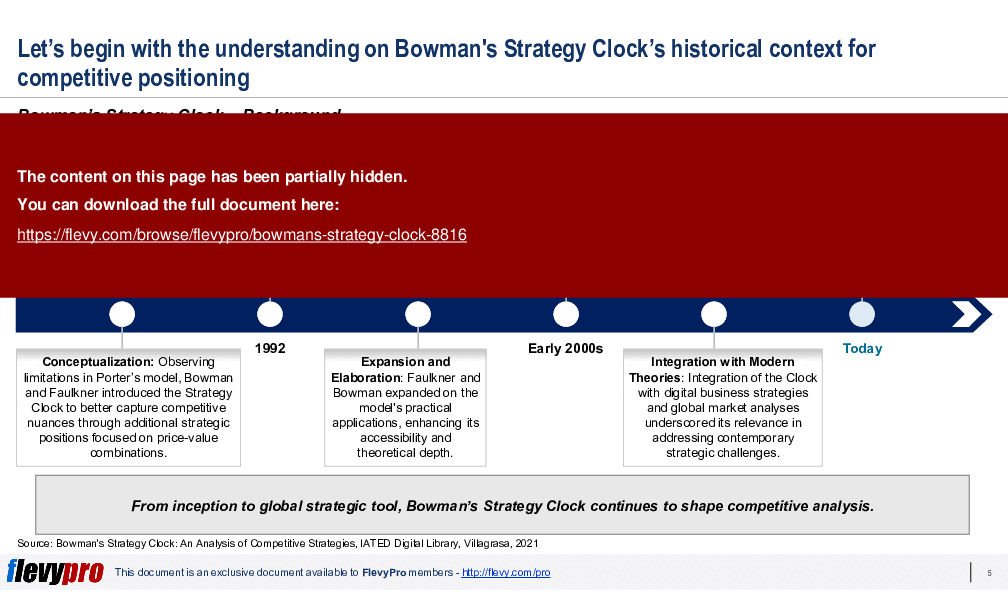
• Historical development of Bowman's Strategy Clock and its evolution in strategic management.
• Integration of digital strategies with the Strategy Clock framework.
• Analysis of competitive dynamics and consumer behavior trends.
• Best practices for continuous market assessment and strategy adaptation.
Topic FAQ
Document FAQ
These are questions addressed within this presentation.
What is Bowman's Strategy Clock?
Bowman's Strategy Clock is a strategic framework that helps organizations assess their competitive positioning based on price and perceived value, offering eight distinct strategic options.
How can I apply the Strategy Clock in my organization?
Utilize the framework to analyze your current market position, identify gaps, and develop actionable strategies to enhance your competitive stance.
What are the eight competitive positions?
The eight positions include: Low Price/Low Value, Low Price, Hybrid, Differentiation, Focused Differentiation, Increased Price/Standard Product, High Price/Low Volumes, and Loss of Market Share.
How does the Strategy Clock differ from traditional models?
Unlike traditional models that focus solely on cost leadership or differentiation, the Strategy Clock integrates price and perceived value to provide a more nuanced analysis of competitive positioning.
Can this framework be used in various industries?
Yes, Bowman's Strategy Clock is adaptable across different industries, making it a versatile tool for strategic analysis and decision-making.
What are the key benefits of using this framework?
The framework aids in identifying competitive advantages, crafting tailored strategies, and fostering customer loyalty through effective value propositions.
How often should organizations reassess their strategic positions?
Organizations should conduct regular assessments to ensure alignment with market conditions and consumer expectations, adapting strategies as needed.
What resources are available for further learning?
The presentation includes templates, case studies, and guidelines for implementing the Strategy Clock in various organizational contexts.
Glossary
• Bowman's Strategy Clock - A framework for assessing competitive positioning based on price and perceived value.
• Competitive Position - The strategic stance an organization takes in relation to its competitors.
• Market Analysis - The process of assessing market conditions and consumer behavior to inform strategic decisions.
• Value Proposition - The unique value a product or service offers to customers.
• Strategic Positioning - The process of establishing a brand or product's place in the market relative to competitors.
• Implementation Roadmap - A structured plan outlining the steps required to execute strategies effectively.
• Stakeholder Engagement - The process of involving key stakeholders in strategic planning and decision-making.
• Case Study - An in-depth analysis of a specific instance of strategic application in a real-world context.
• Market Trends - Patterns and shifts in consumer behavior and market dynamics over time.
• Pricing Strategy - The approach an organization takes to set prices for its products or services.
• Customer Insights - Information gathered about customer preferences and behaviors to inform strategy.
• Gap Analysis - The process of identifying discrepancies between current and desired performance.
• Resource Allocation - The distribution of resources to support strategic initiatives.
• Key Performance Indicators (KPIs) - Metrics used to measure the success of implemented strategies.
• Continuous Improvement - Ongoing efforts to enhance products, services, or processes.
• Digital Transformation - The integration of digital technology into all areas of a business.
• Corporate Social Responsibility (CSR) - The practice of integrating social and environmental concerns in business operations.
• Globalization - The process of expanding business operations to international markets.
• Consumer Behavior - The study of how individuals make decisions to spend their resources on consumption-related items.
• Strategic Flexibility - The ability to adapt strategies in response to changing market conditions.
Source: Best Practices in Pricing Strategy, Competitive Analysis, Competitive Landscape PowerPoint Slides: Bowman's Strategy Clock PowerPoint (PPTX) Presentation Slide Deck, LearnPPT Consulting
Did you need more documents?
Consider a FlevyPro subscription from $39/month. View plans here.
For $10.00 more, you can download this document plus 2 more FlevyPro documents. That's just $13 each.
|
Download our FREE Strategy & Transformation Framework Templates
Download our free compilation of 50+ Strategy & Transformation slides and templates. Frameworks include McKinsey 7-S, Balanced Scorecard, Disruptive Innovation, BCG Curve, and many more. |