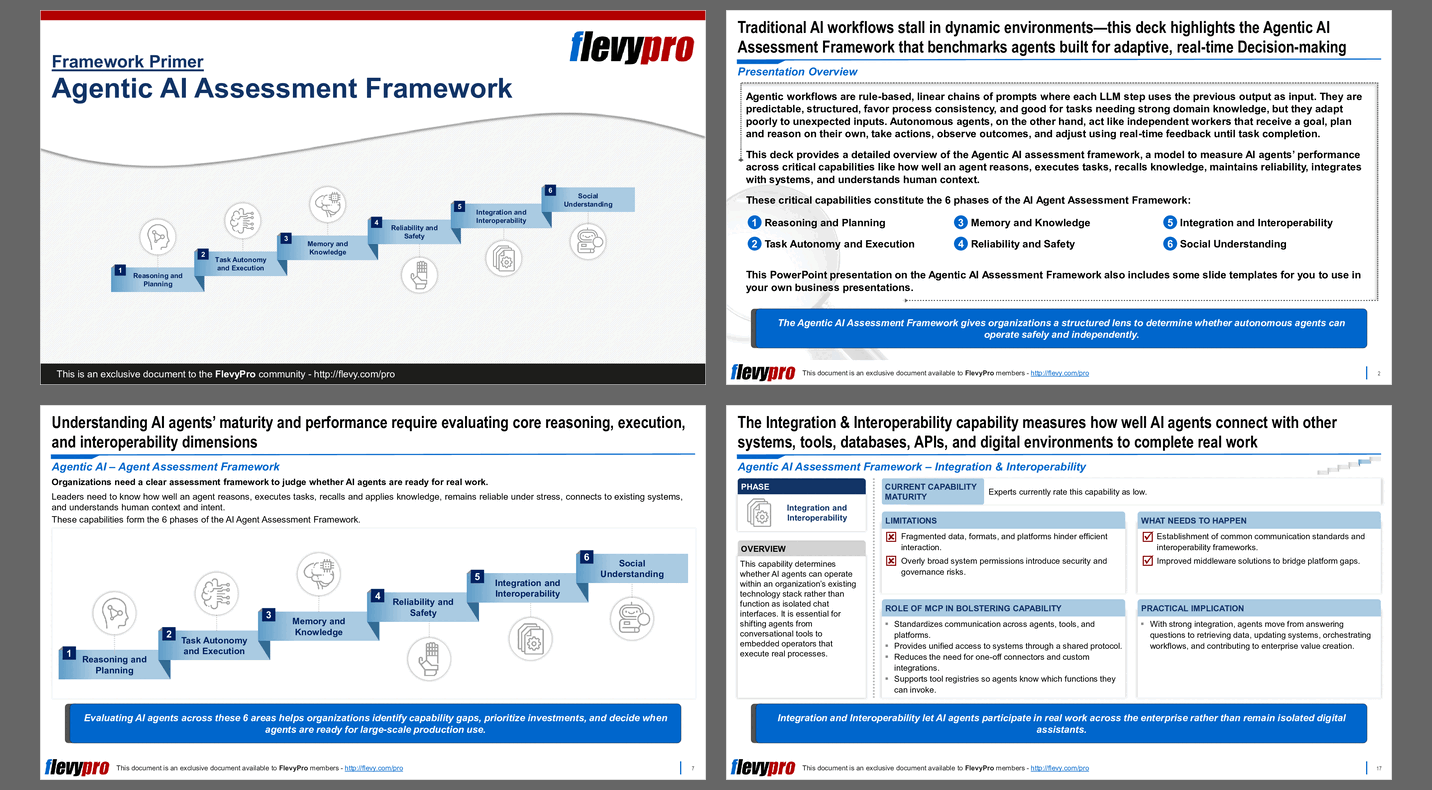
This framework is developed by a team of former McKinsey and Big 4 consultants. The presentation follows the headline-body-bumper slide format used by global consulting firms.
Explore the Agentic AI Assessment Framework, crafted by ex-McKinsey and Big 4 consultants. Evaluate AI agents' performance across 6 critical capabilities. Agentic AI Assessment Framework is a 31-slide PPT PowerPoint presentation slide deck (PPTX) available for immediate download upon purchase.
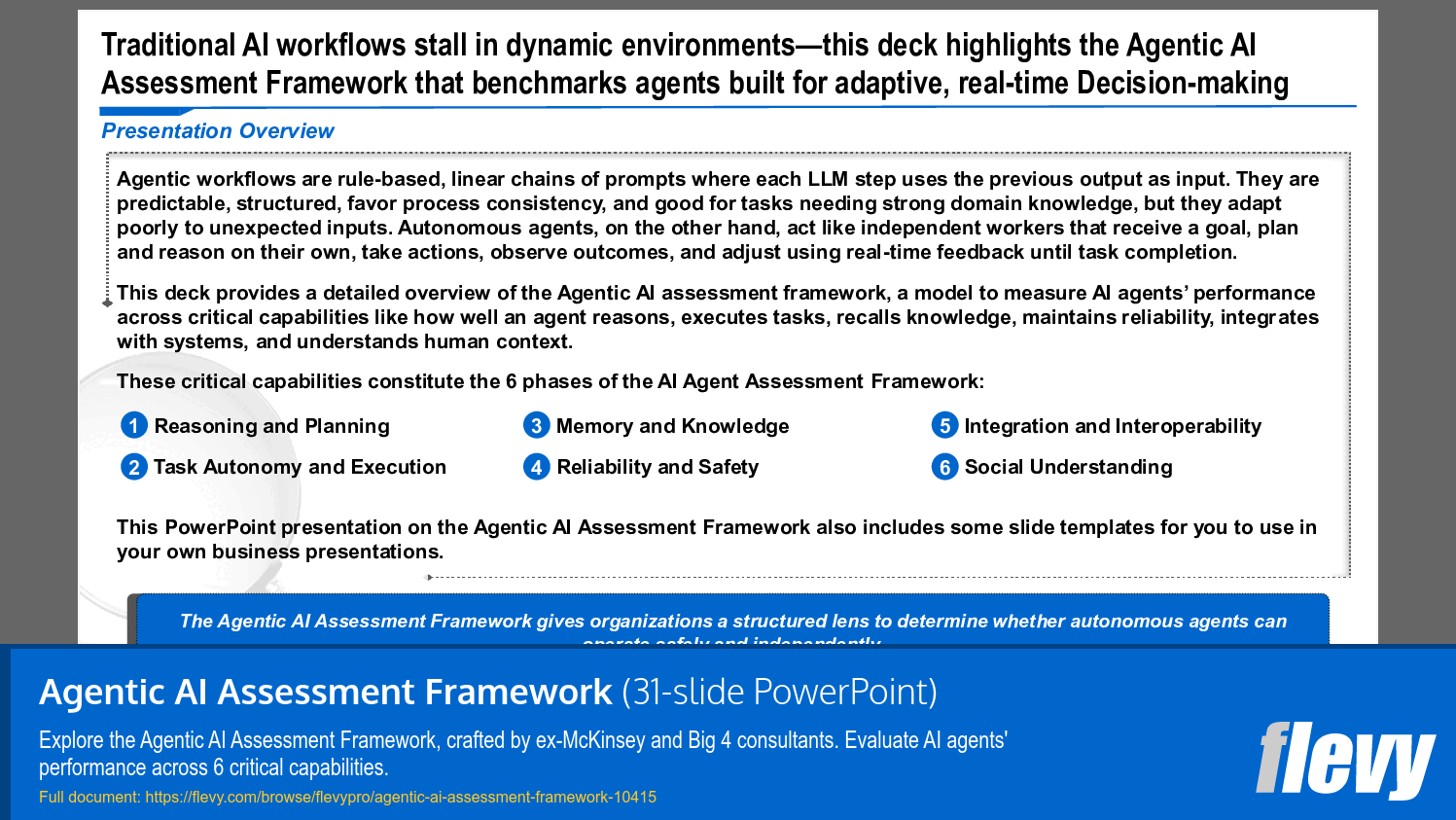
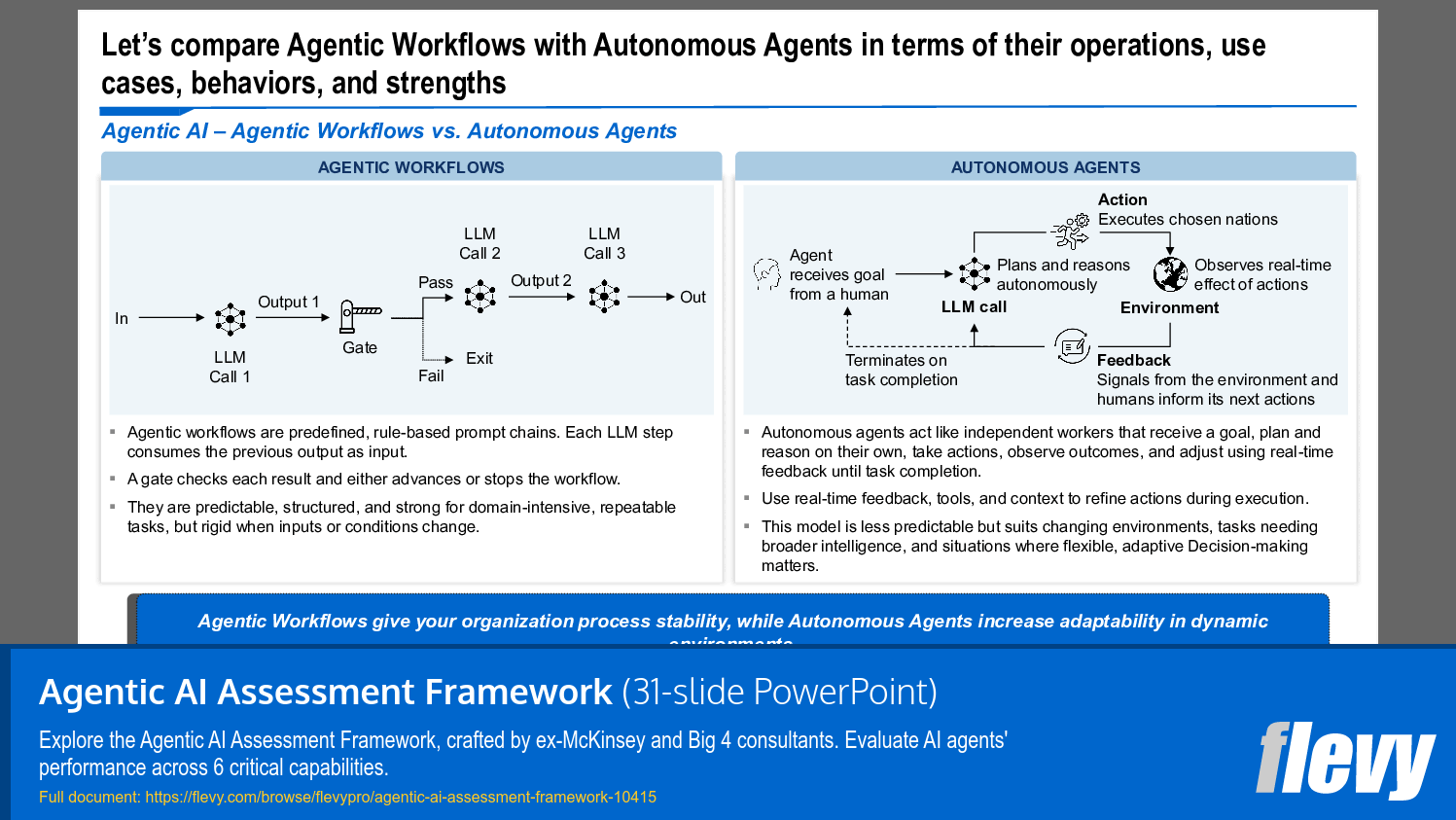
Agentic workflows are rule-based, linear chains of prompts where each LLM step uses the previous output as input. They are predictable, structured, favor process consistency, and good for tasks needing strong domain knowledge, but they adapt poorly to unexpected inputs.
Autonomous agents, on the other hand, act like independent workers that receive a goal, plan and reason on their own, take actions, observe outcomes, and adjust using real-time feedback until task completion.
This deck provides a detailed overview of the Agentic AI assessment framework, a model to measure AI agents' performance across critical capabilities like how well an agent reasons, executes tasks, recalls knowledge, maintains reliability, integrates with systems, and understands human context.
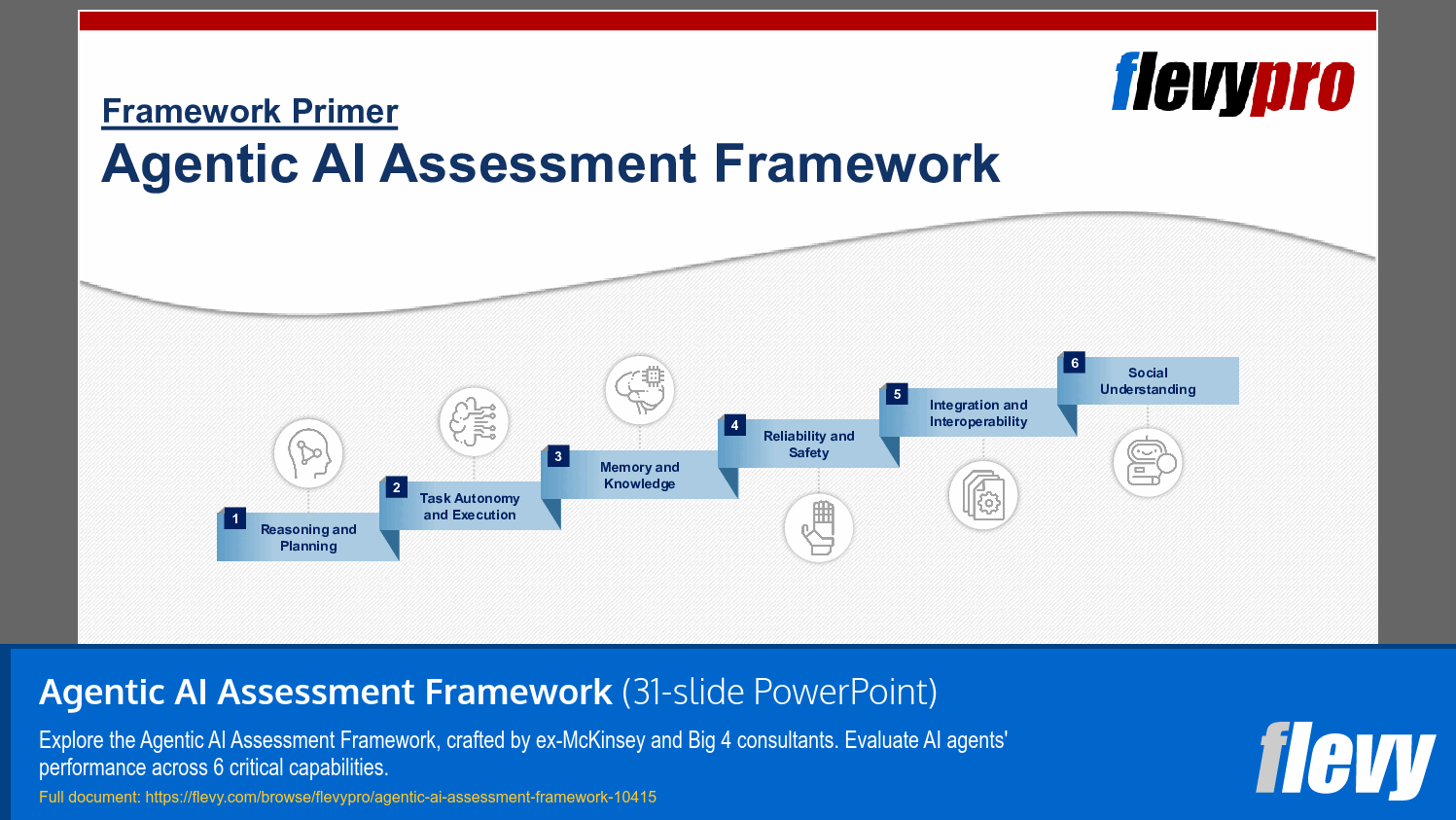
These critical capabilities constitute the 6 phases of the AI Agent Assessment Framework:
1. Reasoning and Planning
2. Task Autonomy and Execution
3. Memory and Knowledge
4. Reliability and Safety
5. Integration and Interoperability
6. Social Understanding
The Agentic AI Assessment Framework gives organizations a structured lens to determine whether autonomous agents can operate safely and independently.
This PowerPoint presentation on the Agentic AI Assessment Framework also includes some slide templates for you to use in your own business presentations.
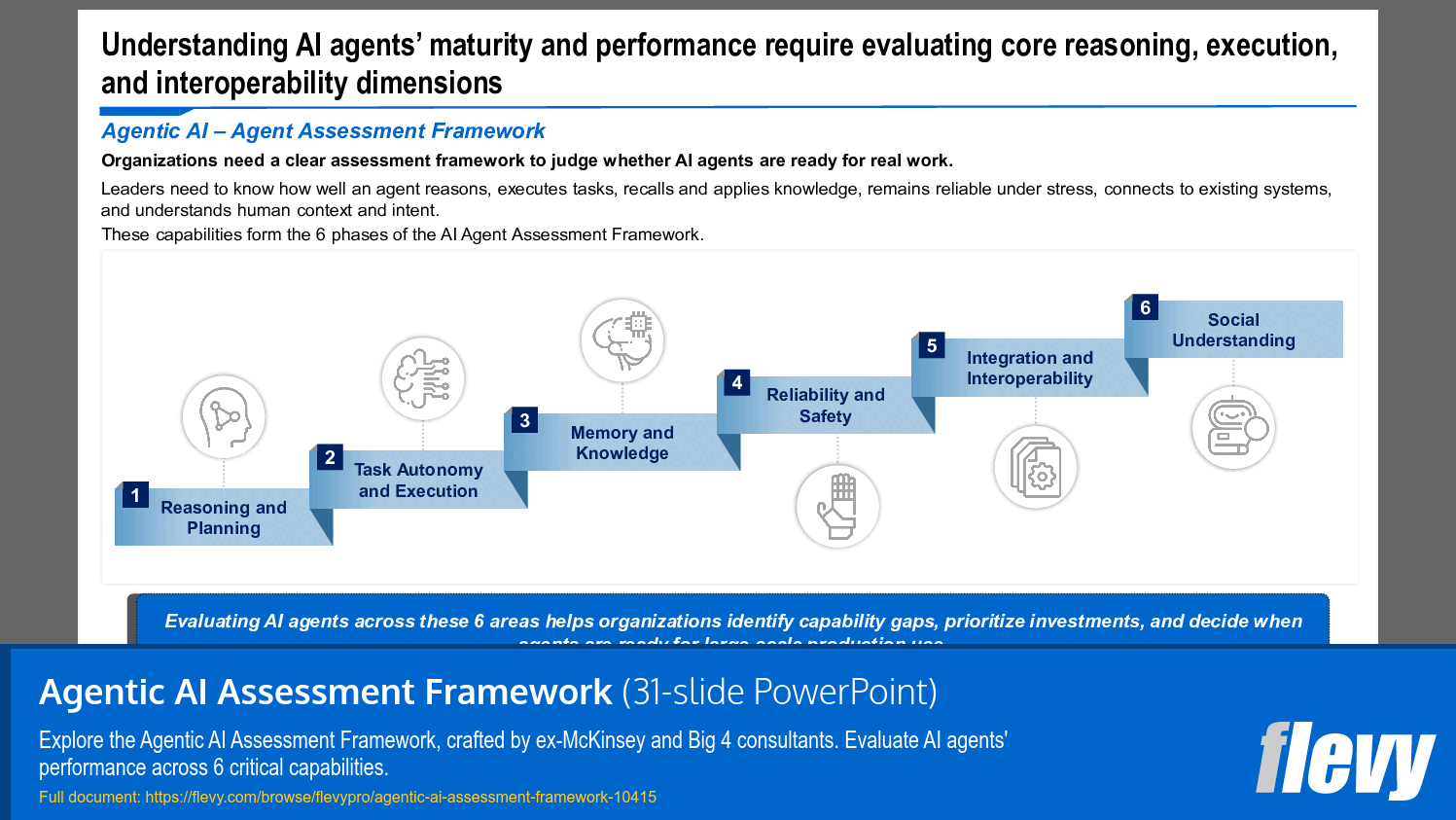
This PPT slide introduces the "Agentic AI – Agent Assessment Framework" for evaluating AI agents' maturity and performance across core dimensions: reasoning, execution, and interoperability. The framework consists of 6 sequential phases: "Reasoning and Planning," "Task Autonomy and Execution," "Memory and Knowledge," "Reliability and Safety," "Integration and Interoperability," and "Social Understanding," each representing a critical capability for AI agents. This structured assessment helps organizations identify capability gaps, prioritize investments, and determine AI readiness for deployment. A phased approach is essential for managing risk and ensuring AI systems meet operational expectations.
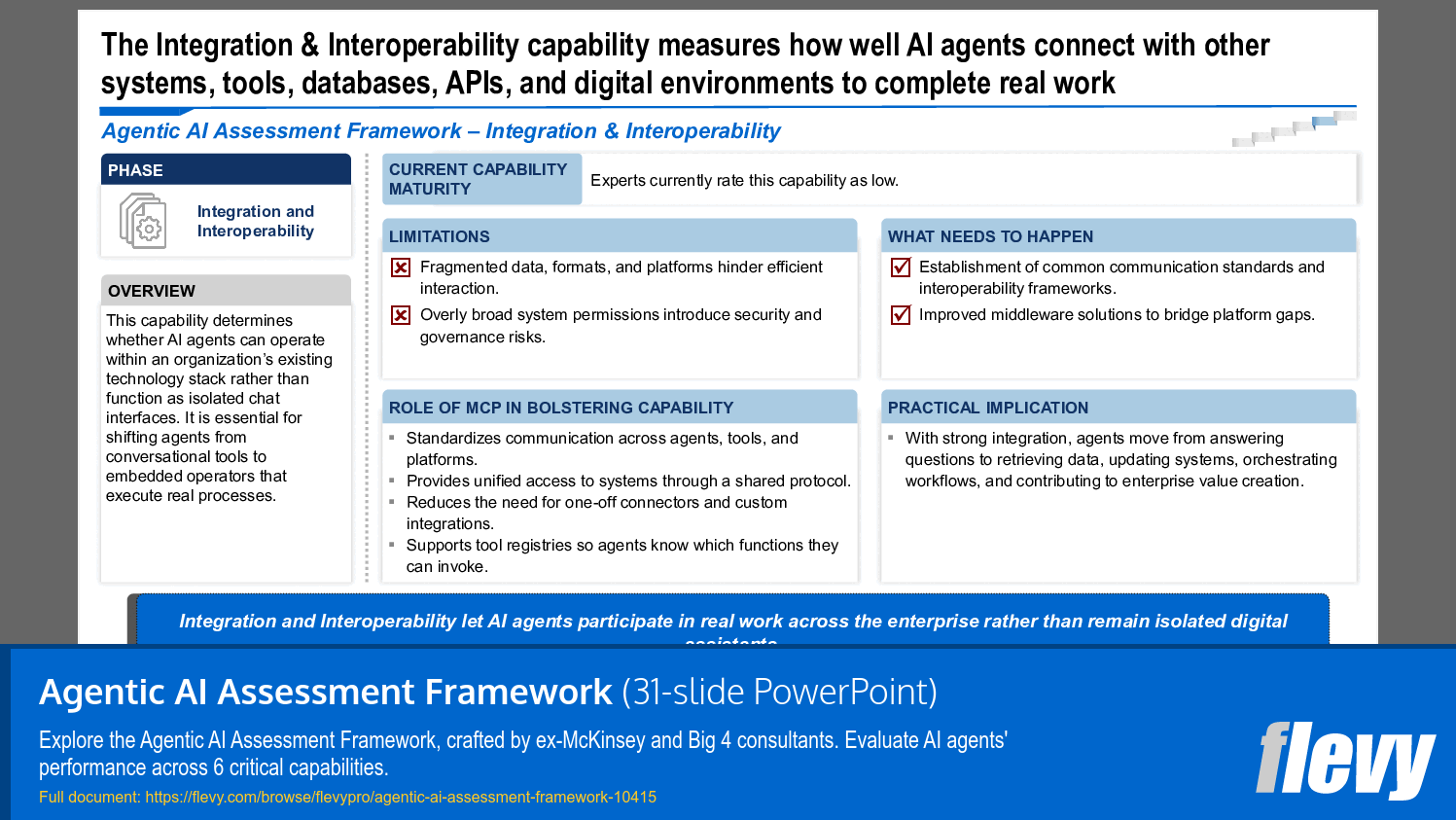
This PPT slide presents a framework for assessing AI agents' integration and interoperability capabilities. It identifies current maturity levels, limitations such as fragmented data formats and broad system permissions, which hinder efficient interaction and pose security risks. These limitations restrict AI agents from functioning seamlessly in complex digital environments. To improve connectivity, establishing common communication standards and interoperability frameworks, along with developing middleware solutions, is essential. Enhanced integration allows AI agents to transition from simple data retrieval to active contributions in enterprise workflows, supporting dynamic, scalable, and secure AI-enabled operations aligned with digital transformation goals.
This PPT slide compares 2 operational models: agentic workflows and autonomous agents. Agentic workflows are rule-based, predictable, and structured, involving multiple steps with specific triggers such as LLM call sequences and gate checks. They prioritize repeatability and clarity, but lack flexibility in changing conditions. In contrast, autonomous agents operate independently, receiving goals from humans and executing actions without constant oversight. They adapt to real-time feedback from their environment, making them more fluid and capable of handling complex tasks. The comparison highlights that agentic workflows are suitable for tasks with clear, repetitive steps, while autonomous agents excel in dynamic environments requiring flexibility and ongoing decision-making. The choice between these models depends on task complexity and variability.
Source: Best Practices in Artificial Intelligence, Agentic AI PowerPoint Slides: Agentic AI Assessment Framework PowerPoint (PPTX) Presentation Slide Deck, LearnPPT Consulting
This framework is developed by a team of former McKinsey and Big 4 consultants. The presentation follows the headline-body-bumper slide format used by global consulting firms.
For $10.00 more, you can download this document plus 2 more FlevyPro documents. That's just $13 each.
ABOUT FLEVYPRO
This document is part of the FlevyPro Library, a curated knowledge base of documents for our FlevyPro subscribers.

FlevyPro is a subscription service for on-demand business frameworks and analysis tools. FlevyPro subscribers receive access to an exclusive library of curated business documents—business framework primers, presentation templates, Lean Six Sigma tools, and more—among other exclusive benefits.
The average daily rate of a McKinsey consultant is $6,625 (not including expenses). The average price of a Flevy document is $65.
Trusted by over 10,000+ Client Organizations
Since 2012, we have provided business templates to over 10,000 businesses and organizations of all sizes, from startups and small businesses to the Fortune 100, in over 130 countries.
"Flevy is our 'go to' resource for management material, at an affordable cost. The Flevy library is comprehensive and the content deep, and typically provides a great foundation for us to further develop and tailor our own service offer."
– Chris McCann, Founder at Resilient.World
"I have used FlevyPro for several business applications. It is a great complement to working with expensive consultants. The quality and effectiveness of the tools are of the highest standards."
– Moritz Bernhoerster, Global Sourcing Director at Fortune 500
"I have found Flevy to be an amazing resource and library of useful presentations for lean sigma, change management and so many other topics. This has reduced the time I need to spend on preparing for my performance consultation. The library is easily accessible and updates are regularly provided. A wealth of great information."
– Cynthia Howard RN, PhD, Executive Coach at Ei Leadership
"If you are looking for great resources to save time with your business presentations, Flevy is truly a value-added resource. Flevy has done all the work for you and we will continue to utilize Flevy as a source to extract up-to-date information and data for our virtual and onsite presentations!"
– Debbi Saffo, President at The NiKhar Group
"I am extremely grateful for the proactiveness and eagerness to help and I would gladly recommend the Flevy team if you are looking for data and toolkits to help you work through business solutions."
– Trevor Booth, Partner, Fast Forward Consulting
"[Flevy] produces some great work that has been/continues to be of immense help not only to myself, but as I seek to provide professional services to my clients, it gives me a large "tool box" of resources that are critical to provide them with the quality of service and outcomes they are expecting."
– Royston Knowles, Executive with 50+ Years of Board Level Experience
"As a niche strategic consulting firm, Flevy and FlevyPro frameworks and documents are an on-going reference to help us structure our findings and recommendations to our clients as well as improve their clarity, strength, and visual power. For us, it is an invaluable resource to increase our impact and value."
– David Coloma, Consulting Area Manager at Cynertia Consulting
"The wide selection of frameworks is very useful to me as an independent consultant. In fact, it rivals what I had at my disposal at Big 4 Consulting firms in terms of efficacy and organization."
– Julia T., Consulting Firm Owner (Former Manager at Deloitte and Capgemini)
Download our FREE Digital Transformation Templates
Download our free compilation of 50+ Digital Transformation slides and templates. DX concepts covered include Digital Leadership, Digital Maturity, Digital Value Chain, Customer Experience, Customer Journey, RPA, etc.









