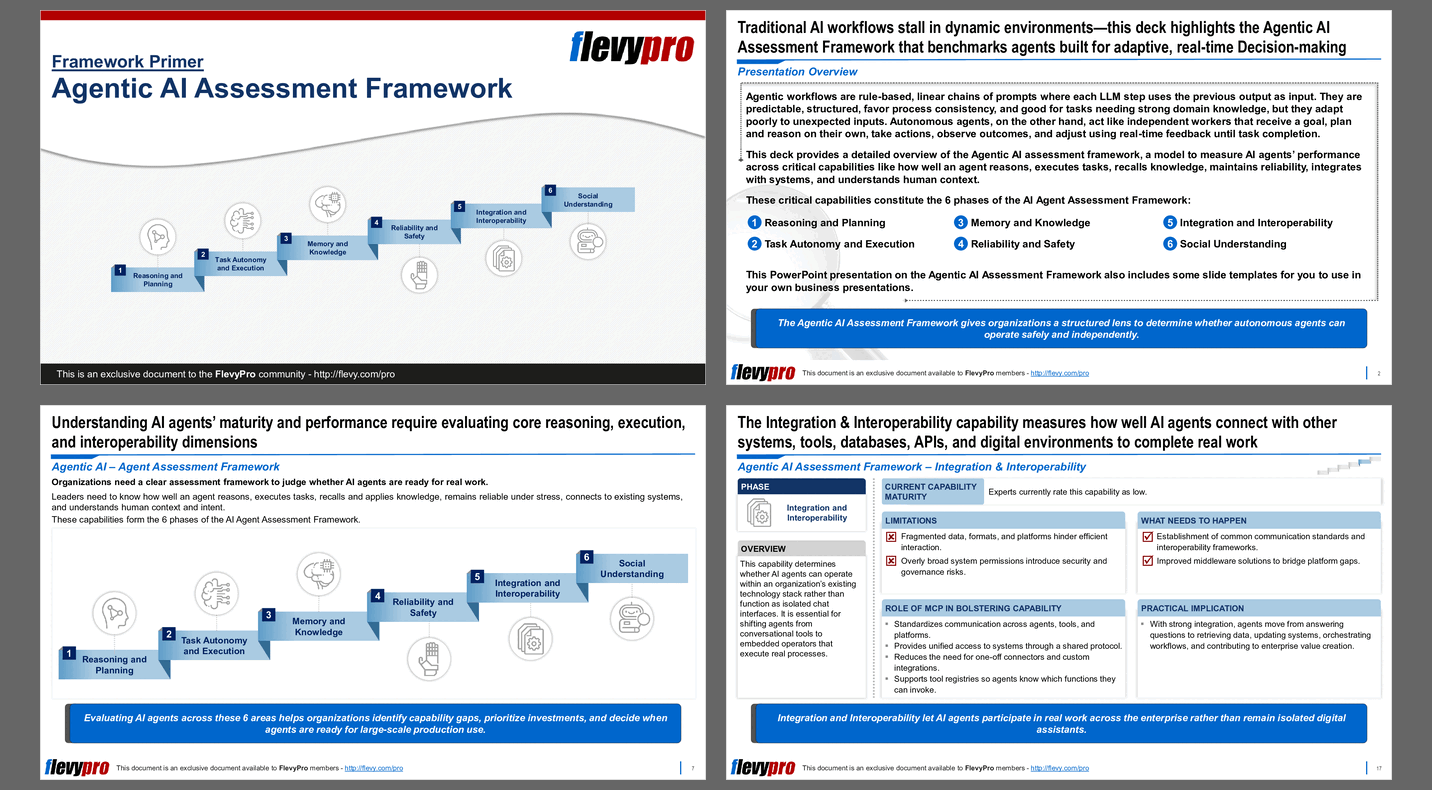
This framework is developed by a team of former McKinsey and Big 4 consultants. The presentation follows the headline-body-bumper slide format used by global consulting firms.
This product (Agentic AI Assessment Framework) is a 31-slide PPT PowerPoint presentation slide deck (PPTX), which you can download immediately upon purchase.
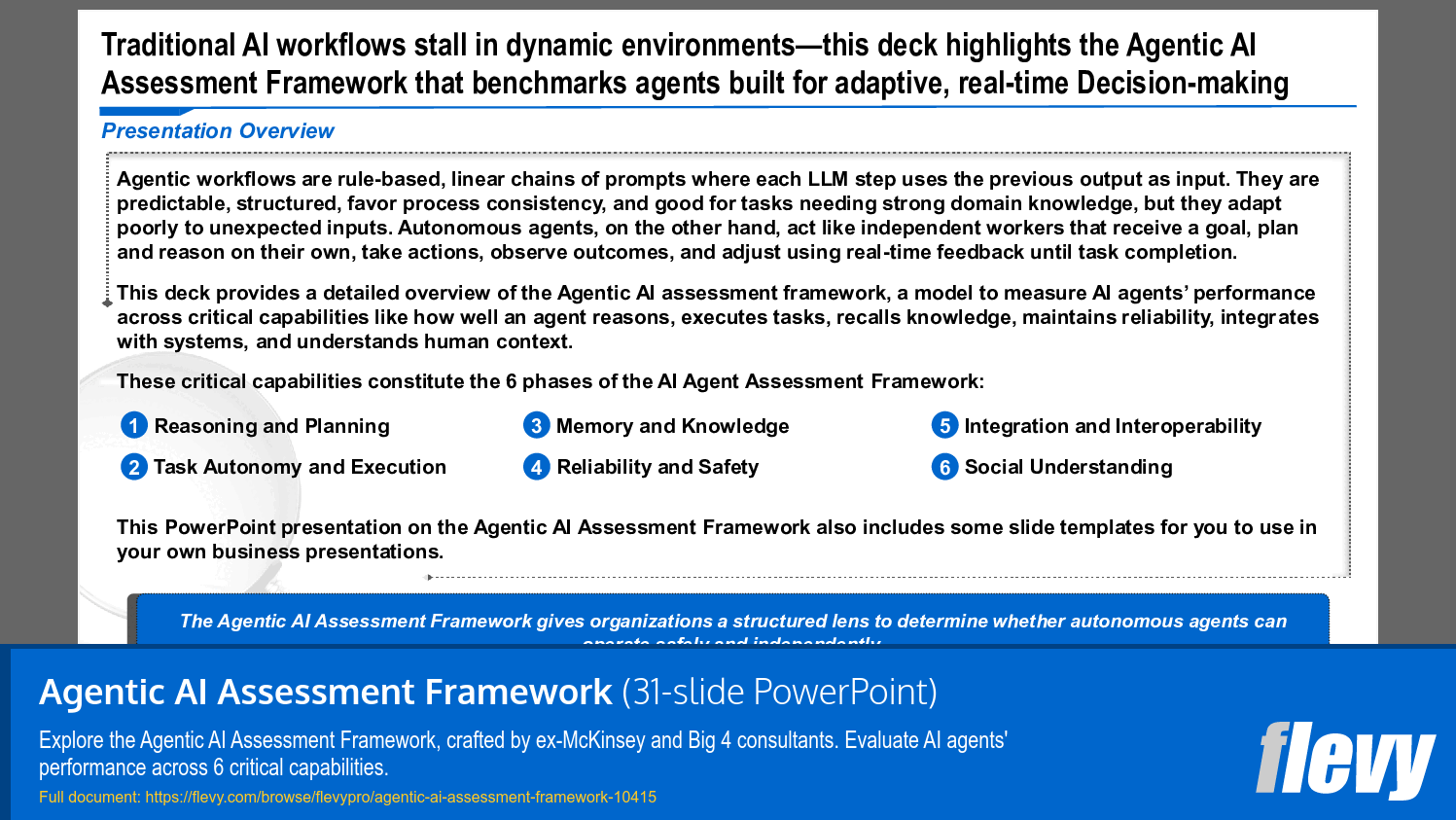
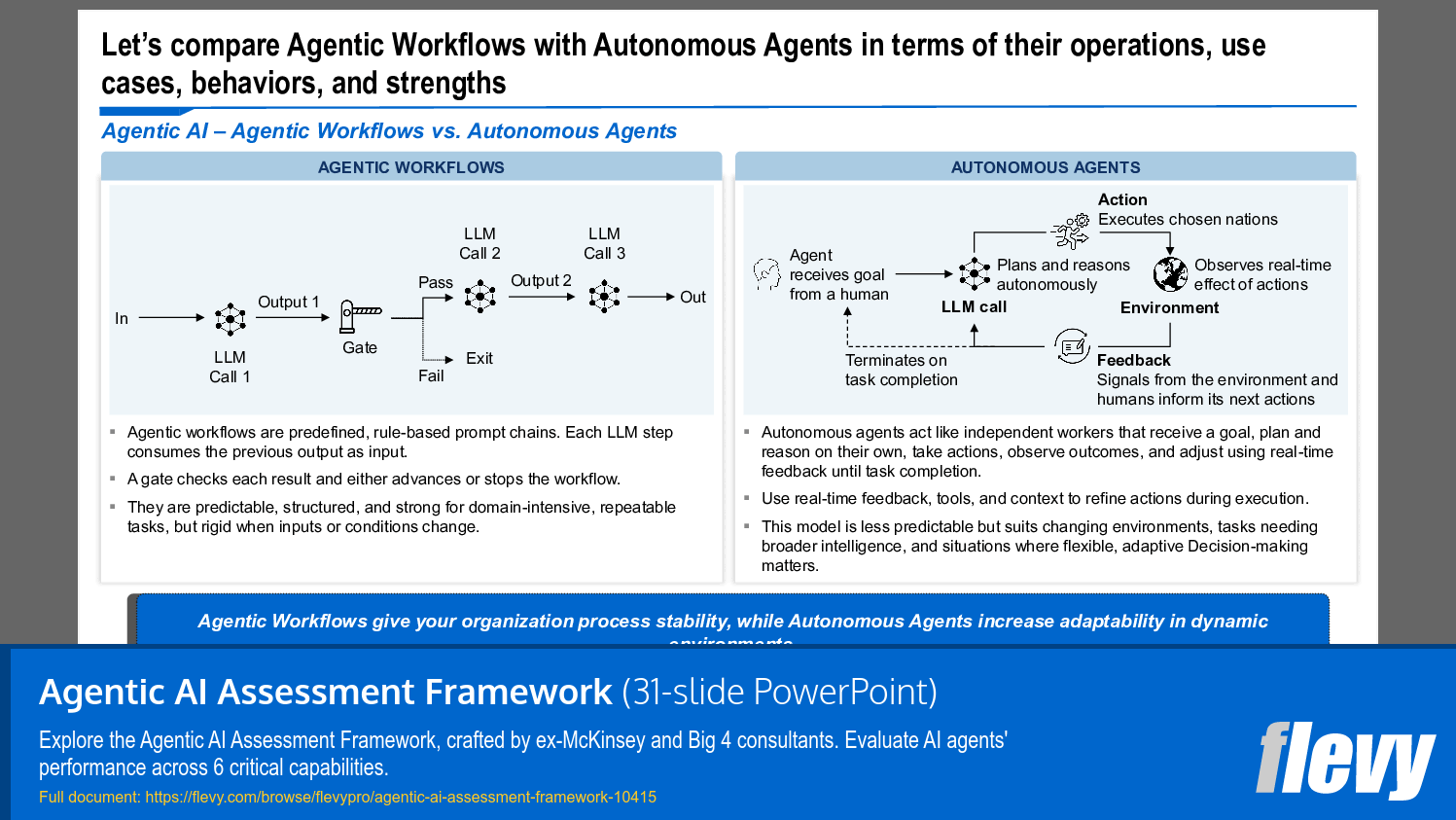
Agentic workflows are rule-based, linear chains of prompts where each LLM step uses the previous output as input. They are predictable, structured, favor process consistency, and good for tasks needing strong domain knowledge, but they adapt poorly to unexpected inputs.
Autonomous agents, on the other hand, act like independent workers that receive a goal, plan and reason on their own, take actions, observe outcomes, and adjust using real-time feedback until task completion.
This deck provides a detailed overview of the Agentic AI assessment framework, a model to measure AI agents' performance across critical capabilities like how well an agent reasons, executes tasks, recalls knowledge, maintains reliability, integrates with systems, and understands human context.
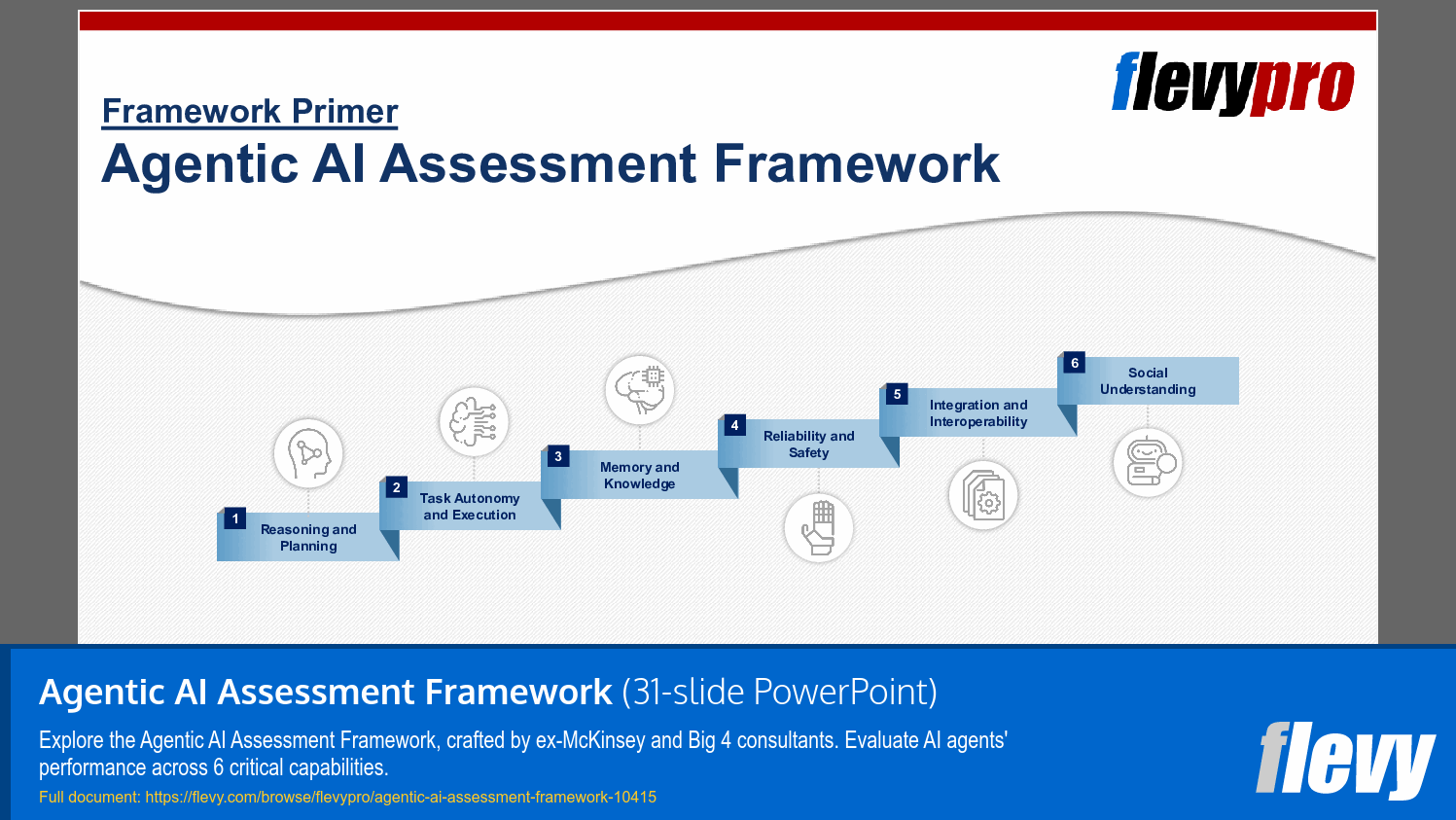
These critical capabilities constitute the 6 phases of the AI Agent Assessment Framework:
1. Reasoning and Planning
2. Task Autonomy and Execution
3. Memory and Knowledge
4. Reliability and Safety
5. Integration and Interoperability
6. Social Understanding
The Agentic AI Assessment Framework gives organizations a structured lens to determine whether autonomous agents can operate safely and independently.
This PowerPoint presentation on the Agentic AI Assessment Framework also includes some slide templates for you to use in your own business presentations.
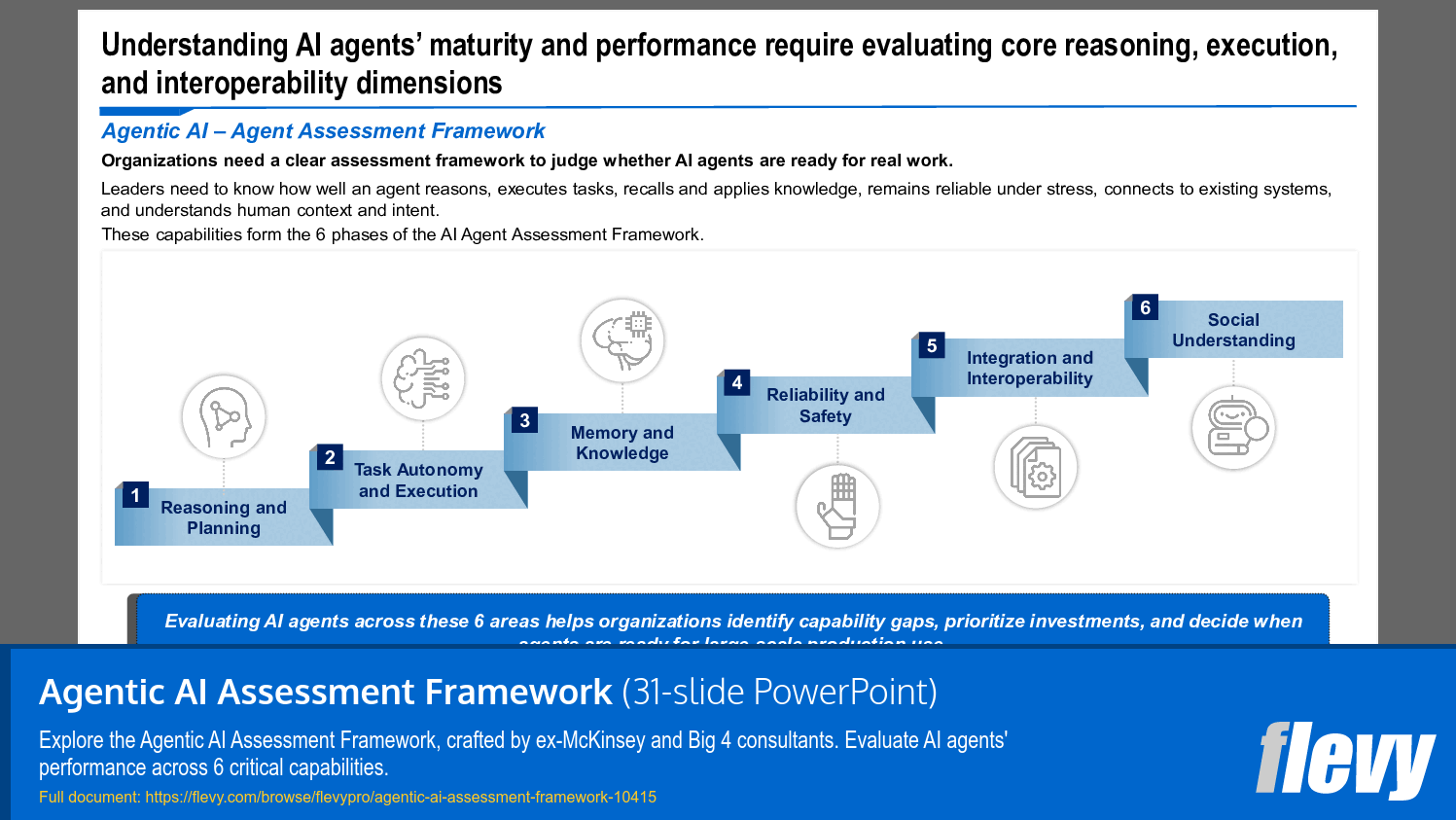
This PPT slide presents a framework for assessing the maturity and performance of AI agents, emphasizing the importance of evaluating core reasoning, execution, and interoperability dimensions. It introduces the "Agentic AI – Agent Assessment Framework," which is designed to help organizations determine whether their AI agents are ready for real-world deployment. The framework is structured around 6 distinct phases, each representing a critical capability that AI agents must develop to operate reliably and effectively.
The 6 phases are sequential, starting with "Reasoning and Planning" and progressing through "Task Autonomy and Execution," "Memory and Knowledge," "Reliability and Safety," "Integration and Interoperability," and finally "Social Understanding." Each phase builds on the previous one, indicating a maturity progression. Icons accompany each phase, visually reinforcing the core focus areas, such as reasoning, task execution, knowledge management, safety, system integration, and social skills. The framework underscores that organizations need a clear assessment approach to judge AI readiness, especially as these systems become more complex and integrated into critical functions.
The slide also suggests that evaluating AI across these 6 areas helps identify capability gaps, prioritize investments, and decide when AI agents are ready for larger-scale use. It implies that a structured, phased assessment is essential for managing risk and ensuring AI systems meet operational expectations. The bottom section references a full document for deeper exploration, indicating this slide is part of a broader resource aimed at guiding strategic AI deployment. Overall, the slide emphasizes a systematic approach to understanding AI maturity, critical for executives making deployment decisions.
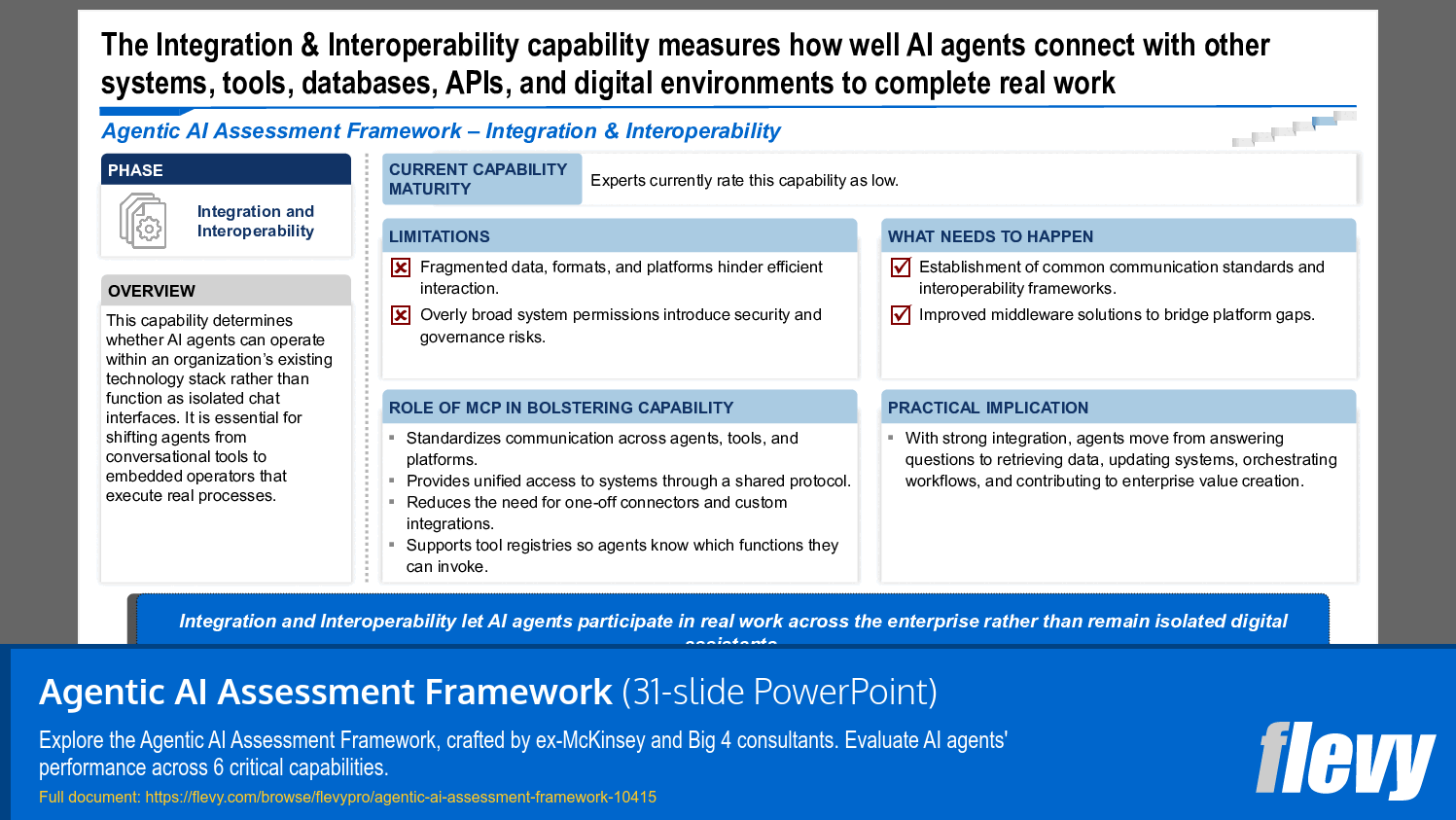
This PPT slide presents a framework for assessing how well AI agents connect with other systems, focusing on integration and interoperability capabilities. It emphasizes the importance of understanding current maturity levels, limitations, and what actions are needed to improve these connections. The framework is structured into distinct sections: the current capability status, limitations hindering progress, and specific steps to address these gaps.
The current capability is rated as low by experts, indicating that the existing integration and interoperability features are underdeveloped. Limitations include fragmented data formats and platforms, which hinder efficient interaction, and broad system permissions that pose security and governance risks. These issues suggest that the current state restricts AI agents from functioning seamlessly within complex digital environments. The slide underscores that these limitations are significant barriers to effective AI deployment at scale.
What needs to happen involves establishing common communication standards and interoperability frameworks, along with developing middleware solutions to bridge platform gaps. These steps are critical to enabling AI agents to operate more cohesively across diverse systems. The practical implications highlight that with better integration, AI agents can move beyond simple data retrieval to actively contribute to enterprise workflows. This transition supports more dynamic, scalable, and secure AI-enabled operations, aligning with broader digital transformation goals. The slide offers a clear view of the current challenges and strategic priorities for improving AI system connectivity.
This PPT slide compares 2 types of operational models: agentic workflows and autonomous agents, highlighting their key differences in terms of processes, behaviors, and strengths. The left side illustrates agentic workflows, which are rule-based, predictable, and structured. These workflows involve multiple steps with specific triggers, such as the LLM call sequence, gate checks, and output stages, emphasizing their rigidity and reliance on predefined prompts and conditions. They are designed for repeatability and clarity, but lack flexibility when inputs or conditions change unexpectedly.
The right side depicts autonomous agents, which operate more independently. They receive goals from humans, plan and reason autonomously, and execute actions without constant oversight. These agents observe real-time feedback from their environment and adjust their behavior accordingly. The diagram suggests that autonomous agents are less predictable, but more adaptable to dynamic environments, capable of handling broader, more complex tasks that require ongoing decision-making. They incorporate real-time signals from the environment and human feedback, making their operations more fluid and context-aware.
The slide emphasizes that agentic workflows are structured and predictable, suitable for tasks with clear, repetitive steps. Autonomous agents, on the other hand, are better suited for environments demanding flexibility, real-time adaptation, and broader intelligence. The comparison aims to help decision-makers understand the operational implications of deploying either model, especially in scenarios where agility and responsiveness are critical. It also hints at the evolving nature of AI applications, where the choice between structured workflows and autonomous decision-making depends on the complexity and variability of the task at hand.
This framework is developed by a team of former McKinsey and Big 4 consultants. The presentation follows the headline-body-bumper slide format used by global consulting firms.
For $10.00 more, you can download this document plus 2 more FlevyPro documents. That's just $13 each.
ABOUT FLEVYPRO
This document is part of the FlevyPro Library, a curated knowledge base of documents for our FlevyPro subscribers.

FlevyPro is a subscription service for on-demand business frameworks and analysis tools. FlevyPro subscribers receive access to an exclusive library of curated business documents—business framework primers, presentation templates, Lean Six Sigma tools, and more—among other exclusive benefits.
The average daily rate of a McKinsey consultant is $6,625 (not including expenses). The average price of a Flevy document is $65.
Trusted by over 10,000+ Client Organizations
Since 2012, we have provided best practices to over 10,000 businesses and organizations of all sizes, from startups and small businesses to the Fortune 100, in over 130 countries.
Read Customer Testimonials
"I like your product. I'm frequently designing PowerPoint presentations for my company and your product has given me so many great ideas on the use of charts, layouts, tools, and frameworks. I really think the templates are a valuable asset to the job."
– Roberto Fuentes Martinez, Senior Executive Director at Technology Transformation Advisory
"My FlevyPro subscription provides me with the most popular frameworks and decks in demand in today’s market. They not only augment my existing consulting and coaching offerings and delivery, but also keep me abreast of the latest trends, inspire new products and service offerings for my practice, and educate me
in a fraction of the time and money of other solutions. I strongly recommend FlevyPro to any consultant serious about success.
"
– Bill Branson, Founder at Strategic Business Architects
"FlevyPro provides business frameworks from many of the global giants in management consulting that allow you to provide best in class solutions for your clients."
– David Harris, Managing Director at Futures Strategy
"I have used Flevy services for a number of years and have never, ever been disappointed. As a matter of fact, David and his team continue, time after time, to impress me with their willingness to assist and in the real sense of the word. I have concluded in fact
that it is not at all just a repository of documents/resources but, in the way that David and his team manage the firm, it is like dealing with consultants always ready to assist, advise and direct you to what you really need, and they always get it right.
I am an international hospitality accomplished senior executive who has worked and lived during the past 35 years in 23 countries in 5 continents and I can humbly say that I know what customer service is, trust me.
Aside from the great and professional service that Flevy's team provide, their wide variety of material is of utmost great quality, professionally put together and most current.
Well done Flevy, keep up the great work and I look forward to continue working with you in the future and to recommend you to a variety of colleagues around the world.
"
– Roberto Pelliccia, Senior Executive in International Hospitality
"The wide selection of frameworks is very useful to me as an independent consultant. In fact, it rivals what I had at my disposal at Big 4 Consulting firms in terms of efficacy and organization."
– Julia T., Consulting Firm Owner (Former Manager at Deloitte and Capgemini)
"I am extremely grateful for the proactiveness and eagerness to help and I would gladly recommend the Flevy team if you are looking for data and toolkits to help you work through business solutions."
– Trevor Booth, Partner, Fast Forward Consulting
"One of the great discoveries that I have made for my business is the Flevy library of training materials.
As a Lean Transformation Expert, I am always making presentations to clients on a variety of topics: Training, Transformation, Total Productive Maintenance, Culture, Coaching, Tools, Leadership Behavior, etc. Flevy
It is well worth the money to purchase these presentations. Sure, I have the knowledge and information to make my point. It is another thing to create a presentation that captures what I want to say. Flevy has saved me countless hours of preparation time that is much better spent with implementation that will actually save money for my clients.
"
– Ed Kemmerling, Senior Lean Transformation Expert at PMG
"I have used FlevyPro for several business applications. It is a great complement to working with expensive consultants. The quality and effectiveness of the tools are of the highest standards."
– Moritz Bernhoerster, Global Sourcing Director at Fortune 500
Download our FREE Digital Transformation Templates
Download our free compilation of 50+ Digital Transformation slides and templates. DX concepts covered include Digital Leadership, Digital Maturity, Digital Value Chain, Customer Experience, Customer Journey, RPA, etc.
Download our FREE Digital Transformation Templates
Get Our FREE Product.
Download our free compilation of 50+ Digital Transformation slides and templates. DX concepts covered include Digital Leadership, Digital Maturity, Digital Value Chain, Customer Experience, Customer Journey, RPA, etc.









