
This framework is developed by a team of former McKinsey and Big 4 consultants. The presentation follows the headline-body-bumper slide format used by global consulting firms.
Editor Summary
24-slide PowerPoint primer titled "Acquisition Integration Approaches" by PPT Lab that presents the 4 integration approaches from Haspeslagh and Jemison: Preservation, Symbiosis, Holding, and Absorption.
Read moreCovers Elements to an Acquisition, Type of Acquisition, Type of Synergy, Degree of Integration, Strategic Interdependence, and Organizational Autonomy, and includes editable PowerPoint templates. Used by executives and C-level executives to evaluate integration choices during mergers and acquisitions. Sold as a digital download on Flevy.
Use this presentation when an organization must choose how to integrate an acquired business—deciding the degree of integration, expected synergies, and organizational autonomy during M&A planning.
C-level executives defining the acquisition integration strategy and selecting between Preservation, Symbiosis, Holding, or Absorption based on strategic goals.
Corporate executives assessing the type of synergy and degree of integration to set post-close priorities and resource allocation.
Integration leads or program owners mapping strategic interdependence and autonomy to design the integration blueprint using slide templates.
The framework’s focus on matching strategic interdependence, need for similarity, and organizational autonomy to an integration choice reflects common M&A decision frameworks.
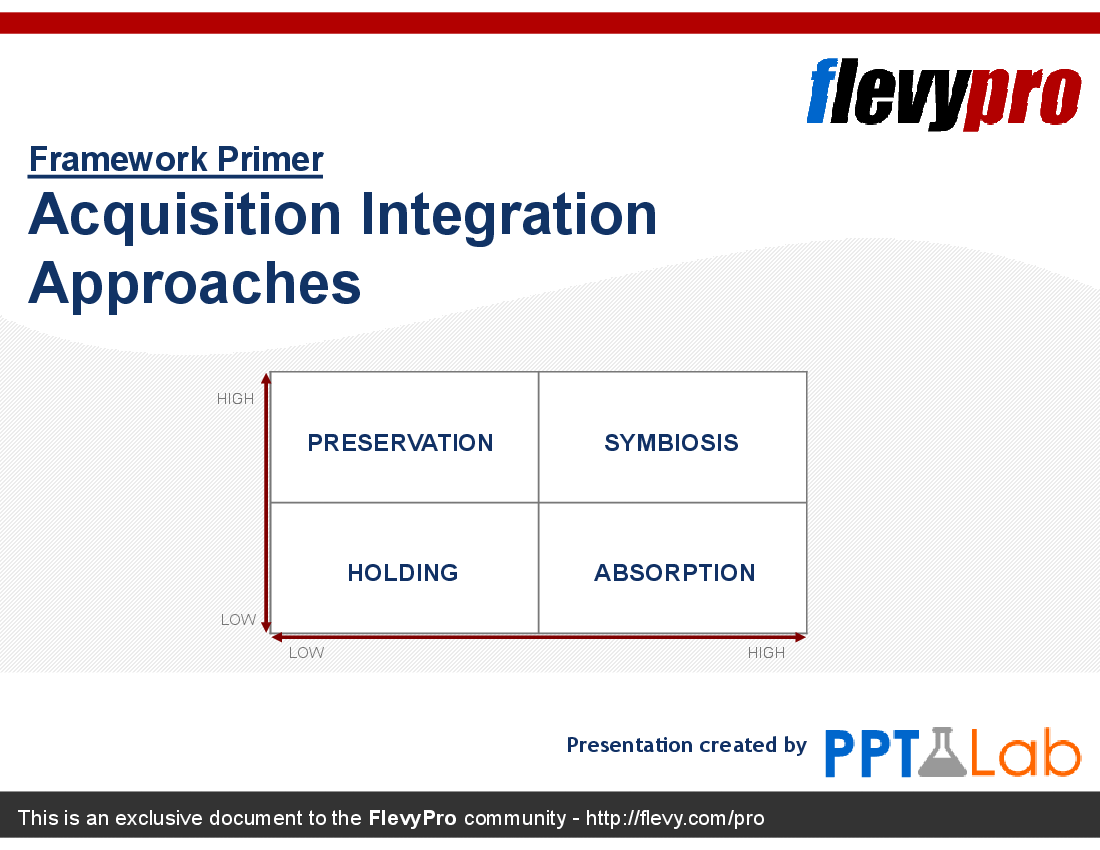
This presentation is a primer to the 4 Acquisition Integration Approaches framework, as developed by Philippe Haspeslagh and David B. Jemison:
1. Preservation
2. Symbiosis
3. Holding
4. Absorption
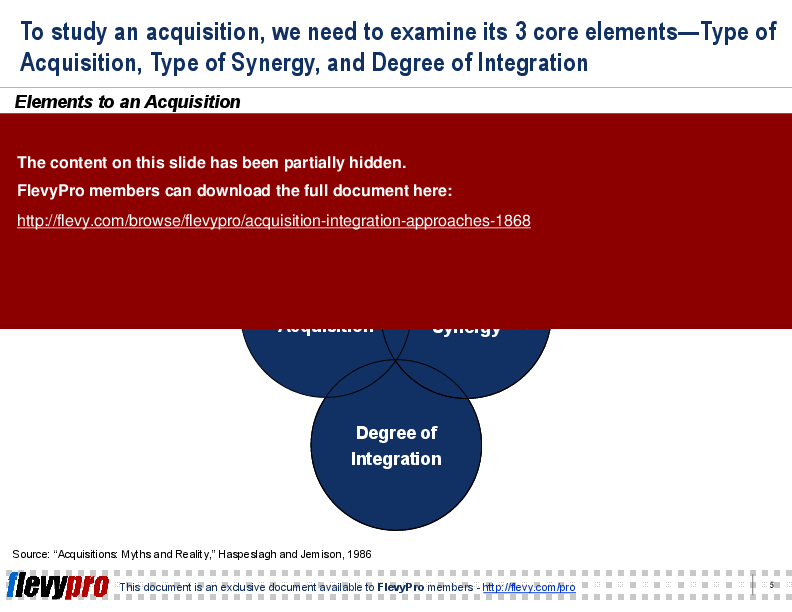
Topics covered include Elements to an Acquisition, Type of Acquisition, Type of Synergy, Degree of Integration, Strategic Interdependence, and Organizational Autonomy. This document also includes a set of PowerPoint templates that can be leveraged for your own presentations.
This PPT delves into the critical aspects of acquisition integration, highlighting the importance of understanding the type of acquisition, synergy, and degree of integration. It provides a comprehensive analysis of the four integration approaches—Preservation, Symbiosis, Holding, and Absorption—each tailored to different strategic needs and organizational contexts. The framework is designed to guide executives through the complexities of mergers and acquisitions, ensuring a strategic fit and maximizing value creation.
The presentation also explores the three primary criteria for successful integration: the need for similarity, strategic interdependence, and organizational autonomy. It emphasizes the importance of aligning these criteria with the chosen integration approach to achieve desired outcomes. The document includes detailed templates and practical tools to assist in planning and executing integration strategies effectively.
For those looking to streamline their acquisition processes and enhance strategic decision-making, this document offers invaluable insights and actionable frameworks. It is an essential resource for C-level executives aiming to navigate the intricacies of acquisition integration and drive long-term success.
What are the main acquisition integration approaches and who developed them?
The principal approaches are Preservation, Symbiosis, Holding, and Absorption, developed by Philippe Haspeslagh and David B. Jemison. These 4 approaches are presented as distinct options for post-acquisition integration in the "Acquisition Integration Approaches" 24-slide PowerPoint by PPT Lab.
What criteria should determine which integration approach to use?
The presentation highlights 3 primary criteria: the need for similarity, strategic interdependence between acquirer and target, and organizational autonomy. It also considers type of acquisition, type of synergy, and degree of integration when selecting an approach, based on those 3 criteria.
How does the framework help compare Symbiosis and Absorption without detailed company data?
The framework positions each approach along axes such as strategic interdependence, organizational autonomy, type of synergy, and degree of integration, allowing executives to compare approaches conceptually before detailed data gathering. The deck frames analysis across these axes within the four-approach model.
What role do "type of synergy" and "degree of integration" play in choosing an approach?
Type of synergy and degree of integration are used to align strategic objectives with integration design: they help determine how tightly to combine operations and which approach to adopt. The presentation treats these as core determinants when selecting among Preservation, Symbiosis, Holding, and Absorption.
What should I look for when choosing an acquisition integration toolkit for internal use?
Seek materials that explain the major integration approaches, link them to criteria like strategic interdependence and organizational autonomy, and provide editable presentation templates you can adapt. The "Acquisition Integration Approaches" PPT includes the four-approach framework and PowerPoint templates.
How much customization is needed to use a PPT primer in executive briefings?
The asset is a 24-slide PowerPoint primer with editable templates intended to be leveraged for your own presentations; the level of customization depends on how much company-specific analysis you add,, but slide and template content is provided as a starting point.
We acquired a business with low strategic interdependence—which approaches does the model suggest I consider?
The framework links strategic interdependence and organizational autonomy to approach selection; for low interdependence, executives typically evaluate options that preserve autonomy or maintain the target as a distinct unit, such as Preservation or Holding, using the model’s criteria to guide choice.
Can this framework guide decisions about post-merger organizational autonomy?
Yes. Organizational autonomy is one of the presentation’s 3 primary integration criteria and is analyzed alongside strategic interdependence and need for similarity. The deck includes templates and slides to structure autonomy decisions as part of the integration approach selection in the 24-slide PPT.
This PPT slide outlines 4 approaches to acquisition integration in mergers and acquisitions (M&A): Preservation, Symbiosis, Holding, and Absorption. Preservation focuses on maintaining the core benefits and strengths of the acquired entity, prioritizing key resources and relationships for value creation. Symbiosis advocates for a balanced strategy that respects boundary preservation while allowing gradual integration for collaboration and synergy. The Holding approach is passive, generating value through financial mechanisms like risk-sharing, suitable when the acquired entity's independence is beneficial. Absorption calls for assertive integration, aligning the acquisition with broader organizational goals through comprehensive assimilation. Each strategy has distinct implications for management and operational execution during the M&A integration phase.
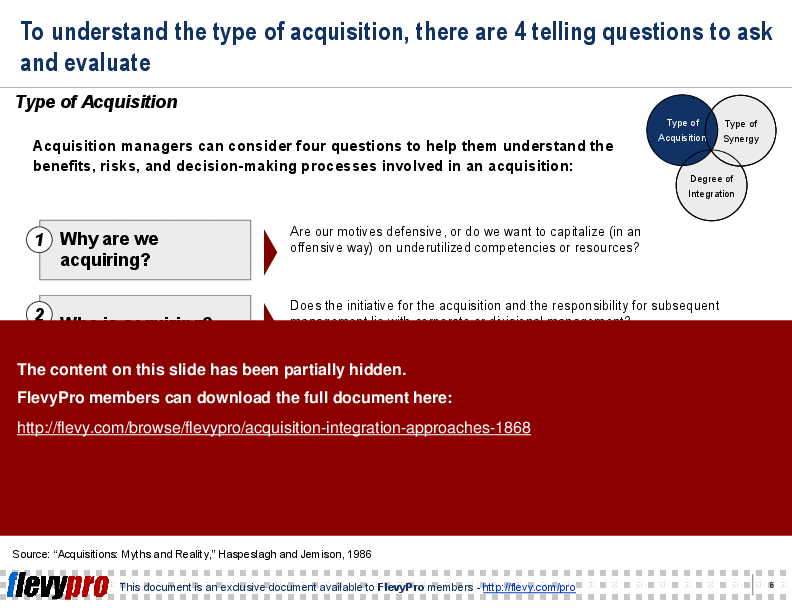
This PPT slide presents a framework for acquisition managers to evaluate potential acquisitions through 4 critical questions. "Why are we acquiring?" distinguishes between defensive strategies to protect market share and offensive strategies to leverage new resources. "Who is acquiring?" clarifies the governance structure, impacting execution and resource allocation. "What do we know about the business?" prompts an assessment of whether the acquisition targets a new market, extends current operations, or purchases a competitor, each with different integration implications. Finally, "What are we acquiring?" assesses the acquisition's role in the broader development strategy, determining if it is a strategic necessity, a growth stepping stone, or an opportunistic buy, ultimately guiding informed strategic choices.
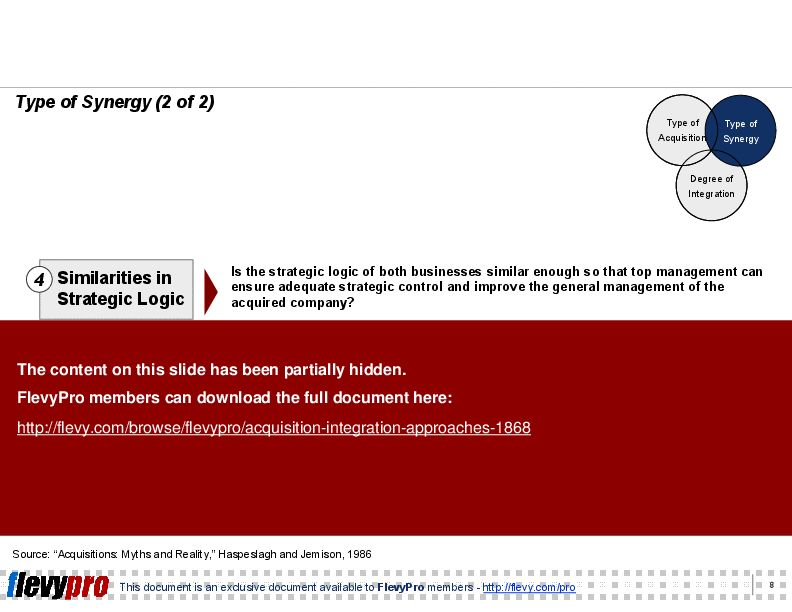
This PPT slide outlines the concept of synergies in acquisitions, identifying 4 primary sources of benefits. The first type, Resource Sharing, examines whether the firms have related tangible resources, like distribution systems, and intangible assets, such as brand names, that can be effectively shared. The second type, Functional Skill Transfer, assesses the alignment of functional competencies, noting that specialized skills in marketing, manufacturing, and R&D require a deep understanding for successful transfer. The third type, Financial Transfer, evaluates the complementarity of financial structures to enable economic value creation, questioning if one firm's cash generation can leverage the other's financial strengths. This framework encourages strategic assessment of resource integration, skills, and financial capabilities in acquisitions.
Source: Best Practices in Acquisition, Synergy PowerPoint Slides: Acquisition Integration Approaches PowerPoint (PPT) Presentation Slide Deck, PPT Lab
This framework is developed by a team of former McKinsey and Big 4 consultants. The presentation follows the headline-body-bumper slide format used by global consulting firms.
For $10.00 more, you can download this document plus 2 more FlevyPro documents. That's just $13 each.
ABOUT FLEVYPRO
This document is part of the FlevyPro Library, a curated knowledge base of documents for our FlevyPro subscribers.

FlevyPro is a subscription service for on-demand business frameworks and analysis tools. FlevyPro subscribers receive access to an exclusive library of curated business documents—business framework primers, presentation templates, Lean Six Sigma tools, and more—among other exclusive benefits.
The average daily rate of a McKinsey consultant is $6,625 (not including expenses). The average price of a Flevy document is $65.
Trusted by over 10,000+ Client Organizations
Since 2012, we have provided business templates to over 10,000 businesses and organizations of all sizes, from startups and small businesses to the Fortune 100, in over 130 countries.
"I have found Flevy to be an amazing resource and library of useful presentations for lean sigma, change management and so many other topics. This has reduced the time I need to spend on preparing for my performance consultation. The library is easily accessible and updates are regularly provided. A wealth of great information."
– Cynthia Howard RN, PhD, Executive Coach at Ei Leadership
"I like your product. I'm frequently designing PowerPoint presentations for my company and your product has given me so many great ideas on the use of charts, layouts, tools, and frameworks. I really think the templates are a valuable asset to the job."
– Roberto Fuentes Martinez, Senior Executive Director at Technology Transformation Advisory
"Last Sunday morning, I was diligently working on an important presentation for a client and found myself in need of additional content and suitable templates for various types of graphics. Flevy.com proved to be a treasure trove for both content and design at a reasonable price, considering the time I
saved. I encountered a download issue during the ordering process. However, a quick email to Flevy's support team, even on a Sunday (!!!), resulted in assistance within less than an hour, allowing me to download the content I needed. Fantastic job, Flevy! I give 5 stars for both content/price and customer service. Thank you!
"
– M. E., Chief Commercial Officer, International Logistics Service Provider
"[Flevy] produces some great work that has been/continues to be of immense help not only to myself, but as I seek to provide professional services to my clients, it gives me a large "tool box" of resources that are critical to provide them with the quality of service and outcomes they are expecting."
– Royston Knowles, Executive with 50+ Years of Board Level Experience
"FlevyPro provides business frameworks from many of the global giants in management consulting that allow you to provide best in class solutions for your clients."
– David Harris, Managing Director at Futures Strategy
"The wide selection of frameworks is very useful to me as an independent consultant. In fact, it rivals what I had at my disposal at Big 4 Consulting firms in terms of efficacy and organization."
– Julia T., Consulting Firm Owner (Former Manager at Deloitte and Capgemini)
"My FlevyPro subscription provides me with the most popular frameworks and decks in demand in today’s market. They not only augment my existing consulting and coaching offerings and delivery, but also keep me abreast of the latest trends, inspire new products and service offerings for my practice, and educate me
in a fraction of the time and money of other solutions. I strongly recommend FlevyPro to any consultant serious about success.
"
– Bill Branson, Founder at Strategic Business Architects
"As a niche strategic consulting firm, Flevy and FlevyPro frameworks and documents are an on-going reference to help us structure our findings and recommendations to our clients as well as improve their clarity, strength, and visual power. For us, it is an invaluable resource to increase our impact and value."
– David Coloma, Consulting Area Manager at Cynertia Consulting
Download our free compilation of 50+ Strategy & Transformation slides and templates. Frameworks include McKinsey 7-S, Balanced Scorecard, Disruptive Innovation, BCG Curve, and many more.