
In the Digital Age marked by rapid technology change, virtually no company can ignore the imperative to innovate. Failing to do so is an invitation to lose business.
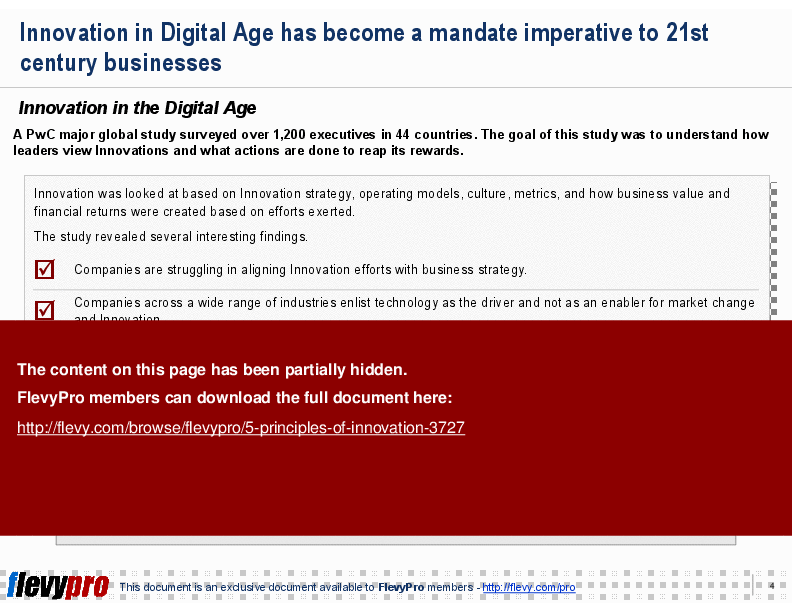
To learn how companies are responding to this mandate, a global consultancy conducted a major global study in 44 countries. The goal was to understand how leaders view Innovation and what is being done to reap its rewards. Findings showed that companies are struggling with aligning Innovation efforts with Business Strategy. Companies across a wide range of industries and technology are also enlisting technology as the driver for market change and Innovation and not just an enabler.
A great number of organizations are also opening up the Innovation process earlier to a broader set of stakeholders both inside and outside the company. Customers are already brought in even while in the ideation phase. Today, Innovation is no longer the domain of a chosen few.
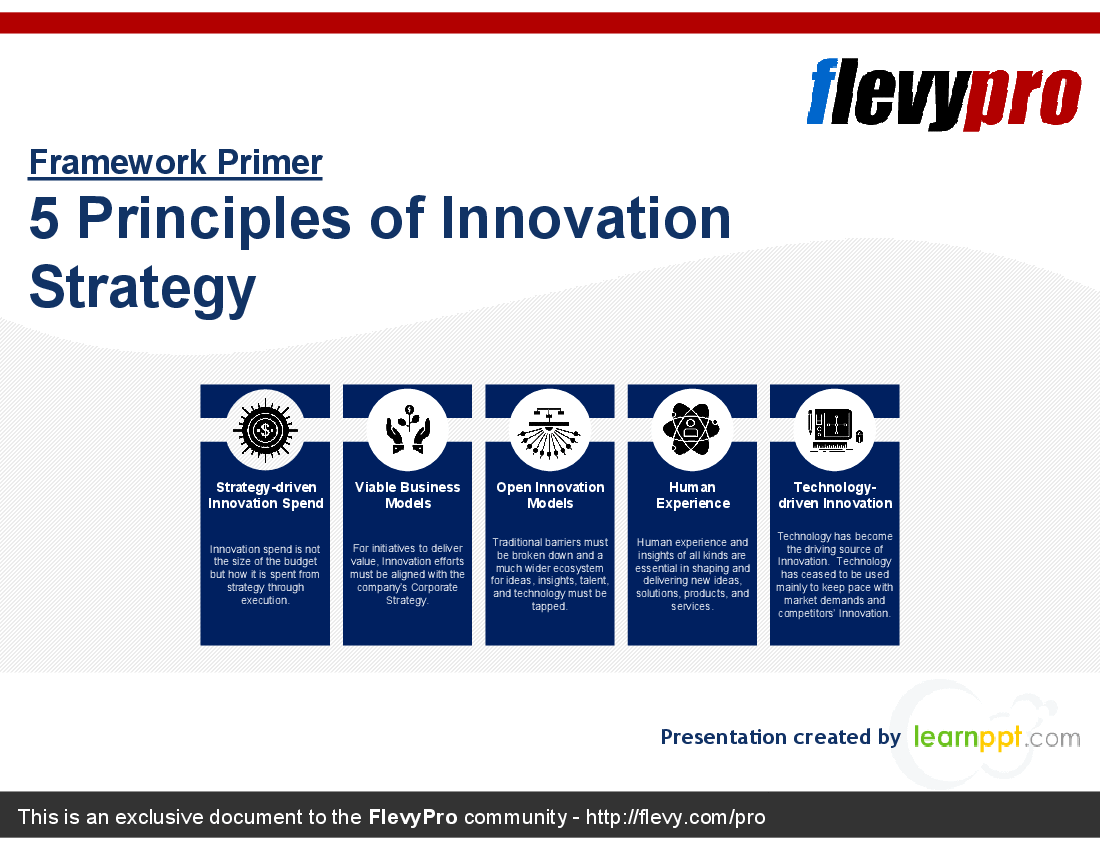
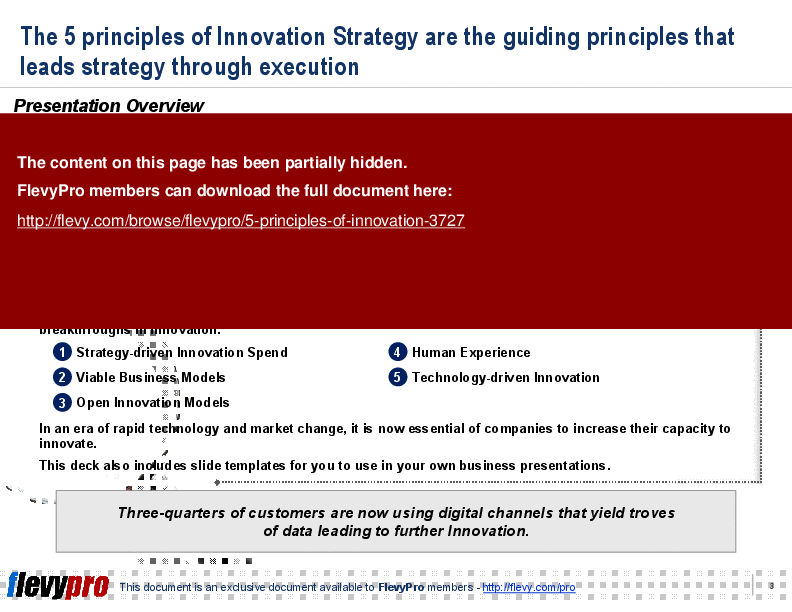
This Innovation Strategy PPT presentation discusses the 5 Principles of Innovation Strategy essential in guiding organizations to make breakthroughs in Innovation.
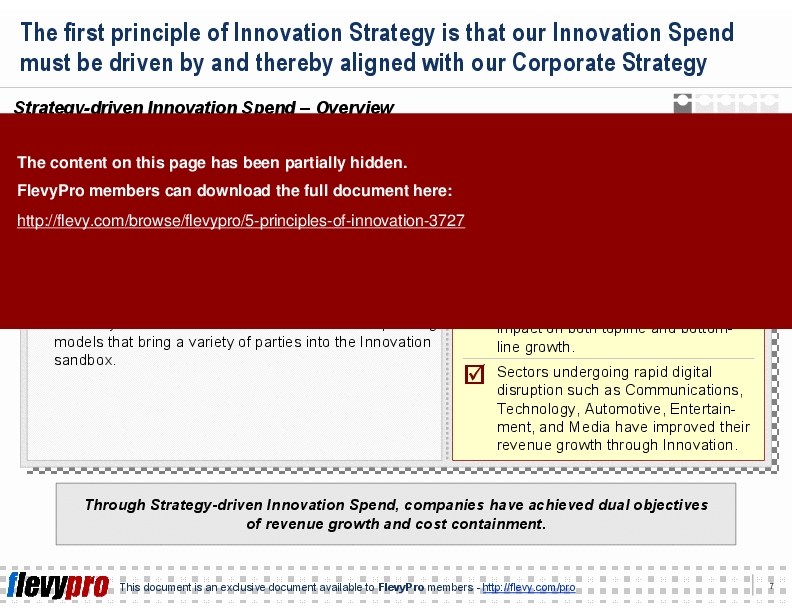
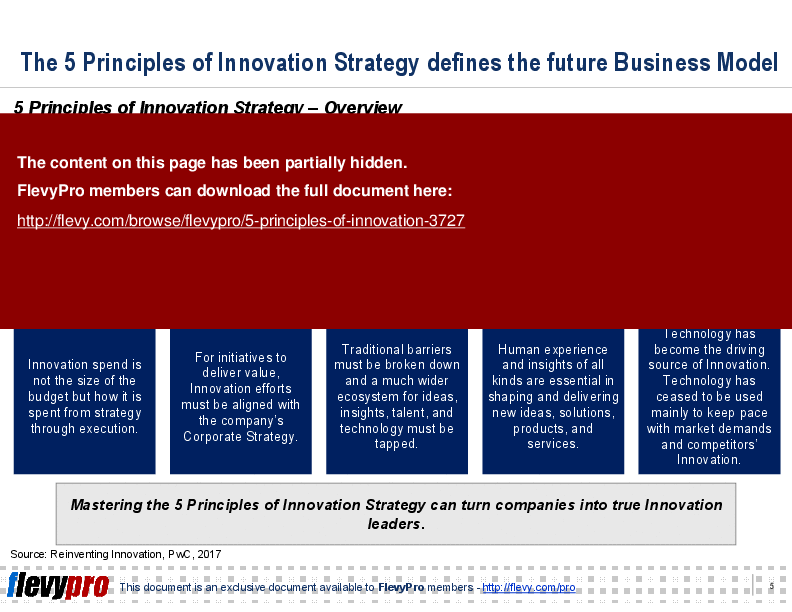
1. Strategy-driven Innovation Spend – Innovation spend is not the size of the budget but how it is spent from strategy through execution.
2. Viable Business Models – For initiatives to deliver value, Innovation efforts must be aligned with the company’s Corporate Strategy.
3. Open Innovation Models – Traditional barriers must be broken down and a much wider ecosystem for ideas, insights, talent, and technology must be tapped.
4. Human Experience – Human experience and insights of all kinds are essential in shaping and delivering new ideas, solutions, products, and services.
5. Technology-driven Innovation – Technology has become the driving source of Innovation. Technology has ceased to be used mainly to keep pace with market demands and competitors’ Innovation.
Each of these principles of Innovation Strategy is discussed in depth within this PowerPoint presentation.
In an era of rapid technology and market change, it is now essential of companies to increase their capacity to innovate.
This Strategic Innovation PPT also includes slide templates that depict the 5 Principles of Innovation Strategy. Furthermore, you can re-purpose the majority of these Innovation Strategy slides for your own business presentations.
Three-quarters of customers are now using digital channels that yield troves of data leading to further innovation. Organizations of all sizes across all industries are engaging in Digital Transformation initiatives.
Got a question about this document? Email us at flevypro@flevy.com.
Executive Summary
The "5 Principles of Innovation Strategy" presentation provides a structured framework for aligning innovation efforts with corporate strategy. Developed by ex-McKinsey and Big 4 consultants, this presentation emphasizes the critical role of technology, human experience, and open innovation in driving successful business models. By mastering these principles, organizations can enhance their capacity to innovate, ensuring that their innovation spend is strategically directed to yield maximum value. The presentation includes templates for practical application, making it a valuable resource for executives and consultants aiming to implement effective innovation strategies.
Who This Is For and When to Use
• Corporate executives responsible for strategic planning and innovation initiatives
• Innovation leaders seeking to align innovation with business objectives
• Consultants advising clients on innovation strategy and execution
• Product development teams looking to integrate customer insights into their processes
Best-fit moments to use this deck:
• During strategic planning sessions to align innovation with corporate goals
• In workshops focused on developing new business models and innovation frameworks
• When assessing current innovation practices and identifying areas for improvement
• For training sessions aimed at enhancing team capabilities in innovation management
Learning Objectives
• Define the 5 principles of innovation strategy and their relevance to corporate success
• Build a framework for aligning innovation efforts with business strategy
• Establish metrics for measuring the impact of innovation on business performance
• Identify opportunities for leveraging technology in innovation processes
• Create inclusive operating models that engage diverse stakeholders in innovation
• Foster a culture of innovation that integrates human experience and insights
Table of Contents
• Overview (page 1)
• Strategy-driven Innovation Spend (page 7)
• Viable Business Models (page 10)
• Open Innovation Models (page 12)
• Human Experience (page 16)
• Technology-driven Innovation (page 19)
• Templates (page 21)
Primary Topics Covered
• Strategy-driven Innovation Spend - Aligning innovation spending with corporate strategy to maximize financial returns and drive growth.
• Viable Business Models - Reimagining business models to ensure alignment between innovation and business strategy for sustainable growth.
• Open Innovation Models - Encouraging collaboration across internal and external stakeholders to enhance the innovation process.
• Human Experience - Leveraging human insights and experiences to shape innovative solutions and products.
• Technology-driven Innovation - Utilizing technology as a primary driver for innovation, focusing on breakthrough and incremental advancements.
Deliverables, Templates, and Tools
• Strategy alignment template for assessing innovation spend against corporate goals
• Business model canvas for reimagining viable business strategies
• Open innovation framework for engaging stakeholders in the innovation process
• Human-centered design toolkit for integrating user insights into product development
• Technology assessment matrix for evaluating potential innovation technologies
Slide Highlights
• Overview of the 5 principles of innovation strategy, emphasizing their interconnections
• Case studies illustrating successful alignment of innovation with corporate strategy
• Visuals depicting the impact of technology on innovation processes
• Charts showing the importance of customer engagement in driving innovation
• Frameworks for measuring the effectiveness of innovation initiatives
Potential Workshop Agenda
Introduction to Innovation Strategy (30 minutes)
• Overview of the 5 principles
• Discussion on current innovation practices
Aligning Innovation with Business Strategy (60 minutes)
• Breakout sessions to assess alignment
• Group presentations on findings
Developing Viable Business Models (90 minutes)
• Workshop on reimagining business models
• Template exercises for practical application
Engaging Stakeholders in Innovation (60 minutes)
• Strategies for open innovation
• Role-playing scenarios to practice stakeholder engagement
Customization Guidance
• Adjust the templates to reflect specific organizational goals and metrics
• Tailor the case studies to include relevant industry examples
• Modify the workshop agenda to fit the time constraints and participant backgrounds
• Incorporate company-specific terminology and frameworks into the presentation
Secondary Topics Covered
• The role of digital transformation in innovation
• Challenges in aligning innovation with business strategy
• Best practices for fostering a culture of innovation
• The impact of customer feedback on innovation processes
• Trends in technology that influence innovation strategies
Topic FAQ
Document FAQ
These are questions addressed within this presentation.
What are the 5 principles of innovation strategy?
The 5 principles include strategy-driven innovation spend, viable business models, open innovation models, human experience, and technology-driven innovation.
How can this presentation help my organization?
This presentation provides a structured approach to aligning innovation with corporate strategy, enhancing your organization's ability to innovate effectively.
What types of templates are included?
Templates for strategy alignment, business model development, and stakeholder engagement are included to facilitate practical application.
How can I measure the impact of innovation?
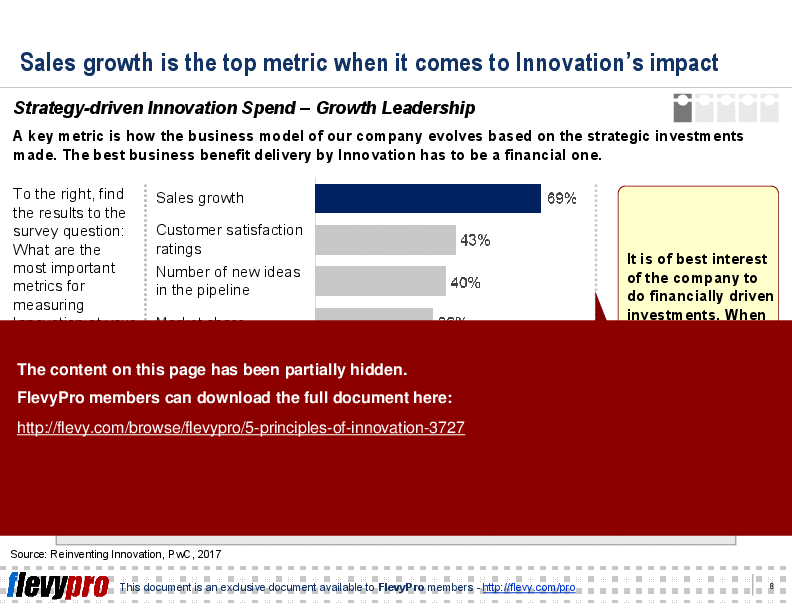
The presentation outlines key metrics such as sales growth, customer satisfaction, and the number of new ideas in the pipeline to assess innovation impact.
Can this presentation be customized for my industry?
Yes, the templates and case studies can be tailored to reflect industry-specific challenges and opportunities.
What is the importance of human experience in innovation?
Human experience provides valuable insights that shape innovative solutions, ensuring they meet customer needs effectively.
How does technology drive innovation?
Technology serves as a catalyst for creating new products and services, enabling organizations to stay competitive in rapidly changing markets.
What is open innovation?
Open innovation involves collaborating with external stakeholders to enhance the innovation process, breaking down traditional barriers.
How can I foster a culture of innovation in my organization?
Encouraging collaboration, integrating customer feedback, and empowering employees to contribute ideas are key strategies for fostering a culture of innovation.
Glossary
• Innovation Strategy - A plan to align innovation efforts with business objectives.
• Business Model - A framework for how an organization creates, delivers, and captures value.
• Open Innovation - A collaborative approach to innovation that involves external stakeholders.
• Human Experience - Insights derived from understanding user needs and behaviors.
• Technology-driven Innovation - Innovations primarily driven by technological advancements.
• Strategy Alignment - Ensuring that innovation efforts support overall corporate strategy.
• Customer Engagement - Involving customers in the innovation process to enhance outcomes.
• Digital Transformation - The integration of digital technology into all areas of a business.
• Innovation Metrics - Measurements used to assess the effectiveness of innovation efforts.
• Culture of Innovation - An organizational environment that encourages creativity and experimentation.
• Stakeholder Engagement - Involving various parties in the innovation process for broader insights.
• Viable Business Model - A sustainable approach to generating revenue and delivering value.
• Breakthrough Innovation - Significant advancements that create new markets or disrupt existing ones.
• Incremental Innovation - Gradual improvements made to existing products or services.
• Design Thinking - A user-centered approach to problem-solving and innovation.
• Innovation Spend - The allocation of resources towards innovation initiatives.
• Feedback Loop - A process where customer insights inform ongoing innovation efforts.
• Innovation Sandbox - A controlled environment for testing new ideas and approaches.
• R&D - Research and Development, focused on creating new products or improving existing ones.
• Innovation Ecosystem - The network of stakeholders involved in the innovation process.
• Customer Insights - Understanding customer needs and preferences to inform innovation.
• Innovation Framework - A structured approach to managing and implementing innovation initiatives.
Source: Best Practices in Digital Transformation, Innovation PowerPoint Slides: 5 Principles of Innovation Strategy PowerPoint (PPT) Presentation Slide Deck, LearnPPT Consulting
Did you need more documents?
Consider a FlevyPro subscription from $39/month. View plans here.
For $10.00 more, you can download this document plus 2 more FlevyPro documents. That's just $13 each.
This document is available as part of the following discounted bundle(s):
Save %!
Fundamentals of Innovation Management & Strategy
This bundle contains 8 total documents. See all the documents to the right.

Save %!
Open Innovation Frameworks
This bundle contains 4 total documents. See all the documents to the right.
|
Download our FREE Strategy & Transformation Framework Templates
Download our free compilation of 50+ Strategy & Transformation slides and templates. Frameworks include McKinsey 7-S, Balanced Scorecard, Disruptive Innovation, BCG Curve, and many more. |