
Early 2000s saw a change of mind regarding the Globalization of commerce by members of the political and economic arenas.
Multi-national companies on the other hand saw opportunity; with emerging markets such as China and India shifting to consumer economies, the multi-nationals had the infrastructure to serve them. Problem was the contrast between the corporate Operating Model of the time and the structural changes that had taken place in the global economy.
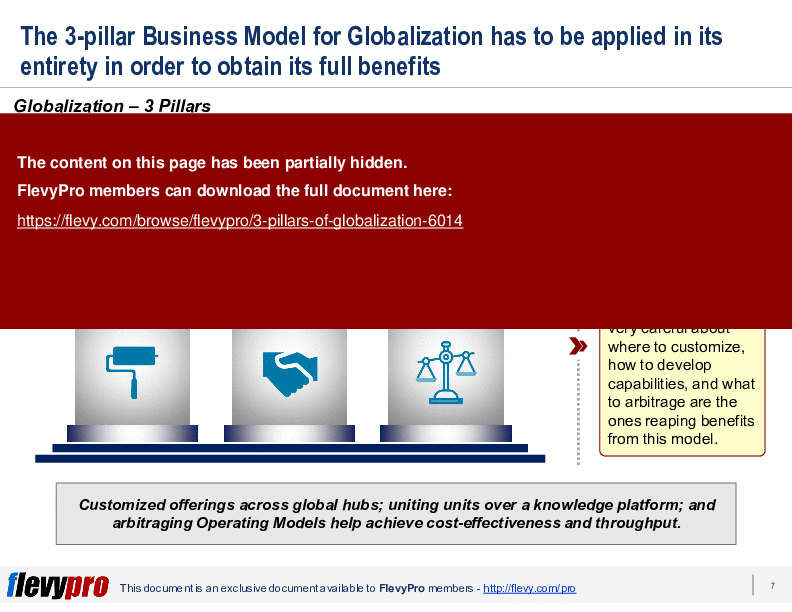
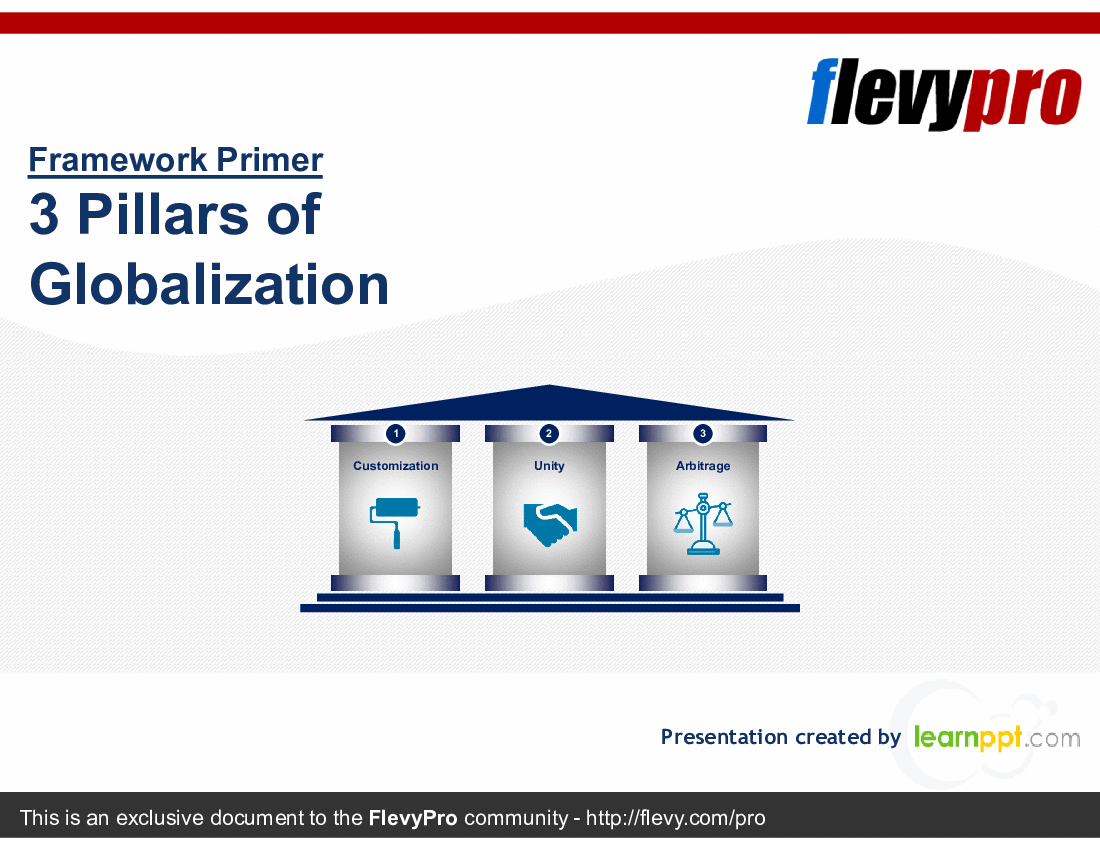
This incongruence was addressed by a new Business Model for Globalization that avoided the trade-offs companies perceived they had to make for succeeding in various markets. The mainstay of this model were 3 pillars:
1. Customization
2. Unity
3. Arbitrage
For the model to show its full advantages all 3 pillars had to be integrated and applied concurrently.
The slide deck also includes some slide templates for you to use in your own business presentations.
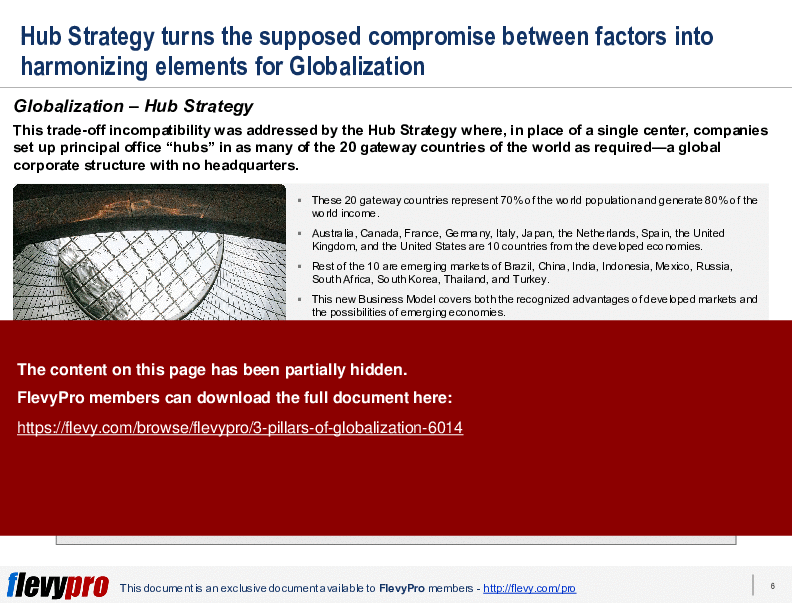
The PPT delves into the myths surrounding globalization, highlighting the common misconceptions that companies often face. It provides a detailed analysis of the Hub Strategy, which eliminates the need for a single headquarters by establishing multiple hubs in key gateway countries. This approach leverages the strengths of both developed and emerging markets, ensuring a balanced and scalable global presence.
The presentation also includes case studies from leading corporations, demonstrating the practical application of the three pillars: Customization, Unity, and Arbitrage. These real-world examples provide actionable insights and proven strategies that can be adapted to your organization’s unique needs. The slide deck is equipped with customizable templates, allowing you to seamlessly integrate these concepts into your business presentations.
Got a question about this document? Email us at flevypro@flevy.com.
Executive Summary
The "3 Pillars of Globalization" presentation provides a comprehensive framework for understanding and implementing globalization strategies in business. It outlines a model that emphasizes the importance of 3 interconnected pillars: Customization, Unity, and Arbitrage. This presentation is designed for corporate executives and consultants looking to enhance their understanding of globalization dynamics and effectively apply these principles to their organizations. By leveraging this framework, businesses can navigate the complexities of global markets, optimize their operations, and achieve sustainable growth.
Who This Is For and When to Use
• Corporate executives seeking to expand their business into global markets
• Strategy consultants advising clients on globalization strategies
• Business development teams focused on entering emerging markets
• Operations leaders looking to optimize global supply chains
Best-fit moments to use this deck:
• During strategic planning sessions for international expansion
• In workshops focused on aligning global operations with local market needs
• When developing training programs for teams involved in globalization efforts
Learning Objectives
• Define the 3 pillars of globalization and their significance in modern business
• Build a comprehensive globalization strategy that incorporates all 3 pillars
• Establish frameworks for customizing offerings to meet diverse market needs
• Create unified operational processes that leverage core competencies globally
• Identify arbitrage opportunities to enhance cost-effectiveness and efficiency
• Develop case studies demonstrating successful applications of the 3-pillar model
Table of Contents
• Overview (page 3)
• Globalization (page 4)
• Pillars of Globalization (page 5)
• Templates (page 15)
Primary Topics Covered
• Overview of Globalization - An introduction to the changing landscape of global commerce and the need for a new business model.
• Pillars of Globalization - Detailed exploration of the 3 pillars: Customization, Unity, and Arbitrage, and their interdependencies.
• Customization - Strategies for tailoring products and services to meet local market demands effectively.
• Unity - The importance of a unified corporate purpose and shared competencies across global operations.
• Arbitrage - Methods for leveraging cost advantages and operational efficiencies in different markets.
Deliverables, Templates, and Tools
• Presentation slides outlining the 3 pillars of globalization
• Case studies illustrating successful applications of the model
• Templates for developing customized offerings in various markets
• Frameworks for aligning global operations with local market strategies
• Tools for identifying arbitrage opportunities in supply chains
Slide Highlights
• A visual representation of the 3 pillars of globalization
• Case study slides featuring GE Healthcare and McDonald's as examples of successful globalization strategies
• Infographics illustrating the Hub Strategy and its role in globalization
• Templates for customizing presentations on globalization strategies
Potential Workshop Agenda
Introduction to Globalization (30 minutes)
• Overview of the changing global landscape
• Discussion on the need for a new business model
Exploring the 3 Pillars (60 minutes)
• In-depth analysis of Customization, Unity, and Arbitrage
• Group activities to identify real-world applications
Case Study Analysis (45 minutes)
• Review of successful globalization strategies from leading companies
• Discussion on lessons learned and best practices
Customization Guidance
• Tailor the presentation to reflect specific industry challenges and opportunities
• Update case studies with recent examples relevant to the audience
• Adjust templates to align with organizational branding and messaging
Secondary Topics Covered
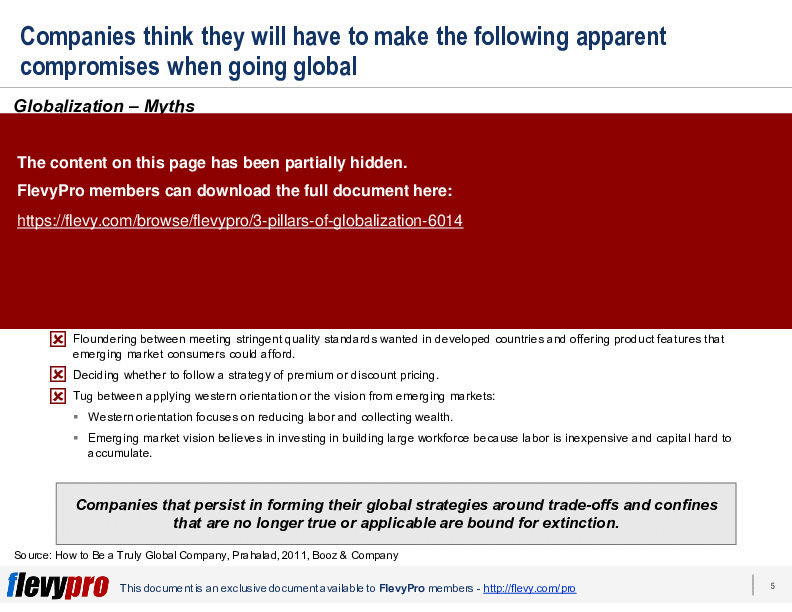
• Myths surrounding globalization and the trade-offs businesses face
• The role of emerging markets in shaping globalization strategies
• The impact of technology on global business operations
Topic FAQ
Document FAQ
These are questions addressed within this presentation.
What are the 3 pillars of globalization?
The 3 pillars are Customization, Unity, and Arbitrage, which together form a comprehensive framework for navigating global markets.
How can businesses apply the 3-pillar model?
Businesses can implement the model by integrating all 3 pillars into their globalization strategies, ensuring they tailor offerings, unify operations, and leverage cost efficiencies.
What is the significance of customization in globalization?
Customization allows businesses to meet the specific needs and preferences of diverse consumer markets, enhancing competitiveness and market penetration.
How does unity contribute to successful globalization?
Unity ensures that all global operations are aligned with a common purpose and leverage shared competencies, fostering collaboration and efficiency.
What is arbitrage in the context of globalization?
Arbitrage refers to the practice of exploiting cost differences across markets to enhance operational efficiency and reduce expenses.
Can you provide examples of companies that successfully implemented the 3-pillar model?
Examples include GE Healthcare, which tailored its products for emerging markets, and McDonald's, which adapted its menu to local tastes while maintaining brand unity.
How does the Hub Strategy relate to the 3 pillars?
The Hub Strategy facilitates the application of the 3 pillars by allowing companies to establish operational hubs in key markets, enhancing customization and unity while enabling arbitrage.
What are some common pitfalls in globalization efforts?
Common pitfalls include failing to adapt offerings to local markets, neglecting the importance of unified corporate culture, and overlooking arbitrage opportunities.
Glossary
• Customization - Tailoring products and services to meet local market demands.
• Unity - Alignment of corporate purpose and competencies across global operations.
• Arbitrage - Leveraging cost advantages and operational efficiencies in different markets.
• Hub Strategy - Establishing operational hubs in key markets to enhance globalization efforts.
• Globalization - The process of expanding business operations across international borders.
• Emerging Markets - Economies that are transitioning to consumer-based markets, offering growth opportunities.
• Trade-offs - Compromises businesses perceive they must make when entering global markets.
• Core Competencies - Unique strengths and capabilities that differentiate a company from its competitors.
• Operational Efficiency - The ability to deliver products and services at lower costs while maintaining quality.
• Market Penetration - The strategy of entering and establishing a presence in a new market.
• Supply Chain - The network of organizations involved in producing and delivering products to consumers.
• Consumer Preferences - The specific needs and desires of customers in different markets.
• Business Model - The framework through which a company creates, delivers, and captures value.
• Global Strategy - A plan for conducting business across multiple countries and regions.
• Market Adaptation - The process of adjusting business practices to fit local market conditions.
• Cost Structure - The various costs associated with operating a business, including fixed and variable costs.
• Competitive Advantage - The attributes that allow a company to outperform its competitors.
• Market Dynamics - The forces that impact the behavior of consumers and businesses in a market.
• Strategic Alignment - Ensuring that all aspects of a business are coordinated to achieve common goals.
• Innovation - The process of developing new ideas, products, or methods to improve business performance.
• Risk Management - The identification and mitigation of potential risks that could impact business operations.
Source: Best Practices in Operating Model, Globalization PowerPoint Slides: 3 Pillars of Globalization PowerPoint (PPTX) Presentation Slide Deck, LearnPPT Consulting
Did you need more documents?
Consider a FlevyPro subscription from $39/month. View plans here.
For $10.00 more, you can download this document plus 2 more FlevyPro documents. That's just $13 each.
|
Download our FREE Strategy & Transformation Framework Templates
Download our free compilation of 50+ Strategy & Transformation slides and templates. Frameworks include McKinsey 7-S, Balanced Scorecard, Disruptive Innovation, BCG Curve, and many more. |