
This framework is developed by a team of former McKinsey and Big 4 consultants. The presentation follows the headline-body-bumper slide format used by global consulting firms.
Editor Summary
30-slide PowerPoint (PPTX) by LearnPPT Consulting presenting a framework of 15 key elements organized across 5 focus areas: Customer Experience, Operations, Employee Experience, Business Model, and Digital Platform.
Read moreDistinguishes Digital Capabilities (skills to use innovative technologies) from Leadership Capabilities (skills to ideate and steer digital transformation). Includes reusable slide templates for business presentations. Sold as a digital download on Flevy; available as an immediate download on Flevy.
Use when an organization recognizes that incremental change is insufficient and needs a capability-focused, systematic approach to digital transformation across multiple domains.
Management consultants assessing client digital maturity and mapping capability gaps against the 15 elements for remediation planning.
CIOs and technology leads mapping digital platform capability gaps and investment priorities across platform and operations elements.
Transformation leads prioritizing customer experience and business-model changes to shift fundamentals rather than making incremental fixes.
HR leaders designing employee experience and upskilling programs linked to digital and leadership capabilities and preparing stakeholder presentations using slide templates.
The emphasis on decomposing transformation into 5 capability domains and 15 elements reflects consulting practice of diagnosing and prioritizing capability domains for phased execution.
Digital Capabilities (skills required to use innovative technologies) and Leadership Capabilities (skills needed to ideate and steer organized Digital Transformation) have become 2 essential elements for creating sustainable Competitive Advantage in this age.
With the passage of time Digital Transformation is getting more and more complex. Organizations that were thinking of evolving incrementally are lagging behind. They have now realized that they need to adopt a more systematic methodology and change their fundamentals to truly transform themselves.
The Leadership capabilities are still valid to this date. However, it's the Digital Capabilities that are consistently changing due to persistent advancement in technologies.
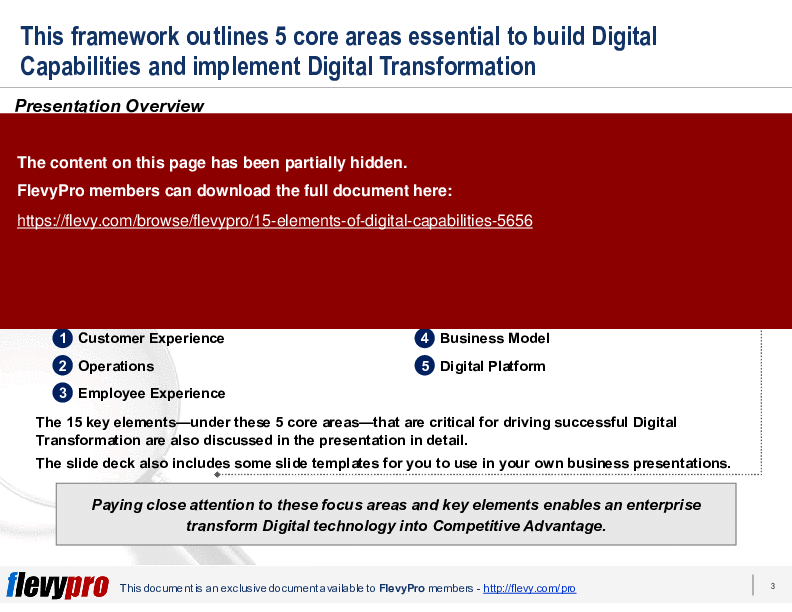
This presentation deliberates on the 5 focus areas that businesses need to concentrate on to build advanced Digital Capabilities:
1. Customer Experience
2. Operations
3. Employee Experience
4. Business Model
5. Digital Platform
The 15 key elements—under these 5 core areas—that are critical for driving successful Digital Transformation are also discussed in the presentation in detail.
The slide deck also includes some slide templates for you to use in your own business presentations.
This presentation provides a comprehensive framework that outlines the 15 critical elements necessary for building robust digital capabilities. Each element is meticulously detailed to guide organizations in enhancing their digital maturity. The focus areas include Customer Experience, Operations, Employee Experience, Business Model, and Digital Platform, ensuring a holistic approach to digital transformation.
The PPT also includes practical slide templates for seamless integration into your business presentations. These templates are designed to help you effectively communicate the importance of digital capabilities within your organization. By leveraging these insights, you can drive significant improvements in efficiency, customer satisfaction, and overall competitive advantage.
What are the main domains to assess when building digital capabilities?
A practical diagnostic organizes digital capabilities into 5 domains to ensure broad coverage: Customer Experience, Operations, Employee Experience, Business Model, and Digital Platform. Using these domains helps teams identify domain-specific gaps and investment needs across the full transformation scope, represented as 5 focus areas.
How do digital capabilities differ from leadership capabilities in transformation work?
Digital Capabilities refer to the technical and usage skills required to apply innovative technologies, while Leadership Capabilities are the skills needed to ideate, sponsor, and steer organized digital transformation efforts. Both are described as 2 complementary, essential elements for sustainable competitive advantage, noted as 2 essential elements.
What common problems cause organizations to fall behind in digital transformation?
Organizations often lag because digital transformation becomes more complex over time and incremental evolution fails to address shifting fundamentals; many lack a systematic methodology to reorganize capabilities. The core issue described is the increasing complexity and the consequent need for a systematic methodology and fundamental change.
What should I look for in a digital capabilities toolkit for enterprise use?
Look for coverage of both digital and leadership capabilities, explicit mapping across capability domains, a clear breakdown of discrete elements to assess and prioritize, and ready-to-use presentation templates to align stakeholders; resources that map 15 elements across 5 focus areas are particularly useful, such as 15 elements and slide templates.
How can I evaluate the value of downloadable slide templates for digital transformation?
Evaluate whether templates map to capability domains, let you show gaps and priorities, and are editable for executive-ready presentations. Check whether templates align with a structured element breakdown and include presentation-ready content; for example, 15 Elements of Digital Capabilities provides slide templates in a 30-slide PPTX.
I need to realign operations for digital maturity — what framework should I start with?
Begin by assessing the Operations focus area within a broader capability framework, identify which of the 15 elements affect operations (automation, process, platform fit, etc.), and use slide templates to present gaps, priorities, and investment cases. Operations is one of the 5 focus areas.
How can HR improve employee experience to support digital transformation?
HR should target the Employee Experience domain by defining the skills and behavior changes required for digital adoption, aligning training/upskilling with leadership capability development, and communicating plans with tailored slides. The Employee Experience domain is explicitly covered among the 15 elements and slide templates.
How should organizations prioritize investments across different digital capability areas?
Prioritization typically starts with a diagnostic across the 5 focus areas, then sequences investments by strategic impact, feasibility, and interdependencies; using a structured element breakdown helps make those trade-offs explicit. A 15-element breakdown can guide sequencing and prioritization decisions.
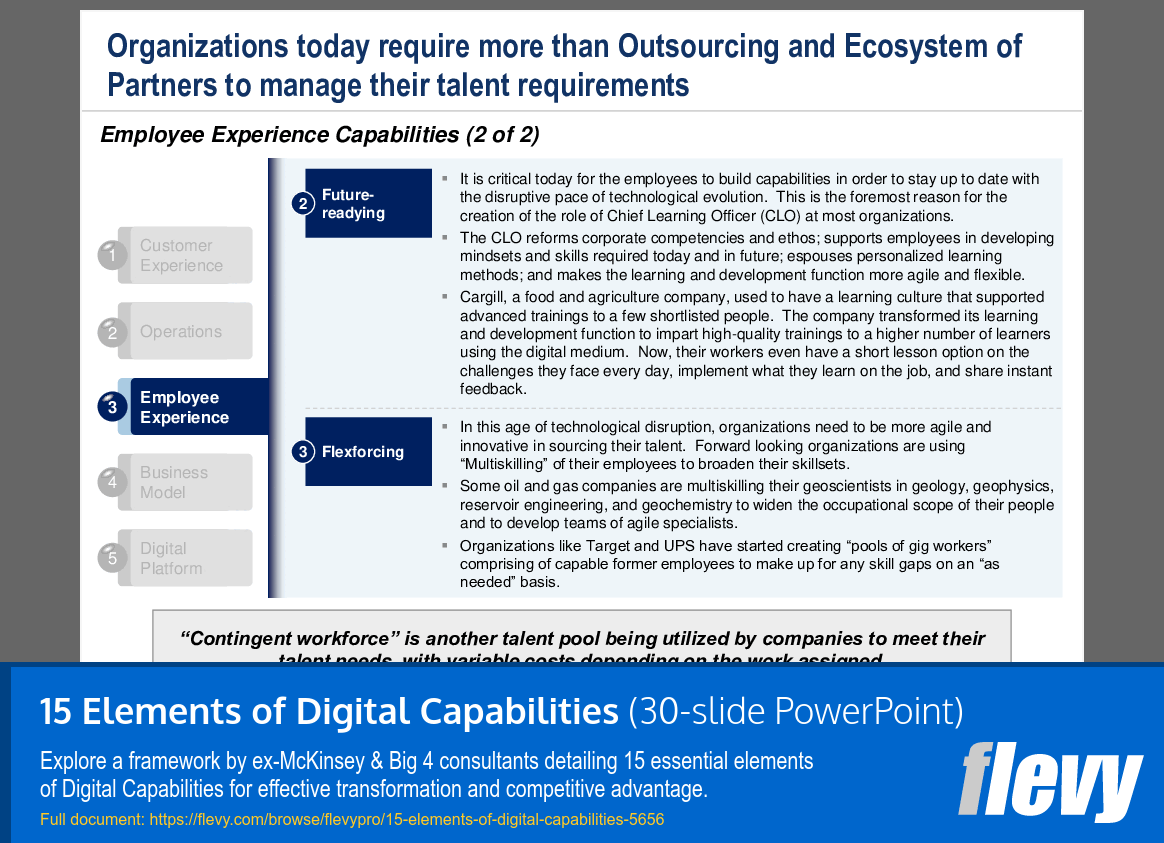
This PPT slide discusses evolving talent management strategies, focusing on "Future-readying" and "Flexforcing." "Future-readying" emphasizes equipping employees with skills to adapt to technological changes, highlighting the pivotal role of the Chief Learning Officer (CLO). Organizations are reforming corporate competencies and learning approaches to enhance workforce agility. Cargill exemplifies this shift by transitioning from a traditional learning culture to a dynamic model, utilizing digital platforms for real-time employee training, thus boosting productivity. "Flexforcing" addresses innovative talent sourcing, advocating for flexibility in workforce management. This includes "multiskilling," training employees across disciplines to increase versatility, as seen in the oil and gas sector with geoscientists. Companies like Target and UPS are creating "pools of gig workers" to fill skill gaps, optimizing resource allocation and maintaining agility in fluctuating markets. Organizations must rethink talent management to stay competitive and responsive.
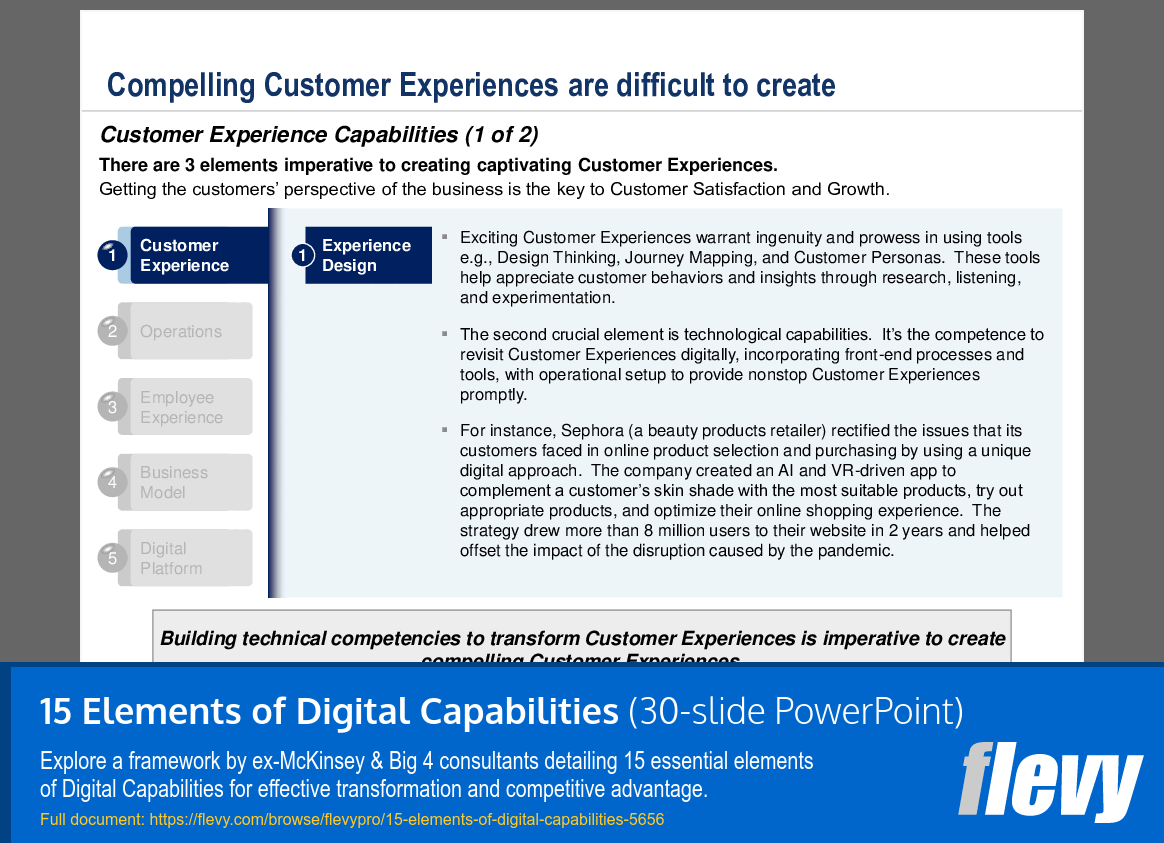
This PPT slide outlines critical components for crafting engaging customer experiences, focusing on customer experience and experience design. The first element emphasizes creativity and methodologies such as Design Thinking, Journey Mapping, and Customer Personas to gather insights into customer behavior. The second element highlights the necessity of technological capabilities, integrating digital tools for seamless interactions and operational readiness. An example is Sephora, which enhanced its online shopping experience through an AI and VR-driven application during the pandemic, attracting over 8 million users in 2 years. Building technical competencies is essential for transforming customer experiences and thriving in a competitive environment.
This PPT slide outlines key components of customer experience capabilities, focusing on integrated customer data to enhance understanding of customer behaviors. Customer Intelligence is essential for interpreting customer actions and designing superior experiences, as demonstrated by Stitch Fix's use of customer surveys and data analysis to personalize offerings, contributing to $1.6 billion in annual sales. Emotional Engagement fosters loyalty and satisfaction, with businesses encouraged to leverage technology for customer feedback across value chains. Examples include LinkedIn's user-generated content, UPS's MyChoice program, and Starbucks' MyStarbucksIdea platform, which actively engage customers, creating ownership and involvement. Organizations that effectively harness customer data and emotional engagement achieve better outcomes.
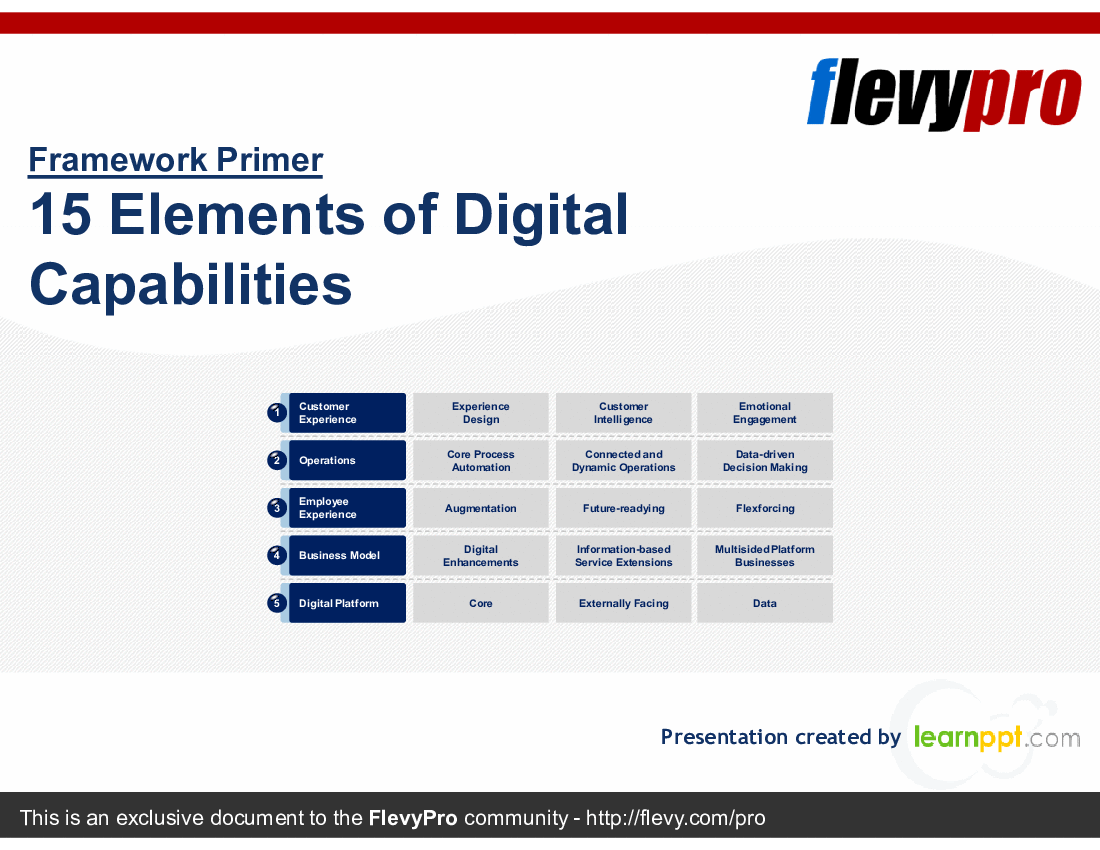
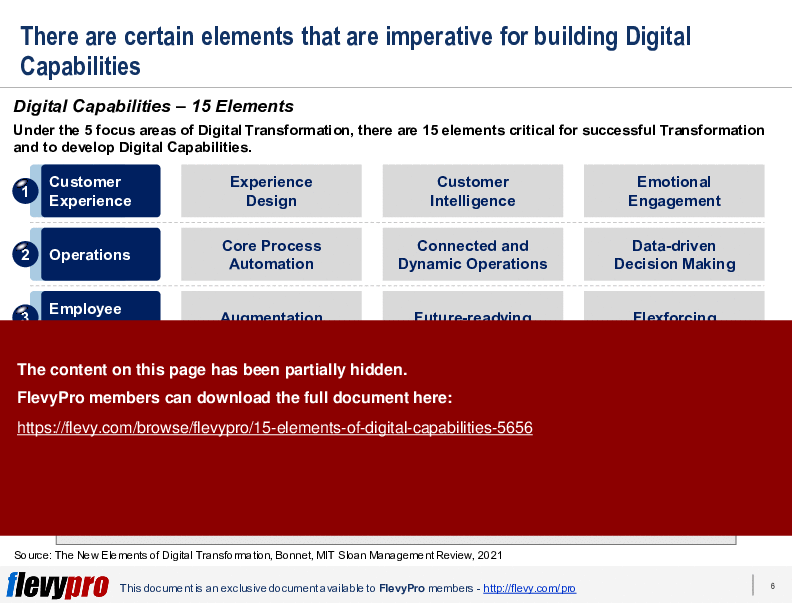
This PPT slide outlines 15 critical elements for building digital capabilities, categorized into 5 focus areas of digital transformation:
1. Customer Experience: Key elements include Experience Design, Customer Intelligence, and Emotional Engagement, which enhance customer interactions and drive loyalty.
2. Operations: Core Process Automation and Connected and Dynamic Operations streamline processes and improve operational efficiency.
3. Employee Experience: Augmentation and Future-readying empower employees through technology and prepare the workforce for future challenges.
4. Business Model: Digital Enhancements and Information-based Service Extensions leverage digital tools to innovate business models and create new revenue streams.
5. Digital Platform: Core and Externally Facing elements emphasize the need for robust digital infrastructure for internal operations and external engagement.
The COVID-19 pandemic has intensified the urgency for these digital capabilities, pushing organizations to adapt and invest in digital transformation to remain competitive.
Operational capabilities are essential for successful operational transformation, with a focus on streamlined operations for profitability. Key digital capabilities include sensors, cloud computing, machine learning, and the Internet of Things, which modernize operations. Core Process Automation is a primary focus area, with traditional practices like Enterprise Resource Planning and Product Lifecycle Management being re-evaluated by innovative companies. For example, Amazon optimizes inventory management by ensuring inventory reaches workers directly, enhancing efficiency and reducing labor. Similarly, Rio Tinto employs autonomous vehicles to improve safety and productivity in mining, addressing safety concerns and allowing workers to engage in less hazardous tasks. Core Process Automation identifies and rectifies issues, eliminating costly redundancies. Organizations seeking operational excellence must leverage technology to transform processes, enhancing safety and profitability.
Source: Best Practices in Digital Transformation, Customer Experience, Business Model PowerPoint Slides: 15 Elements of Digital Capabilities PowerPoint (PPTX) Presentation Slide Deck, LearnPPT Consulting
This framework is developed by a team of former McKinsey and Big 4 consultants. The presentation follows the headline-body-bumper slide format used by global consulting firms.
For $10.00 more, you can download this document plus 2 more FlevyPro documents. That's just $13 each.
ABOUT FLEVYPRO
This document is part of the FlevyPro Library, a curated knowledge base of documents for our FlevyPro subscribers.

FlevyPro is a subscription service for on-demand business frameworks and analysis tools. FlevyPro subscribers receive access to an exclusive library of curated business documents—business framework primers, presentation templates, Lean Six Sigma tools, and more—among other exclusive benefits.
The average daily rate of a McKinsey consultant is $6,625 (not including expenses). The average price of a Flevy document is $65.
Trusted by over 10,000+ Client Organizations
Since 2012, we have provided business templates to over 10,000 businesses and organizations of all sizes, from startups and small businesses to the Fortune 100, in over 130 countries.
"As a small business owner, the resource material available from FlevyPro has proven to be invaluable. The ability to search for material on demand based our project events and client requirements was great for me and proved very beneficial to my clients. Importantly, being able to easily edit and tailor
the material for specific purposes helped us to make presentations, knowledge sharing, and toolkit development, which formed part of the overall program collateral. While FlevyPro contains resource material that any consultancy, project or delivery firm must have, it is an essential part of a small firm or independent consultant's toolbox.
"
– Michael Duff, Managing Director at Change Strategy (UK)
"As a niche strategic consulting firm, Flevy and FlevyPro frameworks and documents are an on-going reference to help us structure our findings and recommendations to our clients as well as improve their clarity, strength, and visual power. For us, it is an invaluable resource to increase our impact and value."
– David Coloma, Consulting Area Manager at Cynertia Consulting
"I have used Flevy services for a number of years and have never, ever been disappointed. As a matter of fact, David and his team continue, time after time, to impress me with their willingness to assist and in the real sense of the word. I have concluded in fact
that it is not at all just a repository of documents/resources but, in the way that David and his team manage the firm, it is like dealing with consultants always ready to assist, advise and direct you to what you really need, and they always get it right.
I am an international hospitality accomplished senior executive who has worked and lived during the past 35 years in 23 countries in 5 continents and I can humbly say that I know what customer service is, trust me.
Aside from the great and professional service that Flevy's team provide, their wide variety of material is of utmost great quality, professionally put together and most current.
Well done Flevy, keep up the great work and I look forward to continue working with you in the future and to recommend you to a variety of colleagues around the world.
"
– Roberto Pelliccia, Senior Executive in International Hospitality
"I am extremely grateful for the proactiveness and eagerness to help and I would gladly recommend the Flevy team if you are looking for data and toolkits to help you work through business solutions."
– Trevor Booth, Partner, Fast Forward Consulting
"As an Independent Management Consultant, I find Flevy to add great value as a source of best practices, templates and information on new trends. Flevy has matured and the quality and quantity of the library is excellent. Lastly the price charged is reasonable, creating a win-win value for
the customer, Flevy and the various authors. This is truly a service that benefits the consulting industry and associated clients. Thanks for providing this service.
"
– Jim Schoen, Principal at FRC Group
"[Flevy] produces some great work that has been/continues to be of immense help not only to myself, but as I seek to provide professional services to my clients, it gives me a large "tool box" of resources that are critical to provide them with the quality of service and outcomes they are expecting."
– Royston Knowles, Executive with 50+ Years of Board Level Experience
"Flevy.com has proven to be an invaluable resource library to our Independent Management Consultancy, supporting and enabling us to better serve our enterprise clients.
The value derived from our [FlevyPro] subscription in terms of the business it has helped to gain far exceeds the investment made, making a subscription a no-brainer for any growing consultancy – or in-house strategy team."
– Dean Carlton, Chief Transformation Officer, Global Village Transformations Pty Ltd.
"If you are looking for great resources to save time with your business presentations, Flevy is truly a value-added resource. Flevy has done all the work for you and we will continue to utilize Flevy as a source to extract up-to-date information and data for our virtual and onsite presentations!"
Download our FREE Digital Transformation Templates
Download our free compilation of 50+ Digital Transformation slides and templates. DX concepts covered include Digital Leadership, Digital Maturity, Digital Value Chain, Customer Experience, Customer Journey, RPA, etc.