Strategic principles allow organizations to make decentralized decisions while maintaining cohesive strategic action. This document explains the strategic principle framework, including examples, defining attributes, relevant crucial situations, and an approach to strategic principle development.
This document is based on the HBR article, "Transforming Corner-Office Strategy into Frontline Action," co-authored by Orit Gadiesh and James Gilbert. This article is on the list of "HBR's Must-Reads on Strategy."
Intro to the article:
Southwest Airlines keeps soaring. Its stock price rose a compounded 21,000% between 1972 and 1992 and leapt 300% between 1995 and 2000.
Why does Southwest succeed while so many other airlines fail? Because it sticks to its powerful strategic principle: "Meet customers' short-haul travel needs at fares competitive with the cost of automobile travel." This pithy, memorable, action-oriented phrase distills Southwest's unique strategy and communicates it throughout the company.
An effective strategic principle lets a company simultaneously:
*maintain strategic focus,
*empower workers to innovate and take risks,
*seize fleeting opportunities,
*create products and services that meet subtle shifts in customers' needs.
In today's rapidly changing world, companies must integrate decentralized decision making with coherent, strategic action. A well-crafted, skillfully implemented strategic principle lets them strike that delicate balance.
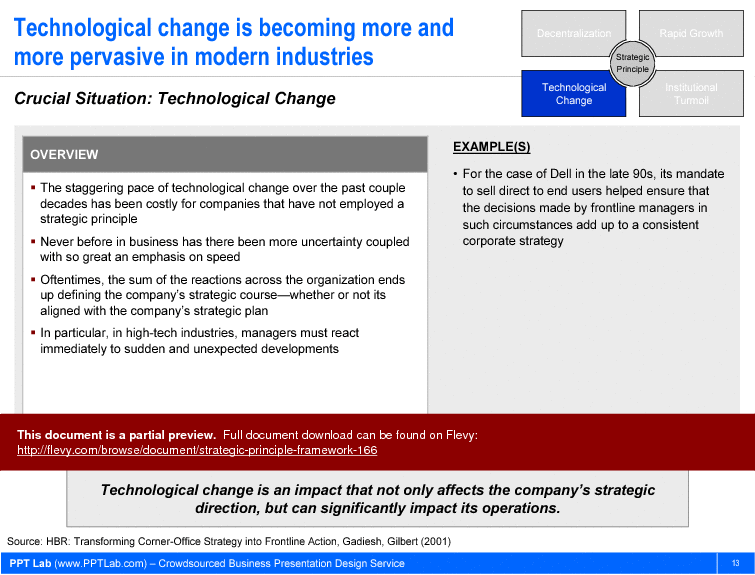
The framework outlined in this document is designed to help organizations navigate crucial situations such as decentralization, rapid growth, technological change, and institutional turmoil. It emphasizes the importance of a strategic principle in maintaining consistency and coherence across the organization, even in the face of uncertainty and rapid change. By distilling strategy into a clear, actionable principle, companies can ensure that all levels of the organization are aligned and capable of making decisions that support the overall strategic direction. This approach not only enhances strategic focus, but also empowers employees to act decisively and innovatively.
Got a question about the product? Email us at support@flevy.com or ask the author directly by using the "Ask the Author a Question" form. If you cannot view the preview above this document description, go here to view the large preview instead.
Executive Summary
The Strategic Principle Framework, co-authored by HBR's Orit Gadiesh, provides a structured approach for organizations to empower decentralized decision-making while ensuring cohesive strategic action. This consulting-grade presentation outlines the significance of strategic principles, which serve as memorable phrases that encapsulate corporate strategies, enabling frontline employees to make informed decisions. By employing this framework, organizations can effectively balance flexibility and strategic coherence, driving consistent action across all levels.
Who This Is For and When to Use
• Corporate executives seeking to align decentralized teams with overarching strategic goals
• Integration leaders managing rapid growth or organizational change
• Consultants advising on strategic implementation and operational coherence
• Change management teams navigating technological disruptions
Best-fit moments to use this deck:
• During strategic planning sessions to define or refine organizational principles
• When facing rapid growth to maintain clarity and direction
• In times of institutional turmoil to ensure continuity and focus
Learning Objectives
• Define what constitutes a strategic principle and its role in organizational strategy
• Build a framework for developing effective strategic principles
• Establish criteria for testing the effectiveness of strategic principles
• Identify crucial situations where strategic principles are essential
• Analyze examples of successful strategic principles from leading companies
• Develop actionable steps for implementing strategic principles within teams
Table of Contents
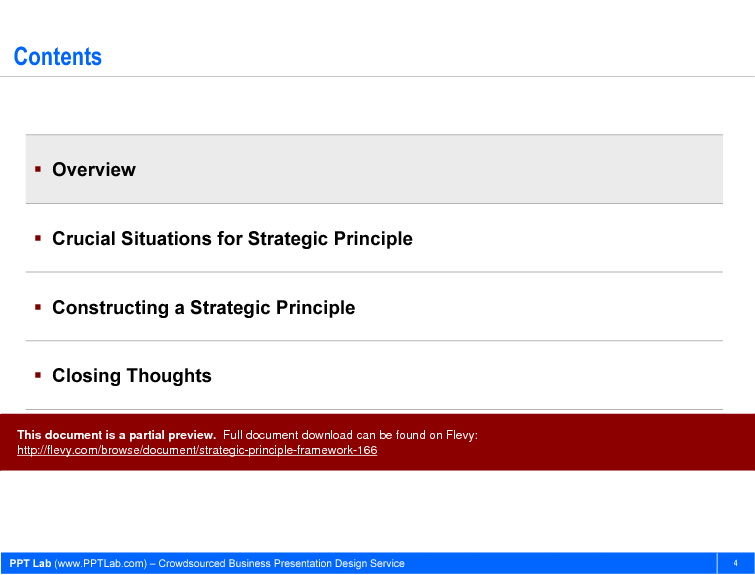
• Overview (page 4)
• Crucial Situations for Strategic Principle (page 9)
• Constructing a Strategic Principle (page 15)
• Closing Thoughts (page 19)
Primary Topics Covered
• Strategic Principle Definition - A strategic principle is a concise, actionable phrase that encapsulates a company's core strategy, guiding decentralized decision-making while ensuring alignment.
• Importance of Strategic Principles - These principles enable organizations to maintain strategic coherence while allowing flexibility in decision-making, essential for navigating complex environments.
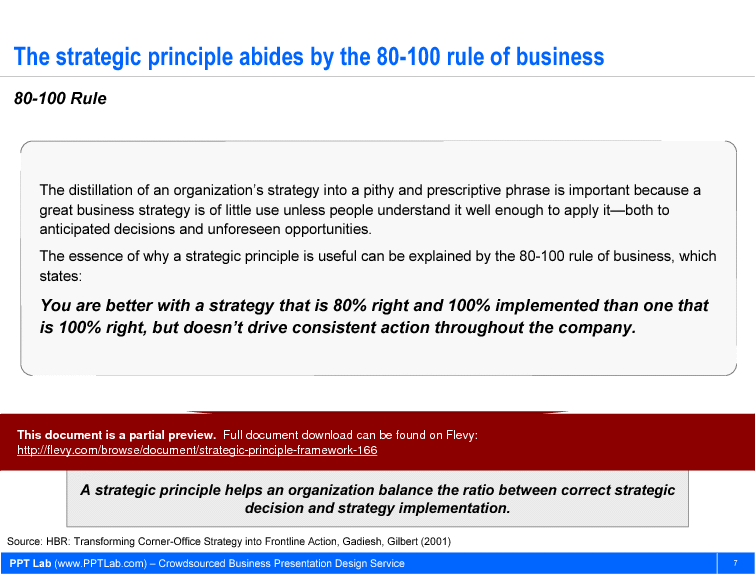
• 80-100 Rule - This rule emphasizes that a strategy should be 80% correct and 100% implemented to drive consistent action across the organization.
• Defining Attributes - Effective strategic principles force trade-offs, test strategic soundness, and set boundaries for employee decision-making while allowing room for experimentation.
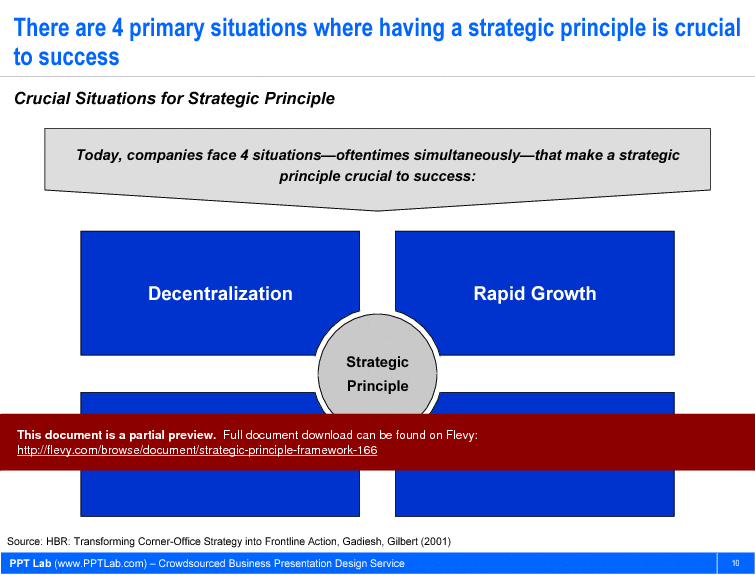
• Crucial Situations - Identifies 4 key scenarios—decentralization, rapid growth, technological change, and institutional turmoil—where strategic principles are vital for success.
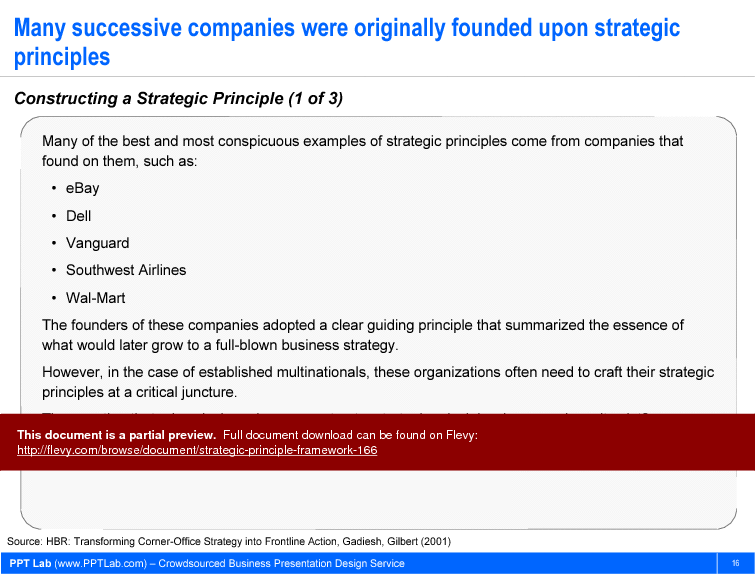
• Constructing a Strategic Principle - Outlines a four-step process to develop a strategic principle that captures a company's unique value proposition and competitive differentiation.
Deliverables, Templates, and Tools
• Framework for developing strategic principles tailored to organizational needs
• Checklist for testing the effectiveness of strategic principles
• Examples of strategic principles from leading companies for reference
• Guidelines for implementing strategic principles across teams
• Templates for documenting and communicating strategic principles
Slide Highlights
• Overview of the Strategic Principle Framework and its significance
• Examples of successful strategic principles from companies like Dell and Southwest Airlines
• The 80-100 Rule slide illustrating the importance of implementation over perfection
• Defining attributes of effective strategic principles
• Four crucial situations where strategic principles are essential for organizational success
Potential Workshop Agenda
Strategic Principle Development Session (90 minutes)
• Discuss the importance of strategic principles in organizational strategy
• Brainstorm potential strategic principles relevant to the organization
• Develop a draft strategic principle and gather feedback
Implementation Planning Session (60 minutes)
• Review the constructed strategic principle and its alignment with corporate goals
• Identify key stakeholders for implementation and assign responsibilities
• Establish a timeline for communicating and operationalizing the strategic principle
Customization Guidance
• Tailor the strategic principle to reflect the unique values and mission of your organization
• Adjust examples and case studies to align with industry-specific challenges and opportunities
• Incorporate organizational terminology and metrics to enhance relatability and clarity
Secondary Topics Covered
• Differences between strategic principles and mission statements
• The role of strategic principles in navigating institutional changes
• The impact of technological advancements on strategic decision-making
• Strategies for revisiting and updating strategic principles regularly
FAQ
What is a strategic principle?
A strategic principle is a concise, actionable phrase that encapsulates a company's core strategy, guiding decentralized decision-making while ensuring alignment.
How does a strategic principle differ from a mission statement?
A mission statement informs a company's culture, while a strategic principle drives strategy and enables frontline workers to act quickly with explicit guidance.
Why is the 80-100 rule important?
This rule emphasizes that a strategy should be 80% correct and 100% implemented to ensure consistent action across the organization, rather than aiming for a perfect strategy that is not executed.
What are the defining attributes of an effective strategic principle?
An effective strategic principle forces trade-offs, tests strategic soundness, and sets boundaries for decision-making while allowing room for experimentation.
In what situations are strategic principles crucial?
Strategic principles are essential during decentralization, rapid growth, technological change, and institutional turmoil to maintain strategic coherence.
How can organizations construct a strategic principle?
The process involves summarizing differentiation, testing for enduring nature, communicative power, and actionability to ensure the principle effectively guides decision-making.
How often should a strategic principle be revisited?
Strategic principles should be reviewed regularly, ideally every quarter, and updated annually or when significant market shifts occur.
What are some examples of successful strategic principles?
Examples include Dell's "Be direct," eBay's "Focus on trading communities," and Southwest Airlines' "Meet customers’ short-haul travel needs at fares competitive with the cost of automobile travel."
What role does a strategic principle play during institutional turmoil?
A strategic principle provides continuity and focus during leadership transitions or organizational changes, allowing teams to maintain strategic objectives without distraction.
Glossary
• Strategic Principle - A concise phrase that encapsulates a company's core strategy, guiding decentralized decision-making.
• Decentralization - The distribution of decision-making authority across various levels of an organization.
• Rapid Growth - A period of significant expansion that may challenge existing operational structures.
• Technological Change - The impact of new technologies on business operations and strategy.
• Institutional Turmoil - Organizational instability often due to leadership changes or political dynamics.
• 80-100 Rule - The principle that emphasizes the importance of implementation over perfect strategy.
• Defining Attributes - Characteristics that make a strategic principle effective, including trade-offs and soundness testing.
• Mission Statement - A statement that defines an organization's purpose and culture.
• Actionability - The ability of a strategic principle to guide immediate decision-making.
• Communicative Power - The clarity and memorability of a strategic principle.
• Differentiation - The unique value proposition that sets a company apart from competitors.
• Review Cycle - The frequency at which a strategic principle should be evaluated and updated.
Source: Best Practices in Mission, Vision, Values PowerPoint Slides: Strategic Principle Framework PowerPoint (PPT) Presentation Slide Deck, PPT Lab
|
Download our FREE Strategy & Transformation Framework Templates
Download our free compilation of 50+ Strategy & Transformation slides and templates. Frameworks include McKinsey 7-S, Balanced Scorecard, Disruptive Innovation, BCG Curve, and many more. |










