
This presentation is created by former McKinsey, BCG, Deloitte, EY, and Capgemini consultants. It teaches a practical consulting framework actively used by tier-1 consulting firms.
Editor Summary
Creative Thinking in Strategy Development is a 39-slide PowerPoint by LearnPPT Consulting, created by former McKinsey, BCG, Deloitte, EY, and Capgemini consultants, presenting a structured framework to integrate creativity into strategy work.
Read moreIncludes tools such as an Innovation SWAT team concept, sources-analysis 2x2, impact-uncertainty 2x2, scenario planning templates, mapping/projection/extrapolation techniques, checklists, and workshop guidelines. Targeted at corporate executives, strategy teams, consultants, and innovation leaders for use in strategic planning workshops and stagnation interventions. Sold as a digital download on Flevy.
Use this deck when strategic planning stalls or when teams need to inject structured creativity into strategy formulation—situations include pre-planning workshops, post-mortems of failing initiatives, or dedicated innovation sprints.
Corporate executives designing strategic planning sessions who need to set timing, team composition, and problem formulation for creative outcomes.
Strategy development teams integrating scenario planning and impact-uncertainty analysis to test alternative strategic options.
Consultants facilitating client workshops using the Innovation SWAT team concept and collaborative thinking templates.
Innovation leaders running multi-day creative workshops that combine mapping, projection, and structured idea generation.
The approach sequences diagnosing obstructions, establishing conditions, then pushing conventional and collaborative thinking, reflecting problem-framing and scenario planning practices used at McKinsey and BCG.
Strategy Development is creative process. Strategy requires innovative thinking to envision new possibilities, challenge existing assumptions, and devise unconventional approaches.
In fact, creative thinking is essential in Strategy Development, because it enables organizations to generate fresh ideas, anticipate market trends, and identify Competitive Advantages. It encourages strategic leaders to explore alternative perspectives, explore diverse solutions, and adapt to evolving circumstances.
However, creativity is not a natural process and, therefore, it isn't easy for an organization to incorporate creative thinking into its Strategy Development process.
This PowerPoint presentation details various ways to foster creative thinking within Strategy Development. It is structured into the following sections:
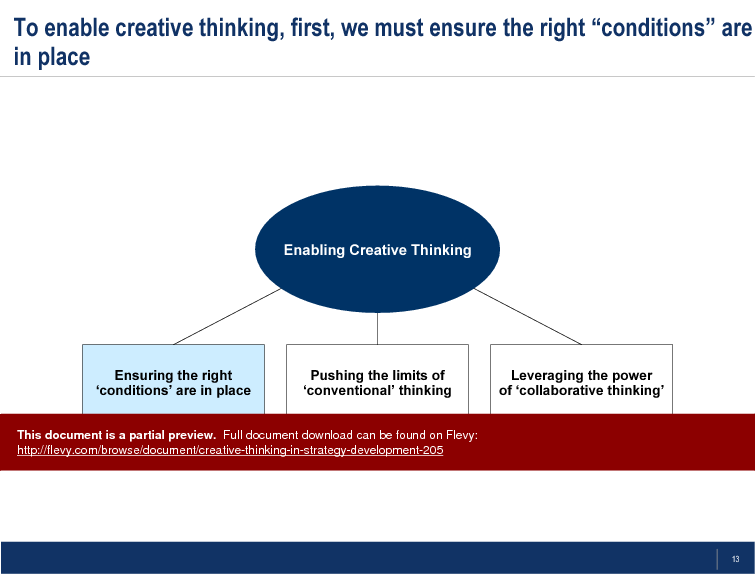
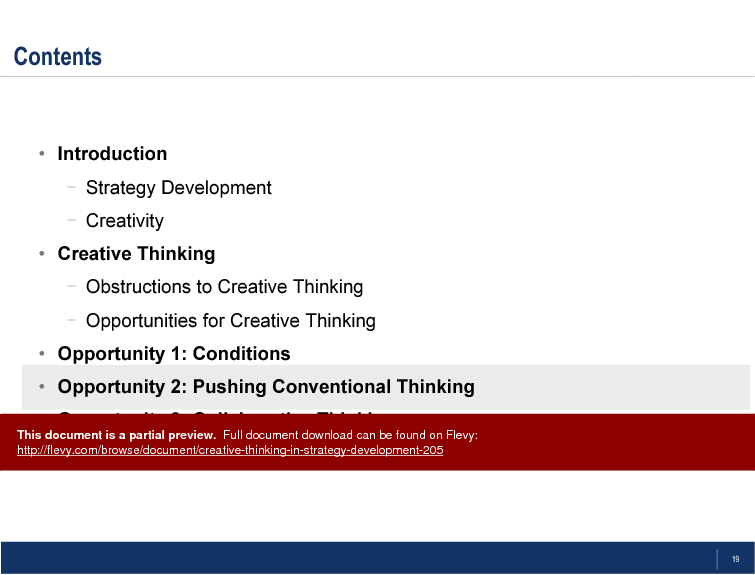
The 3 opportunity areas describe how we can (1) ensure the right "conditions" are in place, (2) push the limits of "conventional" thinking, and (3) leverage the power of "collaborative thinking." In pursuing these opportunities, various tools and frameworks are introduced, including the key elements of timing (frequency, time allocation, calendar), the Innovation SWAT team, sources-analysis 2x2 matrix, behavioral economics flaws, impact-uncertainty 2x2, scenario analysis, workshopping, among others.
The essence of Strategy Development is to design a unique plan to achieve long-term goals, while navigating complex and uncertain environments. Creative thinking allows for the exploration of different strategic and competitive scenarios, evaluation of risks and opportunities, and the ability to connect seemingly unrelated concepts. By fostering creativity, organizations can unlock innovative strategies that set them apart from competitors and enhance their ability to thrive in dynamic business landscapes.
The process, frameworks, and tools presented in this PowerPoint are the same used by global strategy consulting firms.
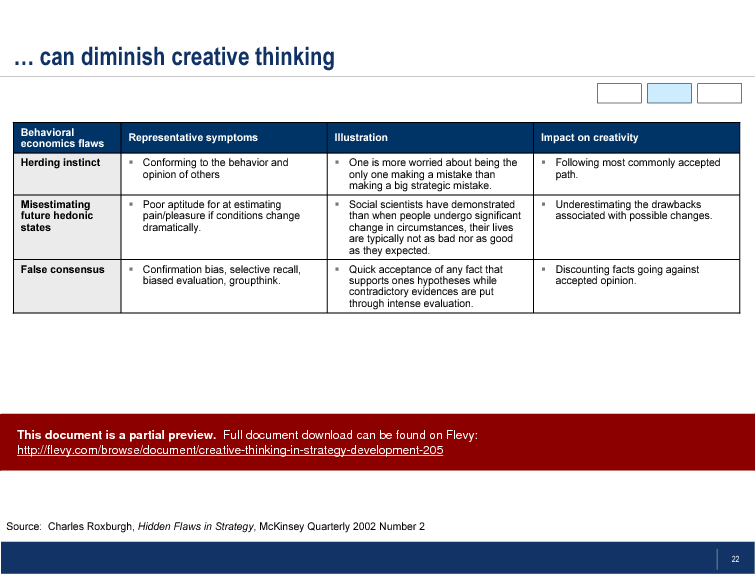
The document emphasizes the importance of appropriately framing problems to unlock creative solutions and drive strategic innovation. It also highlights the need to consider behavioral economics flaws that can hinder creative thinking and strategic decision-making.
Got a question about the product? Email us at support@flevy.com or ask the author directly by using the "Ask the Author a Question" form. If you cannot view the preview above this document description, go here to view the large preview instead.
MARCUS OVERVIEW
This synopsis was written by Marcus [?] based on the analysis of the full 39-slide presentation.
Executive Summary
This presentation titled "Creative Thinking in Strategy Development" is crafted by former consultants from McKinsey, BCG, Deloitte, EY, and Capgemini, ensuring a McKinsey, Bain, or BCG-quality approach (consulting-grade; not affiliated). It provides a structured framework to enhance creativity in strategy development, addressing common challenges organizations face in fostering innovative solutions. By leveraging insights from top-tier consulting practices, this document empowers executives and teams to cultivate an environment conducive to creative thinking, thereby improving strategic outcomes.
Who This Is For and When to Use
• Corporate executives seeking to enhance strategic planning processes
• Strategy development teams aiming to integrate creative thinking into their methodologies
• Consultants looking for frameworks to facilitate client strategy sessions
• Innovation leaders focused on driving organizational change through creativity
Best-fit moments to use this deck:
• During strategic planning sessions to encourage innovative thinking
• When facing stagnation in strategy development and needing fresh perspectives
• In workshops aimed at fostering collaboration and idea generation
Learning Objectives
• Define the role of creativity in strategy development
• Identify common obstructions to creative thinking
• Establish conditions that foster a creative environment
• Explore methods to push conventional thinking boundaries
• Leverage collaborative thinking techniques to enhance idea generation
• Formulate actionable strategies to implement creative solutions
Primary Topics Covered
• Strategy Development - Strategy development is framed as a creative process requiring innovative thinking to generate insights and evaluate alternatives.
• Obstructions to Creative Thinking - Common barriers include reliance on past experiences, discomfort with uncertainty, and groupthink, which hinder innovative solutions.
• Conditions for Creativity - Establishing the right conditions involves timing, team composition, and the quality of problem formulation to enhance creative outcomes.
• Pushing Conventional Thinking - Techniques to challenge existing assumptions and foster innovative solutions through analytical rigor and scenario planning.
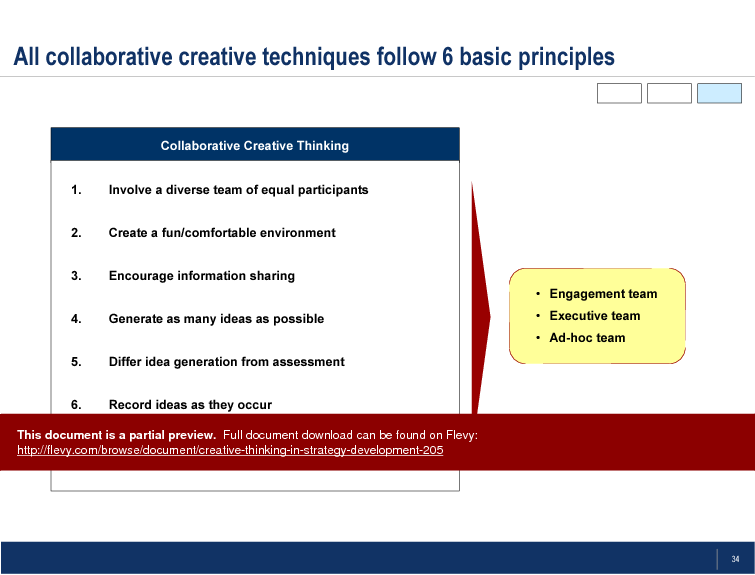
• Collaborative Thinking - Emphasizes the importance of diverse teams and collaborative techniques to drive creativity and generate new ideas.
• Creative Techniques - Various methods such as mapping, projection, and extrapolation are explored to foster creative problem-solving.
Deliverables, Templates, and Tools
• Framework for assessing obstructions to creative thinking
• Checklist for establishing conditions conducive to creativity
• Templates for scenario planning and conventional thinking challenges
• Guidelines for conducting collaborative workshops
• Techniques for reformulating problems to enhance creativity
• Tools for evaluating strategic options under uncertainty
Slide Highlights
• Overview of the creative process in strategy development
• Visual representation of obstructions to creative thinking
• Framework for establishing conditions that foster creativity
• Techniques for pushing conventional thinking boundaries
• Collaborative thinking principles and techniques
• Summary slide encapsulating key takeaways
Potential Workshop Agenda
Creative Thinking Workshop (3 days)
• Day 1: Introduction to Creative Thinking
• Discuss the importance of creativity in strategy
• Identify obstructions to creative thinking
• Day 2: Establishing Conditions for Creativity
• Explore methods to create a conducive environment
• Develop a framework for collaborative thinking
• Day 3: Pushing Conventional Thinking
• Engage in scenario planning exercises
• Generate actionable strategies for implementation
Customization Guidance
• Tailor the workshop agenda to fit specific organizational needs and timelines
• Adjust problem formulation techniques based on industry context
• Incorporate relevant case studies to enhance engagement and relatability
• Modify collaborative techniques to suit team dynamics and objectives
Secondary Topics Covered
• Behavioral economics flaws affecting creativity
• Techniques for reformulating problems to enhance innovative thinking
• Importance of diverse teams in fostering creativity
• Methods for evaluating strategic options under uncertainty
• Role of workshops in driving collaborative thinking
Topic FAQ
What are the main sections or phases of a creative strategy development process I should plan for?
A practical structure starts with an introduction to creativity, then diagnosing obstructions to creative thinking, identifying opportunities for creative thinking, and activities focused on Conditions, Pushing Conventional Thinking, and Collaborative Thinking, finishing with a summary. These correspond to the presentation’s Opportunity 1–3 sections and summary.
How can scenario planning be used to challenge assumptions and expand strategic options?
Scenario planning creates alternative future contexts to test assumptions, reveal hidden risks, and surface divergent strategic options under uncertainty. It’s used alongside analytical rigor and impact-uncertainty assessments to push conventional thinking; the product includes scenario planning templates and guidance to run these exercises.
What common cognitive and organizational obstructions hinder creative thinking in strategy work?
Frequently cited obstructions include reliance on past experiences, discomfort with uncertainty, groupthink, fear of failure, and rigid thinking, all of which constrain idea generation and critical reframing; the toolkit provides an obstruction-assessment framework to identify these barriers.
What should I look for when buying a creative-strategy toolkit for running workshops and planning sessions?
Prioritize toolkits that include an obstruction-assessment framework, checklists for conditions that foster creativity, scenario-planning and conventional-challenge templates, collaborative workshop guidelines, and customization guidance to fit your timeline—look for included scenario planning templates and a conditions checklist.
I have limited time—how can I adapt a 3-day creative thinking workshop into a shorter format while keeping core outcomes?
Use the 3-day agenda as a base and compress sessions by prioritizing critical elements: Day 1 diagnose obstructions, Day 2 establish conditions and run collaborative techniques, and Day 3 focus on scenario planning and actionable strategies. The presentation provides a 3-day workshop agenda and guidance for tailoring it.
How should I assess the cost versus value of purchasing strategy creativity templates and slide decks?
Evaluate based on included practical assets (assessment frameworks, checklists, templates, workshop agendas), customization guidance, and alignment with recognized consulting practices; slide count and concrete tools are useful proxies—this product is a 39-slide PowerPoint with scenario templates and workshop guidance.
How can an Innovation SWAT team be used within client engagements to accelerate idea generation?
An Innovation SWAT team is positioned as a focused, cross-functional group to ensure appropriate timing, balanced team composition, and sharp problem formulation, enabling rapid experiments and targeted idea-generation sprints; the deck introduces the Innovation SWAT team concept as a specific tool.
What collaborative techniques effectively increase idea diversity and participation in strategy workshops?
Techniques include structured brainstorming, workshopping formats, mapping, projection, extrapolation, and other structured idea-generation methods that encourage diverse perspectives and participation; the presentation includes guidelines for conducting collaborative workshops and these mapping techniques.
Document FAQ
These are questions addressed within this presentation.
What is the significance of creativity in strategy development?
Creativity is essential for generating innovative solutions and insights that differentiate an organization in the marketplace.
How can organizations overcome obstructions to creative thinking?
By identifying and addressing barriers such as groupthink and reliance on past experiences, organizations can foster a more innovative environment.
What conditions are necessary for fostering creativity?
Key conditions include appropriate timing, a diverse team, and a supportive environment that encourages open dialogue and idea sharing.
What techniques can be used to push conventional thinking?
Methods such as scenario planning and analytical rigor can help challenge existing assumptions and promote innovative solutions.
How does collaborative thinking enhance creativity?
Collaborative thinking leverages diverse perspectives and encourages idea sharing, leading to richer and more innovative outcomes.
What are some effective collaborative techniques?
Techniques include brainstorming sessions, workshops, and structured idea generation methods that promote participation from all team members.
How can organizations assess their current creative capabilities?
Organizations can evaluate their creative capabilities by analyzing existing processes, team dynamics, and the effectiveness of current problem-solving approaches.
What role do workshops play in strategy development?
Workshops facilitate collaboration, idea generation, and alignment among team members, making them a valuable tool in the strategy development process.
Glossary
• Creative Thinking - The ability to generate innovative ideas and solutions.
• Groupthink - A psychological phenomenon where the desire for harmony in a group leads to poor decision-making.
• Scenario Planning - A strategic planning method used to make flexible long-term plans based on various future scenarios.
• Collaborative Thinking - A process that involves multiple individuals working together to generate ideas and solutions.
• Behavioral Economics - A field of study that examines the effects of psychological factors on economic decision-making.
• Problem Formulation - The process of defining a problem in a way that facilitates creative solutions.
• Diverse Teams - Groups composed of individuals with varied backgrounds, skills, and perspectives, enhancing creativity.
• Innovative Solutions - New and effective answers to problems that significantly improve outcomes.
• Obstructions to Creativity - Factors that hinder the creative process, such as fear of failure or rigid thinking.
• Engagement Team - A group responsible for facilitating workshops and ensuring participant involvement.
• Strategic Options - Different paths or choices available to an organization in its strategic planning.
• Mindset Shift - A change in the way individuals or teams think about a problem or opportunity.
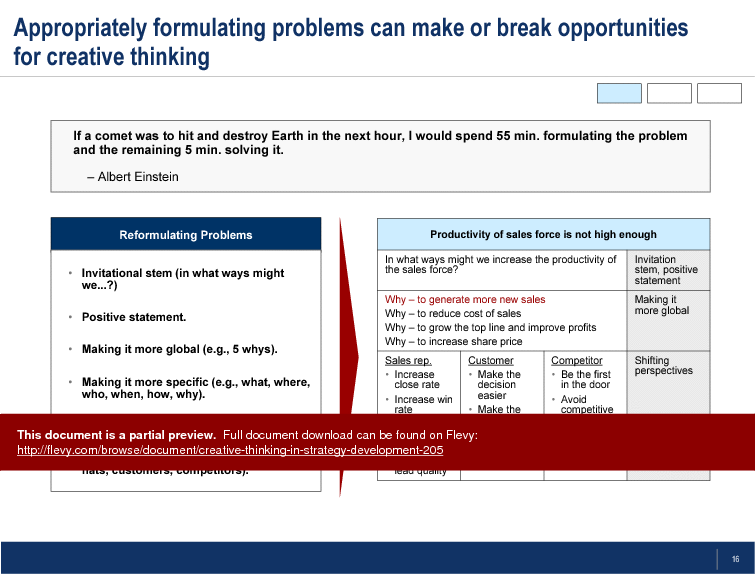
This PPT slide focuses on problem formulation as a catalyst for creative thinking, highlighted by a quote from Albert Einstein on defining problems before solving them. It includes 2 sections: "Reformulating Problems" and "Improving Sales Force Productivity." The "Reformulating Problems" section presents strategies like the "invitational stem," which promotes open-ended inquiry, and the "positive statement" method for constructive problem framing. Techniques such as the "5 whys" help identify root causes, while specificity in problem definition clarifies key elements. The second section explores enhancing sales force productivity through structured inquiries, addressing reasons like generating new sales and reducing costs. Actionable strategies for sales representatives include improving lead quality and increasing close rates, while simplifying the decision process for customers is essential.
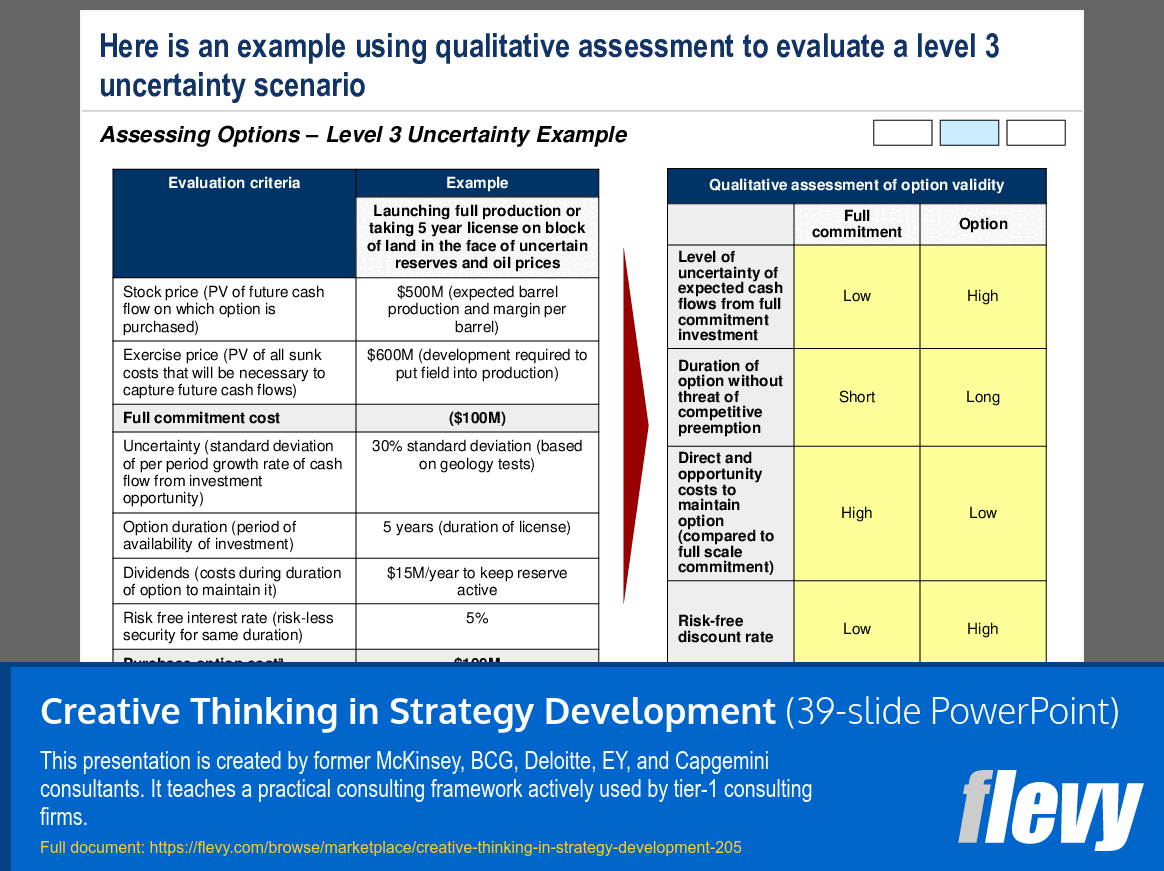
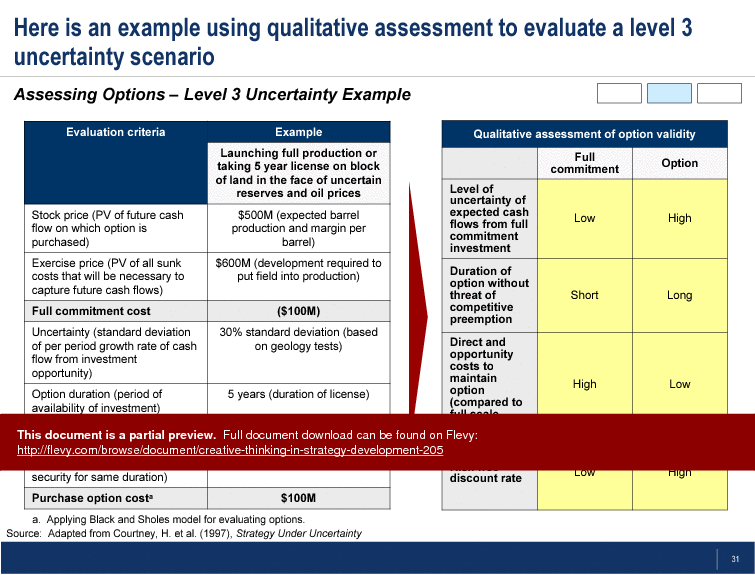
This PPT slide presents a framework for evaluating investment options under level 3 uncertainty, focusing on launching full production versus a five-year land license. Key evaluation criteria include stock price, exercise price, full commitment cost, uncertainty, option duration, dividends, risk-free interest rate, and purchase option cost, all quantified with oil and gas industry examples. The qualitative assessment contrasts the full commitment option, characterized by low uncertainty, short duration, and high costs, with the alternative option, which presents high uncertainty, longer duration, and lower costs. This analysis highlights trade-offs between immediate investment and maintaining flexibility, guiding executives toward informed investment strategies in uncertain environments.
This PPT slide presents a framework for enhancing creative outcomes in strategy development by broadening problem-solving scope. It contrasts 2 approaches: the Traditional Process and the Creative Process. "Broadening the scope early on" emphasizes challenging assumptions and injecting new insights to improve outcomes. This phase sets the foundation for exploring diverse possibilities. "Reopening it as solutions start shaping" involves imposing design challenges and considering alternative viewpoints, allowing teams to reassess strategies in evolving contexts. This iterative approach fosters continuous idea refinement, ensuring solutions remain relevant and innovative. Flexibility in strategy development is essential, advocating for a dynamic process that encourages open-mindedness in framing issues and evaluating solutions.
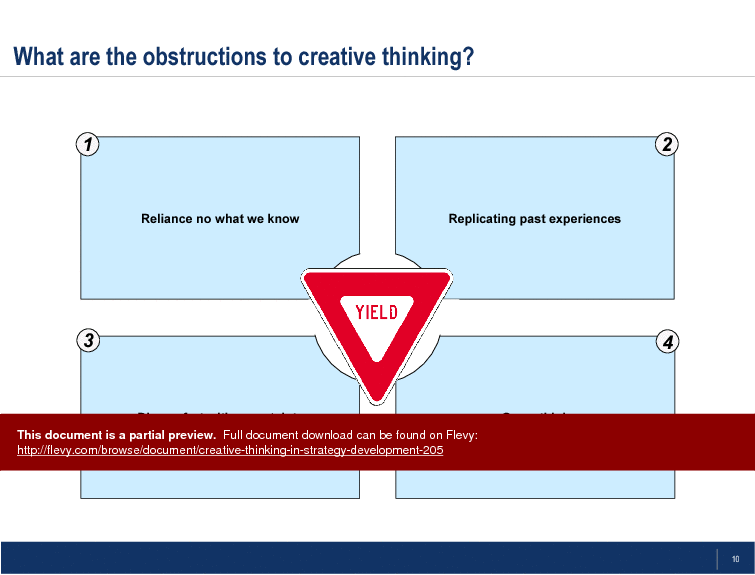
This PPT slide outlines 4 key barriers to creative thinking: "Reliance on what we know," "Replicating past experiences," "Discomfort with uncertainty," and "Groupthink."
"Reliance on what we know" limits exploration of new ideas, stifling innovation. "Replicating past experiences" leads to stagnation by mimicking previous successes without adapting to current challenges. "Discomfort with uncertainty" reflects the fear of new ventures, hindering progress and creativity. "Groupthink" prioritizes consensus over critical thinking, resulting in missed opportunities and uninspired outcomes.
Addressing these barriers is essential for fostering an innovative organizational culture and driving meaningful change in a competitive landscape.
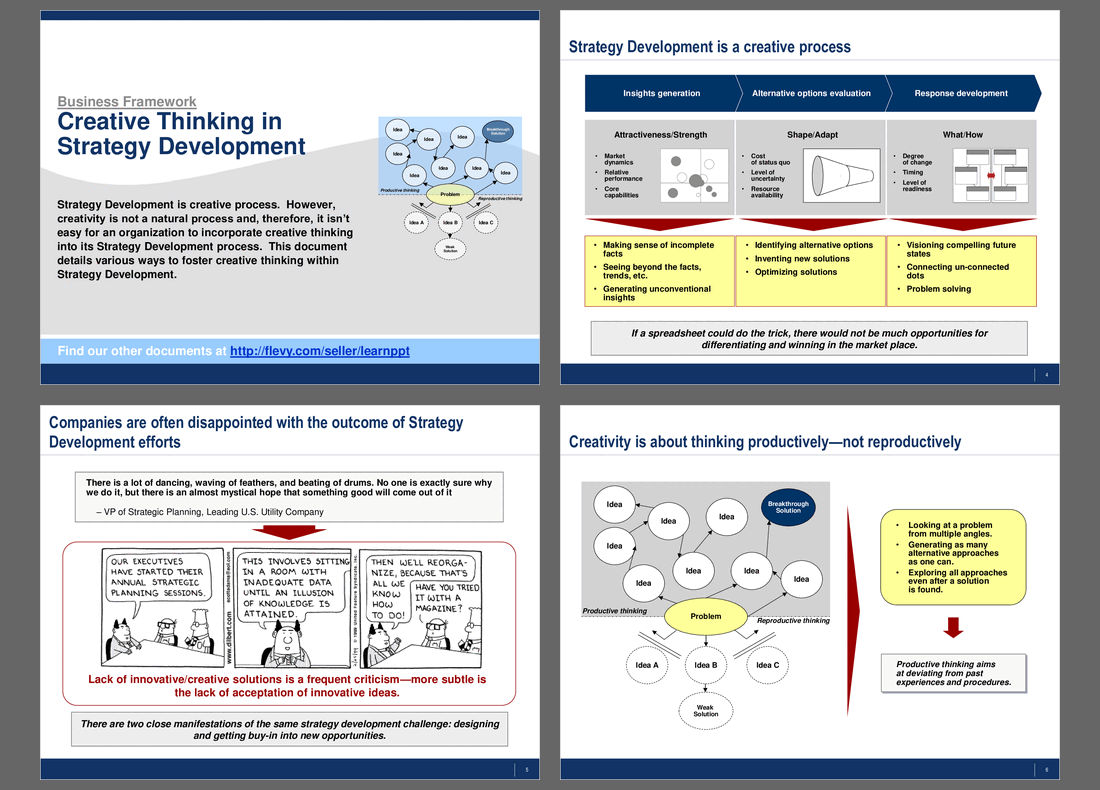
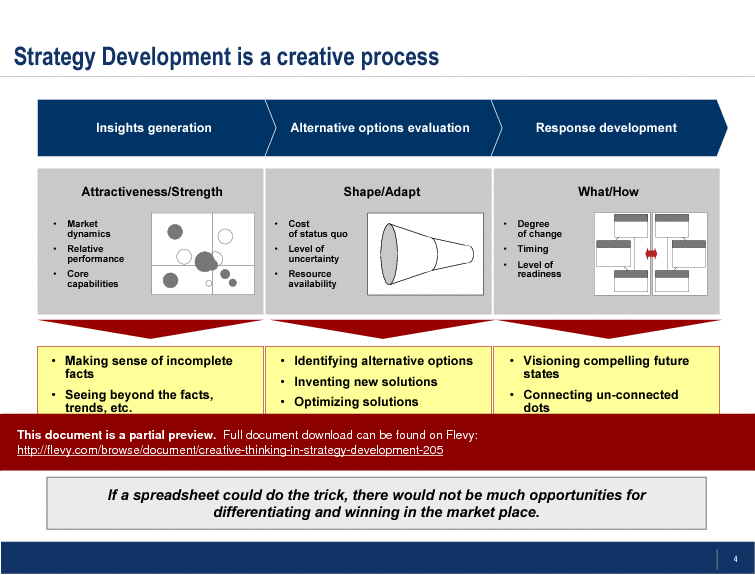
This PPT slide outlines a structured approach to strategy development, divided into 3 phases: insights generation, alternative options evaluation, and response development. The insights generation phase focuses on understanding market dynamics, assessing performance, and identifying core capabilities to uncover unconventional insights. The alternative options evaluation phase involves shaping strategies by considering the cost of the status quo, market uncertainty, and resource availability, aiming to identify and optimize new solutions. The response development phase addresses implementation, considering the degree of change, timing, and organizational readiness, while envisioning compelling future states and solving execution challenges. This approach highlights the necessity of creativity and critical thinking in navigating complex strategic challenges.
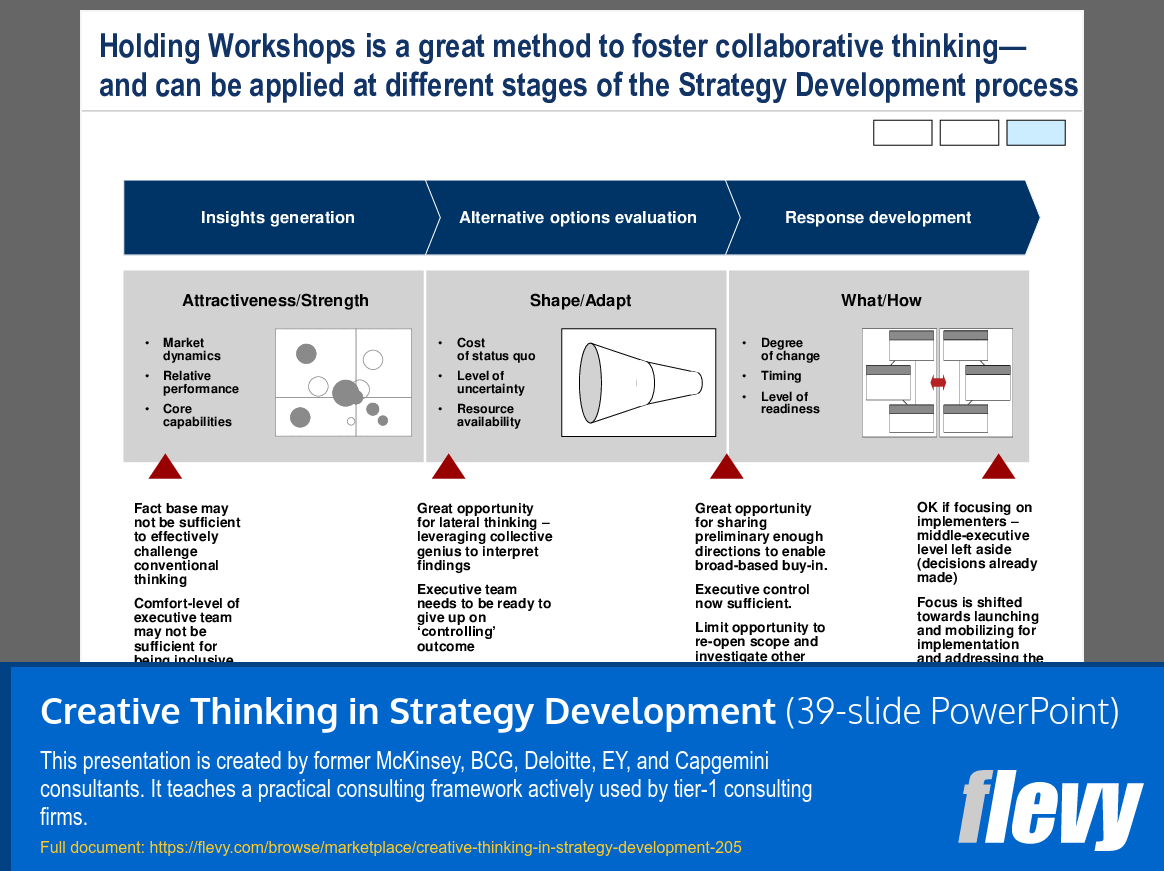
This PPT slide outlines the significance of workshops in the Strategy Development process, divided into 4 stages: Insights Generation, Alternative Options Evaluation, and Response Development. In Insights Generation, the focus is on evaluating Attractiveness and Strength, requiring a robust fact base to challenge conventional thinking. The executive team's comfort with inclusivity may pose a barrier to collaboration. The Alternative Options Evaluation stage emphasizes lateral thinking and leveraging collective intelligence, with a warning that executives must relinquish control over outcomes, necessitating a cultural shift. The Response Development stage stresses sharing preliminary directions for broad-based buy-in and relaxing executive control to explore options, highlighting the need for effective resource mobilization.
This PPT slide presents a framework for categorizing uncertainty in strategic decision-making across 4 levels. Level 1, "Clear enough future," indicates predictable outcomes, allowing confident decisions, such as retailer expansions. Level 2, "Alternative futures," employs a MECE approach to analyze multiple scenarios, including competitor actions and regulatory changes. Level 3, "Range of futures," reflects a wide array of possible outcomes, factoring in customer demand and shifting preferences. Level 4, "True ambiguity," signifies the highest uncertainty with limitless potential outcomes, such as market discontinuities. This framework enables executives to tailor strategies based on the degree of uncertainty, aligning decisions with risk tolerance and strategic goals.
This PPT slide outlines a structured approach to enhancing creativity in organizations, focusing on 3 key areas: ensuring the right conditions, pushing the limits of conventional thinking, and leveraging collaborative thinking. "Ensuring the right conditions" emphasizes the importance of organizational culture, environment, and resources that support creative endeavors, highlighting factors such as leadership support and open communication. "Pushing the limits of conventional thinking" encourages challenging established norms and practices to foster innovation. "Leveraging collaborative thinking" underscores the significance of teamwork and collective intelligence, where diverse viewpoints can lead to breakthrough ideas. Together, these areas guide leaders in implementing effective strategies to nurture creative thinking across teams.
This PPT slide presents a framework distinguishing between productive and reproductive thinking in creativity. Central to this framework is a "Problem," surrounded by "Ideas" representing potential solutions. "Productive thinking" emphasizes a proactive approach, encouraging exploration of multiple perspectives and generating numerous alternatives, fostering ongoing creativity even after a solution seems identified. In contrast, "Reproductive thinking" relies on past experiences and established procedures, often resulting in "Weak Solutions" and limiting creativity. Key practices include examining problems from various angles, generating alternatives, and maintaining an open mindset. This framework guides organizations in enhancing creative processes and effective problem-solving strategies.
This PPT slide addresses common frustrations in strategy development, highlighting a quote from a VP of Strategic Planning at a utility company about the uncertainty in achieving tangible outcomes. A cartoon critiques traditional strategic planning, illustrating executives in annual sessions with inadequate data, which undermines effective decision-making. This reflects a significant issue: organizations often rely on insufficient information. Additionally, the slide notes a criticism of the lack of innovative solutions, pointing to resistance against accepting new ideas within organizations. It identifies 2 related challenges in strategy development: designing effective strategies and embracing innovative approaches, emphasizing the need for a more open-minded approach to enhance strategic planning processes.
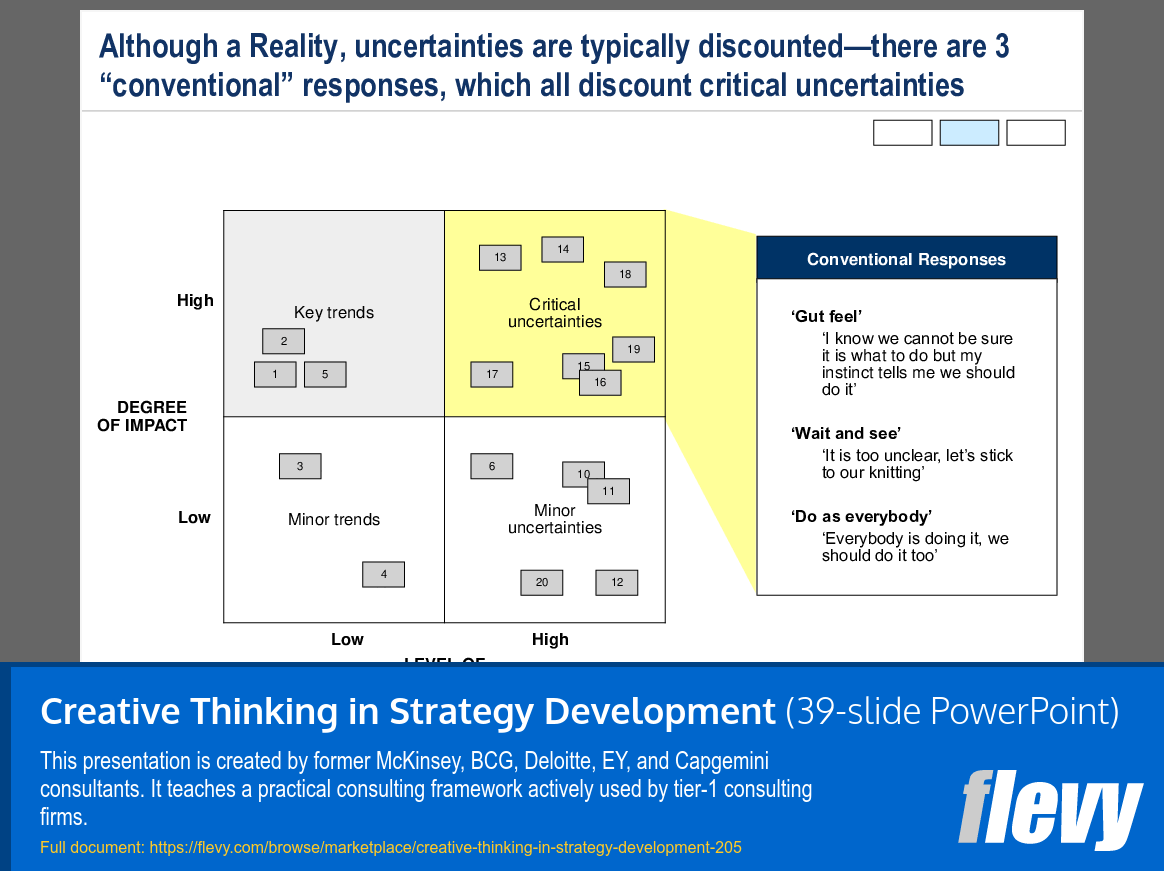
This PPT slide outlines a framework for responding to uncertainties in strategic decision-making, categorizing them into 4 quadrants: "Key trends," "Critical uncertainties," "Minor trends," and "Minor uncertainties." Key trends are significant factors influencing outcomes, while critical uncertainties indicate high impact, but uncertain elements requiring careful analysis. The framework highlights 3 conventional responses to uncertainties: "Gut feel," "Wait and see," and "Do as everybody," which often lead to inadequate strategic thinking. Recognizing the limitations of these responses is essential for executives to adopt a proactive approach to critical uncertainties, ultimately enhancing informed decision-making and strategic outcomes.
This PPT slide presents a decision analysis framework for MagicCo regarding competitor GlobalCo's potential market entry. It outlines 3 strategic options: "Do nothing," "Full scale launch," and "Pilots launch," each evaluated against GlobalCo's entry likelihood and financial implications. The "Do nothing" option has a 90% chance of GlobalCo entering, resulting in a projected loss of $450 million. The "Full scale launch" option, with a $200 million investment, reduces GlobalCo's entry probability to 20%, leading to a potential loss of $355 million or a gain of $125 million if they do not enter. The "Pilots launch" option, requiring a $65 million investment, presents a 30% chance of GlobalCo entering, with a potential loss of $450 million or a gain of $155 million if they do not enter. This analysis emphasizes weighing risks and rewards in uncertain environments.

Source: Best Practices in Strategy Development, Strategic Thinking, Creativity PowerPoint Slides: Creative Thinking in Strategy Development PowerPoint (PPT) Presentation Slide Deck, LearnPPT Consulting
This presentation is created by former McKinsey, BCG, Deloitte, EY, and Capgemini consultants. It teaches a practical consulting framework actively used by tier-1 consulting firms.
We are a team of management consultants trained by top tier global consulting firms (including McKinsey, BCG, Deloitte, EY, Capgemini) with a collective experience of several decades. We specialize in business frameworks based on real-life consulting engagements.
We have served 100s of clients that range from Fortune 500 companies to tech startups to
... [read more] $1B+ private companies.
Utilize our consulting frameworks to apply structured thinking & analysis to address your business challenges, uncover strategic insights, and implement workable solutions. Our PowerPoint presentations follow traditional consulting slide design formats, starting with a clear slide headline. Easily customize and repurpose our slides for your own business presentations.
Beyond business frameworks & methodologies, we also offer PowerPoint templates and other business templates. Our templates are professionally designed and have been used in thousands of deliverables & work products across hundreds of clients.
Since 2012, we have provided business templates to over 10,000 businesses and organizations of all sizes, from startups and small businesses to the Fortune 100, in over 130 countries.
"If you are looking for great resources to save time with your business presentations, Flevy is truly a value-added resource. Flevy has done all the work for you and we will continue to utilize Flevy as a source to extract up-to-date information and data for our virtual and onsite presentations!"
– Debbi Saffo, President at The NiKhar Group
"FlevyPro provides business frameworks from many of the global giants in management consulting that allow you to provide best in class solutions for your clients."
– David Harris, Managing Director at Futures Strategy
"I have used FlevyPro for several business applications. It is a great complement to working with expensive consultants. The quality and effectiveness of the tools are of the highest standards."
– Moritz Bernhoerster, Global Sourcing Director at Fortune 500
"As a small business owner, the resource material available from FlevyPro has proven to be invaluable. The ability to search for material on demand based our project events and client requirements was great for me and proved very beneficial to my clients. Importantly, being able to easily edit and tailor
the material for specific purposes helped us to make presentations, knowledge sharing, and toolkit development, which formed part of the overall program collateral. While FlevyPro contains resource material that any consultancy, project or delivery firm must have, it is an essential part of a small firm or independent consultant's toolbox.
"
– Michael Duff, Managing Director at Change Strategy (UK)
"As a young consulting firm, requests for input from clients vary and it's sometimes impossible to provide expert solutions across a broad spectrum of requirements. That was before I discovered Flevy.com.
Through subscription to this invaluable site of a plethora of topics that are key and crucial to consulting, I
have been able to exceed expectations and deliver quality advice and solutions to my clients. The quality and expertise of the authors are exemplary and gives me great confidence to use as part of my service offerings.
I highly recommend this company for any consultant wanting to apply international best practice standards in their service offerings.
"
– Nishi Singh, Strategist and MD at NSP Consultants
"One of the great discoveries that I have made for my business is the Flevy library of training materials.
As a Lean Transformation Expert, I am always making presentations to clients on a variety of topics: Training, Transformation, Total Productive Maintenance, Culture, Coaching, Tools, Leadership Behavior, etc. Flevy
It is well worth the money to purchase these presentations. Sure, I have the knowledge and information to make my point. It is another thing to create a presentation that captures what I want to say. Flevy has saved me countless hours of preparation time that is much better spent with implementation that will actually save money for my clients.
"
– Ed Kemmerling, Senior Lean Transformation Expert at PMG
"Last Sunday morning, I was diligently working on an important presentation for a client and found myself in need of additional content and suitable templates for various types of graphics. Flevy.com proved to be a treasure trove for both content and design at a reasonable price, considering the time I
saved. I encountered a download issue during the ordering process. However, a quick email to Flevy's support team, even on a Sunday (!!!), resulted in assistance within less than an hour, allowing me to download the content I needed. Fantastic job, Flevy! I give 5 stars for both content/price and customer service. Thank you!
"
– M. E., Chief Commercial Officer, International Logistics Service Provider
"Flevy.com has proven to be an invaluable resource library to our Independent Management Consultancy, supporting and enabling us to better serve our enterprise clients.
The value derived from our [FlevyPro] subscription in terms of the business it has helped to gain far exceeds the investment made, making a subscription a no-brainer for any growing consultancy – or in-house strategy team."
– Dean Carlton, Chief Transformation Officer, Global Village Transformations Pty Ltd.
Save with Bundles
This document is available as part of the following discounted bundle(s):
Download our free compilation of 50+ Strategy & Transformation slides and templates. Frameworks include McKinsey 7-S, Balanced Scorecard, Disruptive Innovation, BCG Curve, and many more.