This presentation is created by former McKinsey, BCG, Deloitte, EY, and Capgemini consultants. It teaches a practical consulting framework actively used by tier-1 consulting firms.
Editor Summary
Soft Side of Change Management is a 20-slide PowerPoint presenting 6 change-management frameworks: Dimensions of Change, Emotional Cycle of Change, Ingredients of Change, Level of Commitment, Phases of Team Building, and Trust Formula.
Read moreDeveloped by former McKinsey, BCG, Deloitte, EY, and Capgemini consultants, the deck includes 6 tools (dimensions assessment framework, emotional cycle mapping tool, 6-ingredient checklist, commitment assessment matrix, team-building phase tracker, trust assessment guide). Target users are change management leaders, HR professionals, project managers, and consultants; sold as a digital download on Flevy with immediate digital download.
Use this deck when an organization needs to manage the human side of significant change—during planning, to address resistance, for training, or in facilitated workshops.
Change management leaders assessing rational, emotional, and political drivers and selecting specific tactics using a dimensions framework.
HR professionals designing engagement programs by mapping the emotional cycle to targeted interventions that sustain morale.
Project managers validating readiness with the 6-ingredients checklist to confirm vision, skills, resources, structure, and implementation plan.
Consultants diagnosing stakeholder commitment using the commitment assessment matrix and running team-building sessions with the phase tracker.
The emphasis on diagnosing multiple change dimensions, sequencing interventions, and using structured assessment tools mirrors consulting practices used at McKinsey and BCG.
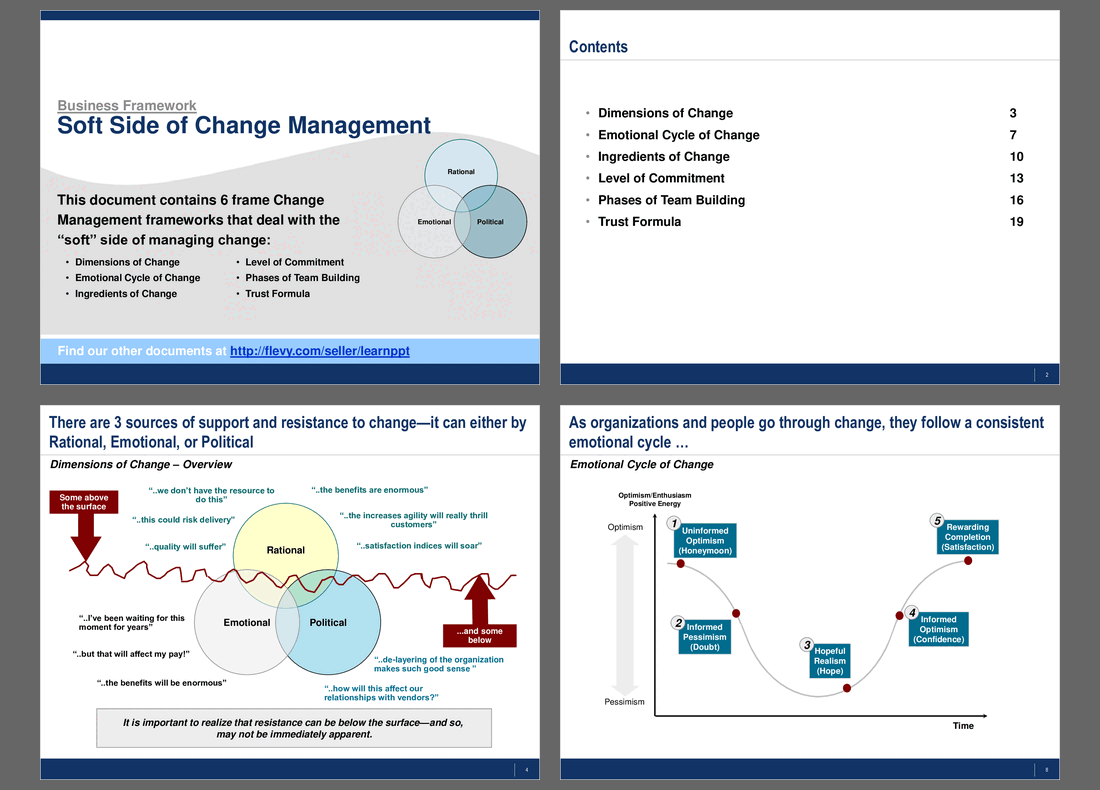
This document contains 6 frame Change Management frameworks that deal with the "soft" side of managing effective organizational change:
1. Dimensions of Change
2. Emotional Cycle of Change
3. Ingredients of Change
4. Level of Commitment
5. Phases of Team Building
6. Trust Formula
Understanding the sources of support and resistance to change is crucial for any organization. This document delves into the Rational, Emotional, and Political dimensions of change, providing insights into how each dimension can impact the success of change initiatives. The framework helps leaders identify and address potential obstacles, ensuring a smoother transition and greater buy-in from all stakeholders.
The Emotional Cycle of Change is another key focus, illustrating the various stages employees go through during a change process. Recognizing these emotional phases allows leaders to provide the necessary support and interventions at the right times, minimizing resistance and fostering a more resilient organizational culture. This section is particularly valuable for maintaining morale and productivity during periods of significant transformation.
The document also covers the Ingredients of Change, which are essential elements that must be in place for change to be effective. These ingredients include clear communication, strong leadership, and a well-defined vision. By understanding and implementing these components, leaders can create a robust foundation for change, ensuring that all team members are aligned and committed to the new direction.
Got a question about the product? Email us at support@flevy.com or ask the author directly by using the "Ask the Author a Question" form. If you cannot view the preview above this document description, go here to view the large preview instead.
MARCUS OVERVIEW
This synopsis was written by Marcus [?] based on the analysis of the full 20-slide presentation.
Executive Summary
The "Soft Side of Change Management" presentation is a consulting-grade resource designed to equip leaders and consultants with frameworks for effectively managing the human aspects of organizational change. Crafted by former consultants from top-tier firms like McKinsey, BCG, and Deloitte, this deck emphasizes the importance of addressing the emotional, rational, and political dimensions of change. Users will gain insights into navigating the complexities of change management, ensuring that both the technical and human elements are aligned for successful implementation.
Who This Is For and When to Use
• Change management leaders overseeing organizational transformations
• HR professionals tasked with managing employee engagement during change
• Project managers responsible for implementing change initiatives
• Consultants advising organizations on change strategies
Best-fit moments to use this deck:
• During the planning phase of a significant organizational change
• When addressing employee resistance to change
• For training sessions on change management best practices
• In workshops focused on team dynamics and commitment levels
Learning Objectives
• Define the emotional cycle of change and its impact on team morale
• Build actionable strategies to address resistance from rational, emotional, and political perspectives
• Establish a framework for communicating vision and securing commitment
• Identify the key ingredients necessary for successful change implementation
• Recognize the phases of team building and their influence on productivity
• Apply the trust formula to enhance collaboration during change initiatives
Table of Contents
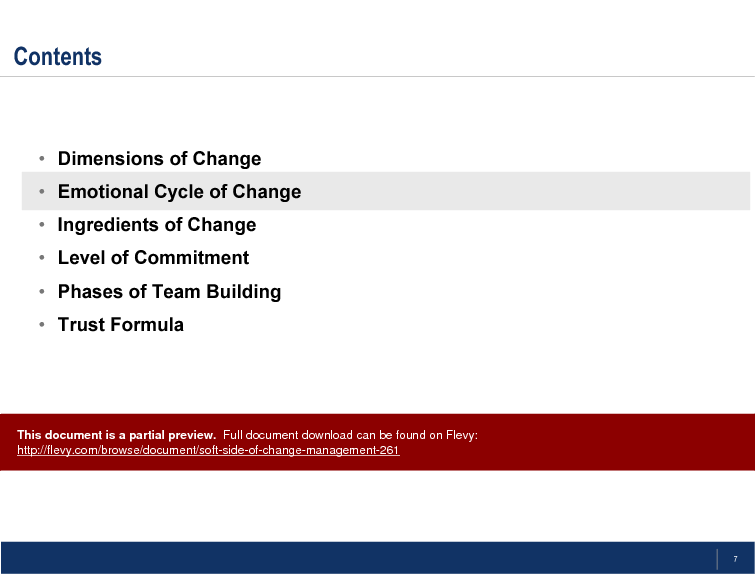
• Dimensions of Change (page 3)
• Emotional Cycle of Change (page 7)
• Ingredients of Change (page 10)
• Level of Commitment (page 13)
• Phases of Team Building (page 16)
• Trust Formula (page 19)
Primary Topics Covered
• Dimensions of Change - This section outlines the rational, emotional, and political dimensions that influence change, emphasizing the need for tailored tactics to address each aspect.
• Emotional Cycle of Change - A detailed exploration of the emotional phases individuals experience during change, from uninformed optimism to rewarding completion.
• Ingredients of Change - Six essential components—vision, skills, incentives, resources, structure, and implementation plan—necessary for successful change initiatives.
• Level of Commitment - Describes the 7 levels of commitment individuals progress through during change, highlighting the importance of engagement and education.
• Phases of Team Building - An overview of the stages teams undergo, including forming, storming, norming, and performing, and their impact on team dynamics.
• Trust Formula - A formula that illustrates how trust is built through intimacy and credibility while being inversely related to risk.
Deliverables, Templates, and Tools
• Framework for assessing the dimensions of change
• Emotional cycle mapping tool to track team sentiment
• Checklist of the 6 ingredients necessary for effective change
• Commitment assessment matrix to gauge engagement levels
• Team building phase tracker to monitor progress
• Trust-building strategies and assessment guide
Slide Highlights
• Visual representation of the emotional cycle of change, illustrating phases from optimism to satisfaction
• Framework diagram outlining the dimensions of change and associated tactics
• Infographic detailing the 6 ingredients of change and their interdependencies
• Chart depicting the levels of commitment and their progression over time
• Team building phases graph showing morale and productivity trends
Potential Workshop Agenda
Understanding Change Dimensions (90 minutes)
• Discuss the rational, emotional, and political dimensions of change
• Identify specific tactics for each dimension
• Engage in breakout sessions to apply frameworks to real scenarios
Emotional Cycle of Change Exploration (60 minutes)
• Review the emotional phases individuals experience during change
• Share personal experiences and strategies for managing emotions
• Develop action plans to support team members through transitions
Building Commitment and Trust (90 minutes)
• Analyze the levels of commitment and their implications for change
• Explore the trust formula and its application in teams
• Create a roadmap for enhancing trust during change initiatives
Customization Guidance
• Tailor the dimensions of change to reflect organizational culture and specific challenges
• Adapt the emotional cycle framework to align with team dynamics and historical context
• Modify the ingredients of change to fit unique project requirements and stakeholder needs
• Incorporate organizational terminology and metrics into the commitment assessment matrix
Secondary Topics Covered
• Strategies for managing resistance to change
• Techniques for fostering open communication during transitions
• Best practices for engaging stakeholders at all levels
• Methods for measuring the success of change initiatives
• Approaches to building resilience within teams
Topic FAQ
What are the main dimensions of change leaders should assess?
Change leaders should assess the rational, emotional, and political dimensions that influence acceptance and behavior. Rational factors address business case and structure, emotional factors cover morale and the emotional cycle individuals experience, and political factors involve stakeholder interests and power dynamics; together these form the Dimensions of Change framework.


How does the emotional cycle of change influence team morale and productivity?
The emotional cycle of change describes stages individuals move through (from uninformed optimism through various reactions to rewarding completion), which correlate with morale and productivity shifts. Mapping these phases helps leaders time interventions and support to reduce disruption, using an emotional cycle mapping tool to track sentiment across stages from optimism to completion.
What are the essential ingredients required for successful organizational change?
Effective change typically requires 6 interdependent ingredients: a clear vision (communicate vision), appropriate skills, aligned incentives, sufficient resources, an enabling structure, and a concrete implementation plan. Missing any one of these can impede progress, which is why checklists of the 6 ingredients are commonly used in planning.
How can I build trust among teams during a change program?
Trust during change is built by increasing intimacy (openness), demonstrating credibility (competence and consistency), and reducing perceived risk. The trust relationship is often expressed as a formula linking intimacy and credibility inversely to risk, and practical trust-building strategies focus on communication, shared evidence, and risk mitigation.
What should I look for when choosing a change-management deck or template?
Choose a template that covers multiple dimensions (rational, emotional, political), maps the emotional cycle, lists core change ingredients, measures commitment, addresses team-building phases, and offers customization and workshop agendas. Flevy's Soft Side of Change Management provides these elements in a 20-slide PPT and includes tools like an emotional cycle mapping tool or commitment assessment matrix.
Are ready-made change management templates worth the investment for small teams with limited budgets?
That depends on the team’s need for structured diagnostics and reusable tools; templates can reduce setup time and provide proven frameworks. For teams needing practical assessment and workshop materials, a resource that contains the 6 core frameworks and supporting tools (for example, a commitment assessment matrix) may offer measurable time savings.
After a merger, employees resist new processes—what frameworks should I apply first?
Begin by assessing the Dimensions of Change (rational, emotional, political) to identify sources of resistance, then map the Emotional Cycle of Change to understand sentiment timing. Follow with a commitment assessment and the Ingredients of Change checklist to prioritize interventions; Flevy's Soft Side of Change Management includes these frameworks and tools for such sequencing.
How can I measure levels of commitment during a change initiative?
Measure commitment using engagement surveys, structured feedback mechanisms, and a commitment assessment matrix that tracks progression from awareness to internalization. Regular pulse checks tied to the matrix help monitor changes in engagement and guide targeted actions using a commitment assessment matrix.
Document FAQ
These are questions addressed within this presentation.
What are the dimensions of change?
The dimensions of change include rational, emotional, and political aspects that influence how change is perceived and accepted within an organization.
How does the emotional cycle of change affect teams?
Teams experience a consistent emotional cycle during change, impacting morale and productivity. Understanding this cycle helps leaders provide appropriate support.
What are the 6 ingredients necessary for successful change?
The 6 ingredients are: Communicate Vision, Skills, Incentives, Resources, Structure, and Implementation Plan. Missing any one of these can hinder the change process.
How can we measure levels of commitment during change?
Levels of commitment can be assessed through engagement surveys and feedback mechanisms that track progress from awareness to internalization.
What are the phases of team building?
The phases of team building include Forming, Storming, Norming, and Performing, each characterized by different team dynamics and morale levels.
How does trust impact change initiatives?
Trust is crucial for successful change. It is built through intimacy and credibility while being inversely related to risk, affecting collaboration and engagement.
What tactics can be employed to address resistance?
Tactics include conducting thorough analyses, creating a robust business case, aligning leadership, and fostering open communication to address concerns.
How can we support team members emotionally during change?
Support can be provided by recognizing emotional phases, encouraging open dialogue, and offering resources to help navigate challenges.
Glossary
• Dimensions of Change - The rational, emotional, and political aspects influencing change management.
• Emotional Cycle of Change - The phases individuals experience during organizational change, affecting morale and productivity.
• Ingredients of Change - Essential components required for successful change implementation: vision, skills, incentives, resources, structure, and implementation plan.
• Level of Commitment - The progression of engagement from initial contact to internalization during change initiatives.
• Phases of Team Building - Stages teams undergo, including forming, storming, norming, and performing, impacting team dynamics.
• Trust Formula - A formula illustrating the relationship between trust, intimacy, credibility, and risk.
• Resistance to Change - The pushback individuals may exhibit in response to organizational changes, influenced by emotional, rational, and political factors.
• Stakeholder Engagement - The process of involving individuals affected by change to ensure their needs and concerns are addressed.
• Change Management - The discipline of guiding individuals and organizations through transitions to achieve desired outcomes.
• Organizational Culture - The shared values, beliefs, and practices that shape how work is conducted within an organization.
• Commitment Assessment - A tool for measuring the level of engagement and support for change initiatives among stakeholders.
• Team Dynamics - The behavioral and emotional interactions among team members that influence performance and collaboration.
This PPT slide outlines 6 essential components of effective change management: Change, Communicate Vision, Skills, Incentives, Resources, Structure, and Implementation Plan. These interconnected elements must work in harmony to facilitate successful organizational change. Omitting any one of these components can create significant obstacles, underscoring the need for a holistic approach. Change is a complex interplay of these factors, necessitating thorough assessment before initiating any change initiative. This framework aids in informed decision-making and optimal resource allocation, serving as a valuable reference for leaders navigating organizational transformations.
The "Emotional Cycle of Change" illustrates the emotional journey individuals and organizations undergo during change. It begins with "Uninformed Optimism" (Honeymoon), where initial excitement often overlooks challenges. This shifts to "Informed Pessimism" (Doubt), as individuals recognize obstacles, leading to uncertainty. The cycle progresses to "Hopeful Realism" (Hope), where optimism balances with a realistic understanding, fostering resilience and proactive problem-solving. Next is "Informed Optimism" (Confidence), a turning point where individuals regain confidence with strategies to navigate change. The cycle concludes with "Rewarding Completion" (Satisfaction), reflecting achievement and adaptability. This framework emphasizes the need for support and communication at each stage to facilitate effective change management.
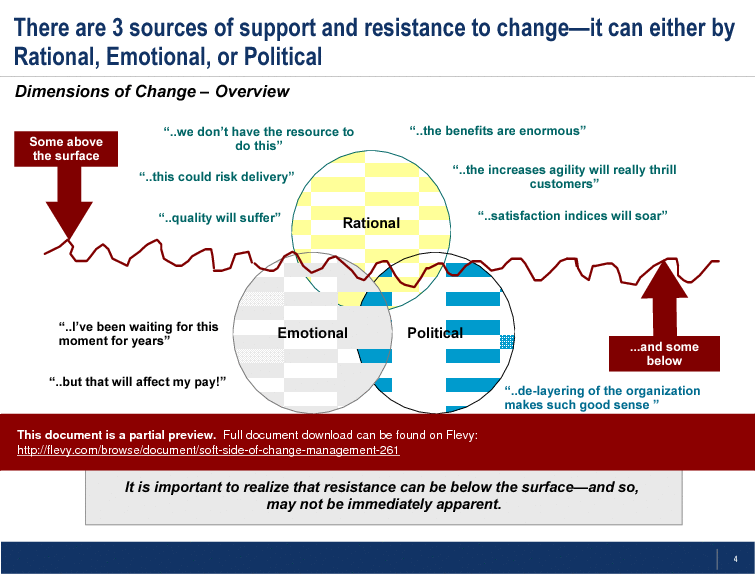
This PPT slide presents a framework for understanding support and resistance to organizational change, categorized into 3 dimensions: Rational, Emotional, and Political. The Rational dimension highlights concerns about resources, delivery risks, and quality implications, indicating stakeholders evaluate change based on logical assessments. The Emotional aspect reflects sentiments of anticipation and personal impact, showing that feelings significantly influence responses to change. The Political dimension addresses power dynamics and interpersonal relationships, suggesting these factors affect acceptance or rejection of change. The visual representation illustrates that support or resistance often arises from a combination of these dimensions, emphasizing that resistance can exist beneath the surface. Understanding these dimensions enables leaders to tailor strategies that address both visible and hidden sources of resistance, facilitating smoother transitions.
This PPT slide outlines a framework of 7 levels of commitment individuals or organizations experience over time, from "Unawareness" to "Commitment." The vertical axis represents "Level of Commitment," while the horizontal axis indicates "Time." The progression begins with "Contact," followed by "Awareness," and "Understanding," which can lead to "Confusion," a barrier to commitment. Individuals may develop a "Negative Perception," hindering progress,, but moving to "Positive Perception" allows recognition of the change's benefits. Subsequent levels include "Decision not to Support Change," "Support Withdrawn after Use," and "Compliance," reflecting varying acceptance. The final stage, "Commitment," signifies full internalization and active support of the change, emphasizing that commitment evolves through time and interactions.
Source: Best Practices in Change Management, Soft Skills PowerPoint Slides: Soft Side of Change Management PowerPoint (PPT) Presentation Slide Deck, LearnPPT Consulting
This presentation is created by former McKinsey, BCG, Deloitte, EY, and Capgemini consultants. It teaches a practical consulting framework actively used by tier-1 consulting firms.
We are a team of management consultants trained by top tier global consulting firms (including McKinsey, BCG, Deloitte, EY, Capgemini) with a collective experience of several decades. We specialize in business frameworks based on real-life consulting engagements.
We have served 100s of clients that range from Fortune 500 companies to tech startups to
... [read more] $1B+ private companies.
Utilize our consulting frameworks to apply structured thinking & analysis to address your business challenges, uncover strategic insights, and implement workable solutions. Our PowerPoint presentations follow traditional consulting slide design formats, starting with a clear slide headline. Easily customize and repurpose our slides for your own business presentations.
Beyond business frameworks & methodologies, we also offer PowerPoint templates and other business templates. Our templates are professionally designed and have been used in thousands of deliverables & work products across hundreds of clients.
The average daily rate of a McKinsey consultant is $6,625 (not including expenses). The average price of a Flevy document is $65.
Trusted by over 10,000+ Client Organizations
Since 2012, we have provided business templates to over 10,000 businesses and organizations of all sizes, from startups and small businesses to the Fortune 100, in over 130 countries.
Read Customer Testimonials
"As a small business owner, the resource material available from FlevyPro has proven to be invaluable. The ability to search for material on demand based our project events and client requirements was great for me and proved very beneficial to my clients. Importantly, being able to easily edit and tailor
the material for specific purposes helped us to make presentations, knowledge sharing, and toolkit development, which formed part of the overall program collateral. While FlevyPro contains resource material that any consultancy, project or delivery firm must have, it is an essential part of a small firm or independent consultant's toolbox.
"
– Michael Duff, Managing Director at Change Strategy (UK)
"As an Independent Management Consultant, I find Flevy to add great value as a source of best practices, templates and information on new trends. Flevy has matured and the quality and quantity of the library is excellent. Lastly the price charged is reasonable, creating a win-win value for
the customer, Flevy and the various authors. This is truly a service that benefits the consulting industry and associated clients. Thanks for providing this service.
"
– Jim Schoen, Principal at FRC Group
"FlevyPro provides business frameworks from many of the global giants in management consulting that allow you to provide best in class solutions for your clients."
– David Harris, Managing Director at Futures Strategy
"I like your product. I'm frequently designing PowerPoint presentations for my company and your product has given me so many great ideas on the use of charts, layouts, tools, and frameworks. I really think the templates are a valuable asset to the job."
– Roberto Fuentes Martinez, Senior Executive Director at Technology Transformation Advisory
"The wide selection of frameworks is very useful to me as an independent consultant. In fact, it rivals what I had at my disposal at Big 4 Consulting firms in terms of efficacy and organization."
– Julia T., Consulting Firm Owner (Former Manager at Deloitte and Capgemini)
"Flevy is now a part of my business routine. I visit Flevy at least 3 times each month.
Flevy has become my preferred learning source, because what it provides is practical, current, and useful in this era where the business world is being rewritten.
many challenges and there is the need to make the right decisions in a short time, with so much scattered information, we are fortunate to have Flevy. Flevy investigates, selects, and puts at our disposal the best of the best to help us be successful in our work.
"
– Omar Hernán Montes Parra, CEO at Quantum SFE
"I have used FlevyPro for several business applications. It is a great complement to working with expensive consultants. The quality and effectiveness of the tools are of the highest standards."
– Moritz Bernhoerster, Global Sourcing Director at Fortune 500
"FlevyPro has been a brilliant resource for me, as an independent growth consultant, to access a vast knowledge bank of presentations to support my work with clients. In terms of RoI, the value I received from the very first presentation I downloaded paid for my subscription many times over! The
quality of the decks available allows me to punch way above my weight – it's like having the resources of a Big 4 consultancy at your fingertips at a microscopic fraction of the overhead.
Download our free compilation of 50+ slides and templates on Organizational Design, Change Management, and Corporate Culture. Methodologies include ADKAR, Burke-Litwin Change Model, McKinsey 7-S, Competing Values Framework, etc.