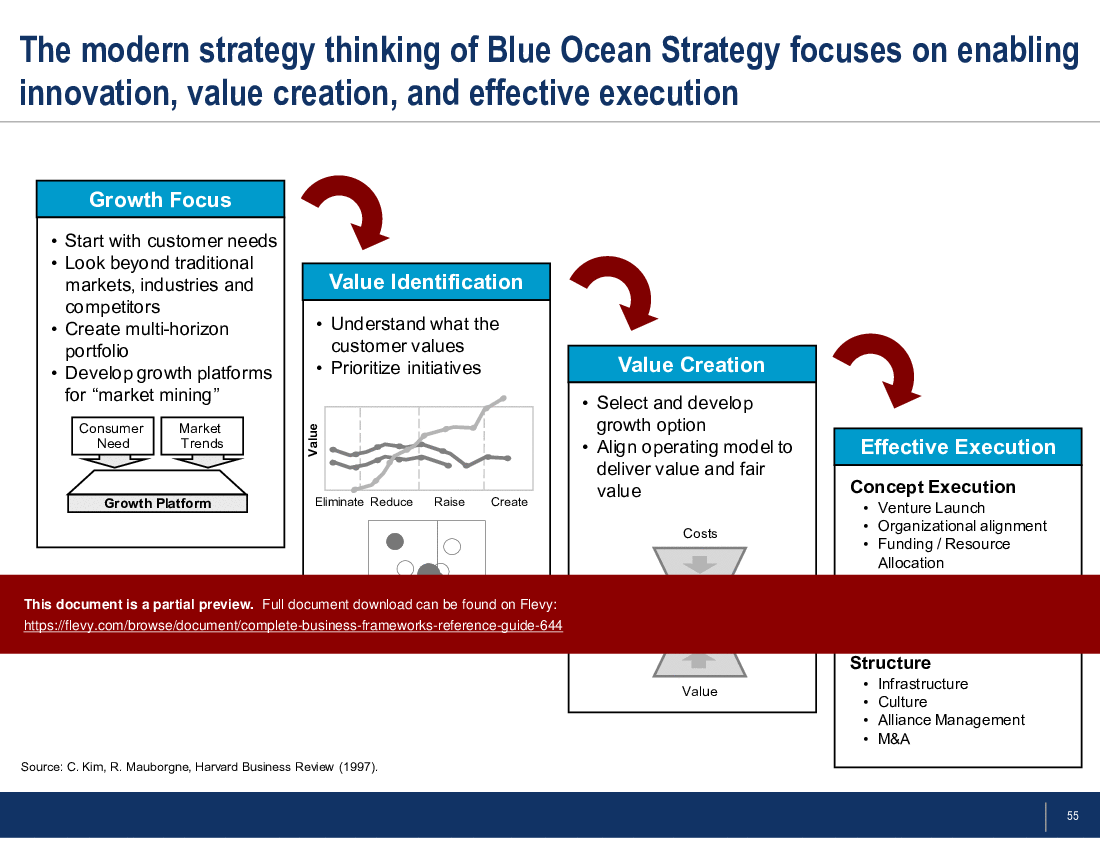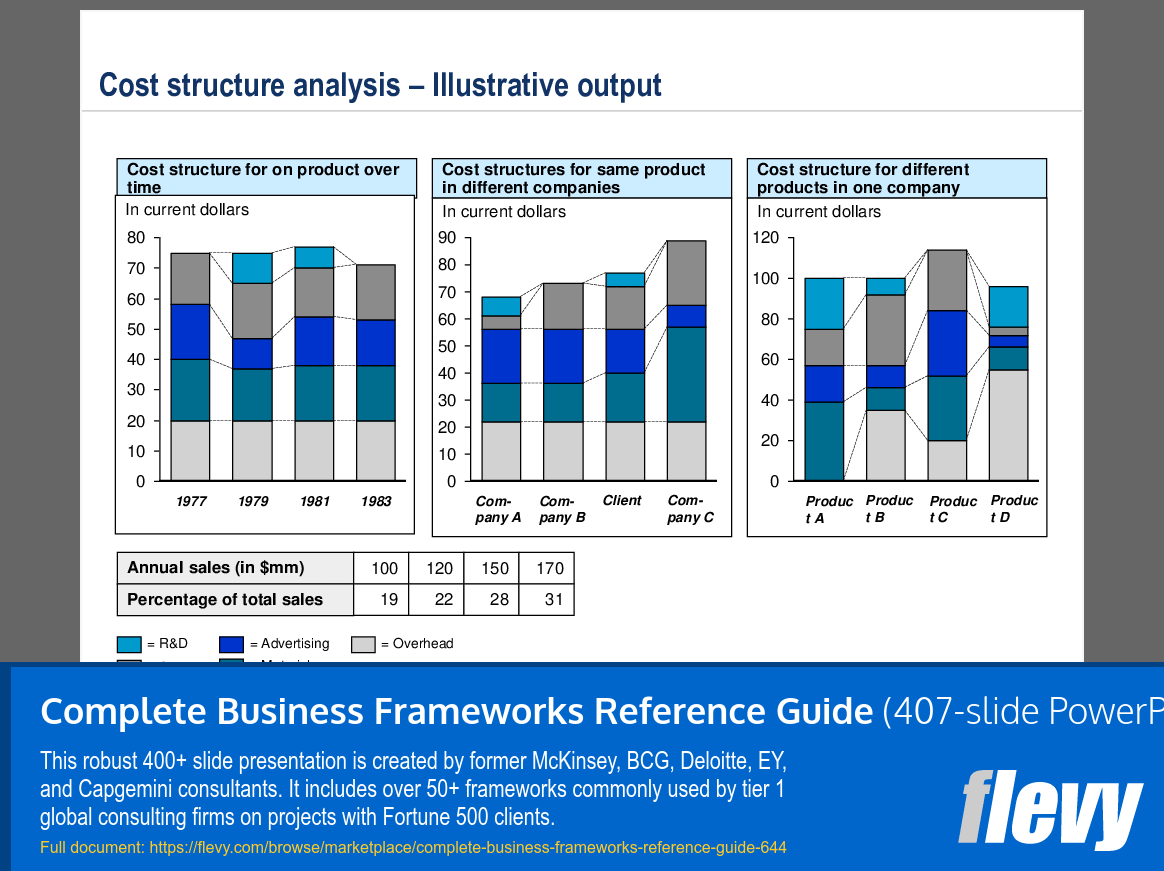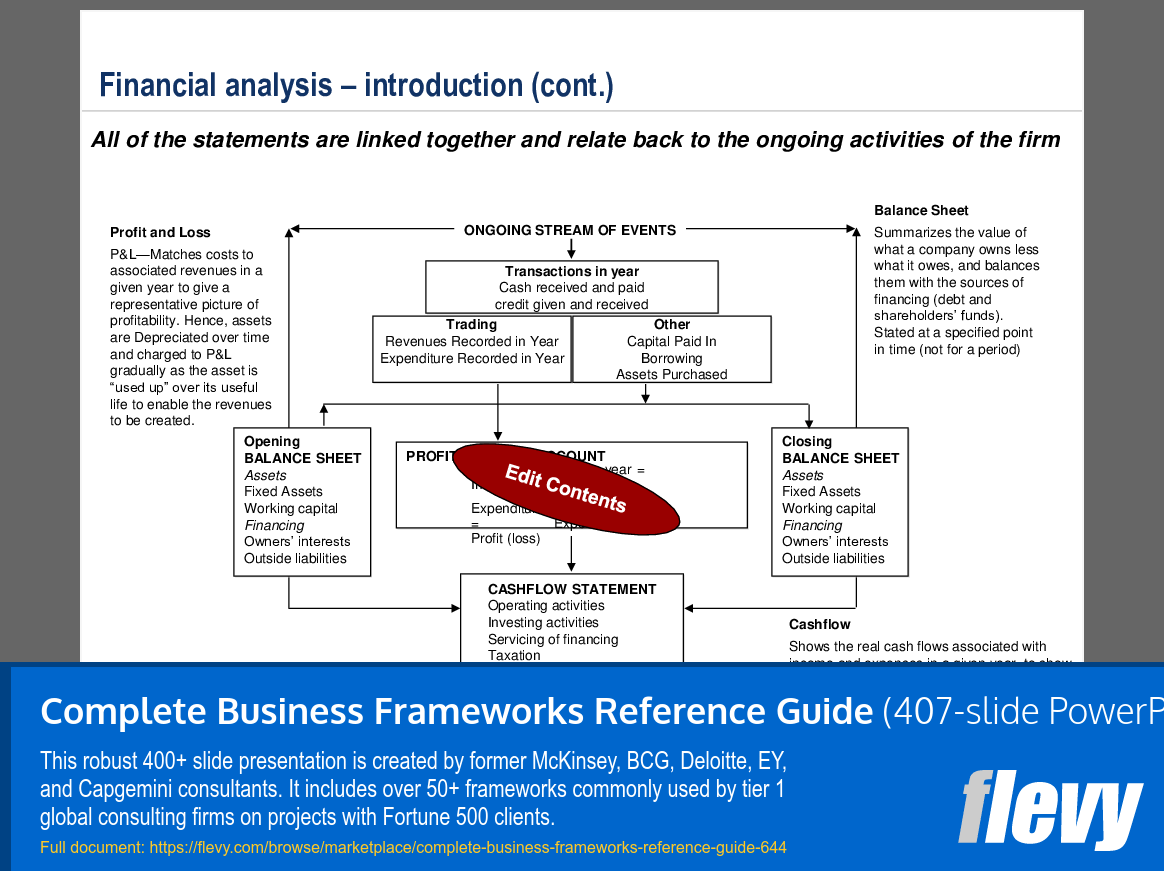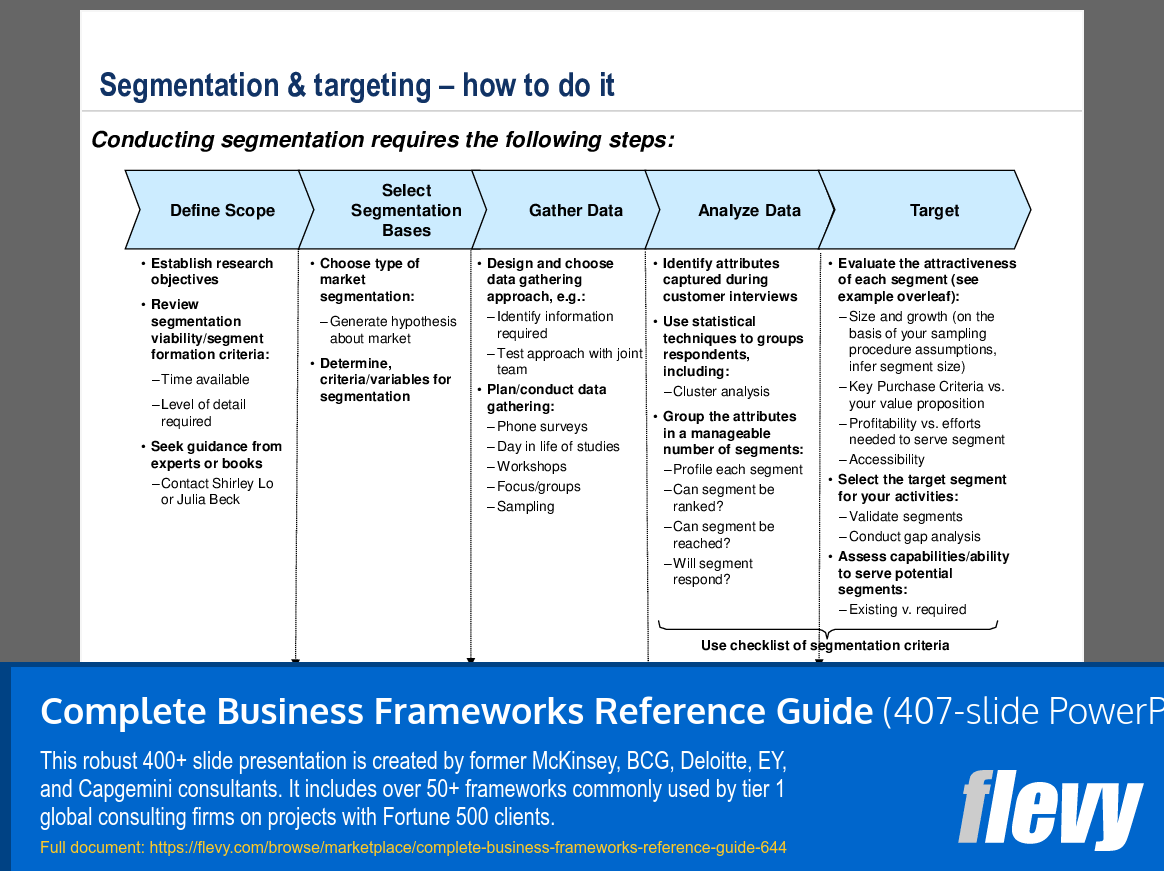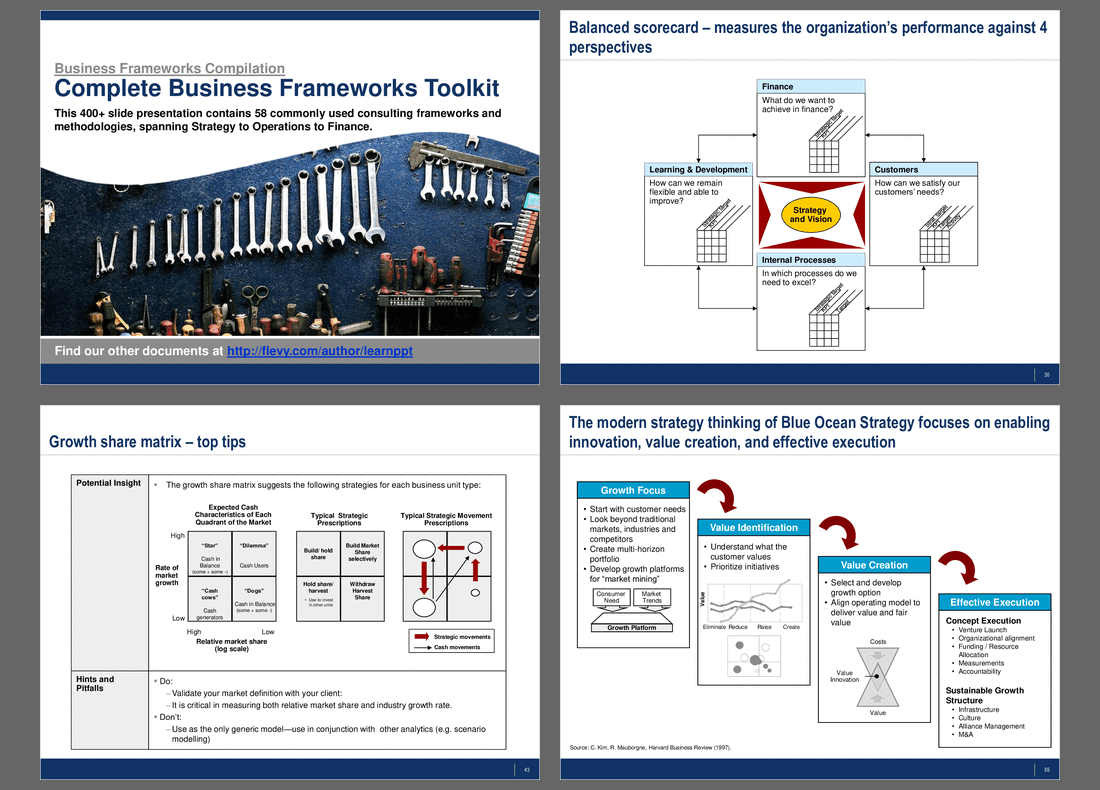

This is a very comprehensive document with over 400+ slides—covering 58 common management consulting frameworks and methodologies (listed below in alphabetical order). A detailed summary is provided for each business framework. The frameworks in this deck span across Corporate Strategy, Sales, Marketing, Operations, Organization, Change Management, and Finance.
INCLUDED FRAMEWORKS & METHODOLOGIES:
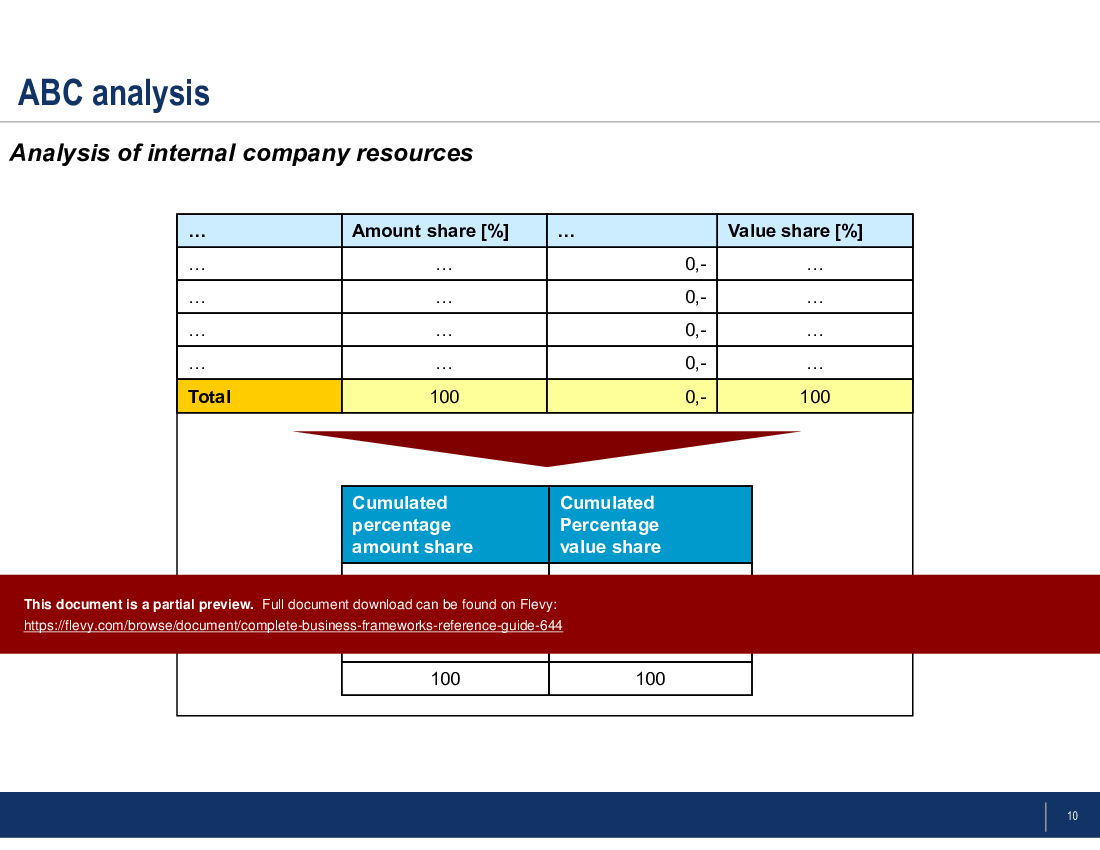
• ABC Analysis
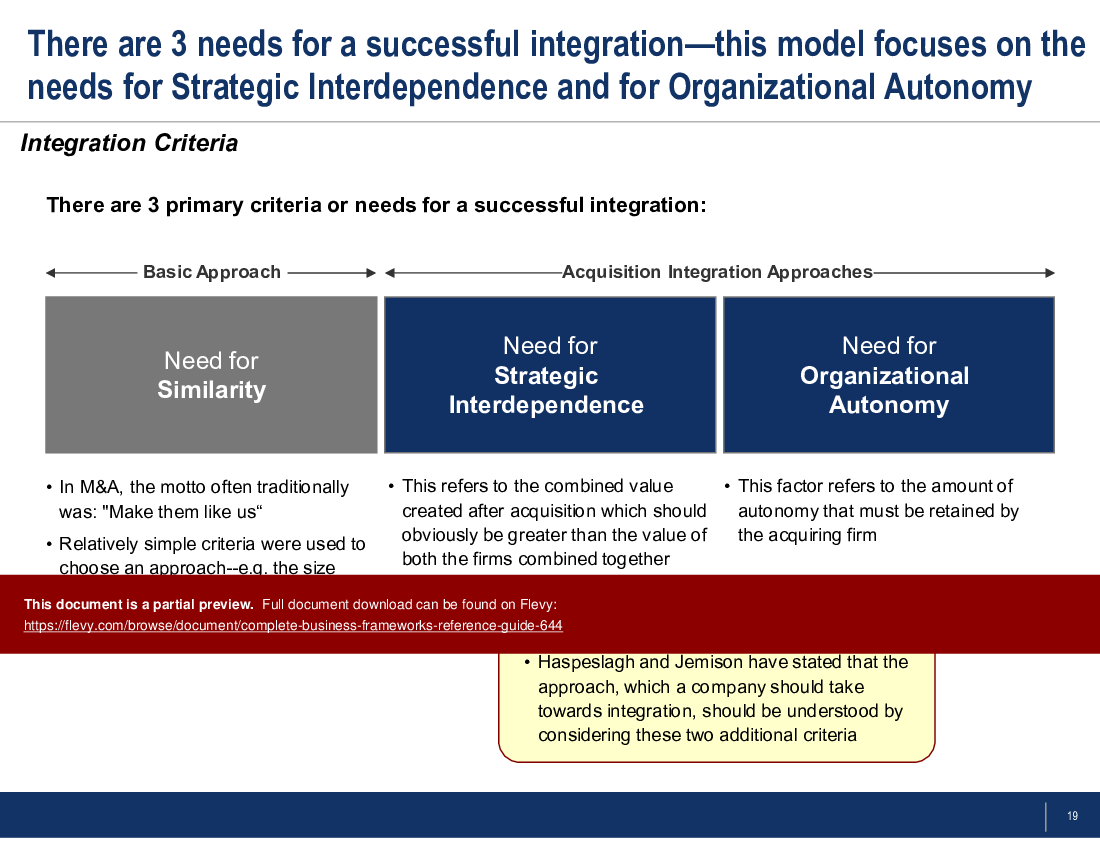
• Acquisition Integration Approaches
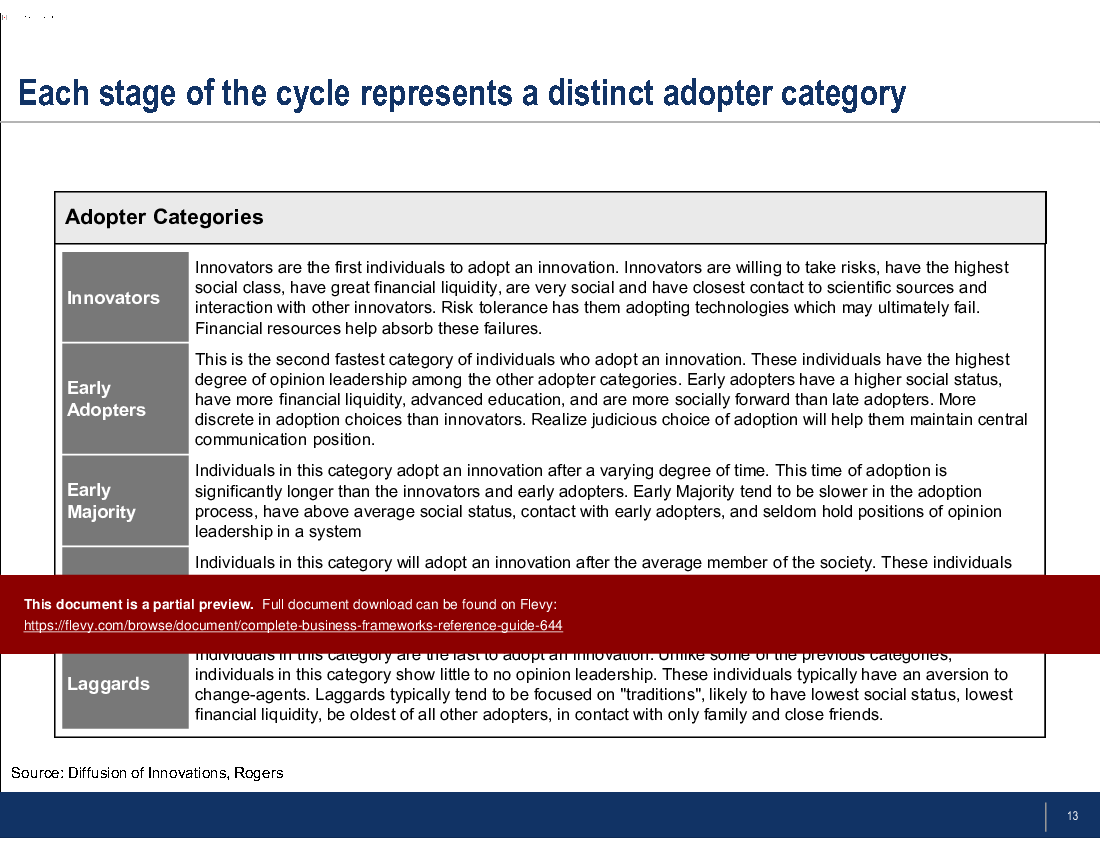
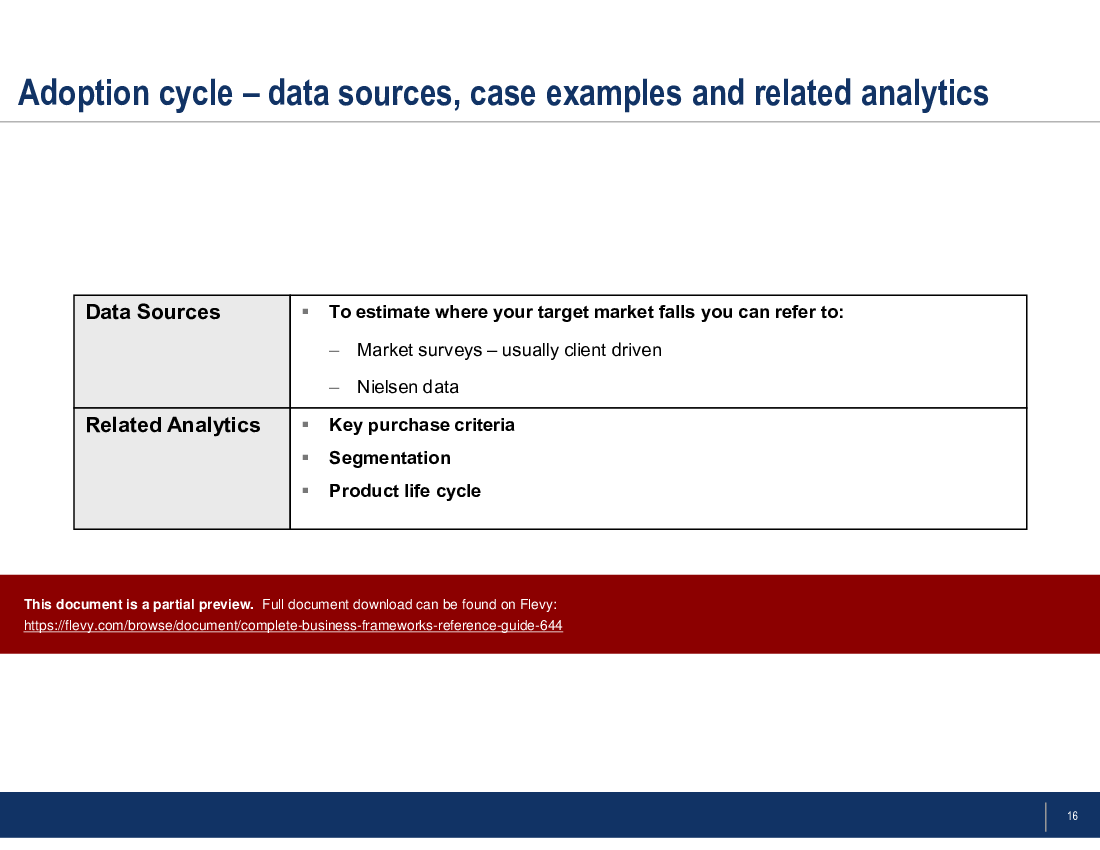
• Adoption Cycle (Consumer Adoption Curve)
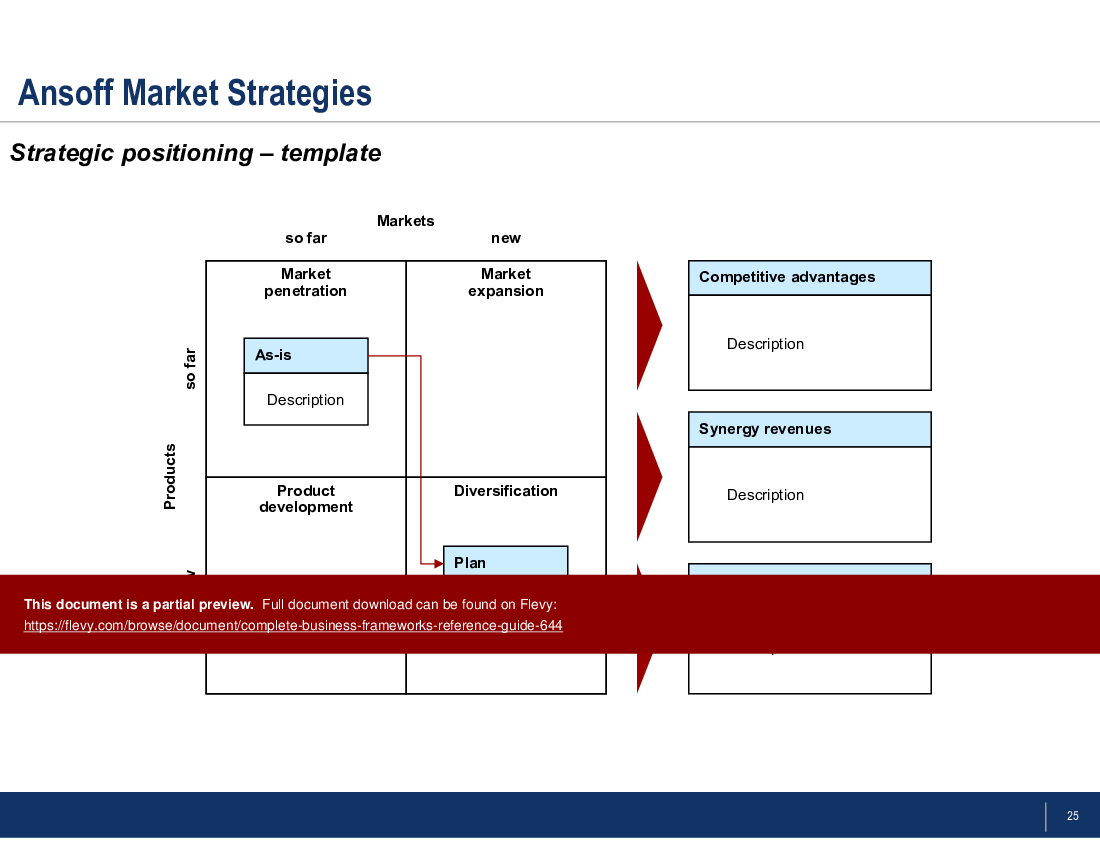
• Ansoff Market Strategies
• Balanced Scorecard
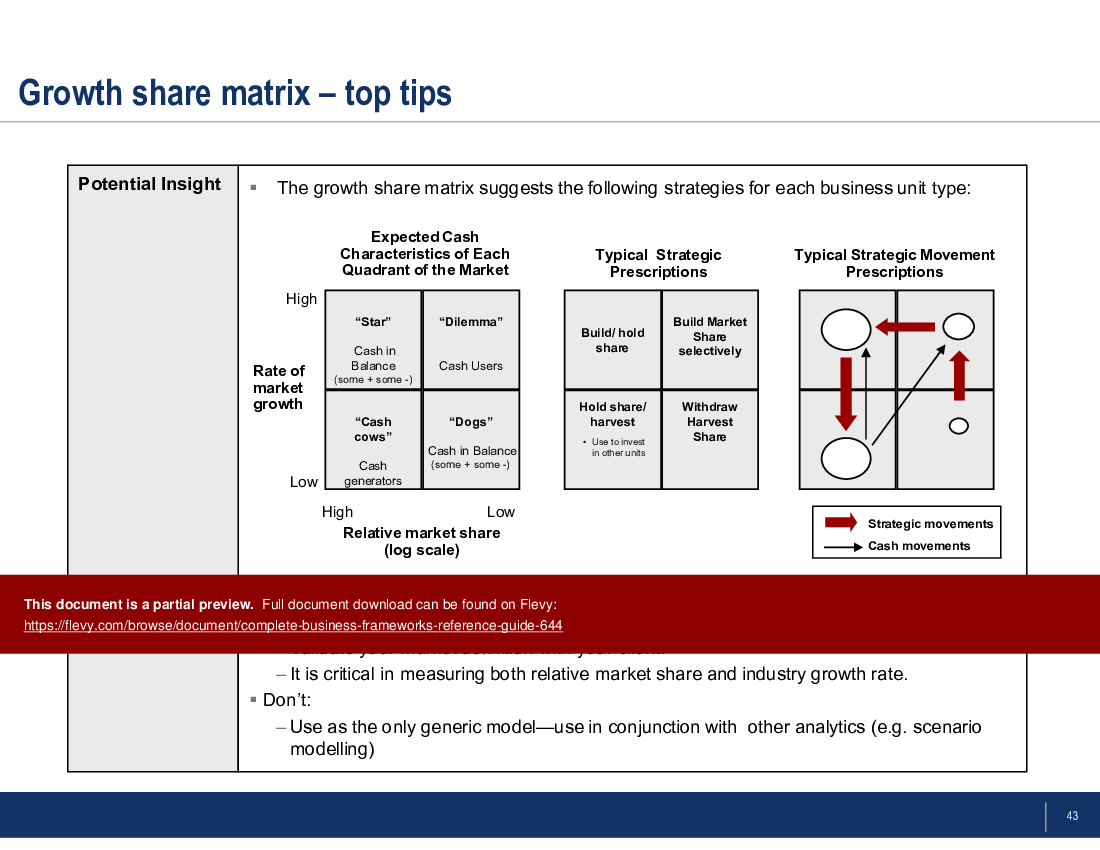
• BCG Growth-Share Matrix
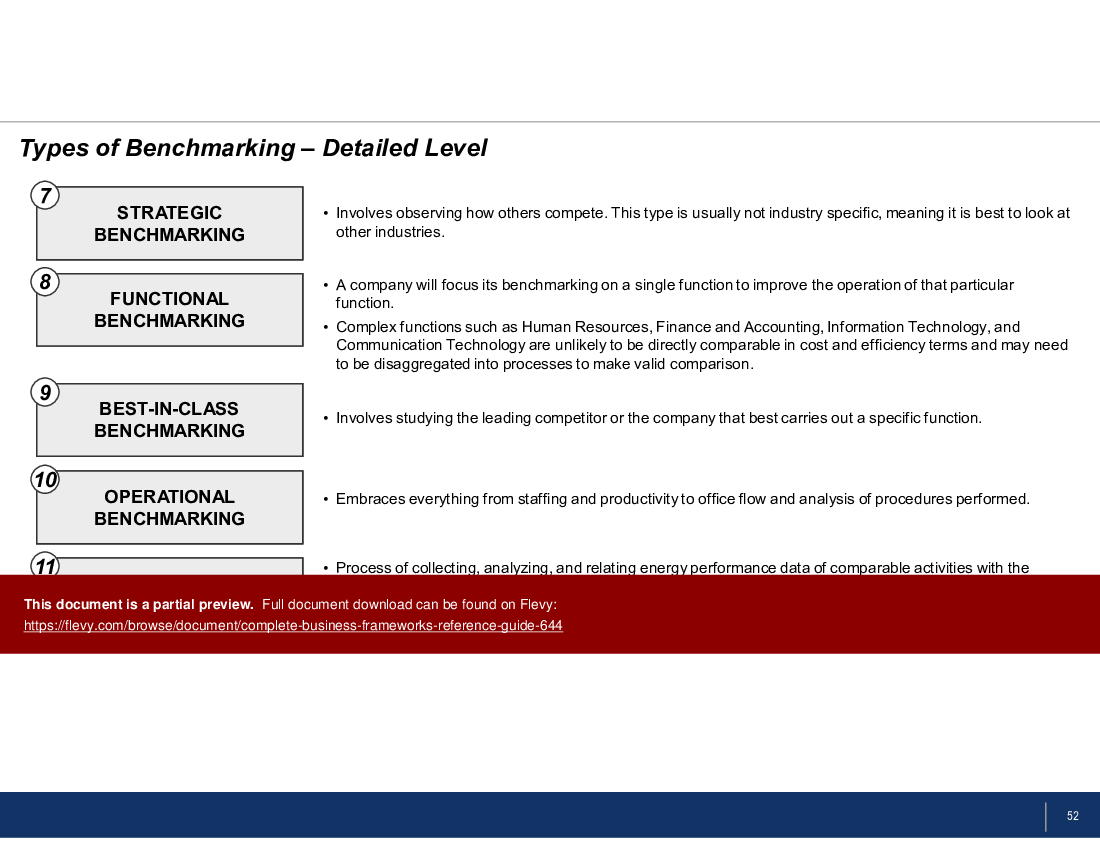
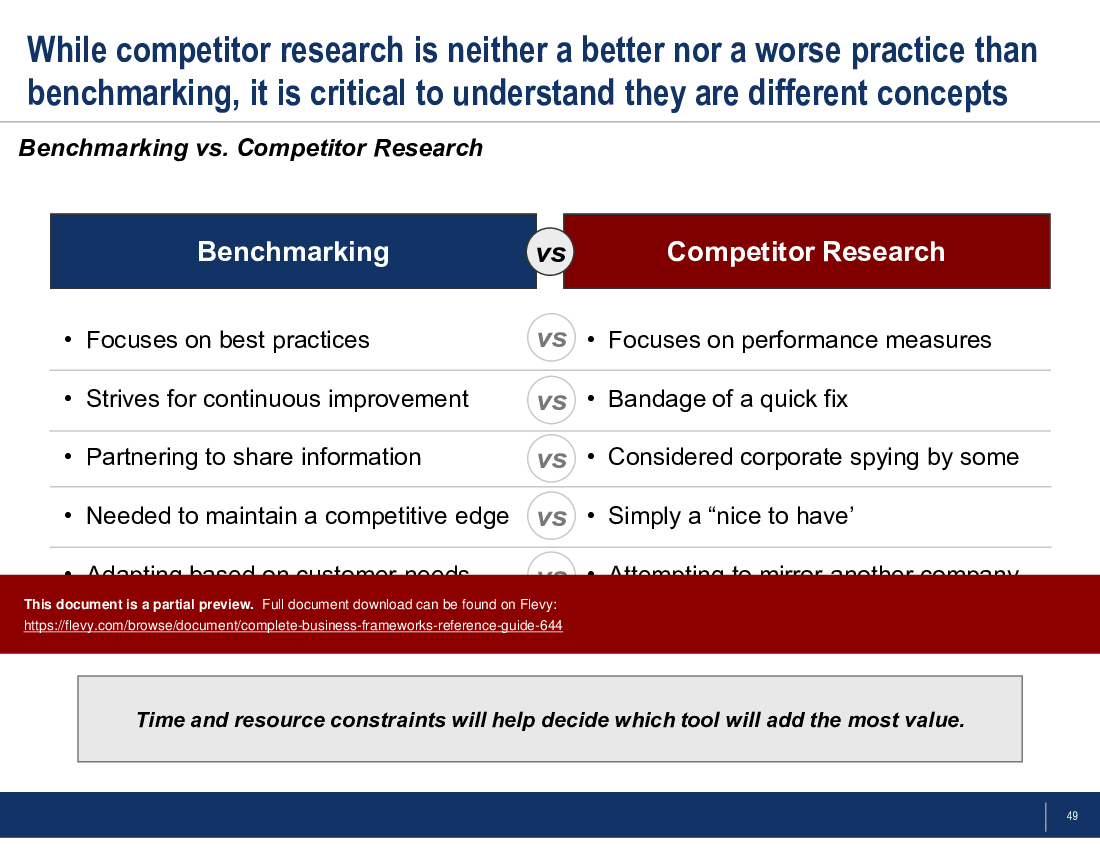
• Benchmarking
• Blue Ocean Strategy
• Break-even Analysis
• Business Unit Profitability
• Competing Values Framework
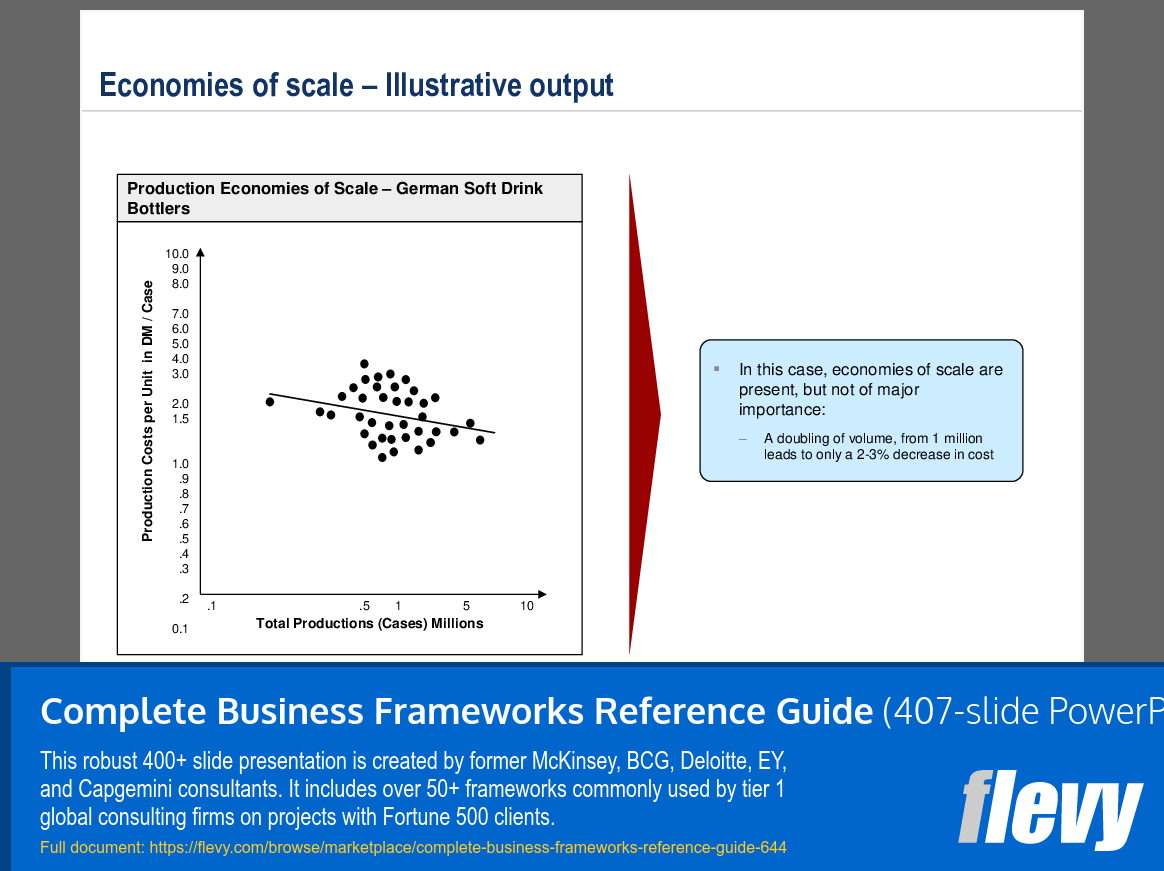
• Economies of Scale
• Environmental Analysis
• Experience Curve
• Cluster Analysis
• Company & Competitor Analysis
• Consumer Decision Journey
• Core Competence Analysis
• Cost Structure Analysis
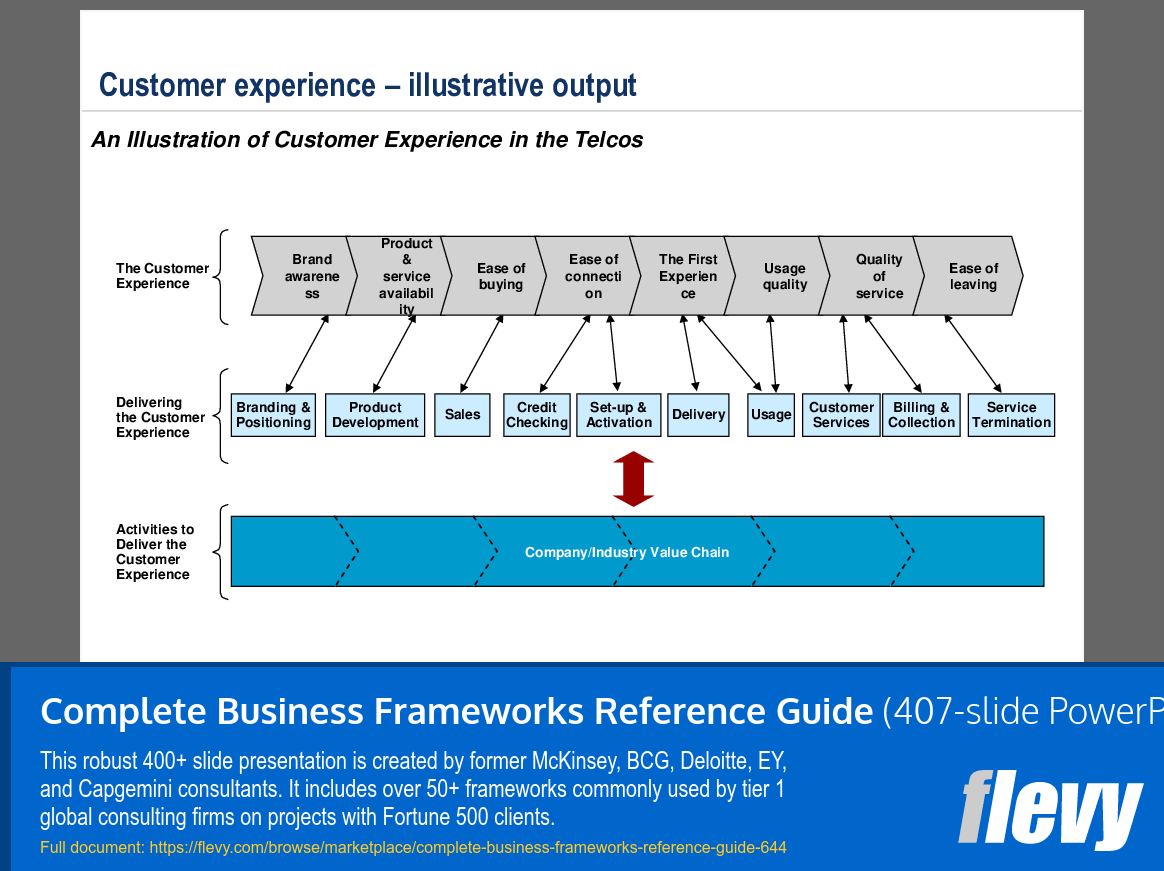
• Customer Experience
• Customer Satisfaction Analysis
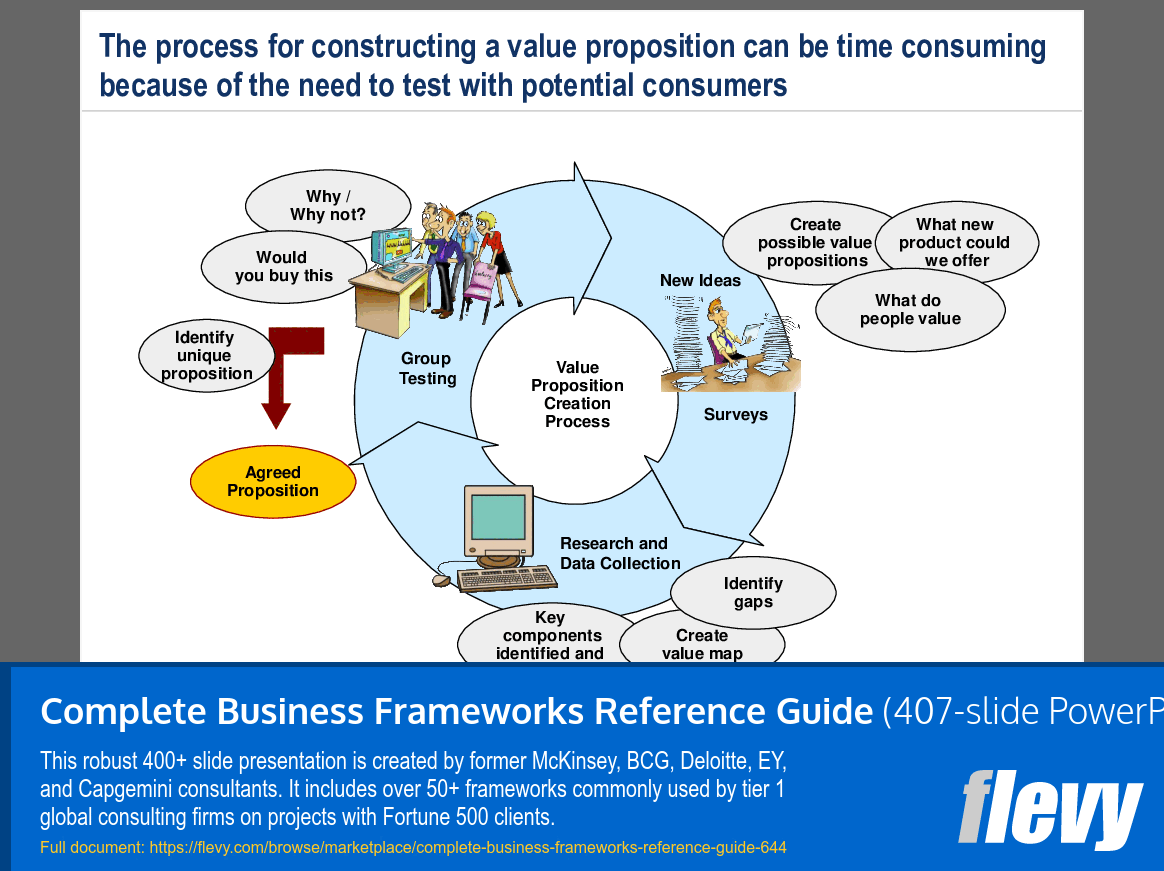
• Customer Value Proposition
• Fiaccabrino Selection Process
• Financial Ratios Analysis
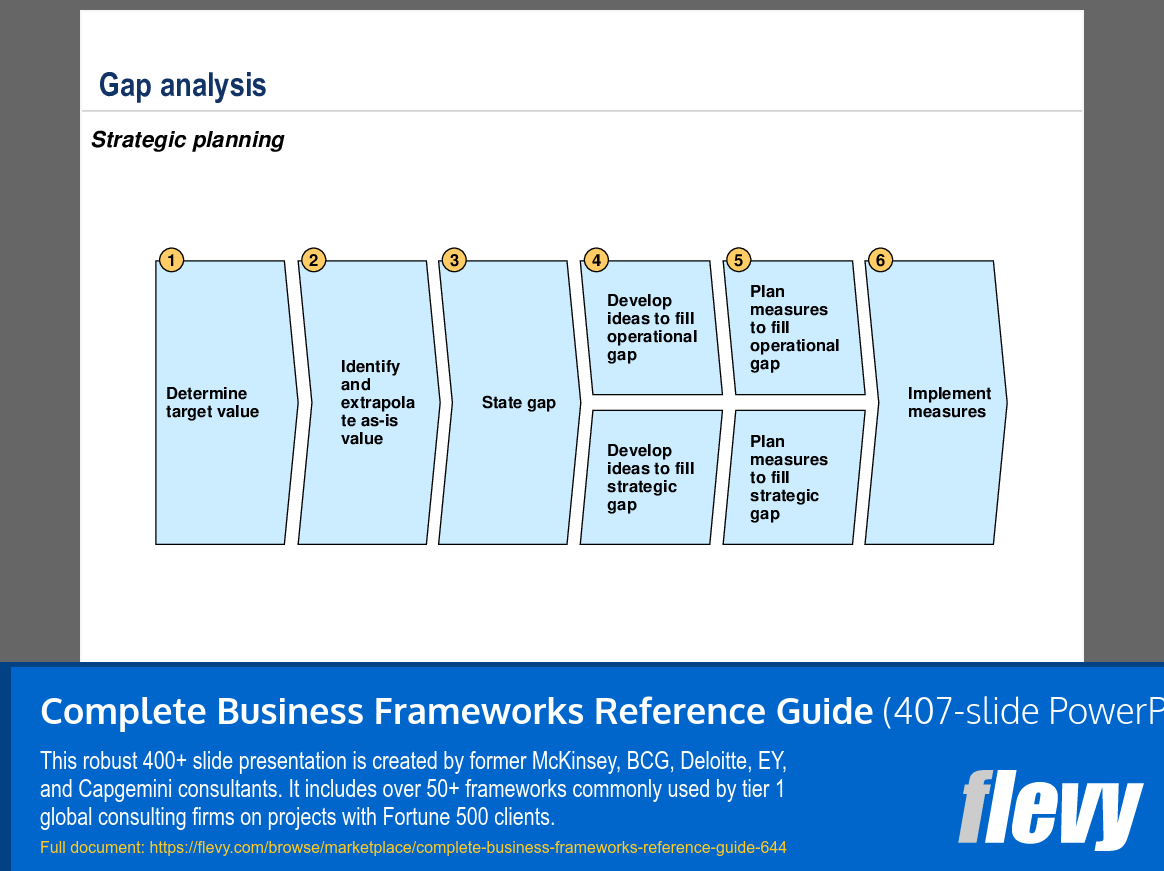
• Gap Analysis
• GE-McKinsey Matrix
• Industry Attractiveness & Business Strength Assessment
• Key Purchase Criteria
• Key Success Factors (KSF)
• Market Sizing & Share
• McKinsey 7-S
• Net Present Value
• PEST Analysis
• Porter Competition Strategies
• Porter's Five Forces
• Portfolio Strategies
• Price Elasticity
• Product Life Cycle
• Product Substitution
• Relative Cost Positioning
• Rogers' Five Factors
• Scenario Techniques
• Scoring Models
• Segment Attractiveness
• Segmentation & Targeting
• Six Thinking Hats
• Stakeholder Analysis
• Strategic Intent
• Strengths & Weaknesses Analysis
• Structure-Conduct-Performance (SCP)
• SWOT Analysis
• SWOT Strategies
• Theory of Constraints
• Treacy / Wiersema Market Positioning
• Value-based Pricing
• Value Chain Analysis
• Value Disciplines Model
• Venkat Matrix
These frameworks and templates are the same used by top tier consulting firms. With this comprehensive document in your back pocket, you can find a way to address just about any problem that can arise in your organization.
The level of detail varies by framework, depending on the nature of the management model. Examples, templates, and case studies are provided.
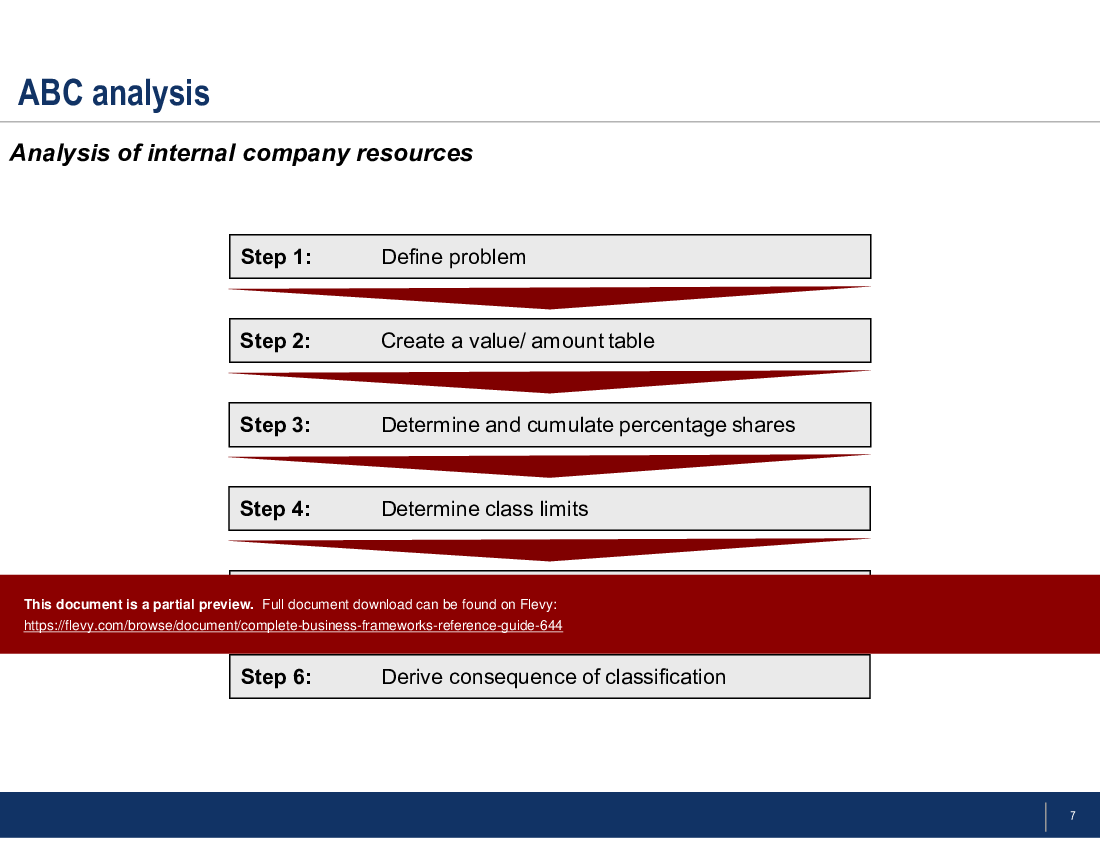
This guide includes step-by-step instructions for conducting ABC analysis and detailed breakdowns of the adoption cycle. It also offers templates for strategic positioning and balanced scorecards, ensuring practical application in real-world scenarios.
Got a question about the product? Email us at support@flevy.com or ask the author directly by using the "Ask the Author a Question" form. If you cannot view the preview above this document description, go here to view the large preview instead.
Executive Summary
The Complete Business Frameworks Toolkit is an extensive 400+ slide presentation designed for corporate executives, integration leaders, and consultants. This toolkit offers over 58 consulting frameworks and methodologies, meticulously crafted by former consultants from top-tier firms like McKinsey, BCG, Deloitte, EY, and Capgemini. It serves as a comprehensive reference guide, enabling users to enhance their strategic, operational, and financial insights. By leveraging these frameworks, users can effectively address complex business challenges, streamline decision-making processes, and drive organizational success.
Who This Is For and When to Use
• Corporate executives seeking to refine strategic initiatives and operational efficiencies.
• Integration leaders managing mergers, acquisitions, or organizational transformations.
• Consultants aiming to deliver high-quality insights and frameworks to clients.
• Business analysts focused on performance improvement and strategic planning.
• Project managers overseeing complex projects requiring structured methodologies.
Best-fit moments to use this deck:
• During strategic planning sessions to align on frameworks and methodologies.
• In workshops aimed at enhancing team collaboration and problem-solving.
• When conducting market analysis or competitive assessments.
• For training sessions on best practices in consulting and project management.
Learning Objectives
• Define and apply various consulting frameworks to real-world business scenarios.
• Build comprehensive strategies using the insights derived from the toolkit.
• Establish a structured approach to problem-solving and decision-making.
• Identify key performance indicators and metrics for measuring success.
• Analyze market dynamics and competitive landscapes using established methodologies.
• Develop actionable plans based on the frameworks provided in the toolkit.
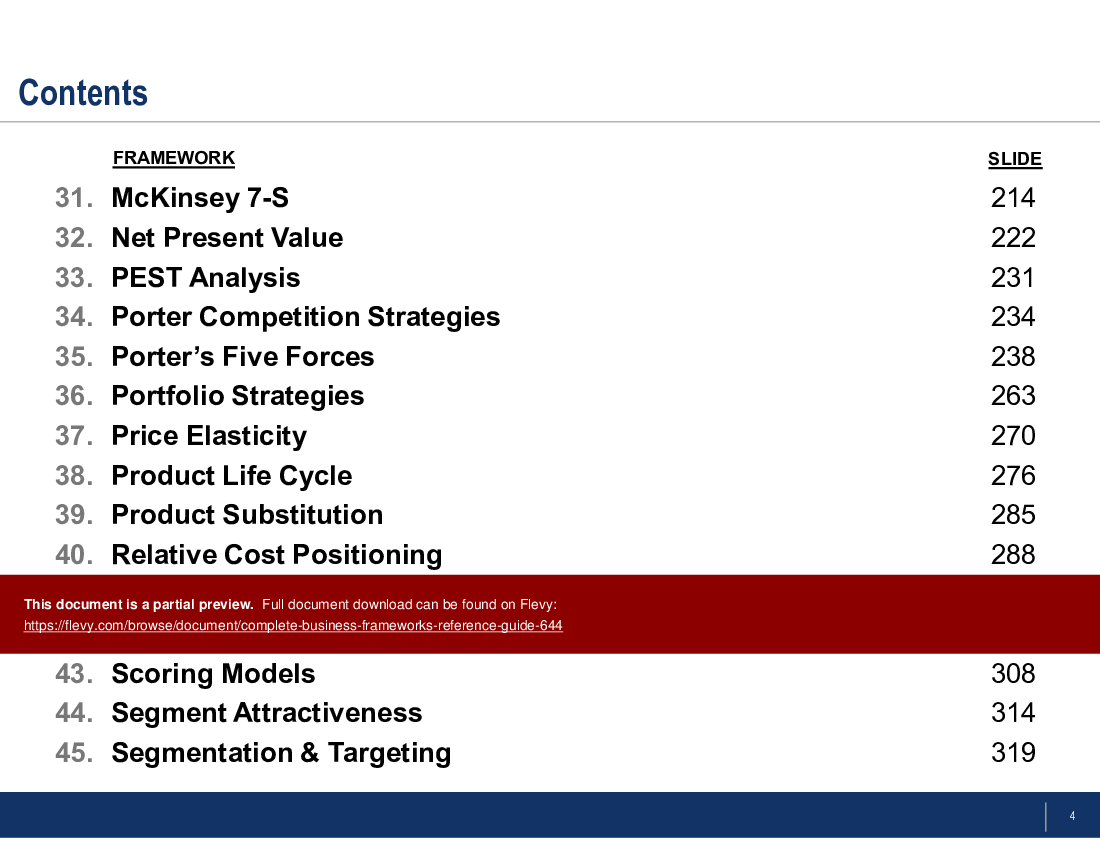
Table of Contents
• ABC Analysis (page 6)
• Acquisition Integration Approaches (page 11)
• Adoption Cycle (Consumer Adoption Curve) (page 17)
• Ansoff Market Strategies (page 22)
• Balanced Scorecard (page 27)
• BCG Growth-Share Matrix (page 39)
• Benchmarking (page 45)
• Blue Ocean Strategy (page 53)
• Break-even Analysis (page 59)
• Business Unit Profitability (page 64)
• Competing Values Framework (page 69)
• Economies of Scale (page 73)
• Environmental Analysis (page 83)
• Experience Curve (page 91)
• Cluster Analysis (page 99)
• Company & Competitor Analysis (page 104)
• Consumer Decision Journey (page 109)
• Core Competence Analysis (page 115)
• Cost Structure Analysis (page 120)
• Customer Experience (page 123)
• Customer Satisfaction Analysis (page 129)
• Customer Value Proposition (page 136)
• Fiaccabrino Selection Process (page 143)
• Financial Ratios Analysis (page 150)
• Gap Analysis (page 172)
• GE-McKinsey Matrix (page 176)
• Industry Attractiveness & Business Strength Assessment (page 176)
• Key Purchase Criteria (page 181)
• Key Success Factors (KSF) (page 192)
• Market Sizing & Share (page 200)
• McKinsey 7-S (page 214)
• Net Present Value (page 222)
• PEST Analysis (page 231)
• Porter Competition Strategies (page 234)
• Porter’s Five Forces (page 238)
• Portfolio Strategies (page 263)
• Price Elasticity (page 270)
• Product Life Cycle (page 276)
• Product Substitution (page 285)
• Relative Cost Positioning (page 288)
• Rogers' Five Factors (page 296)
• Scenario Techniques (page 302)
• Scoring Models (page 308)
• Segment Attractiveness (page 314)
• Segmentation & Targeting (page 319)
• Six Thinking Hats (page 327)
• Stakeholder Analysis (page 332)
• Strategic Intent (page 337)
• Strengths & Weaknesses Analysis (page 343)
• Structure-Conduct-Performance (SCP) (page 350)
• SWOT Analysis (page 353)
• SWOT Strategies (page 358)
• Theory of Constraints (page 362)
• Treacy / Wiersema Market Positioning (page 368)
• Value-based Pricing (page 376)
• Value Chain Analysis (page 382)
• Value Disciplines Model (page 389)
• Venkat Matrix (page 399)
Primary Topics Covered
• ABC Analysis - A method for categorizing inventory based on importance, helping organizations focus on critical items.
• Adoption Cycle - A framework illustrating the stages consumers go through when adopting new products.
• Balanced Scorecard - A strategic planning tool that translates an organization’s mission and vision into actionable objectives.
• BCG Growth-Share Matrix - A portfolio management framework that helps organizations allocate resources based on market growth and share.
• Customer Experience - An analysis of customer interactions with a business, focusing on enhancing satisfaction and loyalty.
• SWOT Analysis - A strategic planning tool that identifies strengths, weaknesses, opportunities, and threats related to competition.
Deliverables, Templates, and Tools
• Framework templates for conducting ABC analysis and gap analysis.
• Balanced Scorecard templates for tracking performance across multiple perspectives.
• Customer satisfaction survey templates to gather feedback from clients.
• Market sizing and share analysis tools to evaluate competitive positioning.
• Scoring models for assessing product or service options against key criteria.
Slide Highlights
• Visual representations of the BCG Growth-Share Matrix and GE-McKinsey Matrix.
• Detailed frameworks for the Adoption Cycle and Customer Decision Journey.
• Illustrative examples of SWOT analysis outputs and key success factors.
Potential Workshop Agenda
Framework Overview Session (60 minutes)
• Introduce key frameworks and their applications.
• Discuss how to leverage these frameworks in strategic planning.
Hands-On Application Workshop (90 minutes)
• Break into groups to apply selected frameworks to case studies.
• Present findings and discuss insights gained from the frameworks.
Framework Integration Session (60 minutes)
• Discuss how to integrate multiple frameworks for comprehensive analysis.
• Explore real-world applications and best practices.
Customization Guidance
• Tailor the frameworks to align with specific organizational goals and industry contexts.
• Adjust templates to reflect unique metrics and KPIs relevant to the organization.
• Incorporate company-specific terminology and branding into presentations.
Secondary Topics Covered
• Environmental Analysis - A framework for assessing external factors impacting business strategy.
• Cost Structure Analysis - A method for understanding the components of a company’s cost structure.
• Value Chain Analysis - A tool for identifying key activities that create value within an organization.
Topic FAQ
What strategic frameworks are commonly used to evaluate a company's competitive position?
Common frameworks for assessing competitive position include Porter's Five Forces for industry dynamics, the BCG Growth-Share Matrix and GE-McKinsey Matrix for portfolio management, SWOT for internal/external assessment, and Value Chain Analysis for activity-level advantage. These models are represented in the Complete Business Frameworks Reference Guide including Porter's Five Forces.
How can I apply the Balanced Scorecard to measure organizational performance?
The Balanced Scorecard translates mission and vision into measurable objectives across multiple perspectives and links KPIs to strategic goals. Practical application typically involves defining perspectives, selecting indicators, setting targets, and tracking results; the Complete Business Frameworks Reference Guide includes Balanced Scorecard templates to support this process and implementation.
Which tools help with market sizing and competitor analysis?
Market sizing and competitor analysis commonly use Market Sizing & Share tools, Company & Competitor Analysis templates, Porter’s Five Forces for external pressures, and Segment Attractiveness assessments. The Complete Business Frameworks Reference Guide provides market sizing and share analysis tools to evaluate competitive positioning and growth potential.
What should I look for when choosing a business frameworks toolkit for consulting work?
Evaluate breadth across strategy, operations, finance, and organization; inclusion of editable templates, examples, and case studies; clear step-by-step instructions for application; and author pedigree if relevant. The Complete Business Frameworks Reference Guide lists over 58 frameworks and includes templates and examples across these domains.
Are slide-based framework toolkits worthwhile compared with building frameworks from scratch?
Slide-based toolkits can save time by providing ready-made templates, illustrative examples, and case studies that accelerate workshop preparation and analysis. The author description notes step-by-step instructions and example applications are included, with the document comprising over 400 slides to support practical application.
I’m leading an M&A integration—what frameworks should I apply to structure the work?
For M&A integration, use Acquisition Integration Approaches to define integration pathways, Stakeholder Analysis to map impacted parties, McKinsey 7-S to align structure and systems, Gap Analysis to identify execution gaps, and Business Unit Profitability to assess portfolio performance; the guide includes Acquisition Integration Approaches.
How can I structure a training workshop to teach junior consultants core frameworks?
A workshop can start with a Framework Overview session to introduce concepts, a Hands-On Application workshop where groups apply selected frameworks to case studies, and a Framework Integration session to combine analyses. The Complete Business Frameworks Reference Guide includes a sample workshop agenda with a 60-minute overview session.
Which frameworks help understand product adoption and diffusion among customers?
Product adoption and diffusion are addressed with the Adoption Cycle (Consumer Adoption Curve), Rogers' Five Factors for innovation diffusion, and the Consumer Decision Journey to map touchpoints. The guide provides detailed breakdowns of the Adoption Cycle to support product launch planning.
Document FAQ
What is the purpose of the Complete Business Frameworks Toolkit?
The toolkit serves as a comprehensive reference for executives and consultants to enhance their strategic, operational, and financial insights through established consulting frameworks.
How can I customize the frameworks for my organization?
You can tailor the frameworks by aligning them with your specific organizational goals, adjusting templates to reflect unique metrics, and incorporating company-specific terminology.
What types of frameworks are included in the toolkit?
The toolkit includes a variety of frameworks, such as SWOT analysis, BCG Growth-Share Matrix, Balanced Scorecard, and more, covering areas from strategy to operations to finance.
How do I implement the frameworks in my organization?
Begin by selecting relevant frameworks based on your organizational needs, then conduct workshops to train teams on their application, ensuring alignment with strategic objectives.
Can the frameworks be used for training purposes?
Yes, the frameworks are designed to facilitate training sessions, enabling teams to learn best practices in consulting and strategic planning.
What are the benefits of using the Balanced Scorecard?
The Balanced Scorecard helps organizations translate their vision and strategy into actionable objectives, providing a comprehensive view of performance across multiple perspectives.
How do I assess market attractiveness using the frameworks?
Utilize the Market Sizing and Share framework to evaluate market dynamics, competitive positioning, and growth potential, incorporating both quantitative and qualitative analyses.
What is the significance of the Adoption Cycle?
The Adoption Cycle illustrates the stages consumers go through when adopting new products, helping organizations tailor marketing strategies to different consumer segments.
Glossary
• ABC Analysis - A method for categorizing inventory based on importance.
• Balanced Scorecard - A strategic planning tool that links performance measures to organizational objectives.
• BCG Growth-Share Matrix - A portfolio management framework for resource allocation.
• SWOT Analysis - A strategic planning tool identifying strengths, weaknesses, opportunities, and threats.
• Value Chain - A model illustrating the key activities that create value in an organization.
• Market Share - The percentage of an industry or market's total sales that is earned by a particular company.
• Customer Experience - The sum of all interactions a customer has with a business.
• PEST Analysis - A framework for analyzing external factors affecting an organization.
• Porter's Five Forces - A model for analyzing the competitive forces within an industry.
• Economies of Scale - The cost advantage that arises with increased output of a product.
• Customer Satisfaction - A measure of how products and services meet or exceed customer expectations.
• Key Success Factors - Elements that are vital for a strategy to be successful.
• Value-Based Pricing - A pricing strategy based on the perceived value of a product to the customer.
• Gap Analysis - A method for assessing the difference between current performance and desired performance.

• Experience Curve - A concept that suggests that the more experience a company has in producing a product, the lower its costs will be.
• Theory of Constraints - A methodology for identifying and managing constraints that hinder an organization's performance.
• Rogers’ Five Factors - A framework for understanding the diffusion of innovations.
• Venkat Matrix - A tool for identifying differentiating versus parity capabilities in a business.
• Treacy/Wiersema Model - A framework suggesting that companies should excel in one of 3 value disciplines: operational excellence, product leadership, or customer intimacy.
Source: Best Practices in Strategy Frameworks, Consulting Training, Gap Analysis, Bain PowerPoint PowerPoint Slides: Complete Business Frameworks Reference Guide PowerPoint (PPTX) Presentation Slide Deck, LearnPPT Consulting
|
Download our FREE Strategy & Transformation Framework Templates
Download our free compilation of 50+ Strategy & Transformation slides and templates. Frameworks include McKinsey 7-S, Balanced Scorecard, Disruptive Innovation, BCG Curve, and many more. |