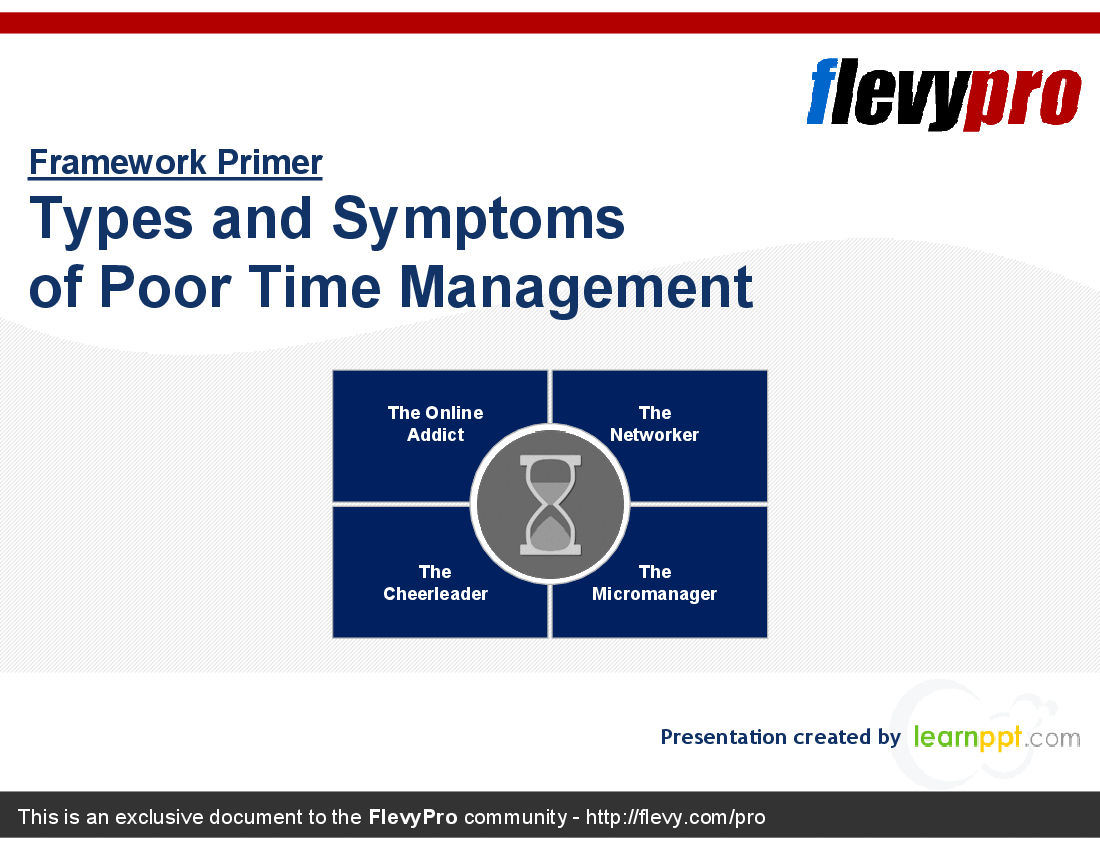

This framework is developed by a team of former McKinsey and Big 4 consultants. The presentation follows the headline-body-bumper slide format used by global consulting firms.
Explore this PPT by ex-McKinsey and Big 4 consultants on time management challenges. Identify symptoms and archetypes to enhance executive productivity. Types and Symptoms of Poor Time Management is a 26-slide PPT PowerPoint presentation template (PPT) available for immediate download upon purchase.
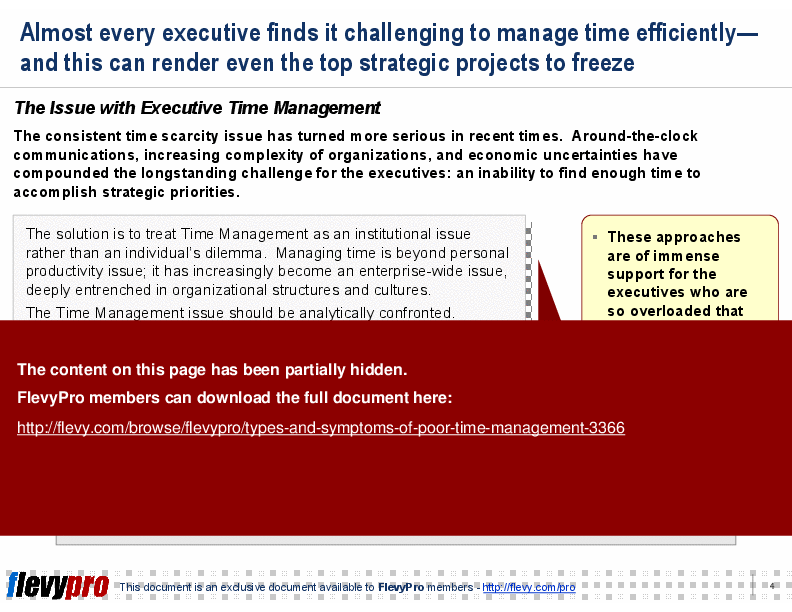
The consistent time scarcity issue has turned more serious of late. Executives are often heard complaining about the shortage of time. Around-the-clock communications, increasing complexity of organizations, and economic uncertainties have compounded the longstanding challenge for the executives to find enough time to accomplish strategic priorities.
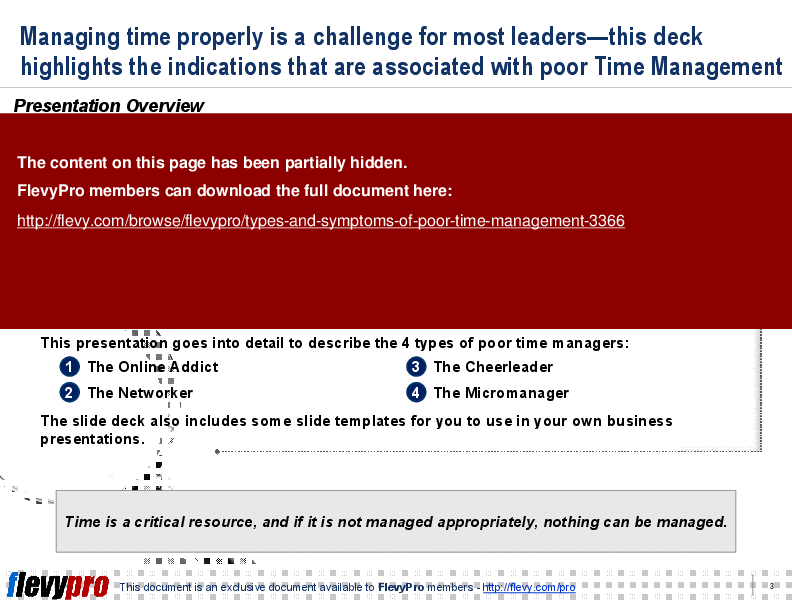
Time is a critical resource, and if it is not managed appropriately, nothing can be managed.
This presentation identifies key symptoms and offers pragmatic solutions to time related issues for the executive leadership. The 4 symptoms of poor Time Management are:
1. Initial Overload
2. Lack of Guidance
3. Ineffective Trade-offs
4. Respecting Time
This presentation goes into detail to describe the 4 types of poor time managers:
1. The Online Addict
2. The Networker
3. The Cheerleader
4. The Micromanager
The slide deck also includes some slide templates for you to use in your own business presentations.
This PPT delves into the intricate dynamics of time management challenges faced by executives. It highlights the pervasive issue of time scarcity, exacerbated by constant communication demands and organizational complexities. The presentation meticulously categorizes poor time managers into four distinct types, each with unique characteristics and pain points. The Online Addict, for instance, is preoccupied with digital communication, neglecting face-to-face interactions, while The Networker spends excessive time with external stakeholders, often at the expense of strategic thinking.
The Cheerleader, another type, focuses heavily on internal team morale, but lacks external customer engagement. Conversely, The Micromanager is deeply involved in operational details, often missing the broader strategic picture. These archetypes are not just theoretical; the document provides practical examples and data points to illustrate their real-world implications. For instance, Online Addicts spend 38% of their time on asynchronous messaging, significantly impacting their direct report interactions.
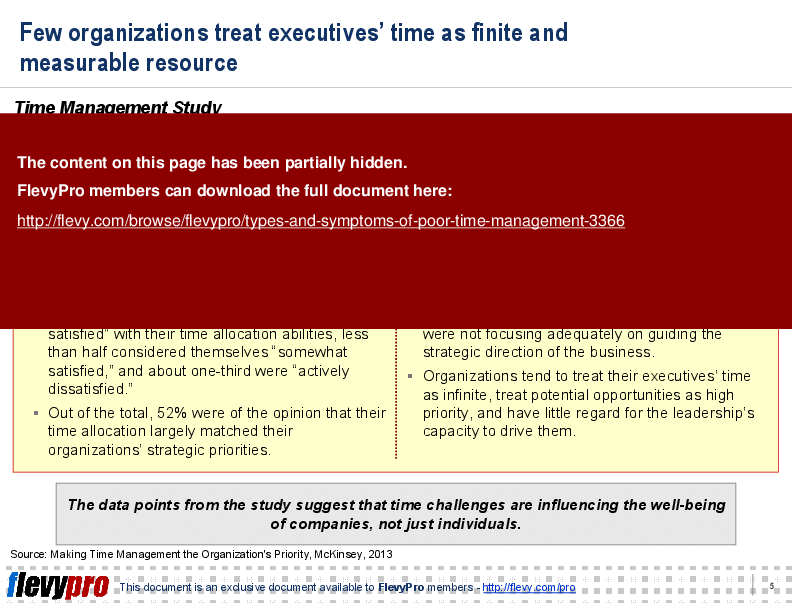
This presentation is not merely descriptive, but also prescriptive. It offers actionable insights and templates that executives can use to diagnose and address their time management issues. The document underscores the importance of treating time as a finite and measurable resource, urging organizations to align time allocation with strategic priorities. By identifying and addressing these symptoms, executives can reclaim control over their schedules, enhance productivity, and drive organizational success.
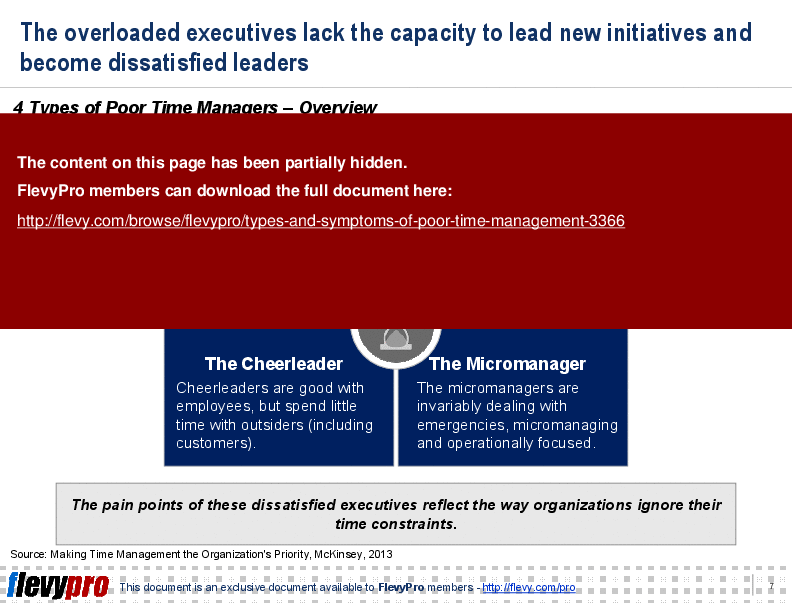
This PPT slide template identifies 4 executive archetypes struggling with time management: The Online Addict, The Networker, The Cheerleader, and The Micromanager. The Online Addict is tied to the office, but fails to manage and motivate their team, creating a disconnect that affects morale and productivity. The Networker spends significant time outside the office, leading to feelings of neglect among team members. The Cheerleader engages positively with employees, but neglects external relationships, limiting organizational growth. The Micromanager focuses on operational issues, stifling strategic thinking and innovation, which can lead to team burnout. These archetypes highlight broader organizational time management challenges affecting executive effectiveness.
This PPT slide template analyzes "Online Addicts," a group of poor time managers who rely on asynchronous communication methods like email and phone calls instead of face-to-face interactions. These managers spend 38% of their time on asynchronous messaging, which detracts from effective management practices. They are office-centered, investing more time in digital communication, but less in motivating direct reports, leading to a -21% time deficit in team interactions. This trend poses a risk for organizations, as excessive reliance on digital communication can diminish team morale and productivity. Balancing asynchronous methods with direct engagement may enhance overall effectiveness and employee satisfaction.
This PPT slide template outlines 4 key symptoms of poor time management in executives, categorized into distinct quadrants. "Initial Overload" occurs when executives are overwhelmed by special projects and regular responsibilities due to insufficient communication time, leading to inefficiencies. "Lack of Guidance" highlights the absence of structured time management protocols, resulting in unclear task prioritization and a casual approach to time management that hampers productivity. "Ineffective Trade-offs" addresses the introduction of new projects without adequate resource allocation, forcing poor trade-offs that diminish leadership effectiveness. Lastly, "Respecting Time" underscores the need for balancing internal meetings and client interactions for effective time management and executive performance. Addressing these symptoms can enhance organizational productivity and executive effectiveness.
New managers often lack structured time management guidelines, leading to significant time wasted on low-value tasks like emails and unnecessary meetings. Two archetypes of poor time managers are identified: Networkers and Cheerleaders. Networkers prioritize external stakeholder interactions, potentially neglecting internal strategic discussions. Cheerleaders spend over 20% of their time motivating employees, which detracts from essential strategic planning. Both archetypes misalign their focus, resulting in reduced time for critical thinking and strategizing, vital for achieving organizational objectives. Understanding these archetypes is essential for organizations aiming to improve productivity and align managerial efforts with strategic goals.
This PPT slide template identifies 4 executive archetypes struggling with time management: The Online Addict, The Networker, The Cheerleader, and The Micromanager. The Online Addict is tied to the office, but fails to manage and motivate their team, creating a disconnect that affects morale and productivity. The Networker spends significant time outside the office, leading to feelings of neglect among team members. The Cheerleader engages positively with employees, but neglects external relationships, limiting organizational growth. The Micromanager focuses on operational issues, stifling strategic thinking and innovation, which can lead to team burnout. These archetypes highlight broader organizational time management challenges affecting executive effectiveness.
This PPT slide template analyzes "Online Addicts," a group of poor time managers who rely on asynchronous communication methods like email and phone calls instead of face-to-face interactions. These managers spend 38% of their time on asynchronous messaging, which detracts from effective management practices. They are office-centered, investing more time in digital communication, but less in motivating direct reports, leading to a -21% time deficit in team interactions. This trend poses a risk for organizations, as excessive reliance on digital communication can diminish team morale and productivity. Balancing asynchronous methods with direct engagement may enhance overall effectiveness and employee satisfaction.
This PPT slide template outlines 4 key symptoms of poor time management in executives, categorized into distinct quadrants. "Initial Overload" occurs when executives are overwhelmed by special projects and regular responsibilities due to insufficient communication time, leading to inefficiencies. "Lack of Guidance" highlights the absence of structured time management protocols, resulting in unclear task prioritization and a casual approach to time management that hampers productivity. "Ineffective Trade-offs" addresses the introduction of new projects without adequate resource allocation, forcing poor trade-offs that diminish leadership effectiveness. Lastly, "Respecting Time" underscores the need for balancing internal meetings and client interactions for effective time management and executive performance. Addressing these symptoms can enhance organizational productivity and executive effectiveness.
New managers often lack structured time management guidelines, leading to significant time wasted on low-value tasks like emails and unnecessary meetings. Two archetypes of poor time managers are identified: Networkers and Cheerleaders. Networkers prioritize external stakeholder interactions, potentially neglecting internal strategic discussions. Cheerleaders spend over 20% of their time motivating employees, which detracts from essential strategic planning. Both archetypes misalign their focus, resulting in reduced time for critical thinking and strategizing, vital for achieving organizational objectives. Understanding these archetypes is essential for organizations aiming to improve productivity and align managerial efforts with strategic goals.
Source: Best Practices in Leadership, Time Management PowerPoint Slides: Types and Symptoms of Poor Time Management PowerPoint (PPT) Presentation Slide Deck, LearnPPT Consulting
This framework is developed by a team of former McKinsey and Big 4 consultants. The presentation follows the headline-body-bumper slide format used by global consulting firms.
For $10.00 more, you can download this document plus 2 more FlevyPro documents. That's just $13 each.
ABOUT FLEVYPRO
This document is part of the FlevyPro Library, a curated knowledge base of documents for our FlevyPro subscribers.

FlevyPro is a subscription service for on-demand business frameworks and analysis tools. FlevyPro subscribers receive access to an exclusive library of curated business documents—business framework primers, presentation templates, Lean Six Sigma tools, and more—among other exclusive benefits.
The average daily rate of a McKinsey consultant is $6,625 (not including expenses). The average price of a Flevy document is $65.
Trusted by over 10,000+ Client Organizations
Since 2012, we have provided business templates to over 10,000 businesses and organizations of all sizes, from startups and small businesses to the Fortune 100, in over 130 countries.
"The wide selection of frameworks is very useful to me as an independent consultant. In fact, it rivals what I had at my disposal at Big 4 Consulting firms in terms of efficacy and organization."
– Julia T., Consulting Firm Owner (Former Manager at Deloitte and Capgemini)
"Flevy.com has proven to be an invaluable resource library to our Independent Management Consultancy, supporting and enabling us to better serve our enterprise clients.
The value derived from our [FlevyPro] subscription in terms of the business it has helped to gain far exceeds the investment made, making a subscription a no-brainer for any growing consultancy – or in-house strategy team."
– Dean Carlton, Chief Transformation Officer, Global Village Transformations Pty Ltd.
"As a niche strategic consulting firm, Flevy and FlevyPro frameworks and documents are an on-going reference to help us structure our findings and recommendations to our clients as well as improve their clarity, strength, and visual power. For us, it is an invaluable resource to increase our impact and value."
– David Coloma, Consulting Area Manager at Cynertia Consulting
"FlevyPro provides business frameworks from many of the global giants in management consulting that allow you to provide best in class solutions for your clients."
– David Harris, Managing Director at Futures Strategy
"As an Independent Management Consultant, I find Flevy to add great value as a source of best practices, templates and information on new trends. Flevy has matured and the quality and quantity of the library is excellent. Lastly the price charged is reasonable, creating a win-win value for
the customer, Flevy and the various authors. This is truly a service that benefits the consulting industry and associated clients. Thanks for providing this service.
"
– Jim Schoen, Principal at FRC Group
"[Flevy] produces some great work that has been/continues to be of immense help not only to myself, but as I seek to provide professional services to my clients, it gives me a large "tool box" of resources that are critical to provide them with the quality of service and outcomes they are expecting."
– Royston Knowles, Executive with 50+ Years of Board Level Experience
"As a consulting firm, we had been creating subject matter training materials for our people and found the excellent materials on Flevy, which saved us 100's of hours of re-creating what already exists on the Flevy materials we purchased."
– Michael Evans, Managing Director at Newport LLC
"FlevyPro has been a brilliant resource for me, as an independent growth consultant, to access a vast knowledge bank of presentations to support my work with clients. In terms of RoI, the value I received from the very first presentation I downloaded paid for my subscription many times over! The
quality of the decks available allows me to punch way above my weight – it's like having the resources of a Big 4 consultancy at your fingertips at a microscopic fraction of the overhead.
Download our free compilation of 50+ slides and templates on Organizational Design, Change Management, and Corporate Culture. Methodologies include ADKAR, Burke-Litwin Change Model, McKinsey 7-S, Competing Values Framework, etc.