
In the ever-evolving landscape of business, the utilization of strategic approaches and frameworks becomes paramount for organizations seeking to not only survive but thrive. This comprehensive 62-slide presentation serves as an illuminating guide, shedding light on essential business strategies and frameworks that are integral to contemporary success.
Unlocking the Strategies:
Discover a Comprehensive Overview of 62 Essential Business Strategies and Frameworks:
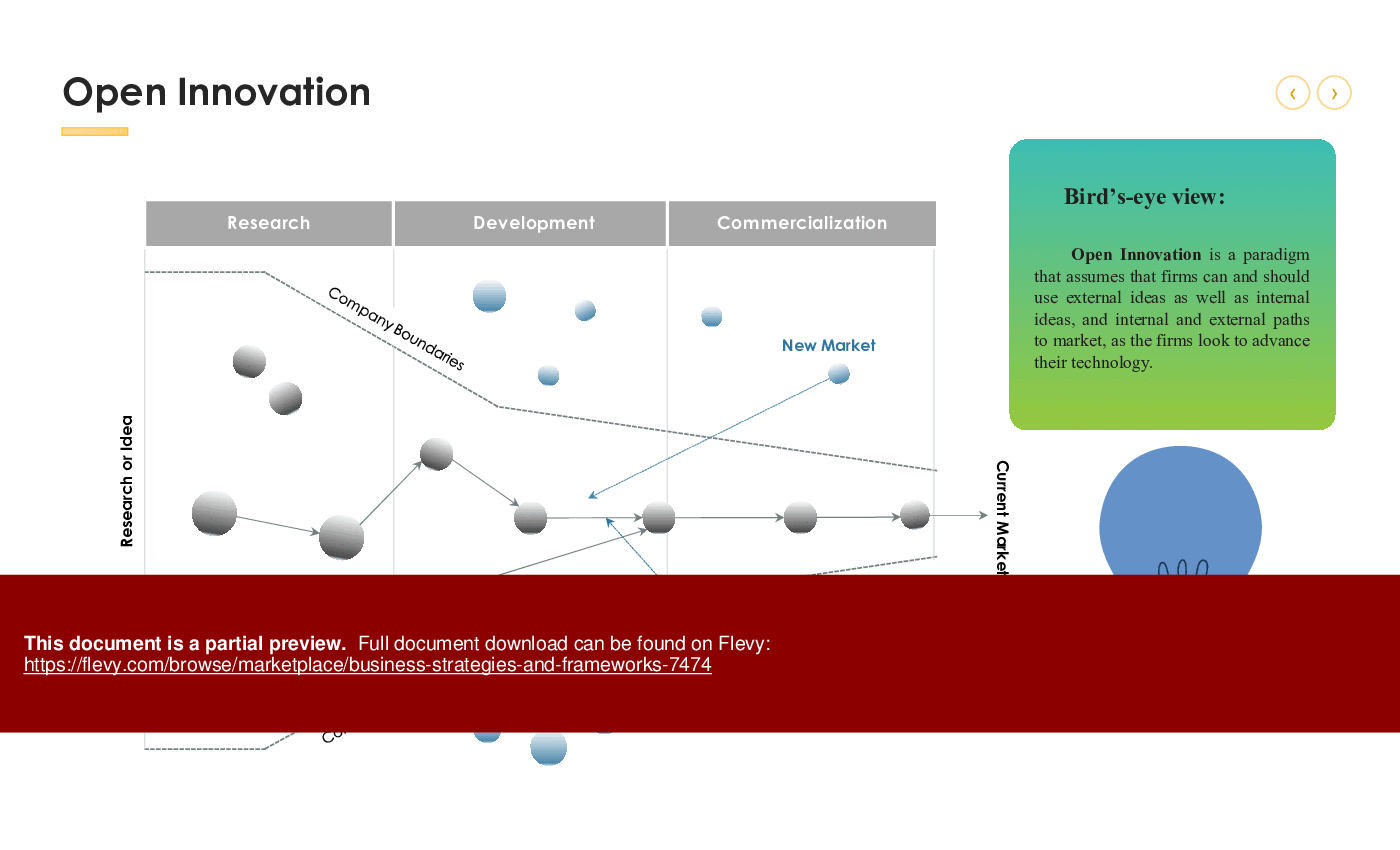
• Open Innovation: Expanding Innovation Horizons.
• Balanced Scorecard: Beyond Financial Metrics.
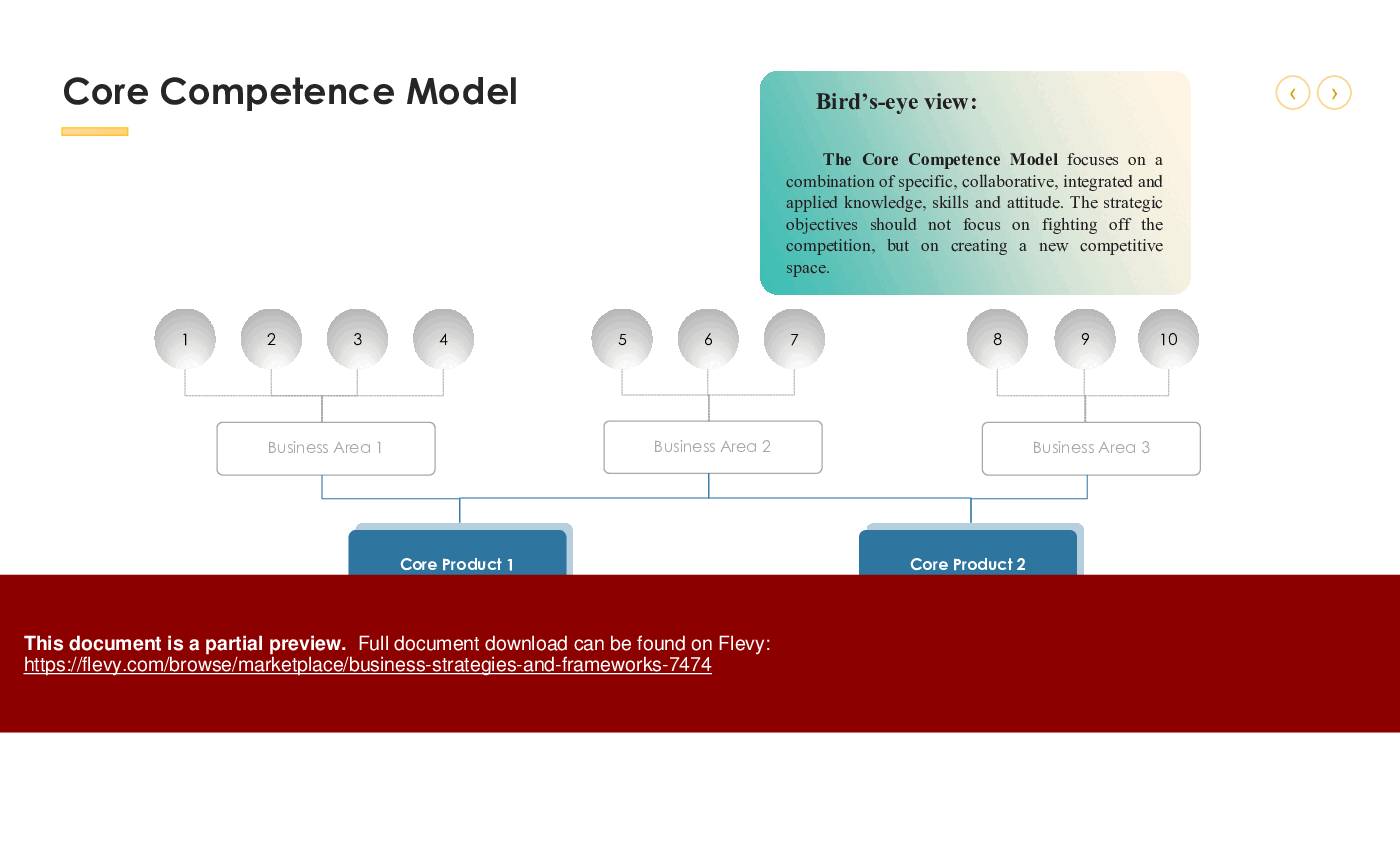
• Core Competence Model: Harnessing Unique Strengths.
• Six Boxes: Aligning Strategy and Execution.
• SWOT Analysis: Strategic Assessment Tool.
• Theory X and Theory Y: Employee Motivation Insights.
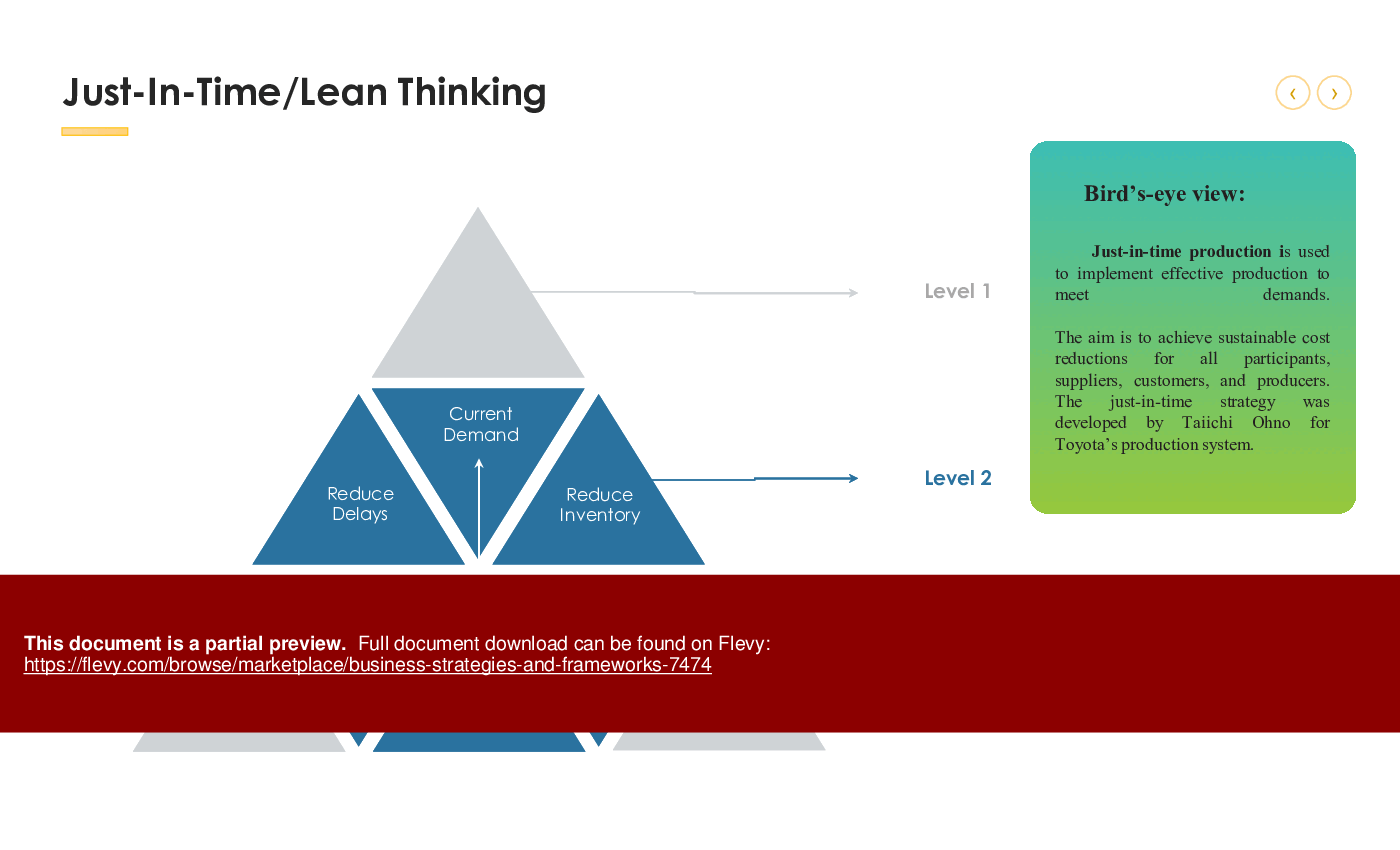
• Just-In-Time/Lean Thinking: Efficiency Enhancement.
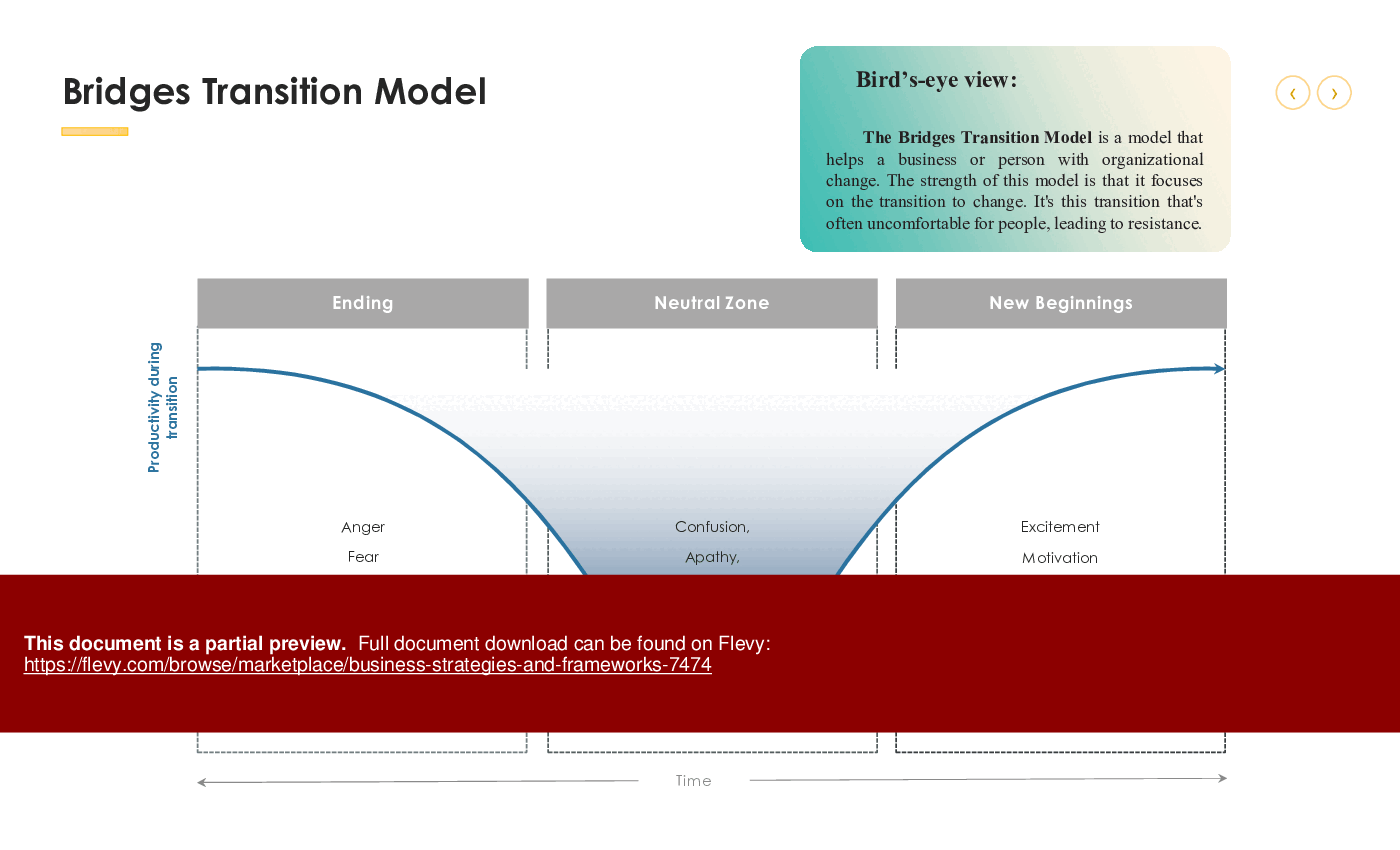
• Bridges Transition Model: Managing Change Effectively.
• Business Model Canvas: Visualizing Business Strategy.
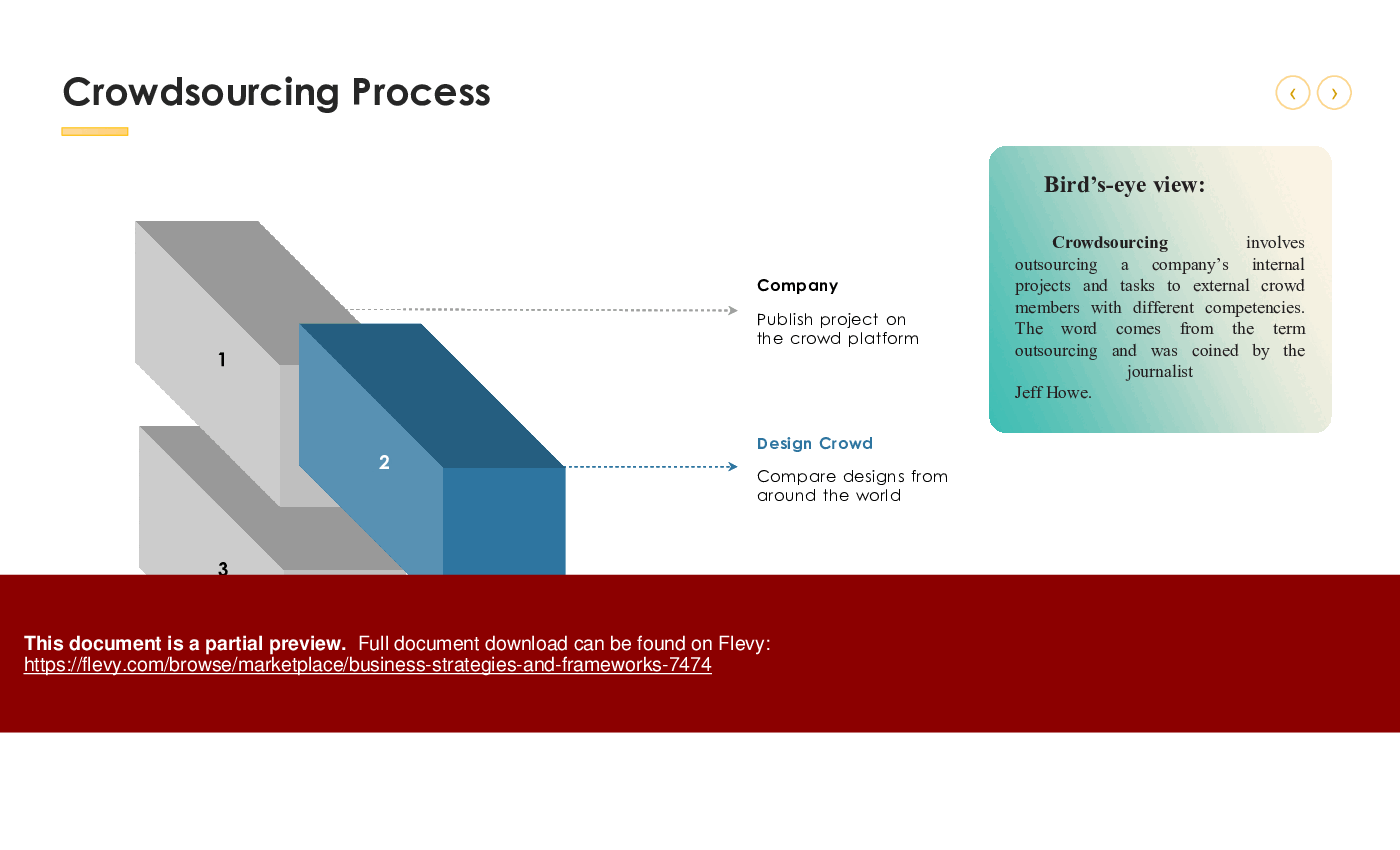
• Crowdsourcing Process: Power of the Crowd.
• Strategic Alignment Model: IT Meets Business Goals.
• Net Present Value: Evaluating Investments.
• Benchmarking: Learning from the Best.
• SCRUM: Agile Project Management.
• ADDIE Model: Crafting Effective Training.
• Senge's Five Disciplines: Path to Organizational Learning.
• Ulrich HR Model: Redefining HR Roles.
• DELPHI Method: Expert Consensus in Decision-Making.
• Iceberg Model of Organizational Culture: Uncovering Culture.
• Six Sigma DMAIC: Process Improvement Framework.
• SZPEKMAN'S Framework: Tailored Solutions.
• XEROX Benchmarking Model: Xerox's Performance Blueprint.
• EFQM Model: Excellence in Action.
• TEECE'S Dynamic Capabilities: Navigating Change.
• NADLER/TUSHMAN Model: Aligning the Organization.
• KÜBLER-ROSS Model: Embracing Change.
• Innovation Funnel Management: Prioritizing Innovation.
• House of Innovation: Cultivating Creativity.
• Coupling Model of Innovation: Fostering Innovation Synergy.
These frameworks offer structured insights to decode business challenges and achieve strategic objectives. Tailor your approach to elevate your organization's success in today's dynamic landscape.
Got a question about the product? Email us at support@flevy.com or ask the author directly by using the "Ask the Author a Question" form. If you cannot view the preview above this document description, go here to view the large preview instead.
Executive Summary
The Business Strategies & Frameworks PPTX is a comprehensive presentation designed to equip corporate executives, integration leaders, and consultants with essential strategic tools and frameworks. Developed by a team of experts with experience at McKinsey, Deloitte, and Capgemini, this deck covers critical methodologies such as Balanced Scorecard, SWOT Analysis, Business Model Canvas, Six Sigma, SCRUM, and various innovation tools. Users will gain the ability to effectively analyze business environments, develop strategic initiatives, and implement frameworks that drive organizational success.
Who This Is For and When to Use
• Corporate Executives seeking to enhance strategic planning capabilities
• Integration Leaders managing mergers and acquisitions
• Consultants advising organizations on strategic frameworks
• Project Managers implementing agile methodologies
• Business Analysts conducting performance assessments
Best-fit moments to use this deck:
• During strategic planning sessions to align organizational goals
• In workshops focused on innovation and operational excellence
• When conducting SWOT analyses to identify market opportunities
• For training sessions on agile methodologies like SCRUM
Learning Objectives
• Define key business frameworks and their applications in strategic planning
• Build comprehensive strategic plans using tools like the Balanced Scorecard
• Establish a clear understanding of organizational strengths and weaknesses through SWOT analysis
• Implement SCRUM methodologies to enhance project management efficiency
• Analyze business models using the Business Model Canvas
• Develop actionable insights from scenario planning techniques
Table of Contents
• Introduction to Business Strategies (page 1)
• Overview of Key Frameworks (page 2)
• Balanced Scorecard (page 5)
• SWOT Analysis (page 10)
• Business Model Canvas (page 15)
• Six Sigma DMAIC Improvement Cycle (page 20)
• SCRUM Methodology (page 25)
• Innovation Funnel Management (page 30)
• Stakeholder Management (page 35)
• Conclusion and Next Steps (page 40)
Primary Topics Covered
• Balanced Scorecard - A strategy performance management tool that helps organizations track execution and monitor outcomes through defined objectives across various perspectives.
• SWOT Analysis - A strategic planning technique used to identify strengths, weaknesses, opportunities, and threats related to business competition or project planning.
• Business Model Canvas - A strategic management template for developing new or documenting existing business models, focusing on key partners, activities, and customer segments.
• Six Sigma DMAIC Improvement Cycle - A structured problem-solving methodology aimed at enhancing processes and reducing defects through defined phases: Define, Measure, Analyze, Improve, and Control.
• SCRUM - An agile framework for managing complex projects, emphasizing iterative progress through sprints and collaborative teamwork.
• Innovation Funnel Management - A structured process for managing and prioritizing innovation projects to ensure alignment with strategic goals.
Deliverables, Templates, and Tools
• Balanced Scorecard template for tracking strategic objectives
• SWOT Analysis framework for assessing organizational positioning
• Business Model Canvas for visualizing business models
• Six Sigma DMAIC template for process improvement initiatives
• SCRUM framework for agile project management
• Innovation Funnel Management tool for prioritizing ideas
Slide Highlights
• Overview of the Balanced Scorecard with visual representation of perspectives
• Detailed SWOT Analysis framework with examples
• Business Model Canvas slide illustrating key components
• Six Sigma DMAIC cycle diagram showcasing the improvement process
• SCRUM framework slide outlining roles and responsibilities in agile teams
Potential Workshop Agenda
Introduction to Business Strategies (30 minutes)
• Overview of key frameworks and their importance
• Discussion on strategic alignment and performance management
Balanced Scorecard Workshop (60 minutes)
• Hands-on activity to develop a Balanced Scorecard
• Group discussion on tracking and measuring success
SWOT Analysis Session (45 minutes)
• Interactive session to conduct a SWOT analysis for a case study
• Identifying actionable insights from the analysis
SCRUM Methodology Overview (30 minutes)
• Introduction to SCRUM roles and ceremonies
• Group exercise to simulate a SCRUM sprint planning session
Customization Guidance
• Tailor the Balanced Scorecard to reflect specific organizational objectives and metrics
• Adapt the SWOT Analysis framework to focus on industry-specific challenges
• Modify the Business Model Canvas to align with unique business propositions
• Incorporate organizational terminology into SCRUM practices for consistency
Secondary Topics Covered
• Open Innovation principles for leveraging external ideas
• Scenario Planning techniques for future-proofing strategies
• Stakeholder Management frameworks for effective communication
• Benchmarking practices for performance improvement
• Learning Style Inventory for enhancing team training
FAQ
What is the purpose of the Balanced Scorecard?
The Balanced Scorecard is designed to help organizations track the execution of activities and monitor the outcomes of strategic initiatives across various perspectives.
How can SWOT Analysis benefit my organization?
SWOT Analysis allows organizations to identify internal strengths and weaknesses, as well as external opportunities and threats, facilitating informed decision-making.
What is the SCRUM methodology?
SCRUM is an agile framework that promotes iterative progress through sprints, focusing on collaboration and flexibility in managing complex projects.
How does the Six Sigma DMAIC cycle work?
The Six Sigma DMAIC cycle consists of 5 phases: Define the problem, Measure current performance, Analyze data to identify causes, Improve processes, and Control to maintain improvements.
What is Innovation Funnel Management?
Innovation Funnel Management is a structured approach to prioritize and manage innovation projects, ensuring alignment with strategic goals and effective resource allocation.
How can I customize the Business Model Canvas for my organization?
You can tailor the Business Model Canvas by incorporating your specific value propositions, customer segments, and key activities relevant to your business context.
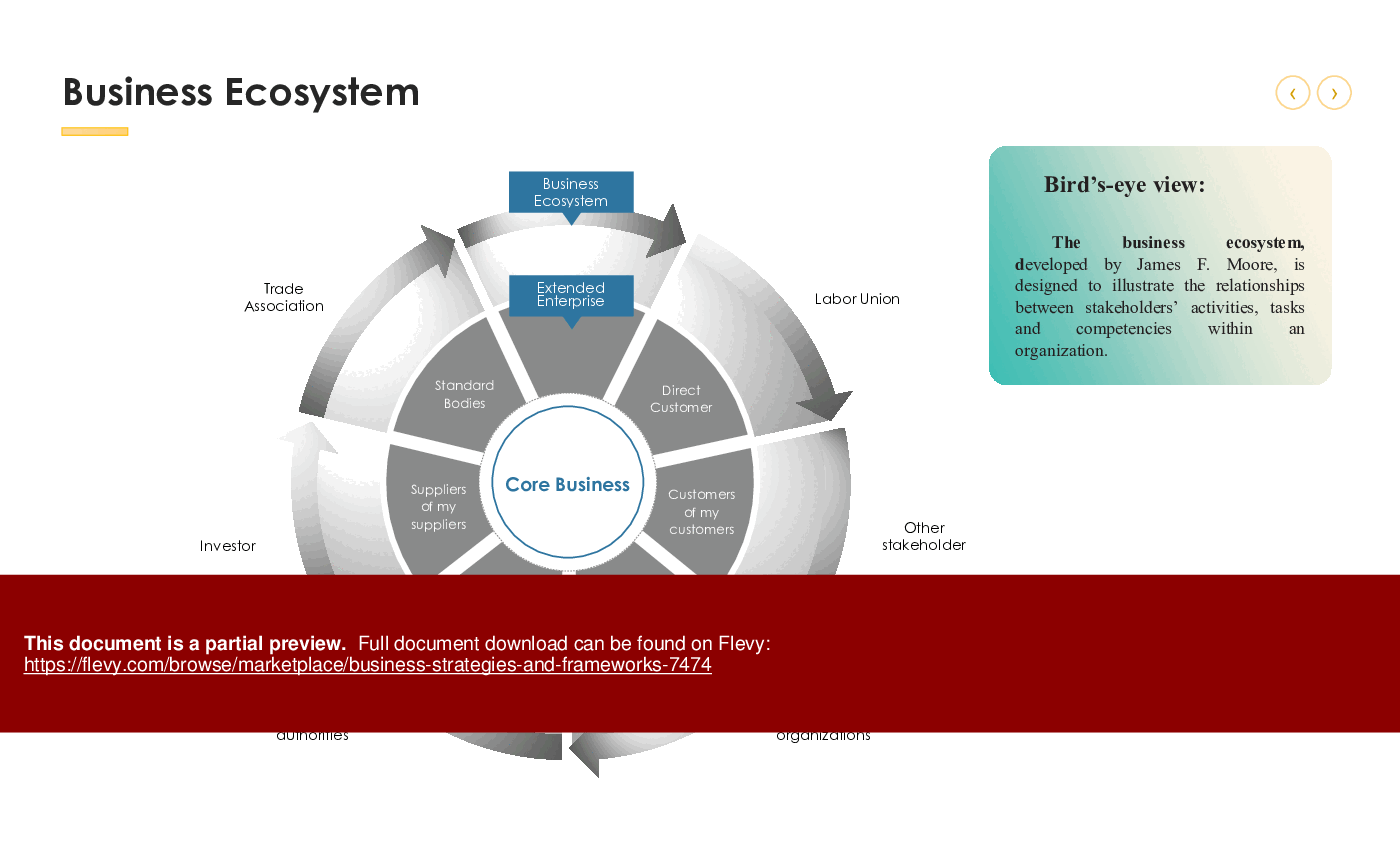
What are the benefits of using the Business Ecosystem model?
The Business Ecosystem model helps organizations understand the relationships between various stakeholders and how they impact business operations and strategy.
How can I implement the ADDIE model for training?
The ADDIE model provides a framework for designing effective training programs by following 5 phases: Analyze, Design, Develop, Implement, and Evaluate.
Glossary
• Balanced Scorecard - A performance management tool that tracks execution of strategic objectives.
• SWOT Analysis - A strategic planning technique for assessing strengths, weaknesses, opportunities, and threats.
• SCRUM - An agile framework for managing complex projects through iterative sprints.
• Six Sigma - A methodology for process improvement that focuses on reducing defects.
• Innovation Funnel Management - A structured process for managing and prioritizing innovation projects.
• Business Model Canvas - A strategic template for developing and documenting business models.
• Stakeholder Management - Strategies for building relationships with key audiences impacting the organization.
• Scenario Planning - A technique for envisioning future scenarios to inform strategic decisions.
• Benchmarking - The practice of comparing business processes and performance metrics to industry bests.
• Learning Style Inventory - A model for assessing individual learning preferences and styles.
• People Capability Maturity Model - A framework for assessing and improving organizational capabilities.
• KANO Model - A theory for product development and customer satisfaction based on customer preferences.
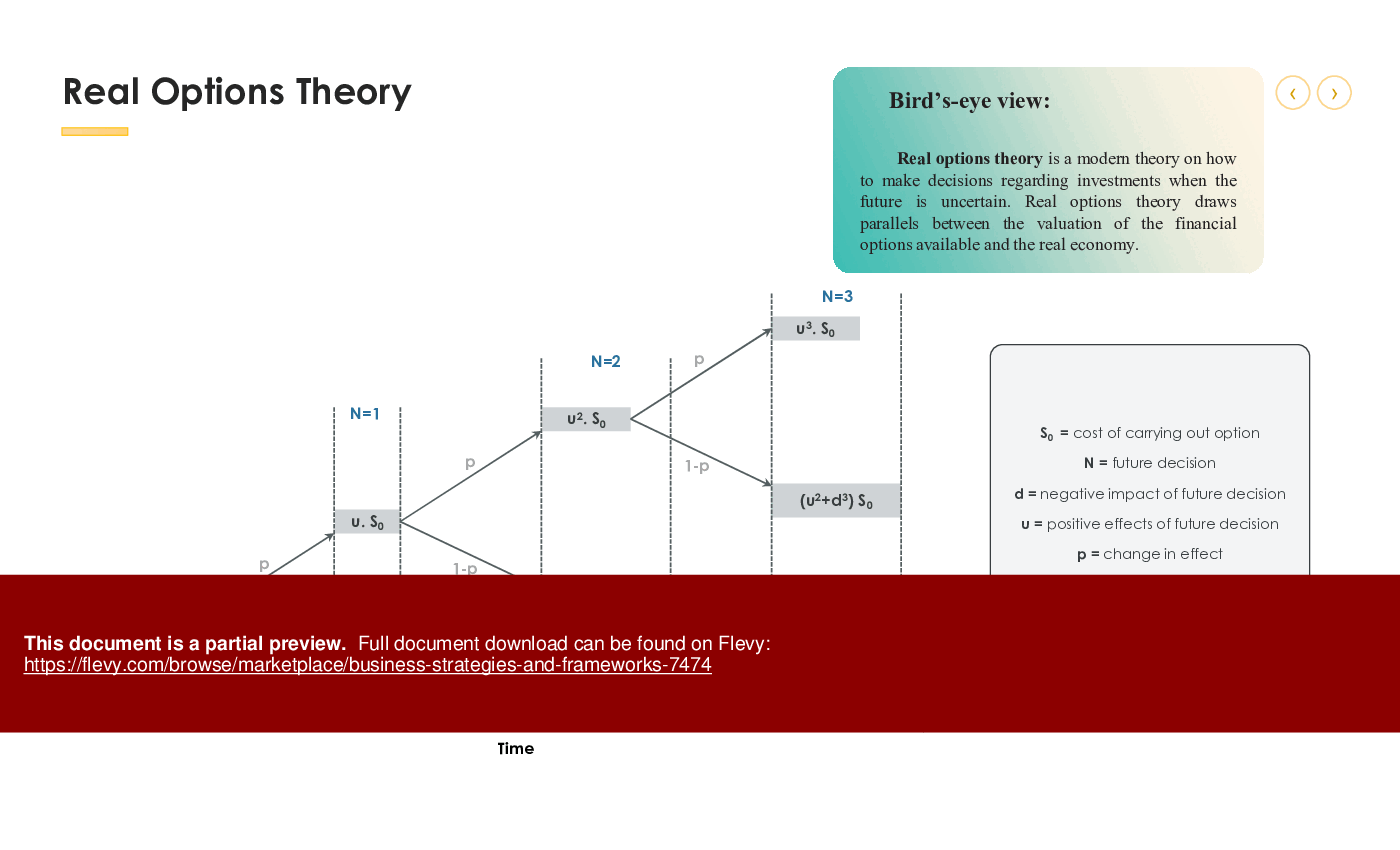
• Real Options Theory - A framework for making investment decisions under uncertainty.
• Theory X and Theory Y - Management theories that describe different assumptions about employee motivation.
• Managerial Grid - A model for assessing leadership styles based on concern for people and production.
• Open Innovation - A paradigm that encourages firms to use external ideas and paths to market.
• Capital Asset Pricing Model (CAPM) - A model for determining the expected return on an asset.
• Just-In-Time/Lean Thinking - A production strategy aimed at minimizing waste and maximizing efficiency.
• Crowdsourcing - The practice of outsourcing tasks to a distributed group of people.
• Ansoff Growth Matrix - A strategic planning tool for identifying growth opportunities.
Source: Business Strategies & Frameworks PowerPoint (PPTX) Presentation Slide Deck, RadVector Consulting
|
Download our FREE Strategy & Transformation Framework Templates
Download our free compilation of 50+ Strategy & Transformation slides and templates. Frameworks include McKinsey 7-S Strategy Model, Balanced Scorecard, Disruptive Innovation, BCG Experience Curve, and many more. |










