
Performance Measurement   23-slide PPT PowerPoint presentation slide deck (PPT)
$29.00

Performance Measurement (23-slide PPT PowerPoint presentation slide deck (PPT)) Preview Image
Log in to unlock full preview.
Performance Measurement (23-slide PPT PowerPoint presentation slide deck (PPT)) Preview Image
Arrow   Click main image to view in full screen.

Performance Measurement (PowerPoint PPT Slide Deck)

PowerPoint (PPT) 23 Slides FlevyPro Document

500+ Downloads $29.00
FlevyPro price: FREE (included in subscription)
This framework is developed by a team of former McKinsey and Big 4 consultants. The presentation follows the headline-body-bumper slide format used by global consulting firms.
Add to Cart


Immediate download
Free lifetime updates

PERFORMANCE MANAGEMENT PPT DESCRIPTION

Editor Summary The Performance Measurement is a 23-slide PowerPoint by LearnPPT Consulting outlining the Balanced Scorecard (BSC) framework and the integration of financial and non‑financial metrics. Read more

The "right" share price in the mind of the capital markets is determined by the market view of future earnings. Apart from the obvious issues of a low share price not pleasing shareholders, it clearly also reduces the company's ability to finance acquisitions or invest in other major strategic initiatives.

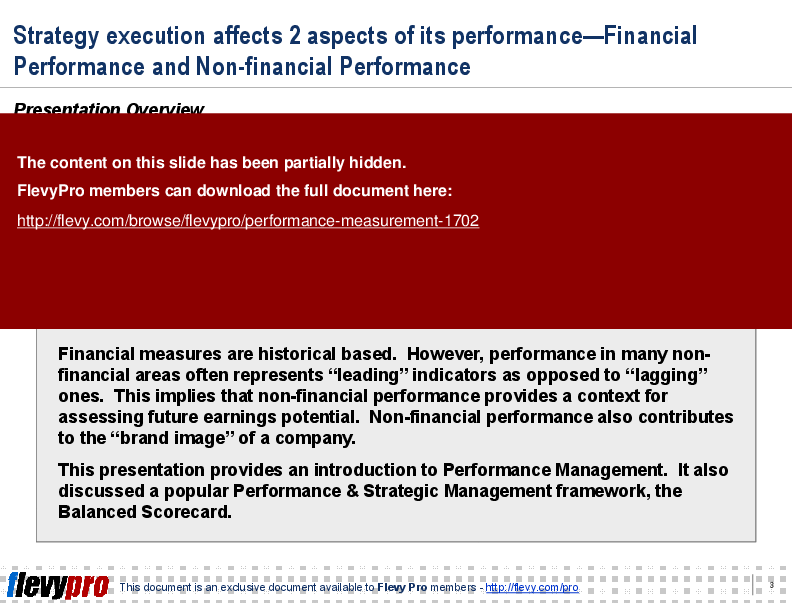
The execution of a company's strategy affects 2 aspects of its performance:
1. Financial Performance; and
2. Non-financial Performance.

Financial measures are historical based. However, performance in many non-financial areas often represents "leading" indicators as opposed to "lagging" ones. This implies that non-financial performance provides a context for assessing future earnings potential. Non-financial performance also contributes to the "brand image" of a company.

This presentation provides an introduction to Performance Management. It also discussed a popular Performance & Strategic Management framework, the Balanced Scorecard.

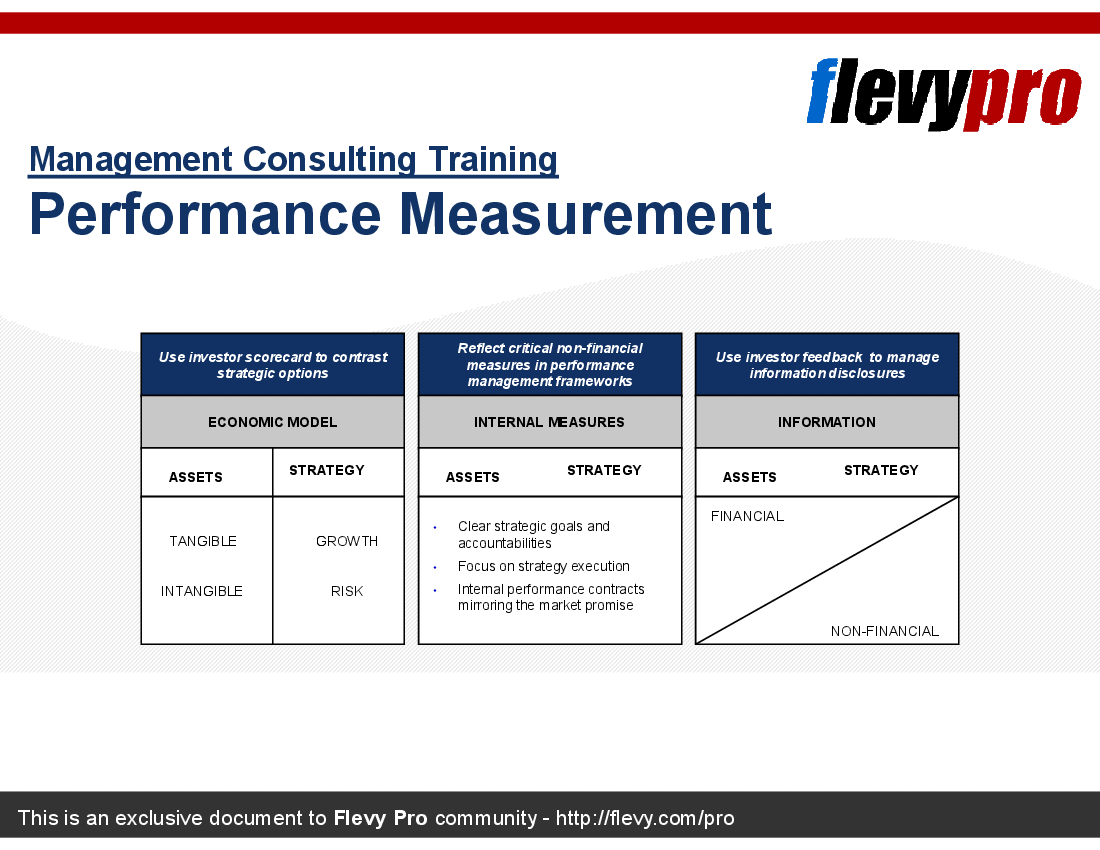
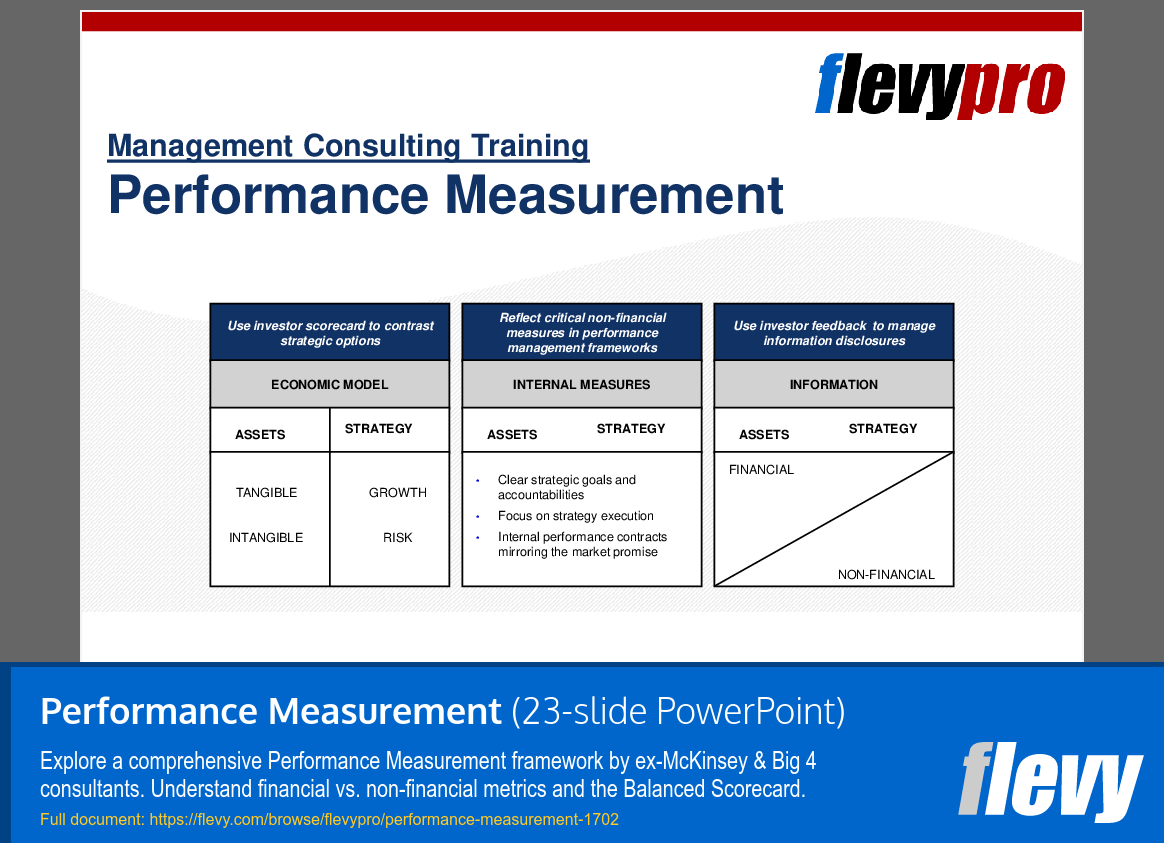
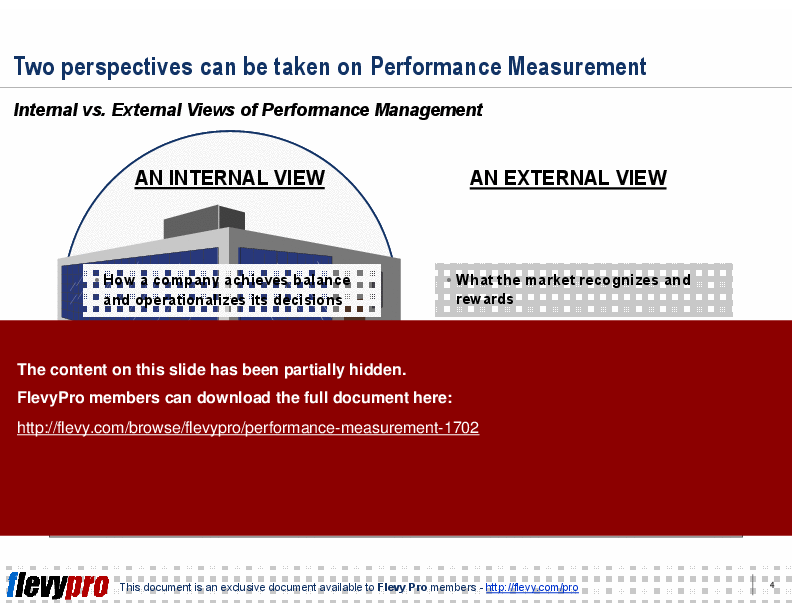
This PPT delves into the dual perspectives of performance measurement: internal and external. It explores how companies achieve balance and operationalize decisions internally while addressing what the market recognizes and rewards externally. The Balanced Scorecard is highlighted as a critical tool for aligning measurement with strategy, ensuring that all performance metrics are tied to strategic objectives.

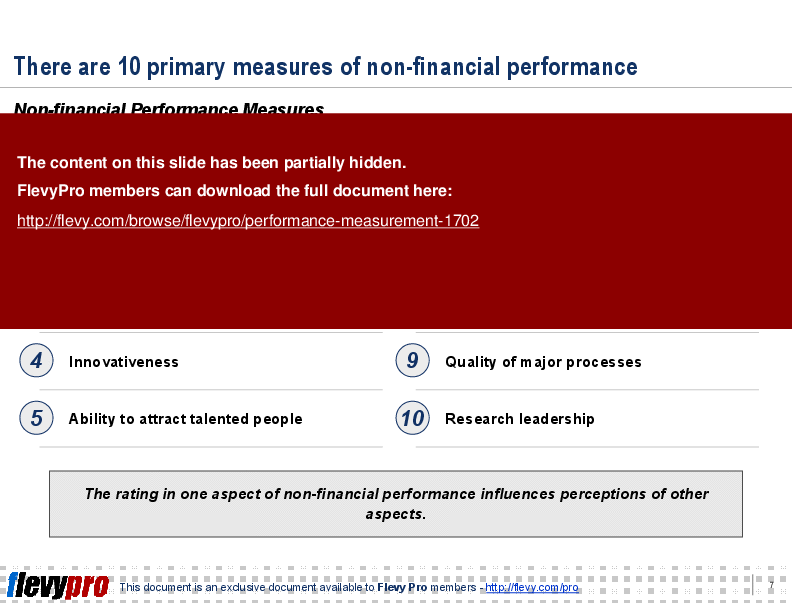
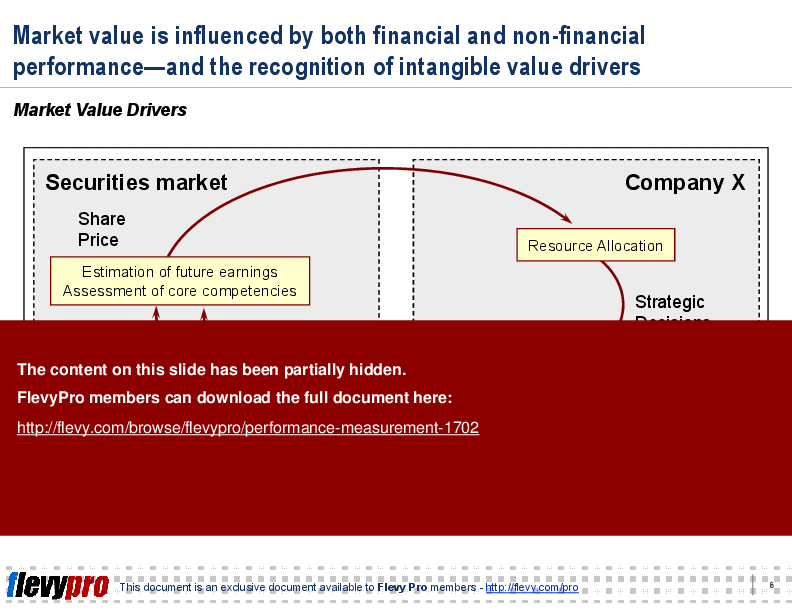
Market value is influenced by both financial and non-financial performance, including the recognition of intangible value drivers. The presentation outlines ten primary measures of non-financial performance, such as innovativeness, quality of major processes, and research leadership. These measures are essential for understanding how non-financial performance impacts market evaluations and strategic decisions.

The document also addresses common pitfalls in Balanced Scorecard design and emphasizes the importance of cascading the corporate scorecard down into the organization. It provides practical insights into avoiding dysfunctional processes and ensuring that the scorecard tells the story of your strategy through cause and effect relationships. This comprehensive approach to performance measurement is essential for any organization aiming to enhance its strategic management capabilities.

Got a question about this document? Email us at flevypro@flevy.com.

MARCUS OVERVIEW

This synopsis was written by Marcus [?] based on the analysis of the full 23-slide presentation.


Executive Summary
The Performance Measurement presentation provides a comprehensive overview of the Balanced Scorecard (BSC) framework, emphasizing the integration of financial and non-financial performance metrics. This document equips corporate executives and consultants with the tools to assess strategic options, enhance performance management, and improve investor communication. By utilizing the BSC, organizations can align their strategic objectives with measurable outcomes, fostering a culture of accountability and continuous improvement.

Who This Is For and When to Use
•  Corporate executives responsible for strategic planning and performance management
•  Consultants advising organizations on performance measurement frameworks
•  Finance leaders focused on integrating financial and non-financial metrics
•  Strategy teams aiming to enhance decision-making processes
•  Performance management professionals seeking to implement the Balanced Scorecard

Best-fit moments to use this deck:
•  During strategic planning sessions to align objectives with performance metrics
•  In workshops focused on developing or refining performance management frameworks
•  When preparing for investor presentations to articulate performance and strategy
•  For training sessions on the implementation of the Balanced Scorecard

Learning Objectives
•  Define the Balanced Scorecard framework and its relevance to performance measurement
•  Identify key financial and non-financial performance indicators that drive organizational success
•  Develop a comprehensive performance management framework using the BSC
•  Establish clear strategic objectives linked to measurable outcomes
•  Assess the impact of non-financial performance on financial results and investor perceptions
•  Create effective communication strategies for engaging with investors and stakeholders

Table of Contents
•  Performance Management Overview (page 3)
•  Performance Management External Perspective (page 4)
•  Performance Management Internal Perspective – Balanced Scorecard (page 5)
•  Non-Financial Performance Measures (page 7)
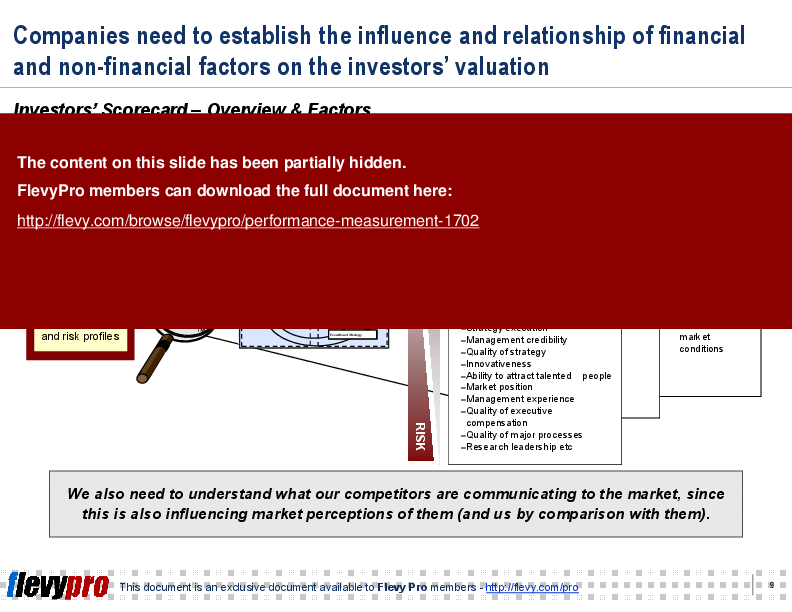
•  Investors’ Scorecard Overview (page 9)
•  Implications of Non-Financial Performance (page 8)
•  Benefits of the Balanced Scorecard Methodology (page 14)
•  The 4 Perspectives of the Balanced Scorecard (page 15)
•  BSC Design Pitfalls (page 21)
•  Criteria for a Good Balanced Scorecard (page 22)

Primary Topics Covered
•  Performance Management Overview - Introduction to performance management concepts, focusing on the integration of financial and non-financial metrics.
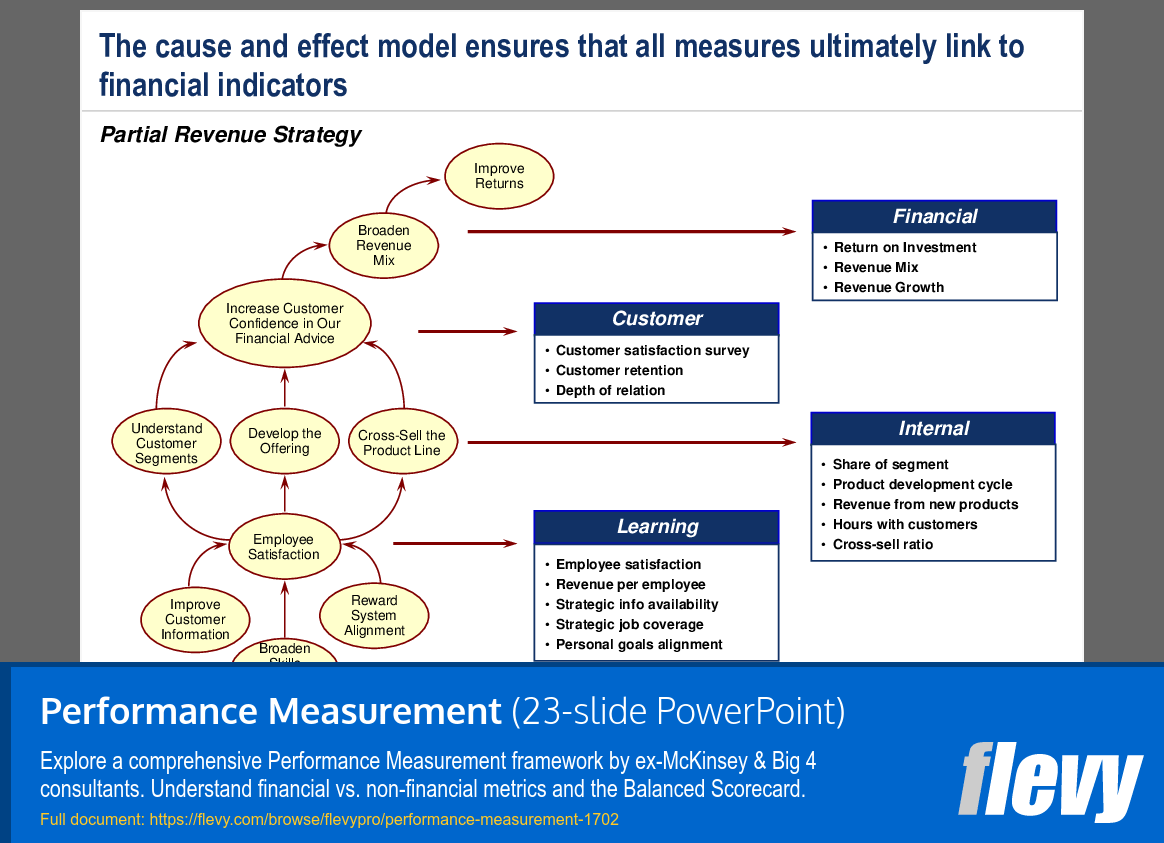
•  Balanced Scorecard Framework - Detailed exploration of the BSC as a tool for aligning strategy with performance measurement across 4 perspectives: financial, customer, internal processes, and learning.
•  Non-Financial Performance Indicators - Identification of ten primary measures of non-financial performance that influence organizational success.
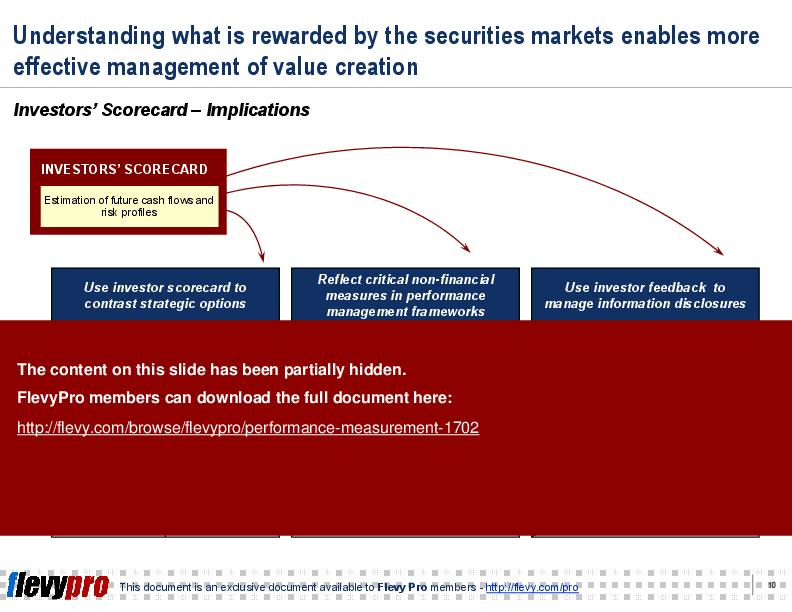
•  Investor Communication Strategies - Techniques for utilizing investor feedback to enhance performance disclosures and strategic alignment.
•  Strategic Benefits of the BSC - Insights into how the BSC can drive strategic options and performance management frameworks.
•  Common Pitfalls in BSC Design - Identification of potential pitfalls in implementing the BSC and strategies to avoid them.

Deliverables, Templates, and Tools
•  Balanced Scorecard template for aligning strategic objectives with performance measures
•  Investor scorecard example for assessing financial and non-financial performance
•  Workshop agenda for implementing the Balanced Scorecard
•  Communication plan template for engaging with investors
•  Performance measurement framework outline for integrating financial and non-financial metrics
•  Checklist for evaluating non-financial performance measures

Slide Highlights
•  Overview of the Balanced Scorecard and its 4 perspectives
•  Key non-financial performance measures influencing market perception
•  The relationship between financial and non-financial performance
•  Strategic benefits of utilizing the investor scorecard
•  Common pitfalls in Balanced Scorecard design and implementation

Potential Workshop Agenda
Introduction to Performance Measurement (30 minutes)
•  Overview of performance management concepts
•  Discussion on the importance of aligning financial and non-financial metrics

Balanced Scorecard Development (60 minutes)
•  Interactive session on defining strategic objectives
•  Group activity to create a Balanced Scorecard template

Investor Communication Strategies (45 minutes)
•  Techniques for effective communication with investors
•  Case studies on successful investor engagement

BSC Implementation Best Practices (30 minutes)
•  Review of common pitfalls and how to avoid them
•  Q&A session on BSC implementation challenges

Customization Guidance
•  Tailor the Balanced Scorecard template to reflect specific organizational goals and metrics
•  Adjust non-financial performance measures based on industry standards and organizational priorities
•  Incorporate company-specific terminology and frameworks into the presentation
•  Modify the workshop agenda to align with organizational timelines and participant availability

Secondary Topics Covered
•  The role of management credibility in performance measurement
•  The impact of strategy execution on financial performance
•  Insights into market perception and investor feedback
•  Techniques for enhancing organizational learning and growth

Topic FAQ

What are the 4 perspectives of the Balanced Scorecard that I should include in a scorecard?

The Balanced Scorecard organizes measures into 4 perspectives: Financial, Customer, Internal Processes, and Learning & Growth. These perspectives help ensure strategy is translated into measurable outcomes and that cause-and-effect links across objectives are explicit, summarized as the BSC’s 4 perspectives.

How do non-financial performance measures influence future earnings and market perception?

Non-financial measures often act as leading indicators of future financial performance, shaping investor expectations and brand image. The presentation highlights ten primary non-financial measures—such as innovativeness and process quality—that help assess future earnings potential and market perception, encompassed in those ten primary measures.

What constitutes a well-designed Balanced Scorecard for my organization?

A well-designed Balanced Scorecard contains clearly stated strategic objectives, measurable outcomes, and aligned targets; it cascades through the organization and tells the strategy’s cause-and-effect story. The deck also warns against common design errors like unclear intent and unbalanced measurement, emphasizing clear objectives, measurable outcomes, and targets.

Which components should I expect when purchasing a Balanced Scorecard PowerPoint toolkit?

A practical BSC toolkit should include a Balanced Scorecard template, an investor scorecard example, a workshop agenda, a communication plan template, a performance measurement framework outline, and an evaluation checklist. The Performance Measurement deck lists these specific deliverables and tools, including the Balanced Scorecard template.

Are pre-built Balanced Scorecard templates useful for small teams working to tight timelines?

Pre-built templates provide structure and reduce preparation effort by supplying a ready BSC template, an investor scorecard example, workshop agenda, and customization guidance. That can shorten workshop setup and stakeholder alignment work; the Performance Measurement product packages these items into a 23-slide deck as a starting point.

How often should an organization review and update its Balanced Scorecard?

Reviews should occur at least annually and more frequently when there are significant changes in strategy, market conditions, or investor expectations. Regular review ensures measures remain aligned with objectives and that leading non-financial indicators continue to inform future financial expectations, with a cadence of at least annually.

I need to prepare an investor presentation—how can the Balanced Scorecard help structure my message?

The BSC links financial results to non-financial drivers, allowing you to present how operational and strategic initiatives influence future earnings. Use an investor scorecard to highlight metrics investors value and a communication plan to frame the narrative; the Performance Measurement deck includes an Investor scorecard example.

What common design pitfalls should I avoid when creating a Balanced Scorecard and how can I mitigate them?

Common pitfalls include failing to articulate strategic intent, creating unbalanced measurement systems, and institutionalizing dysfunctional processes. Mitigation involves defining clear objectives, linking measures through cause-and-effect relationships, engaging stakeholders, and cascading the corporate scorecard down the organization to maintain alignment.

Document FAQ
These are questions addressed within this presentation.

What is the Balanced Scorecard?
The Balanced Scorecard is a strategic planning and performance management framework that links financial and non-financial performance measures to organizational objectives.

How can non-financial performance impact financial results?
Non-financial performance often serves as leading indicators that can predict future financial outcomes, influencing overall market perception and investor confidence.

What are the key components of a good Balanced Scorecard?
A good Balanced Scorecard includes clear objectives, measurable outcomes, and targets that align with the organization’s strategic goals.

How do I implement the Balanced Scorecard in my organization?
Begin by defining strategic objectives, selecting relevant performance measures, and engaging stakeholders in the development process to ensure alignment and buy-in.

What are common pitfalls in Balanced Scorecard design?
Common pitfalls include failing to articulate strategic intent, creating unbalanced measurement systems, and institutionalizing a dysfunctional process.

How can I effectively communicate performance metrics to investors?
Utilize clear, concise messaging that highlights both financial and non-financial performance indicators, ensuring alignment with investor interests and market expectations.

What is the role of non-financial performance measures?
Non-financial performance measures provide insights into operational effectiveness and customer satisfaction, which can influence long-term financial success.

How often should the Balanced Scorecard be reviewed and updated?
Regular reviews should be conducted at least annually, or more frequently if significant changes in strategy or market conditions occur.

Glossary
•  Balanced Scorecard - A framework for translating an organization’s strategic objectives into a set of performance measures.
•  Financial Performance - Metrics that assess a company’s financial health, including revenue, profit margins, and return on investment.
•  Non-Financial Performance - Indicators that measure aspects such as customer satisfaction, employee engagement, and operational efficiency.
•  Investor Scorecard - A tool for evaluating financial and non-financial performance from an investor's perspective.
•  Strategic Objectives - Specific goals that an organization aims to achieve to fulfill its mission and vision.
•  Performance Measures - Quantitative indicators used to assess the success of an organization in achieving its objectives.
•  Leading Indicators - Metrics that predict future performance, often related to non-financial factors.
•  Lagging Indicators - Metrics that reflect past performance, typically financial results.
•  Stakeholders - Individuals or groups with an interest in the organization’s performance, including investors, employees, and customers.
•  Market Perception - The collective opinion of investors and the public regarding a company's value and performance.
•  Strategic Alignment - The process of ensuring that all aspects of an organization are aligned with its strategic objectives.
•  Communication Strategy - A plan for effectively conveying information to stakeholders and the market.

PERFORMANCE MANAGEMENT PPT SLIDES

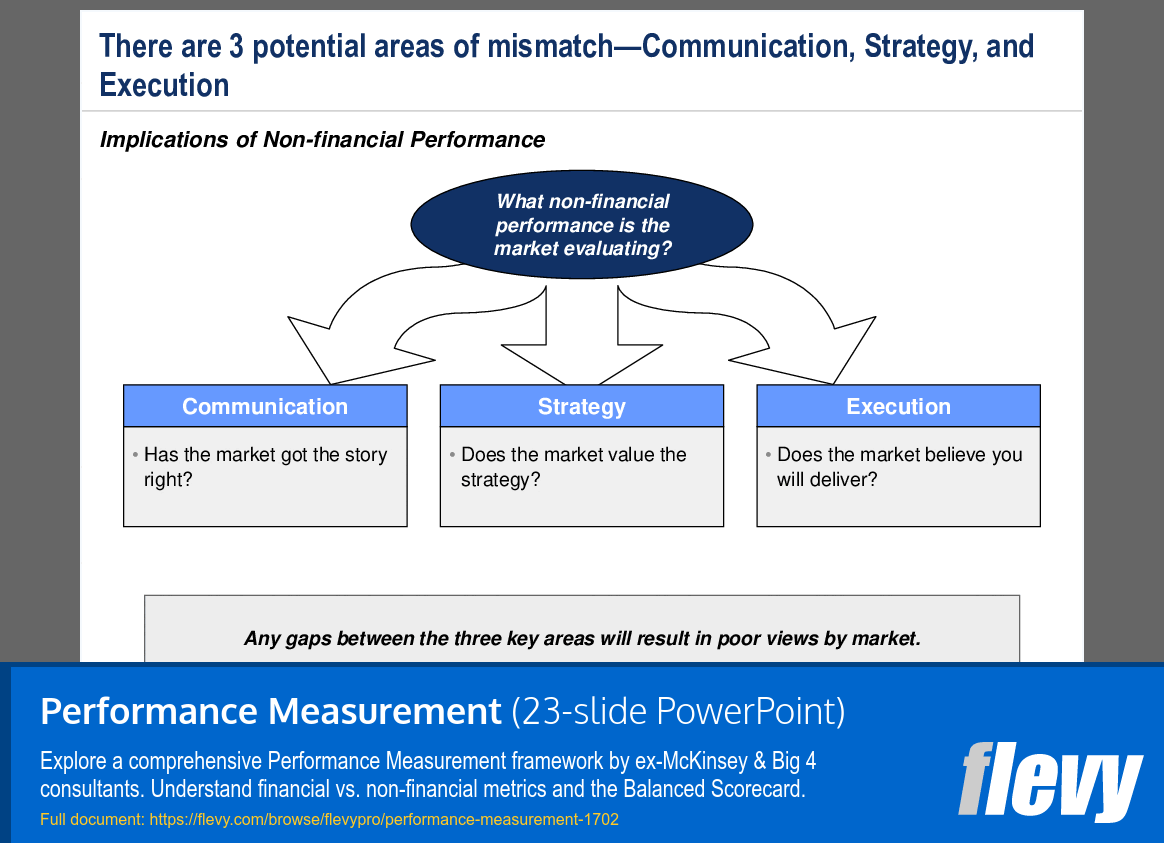
Assessing Alignment: Communication, Strategy, and Execution

Linking Measurement to Strategic Goals for Performance

Understanding Investor Valuation: Financial and Non-Financial Metrics

Identifying and Avoiding BSC Design Pitfalls

Strategic Alignment for Comprehensive Performance Management

Understanding Market Value: Financial and Intangible Drivers

Linking Strategic Initiatives to Financial Outcomes

Source: Best Practices in Performance Management, Balanced Scorecard, Performance Measurement PowerPoint Slides: Performance Measurement PowerPoint (PPT) Presentation Slide Deck, LearnPPT Consulting


$29.00
FlevyPro price: FREE (included in subscription)
This framework is developed by a team of former McKinsey and Big 4 consultants. The presentation follows the headline-body-bumper slide format used by global consulting firms.
Add to Cart
  

Did you need more documents?

Consider a FlevyPro subscription from $39/month. View plans here.

For $10.00 more, you can download this document plus 2 more FlevyPro documents. That's just $13 each.

ABOUT FLEVYPRO

This document is part of the FlevyPro Library, a curated knowledge base of documents for our FlevyPro subscribers.

FlevyPro is a subscription service for on-demand business frameworks and analysis tools. FlevyPro subscribers receive access to an exclusive library of curated business documents—business framework primers, presentation templates, Lean Six Sigma tools, and more—among other exclusive benefits.

Click here to learn more about FlevyPro and its benefits.

Did you know?
The average daily rate of a McKinsey consultant is $6,625 (not including expenses). The average price of a Flevy document is $65.
Bundle and save! You can save up to % with bundles!

View bundle(s)


Trusted by over 10,000+ Client Organizations
Since 2012, we have provided business templates to over 10,000 businesses and organizations of all sizes, from startups and small businesses to the Fortune 100, in over 130 countries.
AT&T GE Cisco Intel IBM Coke Dell Toyota HP Nike Samsung Microsoft Astrazeneca JP Morgan KPMG Walgreens Walmart 3M Kaiser Oracle SAP Google E&Y Volvo Bosch Merck Fedex Shell Amgen Eli Lilly Roche AIG Abbott Amazon PwC T-Mobile Broadcom Bayer Pearson Titleist ConEd Pfizer NTT Data Schwab


Read Customer Testimonials

 
"One of the great discoveries that I have made for my business is the Flevy library of training materials.

As a Lean Transformation Expert, I am always making presentations to clients on a variety of topics: Training, Transformation, Total Productive Maintenance, Culture, Coaching, Tools, Leadership Behavior, etc. Flevy "

– Ed Kemmerling, Senior Lean Transformation Expert at PMG
 
"I have used Flevy services for a number of years and have never, ever been disappointed. As a matter of fact, David and his team continue, time after time, to impress me with their willingness to assist and in the real sense of the word. I have concluded in fact "

– Roberto Pelliccia, Senior Executive in International Hospitality
 
"As a consultant requiring up to date and professional material that will be of value and use to my clients, I find Flevy a very reliable resource.

The variety and quality of material available through Flevy offers a very useful and commanding source for information. Using Flevy saves me time, enhances my expertise and ends up being a good decision."

– Dennis Gershowitz, Principal at DG Associates
 
"FlevyPro provides business frameworks from many of the global giants in management consulting that allow you to provide best in class solutions for your clients."

– David Harris, Managing Director at Futures Strategy
 
"Flevy is now a part of my business routine. I visit Flevy at least 3 times each month.

Flevy has become my preferred learning source, because what it provides is practical, current, and useful in this era where the business world is being rewritten.

In today's environment where there are so "

– Omar Hernán Montes Parra, CEO at Quantum SFE
 
"As a niche strategic consulting firm, Flevy and FlevyPro frameworks and documents are an on-going reference to help us structure our findings and recommendations to our clients as well as improve their clarity, strength, and visual power. For us, it is an invaluable resource to increase our impact and value."

– David Coloma, Consulting Area Manager at Cynertia Consulting
 
"My FlevyPro subscription provides me with the most popular frameworks and decks in demand in today’s market. They not only augment my existing consulting and coaching offerings and delivery, but also keep me abreast of the latest trends, inspire new products and service offerings for my practice, and educate me "

– Bill Branson, Founder at Strategic Business Architects
 
"As a small business owner, the resource material available from FlevyPro has proven to be invaluable. The ability to search for material on demand based our project events and client requirements was great for me and proved very beneficial to my clients. Importantly, being able to easily edit and tailor "

– Michael Duff, Managing Director at Change Strategy (UK)


Save with Bundles

This document is available as part of the following discounted bundle(s):

Save %!
Consulting Training - Company Analysis

This bundle contains 6 total documents. See all the documents to the right.

$79.00


Add Bundle & Save


Customers Also Bought These Documents


Customers Also Like These Documents

Explore Templates on Related Management Topics


Your Recently Viewed Documents
Download our FREE Strategy & Transformation Framework Templates

Download our free compilation of 50+ Strategy & Transformation slides and templates. Frameworks include McKinsey 7-S, Balanced Scorecard, Disruptive Innovation, BCG Curve, and many more.