Guide to Organizational Structures   17-slide PPT PowerPoint presentation slide deck (PPTX)
$20.00

Guide to Organizational Structures (17-slide PPT PowerPoint presentation slide deck (PPTX)) Preview Image
Flevy is the marketplace for business best practices.
Guide to Organizational Structures (17-slide PPT PowerPoint presentation slide deck (PPTX)) Preview Image
Arrow   Click main image to view in full screen.

Guide to Organizational Structures (PowerPoint PPTX Slide Deck)

PowerPoint (PPTX) 17 Slides

Top 1,000 Best Practice $20.00

Add to Cart


Immediate download
Free lifetime updates

ORGANIZATIONAL STRUCTURE PPT DESCRIPTION

Editor Summary Guide to Organizational Structures is a 17-slide PowerPoint presentation by Corporate Finance 101 that outlines types of organizational structures with a detailed focus on matrix structures. Read more

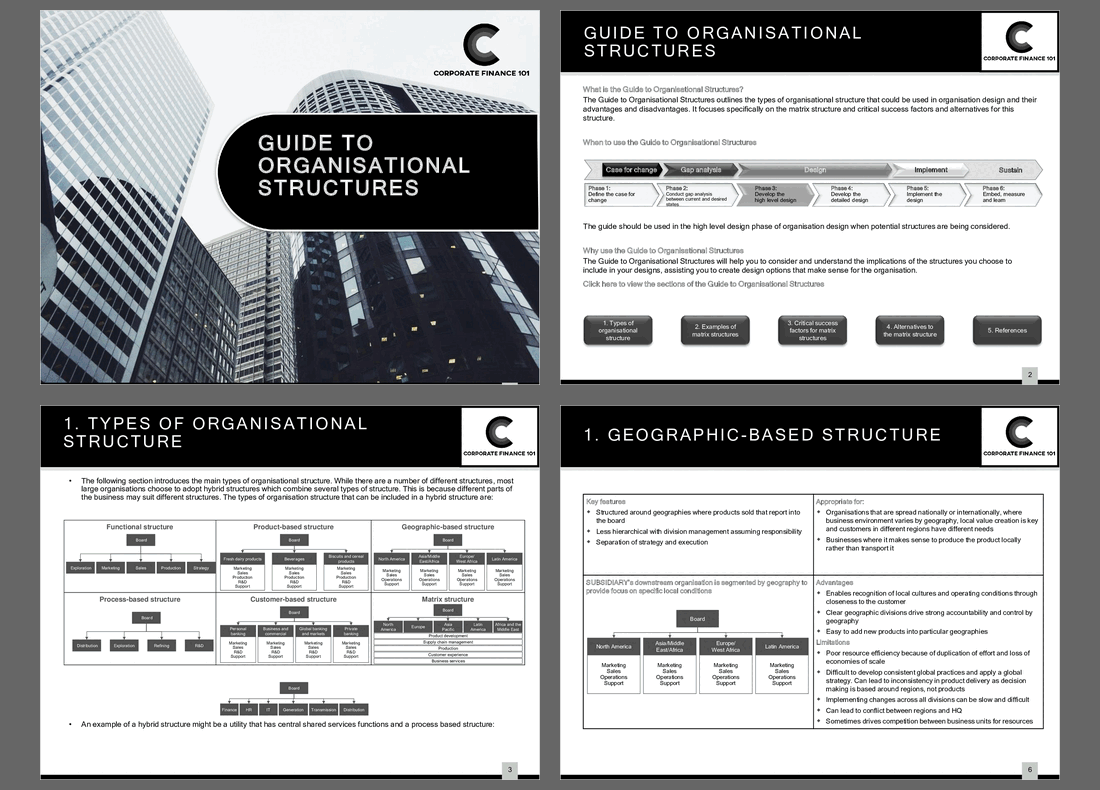
The Guide to Organisational Structures outlines the types of organisational structure that could be used in organisation design and their advantages and disadvantages.

It focuses specifically on the matrix structure and critical success factors and alternatives for this structure.

The guide should be used in the high-level design phase of organisation design when potential structures are being considered. The Guide to Organisational Structures will help you to consider and understand the implications of the structures you choose to include in your designs, assisting you to create design options that make sense for the organisation.

This guide is included as an appendix as part of the Organization Design Toolkit.

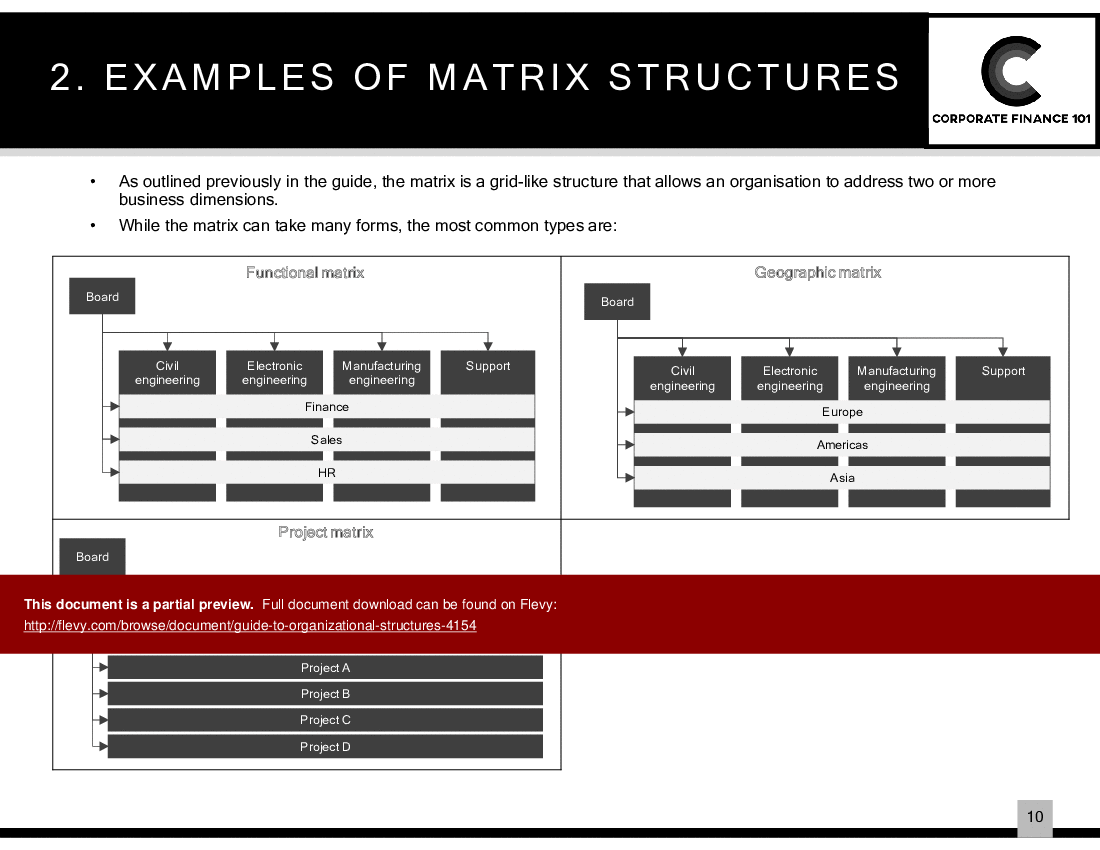
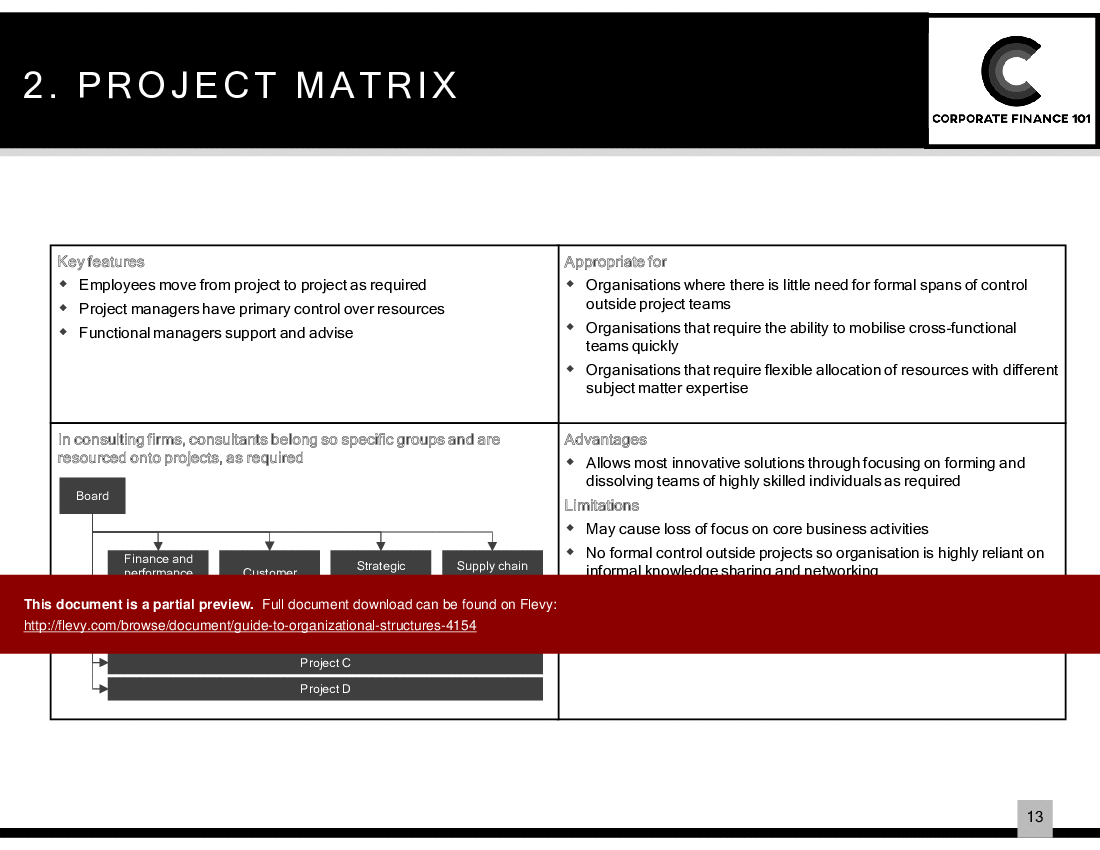
The Guide to Organizational Structures dives deep into various structural frameworks, including functional and process-based structures. It highlights key features, appropriateness, advantages, and limitations of each structure, providing a comprehensive understanding of their practical applications. The guide also explores matrix structures, detailing functional, geographic, and project matrices, and their role in addressing multiple business dimensions.

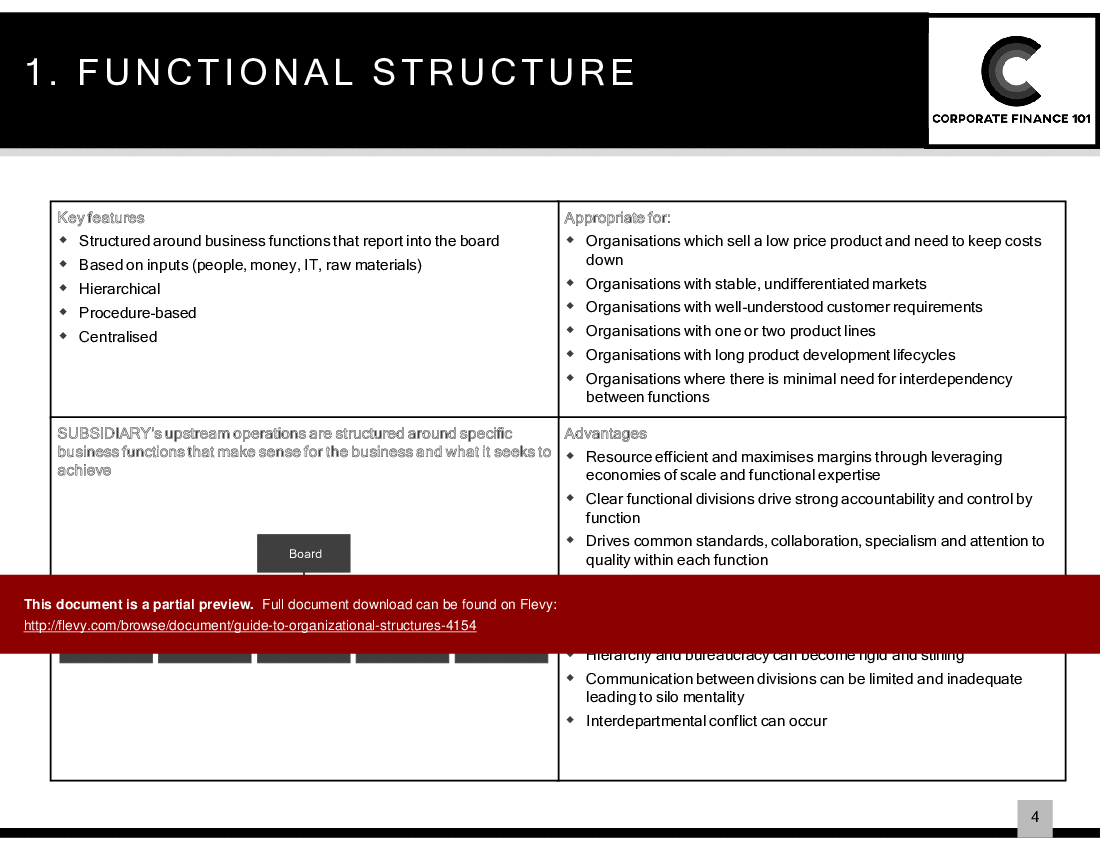
Functional structures are ideal for organizations with stable markets and well-understood customer requirements. They drive accountability and control by function, leveraging economies of scale and functional expertise. However, they can become rigid, leading to interdepartmental conflicts and limited communication between divisions.

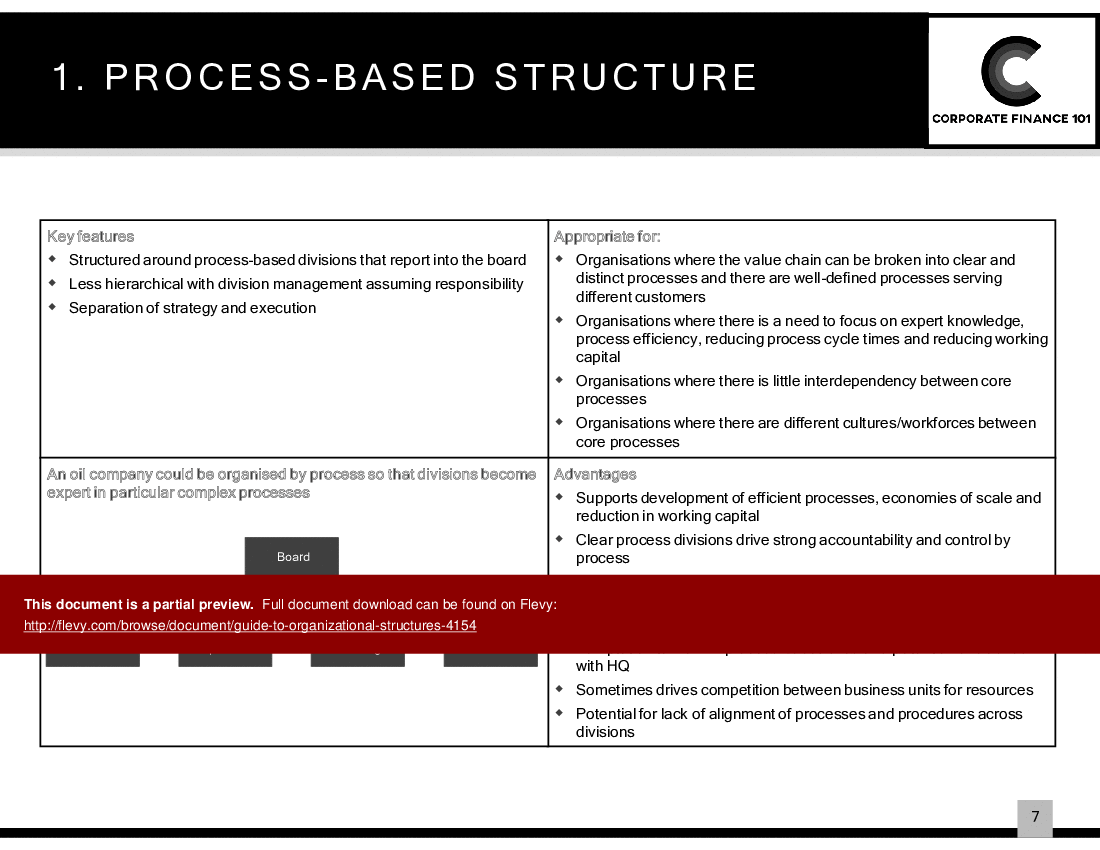
Process-based structures focus on breaking value chains into distinct processes, promoting efficiency and reducing working capital. They support efficient process development and strong accountability by process. Yet, they may drive competition for resources and misalignment of processes across divisions. This guide is essential for executives seeking to optimize organizational design for operational excellence.

Got a question about the product? Email us at support@flevy.com or ask the author directly by using the "Ask the Author a Question" form. If you cannot view the preview above this document description, go here to view the large preview instead.

MARCUS OVERVIEW

This synopsis was written by Marcus [?] based on the analysis of the full 17-slide presentation.


Executive Summary
The Guide to Organizational Structures is a comprehensive resource that outlines various types of organizational structures, focusing particularly on the matrix structure. This consulting-grade presentation, akin to McKinsey, Bain, or BCG-quality, provides insights into the advantages and disadvantages of each structure, critical success factors for matrix structures, and alternatives when a matrix structure may not be suitable. By utilizing this guide, corporate executives and organizational leaders can effectively design and implement organizational frameworks that align with their strategic goals.

Who This Is For and When to Use
•  Corporate executives involved in organizational design and restructuring
•  HR leaders responsible for workforce planning and development
•  Management consultants advising on organizational effectiveness
•  Project managers overseeing cross-functional initiatives
•  Change management professionals facilitating transitions

Best-fit moments to use this deck:
•  During the high-level design phase of organizational restructuring
•  When evaluating the implications of different organizational structures
•  In workshops focused on improving organizational efficiency and effectiveness
•  For training sessions on organizational design principles and practices

Learning Objectives
•  Define the various types of organizational structures and their applications
•  Analyze the advantages and disadvantages of matrix structures
•  Identify critical success factors for implementing matrix structures
•  Explore alternatives to matrix structures and their suitability
•  Develop a framework for assessing organizational design options
•  Create actionable plans for implementing chosen organizational structures

Table of Contents
•  Types of Organizational Structure (page 3)
•  Examples of Matrix Structures (page 10)
•  Critical Success Factors for Matrix Structures (page 14)
•  Alternatives to the Matrix Structure (page 17)
•  References (page 18)

Primary Topics Covered
•  Types of Organizational Structure - An overview of various organizational structures, including functional, product-based, geographic, process-based, customer-based, and matrix structures.
•  Matrix Structure - A detailed examination of the matrix structure, highlighting its dual reporting relationships and the balance between centralization and decentralization.
•  Critical Success Factors - Key elements necessary for the successful implementation of matrix structures, including clear roles, effective communication, and robust information systems.
•  Alternatives to Matrix Structure - Exploration of other organizational frameworks that may be more suitable depending on specific business needs and contexts.

Deliverables, Templates, and Tools
•  Organizational structure assessment template for evaluating potential designs
•  Matrix structure implementation checklist to ensure critical success factors are addressed
•  Communication plan template for facilitating knowledge sharing in matrix environments
•  Performance management framework for aligning individual and organizational goals

Slide Highlights
•  Overview of different organizational structures with visual representations
•  Detailed breakdown of the matrix structure, including its advantages and limitations
•  Critical success factors slide emphasizing the importance of clear roles and responsibilities
•  Alternatives to matrix structures with pros and cons for each option

Potential Workshop Agenda
Understanding Organizational Structures (60 minutes)
•  Introduce types of organizational structures and their relevance
•  Discuss advantages and disadvantages of each structure

Matrix Structure Deep Dive (90 minutes)
•  Explore the matrix structure in detail, including examples and case studies
•  Identify critical success factors for successful implementation

Alternatives and Application (60 minutes)
•  Discuss alternatives to matrix structures and when to use them
•  Facilitate group discussions on organizational design challenges

Customization Guidance
•  Tailor the organizational structure assessment template to reflect specific industry needs
•  Adjust the communication plan to align with organizational culture and existing practices
•  Modify the performance management framework to incorporate organizational values and objectives

Secondary Topics Covered
•  Hybrid organizational structures and their applications
•  The role of technology in supporting organizational design
•  Change management strategies during organizational restructuring

Topic FAQ

What are the main types of organizational structures and when is each appropriate?

Common organizational structures include functional, product-based, geographic, process-based, customer-based, and matrix, each serving different needs: functional for stable markets, product for product specialization, geographic for local responsiveness, process for efficiency, and matrix for multi-dimensional demands—six main types in total.

What defines a matrix organizational structure and what are its key features?

A matrix structure is defined by dual reporting relationships where employees report along 2 dimensions (e.g., function and project), seeking a balance between centralization and decentralization. Variants include functional, geographic, and project matrices, with dual reporting across those dimensions.

What are critical success factors for implementing a matrix structure?

Key factors cited include clearly defined roles and responsibilities, effective communication mechanisms, aligned organizational goals, and robust information systems to support decision-making and coordination—clear roles, communication, aligned goals, and information systems.

What common challenges arise in matrix organizations and what practical steps address them?

Common challenges include confused accountabilities, overlapping responsibilities, and higher coordination costs. Practical steps from organizational practice involve establishing formal communication mechanisms, promoting knowledge sharing, and using tools such as a communication plan template and RACI definitions.

What should I look for when buying an organizational structure toolkit for high-level design?

Buyers should seek materials that compare structure types, provide implementation checklists, include assessment templates and communication planning, and offer performance alignment tools. Look for an organizational structure assessment template and a matrix structure implementation checklist in the toolkit.

How much time should I plan for workshops to cover organizational structure types and matrix implementation?

A recommended workshop agenda in practitioner guidance breaks content into modules: a 60-minute overview of structure types, a 90-minute matrix deep dive with examples and case studies, and a 60-minute session on alternatives and application, totaling 210 minutes.

After a merger, which structure frameworks should we evaluate to organize the combined entity?

Evaluate functional, product-based, geographic, process-based, customer-based, and matrix structures, plus hybrid configurations, centers of excellence, and cross-organizational networks to address integration complexity—consider the 6 main structure types plus hybrid and centers of excellence options.

How can I assess which organizational structure best fits my company’s needs?

Use a structured assessment that compares organizational goals, operating context, resource allocation, and coordination needs; apply an organizational structure assessment template and align findings to a performance management framework to decide among candidate designs.

Document FAQ
These are questions addressed within this presentation.

What are the main types of organizational structures?
The main types include functional, product-based, geographic, process-based, customer-based, and matrix structures, each serving different organizational needs.

When should a matrix structure be used?
A matrix structure is suitable for organizations operating in complex environments that require responsiveness to multiple demands and projects.

What are the critical success factors for matrix structures?
Key factors include clearly defined roles, effective communication, aligned organizational goals, and robust information systems.

What are some alternatives to matrix structures?
Alternatives include organizational performance measures, establishing centers of excellence, and developing networks for cross-organizational collaboration.

How can I assess which organizational structure is right for my organization?
Utilize the organizational structure assessment template to evaluate your specific needs, goals, and operational context.

What challenges might arise with a matrix structure?
Challenges include confused accountabilities, overlapping responsibilities, and potential for increased coordination costs.

How can communication be improved in a matrix organization?
Establish formal communication mechanisms and promote a culture of knowledge sharing among teams.

What role does technology play in organizational design?
Technology supports information sharing, enhances communication, and facilitates efficient decision-making across organizational structures.

Glossary
•  Matrix Structure - An organizational framework that incorporates dual reporting relationships across multiple dimensions.
•  Functional Structure - An organization structured around specific business functions, typically hierarchical.
•  Product-Based Structure - An organizational design focused on product divisions, allowing for specialized management.
•  Geographic-Based Structure - An organization segmented by geographic regions to address local needs.
•  Process-Based Structure - A framework organized around distinct processes to enhance efficiency and expertise.
•  Customer-Based Structure - An organizational design centered on customer segments to improve service delivery.
•  Critical Success Factors - Essential elements that contribute to the successful implementation of a strategy or structure.
•  Hybrid Structure - A combination of various organizational structures tailored to different parts of a business.
•  RACI Tool - A framework for defining roles and responsibilities in project management.
•  Knowledge Sharing - The practice of exchanging information and insights among individuals or teams.
•  Performance Management - A systematic process for improving organizational performance by managing employee performance.
•  Organizational Design - The process of aligning an organization’s structure with its mission and goals.
•  Change Management - The discipline of managing the transition of individuals, teams, and organizations to a desired future state.
•  Communication Plan - A strategic approach to ensuring effective communication within an organization.
•  Information Systems - Technology systems that support data management, communication, and decision-making processes.
•  Accountability - The obligation of individuals or teams to report on their performance and outcomes.
•  Decision-Making Process - The steps taken to identify and choose alternatives based on values and preferences.
•  Organizational Culture - The shared values, beliefs, and practices that shape how work is done within an organization.
•  Stakeholder Engagement - The process of involving individuals or groups who may be affected by or can influence an organization’s decisions.
•  Resource Allocation - The distribution of resources among various projects or business units.
•  Operational Efficiency - The ability to deliver products or services in the most cost-effective manner without compromising quality.
•  Business Performance Measures - Metrics used to assess the efficiency and effectiveness of an organization’s operations.

ORGANIZATIONAL STRUCTURE PPT SLIDES

Overview of Organizational Structure Types

Essential Factors for Effective Matrix Structure Implementation

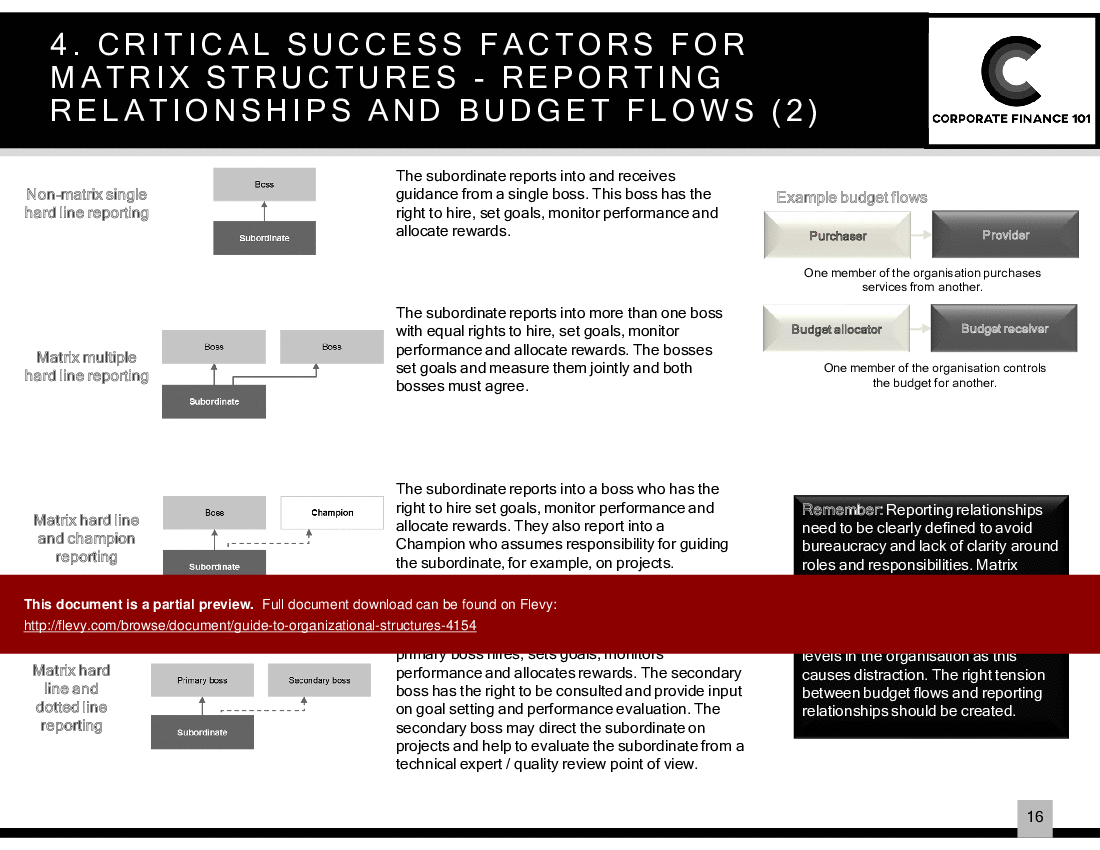
Understanding Reporting Relationships in Matrix Structures

Framework for Effective Organizational Structure Design

Regional Organizational Framework Analysis

Source: Best Practices in Organizational Structure PowerPoint Slides: Guide to Organizational Structures PowerPoint (PPTX) Presentation Slide Deck, Corporate Finance 101


$20.00

Add to Cart
  

ABOUT THE AUTHOR

Additional documents from author: 37

Corporate Finance 101 consists of ex EY and Grant Thornton consultants who have experience helping professionals across disciplines, with a focus on strategy consulting and transaction advisory.

These documents are prepared to help you increase the impact of your business communication and save you valuable time.

The documents are based upon techniques learned while working at ... [read more]

Ask the Author a Question

You must be logged in to contact the author.

Click here to log in Click here register

Did you know?
The average daily rate of a McKinsey consultant is $6,625 (not including expenses). The average price of a Flevy document is $65.


Trusted by over 10,000+ Client Organizations
Since 2012, we have provided business templates to over 10,000 businesses and organizations of all sizes, from startups and small businesses to the Fortune 100, in over 130 countries.
AT&T GE Cisco Intel IBM Coke Dell Toyota HP Nike Samsung Microsoft Astrazeneca JP Morgan KPMG Walgreens Walmart 3M Kaiser Oracle SAP Google E&Y Volvo Bosch Merck Fedex Shell Amgen Eli Lilly Roche AIG Abbott Amazon PwC T-Mobile Broadcom Bayer Pearson Titleist ConEd Pfizer NTT Data Schwab


Read Customer Testimonials

 
"As a consultant requiring up to date and professional material that will be of value and use to my clients, I find Flevy a very reliable resource.

The variety and quality of material available through Flevy offers a very useful and commanding source for information. Using Flevy saves me time, enhances my expertise and ends up being a good decision."

– Dennis Gershowitz, Principal at DG Associates
 
"I have found Flevy to be an amazing resource and library of useful presentations for lean sigma, change management and so many other topics. This has reduced the time I need to spend on preparing for my performance consultation. The library is easily accessible and updates are regularly provided. A wealth of great information."

– Cynthia Howard RN, PhD, Executive Coach at Ei Leadership
 
"Flevy.com has proven to be an invaluable resource library to our Independent Management Consultancy, supporting and enabling us to better serve our enterprise clients.

The value derived from our [FlevyPro] subscription in terms of the business it has helped to gain far exceeds the investment made, making a subscription a no-brainer for any growing consultancy – or in-house strategy team."

– Dean Carlton, Chief Transformation Officer, Global Village Transformations Pty Ltd.
 
"As a consulting firm, we had been creating subject matter training materials for our people and found the excellent materials on Flevy, which saved us 100's of hours of re-creating what already exists on the Flevy materials we purchased."

– Michael Evans, Managing Director at Newport LLC
 
"FlevyPro provides business frameworks from many of the global giants in management consulting that allow you to provide best in class solutions for your clients."

– David Harris, Managing Director at Futures Strategy
 
"As a young consulting firm, requests for input from clients vary and it's sometimes impossible to provide expert solutions across a broad spectrum of requirements. That was before I discovered Flevy.com.

Through subscription to this invaluable site of a plethora of topics that are key and crucial to consulting, I "

– Nishi Singh, Strategist and MD at NSP Consultants
 
"FlevyPro has been a brilliant resource for me, as an independent growth consultant, to access a vast knowledge bank of presentations to support my work with clients. In terms of RoI, the value I received from the very first presentation I downloaded paid for my subscription many times over! The "

– Roderick Cameron, Founding Partner at SGFE Ltd
 
"Last Sunday morning, I was diligently working on an important presentation for a client and found myself in need of additional content and suitable templates for various types of graphics. Flevy.com proved to be a treasure trove for both content and design at a reasonable price, considering the time I "

– M. E., Chief Commercial Officer, International Logistics Service Provider


Customers Also Bought These Documents


Customers Also Like These Documents

Explore Related Management Topics


Your Recently Viewed Documents
Download our FREE Organization, Change, & Culture, Templates

Download our free compilation of 50+ slides and templates on Organizational Design, Change Management, and Corporate Culture. Methodologies include ADKAR, Burke-Litwin Change Model, McKinsey 7-S, Competing Values Framework, etc.










