
Value Chain Analysis   16-slide PPT PowerPoint presentation slide deck (PPT)
$29.00

Value Chain Analysis (16-slide PPT PowerPoint presentation slide deck (PPT)) Preview Image
Log in to unlock full preview.
Value Chain Analysis (16-slide PPT PowerPoint presentation slide deck (PPT)) Preview Image
Arrow   Click main image to view in full screen.

Value Chain Analysis (PowerPoint PPT Slide Deck)

PowerPoint (PPT) 16 Slides

Top 1,000 Best Practice $29.00
This presentation is created by former McKinsey, BCG, Deloitte, EY, and Capgemini consultants. It teaches a practical consulting framework actively used by tier-1 consulting firms.
Add to Cart


Immediate download
Free lifetime updates

VALUE CHAIN ANALYSIS PPT DESCRIPTION

Value Chain Analysis PPT: Download a ready-to-use template to map retail and strategic value chains. Includes slides for analysis, integration, and competitor insights. Value Chain Analysis is a 16-slide PPT PowerPoint presentation slide deck (PPT) available for immediate download upon purchase.

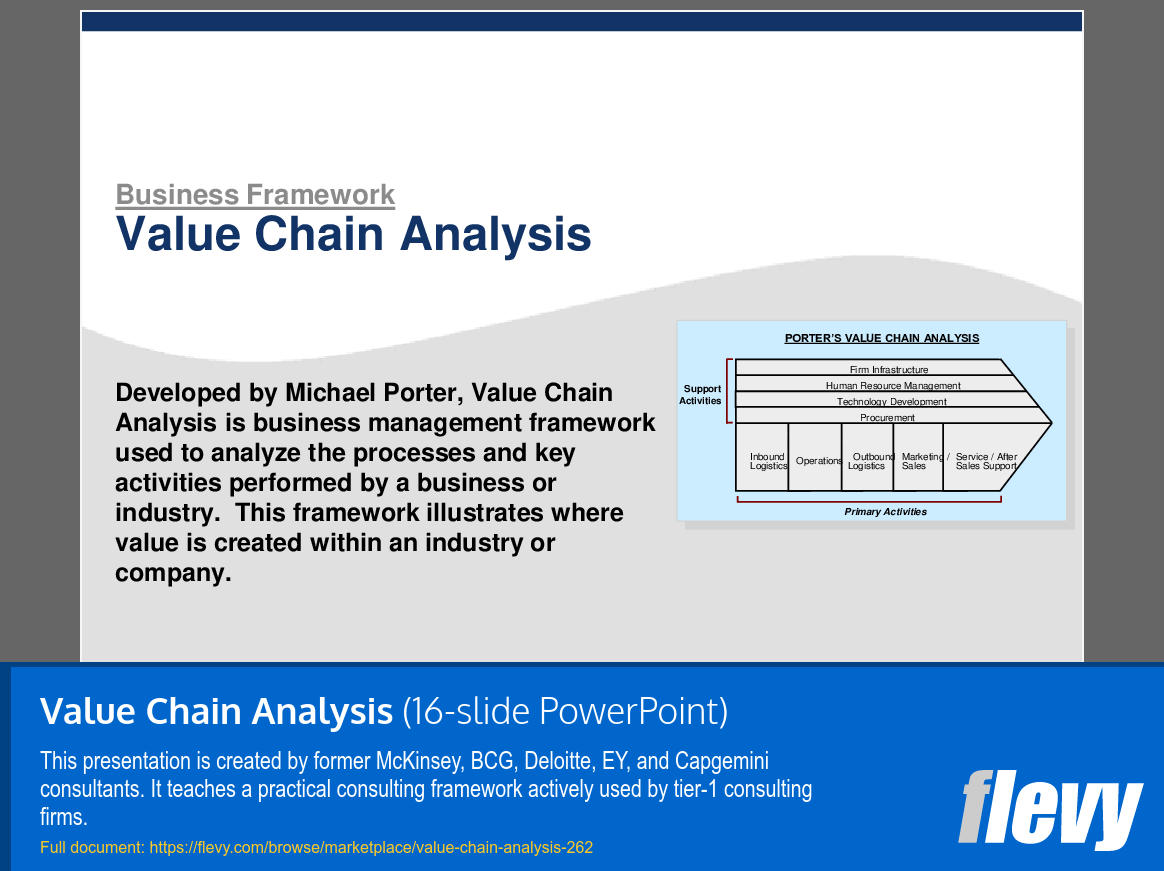
Developed by Michael Porter, Value Chain Analysis is strategic management framework used to analyze the processes and key activities performed by a business or industry. This framework illustrates where value is created within an industry or company.

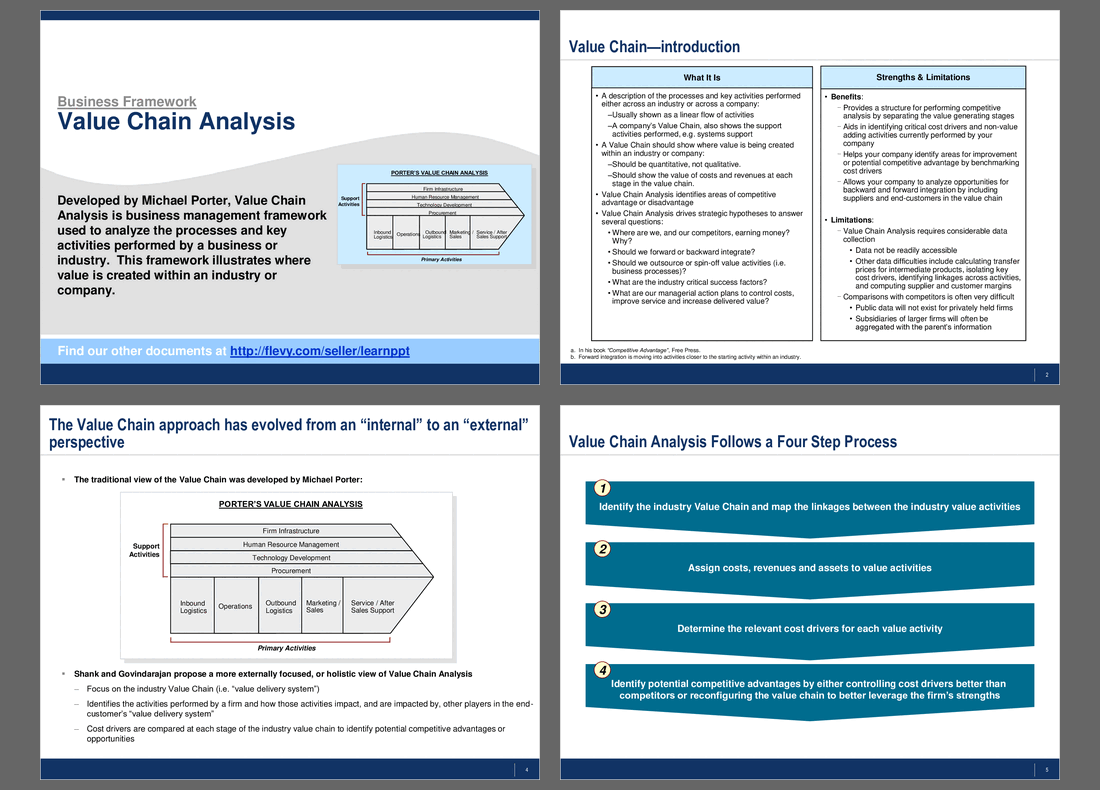
The conventional view of the Porter Value Chain (depicted in a multi-level chevron diagram) captures 5 primary activities and 4 support (secondary) activities:

Primary Activities
•  Inbound Logistics
•  Operations
•  Outbound Logistics
•  Marketing & Sales
•  Service & After Sales Support

Support Activities
•  Firm Infrastructure
•  Human Resource Management
•  Technology Development (IT)
•  Procurement

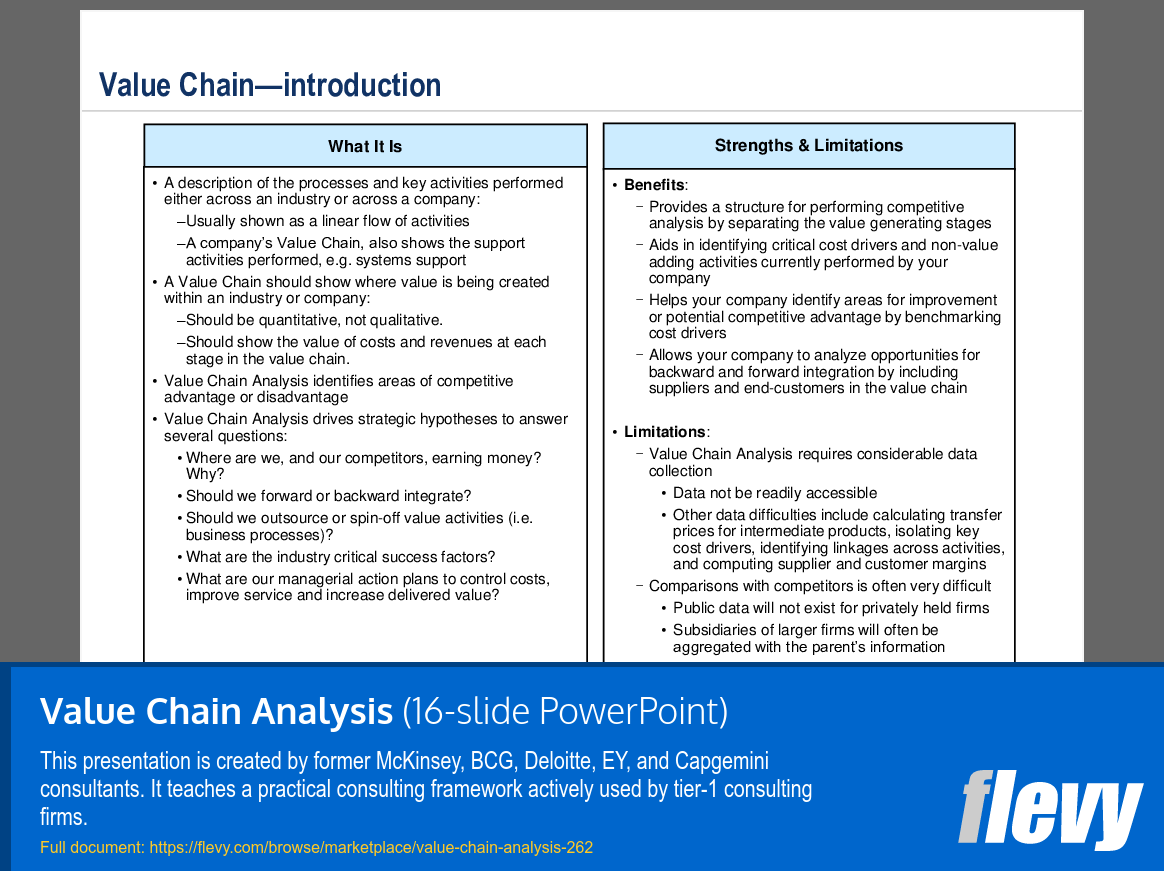
Through Value Chain Analysis, we can identify areas of competitive advantage (or disadvantage) by benchmarking cost drivers. It also provides a structure for performing competitive analysis by separating the value generating stages. This analysis also allows your organization to analyze opportunities for backward and forward integration by including suppliers and end-customers in the Value Chain.

Value Chain Analysis also drives strategic hypotheses to answer several critical strategic management questions:

•  Where are we, and our competitors, earning money? Why?
•  Should we forward or backward integrate?
•  Should we outsource or spin-off value activities (i.e. business processes)?
•  What are the industry critical success factors?
•  What are our managerial action plans to control costs, improve service, and increase delivered value?

This Value Chain Analysis PPT presentation breaks down a 4-step process to Value Chain Analysis:

1. Identify the industry Value Chain and map the linkages between the industry value activities.
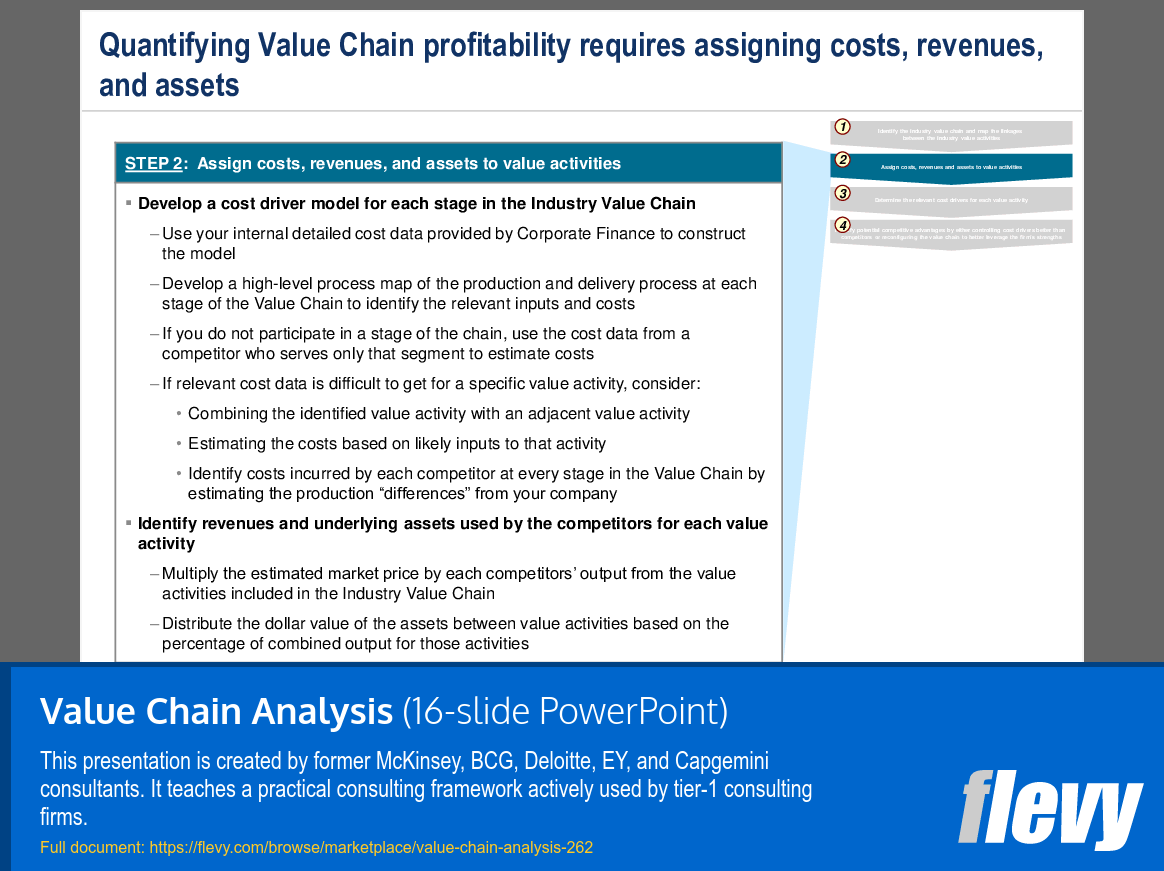
2. Assign costs, revenues and assets to value activities.
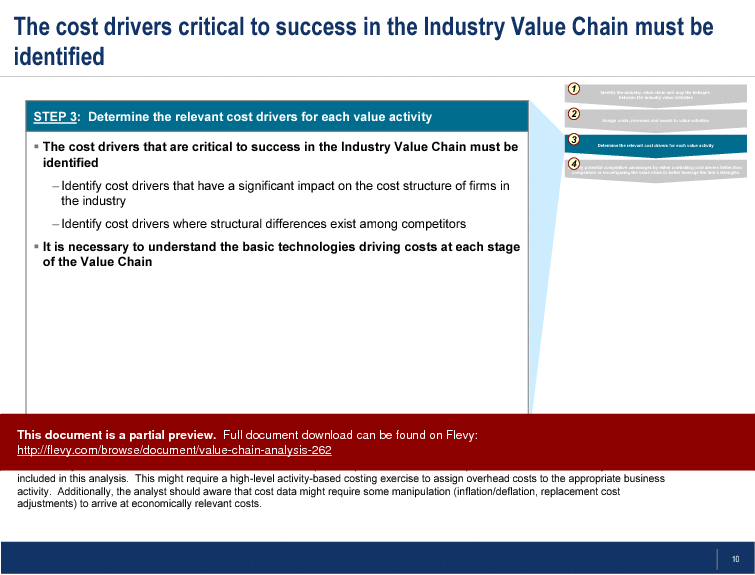
3. Determine the relevant cost drivers for each value activity.
4. Identify potential competitive advantages by either controlling cost drivers better than competitors or reconfiguring the value chain to better leverage the organization's strengths.

Value Chain Analysis is a powerful tool in Strategic Management. This PowerPoint presentation provides an in-depth explanation of the framework with detailed examples and is the same training material used by global management consulting firms.

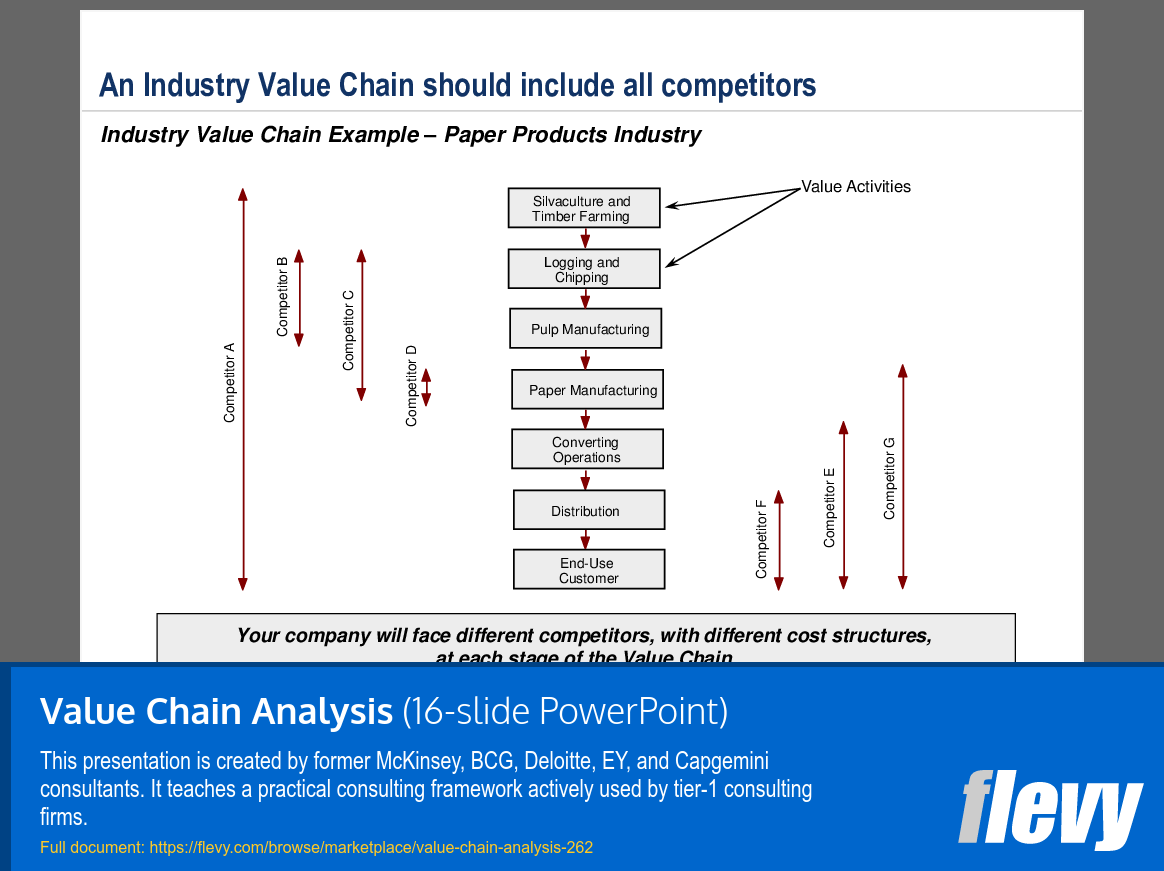
This presentation also includes detailed industry examples, such as the paper products industry, to illustrate practical applications. It emphasizes the importance of identifying cost drivers and understanding competitive trends to optimize your value chain strategy.

Got a question about the product? Email us at support@flevy.com or ask the author directly by using the "Ask the Author a Question" form. If you cannot view the preview above this document description, go here to view the large preview instead.

MARCUS OVERVIEW

This synopsis was written by Marcus [?] based on the analysis of the full 16-slide presentation.


Executive Summary
The Value Chain Analysis presentation is a consulting-grade framework developed by Michael Porter, designed to analyze the processes and key activities performed by a business or industry. This McKinsey, Bain, or BCG-quality resource illustrates how value is created within an industry or company, enabling users to identify competitive advantages and strategic opportunities. By utilizing this framework, executives and consultants can effectively assess where value is generated, determine cost drivers, and formulate action plans to enhance operational efficiency and service delivery.

Who This Is For and When to Use

•  Corporate executives seeking to understand their company's value creation processes
•  Strategy consultants analyzing industry dynamics and competitive positioning
•  Business analysts evaluating operational efficiencies and cost structures
•  Integration leaders looking to identify areas for backward or forward integration

Best-fit moments to use this deck:
•  During strategic planning sessions to assess competitive positioning
•  When conducting market analysis to identify industry critical success factors
•  In workshops aimed at improving operational efficiencies and cost management

Learning Objectives

•  Define the components of a value chain and their relevance to competitive advantage
•  Identify primary and support activities within an industry value chain
•  Analyze cost drivers and their impact on profitability across value activities
•  Develop strategic hypotheses based on value chain insights
•  Map customer experiences to identify areas for improvement
•  Formulate actionable plans to enhance service delivery and operational efficiency

Table of Contents

•  Introduction to Value Chain Analysis (page 2)
•  Benefits and Limitations of Value Chain Analysis (page 3)
•  Steps in Developing a Value Chain (page 4)
•  Identifying the Industry Value Chain (page 6)
•  Assigning Costs, Revenues, and Assets (page 9)
•  Determining Relevant Cost Drivers (page 10)
•  Identifying Competitive Advantages (page 12)
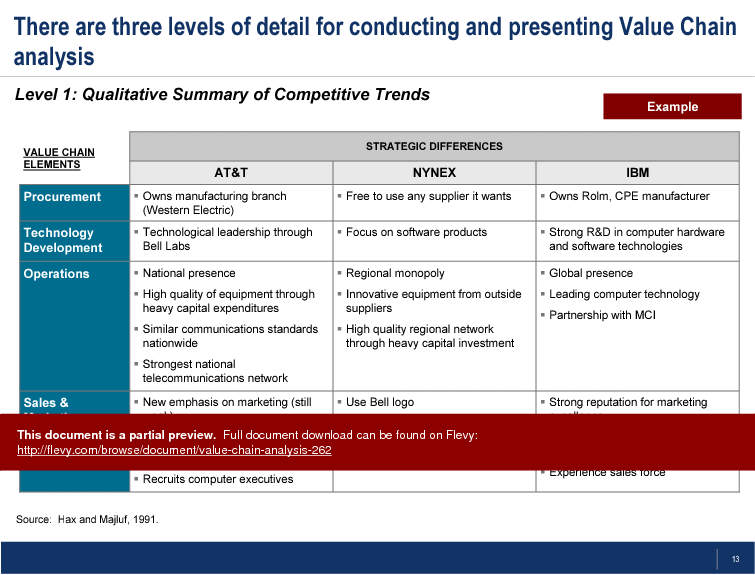
•  Levels of Detail in Value Chain Analysis (page 13)
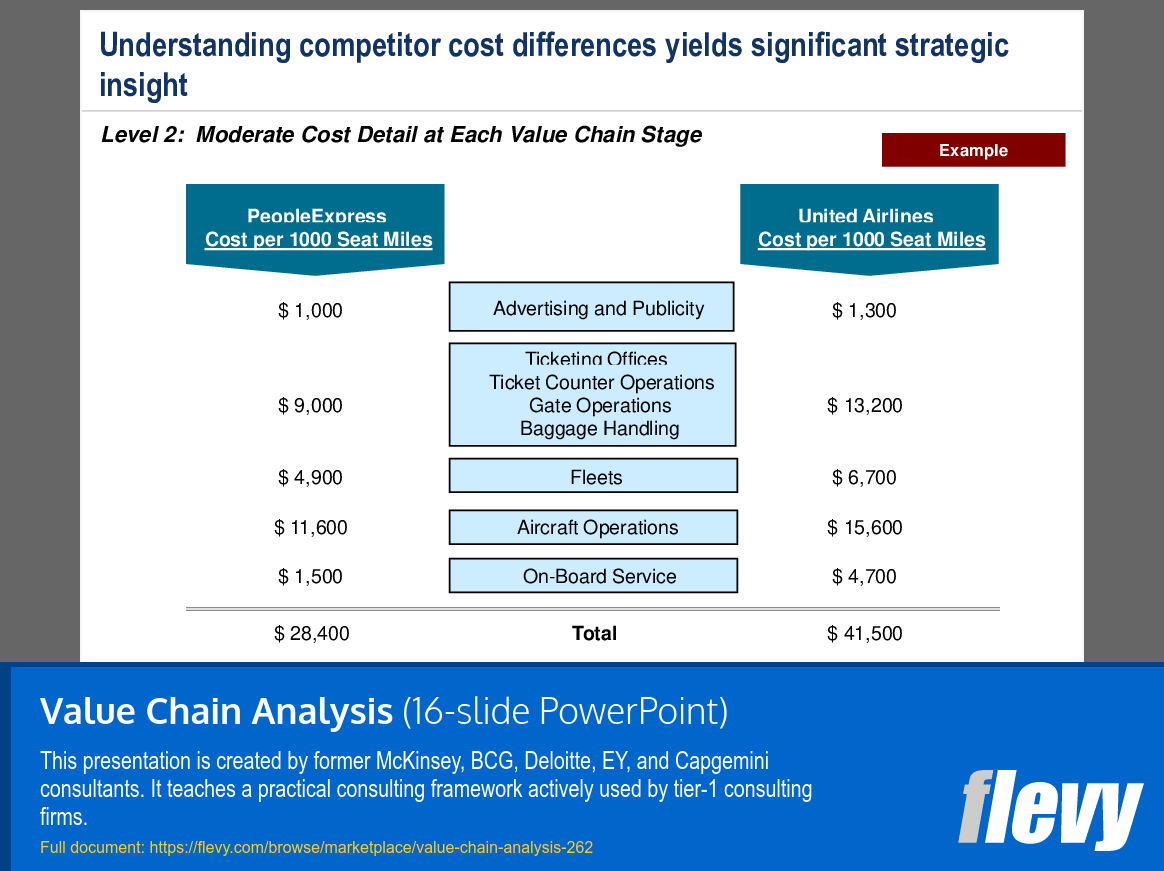
•  Understanding Competitor Cost Differences (page 14)
•  Calculating Profitability at Each Value Chain Stage (page 15)
•  Tips and Data Sources for Value Chain Analysis (page 16)

Primary Topics Covered

•  Value Chain Definition - A structured representation of the processes and activities that create value within an industry or company, typically illustrated as a linear flow.
•  Primary and Support Activities - Distinction between primary activities (e.g., operations, marketing) and support activities (e.g., human resource management, technology development) that contribute to value creation.
•  Cost Driver Analysis - Identification of key cost drivers affecting profitability at each stage of the value chain, enabling firms to pinpoint areas for improvement.
•  Competitive Advantage Identification - Strategies to leverage strengths or control cost drivers better than competitors to gain a competitive edge.
•  Industry Value Chain Mapping - Visual representation of the interconnected activities performed by firms within an industry, highlighting relationships and dependencies.
•  Quantitative Value Assessment - Emphasis on quantitative analysis of costs and revenues at each stage, facilitating a clear understanding of value generation.

Deliverables, Templates, and Tools

•  Value chain mapping template for visualizing industry activities
•  Cost driver model template for analyzing financial impacts
•  Strategic hypothesis framework for identifying competitive advantages
•  Customer experience mapping tool to enhance service delivery
•  Benchmarking template for comparing cost structures with competitors
•  Action plan template for operational improvements

Slide Highlights

•  Overview of Porter’s Value Chain and its components
•  Benefits and limitations of conducting a value chain analysis
•  Step-by-step process for identifying and mapping the industry value chain
•  Examples of industry value chains, such as the paper products industry
•  Detailed cost driver analysis and its implications for competitive strategy
•  Visual representation of competitor cost differences and profitability analysis

Potential Workshop Agenda

Value Chain Mapping Session (90 minutes)
•  Introduce the concept of value chains and their importance
•  Identify primary and support activities within the industry
•  Map the industry value chain and discuss linkages

Cost Driver Analysis Workshop (60 minutes)
•  Analyze cost drivers affecting each value activity
•  Discuss strategies for controlling costs and enhancing value
•  Develop a cost driver model for the organization

Competitive Advantage Strategy Session (90 minutes)
•  Identify potential competitive advantages based on value chain insights
•  Formulate strategic hypotheses for operational improvements
•  Create actionable plans for leveraging strengths in the value chain

Customization Guidance

•  Tailor the value chain mapping to reflect specific industry dynamics and competitors
•  Adjust cost driver models based on internal financial data and competitor insights
•  Incorporate company-specific terminology and metrics into the analysis

Secondary Topics Covered

•  Industry critical success factors and their relevance to strategic planning
•  The role of technology development in enhancing value creation
•  Implications of backward and forward integration strategies
•  Challenges in data collection and analysis for value chain assessments
•  The evolution of value chain analysis from internal to external perspectives

FAQ

What is Value Chain Analysis?
Value Chain Analysis is a framework that helps organizations identify the processes and activities that create value within their operations, enabling strategic insights into competitive advantages.

How do I identify primary and support activities?
Primary activities are those directly involved in creating and delivering a product or service, while support activities facilitate these processes. Distinguishing between them is essential for effective analysis.

What are cost drivers, and why are they important?
Cost drivers are factors that significantly impact the cost structure of activities within the value chain. Understanding them helps organizations identify areas for cost reduction and efficiency improvements.

How can I use Value Chain Analysis to improve my business?
By mapping your value chain, you can identify inefficiencies, assess competitive positioning, and formulate strategies to enhance operational performance and customer satisfaction.

What data sources are useful for conducting Value Chain Analysis?
Useful data sources include annual reports, industry reports, competitor financial statements, and insights from industry experts.

How does Value Chain Analysis help in strategic planning?
It provides a structured approach to understanding where value is created, allowing organizations to make informed decisions about resource allocation and strategic initiatives.

What are the limitations of Value Chain Analysis?
Limitations include the need for extensive data collection, challenges in comparing private firms, and potential difficulties in isolating key cost drivers.

How can I quantify profitability at each stage of the Value Chain?
By assigning costs, revenues, and assets to each value activity, you can calculate profitability and identify opportunities for improvement.

What is the significance of mapping customer experiences in the Value Chain?
Mapping customer experiences helps organizations identify pain points and areas for enhancement, ultimately leading to improved service delivery and customer satisfaction.

Glossary

•  Value Chain - A structured representation of the activities that create value within an industry or company.
•  Primary Activities - Activities directly involved in creating and delivering a product or service.
•  Support Activities - Activities that facilitate primary activities, such as human resource management and technology development.
•  Cost Driver - A factor that significantly impacts the cost structure of a value activity.
•  Competitive Advantage - The ability of a firm to outperform its competitors by controlling cost drivers or leveraging strengths.
•  Industry Value Chain - A linked set of value activities performed by firms within an industry.
•  Quantitative Analysis - The process of assessing costs and revenues in numerical terms to evaluate performance.
•  Benchmarking - Comparing performance metrics with industry standards or competitors to identify areas for improvement.
•  Strategic Hypothesis - A proposed explanation or strategy based on insights gained from value chain analysis.
•  Operational Efficiency - The ability to deliver products or services with minimal waste and maximum value.
•  Customer Experience Mapping - A visual representation of the customer journey through the value chain.
•  Backward Integration - A strategy where a company takes control of its suppliers.
•  Forward Integration - A strategy where a company takes control of its distribution channels or customers.
•  Data Collection - The process of gathering information necessary for conducting value chain analysis.
•  Financial Statistics - Metrics used to assess the financial performance of value activities.
•  Differentiation - The process of distinguishing a product or service from others in the market.
•  Operational Costs - Expenses incurred in the process of delivering products or services.
•  Market Positioning - The strategy of positioning a brand or product in the marketplace relative to competitors.
•  Value Delivery System - The interconnected activities that deliver value to customers.
•  Strategic Planning - The process of defining an organization's direction and making decisions on allocating resources.
•  Industry Dynamics - The changing factors and trends that affect the competitive landscape of an industry.

VALUE CHAIN ANALYSIS PPT SLIDES

Understanding Value Chain Analysis: Overview and Insights

Evolving Perspectives in Value Chain Analysis

Four-Step Framework for Value Chain Analysis

Cost Structure Comparison: PeopleExpress vs. United Airlines

Value Delivery System in Paper Products Industry

Framework for Assigning Costs and Revenues in Value Chain

Comprehensive Value Chain Analysis for Paper Products

Source: Best Practices in Value Chain Analysis PowerPoint Slides: Value Chain Analysis PowerPoint (PPT) Presentation Slide Deck, LearnPPT Consulting


$29.00
This presentation is created by former McKinsey, BCG, Deloitte, EY, and Capgemini consultants. It teaches a practical consulting framework actively used by tier-1 consulting firms.
Add to Cart
  

ABOUT THE AUTHOR

Author image
Additional documents from author: 141

We are a team of management consultants trained by top tier global consulting firms (including McKinsey, BCG, Deloitte, EY, Capgemini) with a collective experience of several decades. We specialize in business frameworks based on real-life consulting engagements.

We have served 100s of clients that range from Fortune 500 companies to tech startups to ... [read more]

Ask the Author a Question

You must be logged in to contact the author.

Click here to log in Click here register

Did you know?
The average daily rate of a McKinsey consultant is $6,625 (not including expenses). The average price of a Flevy document is $65.

Bundle and save! You can save up to % with bundles!

View bundle(s)


Trusted by over 10,000+ Client Organizations
Since 2012, we have provided business templates to over 10,000 businesses and organizations of all sizes, from startups and small businesses to the Fortune 100, in over 130 countries.
AT&T GE Cisco Intel IBM Coke Dell Toyota HP Nike Samsung Microsoft Astrazeneca JP Morgan KPMG Walgreens Walmart 3M Kaiser Oracle SAP Google E&Y Volvo Bosch Merck Fedex Shell Amgen Eli Lilly Roche AIG Abbott Amazon PwC T-Mobile Broadcom Bayer Pearson Titleist ConEd Pfizer NTT Data Schwab


Read Customer Testimonials

 
"I have used FlevyPro for several business applications. It is a great complement to working with expensive consultants. The quality and effectiveness of the tools are of the highest standards."

– Moritz Bernhoerster, Global Sourcing Director at Fortune 500
 
"As a consulting firm, we had been creating subject matter training materials for our people and found the excellent materials on Flevy, which saved us 100's of hours of re-creating what already exists on the Flevy materials we purchased."

– Michael Evans, Managing Director at Newport LLC
 
"As an Independent Management Consultant, I find Flevy to add great value as a source of best practices, templates and information on new trends. Flevy has matured and the quality and quantity of the library is excellent. Lastly the price charged is reasonable, creating a win-win value for "

– Jim Schoen, Principal at FRC Group
 
"Flevy is our 'go to' resource for management material, at an affordable cost. The Flevy library is comprehensive and the content deep, and typically provides a great foundation for us to further develop and tailor our own service offer."

– Chris McCann, Founder at Resilient.World
 
"The wide selection of frameworks is very useful to me as an independent consultant. In fact, it rivals what I had at my disposal at Big 4 Consulting firms in terms of efficacy and organization."

– Julia T., Consulting Firm Owner (Former Manager at Deloitte and Capgemini)
 
"As a consultant requiring up to date and professional material that will be of value and use to my clients, I find Flevy a very reliable resource.

The variety and quality of material available through Flevy offers a very useful and commanding source for information. Using Flevy saves me time, enhances my expertise and ends up being a good decision."

– Dennis Gershowitz, Principal at DG Associates
 
"Last Sunday morning, I was diligently working on an important presentation for a client and found myself in need of additional content and suitable templates for various types of graphics. Flevy.com proved to be a treasure trove for both content and design at a reasonable price, considering the time I "

– M. E., Chief Commercial Officer, International Logistics Service Provider
 
"My FlevyPro subscription provides me with the most popular frameworks and decks in demand in today’s market. They not only augment my existing consulting and coaching offerings and delivery, but also keep me abreast of the latest trends, inspire new products and service offerings for my practice, and educate me "

– Bill Branson, Founder at Strategic Business Architects


Save with Bundles

This document is available as part of the following discounted bundle(s):

Save %!
Competitive and Company Cost Analysis

This bundle contains 5 total documents. See all the documents to the right.

$129.00


Add Bundle & Save


Customers Also Bought These Documents


Customers Also Like These Documents

Explore Related Management Topics


Your Recently Viewed Documents
Download our FREE Strategy & Transformation Framework Templates

Download our free compilation of 50+ Strategy & Transformation slides and templates. Frameworks include McKinsey 7-S, Balanced Scorecard, Disruptive Innovation, BCG Curve, and many more.