
Training Within Industry (TWI) Frameworks   63-slide PPT PowerPoint presentation slide deck (PPTX)
$49.00

Training Within Industry (TWI) Frameworks (63-slide PPT PowerPoint presentation slide deck (PPTX)) Preview Image
Log in to unlock full preview.
Training Within Industry (TWI) Frameworks (63-slide PPT PowerPoint presentation slide deck (PPTX)) Preview Image
Arrow   Click main image to view in full screen.

Training Within Industry (TWI) Frameworks (PowerPoint PPTX Slide Deck)

PowerPoint (PPTX) + Zip archive file (ZIP) 63 Slides

#1 in Training within Industry $49.00
Developed by a seasoned TWI Master Trainer with global experience at Microsoft, IBM and Panasonic, this collection serves as your resource for TWI Frameworks, enabling operational excellence and enhancing stakeholder satisfaction.
Add to Cart


Immediate download
Fully editable PowerPoint
Free lifetime updates

BENEFITS OF THIS POWERPOINT DOCUMENT

  1. Put the TWI tools and templates to immediate use to save time and effort.
  2. Easily editable TWI graphics, tools and templates to suit your specific needs and preferences.

EMPLOYEE TRAINING PPT DESCRIPTION

Editor Summary Training Within Industry (TWI) Frameworks is a 63-slide PowerPoint (PPTX) with a supplemental ZIP of templates, developed by a seasoned TWI Master Trainer with experience at Microsoft, IBM, and Panasonic. Read more

The Training Within Industry (TWI) program is a workplace training program that was developed in the United States during World War II to help rapidly train workers for new jobs in manufacturing industries. Today, the TWI program is still used by organizations worldwide to improve the skills of their workforce and increase productivity.

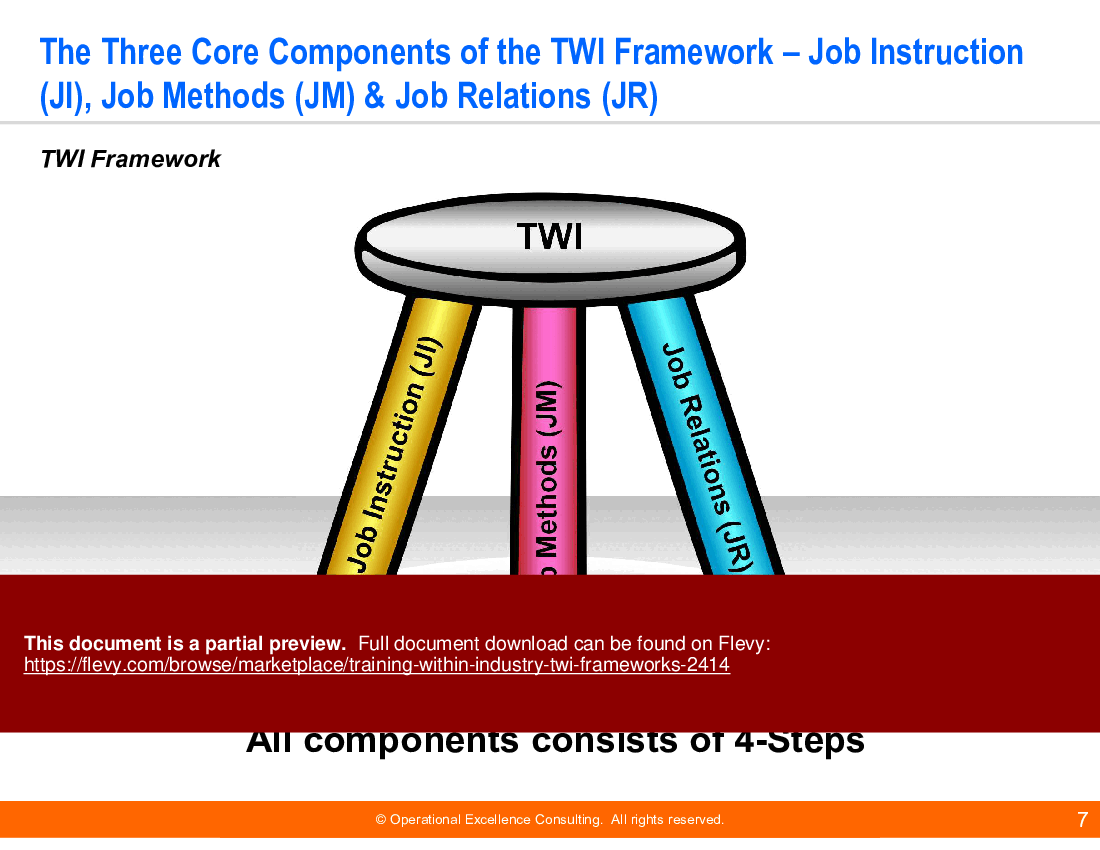
There are three main components of the TWI program: Job Instruction (JI), Job Methods (JM), and Job Relations (JR).

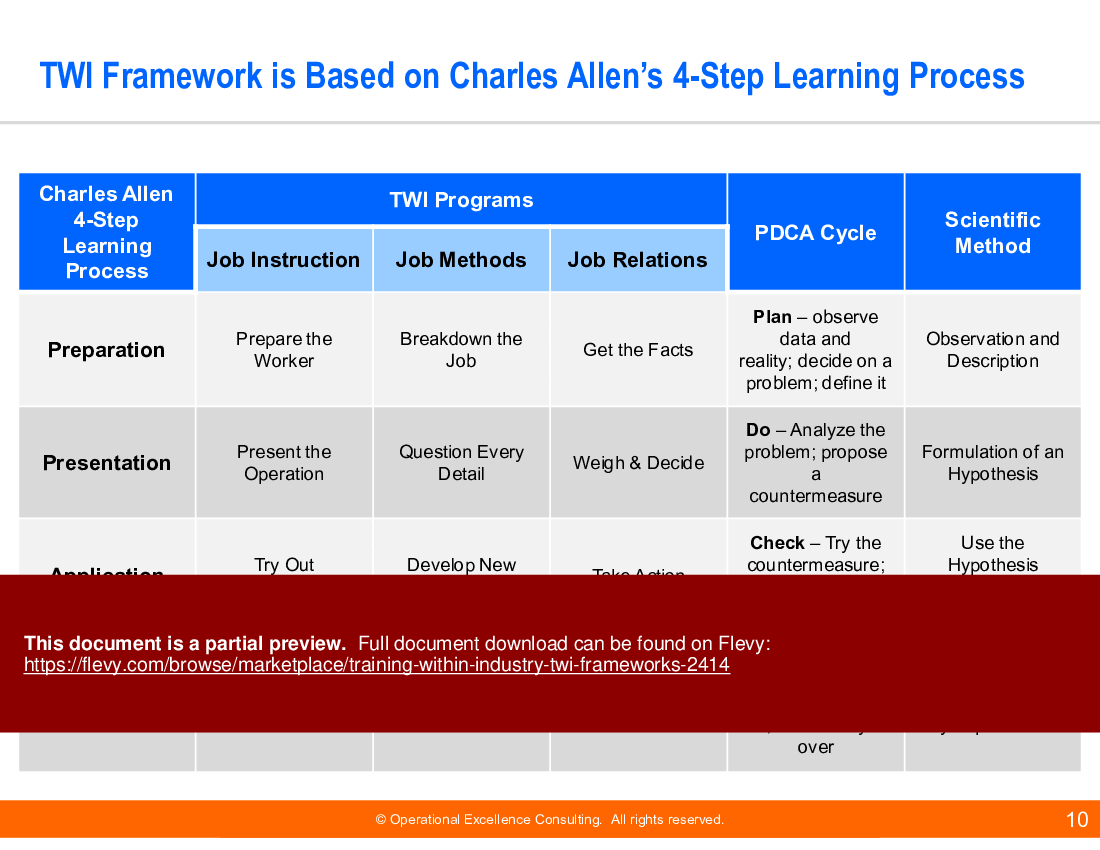
•  Job Instruction (JI) is a method for training employees on how to perform their jobs effectively and efficiently. It involves breaking down a job into smaller steps and teaching employees how to perform each step correctly. JI focuses on four key steps: Preparation, Presenting the Operation, Trying Out Performance, and Follow-up.

•  Job Methods (JM) is a problem-solving method that helps employees to identify and eliminate waste in their work processes. JM involves analyzing the current work process, breaking it down into smaller steps, and then developing a new, more efficient process.

•  Job Relations (JR) is a method for improving workplace relationships and reducing conflict. JR focuses on three key skills: understanding the needs of others, expressing oneself clearly, and solving problems collaboratively. By developing these skills, employees are better able to work together as a team, which can lead to increased productivity and job satisfaction.

Overall, the TWI program is designed to help organizations develop a more skilled and efficient workforce by providing employees with the knowledge, skills, and tools they need to perform their jobs effectively.

This TWI Frameworks is a collection of TWI diagrams, pocket cards and templates for Job Instruction (JI), Job Methods (JM), Job Relations (JR), Job Safety (JS) and Problem Solving (PS).

These tools and templates are useful for organizations who are preparing or implementing TWI programs. To get the most out of the tools and templates, they are best used together with the TWI four-step process.

(NOTE: If you had purchased our TWI training programs, all the diagrams, pocket cards and templates listed here were already included in the package and you need not purchase them again.)

THIS TWI FRAMEWORKS COLLECTION INCLUDE:

1. TWI Frameworks (PowerPoint format)
2. Job Instruction Breakdown Sheet (Word format)
3. Job Instruction Training Matrix (Excel format)
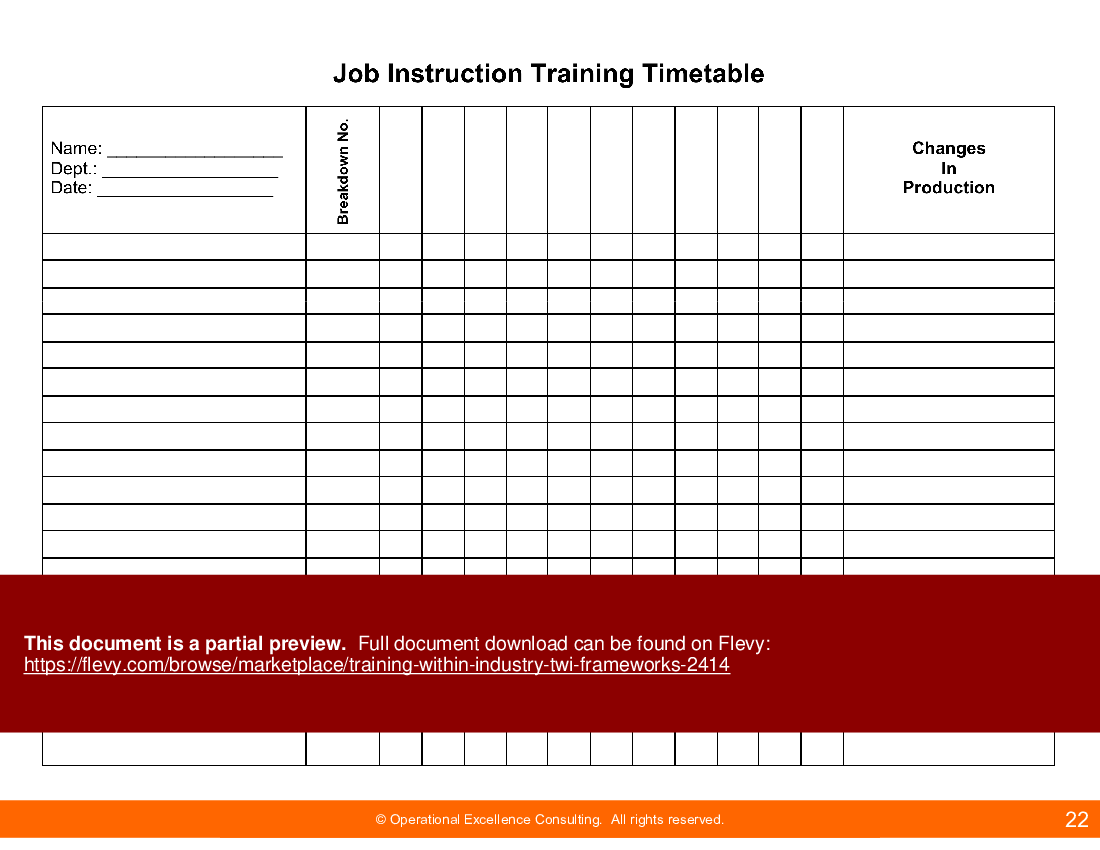
4. Job Instruction Training Timetable (Word format)
5. Job Methods Breakdown Sheet (simple) (Word format)
6. Job Methods Breakdown Sheet (8.5x11) (Word format)
7. Job Methods Breakdown Sheet (8.5x14) (Word format)
8. Job Methods Improvement Proposal Sheet (Word format)
9. Job Relations Situation Analysis Sheet (original) (Word format)
10. Job Relations Situation Analysis Sheet (revised) (Word format)
11. Job Safety Breakdown Sheet (Word format)
12. Problem Solving Problem Analysis Sheet (Word format)
13. Problem Solving Causation Analysis Sheet (Word format)
14. JI Pocket Card (PowerPoint format)
15. JM Pocket Card (PowerPoint format)
16. JR Pocket Card (PowerPoint format)
17. JS Pocket Card (PowerPoint format)

The TWI Frameworks collection includes detailed breakdown sheets and training timetables to streamline job instruction processes. These resources are essential for supervisors aiming to enhance operational efficiency and workforce competency.

Got a question about the product? Email us at support@flevy.com or ask the author directly by using the "Ask the Author a Question" form. If you cannot view the preview above this document description, go here to view the large preview instead.

MARCUS OVERVIEW

This synopsis was written by Marcus [?] based on the analysis of the full 63-slide presentation.


Executive Summary
The Training Within Industry (TWI) Frameworks presentation is a comprehensive resource designed to enhance workforce training through structured methodologies. Developed by a seasoned TWI Master Trainer with experience at leading organizations such as Microsoft, IBM, and Panasonic, this collection provides essential tools for implementing Job Instruction (JI), Job Methods (JM), Job Relations (JR), Job Safety (JS), and Problem Solving (PS). By utilizing these frameworks, organizations can achieve operational excellence and improve stakeholder satisfaction.

Who This Is For and When to Use
•  Supervisors and team leaders responsible for training and workforce development
•  Human resources professionals focused on employee engagement and performance
•  Operations managers aiming to streamline processes and enhance productivity
•  Safety officers dedicated to maintaining workplace safety standards

Best-fit moments to use this deck:
•  During onboarding sessions to train new employees effectively
•  In continuous improvement initiatives to refine job methods and safety protocols
•  When addressing interpersonal issues within teams to foster better job relations
•  For safety training sessions to ensure compliance and reduce workplace incidents

Learning Objectives
•  Define the core components of the TWI Frameworks and their applications
•  Build effective training sessions using the Job Instruction methodology
•  Establish continuous improvement processes through Job Methods training
•  Evaluate and resolve interpersonal issues using Job Relations techniques
•  Implement safety measures and protocols through Job Safety training
•  Apply structured problem-solving techniques to address operational challenges

Table of Contents
•  General Overview (page 1)
•  Job Instruction (JI) (page 2)
•  Job Methods (JM) (page 3)
•  Job Relations (JR) (page 4)
•  Job Safety (JS) (page 5)
•  Problem Solving (PS) (page 6)

Primary Topics Covered
•  Job Instruction (JI) - A structured approach to train employees quickly and effectively, ensuring they perform tasks correctly and safely.
•  Job Methods (JM) - Techniques to continuously improve job performance by analyzing and refining existing methods.
•  Job Relations (JR) - Strategies for supervisors to manage and resolve interpersonal issues, fostering a productive work environment.
•  Job Safety (JS) - A proactive methodology to identify hazards, implement countermeasures, and ensure workplace safety.
•  Problem Solving (PS) - A systematic approach to isolate and address operational problems, ensuring effective solutions are implemented.

Deliverables, Templates, and Tools
•  Job Instruction breakdown sheets for effective training sessions
•  Job Methods improvement proposal templates for process enhancement
•  Job Relations problem-solving sheets for evaluating and addressing interpersonal issues
•  Job Safety breakdown sheets for identifying and mitigating hazards
•  Problem-Solving tree diagrams to visualize and tackle operational challenges

Slide Highlights
•  Overview of the TWI Framework and its core components
•  Step-by-step Job Instruction methodology with practical examples
•  Job Methods questioning techniques to drive continuous improvement
•  Job Relations strategies for effective communication and conflict resolution
•  Job Safety incident chain and prevention strategies

Potential Workshop Agenda
TWI Framework Overview (30 minutes)
•  Introduce the TWI Framework and its significance
•  Discuss the core components and their applications

Job Instruction Training (60 minutes)
•  Review the 4-step Job Instruction process
•  Conduct a hands-on training session using a Job Instruction breakdown sheet

Job Methods Improvement Session (45 minutes)
•  Analyze current job methods and identify areas for improvement
•  Develop new methods using the Job Methods framework

Customization Guidance
•  Tailor the training materials to reflect specific job roles and responsibilities within your organization
•  Adjust the examples and case studies to align with your industry and operational context
•  Incorporate company-specific safety protocols and procedures into the Job Safety training

Secondary Topics Covered
•  The importance of effective communication in Job Relations
•  Techniques for engaging employees in continuous improvement initiatives
•  Safety culture development and its impact on workplace performance
•  The role of leadership in fostering a positive work environment

Topic FAQ

What are the core components of the TWI program and how do they differ?

Historically, the TWI program centers on 3 main components: Job Instruction (JI), Job Methods (JM), and Job Relations (JR). The Training Within Industry (TWI) Frameworks collection extends those with Job Safety (JS) and Problem Solving (PS), providing 5 applied areas for training and operational improvement, with 3 primary components being JI, JM, and JR.

How does the 4-step Job Instruction process train workers effectively?

The 4-step Job Instruction process structures training into Prepare the Worker, Present the Operation, Try-out Performance, and Follow-up. This sequence ensures workers learn correct steps, practice under supervision, and receive reinforcement, and the process is provided in the collection as Job Instruction breakdown sheets and pocket cards for the 4-step method.

Which templates support Job Methods improvement workshops?

The Training Within Industry (TWI) Frameworks collection includes Job Methods breakdown sheets in multiple sizes and a Job Methods Improvement Proposal Sheet to document analyses and proposed changes. These templates are intended to guide step-by-step analysis and redesign of work processes, using the Job Methods questioning techniques and improvement proposal templates.

What should I look for when buying a TWI templates package for frontline training?

Buyers should look for Job Instruction breakdown sheets, a Job Instruction Training Matrix and timetable, Job Methods proposal templates, Job Relations analysis sheets, Job Safety breakdowns, and Problem Solving diagrams. The Training Within Industry (TWI) Frameworks package lists these items across PowerPoint, Word, and Excel files, totaling 17 deliverables.

How can I apply TWI to speed up onboarding for new hires?

Use the Job Instruction 4-step process to structure each task: prepare the worker, present the operation, try-out performance, and follow-up. Pair that with the Job Instruction Training Matrix and Training Timetable to schedule, track, and document skill attainment during onboarding using the provided Job Instruction templates and matrix.

Can I customize the TWI materials to reflect my company’s roles and safety rules?

Yes. The author guidance recommends tailoring training materials to specific job roles, adjusting case examples to industry context, and incorporating company-specific safety protocols into Job Safety sessions. The Training Within Industry (TWI) Frameworks collection includes editable Word, Excel, and PowerPoint templates such as Job Instruction breakdown sheets to adapt.

What does Job Safety coverage include for reducing workplace incidents?

Job Safety (JS) in the TWI Frameworks emphasizes proactive hazard identification, implementation of countermeasures, and compliance with safety protocols. The collection supplies Job Safety breakdown sheets and JS pocket cards to document hazards and preventive actions, supporting incident prevention through structured safety analysis.

In what file formats are TWI templates typically provided?

The Training Within Industry (TWI) Frameworks collection provides materials in PowerPoint, Word, and Excel formats, with pocket cards and diagrams in PowerPoint and multiple Word templates for breakdown sheets and analysis. The full package lists 17 distinct files across these formats.

Document FAQ
These are questions addressed within this presentation.

What is the TWI Framework?
The TWI Framework consists of structured methodologies designed to improve workforce training and operational efficiency through Job Instruction, Job Methods, Job Relations, Job Safety, and Problem Solving.

How can I implement Job Instruction effectively?
Utilize the 4-step Job Instruction process: Prepare the Worker, Present the Operation, Try-out Performance, and Follow-up to ensure comprehensive training.

What are the benefits of Job Methods training?
Job Methods training helps identify inefficiencies, streamline processes, and enhance productivity by continuously improving job performance.

How does Job Relations training help supervisors?
Job Relations training equips supervisors with the skills to manage interpersonal issues, improve team dynamics, and foster a collaborative work environment.

What safety measures are included in Job Safety training?
Job Safety training focuses on identifying hazards, implementing countermeasures, and ensuring compliance with safety protocols to prevent workplace incidents.

How can Problem Solving techniques be applied in my organization?
Problem Solving techniques can be applied by isolating issues, preparing solutions, correcting problems, and evaluating results to ensure effective resolutions.

Can these materials be customized for my organization?
Yes, the materials can be tailored to fit your organization's specific needs, roles, and operational context.

What types of templates are included in the presentation?
The presentation includes templates for Job Instruction breakdowns, Job Methods proposals, Job Relations problem-solving sheets, Job Safety assessments, and Problem-Solving diagrams.

Glossary
•  Job Instruction (JI) - A method for training employees to perform tasks correctly and safely.
•  Job Methods (JM) - Techniques for improving job performance through analysis and refinement.
•  Job Relations (JR) - Strategies for managing interpersonal issues in the workplace.
•  Job Safety (JS) - A proactive approach to identifying and mitigating workplace hazards.
•  Problem Solving (PS) - A systematic method for addressing operational challenges.
•  TWI Framework - A structured approach to workforce training and operational excellence.
•  4-Step Learning Process - A method for effective training that includes Preparation, Presentation, Application, and Testing.
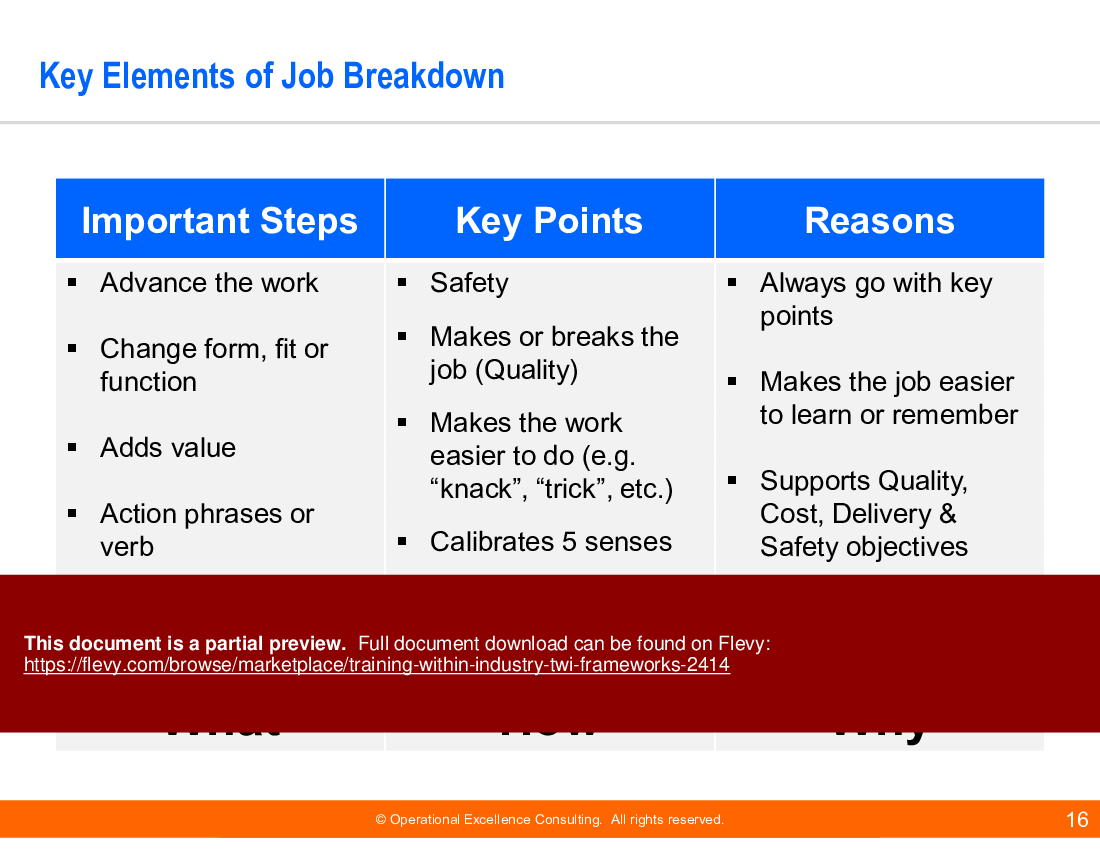
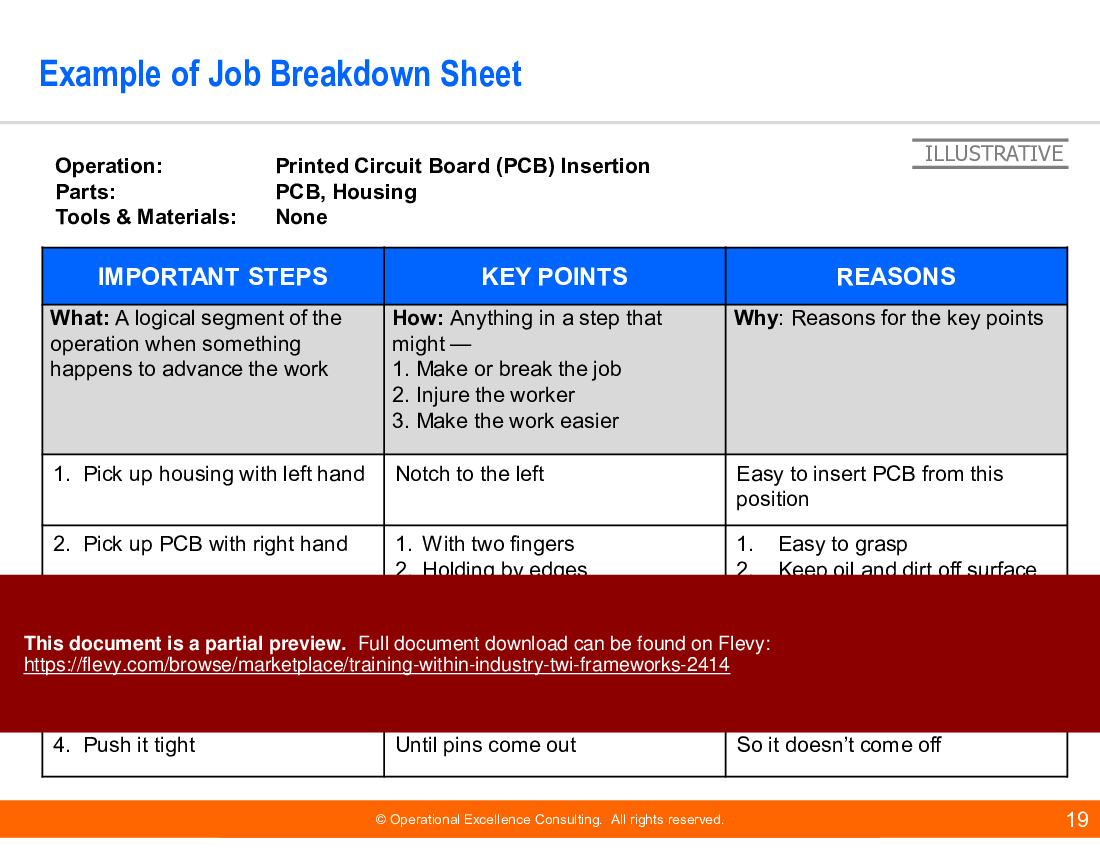
•  Breakdown Sheet - A tool for detailing job steps, key points, and reasons for effective training.
•  Continuous Improvement - Ongoing efforts to enhance products, services, or processes.
•  Safety Protocols - Established procedures to ensure workplace safety and compliance.
•  Interpersonal Issues - Conflicts or challenges arising between individuals in the workplace.
•  Engagement - The level of commitment and involvement an employee has towards their organization.

Source: Best Practices in Employee Training, Business Framework PowerPoint Diagrams, Training within Industry PowerPoint Slides: Training Within Industry (TWI) Frameworks PowerPoint (PPTX) Presentation Slide Deck, Operational Excellence Consulting


$49.00
Developed by a seasoned TWI Master Trainer with global experience at Microsoft, IBM and Panasonic, this collection serves as your resource for TWI Frameworks, enabling operational excellence and enhancing stakeholder satisfaction.
Add to Cart
  

ABOUT THE AUTHOR

Author image
Additional documents from author: 257
Terms of usage (for all documents from this author)

Operational Excellence Consulting, founded in 2009 by Allan Ung, draws from extensive experience at Microsoft, IBM, and Underwriters Laboratories (UL). We specialize in strategy deployment, customer experience design, and operational excellence, applying Design Thinking, Lean, and Systems Thinking to maximize customer value and minimize waste.

Our ... [read more]

Ask the Author a Question

You must be logged in to contact the author.

Click here to log in Click here register

Did you know?
The average daily rate of a McKinsey consultant is $6,625 (not including expenses). The average price of a Flevy document is $65.



Trusted by over 10,000+ Client Organizations
Since 2012, we have provided business templates to over 10,000 businesses and organizations of all sizes, from startups and small businesses to the Fortune 100, in over 130 countries.
AT&T GE Cisco Intel IBM Coke Dell Toyota HP Nike Samsung Microsoft Astrazeneca JP Morgan KPMG Walgreens Walmart 3M Kaiser Oracle SAP Google E&Y Volvo Bosch Merck Fedex Shell Amgen Eli Lilly Roche AIG Abbott Amazon PwC T-Mobile Broadcom Bayer Pearson Titleist ConEd Pfizer NTT Data Schwab


Read Customer Testimonials

 
"If you are looking for great resources to save time with your business presentations, Flevy is truly a value-added resource. Flevy has done all the work for you and we will continue to utilize Flevy as a source to extract up-to-date information and data for our virtual and onsite presentations!"

– Debbi Saffo, President at The NiKhar Group
 
"I have used Flevy services for a number of years and have never, ever been disappointed. As a matter of fact, David and his team continue, time after time, to impress me with their willingness to assist and in the real sense of the word. I have concluded in fact "

– Roberto Pelliccia, Senior Executive in International Hospitality
 
"Last Sunday morning, I was diligently working on an important presentation for a client and found myself in need of additional content and suitable templates for various types of graphics. Flevy.com proved to be a treasure trove for both content and design at a reasonable price, considering the time I "

– M. E., Chief Commercial Officer, International Logistics Service Provider
 
"As a consultant requiring up to date and professional material that will be of value and use to my clients, I find Flevy a very reliable resource.

The variety and quality of material available through Flevy offers a very useful and commanding source for information. Using Flevy saves me time, enhances my expertise and ends up being a good decision."

– Dennis Gershowitz, Principal at DG Associates
 
"[Flevy] produces some great work that has been/continues to be of immense help not only to myself, but as I seek to provide professional services to my clients, it gives me a large "tool box" of resources that are critical to provide them with the quality of service and outcomes they are expecting."

– Royston Knowles, Executive with 50+ Years of Board Level Experience
 
"As an Independent Management Consultant, I find Flevy to add great value as a source of best practices, templates and information on new trends. Flevy has matured and the quality and quantity of the library is excellent. Lastly the price charged is reasonable, creating a win-win value for "

– Jim Schoen, Principal at FRC Group
 
"Flevy is now a part of my business routine. I visit Flevy at least 3 times each month.

Flevy has become my preferred learning source, because what it provides is practical, current, and useful in this era where the business world is being rewritten.

In today's environment where there are so "

– Omar Hernán Montes Parra, CEO at Quantum SFE
 
"I am extremely grateful for the proactiveness and eagerness to help and I would gladly recommend the Flevy team if you are looking for data and toolkits to help you work through business solutions."

– Trevor Booth, Partner, Fast Forward Consulting


Customers Also Bought These Documents


Customers Also Like These Documents

Explore Related Management Topics


Your Recently Viewed Documents
Download our FREE Organization, Change, & Culture, Templates

Download our free compilation of 50+ slides and templates on Organizational Design, Change Management, and Corporate Culture. Methodologies include ADKAR, Burke-Litwin Change Model, McKinsey 7-S, Competing Values Framework, etc.