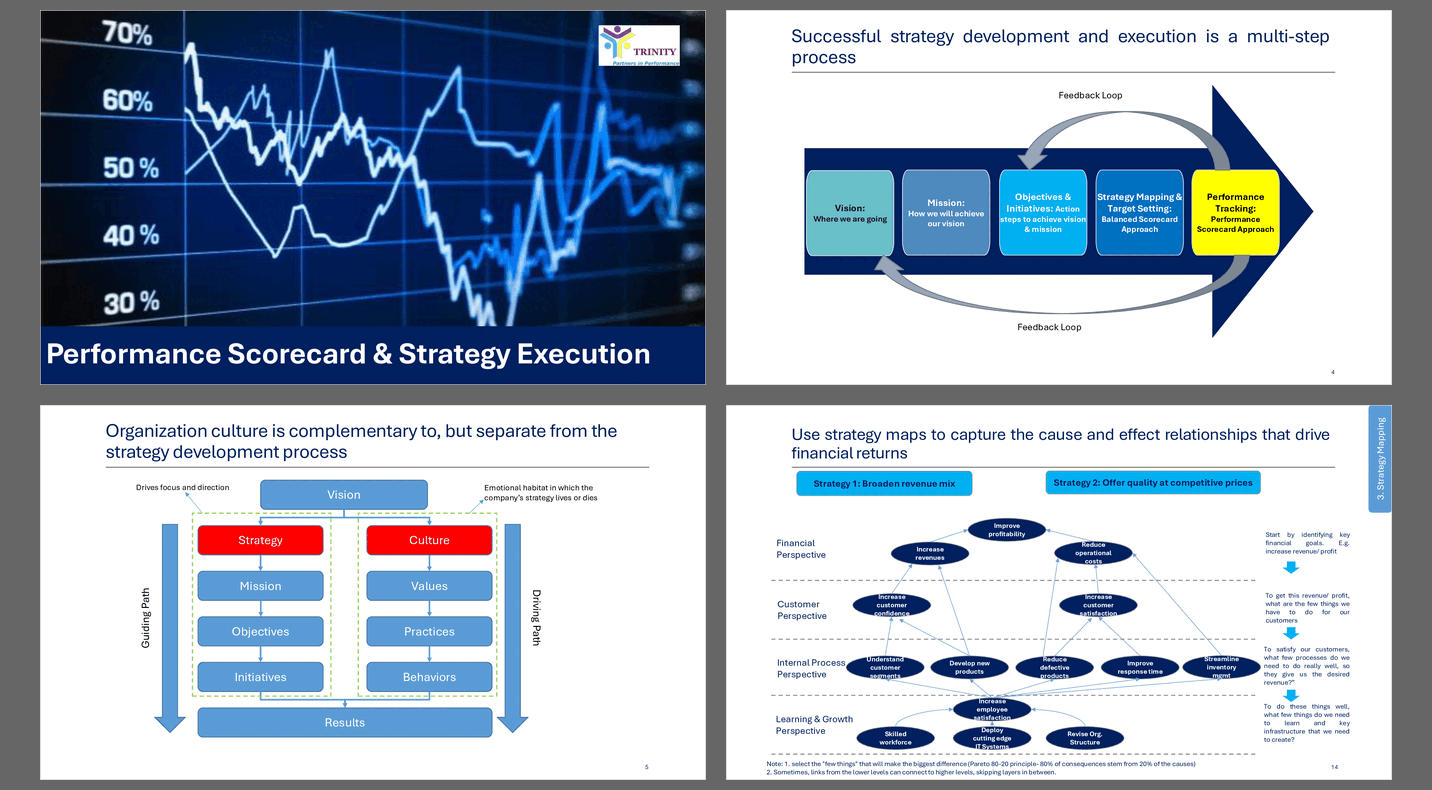

Elevate your team's performance and strategy execution to new heights with the Performance Scorecard Framework, crafted by former strategy consultants from elite firms such as BCG and EY. This unique tool combines the strengths of the Balanced Scorecard with an exclusive proprietary methodology. It empowers senior leaders to articulate their organization's primary goals, initiatives, and metrics in a clear manner. Beyond simply setting objectives, it offers a dynamic way to aggregate and monitor organizational performance through a unified score, facilitating period-over-period comparisons and insights across different departments and business units.
Here's What You Will Learn-
Crafting Your Vision: Master the art of defining a compelling organizational vision that paves the way for success.
Strategic Mission and Actionable Objectives: Learn to distill your overarching vision into concrete, actionable strategies, missions, and initiatives that resonate at every organizational level.
Strategy Mapping Mastery:
• Dive deep into the Balanced Scorecard methodology, a renowned framework for strategic management.
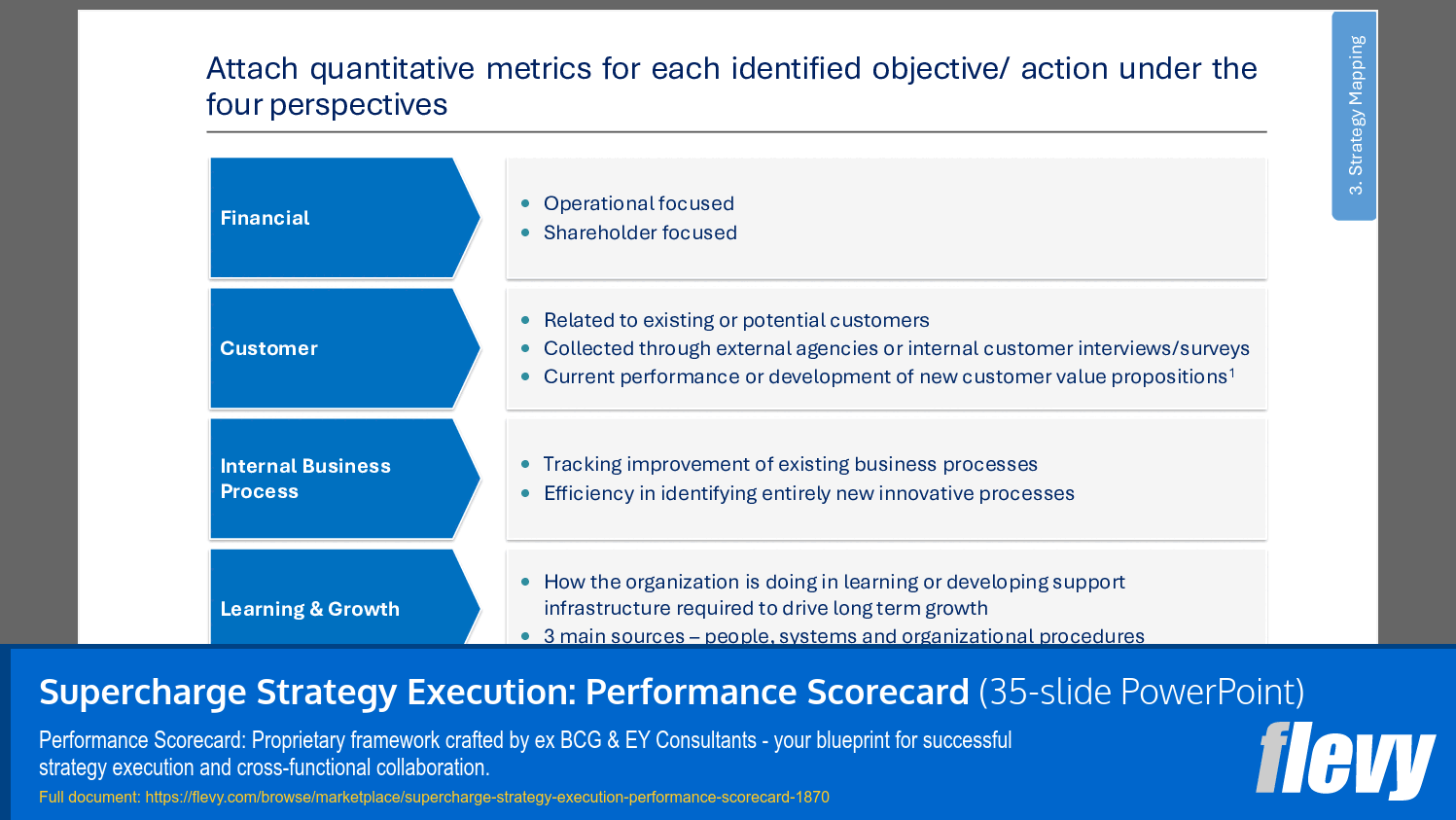
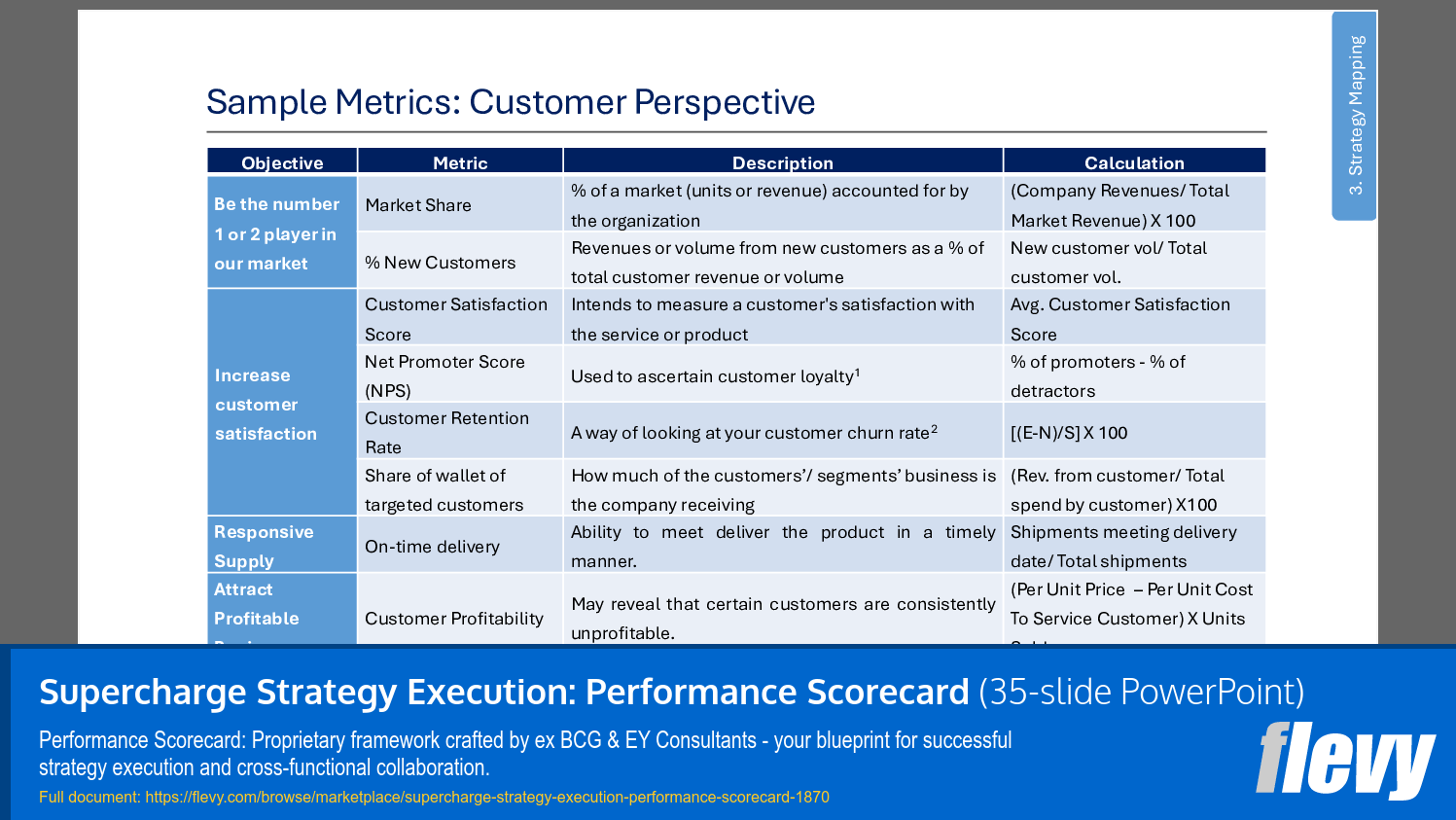
• Develop a comprehensive set of KPIs across the Balanced Scorecard's four perspectives (Financial, Customer, Internal Business Process, Learning & Development) to ensure a holistic strategy assessment.
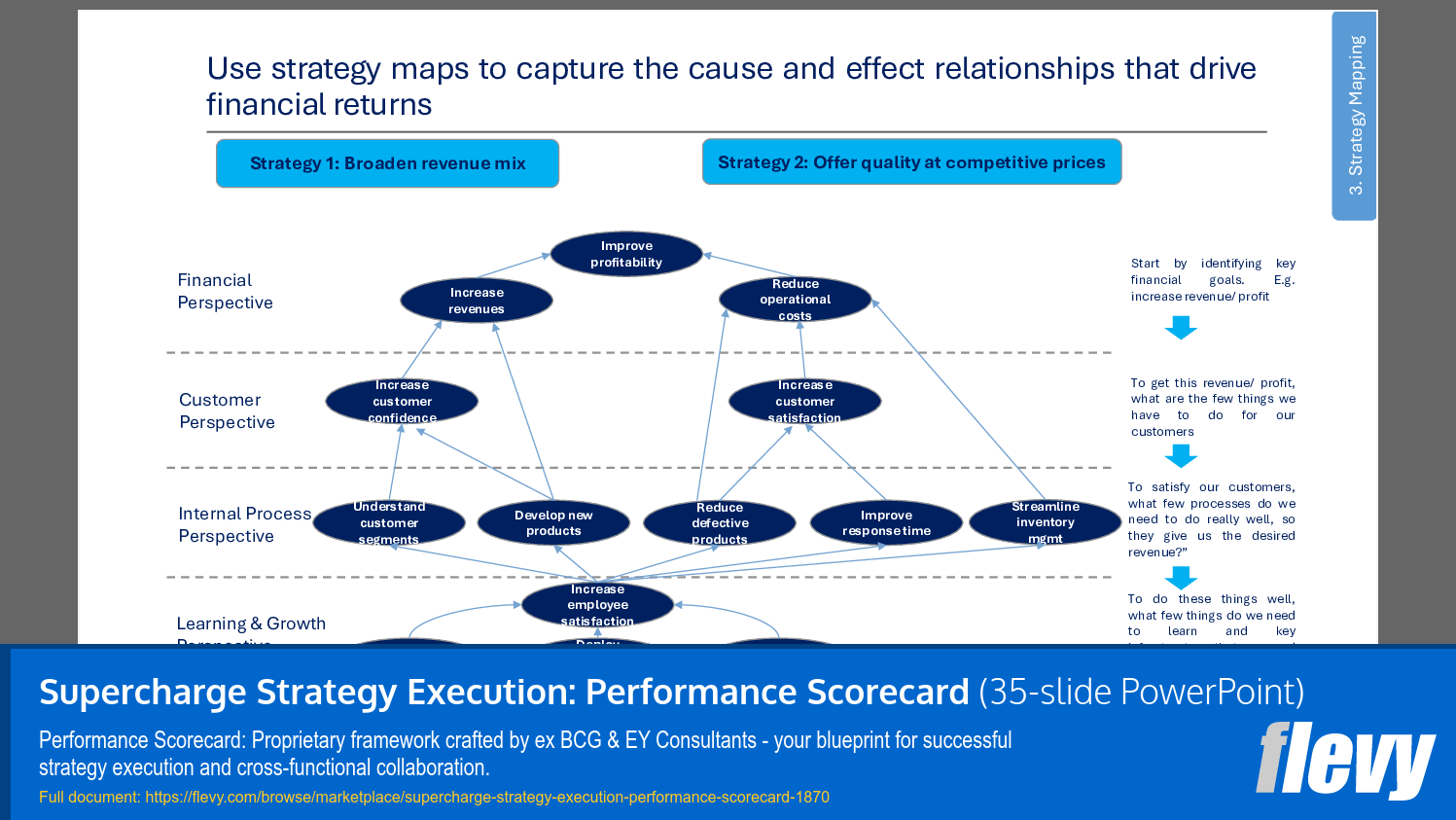
• Employ strategy maps to visualize and understand the causal relationships leading to financial success.
Advanced Performance Tracking: Elevate your strategy execution with our Performance Scorecard, pinpointing critical initiatives and KPIs while providing a consolidated score of your organization's and departments' performance that prioritizes the highest impact initiatives.
Proactive Feedback and Strategy Adjustment: Regularly monitor performance, identify significant trends or deviations, and adjust your strategic course to ensure continuous alignment with your goals.
Empower Your Strategy with Our Hands-On Excel Workbook:
• A ready-to-use, professionally designed template.
• Automatically generates a comprehensive organizational performance score and departmental breakdowns upon data entry.
• Visualize performance trends over time with an intuitive dashboard for the consolidated score and individual metrics.
• Utilize the traffic light system for immediate performance status assessments.
• Gain clarity on departmental responsibilities and collaborative areas.
Enhanced Learning Tools:
• Enhanced with Facilitator Notes and Participant Exercises for an engaging and interactive learning experience.
• Compatible with Microsoft Excel 2010 or later versions; macros must be enabled for full functionality.
The Performance Scorecard Framework is more than just a tool; it's your roadmap from vision to reality, enhancing your organization's strategy execution and teamwork under the guidance of experts from BCG and EY. Make the leap towards unparalleled organizational achievement today.
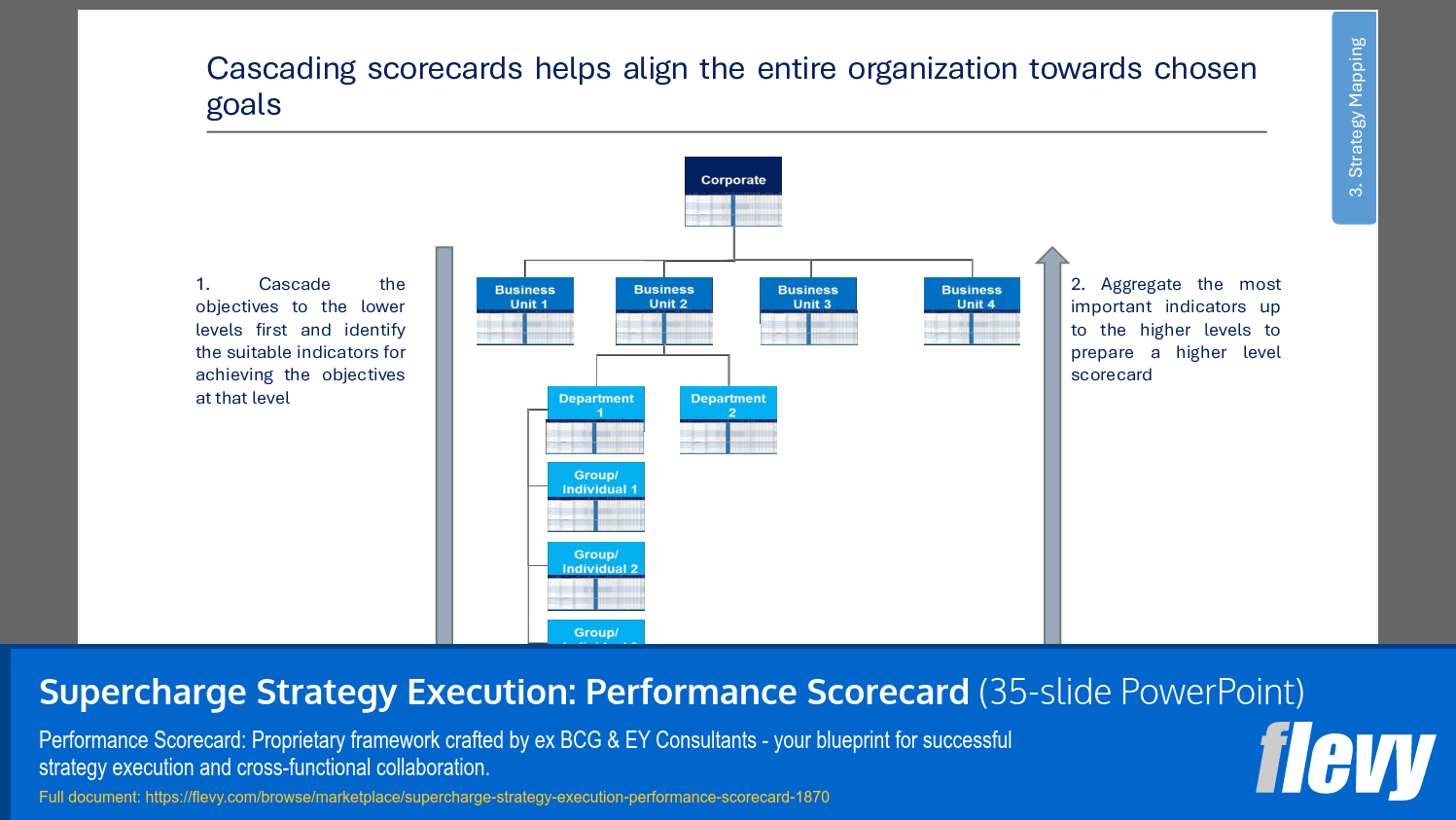
The Performance Scorecard provides a single-view dashboard, enabling senior management to assess organizational health at a glance. It facilitates monthly strategy review meetings, driving discussions and enabling quick corrective actions.
Got a question about the product? Email us at support@flevy.com or ask the author directly by using the "Ask the Author a Question" form. If you cannot view the preview above this document description, go here to view the large preview instead.
Executive Summary
The Performance Scorecard & Strategy Execution presentation offers a robust framework for organizations aiming to enhance their strategic execution capabilities. Developed by former consultants from top firms, this consulting-grade resource provides a comprehensive approach to aligning organizational goals with actionable initiatives. It empowers executives to articulate their vision, set measurable objectives, and track performance effectively. By integrating the Balanced Scorecard methodology, this presentation enables organizations to move beyond traditional financial metrics, fostering a holistic view of performance that drives sustainable success.
Who This Is For and When to Use
• Corporate executives seeking to refine their strategic execution processes
• Integration leaders responsible for aligning cross-functional teams with organizational goals
• Consultants aiming to facilitate strategy development and execution workshops
• Performance management teams focused on tracking and improving organizational effectiveness
Best-fit moments to use this deck:
• During strategy formulation sessions to clarify vision and objectives
• In performance review meetings to assess progress against strategic goals
• When implementing new initiatives that require cross-departmental collaboration
• For training sessions on effective strategy execution and performance tracking
Learning Objectives
• Define the core components of an effective strategy and its execution
• Articulate the organization’s vision and mission in actionable terms
• Establish measurable objectives linked to strategic goals
• Utilize the Balanced Scorecard approach for comprehensive performance tracking
• Identify inter-departmental dependencies to enhance collaboration
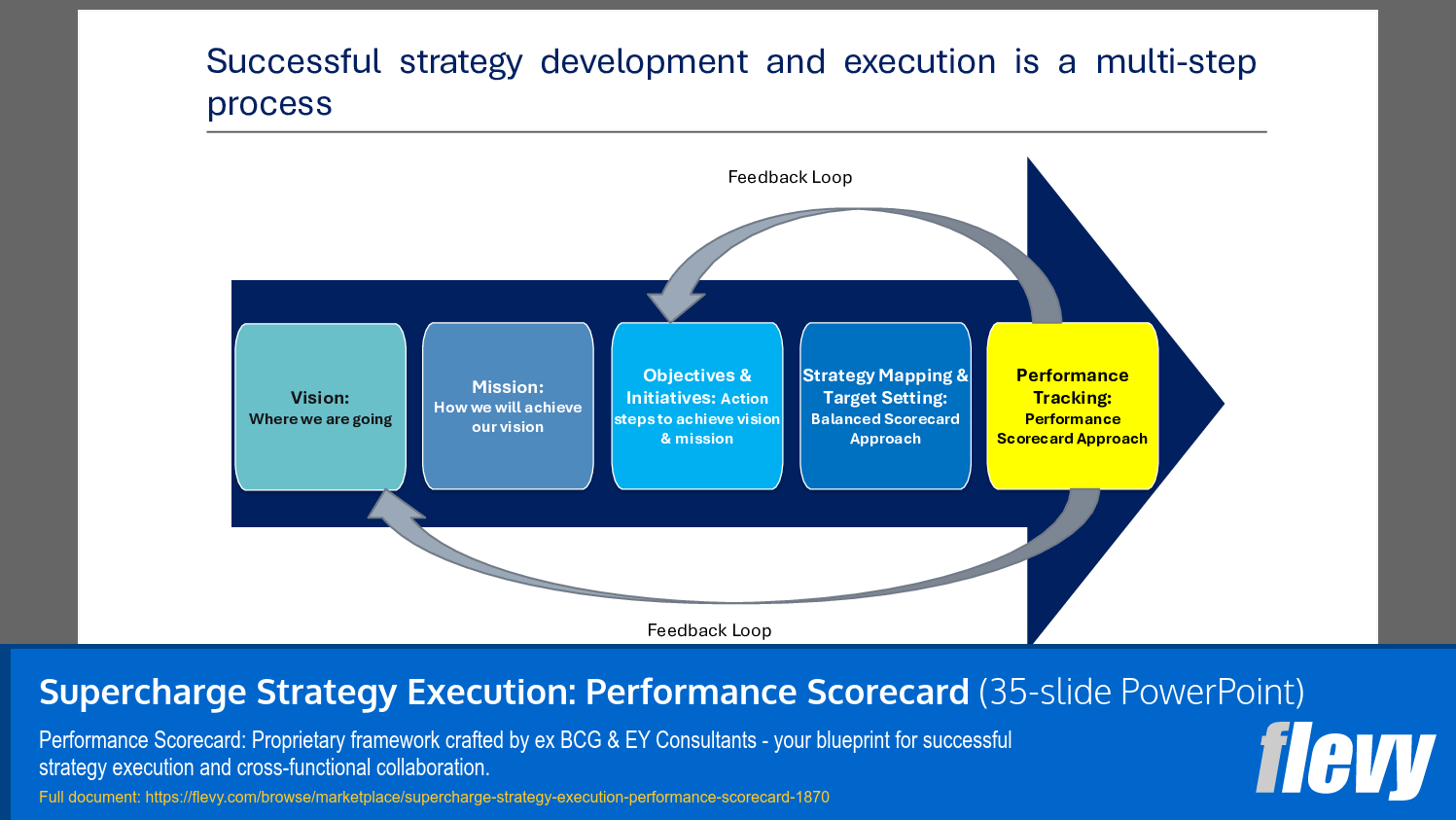
• Implement a feedback loop for continuous improvement in strategy execution
Table of Contents
• Introduction to Strategy (page 2)
• Multi-Step Strategy Development Process (page 3)
• Vision and Mission Articulation (page 9)
• Objectives and Initiatives (page 11)
• Balanced Scorecard Overview (page 13)
• Strategy Mapping Techniques (page 15)
• Performance Scorecard Template (page 25)
• Tracking Performance Metrics (page 26)
• Feedback and Review Mechanisms (page 31)
Primary Topics Covered
• Strategy Definition - Strategy is a plan that outlines how an organization will achieve its goals, focusing on market positioning and competitive advantage.
• Vision and Mission - The vision provides a long-term direction, while the mission outlines how to achieve that vision through specific actions.
• Objectives and Initiatives - Clear objectives are linked to the vision and mission, detailing the actions required to achieve strategic goals.
• Balanced Scorecard - A performance measurement framework that incorporates financial and non-financial metrics to provide a holistic view of organizational performance.
• Strategy Mapping - A visual representation of the cause-and-effect relationships among strategic objectives, facilitating clarity in execution.
• Performance Tracking - The Performance Scorecard serves as a consolidated dashboard for monitoring progress against strategic objectives.
Deliverables, Templates, and Tools
• Vision and mission statement templates for articulating organizational aspirations
• Balanced Scorecard framework for integrating financial and non-financial performance metrics
• Strategy mapping tools to visualize interdependencies among objectives
• Performance Scorecard template for tracking key performance indicators (KPIs)
• Feedback loop mechanisms to facilitate continuous improvement in strategy execution
Slide Highlights
• Overview of the multi-step strategy development process, emphasizing the importance of vision and mission
• Visual representation of the Balanced Scorecard, illustrating its 4 perspectives: Financial, Customer, Internal Process, and Learning & Growth
• Strategy mapping slide that captures the cause-and-effect relationships driving financial returns
• Performance Scorecard template showcasing how to prioritize objectives and track performance metrics
• Feedback and review process slide detailing steps for evaluating performance and implementing corrective actions
Potential Workshop Agenda
Vision and Mission Workshop (90 minutes)
• Discuss and articulate the organization’s vision and mission statements
• Facilitate group activities to refine and vote on the most inspiring statements
• Document and share the finalized vision and mission for broader input
Balanced Scorecard Implementation Session (120 minutes)
• Introduce the Balanced Scorecard framework and its components
• Guide participants in mapping their strategic objectives to the 4 perspectives
• Develop a draft Performance Scorecard with key metrics and targets
Performance Review and Feedback Loop Discussion (60 minutes)
• Review current performance metrics against established targets
• Identify variances and discuss potential corrective actions
• Establish a plan for ongoing feedback and continuous improvement
Customization Guidance
• Tailor vision and mission statements to reflect the unique aspirations of your organization
• Adjust performance metrics in the Balanced Scorecard to align with specific organizational goals
• Modify the Performance Scorecard template to include relevant departmental KPIs and targets
• Incorporate industry-specific benchmarks to enhance the relevance of performance tracking
Secondary Topics Covered
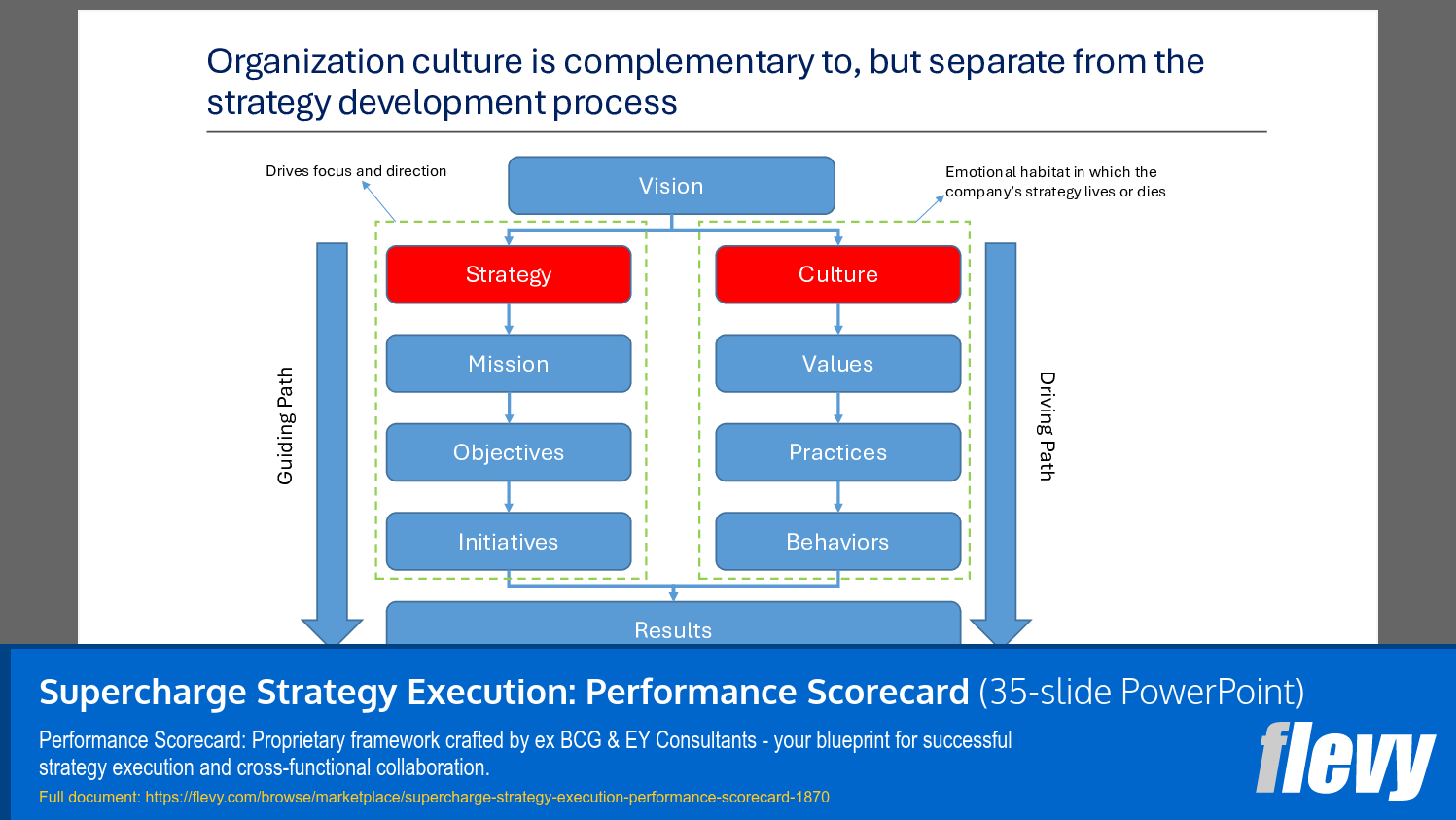
• The role of organizational culture in strategy execution
• Techniques for fostering cross-functional collaboration
• The impact of traditional performance measurement systems on strategic alignment
• Best practices for engaging stakeholders in the strategy development process
FAQ
What is the purpose of a Performance Scorecard?
The Performance Scorecard serves as a consolidated dashboard that allows organizations to track progress against strategic objectives, facilitating informed decision-making and accountability.
How does the Balanced Scorecard differ from traditional performance measurement systems?
The Balanced Scorecard incorporates both financial and non-financial metrics, providing a more comprehensive view of organizational performance and enabling proactive management.
What are the key components of a vision statement?
A vision statement should convey a vivid picture of the organization’s future, inspire stakeholders, and remain consistent over time, focusing solely on the desired end state.
How can we ensure alignment across departments in strategy execution?
By identifying inter-departmental dependencies and assigning joint responsibilities for achieving strategic objectives, organizations can foster collaboration and alignment.
What metrics should be included in the Performance Scorecard?
Metrics should cover financial performance, customer satisfaction, internal processes, and learning and growth, ensuring a holistic view of organizational effectiveness.
How often should we review our performance metrics?
Regular reviews, typically on a monthly or quarterly basis, allow organizations to assess progress, identify variances, and implement corrective actions promptly.
What is the significance of a feedback loop in strategy execution?
A feedback loop enables organizations to learn from performance outcomes, adjust strategies as needed, and continuously improve execution processes.
How can we engage employees in the strategy development process?
Involving employees in discussions about the vision, mission, and objectives fosters buy-in and ensures that diverse perspectives are considered in shaping the organization’s strategy.
Glossary
• Balanced Scorecard - A performance measurement framework that integrates financial and non-financial metrics.
• Performance Scorecard - A dashboard for tracking progress against strategic objectives.
• Vision Statement - A declaration of an organization’s long-term aspirations.
• Mission Statement - A description of how an organization will achieve its vision.
• Objectives - Specific goals that an organization aims to achieve within a defined timeframe.
• Key Performance Indicator (KPI) - A measurable value that demonstrates how effectively an organization is achieving key objectives.
• Strategy Mapping - A visual representation of the relationships among strategic objectives.
• Feedback Loop - A process for evaluating performance and implementing improvements based on outcomes.
• Inter-departmental Dependencies - Relationships among departments that affect the achievement of strategic objectives.
• Continuous Improvement - An ongoing effort to enhance products, services, or processes.
• Causal Relationships - Connections between actions and outcomes that drive performance.
• Stakeholder Engagement - The process of involving individuals or groups with an interest in the organization’s activities.
• Organizational Culture - The shared values, beliefs, and practices that shape how work is done within an organization.
• Strategic Execution - The process of implementing and managing a strategy to achieve desired outcomes.
• Financial Metrics - Quantitative measures that assess an organization’s financial performance.
• Non-Financial Metrics - Qualitative measures that evaluate aspects of performance beyond financial results.
• Operational Efficiency - The ability to deliver products or services with minimal waste and maximum productivity.
• Customer Satisfaction - A measure of how products or services meet or exceed customer expectations.
• Employee Engagement - The level of commitment and involvement an employee has towards their organization.
• Market Share - The portion of a market controlled by a particular company or product.
Source: Best Practices in Performance Management, Key Performance Indicators, Balanced Scorecard, Strategy Deployment & Execution PowerPoint Slides: Supercharge Strategy Execution: Performance Scorecard PowerPoint (PPTX) Presentation Slide Deck, Trinity Consulting
|
Download our FREE Strategy & Transformation Framework Templates
Download our free compilation of 50+ Strategy & Transformation slides and templates. Frameworks include McKinsey 7-S, Balanced Scorecard, Disruptive Innovation, BCG Curve, and many more. |










