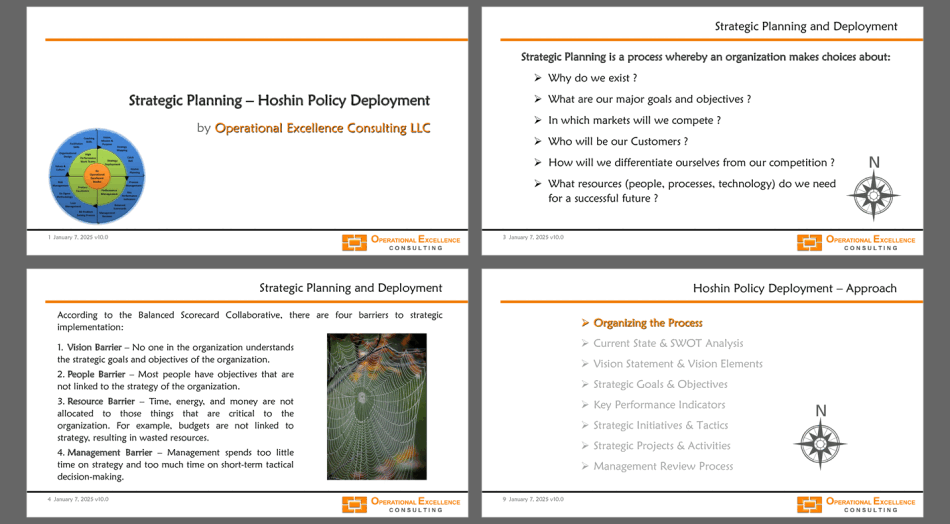
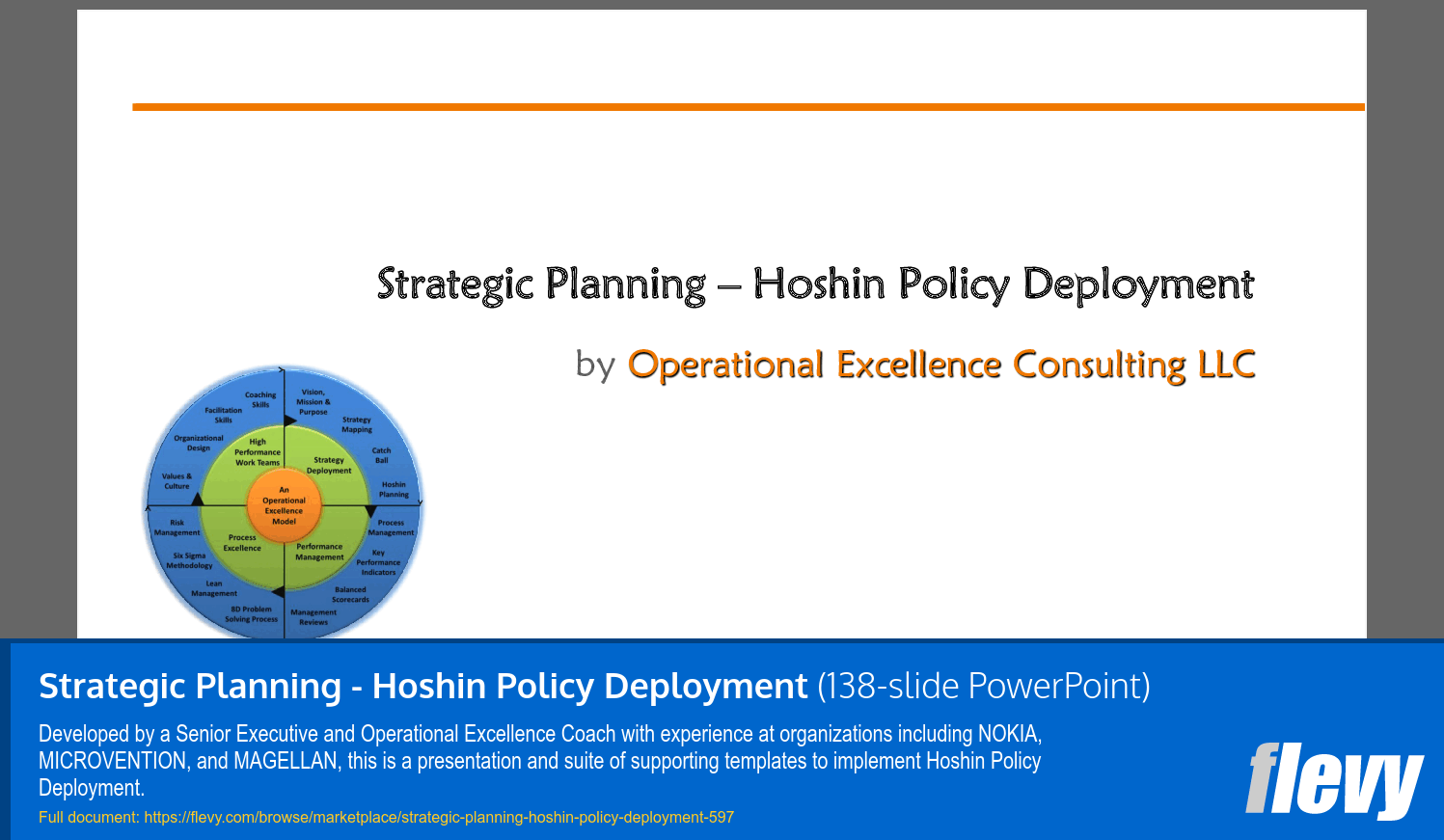

Developed by a Senior Executive and Operational Excellence Coach with experience at organizations including NOKIA, MICROVENTION, and MAGELLAN, this is a presentation and suite of supporting templates to implement Hoshin Policy Deployment.
helps a management team identify and focus on the "right" objectives, initiatives, and projects;
enables an organization to understand and evaluate the relationship between specific actions and strategic objectives; and
strengthens and formalizes the project selection process to focus on relevant capabilities and enablers.
STRATEGIC PLANNING PPT DESCRIPTION
Enhance your strategic planning with our Hoshin Policy Deployment module, crafted by an ex-NOKIA executive. Includes templates for effective goal alignment. Hoshin Policy Deployment is a 138-slide PPT PowerPoint presentation slide deck (PPTX) with a supplemental Excel document available for immediate download upon purchase.
Our Strategic Planning Process, based on Hoshin Policy Deployment, provides an organization with proven and effective methods to develop, communicate and align its strategic goals, objectives, and initiatives.
The Strategic Planning – Hoshin Policy Deployment Training Module includes:
1. MS PowerPoint Presentation including 137 slides covering our Strategic Planning Process based on Hoshin Policy Deployment, including
• Introduction to Hoshin Policy Deployment,
• Organizing the Strategy Process,
• Current State Analysis (CSA),
• Strategic Vision and Vision Elements,
• Strategic Breakthrough Goals and Objectives,
• Key Performance Indicators and Balanced Scorecard,
• Strategic Initiatives and Tactics,
• Strategic Projects and Activities, and
• Management Review Process.
4. MS Word Current State Analysis (CSA) Questionnaire
5. MS Word SWOT Analysis Questionnaire
6. MS Excel Criticality Analysis Template
7. MS Excel Radar Gap Analysis Chart Template
8. MS Excel Strategy Grid Alignment Matrix Template
9. MS Excel Strategy Grid Correlation Matrix Template
10. MS Excel Balanced Scorecard Template
11. MS Excel Templates for Annual Planning Review (Level 1) Template
12. MS Excel Templates for Annual Planning Review (Level 2) Template
13. MS Excel Project Prioritization & Selection Matrix Template
14. MS Excel A3 Project Charter Template
15. MS Excel A3 Project Report Template
16. MS Excel Bowling Chart Template
"After you have downloaded the training material, you can change any part of the training material and remove all logos and references to Operational Excellence Consulting. You can share the material with your colleagues and clients, and re-use it as you need. The only restriction is that you cannot publicly re-distribute, sell, rent or license the material as though it is your own. Thank you."
This module addresses common pitfalls in strategic planning, such as the lack of actionable steps and over-reliance on metrics. It emphasizes the importance of critical thinking skills and rigorous review processes to ensure successful policy deployment.
Got a question about the product? Email us at support@flevy.com or ask the author directly by using the "Ask the Author a Question" form. If you cannot view the preview above this document description, go here to view the large preview instead.
MARCUS OVERVIEW
This synopsis was written by Marcus [?] based on the analysis of the full 138-slide presentation.
Executive Summary
The "Strategic Planning – Hoshin Policy Deployment" presentation is a comprehensive guide designed to facilitate the implementation of Hoshin Policy Deployment within organizations. Created by Operational Excellence Consulting LLC, this resource aims to align strategic goals with actionable initiatives through structured planning and performance management. By utilizing tools such as the Hoshin X-Matrix and Balanced Scorecards, executives and teams can effectively translate high-level strategies into measurable objectives, ensuring that all organizational efforts are synchronized towards common goals.
Who This Is For and When to Use
• Corporate executives responsible for strategic planning and execution
• Operational leaders seeking to enhance alignment between strategy and execution
• Project managers tasked with implementing strategic initiatives
• Consultants advising organizations on performance improvement and strategy deployment
Best-fit moments to use this deck:
• During strategic planning sessions to align organizational vision and objectives
• When developing annual operational plans that support long-term strategic goals
• In workshops aimed at fostering team engagement and understanding of strategic initiatives
Learning Objectives
• Define the components of Hoshin Policy Deployment and its significance in strategic planning
• Build a comprehensive strategic plan that incorporates measurable objectives and initiatives
• Establish a systematic approach for aligning organizational resources with strategic goals
• Create effective performance metrics using Balanced Scorecards to monitor progress
• Identify and mitigate barriers to successful strategy implementation
• Utilize the Hoshin X-Matrix for visualizing strategic alignment across the organization
Table of Contents
• Introduction to Hoshin Policy Deployment (page 1)
• Key Components of Strategic Planning (page 3)
• Barriers to Strategic Implementation (page 4)
• Current State Analysis and SWOT (page 35)
• Vision Statement Development (page 48)
• Strategic Goals and Objectives (page 57)
• Key Performance Indicators (page 66)
• Strategic Initiatives and Tactics (page 84)
• Management Review Process (page 119)
Primary Topics Covered
• Strategic Planning - A structured approach for organizations to define their mission, vision, and objectives.
• Hoshin Policy Deployment - A methodology for aligning strategic goals with operational execution through structured planning.
• SWOT Analysis - A tool for assessing internal strengths and weaknesses, as well as external opportunities and threats.
• Balanced Scorecard - A framework for translating strategic objectives into measurable performance indicators.
• Hoshin X-Matrix - A visual tool for aligning strategic objectives with initiatives and performance metrics.
• Management Review Process - A systematic approach to evaluate the effectiveness of strategic initiatives and ensure alignment with goals.
Deliverables, Templates, and Tools
• Hoshin X-Matrix template for visualizing strategic alignment
• Balanced Scorecard framework for tracking performance metrics
• SWOT Analysis worksheet for assessing organizational capabilities
• Annual Review Plan Table for summarizing strategic initiatives and performance indicators
• A3 Project Charter template for documenting strategic projects and activities
Slide Highlights
• Overview of Hoshin Policy Deployment and its significance in strategic planning
• Visual representation of the Hoshin X-Matrix and its components
• Examples of effective strategic goals and objectives
• Framework for conducting a Current State Analysis using SWOT
• Guidelines for establishing a robust Management Review Process
Potential Workshop Agenda
Strategic Planning Overview (60 minutes)
• Introduce the Hoshin Policy Deployment methodology
• Discuss the importance of aligning strategy with execution
SWOT Analysis Workshop (90 minutes)
• Conduct a Current State Analysis using SWOT
• Identify key strengths, weaknesses, opportunities, and threats
Goal Setting and Performance Metrics (90 minutes)
• Develop strategic goals and objectives
• Create a Balanced Scorecard to track performance
Customization Guidance
• Tailor the Hoshin X-Matrix to reflect specific organizational goals and initiatives
• Adjust performance metrics within the Balanced Scorecard to align with industry standards
• Modify the Current State Analysis template to include relevant internal and external factors
Secondary Topics Covered
• The role of leadership in strategy deployment
• Techniques for fostering organizational engagement in strategic planning
• Best practices for monitoring and adjusting strategic initiatives
FAQ What is Hoshin Policy Deployment?
Hoshin Policy Deployment is a strategic planning methodology that aligns an organization's goals with its operational execution, ensuring that all levels of the organization work towards common objectives.
How does the Balanced Scorecard work?
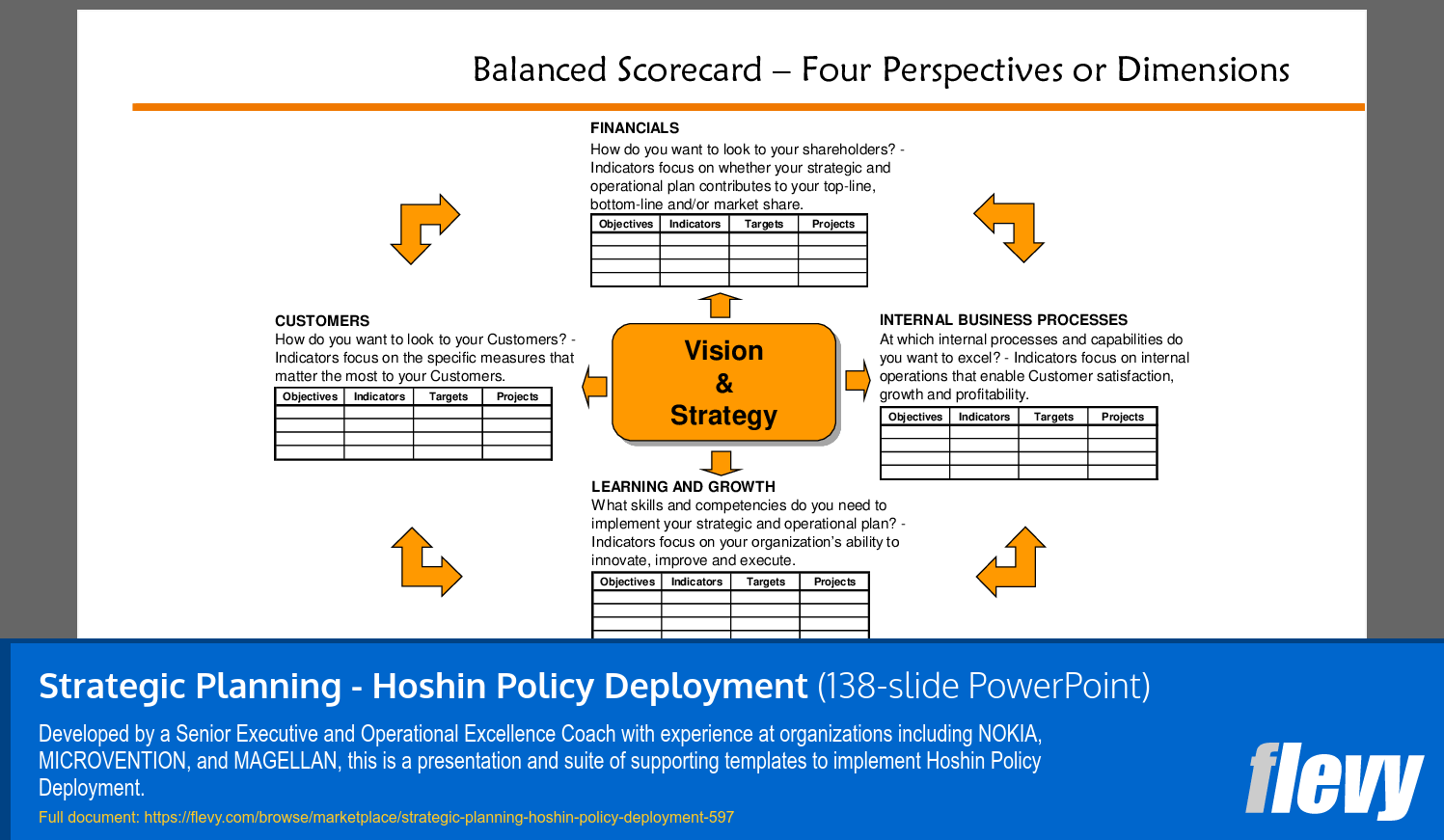
The Balanced Scorecard translates strategic objectives into measurable performance indicators across 4 perspectives: Financial, Customer, Internal Processes, and Learning & Growth.
What is the purpose of the Hoshin X-Matrix?
The Hoshin X-Matrix visually aligns strategic objectives, initiatives, performance indicators, and resource requirements, enhancing clarity and focus across the organization.
How can we overcome barriers to strategic implementation?
Identifying and addressing barriers such as lack of alignment, insufficient resources, and ineffective communication can enhance the likelihood of successful strategy execution.
What is the significance of the Current State Analysis?
The Current State Analysis provides a comprehensive view of an organization's strengths, weaknesses, opportunities, and threats, informing strategic planning and decision-making.
How often should management reviews occur?
Regular management reviews, ideally monthly, help ensure that strategic initiatives remain on track and aligned with organizational goals.
What are strategic initiatives?
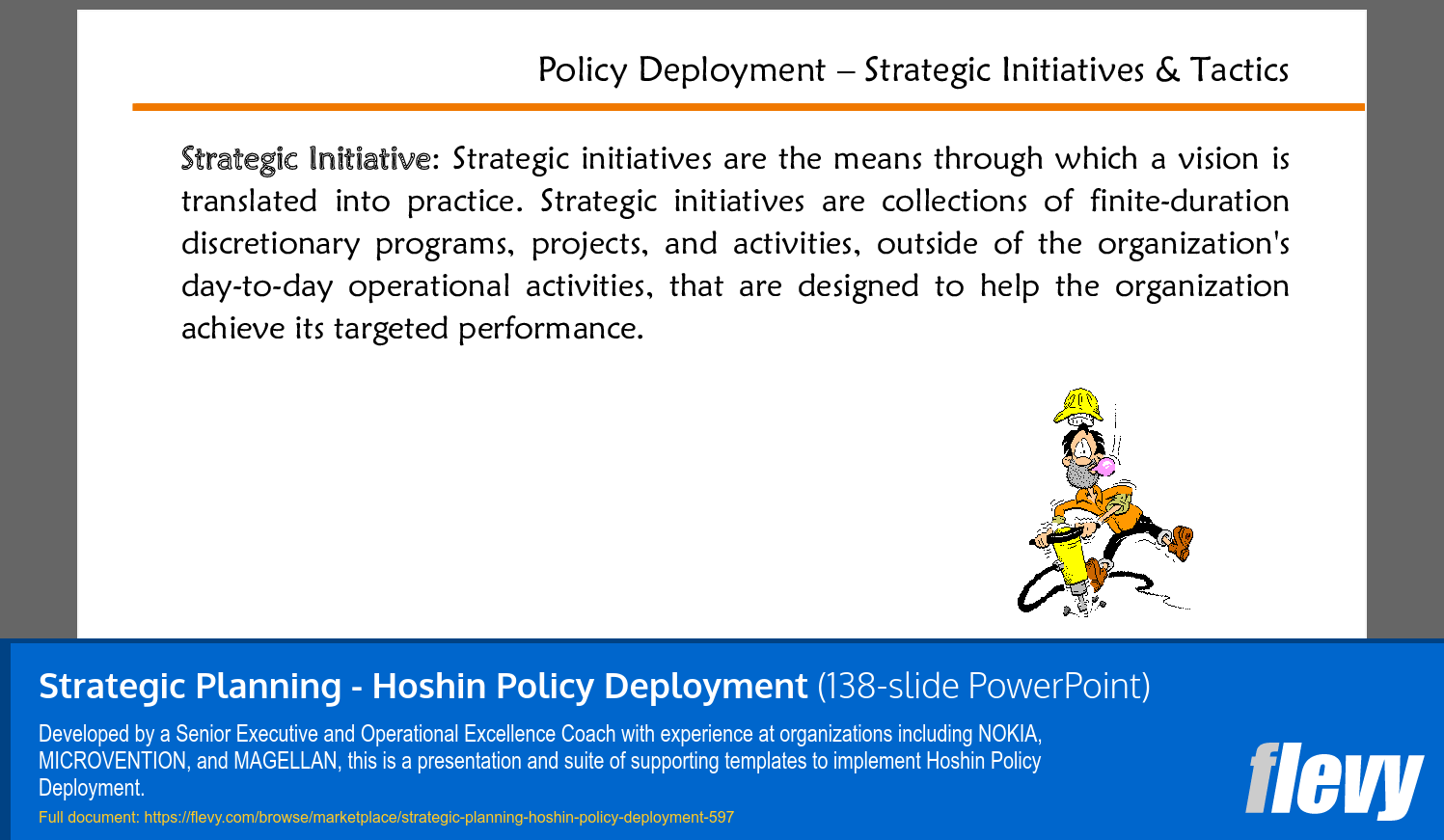
Strategic initiatives are specific projects or programs designed to achieve defined strategic goals and objectives, often requiring dedicated resources and management oversight.
How do we measure the success of strategic initiatives?
Success can be measured through established performance indicators, regular reviews, and adjustments based on feedback and results.
Glossary
• Hoshin Kanri - A strategic planning process that aligns an organization's functions and activities with its strategic goals.
• SWOT Analysis - A framework for identifying an organization's strengths, weaknesses, opportunities, and threats.
• Balanced Scorecard - A strategic management tool that uses performance metrics to track organizational success across multiple perspectives.
• Key Performance Indicator (KPI) - A measurable value that demonstrates how effectively an organization is achieving key business objectives.
• Strategic Initiative - A specific project or program aimed at achieving a strategic goal.
• Management Review - A systematic evaluation of the effectiveness of strategic initiatives and alignment with organizational goals.
• Catchball Process - A communication technique used to ensure alignment and buy-in during the strategic planning process.
• Vision Statement - A declaration of an organization's long-term goals and aspirations.
• Mission Statement - A brief description of an organization's fundamental purpose.
• A3 Report - A structured problem-solving tool used to document and communicate project progress and outcomes.
• X-Matrix - A visual tool that aligns strategic objectives with initiatives and performance metrics.
• Annual Review Plan - A document summarizing strategic initiatives, tactics, and performance indicators for review and assessment.
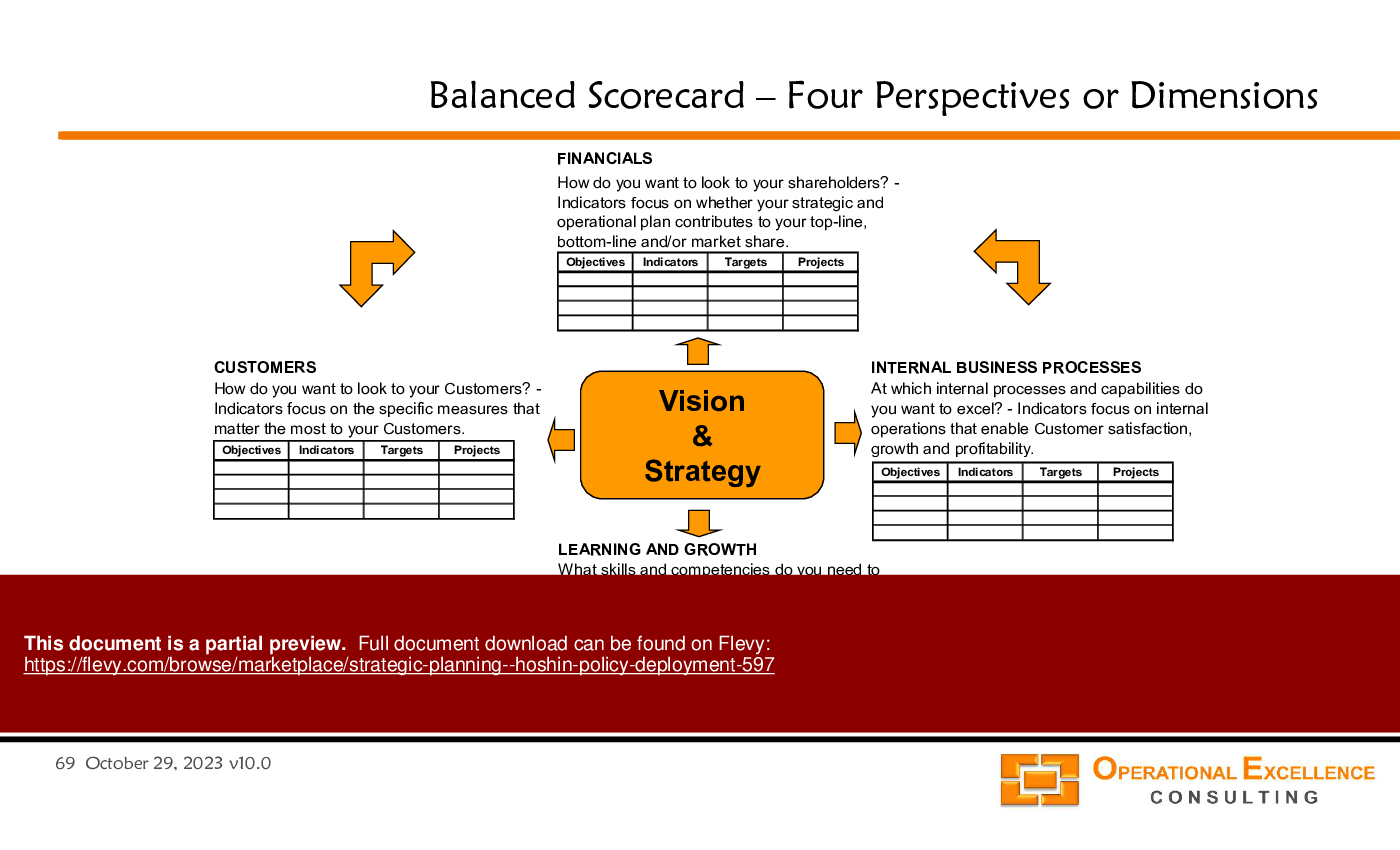
This PPT slide presents a Balanced Scorecard framework with 4 critical perspectives: Financials, Customers, Internal Business Processes, and Learning and Growth. The Financials perspective emphasizes shareholder perception and the impact of strategic plans on financial performance metrics like revenue and market share. The Customers perspective focuses on customer satisfaction and loyalty indicators. Internal Business Processes highlight operational capabilities essential for market success, urging organizations to assess efficiency in delivering value. Learning and Growth centers on developing skills and competencies for effective strategy execution, fostering innovation and continuous improvement. This framework supports the implementation of Hoshin Policy Deployment, ensuring alignment of performance measurement with organizational vision and strategy.
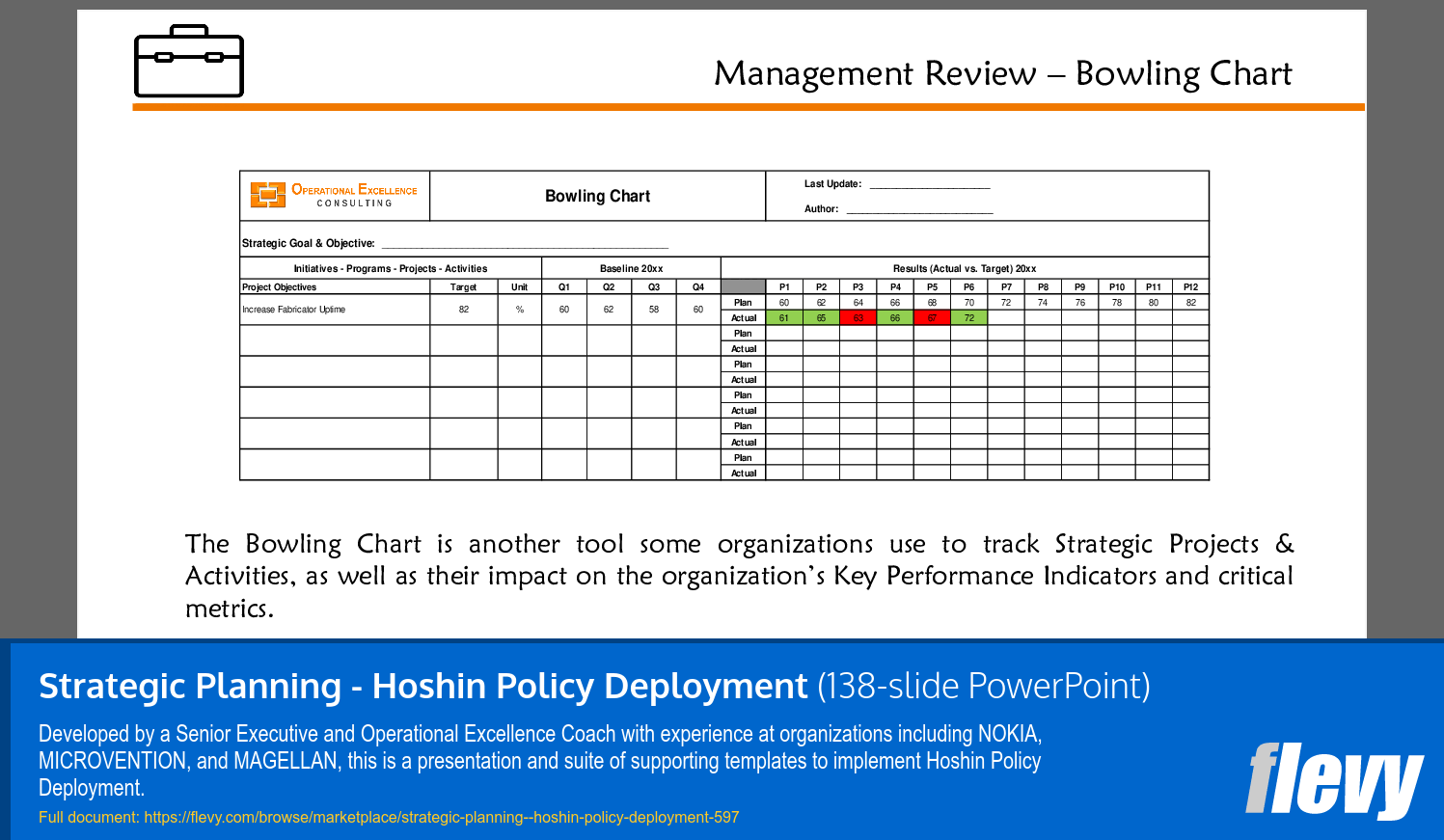
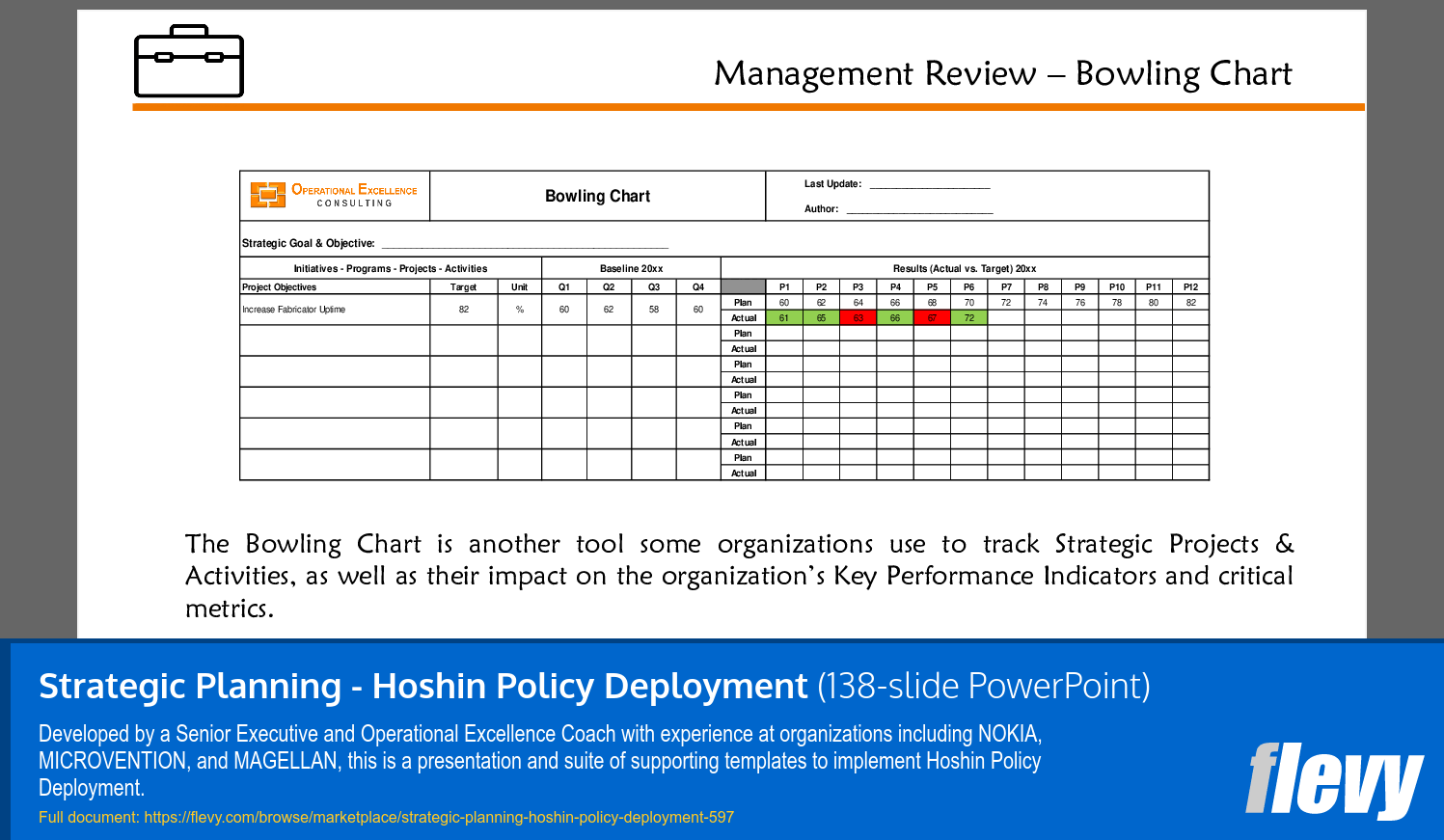
The Bowling Chart is a strategic tool for monitoring initiatives and their effects on key performance indicators (KPIs). It identifies strategic goals and objectives, with specific project objectives like "Increase Fabricator Uptime" set at a target of 82%. The chart tracks performance over 4 quarters, comparing planned and actual results, and uses color coding—green, yellow, red—for quick visual reference. For example, the first quarter shows actual performance at 61%, below the target, while subsequent quarters indicate improvements. The Bowling Chart facilitates discussions on performance, accountability, and strategic alignment, emphasizing the need for ongoing monitoring and adjustment to meet objectives.
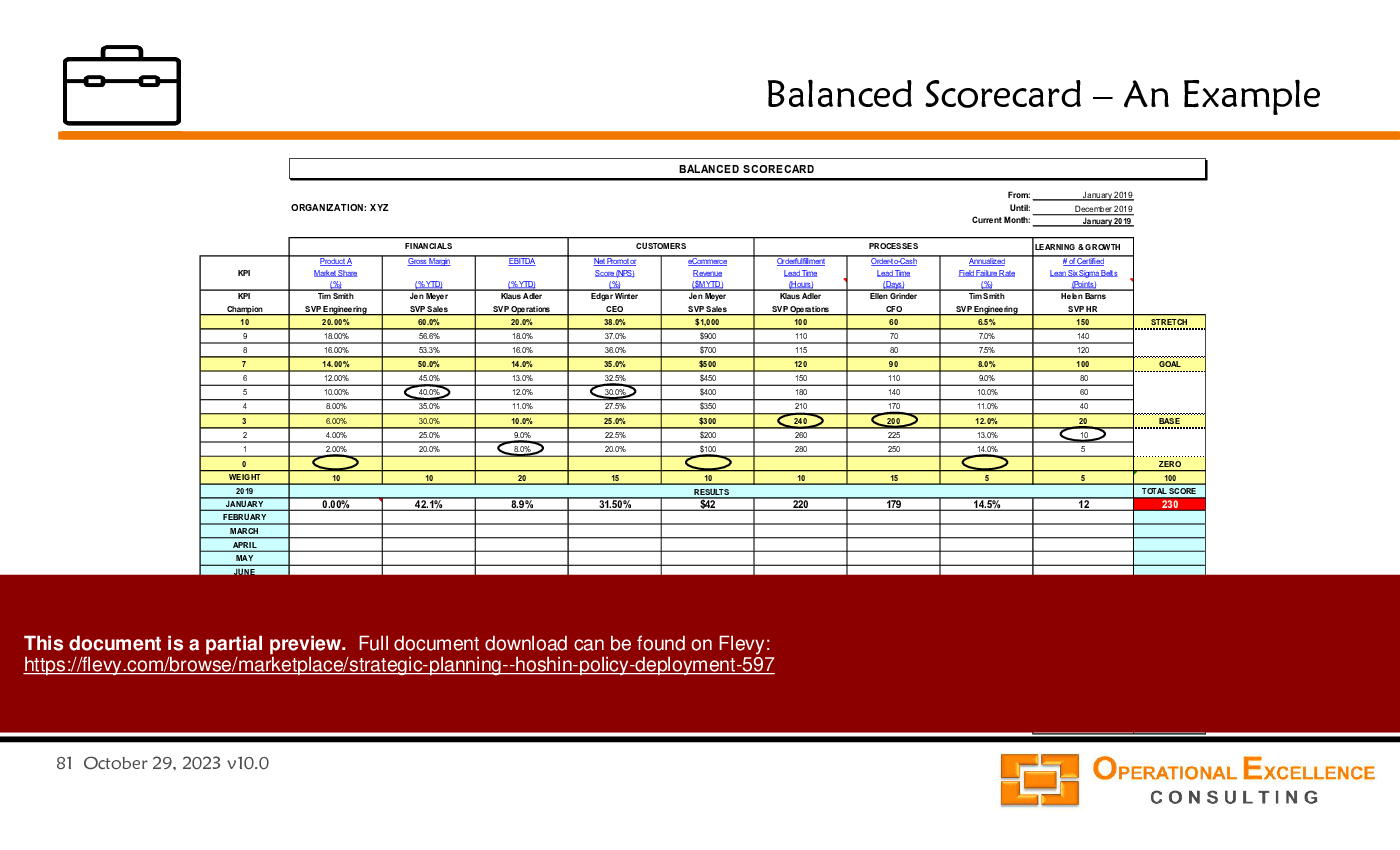
This PPT slide presents an Operational Excellence Balanced Scorecard template for strategic planning and performance measurement, tracking key performance indicators (KPIs) across 4 perspectives: Financials, Customers, Processes, and Organization. It includes sections for organizational context, KPI scoring from 0 to 10, and accountability through KPI champions. Weights assigned to each KPI highlight their importance to the overall strategy. The scorecard features monthly assessments, stretch, goal, and base targets for evaluating progress against benchmarks. The total score aggregates performance across all KPIs, providing a snapshot of effectiveness. This template supports Hoshin Policy Deployment, aligning all organizational levels with strategic objectives and driving continuous improvement.
The Hoshin X-Matrix is a strategic framework tool that visualizes key components: strategic objectives, initiatives, key performance indicators, projects, and human resource requirements. This matrix format clarifies the interconnections among these elements, facilitating analysis and alignment across the organization. The Hoshin X-Matrix is a dynamic tool that enhances organizational effectiveness by ensuring strategic initiatives align with overarching objectives, crucial for coherence in execution amid complex projects. Proper utilization of the Hoshin X-Matrix increases the likelihood of successful strategic plan execution, equipping organizations to navigate challenges and seize opportunities. Its visual nature aids in communicating strategy across different organizational levels, fostering shared understanding among stakeholders.
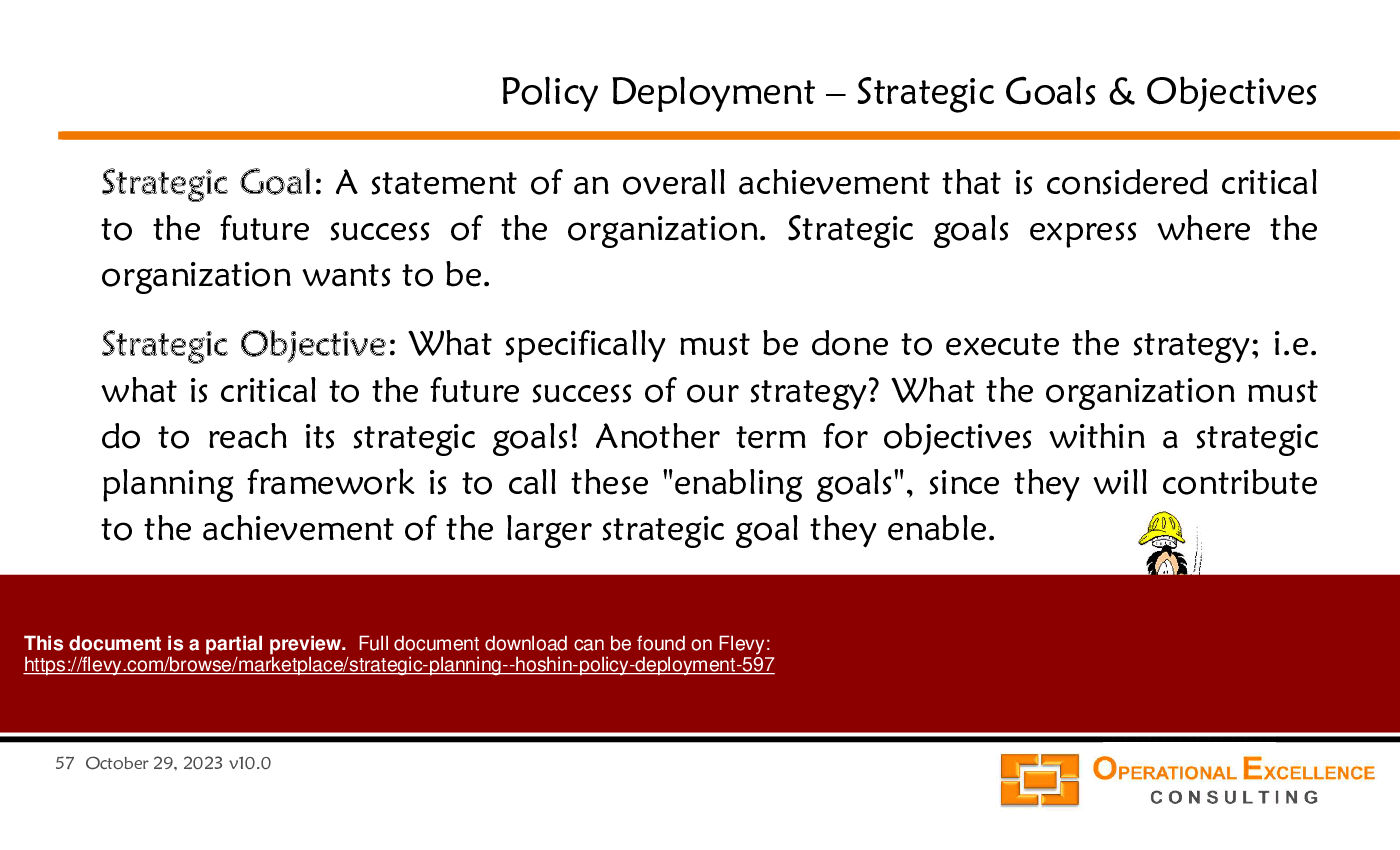
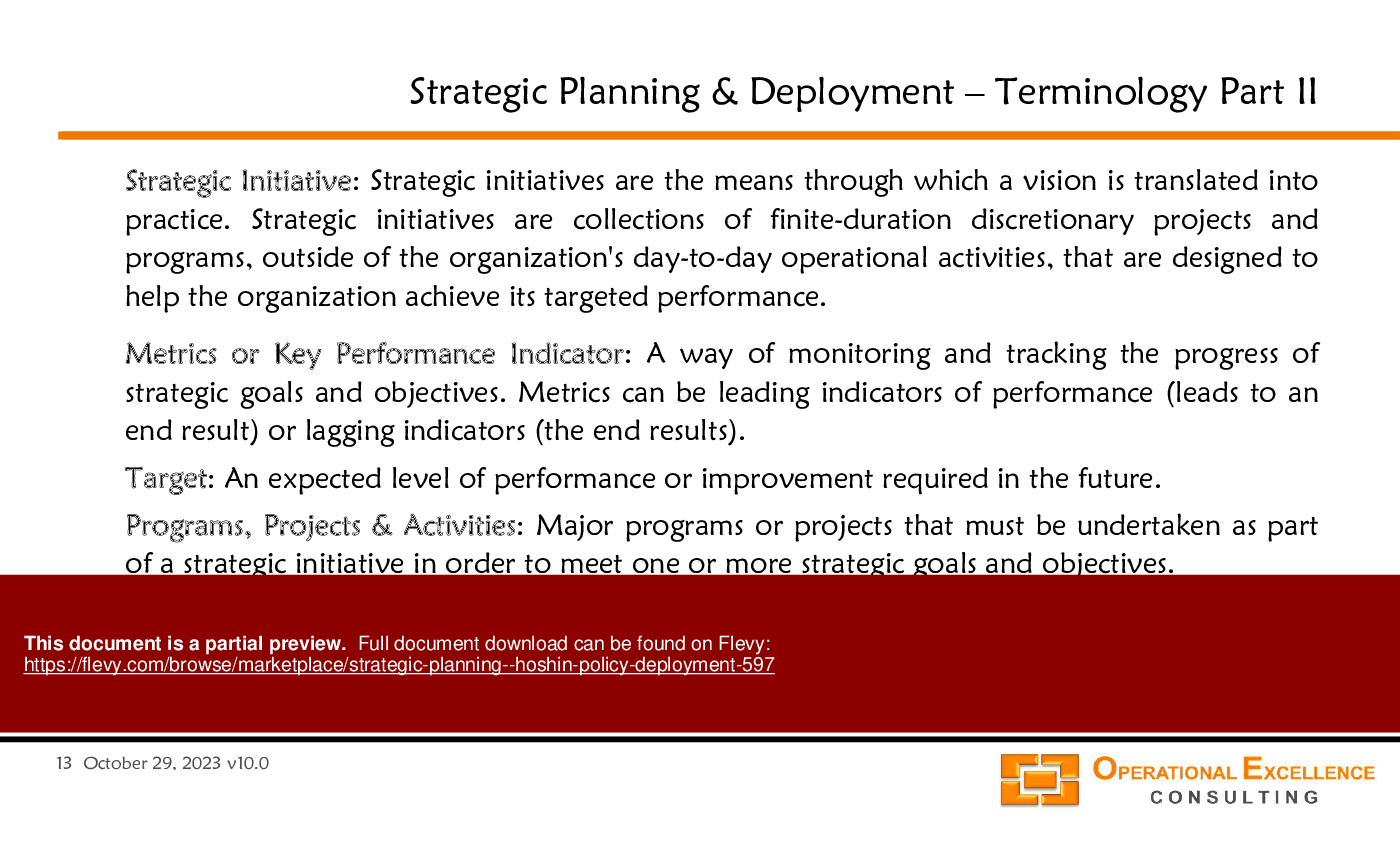
This PPT slide outlines key components of strategic planning terminology, focusing on the relationship between strategic goals, objectives, metrics, and initiatives. The strategic goal is defined as becoming the price leader, with a strategic objective of improving operational efficiency. Metrics include total costs per unit, targeted at less than $15, and productivity, aimed at more than 15 units per direct labor hour. Strategic initiatives to achieve these goals include a cost reduction program, Lean Six Sigma training, and a comprehensive operational performance database. Understanding the dependencies among these initiatives is crucial for effective execution and alignment with overarching strategic goals.

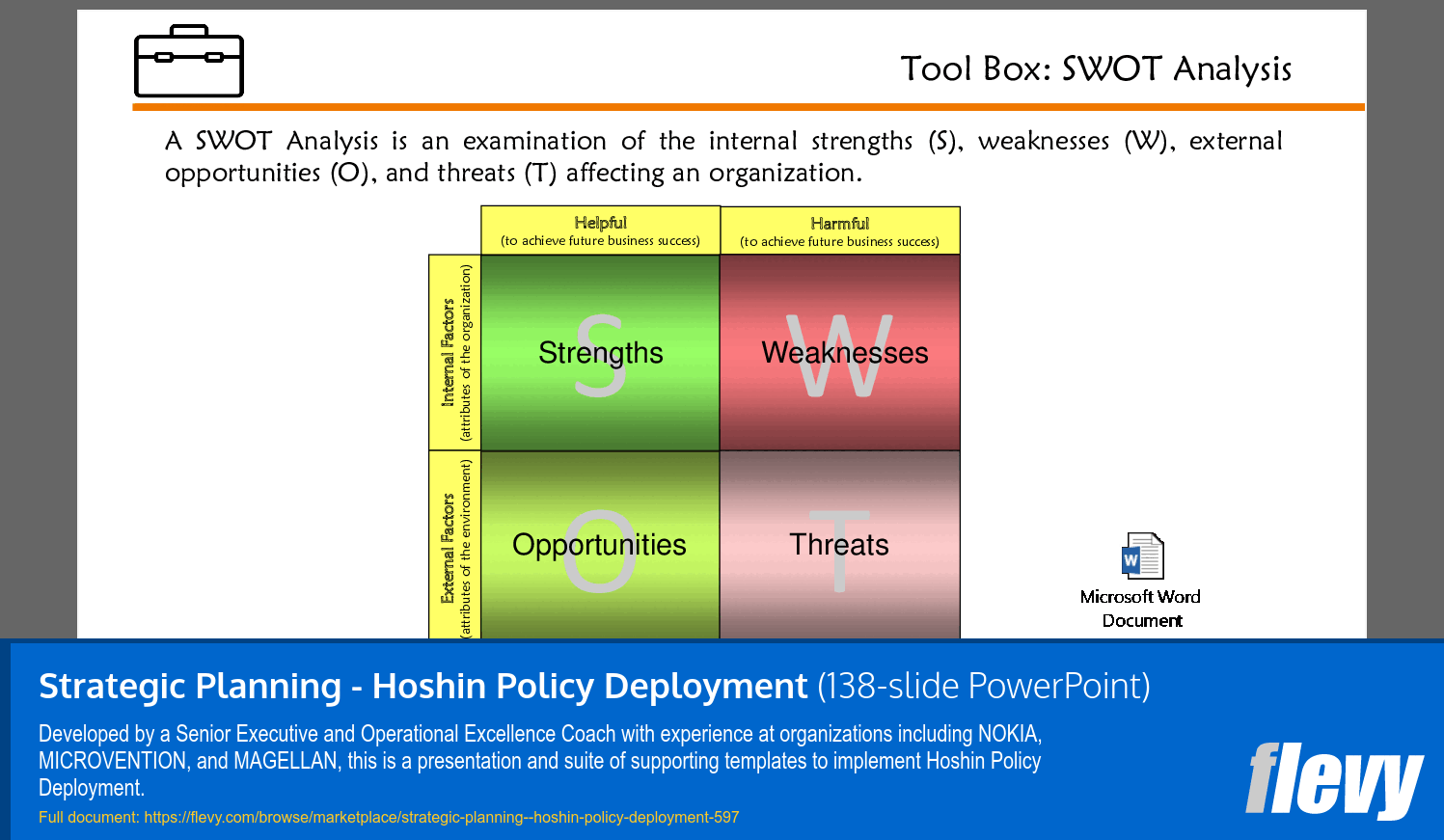
This PPT slide outlines a structured approach to SWOT analysis, a strategic planning tool for identifying internal strengths and weaknesses, as well as external opportunities and threats. The "Strengths" quadrant prompts organizations to evaluate unique advantages and resources that differentiate them from competitors, crucial for defining their Unique Selling Proposition (USP). The "Weaknesses" section encourages introspection on market perceptions and factors that may hinder sales, helping to identify critical blind spots. The "Opportunities" quadrant highlights the importance of recognizing favorable market trends, such as technological advancements and shifts in government policy. Finally, the "Threats" section addresses external challenges like competitor actions and technological disruptions, urging organizations to assess vulnerabilities that could impact operations.
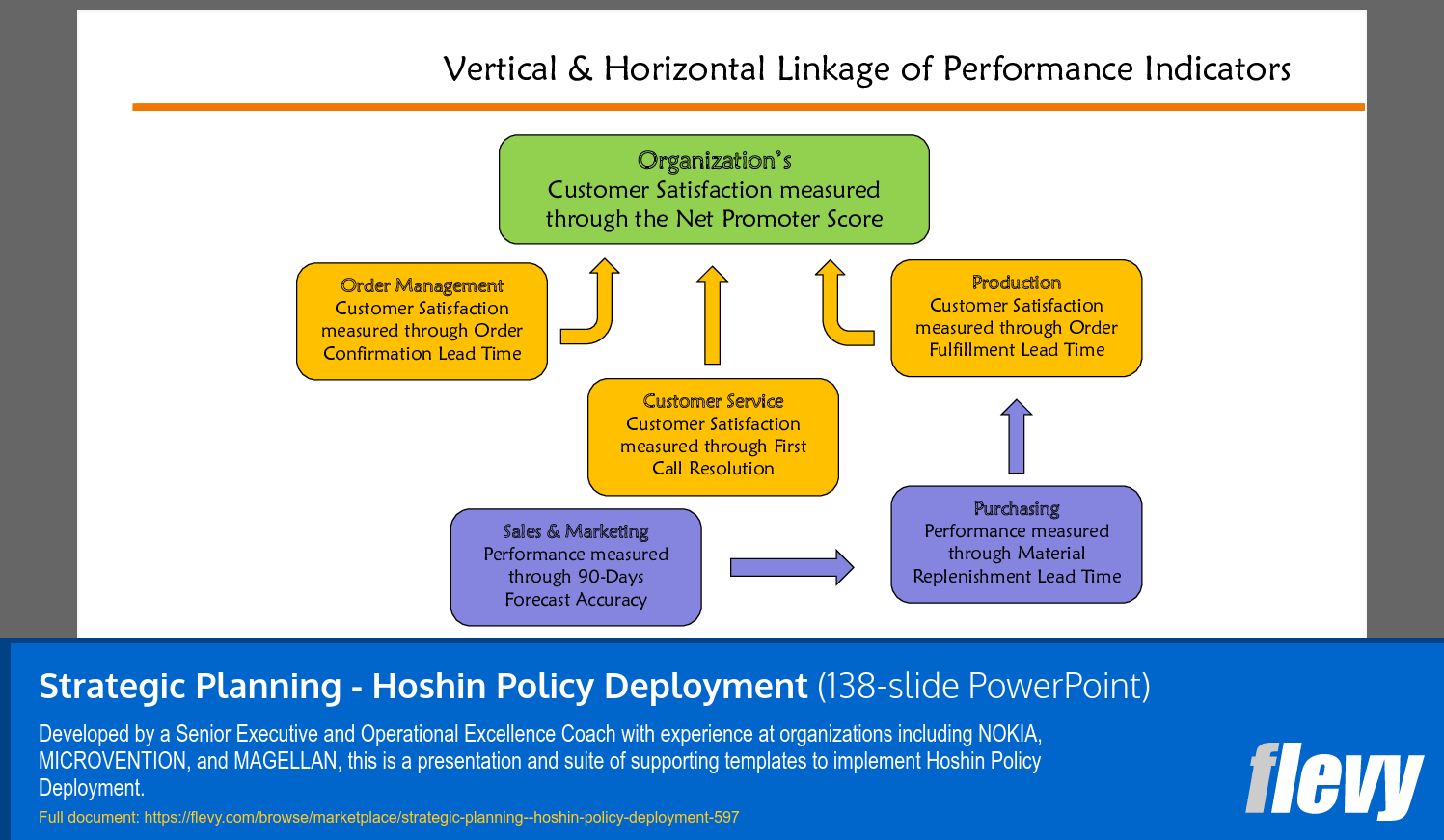
This PPT slide illustrates the interconnectedness of performance indicators within an organization, emphasizing customer satisfaction through the Net Promoter Score (NPS), a key metric for gauging customer loyalty. Key operational areas include Order Management, evaluated by Order Confirmation Lead Time; Customer Service, assessed via First Call Resolution; Production, measured by Order Fulfillment Lead Time; Sales & Marketing, determined by 90-Days Forecast Accuracy; and Purchasing, evaluated through Material Replenishment Lead Time. Each department's performance directly impacts overall customer satisfaction, highlighting the need for alignment across functions to achieve organizational goals. Improvements in one area can enhance outcomes in others, fostering a holistic approach to performance management.
This PPT slide presents a SWOT Analysis framework, a strategic tool for evaluating internal strengths and weaknesses alongside external opportunities and threats. The layout consists of 4 quadrants: Strengths (S) and Weaknesses (W) focus on internal factors, where strengths drive success and weaknesses hinder progress. Opportunities (O) and Threats (T) address external factors, with opportunities representing growth potential and threats posing risks. This framework is essential for strategic planning, enabling organizations to identify growth avenues while remaining vigilant against external challenges. Systematic assessment of these 4 dimensions informs decision-making aligned with long-term objectives.
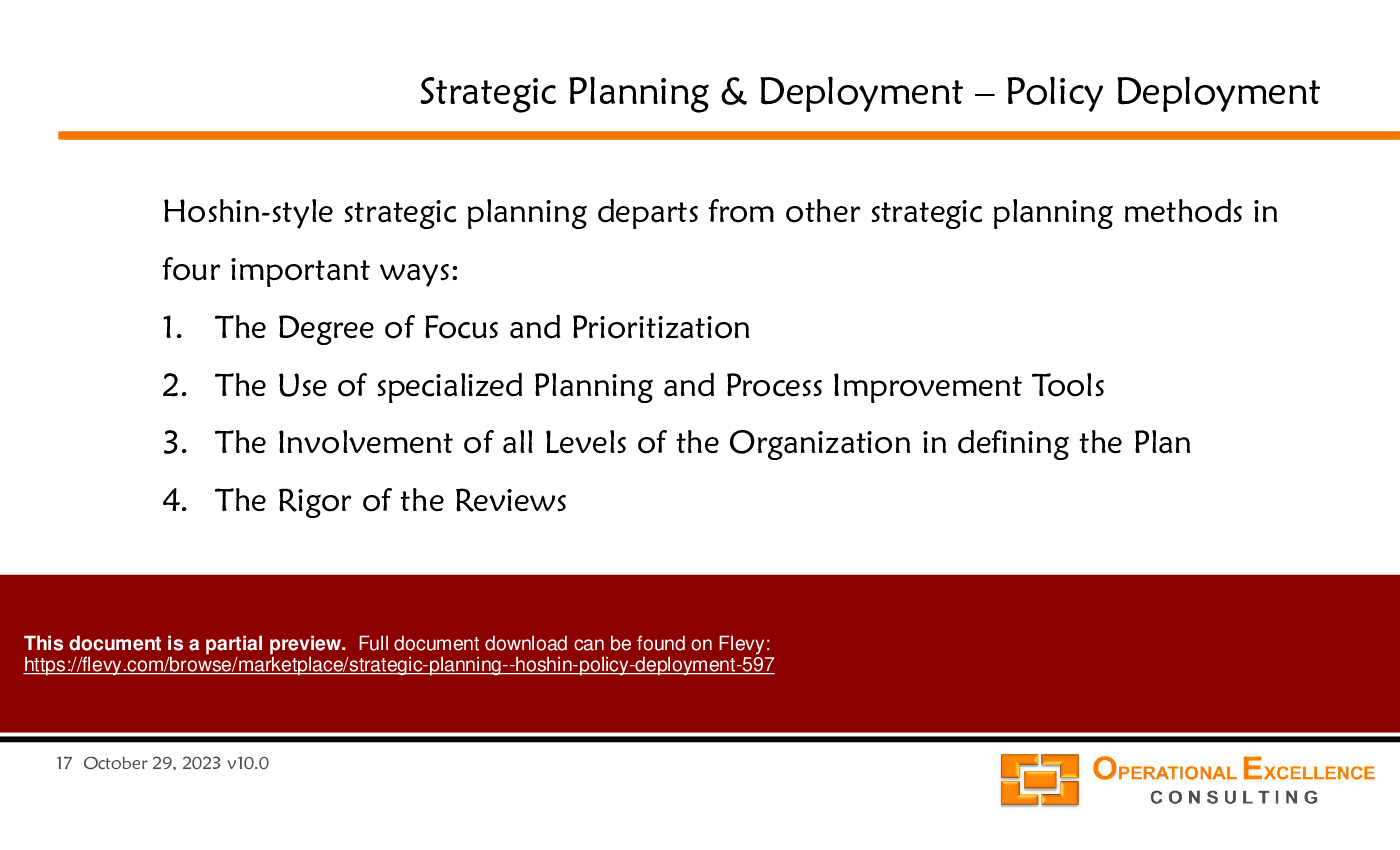
This PPT slide illustrates a metaphorical framework for Policy Deployment and Hoshin planning as a journey towards a desired organizational future state. Key elements include identifying obstacles, represented as boulders, that hinder progress. A systematic approach to overcoming these challenges is advocated, focusing on tackling significant and minor barriers through continuous improvement. This dual strategy ensures alignment with the overall strategic vision while maintaining focus on the path. Employing these frameworks enables leaders to navigate the complexities of organizational change and effectively guide their teams toward achieving strategic goals.
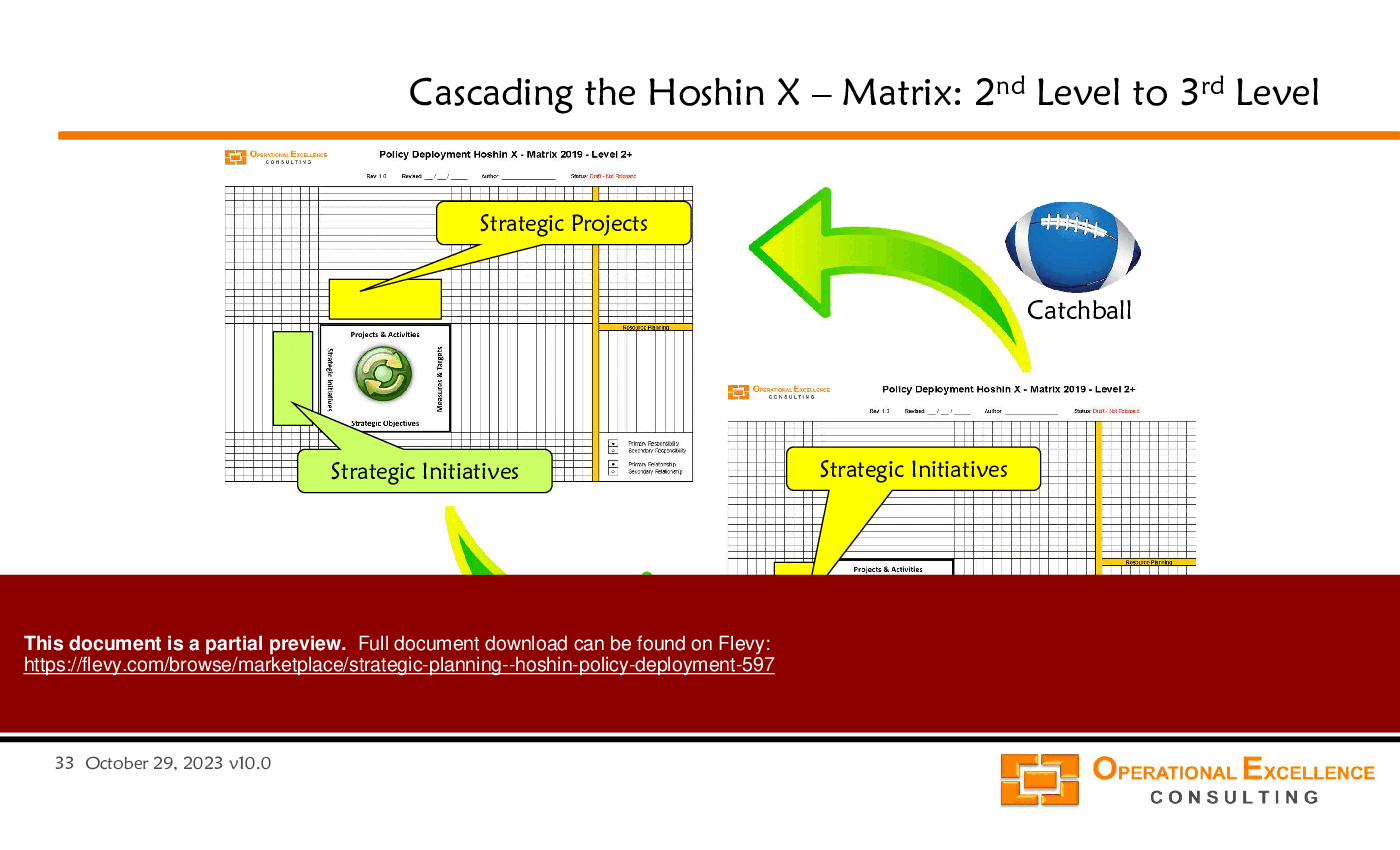
This PPT slide illustrates the Hoshin X Matrix framework for cascading strategic initiatives, transitioning from first-level to second-level objectives. It emphasizes aligning annual strategic objectives with long-term breakthrough objectives spanning 3 to 5 years. The "Catchball" process facilitates collaboration and feedback across organizational levels, ensuring strategic initiatives incorporate insights from various stakeholders. The second level of the Hoshin X Matrix breaks down strategic initiatives into actionable projects, enhancing accountability and progress tracking. The visual layout, with clear labels and directional arrows, conveys a methodical approach to strategic planning and execution, highlighting the need for ongoing communication and adaptability in successful strategy deployment.
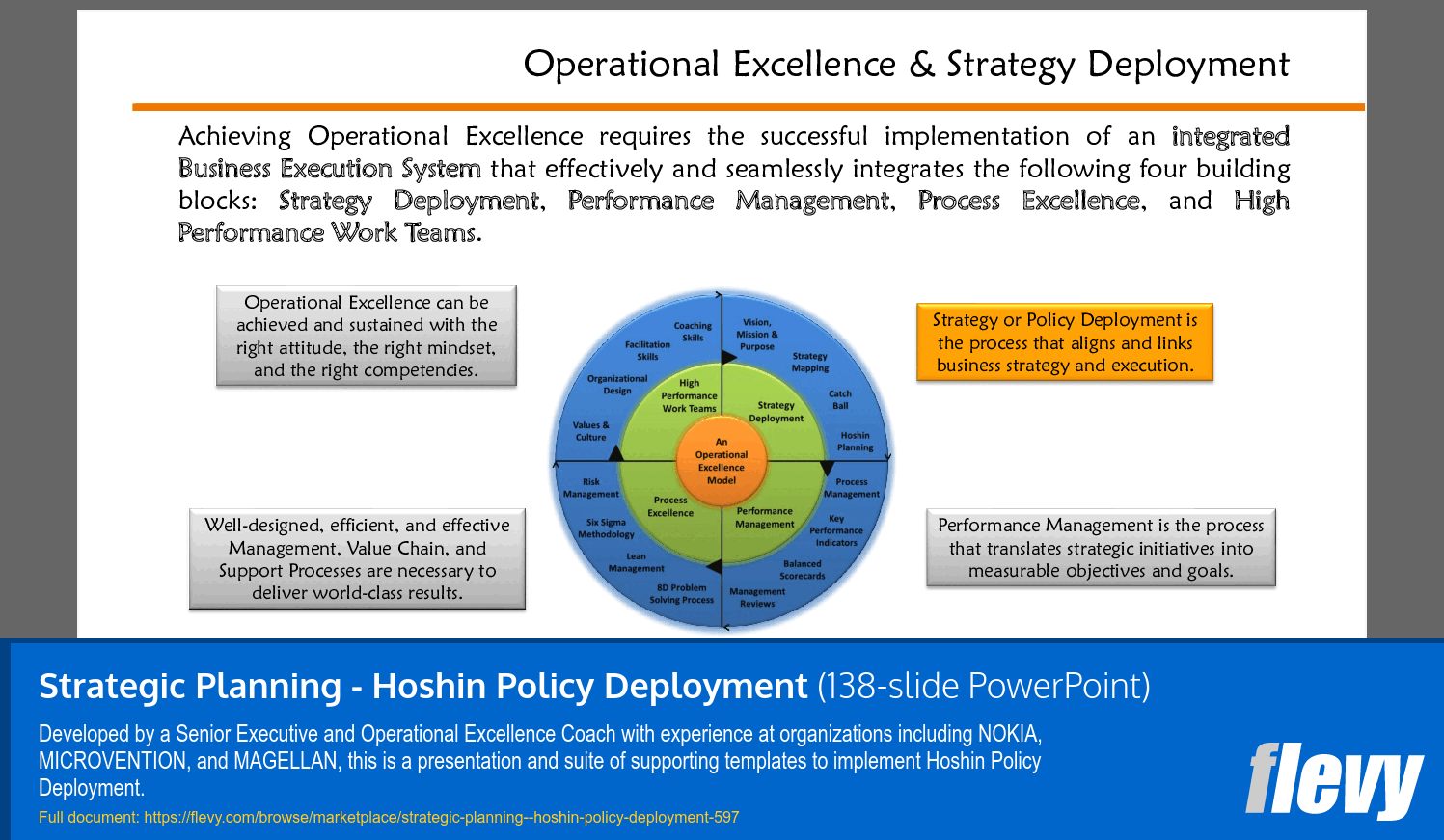
This PPT slide presents a framework for achieving Operational Excellence through an integrated Business Execution System, emphasizing 4 foundational components: Strategy Deployment, Performance Management, Process Excellence, and High-Performance Work Teams. Operational Excellence is a continuous journey requiring the right mindset, competencies, and organizational culture. The circular model illustrates the interconnectedness of skills and methodologies, including coaching, risk management, and Six Sigma, aligning vision, mission, and purpose with strategic initiatives. Key processes like Performance Management translate strategic initiatives into measurable objectives, providing clarity for executives implementing operational strategies. This comprehensive overview guides decision-making and strategic planning for enhancing organizational performance through a systematic approach.
This PPT slide outlines a structured framework for aligning strategic goals within the financial dimension of an organization, centered on the primary goal of "Increase Shareholder Value." Key objectives include achieving a 20% revenue growth and 15% operating cost improvements in 2019, emphasizing quantifiable targets for accountability. The strategy promotes diversifying revenue through "New Sources of Revenue" and enhancing "Customer Profitability" by improving service or product offerings. Additionally, objectives focus on "Lower Operating Costs" and "High Utilization of Assets," highlighting efficiency and resource maximization. The integration of these objectives into a balanced scorecard approach ensures cohesive strategy execution and reflects a commitment to continuous improvement in strategic planning.
The A3 Project Charter is a structured template for project initiation and management within Hoshin Policy Deployment. It includes a project description section for summarizing the initiative, ensuring stakeholder clarity on its purpose. The problem and goal statement articulates specific challenges and desired outcomes, maintaining project focus. The business outcomes and benefits section highlights expected value, essential for leadership buy-in. Scope definition delineates project boundaries to prevent scope creep and allocate resources effectively. The high-level project plan outlines key activities and milestones, guiding execution. Resource estimation assesses necessary full-time equivalents (FTEs) and costs for budgeting. This PPT slide also addresses sponsorship and key stakeholders, emphasizing their support, while highlighting assumptions, constraints, and risks to proactively consider potential challenges.
This PPT slide outlines a structured framework for an A3 Project Report focused on Policy Deployment. Key sections include "Background," which articulates the A3 report's purpose and develops a clear problem statement to align stakeholders. "Current Conditions" requires a detailed assessment of existing situations, identifying internal or external problems in quantifiable terms. "Goals & Targets" defines specific, measurable objectives related to quality, time, and cost, establishing clear expectations and benchmarks. "Root Cause Analysis" isolates and verifies underlying causes of identified problems, ensuring solutions address true issues. "Countermeasures" develops actionable strategies to eliminate root causes and improve processes, verifying effectiveness. Implementation involves executing selected countermeasures and validating effectiveness from the customer perspective. Finally, "Follow Up" modifies necessary systems to prevent issue recurrence and celebrates successes, ensuring continuous improvement and learning.
This PPT slide outlines the Hoshin Policy Deployment framework for strategic planning, focusing on aligning organizational goals across 4 perspectives: Financials, Customers, Internal Processes, and Learning & Growth. The "Financials" perspective prompts leaders to assess shareholder perceptions of success, highlighting financial performance as a key indicator of organizational health. The "Customers" perspective emphasizes aligning operations with customer expectations, underscoring the importance of customer-centric strategies. The "Internal Processes" perspective evaluates essential processes for satisfying customer needs, identifying operational efficiencies. Finally, the "Learning & Growth" perspective stresses continuous improvement and adaptability for long-term success. This structured approach integrates multiple viewpoints to enhance strategic alignment and operational effectiveness.
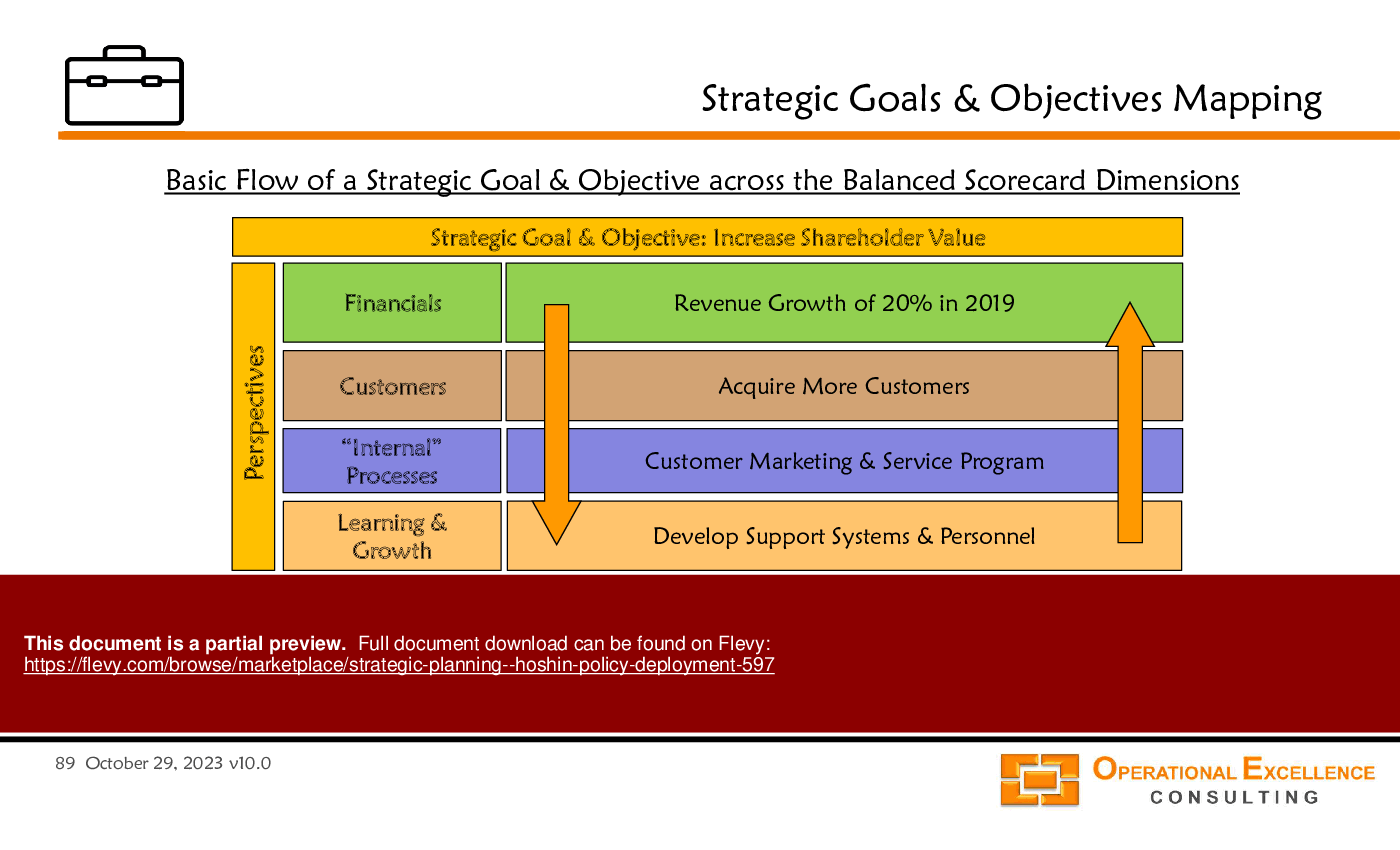
This PPT slide outlines a structured approach to strategic goal and objective mapping, focusing on increasing shareholder value through the Balanced Scorecard framework. Key objectives span 4 dimensions: Financials, Customers, Internal Processes, and Learning & Growth.
In Financials, the primary objective is a 20% revenue growth by 2019. The Customers dimension emphasizes customer acquisition and price leadership, indicating strategies for market expansion and competitive pricing.
Internal Processes focus on operational efficiency, including a cost reduction program and a knowledge-based system, while reducing non-core activities to concentrate resources.
Learning & Growth objectives enhance organizational capabilities, featuring a Lean Six Sigma training program and a database network for operational performance insights.
All elements of the strategic map must align with the overall strategy, ensuring stakeholders understand the organization’s direction and the interconnectedness of its initiatives.
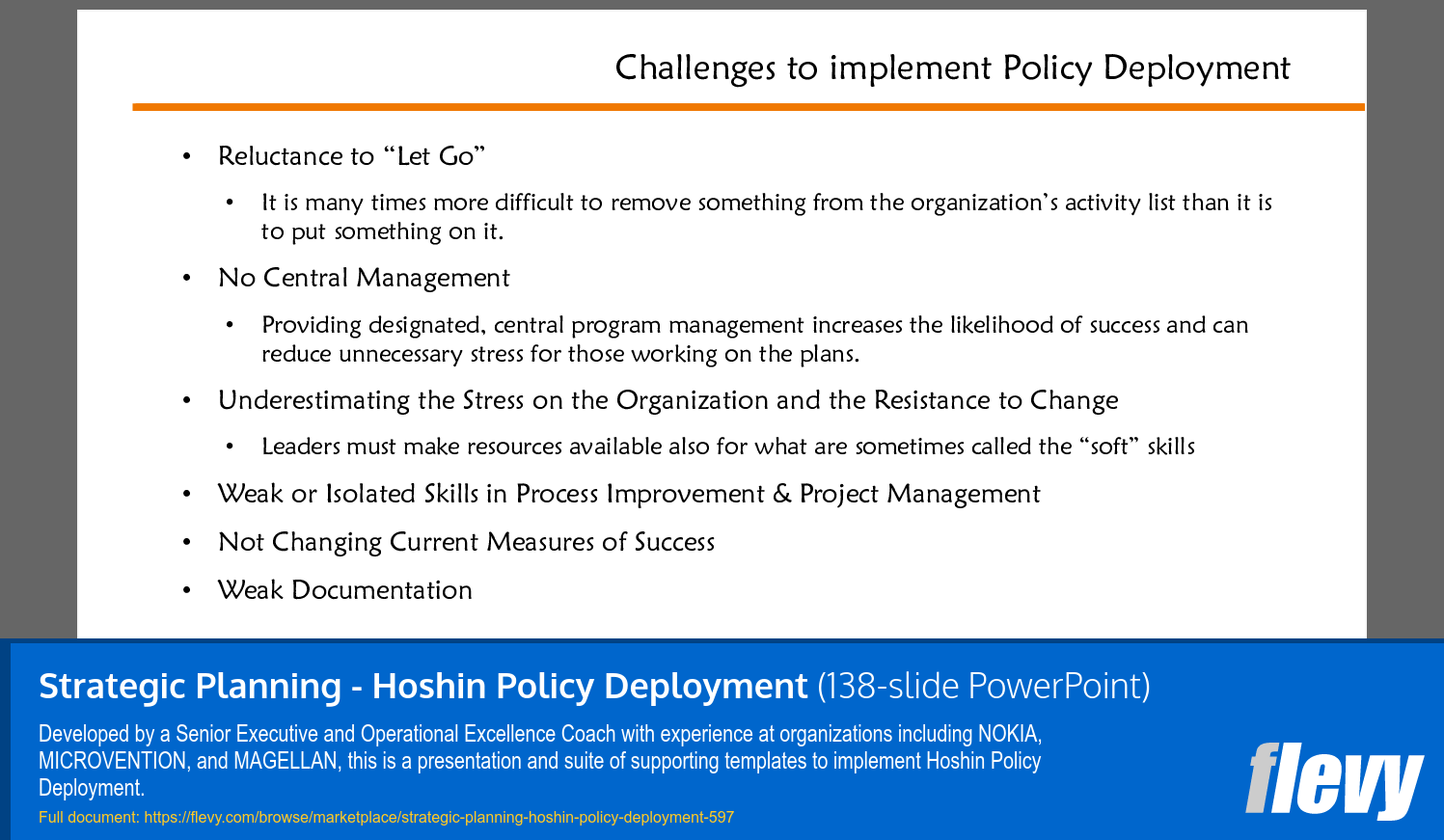
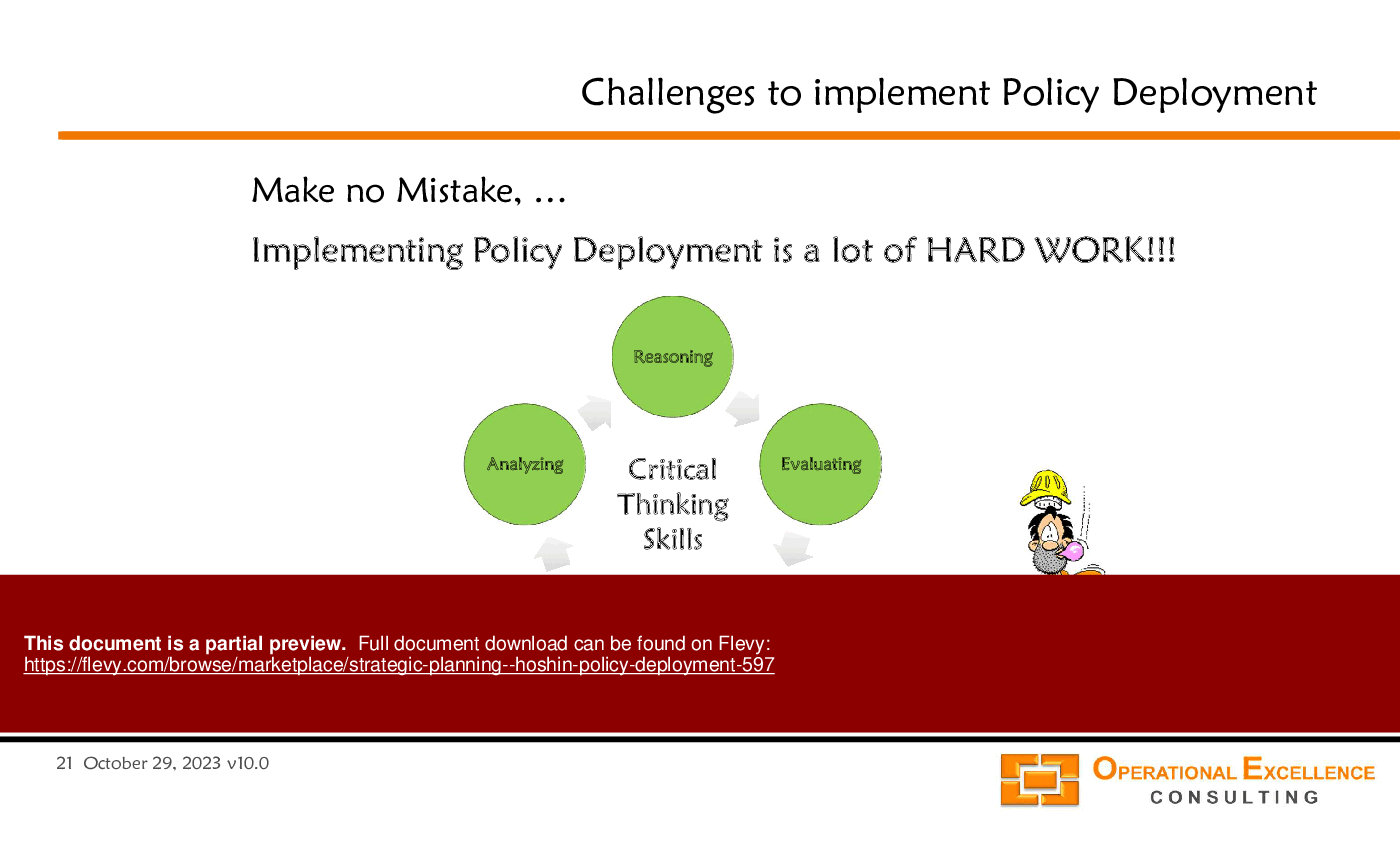
Implementing effective policy deployment requires significant effort and critical thinking skills. Essential skills include Reasoning, Analyzing, Evaluating, Decision Making, and Problem Solving, which collectively support successful policy execution. These skills should be viewed as an interconnected framework rather than in isolation. The complexities of policy deployment highlight the importance of these critical thinking skills in overcoming implementation challenges. Organizations must prepare for the rigorous demands of policy deployment by leveraging these competencies to navigate obstacles effectively.
This PPT slide presents a framework for aligning strategic goals with performance indicators to increase shareholder value, organized into 4 dimensions: Financials, Customers, Internal Processes, and Learning & Growth. The Financials dimension targets revenue growth, while the Customers section focuses on market expansion and competitive pricing strategies. Internal Processes emphasize operational efficiency through initiatives like cost reduction and knowledge-based systems. Learning & Growth includes training programs, such as Lean Six Sigma, and a database network for performance. The necessity of performance indicators for each initiative is highlighted, questioning the viability of objectives without measurable metrics. This approach ensures that strategic initiatives are defined and trackable, maintaining focus and accountability in achieving goals.
The Hoshin X Matrix at Level 1 is a critical tool for policy deployment, aligning strategic goals with operational execution. It includes the organization’s annual strategic goals and objectives, which provide clear, measurable targets. The matrix also outlines 3-5 year breakthrough goals, establishing a long-term vision. Central to the matrix are strategic initiatives and tactics that connect high-level goals with actionable steps, ensuring alignment with overarching objectives. Resource allocation is vital for successful implementation, detailing how human resources are distributed across initiatives. Key performance indicators are represented through a balanced scorecard approach, systematically measuring progress against strategic goals and allowing for necessary adjustments. This framework ensures effective policy deployment and alignment between strategy and execution.
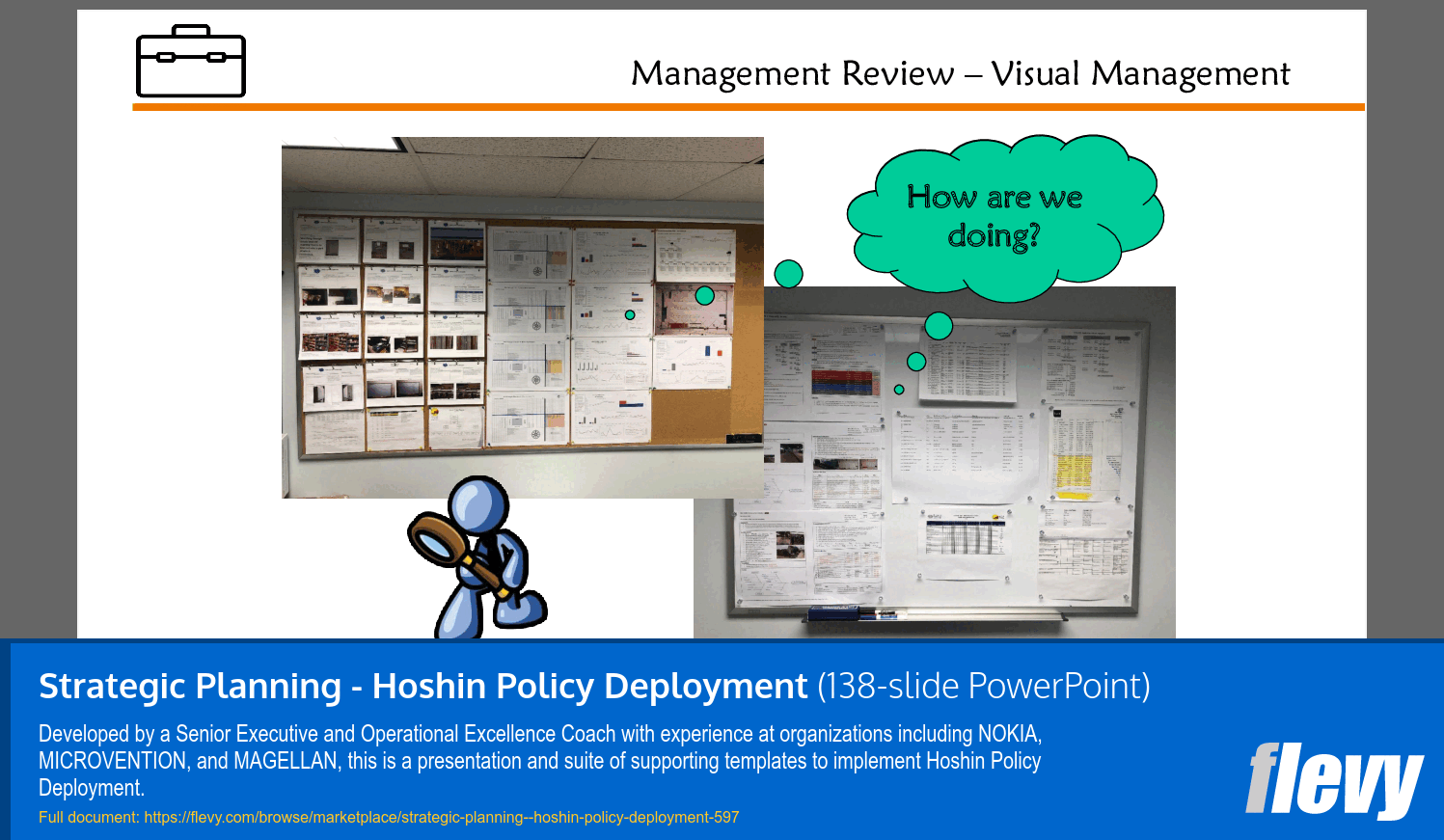
This PPT slide illustrates the Hoshin Policy Deployment methodology for management reviews, focusing on organizational performance assessment through visual management. It features a wall of charts, graphs, and documentation that systematically track key metrics and progress indicators relevant to organizational objectives, promoting transparency and accountability. The speech bubble asking "How are we doing?" highlights the importance of continuous evaluation and reflection, encouraging discussions about performance and areas for improvement. By integrating visual elements into management reviews, organizations enhance communication, foster workforce engagement, and align with strategic goals, making visual management a dynamic part of decision-making.
Developed by a Senior Executive and Operational Excellence Coach with experience at organizations including NOKIA, MICROVENTION, and MAGELLAN, this is a presentation and suite of supporting templates to implement Hoshin Policy Deployment.
Operational Excellence Consulting LLC provides assessments, training solutions, kaizen event facilitation, and implementation support to enable our clients to achieve superior performance through Operational Excellence - Strategy Deployment & Hoshin Planning, Performance Management & Balanced Scorecards, Process Excellence & Lean Six Sigma, and High
... [read more] Performance Work Teams.
Frank Adler co-founded OEC LLC in 2009 to follow his passion for Operational Excellence and to be able to work with individuals and organizations that share this passion.
He is an accomplished and recognized Operational Excellence, Lean Management, and Six Sigma coach, with over 20 years of domestic and international executive leadership experience in General Management, multi-site Operations & Supply Chain Management, and Quality & Customer Support Management.
Frank is a certified and experienced Lean Six Sigma Master Black Belt with a proven track record of implementing these methods, concepts, and tools in various organizations and industries.
He holds a Master of Science in Mathematics & Physics from the Freie University of Berlin (Germany) and a Doctor of Philosophy in Applied Mathematics & Industrial Economics from the Helsinki University of Technology (Finland).
Since 2012, we have provided business templates to over 10,000 businesses and organizations of all sizes, from startups and small businesses to the Fortune 100, in over 130 countries.
Read Customer Testimonials
"I have used Flevy services for a number of years and have never, ever been disappointed. As a matter of fact, David and his team continue, time after time, to impress me with their willingness to assist and in the real sense of the word. I have concluded in fact
that it is not at all just a repository of documents/resources but, in the way that David and his team manage the firm, it is like dealing with consultants always ready to assist, advise and direct you to what you really need, and they always get it right.
I am an international hospitality accomplished senior executive who has worked and lived during the past 35 years in 23 countries in 5 continents and I can humbly say that I know what customer service is, trust me.
Aside from the great and professional service that Flevy's team provide, their wide variety of material is of utmost great quality, professionally put together and most current.
Well done Flevy, keep up the great work and I look forward to continue working with you in the future and to recommend you to a variety of colleagues around the world.
"
– Roberto Pelliccia, Senior Executive in International Hospitality
"As a consultant requiring up to date and professional material that will be of value and use to my clients, I find Flevy a very reliable resource.
The variety and quality of material available through Flevy offers a very useful and commanding source for information. Using Flevy saves me time, enhances my expertise and ends up being a good decision."
– Dennis Gershowitz, Principal at DG Associates
"I am extremely grateful for the proactiveness and eagerness to help and I would gladly recommend the Flevy team if you are looking for data and toolkits to help you work through business solutions."
– Trevor Booth, Partner, Fast Forward Consulting
"Flevy is our 'go to' resource for management material, at an affordable cost. The Flevy library is comprehensive and the content deep, and typically provides a great foundation for us to further develop and tailor our own service offer."
– Chris McCann, Founder at Resilient.World
"If you are looking for great resources to save time with your business presentations, Flevy is truly a value-added resource. Flevy has done all the work for you and we will continue to utilize Flevy as a source to extract up-to-date information and data for our virtual and onsite presentations!"
– Debbi Saffo, President at The NiKhar Group
"Flevy is now a part of my business routine. I visit Flevy at least 3 times each month.
Flevy has become my preferred learning source, because what it provides is practical, current, and useful in this era where the business world is being rewritten.
many challenges and there is the need to make the right decisions in a short time, with so much scattered information, we are fortunate to have Flevy. Flevy investigates, selects, and puts at our disposal the best of the best to help us be successful in our work.
"
– Omar Hernán Montes Parra, CEO at Quantum SFE
"Flevy.com has proven to be an invaluable resource library to our Independent Management Consultancy, supporting and enabling us to better serve our enterprise clients.
The value derived from our [FlevyPro] subscription in terms of the business it has helped to gain far exceeds the investment made, making a subscription a no-brainer for any growing consultancy – or in-house strategy team."
– Dean Carlton, Chief Transformation Officer, Global Village Transformations Pty Ltd.
"As a niche strategic consulting firm, Flevy and FlevyPro frameworks and documents are an on-going reference to help us structure our findings and recommendations to our clients as well as improve their clarity, strength, and visual power. For us, it is an invaluable resource to increase our impact and value."
– David Coloma, Consulting Area Manager at Cynertia Consulting
Save with Bundles
This document is available as part of the following discounted bundle(s):
Download our free compilation of 50+ Strategy & Transformation slides and templates. Frameworks include McKinsey 7-S, Balanced Scorecard, Disruptive Innovation, BCG Curve, and many more.