
Quality & Cost of Quality   79-slide PPT PowerPoint presentation slide deck (PPT)
$29.00

Quality & Cost of Quality (79-slide PPT PowerPoint presentation slide deck (PPT)) Preview Image
Log in to unlock full preview.
Quality & Cost of Quality (79-slide PPT PowerPoint presentation slide deck (PPT)) Preview Image
Arrow   Click main image to view in full screen.

Quality & Cost of Quality (PowerPoint PPT Slide Deck)

PowerPoint (PPT) 79 Slides

Top 1,000 Best Practice $29.00

Add to Cart


Immediate download
Fully editable PowerPoint
Free lifetime updates

BENEFITS OF THIS POWERPOINT DOCUMENT

  1. Learn how to identify, measure and analyze items related to the Cost of Non-Conformance (CONC) and the Cost of Conformance (COC).
  2. The COQ system supports your Lean & Six Sigma initiative.
  3. All the documents can be modified or change as per business requirement.

COQ PPT DESCRIPTION

Editor Summary Quality & Cost of Quality is a 79-slide PowerPoint presentation by Nishil Josh that explains quality management principles and the cost implications of poor quality. Read more

By this PowerPoint Presentation, you can improve the company Quality culture and improve the bottom line. This presentation you can understanding elements of cost of quality or cost of poor quality. This document could be a very good training material for organisation.
This document can be modified and change as per company requirement.
Learning Objective: –
To understand the concept of Quality Function and its importance
To understand the concept of Cost of Quality Function
Understand Elements of Cost of Quality
Understand Categorisation of Cost of Quality
Understand how to Implement the Cost of Quality
Understand how to Analyse Cost of Quality
Understand method of Cost capturing / Data Gathering

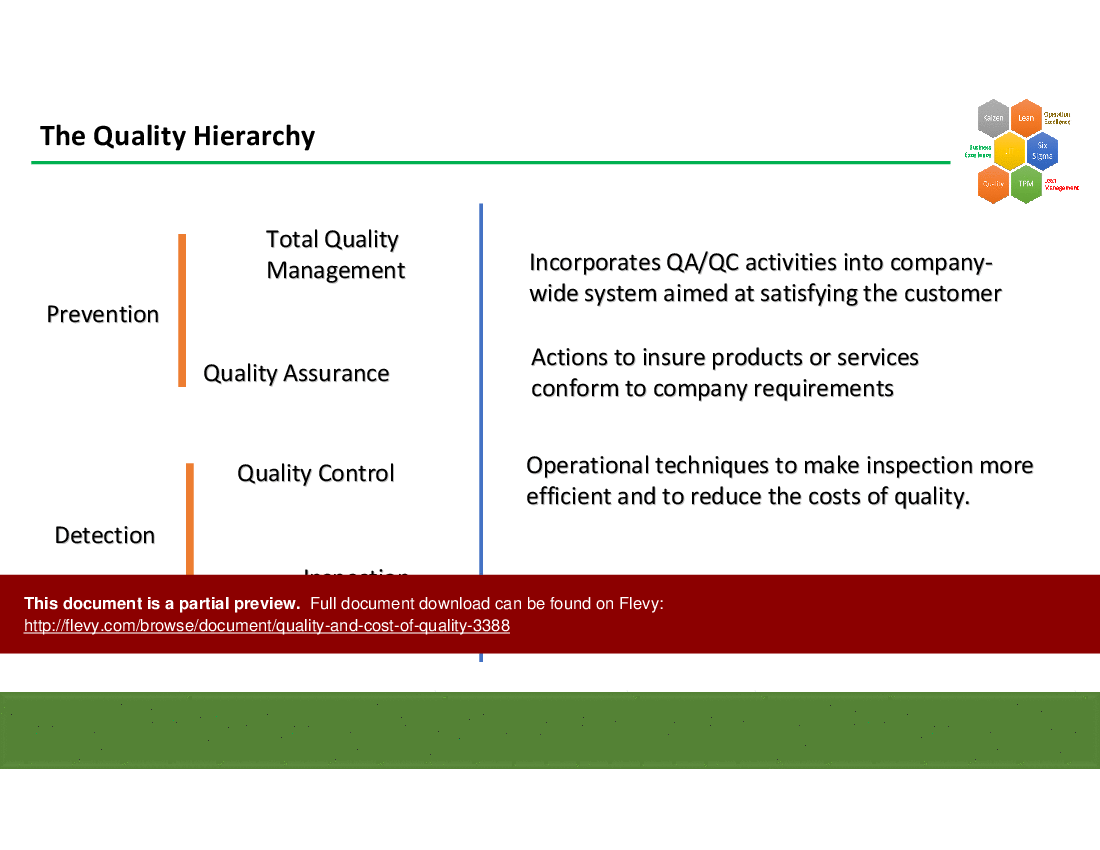
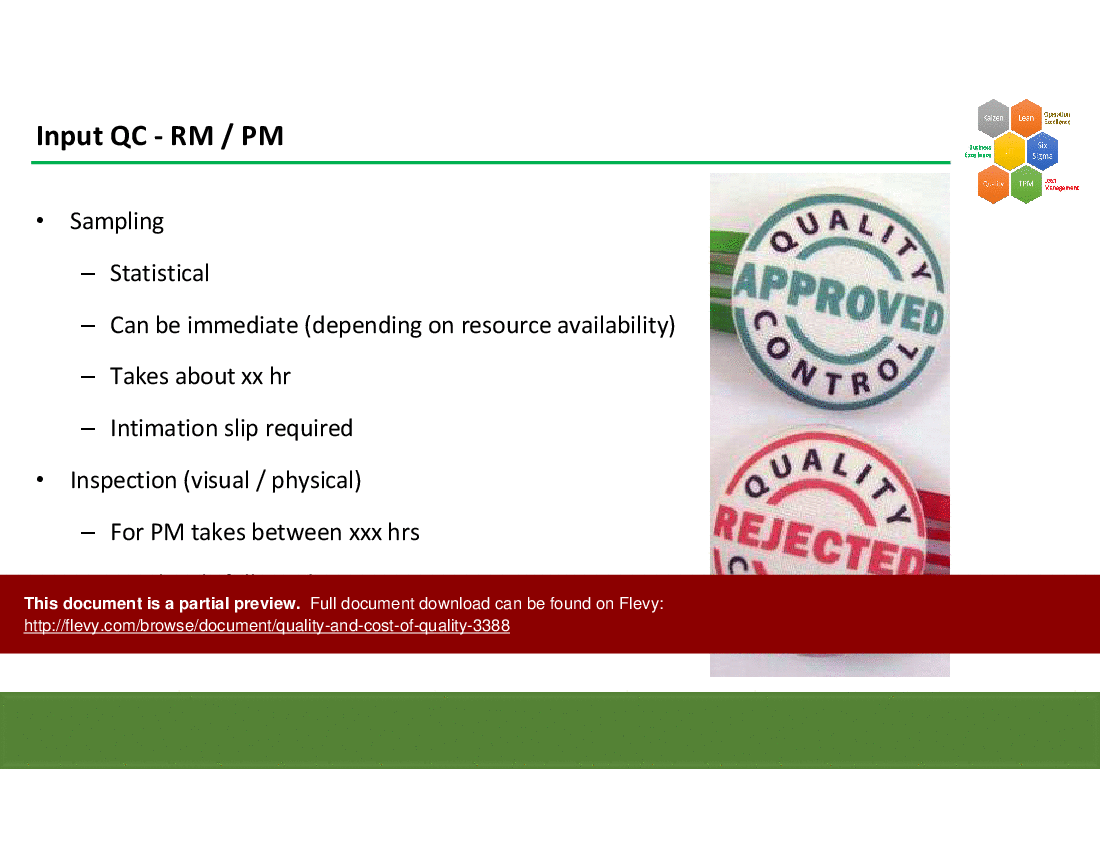
This presentation delves into the hierarchy of quality, emphasizing the critical roles of prevention, detection, and operational techniques. It highlights how Total Quality Management and Quality Assurance ensure products and services meet company standards, reducing inspection costs and enhancing efficiency. The PPT also covers the importance of statistical sampling and inspection in quality control, providing insights into immediate and resource-dependent processes.

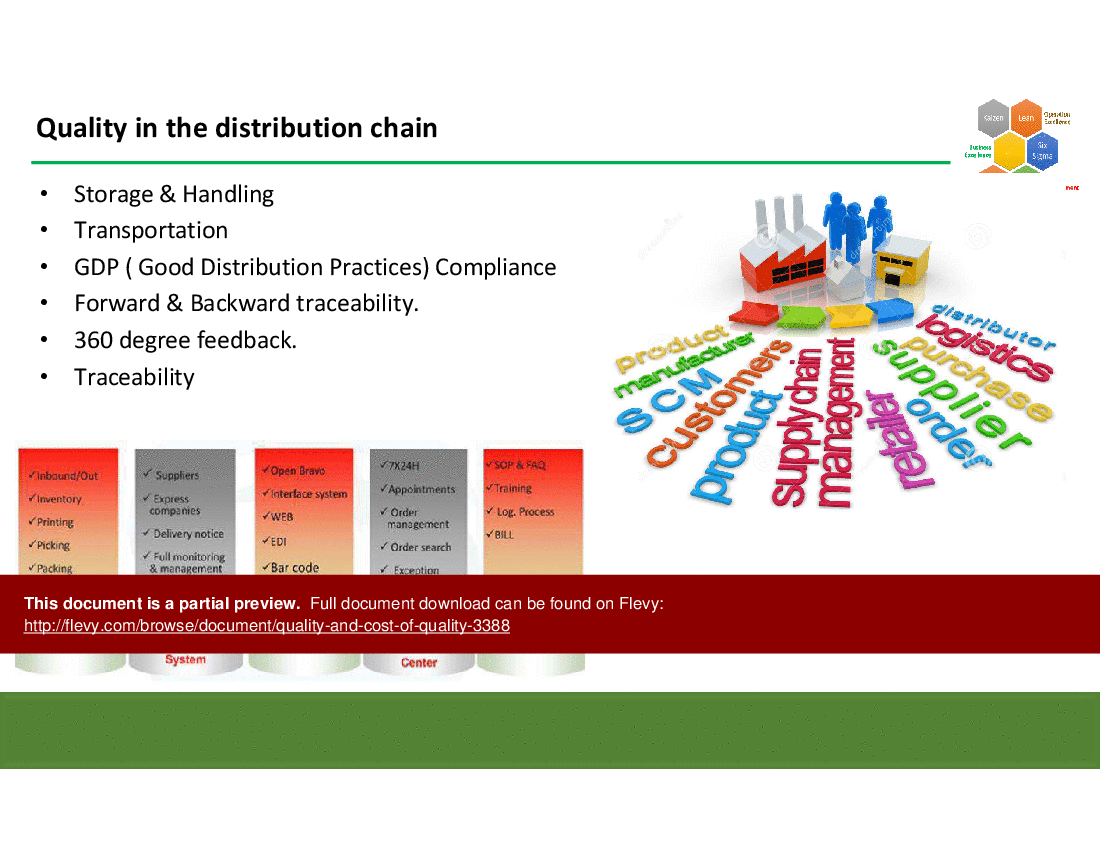
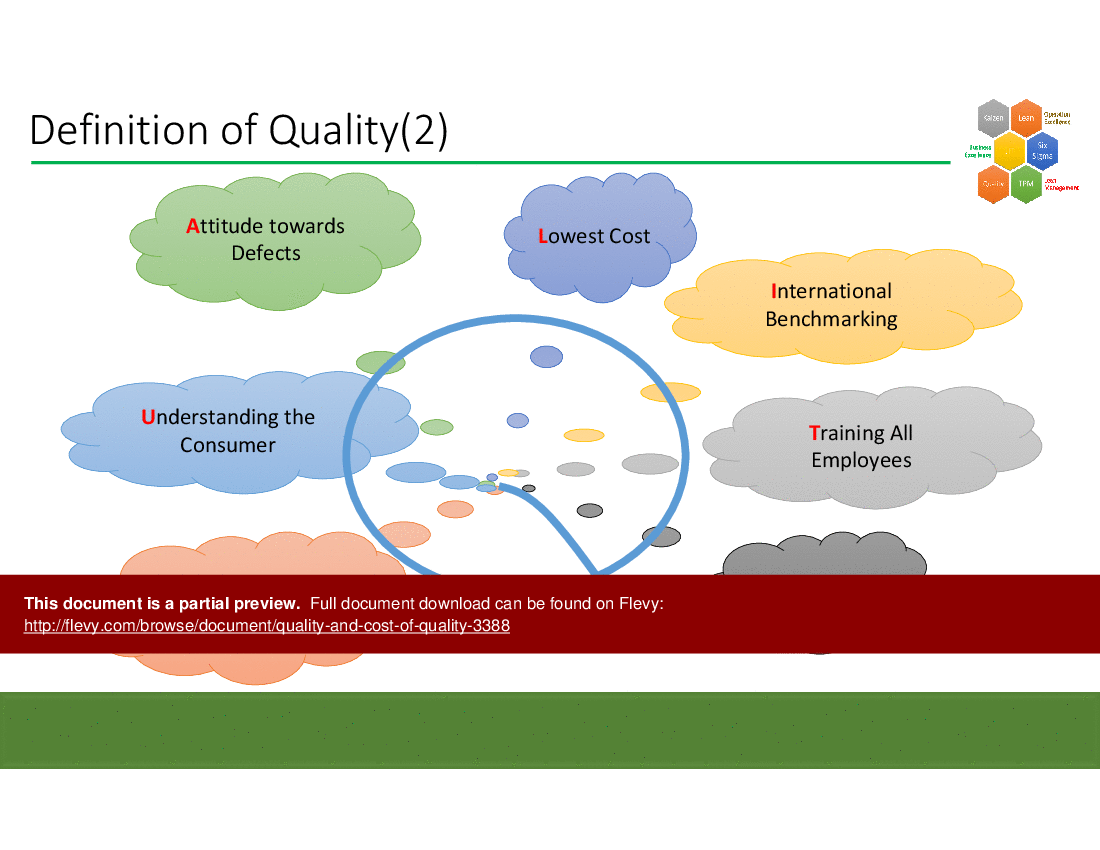
The distribution chain's quality aspects are meticulously examined, including storage, handling, transportation, and compliance with Good Distribution Practices. Forward and backward traceability, 360-degree feedback, and the necessity for traceability are discussed. The presentation also defines quality in terms of consumer understanding, defect attitudes, cost minimization, and international benchmarking, stressing the importance of training all employees.

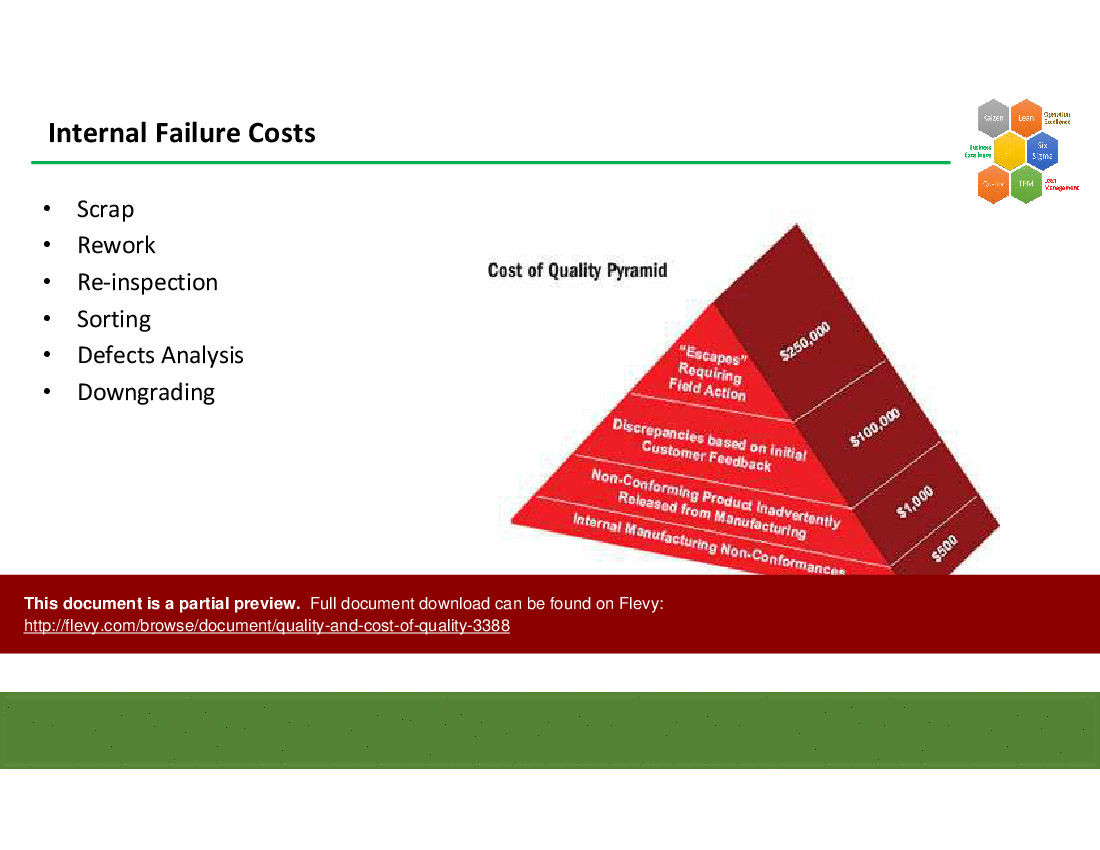
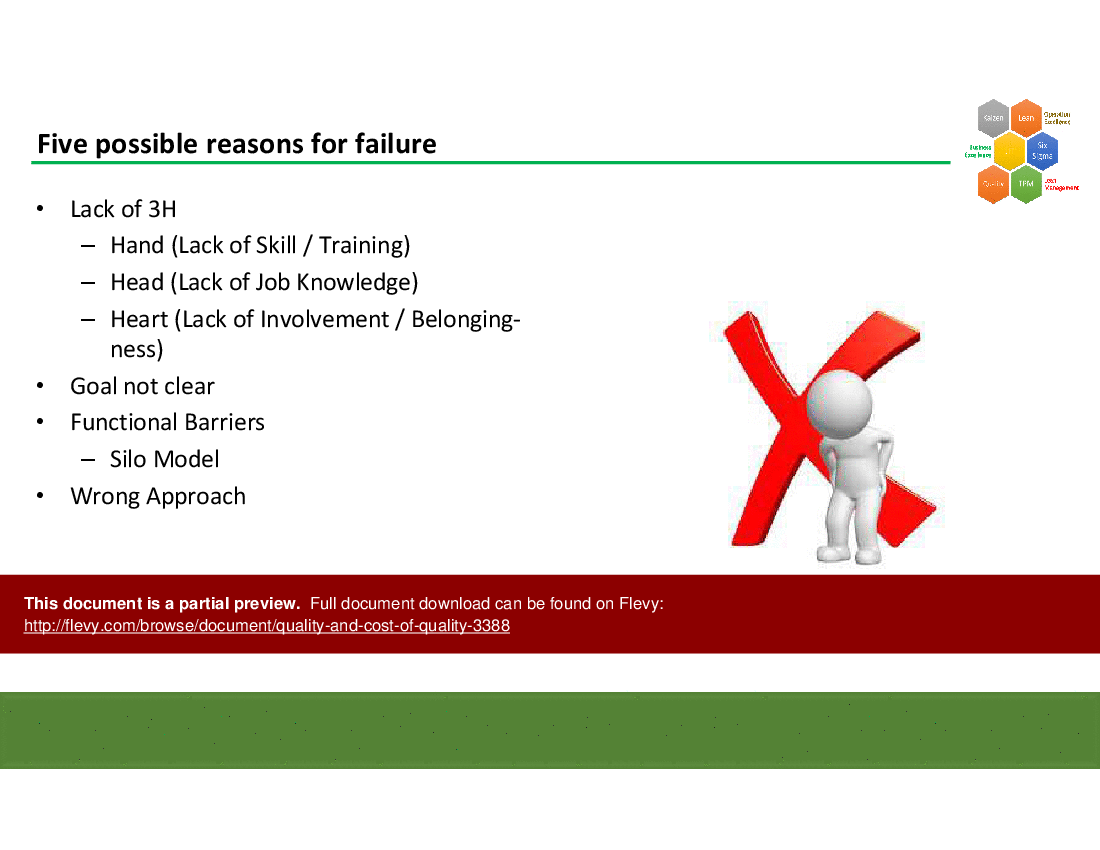
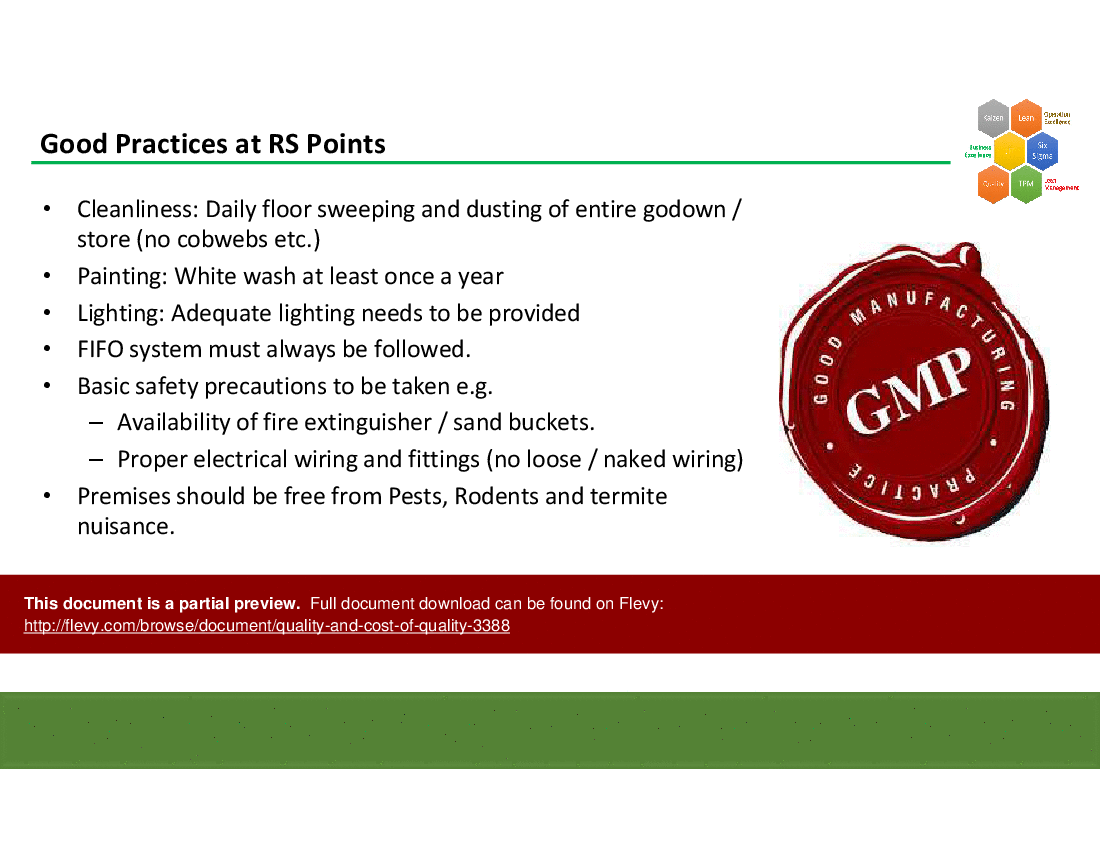
Internal failure costs such as scrap, rework, re-inspection, sorting, and defect analysis are outlined, with a focus on the cost implications of poor quality. The presentation identifies five possible reasons for failure, including lack of skill, job knowledge, involvement, unclear goals, functional barriers, and wrong approaches. Good practices at RS points, including cleanliness, painting, lighting, and safety precautions, are also detailed to ensure a comprehensive understanding of maintaining high-quality standards.

Got a question about the product? Email us at support@flevy.com or ask the author directly by using the "Ask the Author a Question" form. If you cannot view the preview above this document description, go here to view the large preview instead.

MARCUS OVERVIEW

This synopsis was written by Marcus [?] based on the analysis of the full 79-slide presentation.


Executive Summary
The "Quality & Cost of Quality" presentation provides a comprehensive overview of quality management principles, focusing on the critical aspects of consumer safety, company image, and legal compliance. This deck equips corporate executives and quality management teams with the necessary tools to understand the cost implications of poor quality and the importance of implementing effective quality management systems. By utilizing this presentation, organizations can enhance their quality control measures, reduce costs associated with quality failures, and ultimately improve customer satisfaction and profitability.

Who This Is For and When to Use
•  Quality Assurance Managers responsible for implementing quality control measures
•  Operations Executives seeking to improve process efficiency and product quality
•  Supply Chain Managers focused on vendor quality and compliance
•  Product Development Teams aiming for defect-free product launches

Best-fit moments to use this deck:
•  During quality management training sessions for staff
•  In strategy meetings focused on improving operational excellence
•  When assessing vendor quality and compliance standards
•  For workshops aimed at reducing costs associated with poor quality

Learning Objectives
•  Define the concept of quality and its importance in business operations
•  Identify the various costs associated with poor quality and their impact on profitability
•  Establish effective quality management systems to enhance product quality
•  Analyze the cost of quality metrics to drive continuous improvement
•  Implement best practices for vendor management and quality assurance
•  Develop strategies for reducing internal and external failure costs

Table of Contents
•  Introduction to Quality and Cost of Quality (page 2)
•  Understanding Quality Hierarchy (page 5)
•  Ensuring Quality: Input, In-process, and Finished Product (page 10)
•  Cost of Quality: Concepts and Definitions (page 15)
•  Elements of Cost of Quality (page 20)
•  Cost Categorization and Analysis (page 25)
•  Implementation Strategies for Quality Improvement (page 30)
•  Case Studies and Best Practices (page 35)

Primary Topics Covered
•  Quality Definition - Quality is defined as doing the right things right, focusing on features that meet customer desires and executing tasks without errors.
•  Quality Hierarchy - The hierarchy includes inspection, quality control, quality assurance, and total quality management aimed at customer satisfaction.
•  Cost of Quality - The cost associated with poor quality includes prevention, appraisal, internal failure, and external failure costs.
•  Vendor Management - Effective vendor management practices ensure input quality through approval processes, audits, and corrective actions.
•  In-process Quality Control - Techniques for maintaining quality during production, including traceability and internal audits.
•  Finished Product Quality - Assessment of chemical, physical, and microbiological properties to ensure compliance with standards.

Deliverables, Templates, and Tools
•  Quality management system templates for tracking quality metrics
•  Vendor approval and monitoring checklists
•  Quality control process flow diagrams
•  Cost of quality analysis worksheets
•  Training materials for quality management best practices
•  Audit templates for in-process quality assessments

Slide Highlights
•  Overview of the Quality Hierarchy illustrating the progression from inspection to total quality management.
•  Detailed breakdown of the cost of quality components, emphasizing prevention and appraisal costs.
•  Case study examples demonstrating the impact of quality improvements on profitability.
•  Visual representation of the relationship between quality costs and operational effectiveness.
•  Best practices for vendor management and quality assurance processes.

Potential Workshop Agenda
Introduction to Quality Management (60 minutes)
•  Overview of quality concepts and definitions
•  Discussion on the importance of quality in business

Cost of Quality Analysis (90 minutes)
•  Breakdown of cost categories and their implications
•  Group activity to analyze quality costs in real scenarios

Vendor Management Best Practices (60 minutes)
•  Strategies for effective vendor quality monitoring
•  Case studies on successful vendor management

Implementation Strategies for Quality Improvement (90 minutes)
•  Developing action plans for quality enhancement
•  Setting measurable quality objectives

Customization Guidance
•  Tailor the presentation to reflect specific industry standards and regulations relevant to your organization.
•  Adjust case studies and examples to align with your company's operational context.
•  Incorporate company-specific metrics and benchmarks for quality assessment.

Secondary Topics Covered
•  The role of consumer feedback in quality improvement
•  Legal compliance and its impact on quality management
•  Strategies for fostering a quality-centric culture within the organization
•  The relationship between quality and customer satisfaction

Topic FAQ

What are the main components of the cost of quality and how do they differ?

The cost of quality is typically divided into prevention, appraisal, internal failure, and external failure costs. Prevention covers activities to avoid defects; appraisal covers inspection and testing; internal failure covers scrap and rework before delivery; external failure covers warranty, returns, and customer impact, ending with prevention, appraisal, internal, and external failure costs.

How can I measure whether our quality initiatives are working?

Measure quality initiatives using KPIs like defect rates, customer satisfaction scores, and cost-of-quality metrics to identify trends and improvement areas. Tracking changes in these indicators after interventions offers insight into effectiveness, concluding with defect rates, customer satisfaction scores, and cost of quality metrics.

What is traceability and why does it matter for quality management?

Traceability is the ability to track a product through the supply chain so quality issues can be identified and contained quickly. It reduces customer impact and supports corrective actions across suppliers and processes, typically implemented as forward and backward traceability in distribution and production chains.

How does vendor management affect product quality in practice?

Vendor management affects input quality through supplier approval processes, regular audits, feedback loops, and corrective actions; these practices reduce supplier-related defects and downstream failure costs. Effective vendor oversight is operationalized using vendor approval and monitoring checklists.

What should I look for when choosing a quality management toolkit or slide deck?

Prioritize toolkits that include editable quality management system templates, cost-of-quality analysis worksheets, vendor checklists, process flow diagrams, and training materials so you can run workshops and customize content for your operations. Flevy’s Quality & Cost of Quality explicitly lists those deliverables.

Are paid quality templates worth buying for a small quality team with limited budget?

Assess whether a template set provides editable training materials, audit and vendor checklists, and cost-capture worksheets that save time versus building them internally; such features support quicker roll-out. Flevy’s Quality & Cost of Quality is a 79-slide PPT with editable templates and training slides.

I need to run a workshop after a product recall to reduce failure costs—what should the agenda include?

Focus the workshop on analyzing cost-of-quality categories, root causes of internal vs. external failures, immediate containment, and vendor audit findings; include activities for developing prevention plans and measurable objectives. Use cost-of-quality analysis worksheets and vendor audit templates to structure exercises.

What methods can teams use to capture and analyze cost-of-poor-quality data?

Capture costs through structured data-gathering on scrap, rework, re-inspection, returns, warranty, and defect analysis; categorize them into prevention, appraisal, internal, and external costs and analyze trends to prioritize interventions. Implement documented cost-capturing and data-gathering templates to standardize reporting.

Document FAQ
These are questions addressed within this presentation.

What is the cost of quality?
The cost of quality refers to the total costs associated with ensuring that products meet quality standards, including prevention, appraisal, internal failure, and external failure costs.

How can we reduce internal failure costs?
Reducing internal failure costs involves implementing effective quality control measures, enhancing employee training, and improving process capabilities to prevent defects before products reach the customer.

What are the key components of a quality management system?
A quality management system typically includes quality planning, quality assurance, quality control, and continuous improvement processes aimed at meeting customer requirements.

How does vendor management impact product quality?
Effective vendor management ensures that suppliers meet quality standards through regular audits, feedback, and corrective actions, which ultimately leads to higher input quality and reduced failure costs.

What is the significance of traceability in quality management?
Traceability allows organizations to track products through the supply chain, ensuring that any quality issues can be quickly identified and addressed, thereby minimizing the impact on customers.

How can we measure the effectiveness of our quality management initiatives?
Effectiveness can be measured through key performance indicators (KPIs) such as defect rates, customer satisfaction scores, and cost of quality metrics, which provide insights into areas for improvement.

What role does employee training play in quality management?
Employee training is crucial for ensuring that all staff understand quality standards, processes, and their responsibilities, leading to improved execution and reduced errors.

How can we foster a culture of quality within our organization?
Fostering a culture of quality involves engaging employees at all levels, providing ongoing training, and recognizing and rewarding quality improvement efforts.

Glossary
•  Quality - The degree to which a product or service meets customer expectations.
•  Cost of Quality (COQ) - The total costs associated with ensuring quality, including prevention, appraisal, internal, and external failure costs.
•  Vendor Management - The process of overseeing and managing supplier relationships to ensure quality and compliance.
•  Total Quality Management (TQM) - An organization-wide approach to continuous improvement in quality.
•  Internal Failure Costs - Costs incurred when defects are found before products reach the customer.
•  External Failure Costs - Costs incurred when defects are found after products have been delivered to customers.
•  Prevention Costs - Costs associated with activities aimed at preventing defects.
•  Appraisal Costs - Costs related to measuring and monitoring quality to ensure conformance to standards.
•  Traceability - The ability to track a product through the supply chain to ensure quality and compliance.
•  Critical to Quality (CTQ) - Attributes that are essential to ensuring product quality and customer satisfaction.
•  Continuous Improvement - Ongoing efforts to enhance products, services, or processes.
•  Quality Assurance (QA) - The systematic process of ensuring that quality requirements are met.
•  Quality Control (QC) - The operational techniques and activities used to fulfill quality requirements.
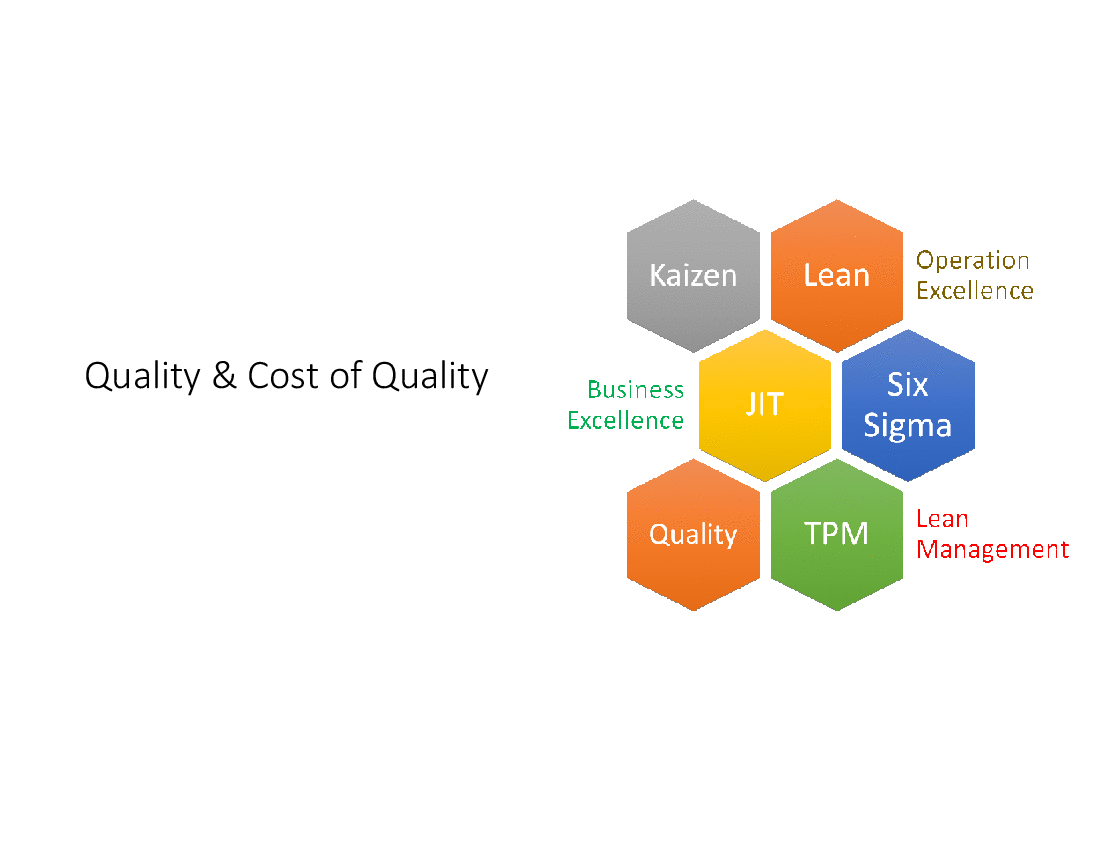
•  Lean Management - An approach to improving efficiency by eliminating waste and optimizing processes.
•  Six Sigma - A data-driven methodology for eliminating defects and improving quality.
•  Kaizen - A Japanese term meaning "continuous improvement," focusing on small, incremental changes.
•  Just-In-Time (JIT) - An inventory strategy that aligns production with demand to reduce waste.
•  Total Productive Maintenance (TPM) - A maintenance approach focused on proactive and preventative maintenance to maximize equipment effectiveness.
•  Operational Effectiveness - The ability to execute business operations efficiently and effectively.
•  Consumer Safety - The protection of consumers from products that may cause harm or injury.
•  Legal Compliance - Adherence to laws and regulations governing product quality and safety.

Source: Best Practices in COQ, Quality Culture PowerPoint Slides: Quality & Cost of Quality PowerPoint (PPT) Presentation Slide Deck, Nishil Josh


$29.00

Add to Cart
  

ABOUT THE AUTHOR

Author: Nishil Josh
Additional documents from author: 23

I am a Business Excellence Professional with over 25 years of experience in Manufacturing Operations, Quality Assurance & Improvement, and Resource Management across various industry sectors. Throughout my career, I have specialized in managing production activities, optimizing processes, and implementing best practices to enhance operational efficiency and productivity.

My expertise includes ... [read more]

Ask the Author a Question

You must be logged in to contact the author.

Click here to log in Click here register

Did you know?
The average daily rate of a McKinsey consultant is $6,625 (not including expenses). The average price of a Flevy document is $65.
Bundle and save! You can save up to % with bundles!

View bundle(s)


Trusted by over 10,000+ Client Organizations
Since 2012, we have provided business templates to over 10,000 businesses and organizations of all sizes, from startups and small businesses to the Fortune 100, in over 130 countries.
AT&T GE Cisco Intel IBM Coke Dell Toyota HP Nike Samsung Microsoft Astrazeneca JP Morgan KPMG Walgreens Walmart 3M Kaiser Oracle SAP Google E&Y Volvo Bosch Merck Fedex Shell Amgen Eli Lilly Roche AIG Abbott Amazon PwC T-Mobile Broadcom Bayer Pearson Titleist ConEd Pfizer NTT Data Schwab


Read Customer Testimonials

 
"As a consulting firm, we had been creating subject matter training materials for our people and found the excellent materials on Flevy, which saved us 100's of hours of re-creating what already exists on the Flevy materials we purchased."

– Michael Evans, Managing Director at Newport LLC
 
"As a small business owner, the resource material available from FlevyPro has proven to be invaluable. The ability to search for material on demand based our project events and client requirements was great for me and proved very beneficial to my clients. Importantly, being able to easily edit and tailor "

– Michael Duff, Managing Director at Change Strategy (UK)
 
"FlevyPro has been a brilliant resource for me, as an independent growth consultant, to access a vast knowledge bank of presentations to support my work with clients. In terms of RoI, the value I received from the very first presentation I downloaded paid for my subscription many times over! The "

– Roderick Cameron, Founding Partner at SGFE Ltd
 
"The wide selection of frameworks is very useful to me as an independent consultant. In fact, it rivals what I had at my disposal at Big 4 Consulting firms in terms of efficacy and organization."

– Julia T., Consulting Firm Owner (Former Manager at Deloitte and Capgemini)
 
"I have used FlevyPro for several business applications. It is a great complement to working with expensive consultants. The quality and effectiveness of the tools are of the highest standards."

– Moritz Bernhoerster, Global Sourcing Director at Fortune 500
 
"FlevyPro provides business frameworks from many of the global giants in management consulting that allow you to provide best in class solutions for your clients."

– David Harris, Managing Director at Futures Strategy
 
"Flevy is now a part of my business routine. I visit Flevy at least 3 times each month.

Flevy has become my preferred learning source, because what it provides is practical, current, and useful in this era where the business world is being rewritten.

In today's environment where there are so "

– Omar Hernán Montes Parra, CEO at Quantum SFE
 
"Flevy is our 'go to' resource for management material, at an affordable cost. The Flevy library is comprehensive and the content deep, and typically provides a great foundation for us to further develop and tailor our own service offer."

– Chris McCann, Founder at Resilient.World


Save with Bundles

This document is available as part of the following discounted bundle(s):

Save %!
Quality Management Tools

This bundle contains 6 total documents. See all the documents to the right.

$59.00


Add Bundle & Save


Customers Also Bought These Documents


Customers Also Like These Documents

Explore Templates on Related Management Topics


Your Recently Viewed Documents
Receive our FREE presentation on Operational Excellence

This 50-slide presentation provides a high-level introduction to the 4 Building Blocks of Operational Excellence. Achieving OpEx requires the implementation of a Business Execution System that integrates these 4 building blocks.









