
This document offers a comprehensive framework for developing effective product strategies from inception to launch, focusing on leveraging advanced technologies such as machine learning, computer vision, deep learning, natural language processing, and generation. Key activities outlined include:
In a typical product strategy related work, following are the activities that are performed:
1) Perform customer discovery – Identify problem statements that can possibly be solved using machine learning, computer vision, deep learning, natural language processing and generation. Your broader understanding of these concepts and its applicability to solve problems is going to be critical at this stage.
2) As we begin, define goals and success metrics that are easy to achieve, rather than stringent measures. Essentially, set low expectations with stakeholders and deliver better.
3) Define OKRs, features and priortize them basis on ease of build out, low dataset requirements, ease of application and business value.
4) Launch and experiment with the production use cases, identify feature and capability gaps. Document them extensively, and use them in retro meetings for next incremental development.
5) Review the feature and capability gaps, priortize them using the framework above and continue building on the product. Keep your early adopters engaged through the process, to ensure their requirements are being met. Continue iterating them, till you attain a market fit for a particular use case.
6) As you look at extending the product for other use cases, consider use cases that closely mirror your previously working use cases and see the new use case essentially as extension to the product feature.
The attached document is a template for developing an exhaustive product strategy from ideation to launch
Key components of the document include:
1) Vision, Mission of the product – Business Imperatives
2) Objective Key Results (OKRs) – outcomes that the organization wants to achieve using the product
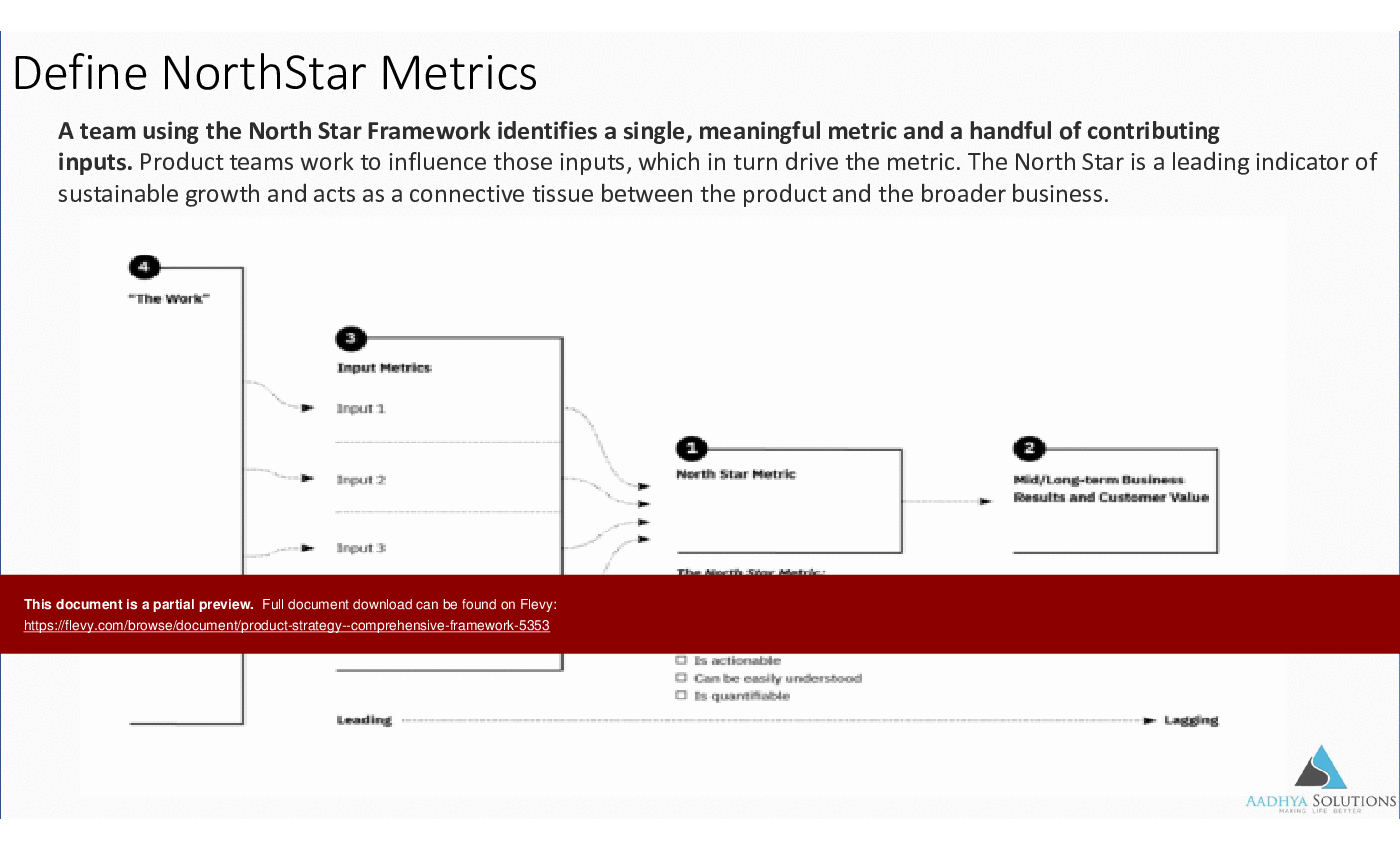
3) Defining NorthStar Metrics – outcomes that the organization wants to achieve using the product
4) Trends & Implications
5) Competitive Analysis – Benchmarking – Compare with best in class capabilities – what should be leveraged and where should we invest?
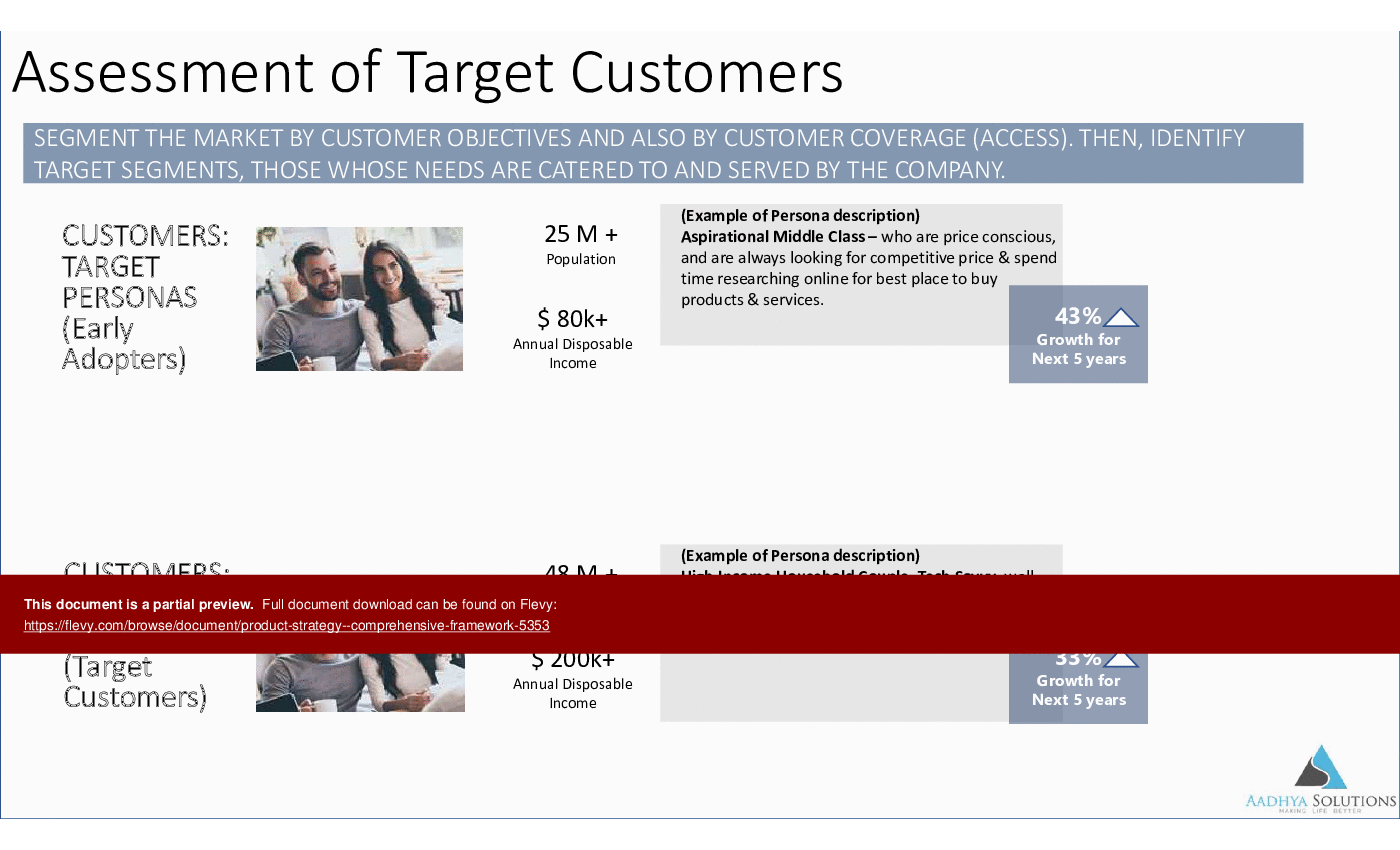
6) Assessment of Target Customers ( Personas)
7) Customer Discovery Exercise
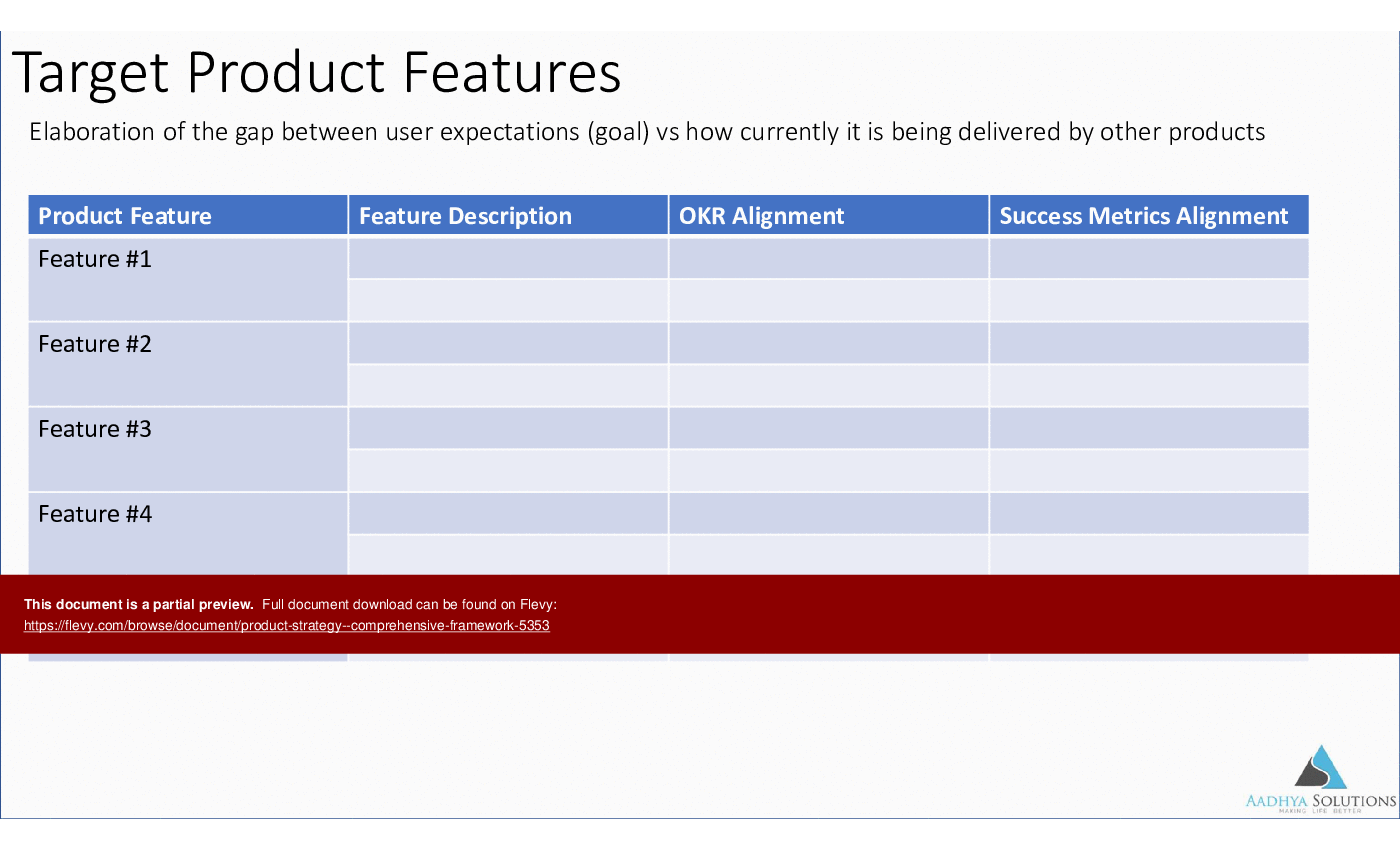
8) Prioritized customer features aligned with OKRs – - Essential elements needed to enable the new target operating model
9) Value proposition canvas – Value creation optimizer
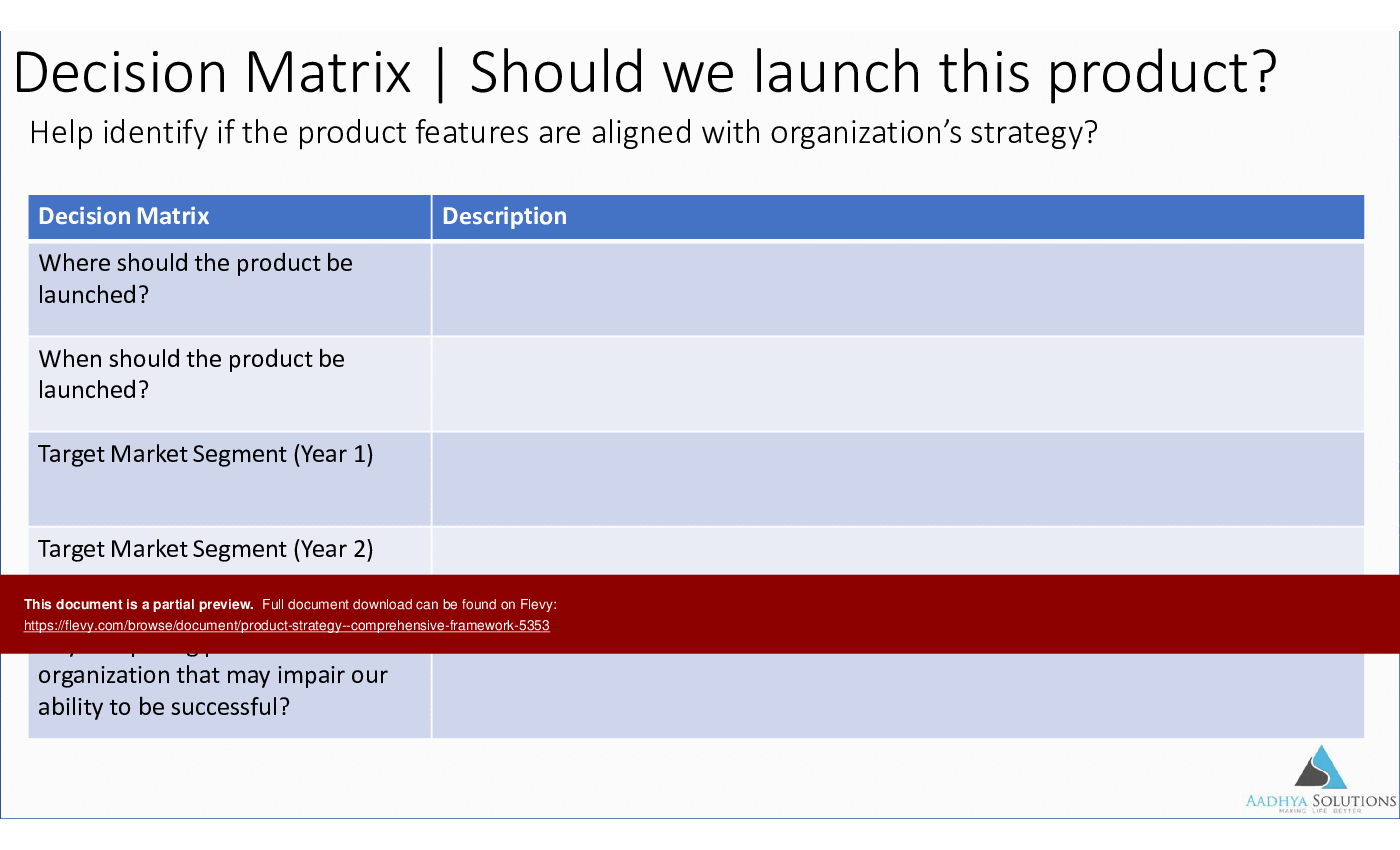
10) Decision Matrix – Should we launch this product?
11) Competitive positioning of product?
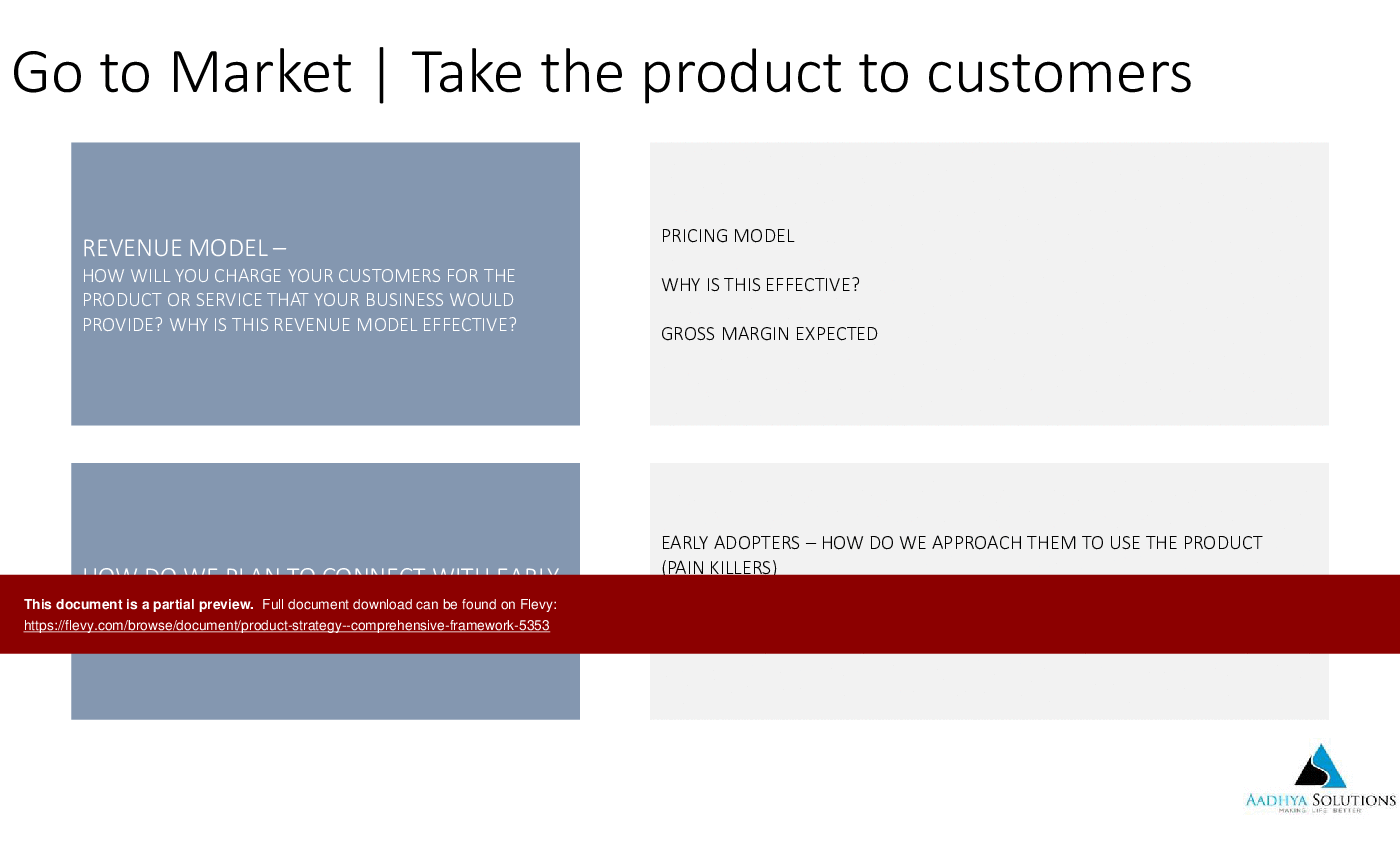
12) Go to Market – Launch & Market Expansion
13) Revenue Model
14) Launch Strategy
This framework includes a detailed assessment of target customers and their personas, ensuring alignment with market needs. It also provides a robust decision matrix to evaluate the feasibility of product launches, minimizing risk.
Got a question about the product? Email us at support@flevy.com or ask the author directly by using the "Ask the Author a Question" form. If you cannot view the preview above this document description, go here to view the large preview instead.
Executive Summary
This Product Strategy framework provides a structured approach to developing a product strategy tailored to your organization’s needs. It guides teams through defining objectives, vision, and mission, while emphasizing the importance of aligning product features with customer needs and market trends. By utilizing this framework, organizations can effectively assess market opportunities, prioritize product features, and create a robust go-to-market strategy, ultimately driving successful product launches and sustainable growth.
Who This Is For and When to Use
• Product Managers and Product Development Teams responsible for creating and executing product strategies.
• Marketing Teams tasked with aligning product offerings with customer needs and market demands.
• Business Analysts focused on assessing market trends and competitive landscapes.
• Executives seeking to align product strategies with overall business objectives.
Best-fit moments to use this deck:
• During the initial stages of product development to establish a clear vision and mission.
• When assessing market trends and customer needs to inform product feature prioritization.
• In preparation for product launches to ensure alignment with marketing and sales strategies.
Learning Objectives
• Define the product’s vision and mission in alignment with organizational goals.
• Establish measurable objectives and key results (OKRs) to track product success.
• Identify and prioritize target customer personas based on market segmentation.
• Assess customer needs through discovery processes to inform product features.
• Develop a comprehensive go-to-market strategy that includes pricing models and launch plans.
• Conduct competitive analysis to position the product effectively in the marketplace.
Table of Contents
• Defining Vision and Mission (page 2)
• Objective Key Results (page 3)
• North Star Metrics (page 4)
• Trends and Implications (page 5)
• Competitive Analysis and Benchmarking (page 6)
• Assessment of Target Customers (page 7)
• Customer Discovery (page 8)
• Target Product Features (page 10)
• Prioritized Product Features (page 11)
• Assumptions and Constraints (page 12)
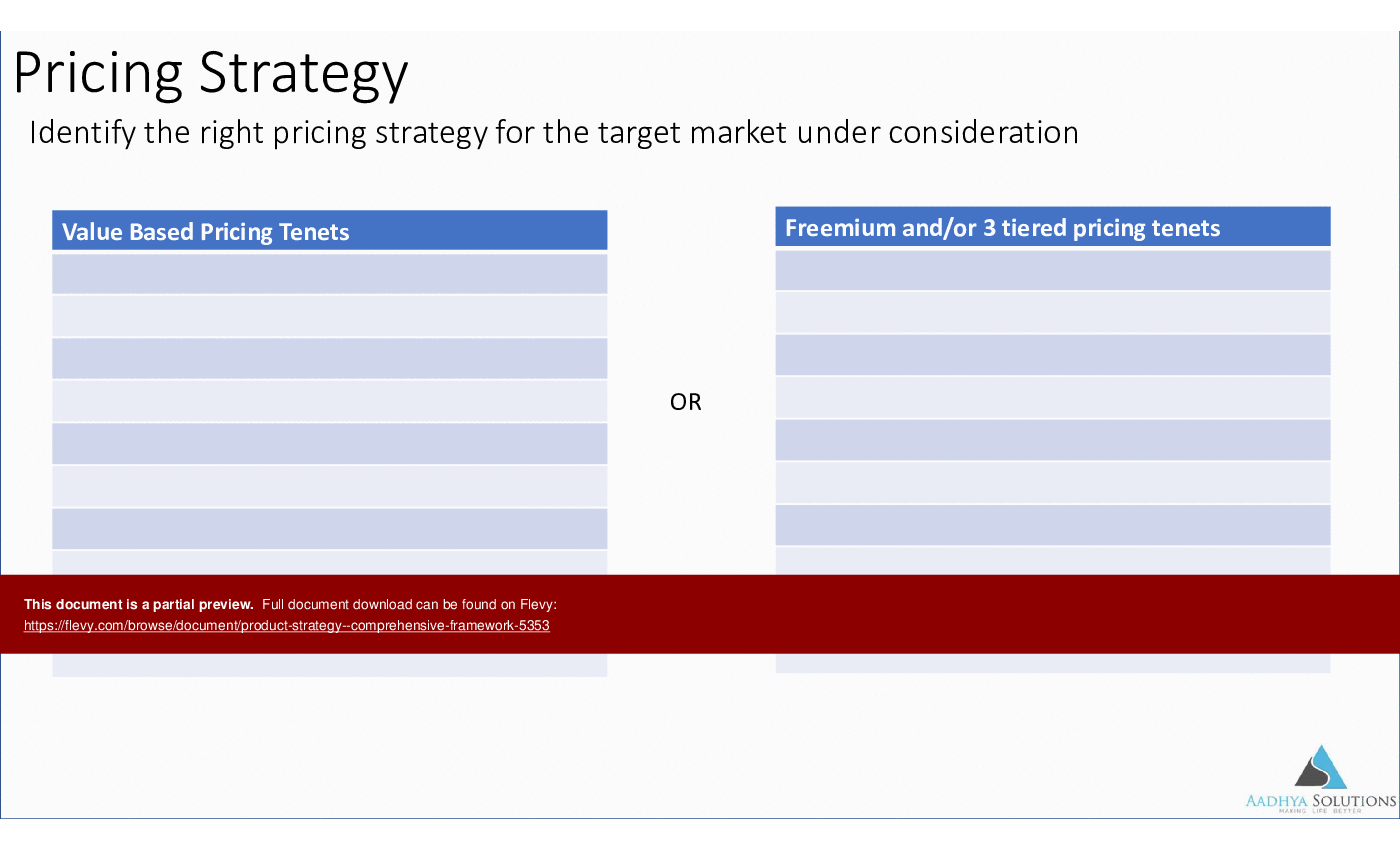
• Pricing Strategy (page 13)
• Value Proposition Canvas (page 14)
• Decision Matrix for Product Launch (page 15)
• Competitive Positioning of Product (page 17)
• Go to Market Strategy (page 18)
• Launch Strategy (page 20)
Primary Topics Covered
• Vision and Mission - Establishes the foundational purpose and long-term aspirations for the product, ensuring alignment with company values and customer needs.
• Objective Key Results (OKRs) - Provides a framework for measuring outcomes and tracking progress against defined business objectives.
• North Star Metrics - Identifies a leading metric that indicates sustainable growth and connects product performance to broader business goals.
• Customer Discovery - Focuses on understanding customer needs and pain points to inform product development and feature prioritization.
• Competitive Analysis - Involves assessing competitors to identify strengths, weaknesses, and opportunities for differentiation in the marketplace.
• Go to Market Strategy - Outlines the approach for launching the product, including marketing tactics, pricing models, and distribution channels.
Deliverables, Templates, and Tools
• Vision and mission statement templates to define product purpose and direction.
• OKR frameworks for measuring product success and aligning team efforts.
• Customer persona templates for identifying and segmenting target audiences.
• Competitive analysis matrices to benchmark against key competitors.
• Go-to-market strategy outlines for planning product launches and marketing efforts.
• Pricing strategy frameworks to determine optimal pricing models for the target market.
Slide Highlights
• Vision and Mission slide that articulates the product's purpose and long-term goals.
• OKR framework slide that provides a structured approach to measuring success.
• North Star Metrics slide that connects product performance to business outcomes.
• Customer Discovery slide that emphasizes understanding customer needs and pain points.
• Competitive Analysis slide that benchmarks against key competitors in the market.
Potential Workshop Agenda
Defining Product Vision and Mission (60 minutes)
• Discuss the importance of vision and mission in product strategy.
• Collaborate to draft vision and mission statements.
• Align on how these statements connect to company values.
Customer Discovery and Needs Assessment (90 minutes)
• Identify target customer personas and their needs.
• Conduct brainstorming sessions to uncover customer pain points.
• Prioritize customer needs based on impact and feasibility.
Go to Market Strategy Development (120 minutes)
• Outline key components of the go-to-market strategy.
• Discuss pricing models and distribution channels.
• Create a timeline for product launch activities.
Customization Guidance
• Tailor the vision and mission statements to reflect your organization’s unique values and objectives.
• Adjust customer personas based on specific market research and insights.
• Modify the competitive analysis framework to focus on relevant competitors in your industry.
• Adapt the go-to-market strategy to align with your organization’s marketing and sales capabilities.
Secondary Topics Covered
• Market segmentation strategies for identifying target audiences.
• Risk assessment frameworks for evaluating potential challenges.
• Communication strategies for engaging stakeholders throughout the product lifecycle.
• Metrics for tracking customer satisfaction and product performance post-launch.
Topic FAQ
Document FAQ
These are questions addressed within this presentation.
What is the purpose of defining a product vision and mission?
Defining a product vision and mission provides clarity on the product's purpose and direction, ensuring alignment with organizational goals and customer needs.
How do I measure the success of my product?
Success can be measured using Objective Key Results (OKRs) and North Star Metrics, which track progress against defined business objectives and leading indicators of growth.
What is customer discovery, and why is it important?
Customer discovery involves understanding customer needs and pain points, which is crucial for developing products that effectively address market demands.
How can I assess my competition?
Conduct a competitive analysis using benchmarking frameworks to evaluate competitors' strengths and weaknesses, helping to identify opportunities for differentiation.
What should be included in a go-to-market strategy?
A go-to-market strategy should outline marketing tactics, pricing models, distribution channels, and a timeline for product launch activities.
How do I prioritize product features?
Prioritize product features based on customer impact, alignment with OKRs, and engineering efforts required for implementation.
What are North Star Metrics?
North Star Metrics are leading indicators of sustainable growth that connect product performance to broader business goals, guiding product teams in their efforts.
How do I create effective customer personas?
Effective customer personas are created by segmenting the market based on customer objectives and needs, ensuring they reflect the target audience accurately.
What is the role of pricing strategy in product development?
A pricing strategy determines how to charge customers for the product, ensuring it aligns with market expectations and supports business objectives.
How can I ensure alignment across teams during product development?
Regular communication and collaboration across teams, along with clearly defined objectives and metrics, can help ensure alignment throughout the product development process.
Glossary
• Vision - The long-term aspiration for the product that aligns with organizational goals.
• Mission - The purpose of the product and the approach to achieving its objectives.
• Objective Key Results (OKRs) - A framework for measuring outcomes and tracking progress.
• North Star Metrics - A leading indicator of sustainable growth that connects product performance to business goals.
• Customer Persona - A semi-fictional representation of a target customer based on market research.
• Competitive Analysis - The process of assessing competitors to identify strengths and weaknesses.
• Go to Market Strategy - The plan for launching a product, including marketing and distribution tactics.
• Pricing Strategy - The approach for determining how to charge customers for a product or service.
• Customer Discovery - The process of understanding customer needs and pain points.
• Market Segmentation - The practice of dividing a market into distinct groups of buyers.
• Risk Assessment - The process of identifying and evaluating potential challenges.
• Stakeholder Communication - The strategies used to engage and inform stakeholders throughout the product lifecycle.
Source: Best Practices in Product Strategy PowerPoint Slides: Product Strategy - Comprehensive Framework PowerPoint (PPTX) Presentation Slide Deck, Aadhya Solutions
|
Download our FREE Strategy & Transformation Framework Templates

Download our free compilation of 50+ Strategy & Transformation slides and templates. Frameworks include McKinsey 7-S, Balanced Scorecard, Disruptive Innovation, BCG Curve, and many more. |









