

Private Equity Funding Guide   56-slide PPT PowerPoint presentation template (PPT)
$29.00

Private Equity Funding Guide (56-slide PPT PowerPoint presentation slide deck (PPT)) Preview Image
Log in to unlock full preview.
Private Equity Funding Guide (56-slide PPT PowerPoint presentation slide deck (PPT)) Preview Image
Arrow   Click main image to view in full screen.

Private Equity Funding Guide – PowerPoint PPT Template

PowerPoint (PPT) 56 Slides

#3 in Financing $29.00

Add to Cart


Immediate download
Fully editable PowerPoint
Free lifetime updates

PRIVATE EQUITY PPT TEMPLATE DESCRIPTION

Editor Summary Private Equity Funding Guide is a 56-slide PowerPoint deck by Corporate Finance 101 that provides frameworks and tools for private equity deal work, covering deal evaluation, management buyouts (MBOs), growth capital, valuation, risk management, and exit planning. Read more

Private equity ("PE") pool funds of capital invested in businesses, which come with a fixed investment horizon, at which point the PE firm exits the investment. Exit strategies include IPOs and the sale of the business to another PE firm or strategic buyer.

PE funds are focused on the long-term potential of the portfolio of companies they hold an interest in or acquire.

Institutional funds constitute the primary sources of private equity funds, as they provide substantial capital for extended periods of time. Investment professionals from a particular PE firm raises and manages the funds.

PE funds typically fall into two categories: Venture Capital and Buyouts.

This Guide covers the following aspects of a PE deal:
1. What do PE Houses look for in a deal
2. Management Buy-Outs
3. Growth Capital
4. The Business Plan
5. How PE Houses make money including earnings structure
6. Exits

The value of this Guide is in its practical awareness of matters pertinent to PE Houses to facilitate better-informed debate, in private equity's effective engagement with stakeholders, and awareness among business owners of private equity as a potential source of sustainable finance for growth.

This Guide, used in conjunction with the Business Valuation Guide and Valuation Model represent useful resources to investment professionals and business owners alike.

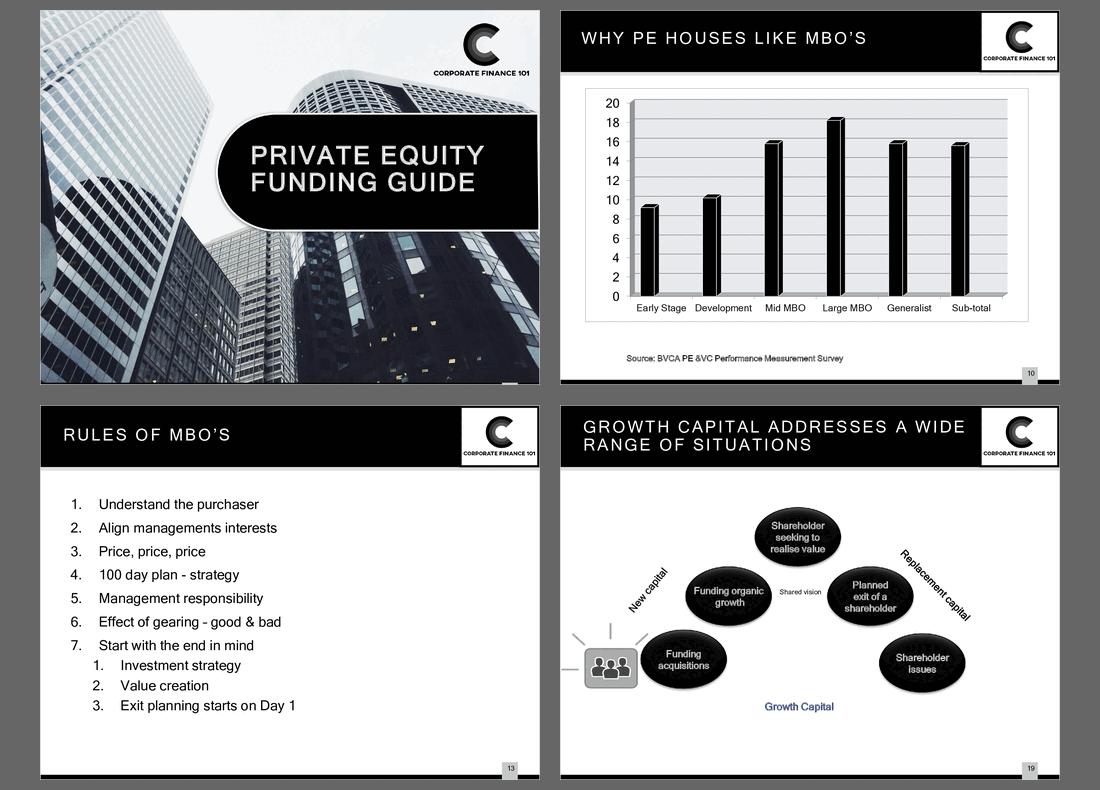
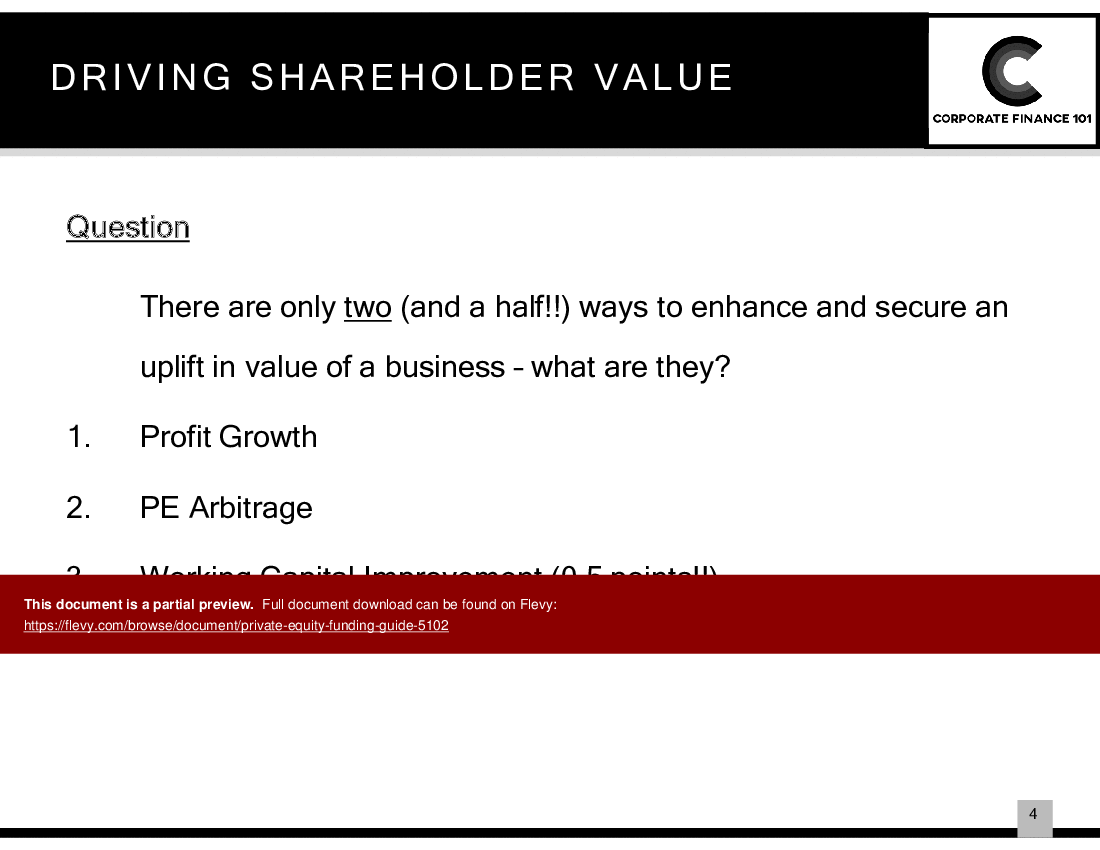
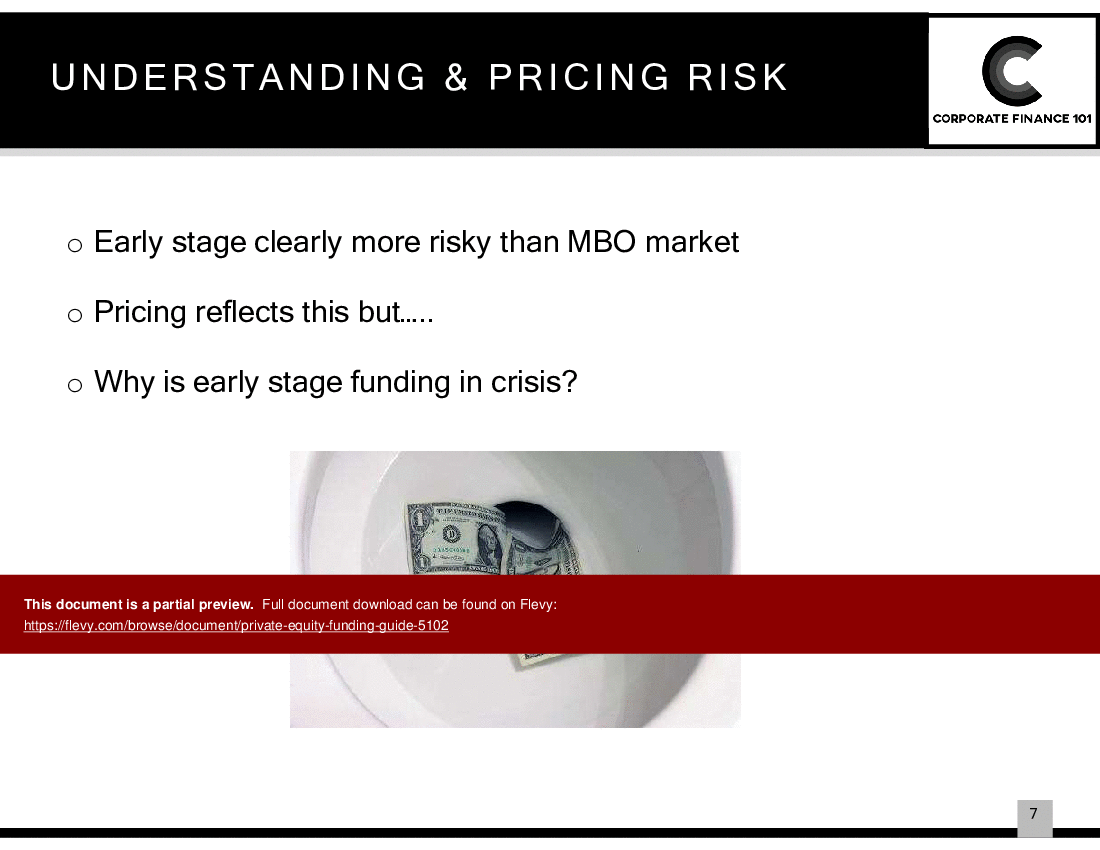
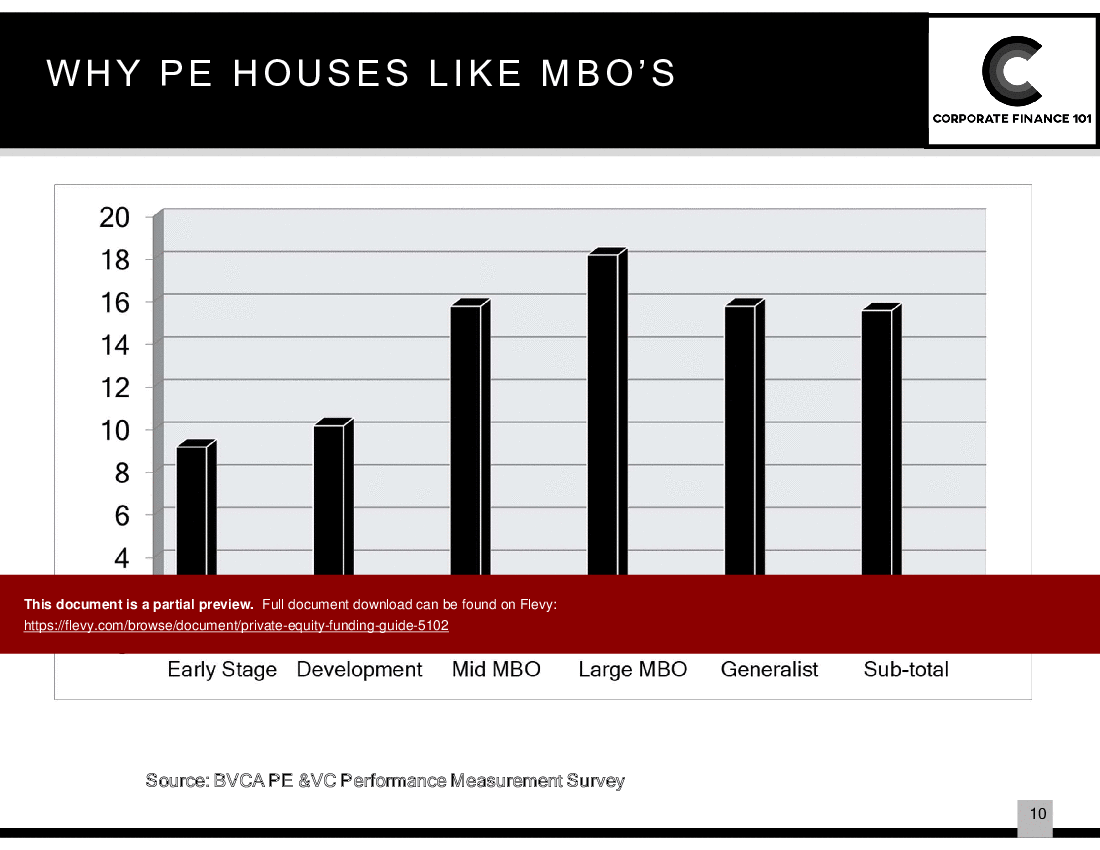
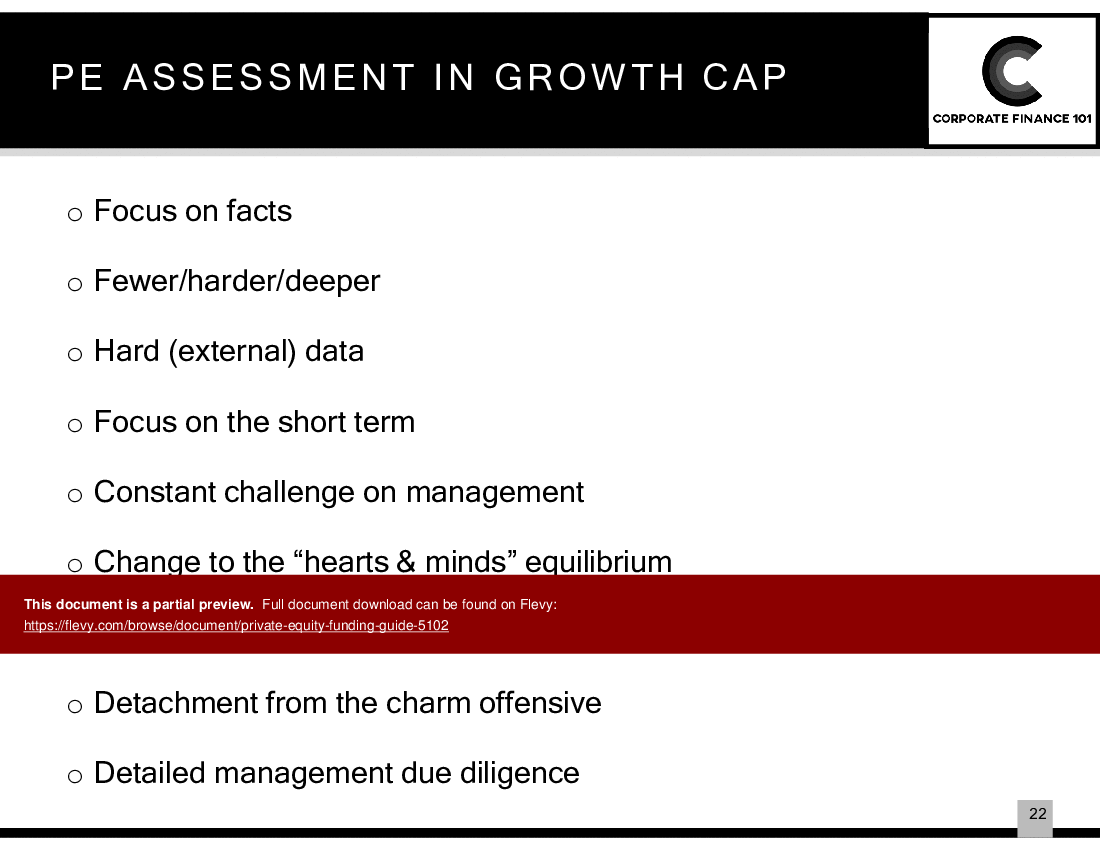
This Guide delves into crucial aspects of driving shareholder value, including profit growth and PE arbitrage. It highlights the nuanced risks in early-stage funding versus MBO markets and why PE houses favor MBOs. Detailed rules for MBOs, growth capital strategies, and PE assessments are covered. The PPT also explores the structure of PE investments, how PE houses generate returns, and the importance of IRR and timelines. Exit planning is emphasized, with insights into value drivers and management succession. This resource is essential for those seeking a comprehensive understanding of private equity dynamics.

Got a question about the product? Email us at support@flevy.com or ask the author directly by using the "Ask the Author a Question" form. If you cannot view the preview above this document description, go here to view the large preview instead.

PRESENTATION DEEP DIVE ANALYSIS

This deep-dive analysis was generated from the full 56-slide PowerPoint presentation.


Executive Summary
The Private Equity Funding Guide is a comprehensive presentation designed to equip professionals with the essential knowledge and tools for navigating the complexities of private equity funding. This expertly crafted PowerPoint deck provides insights into what private equity houses seek in deals, the dynamics of management buyouts (MBOs), and effective strategies for structuring growth capital. Users will gain a clear understanding of risk management, valuation metrics, and exit strategies, enabling them to create compelling investment proposals and enhance shareholder value.

Who This Is For and When to Use
•  Private equity analysts and associates evaluating potential investments
•  Corporate finance professionals involved in mergers and acquisitions
•  Management teams preparing for buyouts or seeking growth capital
•  Consultants advising businesses on private equity strategies

Best-fit moments to use this deck:
•  During pre-investment evaluations to align management and investor interests
•  In strategy sessions focused on structuring MBOs or growth capital deals
•  When preparing for investor presentations or capital raising initiatives
•  For training sessions aimed at enhancing understanding of private equity dynamics

Learning Objectives
•  Define the key criteria private equity houses use to evaluate deals
•  Analyze the components of successful management buyouts and growth capital structures
•  Establish effective risk management strategies tailored to private equity investments
•  Identify valuation metrics critical for assessing investment opportunities
•  Develop comprehensive exit strategies that maximize shareholder value
•  Create compelling business plans that resonate with potential investors

Table of Contents
•  What Do PE Houses Look For In A Deal? (page 2)
•  Management Buyouts (page 9)
•  Growth Capital (page 16)
•  Structuring The Acquisition (page 45)
•  How Do PE Houses Make Money? (page 38)
•  Exit Planning (page 55)

Primary Topics Covered
•  Private Equity Deal Evaluation - Understand the essential factors that private equity firms consider when assessing potential investments, including management commitment and financial performance.
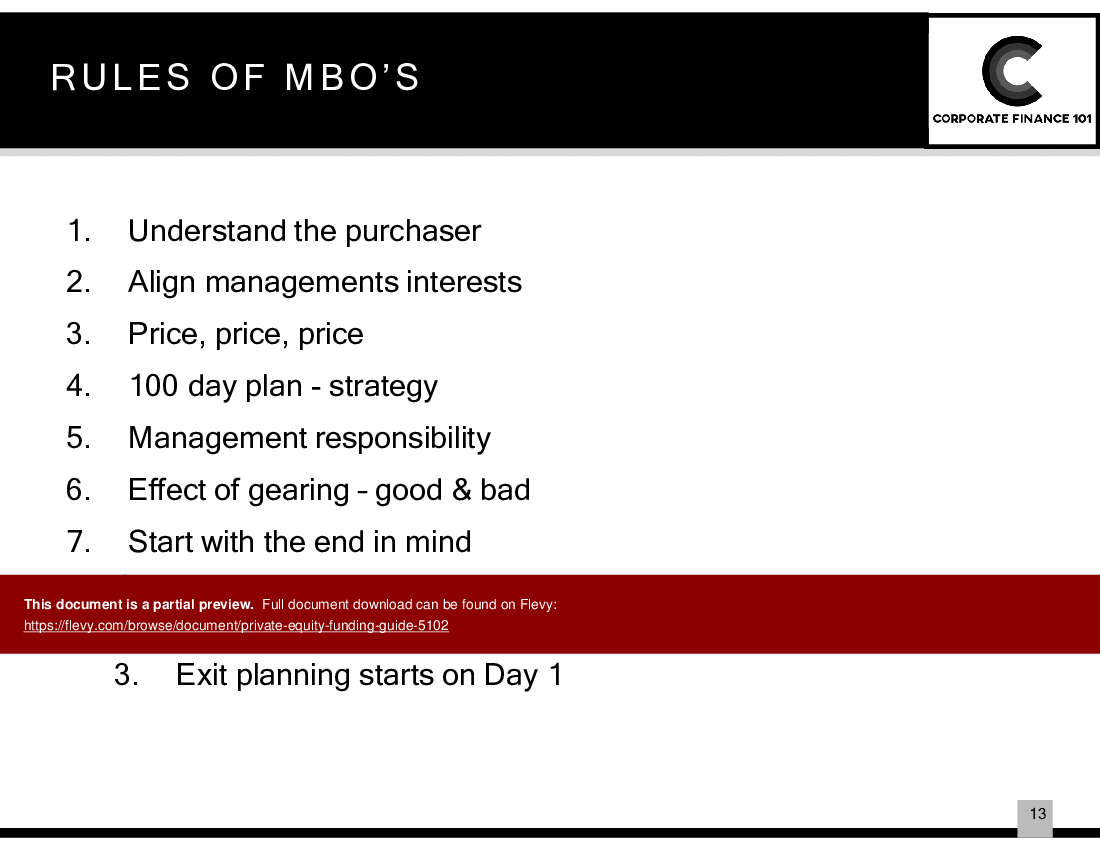
•  Management Buyouts (MBOs) - Explore the structure, benefits, and challenges of MBOs, including alignment of interests and pricing strategies.
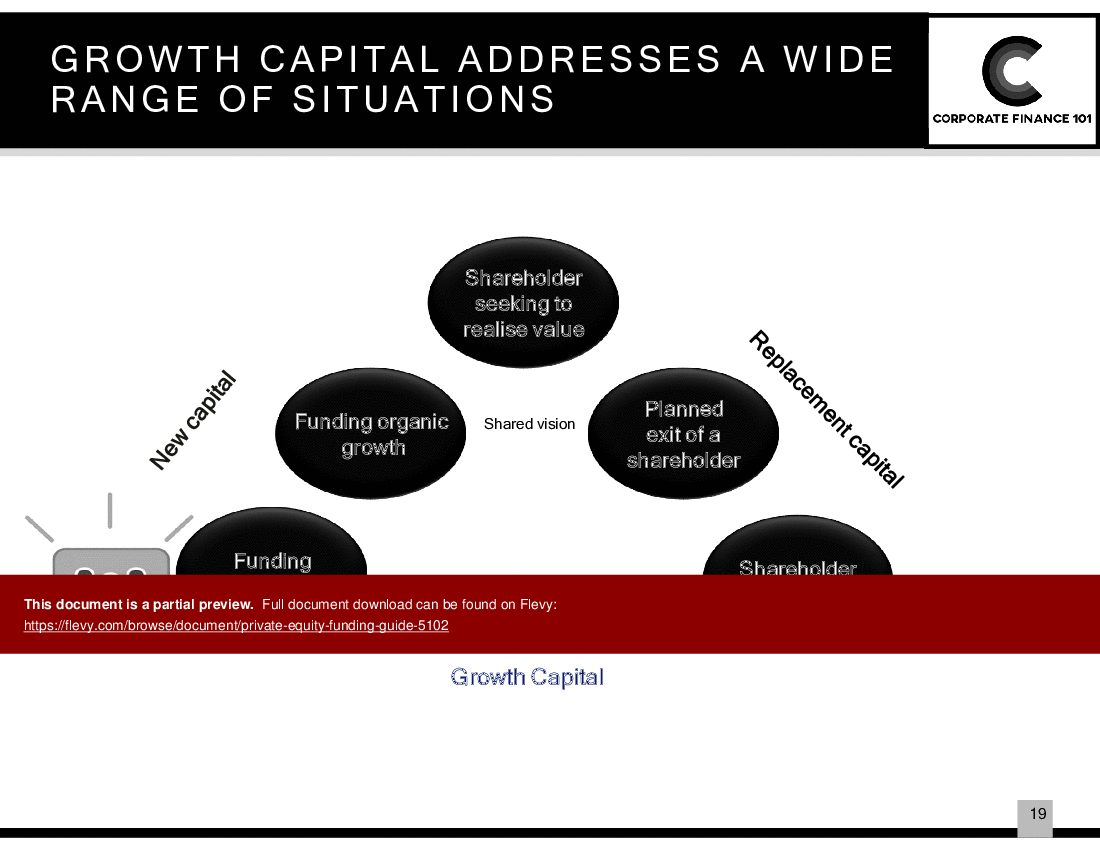
•  Growth Capital - Learn about growth capital's role in funding business expansion without changing control, emphasizing alignment of interests.
•  Risk Management - Examine the importance of understanding and pricing risk in private equity, including the correlation between risk and return.
•  Exit Strategies - Identify various exit routes such as trade sales and IPOs, and understand their significance in realizing investment value.
•  Valuation Metrics - Analyze key metrics that influence deal valuation and investor expectations, including cash flow and internal rates of return (IRR).

Deliverables, Templates, and Tools
•  Investment proposal template tailored for private equity presentations
•  MBO structuring checklist to ensure alignment of management interests
•  Risk assessment framework for evaluating potential investments
•  Valuation model template for calculating expected returns
•  Exit strategy planning guide to optimize investment realization
•  Growth capital deal structure outline for effective negotiations

Slide Highlights
•  Overview of what private equity houses prioritize in deal evaluation
•  Key rules and strategies for successful management buyouts
•  Visual representation of the shift from buyouts to growth capital
•  Flowchart illustrating the structure of a typical private equity fund
•  Summary of crucial points regarding exit planning and shareholder value

Potential Workshop Agenda
Introduction to Private Equity (30 minutes)
•  Overview of private equity fundamentals
•  Discussion on the importance of management commitment

MBO Structuring Session (60 minutes)
•  Aligning management and investor interests
•  Creating a 100-day plan for successful execution

Growth Capital Strategies (45 minutes)
•  Identifying opportunities for growth funding
•  Structuring deals for optimal alignment of interests

Exit Strategy Planning (60 minutes)
•  Exploring various exit routes and their implications
•  Developing a comprehensive exit plan

Customization Guidance
•  Tailor the investment proposal template to reflect specific deal characteristics and company metrics.
•  Adjust the MBO checklist to align with the unique interests of stakeholders involved.
•  Incorporate company-specific financial data into the valuation model for accurate assessments.
•  Modify the exit strategy planning guide to include relevant market conditions and timelines.

Secondary Topics Covered
•  The role of leverage in private equity transactions
•  Understanding the dynamics of risk vs. return in private equity
•  The importance of transparency and alignment in investor relationships
•  The impact of market conditions on private equity funding strategies
•  Best practices for conducting due diligence in private equity investments

Topic FAQ

What factors do private equity firms typically evaluate when assessing an investment opportunity?

Private equity firms focus on management commitment, potential for profit and cash-flow growth, favorable valuation metrics, and exit prospects. They assess operational performance, downside risks, and expected returns measured by metrics such as internal rate of return (IRR), cash-flow projections, and valuation multiples.

How are management buyouts typically structured and what should management prepare?

MBOs align management and investor interests through equity incentives, pricing strategies, and clear execution plans. Management should prepare a detailed business plan, a 100-day post-close plan, and supporting financials; Flevy's Private Equity Funding Guide includes an MBO structuring checklist and guidance for alignment and pricing.

What valuation metrics matter most in private equity analysis?

Private equity analysis emphasizes projected cash flows, valuation multiples, and internal rate of return (IRR) to assess expected returns and comparability. These metrics help calibrate purchase price, leverage capacity, and exit targets, with IRR and cash-flow projections being central to valuation judgments.

What should I look for when choosing a private equity funding toolkit or template set?

Choose a toolkit that provides investor-facing deliverables (investment proposal templates), financial modeling (valuation model templates), transaction checklists (MBO checklist), risk frameworks, and exit-planning guides. Flevy's Private Equity Funding Guide lists these specific deliverables and offers customization guidance for deal-specific inputs like company financials.

How much internal customization is typically needed to use PE templates for a live deal?

PE templates require incorporation of company-specific financial data, adjusted assumptions for pricing and risk, and stakeholder-specific alignment items. The guide advises tailoring the investment proposal, adjusting the MBO checklist, and populating the valuation model with actual company metrics such as revenue and cash-flow projections.

I need to raise growth capital without ceding control—what structure should I consider?

For non-control expansion funding, consider minority equity investments that preserve management control while aligning interests through governance covenants and performance milestones. Prepare a business plan emphasizing growth drivers, valuation projections, and negotiate a growth capital deal structure that maintains control and aligns incentives.

How should exit planning be incorporated into deal preparation?

Exit planning should be defined early, identifying viable routes (trade sale, IPO, secondary buyout, partial refinancing), timelines, and value drivers that influence operational priorities. Integrate exit scenarios into financial models and investor proposals; Flevy's Private Equity Funding Guide includes an exit strategy planning guide to support this work.

Are paid private equity templates worth the cost compared with building tools in-house?

Paid templates provide ready-made investment proposal formats, valuation models, MBO checklists, and risk frameworks that can be customized to deal specifics, offering practical guidance and workshop agendas. The Guide’s stated value is its practical awareness and it pairs with the Business Valuation Guide and Valuation Model as resources for deal work.

Document FAQ
These are questions addressed within this presentation.

What do private equity houses look for in a deal?
Private equity houses typically seek strong management commitment, potential for profit growth, and favorable valuation metrics.

How are management buyouts structured?
Management buyouts involve aligning management interests with those of investors, establishing a clear pricing strategy, and creating a detailed 100-day plan for execution.

What is growth capital?
Growth capital refers to minority equity investments aimed at funding business expansion without taking control, focusing on aligning interests between investors and management.

What are the key risks in private equity investments?
Key risks include valuation uncertainties, cash flow availability, and the potential for market fluctuations impacting investment returns.

How do private equity houses generate returns?
Returns are generated through capital gains on exit, yields on investments, and management fees, minus operational costs and salaries.

What are common exit routes for private equity investments?
Common exit routes include trade sales, IPOs, secondary buyouts, and partial refinancing.

How important is exit planning in private equity?
Exit planning is crucial as it crystallizes value, enables capital return to investors, and serves as the ultimate test of investment quality.

What metrics are used to evaluate private equity investments?
Key metrics include internal rates of return (IRR), cash flow projections, and valuation multiples.

Glossary
•  Private Equity (PE) - Investment in private companies or buyouts of public companies.
•  Management Buyout (MBO) - Acquisition of a company by its management team.
•  Growth Capital - Investment aimed at funding business growth without taking control.
•  Internal Rate of Return (IRR) - A metric used to evaluate the profitability of an investment.
•  Exit Strategy - A plan for how investors will realize their investment returns.
•  Valuation Metrics - Financial indicators used to assess the worth of a company.
•  Due Diligence - The process of investigating a business before an investment.
•  Cash Flow - The total amount of money being transferred into and out of a business.
•  Equity Stake - Ownership interest in a company, represented by shares.
•  Leverage - The use of borrowed capital to increase the potential return of an investment.
•  Investment Proposal - A document outlining the details of a proposed investment.
•  Risk Management - The identification, assessment, and prioritization of risks.
•  Shareholder Value - The value delivered to shareholders as a result of the company's performance.
•  IPO (Initial Public Offering) - The process of offering shares of a private corporation to the public.
•  Secondary Buyout - The acquisition of a company by another private equity firm.
•  Hurdle Rate - The minimum acceptable return on an investment.
•  Carry - The share of profits that the general partners of a private equity fund receive.
•  Tax Transparent - A structure that allows income to be taxed only at the investor level.
•  Limited Partner (LP) - An investor in a private equity fund who does not participate in day-to-day management.
•  General Partner (GP) - The party responsible for managing a private equity fund.
•  Advisory Agreement - A contract between an advisor and a fund outlining the terms of service.

Source: Best Practices in Private Equity, Financing PowerPoint Slides: Private Equity Funding Guide PowerPoint (PPT) Presentation Slide Deck, Corporate Finance 101


$29.00

Add to Cart
  

ABOUT THE AUTHOR

Additional documents from author: 37

Corporate Finance 101 consists of ex EY and Grant Thornton consultants who have experience helping professionals across disciplines, with a focus on strategy consulting and transaction advisory.

These documents are prepared to help you increase the impact of your business communication and save you valuable time.

The documents are based upon techniques learned while working at ... [read more]

Ask the Author a Question

You must be logged in to contact the author.

Click here to log in Click here register

Did you know?
The average daily rate of a McKinsey consultant is $6,625 (not including expenses). The average price of a Flevy document is $65.


Trusted by over 10,000+ Client Organizations
Since 2012, we have provided business templates to over 10,000 businesses and organizations of all sizes, from startups and small businesses to the Fortune 100, in over 130 countries.
AT&T GE Cisco Intel IBM Coke Dell Toyota HP Nike Samsung Microsoft Astrazeneca JP Morgan KPMG Walgreens Walmart 3M Kaiser Oracle SAP Google E&Y Volvo Bosch Merck Fedex Shell Amgen Eli Lilly Roche AIG Abbott Amazon PwC T-Mobile Broadcom Bayer Pearson Titleist ConEd Pfizer NTT Data Schwab


Read Customer Testimonials

 
"As a consulting firm, we had been creating subject matter training materials for our people and found the excellent materials on Flevy, which saved us 100's of hours of re-creating what already exists on the Flevy materials we purchased."

– Michael Evans, Managing Director at Newport LLC
 
"Last Sunday morning, I was diligently working on an important presentation for a client and found myself in need of additional content and suitable templates for various types of graphics. Flevy.com proved to be a treasure trove for both content and design at a reasonable price, considering the time I "

– M. E., Chief Commercial Officer, International Logistics Service Provider
 
"[Flevy] produces some great work that has been/continues to be of immense help not only to myself, but as I seek to provide professional services to my clients, it gives me a large "tool box" of resources that are critical to provide them with the quality of service and outcomes they are expecting."

– Royston Knowles, Executive with 50+ Years of Board Level Experience
 
"As a niche strategic consulting firm, Flevy and FlevyPro frameworks and documents are an on-going reference to help us structure our findings and recommendations to our clients as well as improve their clarity, strength, and visual power. For us, it is an invaluable resource to increase our impact and value."

– David Coloma, Consulting Area Manager at Cynertia Consulting
 
"As a consultant requiring up to date and professional material that will be of value and use to my clients, I find Flevy a very reliable resource.

The variety and quality of material available through Flevy offers a very useful and commanding source for information. Using Flevy saves me time, enhances my expertise and ends up being a good decision."

– Dennis Gershowitz, Principal at DG Associates
 
"The wide selection of frameworks is very useful to me as an independent consultant. In fact, it rivals what I had at my disposal at Big 4 Consulting firms in terms of efficacy and organization."

– Julia T., Consulting Firm Owner (Former Manager at Deloitte and Capgemini)
 
"I have used FlevyPro for several business applications. It is a great complement to working with expensive consultants. The quality and effectiveness of the tools are of the highest standards."

– Moritz Bernhoerster, Global Sourcing Director at Fortune 500
 
"I like your product. I'm frequently designing PowerPoint presentations for my company and your product has given me so many great ideas on the use of charts, layouts, tools, and frameworks. I really think the templates are a valuable asset to the job."

– Roberto Fuentes Martinez, Senior Executive Director at Technology Transformation Advisory


Customers Also Bought These Documents


Customers Also Like These Documents

Explore Templates on Related Management Topics


Your Recently Viewed Documents
Download our FREE Strategy & Transformation Framework Templates

Download our free compilation of 50+ Strategy & Transformation slides and templates. Frameworks include McKinsey 7-S, Balanced Scorecard, Disruptive Innovation, BCG Curve, and many more.










