
 Click main image to view in full screen. Unlock all 23 preview images:
PMP Exam Prep - 200 Themed Questions (July 2026 Update) – PowerPoint PPTX Template
PowerPoint (PPTX) 419 Slides


PMP PPT TEMPLATE DESCRIPTION
PMP Exam Prep – 200 Themed Questions (July 2026 Update)
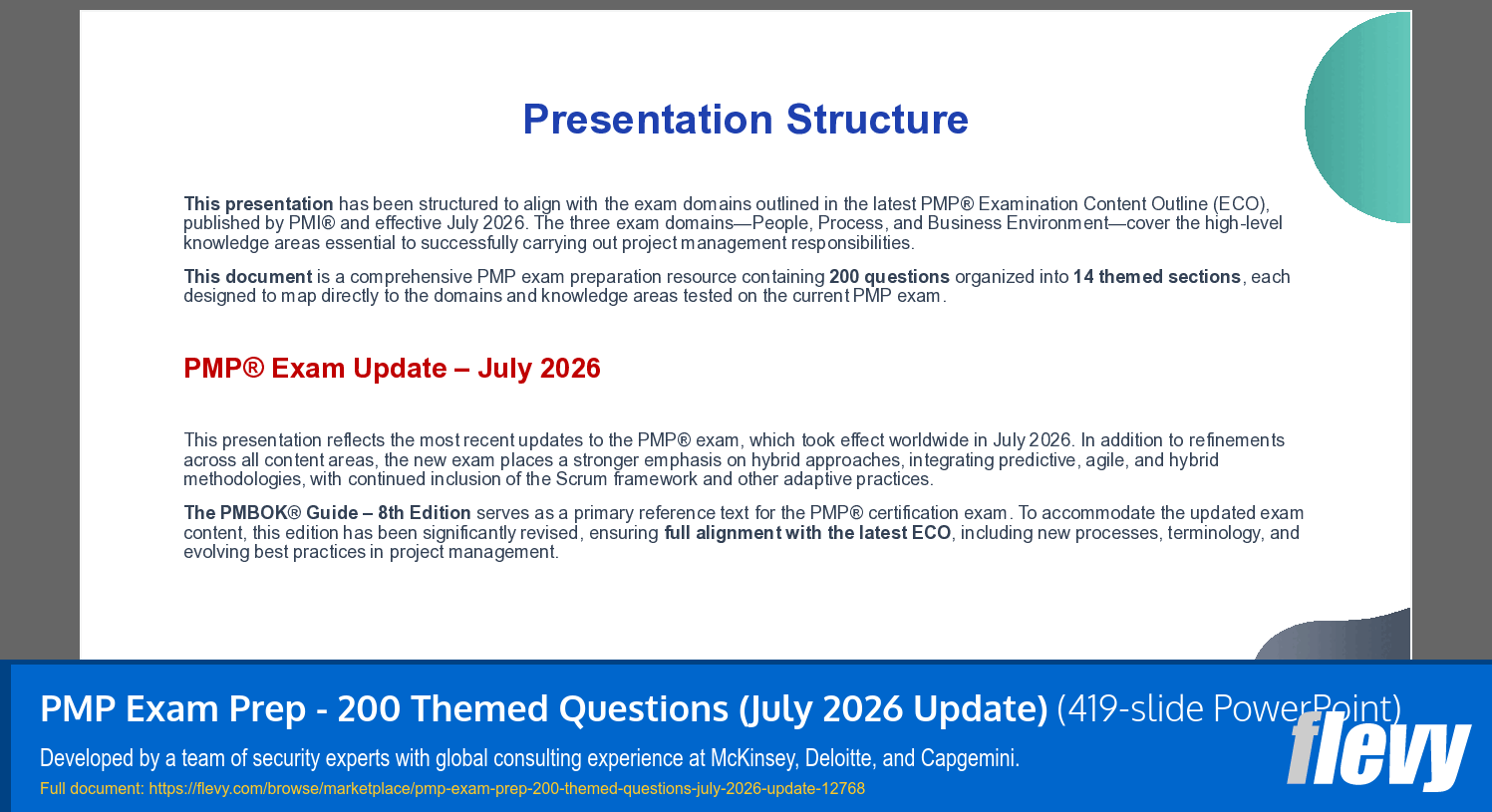
This document is a comprehensive PMP exam preparation resource containing 200 questions organized into 14 themed sections, each designed to map directly to the domains and knowledge areas tested on the current PMP exam. Below is a section-by-section summary.
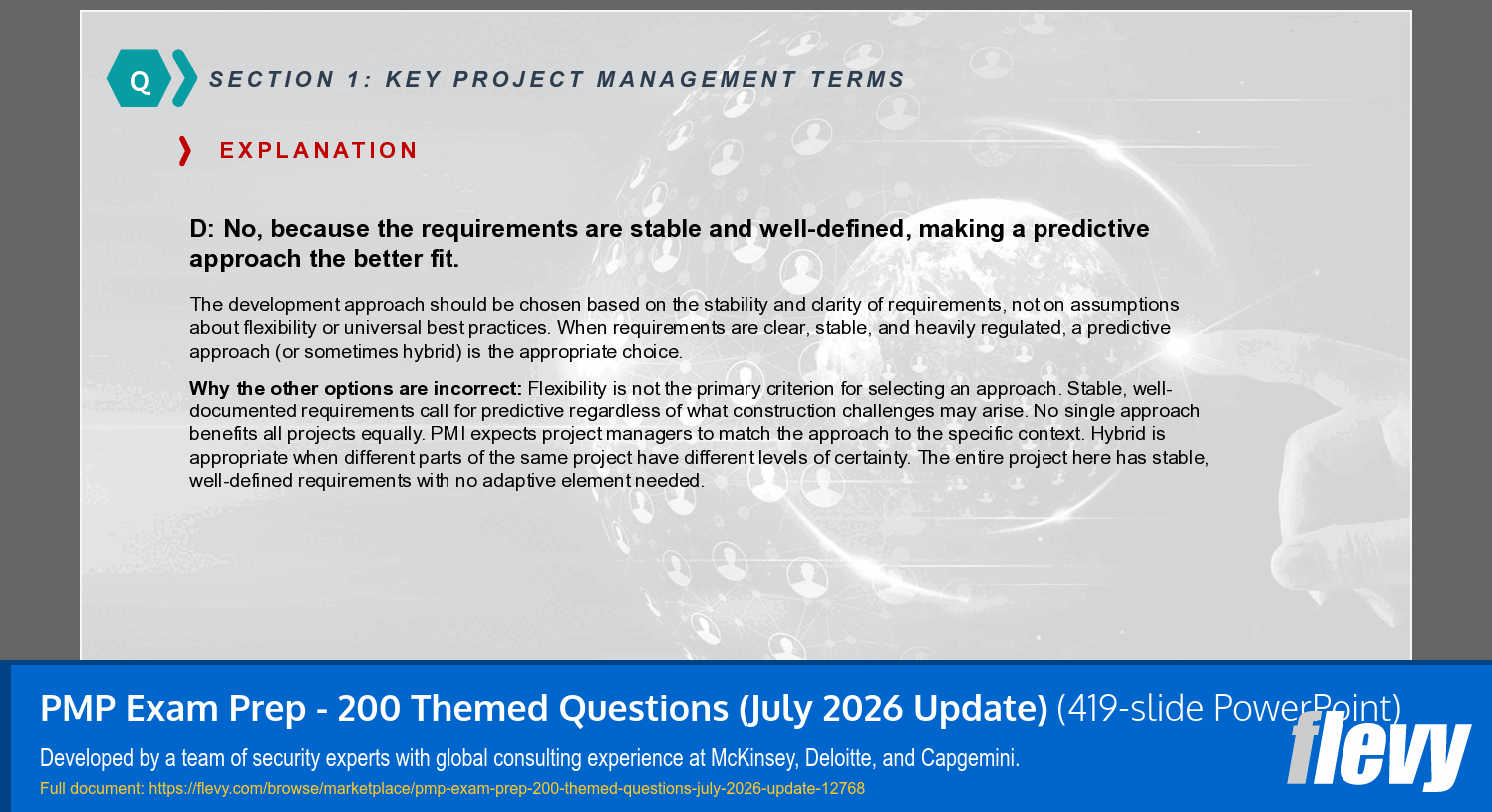
Section 1: Key Project Management Terms (Q1–Q20)
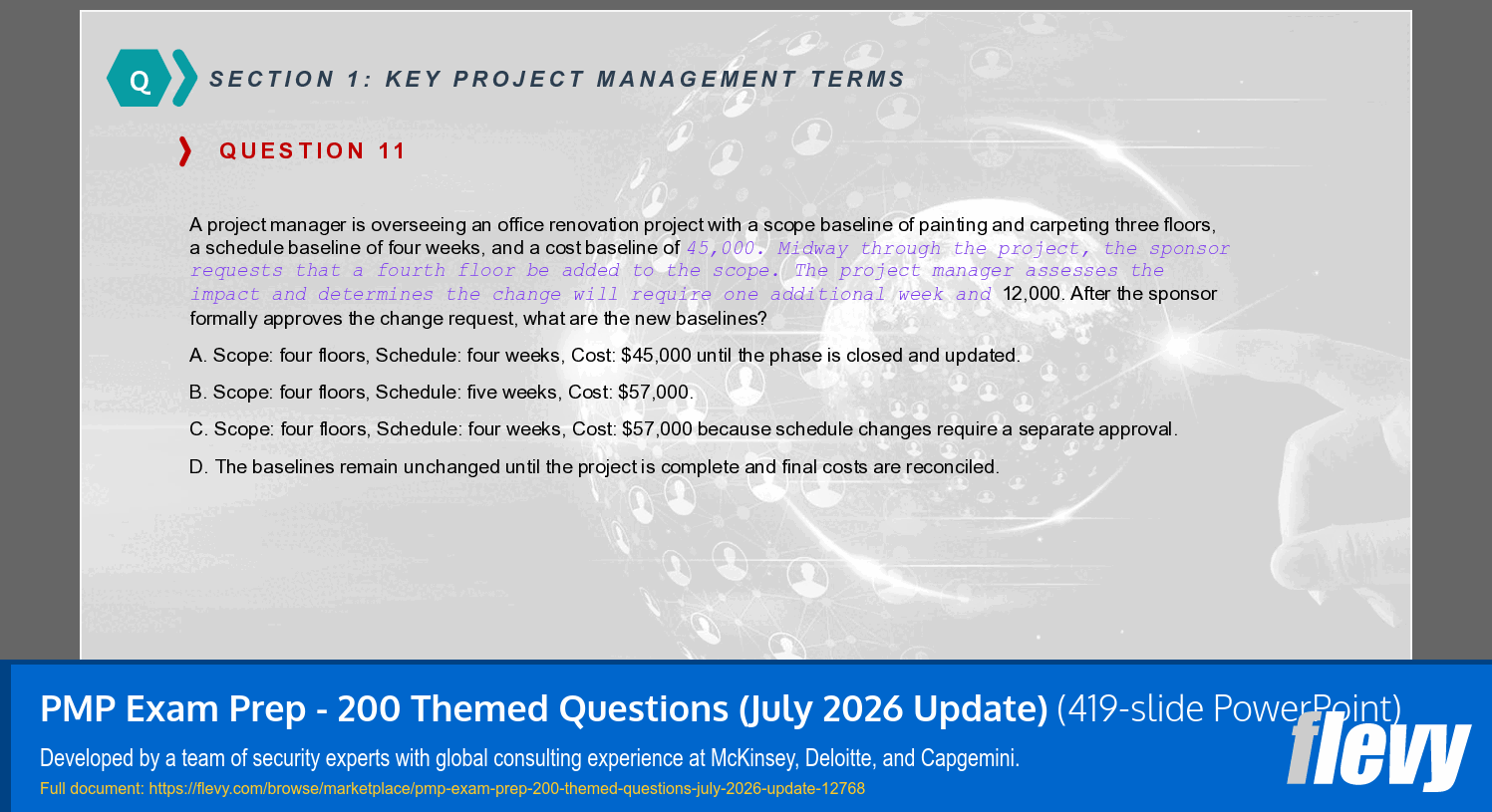
Covers foundational terminology: development approaches (predictive vs. adaptive vs. hybrid), the role of the sponsor, servant leadership in agile, self-organizing teams, product owner responsibilities, lessons learned, project success dimensions (process vs. outcome), PMO types (supportive/controlling/directive), baseline management, programs vs. portfolios vs. projects, focus areas, interconnected constraints, operations vs. projects, organizational structures (strong matrix), triple bottom line, regulations vs. standards, and progressive elaboration.
Section 2: Principles and Mindset (Q21–Q35)
Focuses on the PMI mindset: proactive risk identification, early conflict intervention, holistic impact analysis, stakeholder pressure management, embedding quality, accountability and ownership, servant leadership, empowering teams, value-driven decision-making, validating stakeholder value, sustainable decision-making, situational leadership, and process quality over outcome quality.
Section 3: Agile and Hybrid (Q36–Q50)
Agile-specific concepts: product backlog prioritization, sprint reviews, retrospectives, sprint planning output, self-organization, fixed-timebox/flexible-scope principle, servant leadership protecting sprints, cross-functional teams (generalizing specialists), Agile Manifesto principles, daily standup timeboxing, hybrid approaches for mixed-certainty projects, MVPs, information radiators, and protecting the sprint from mid-sprint changes.
Section 4: Project Management Process (Q51–Q60)
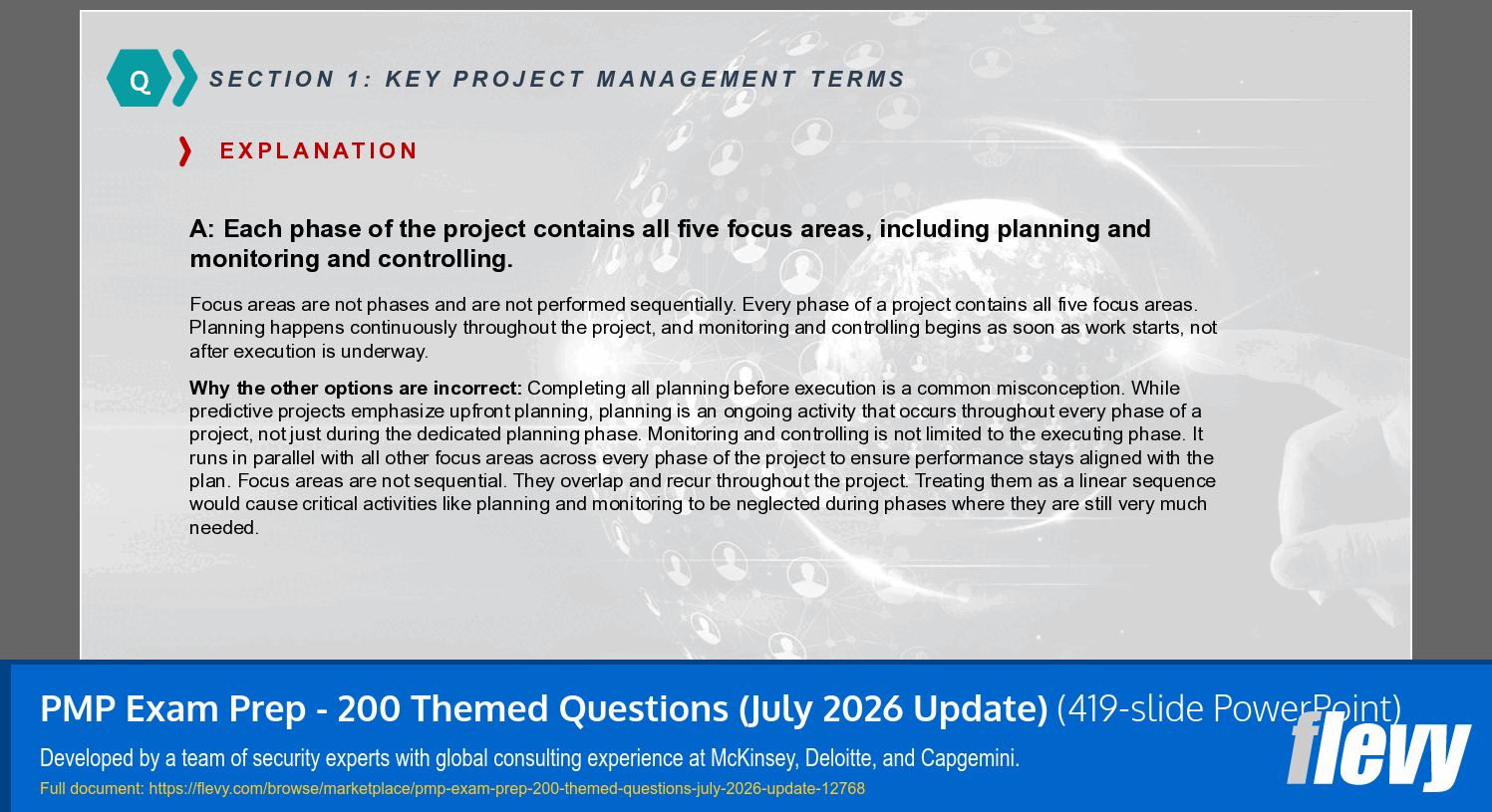
Maps the PMI focus areas: initiating, planning, executing, monitoring & controlling, and closing. Distinguishes OPAs from EEFs, explains work performance data vs. information vs. reports, preventive vs. corrective actions, variance vs. root cause vs. trend analysis, and how focus areas overlap across phases.
Section 5: Governance (Q61–Q75)
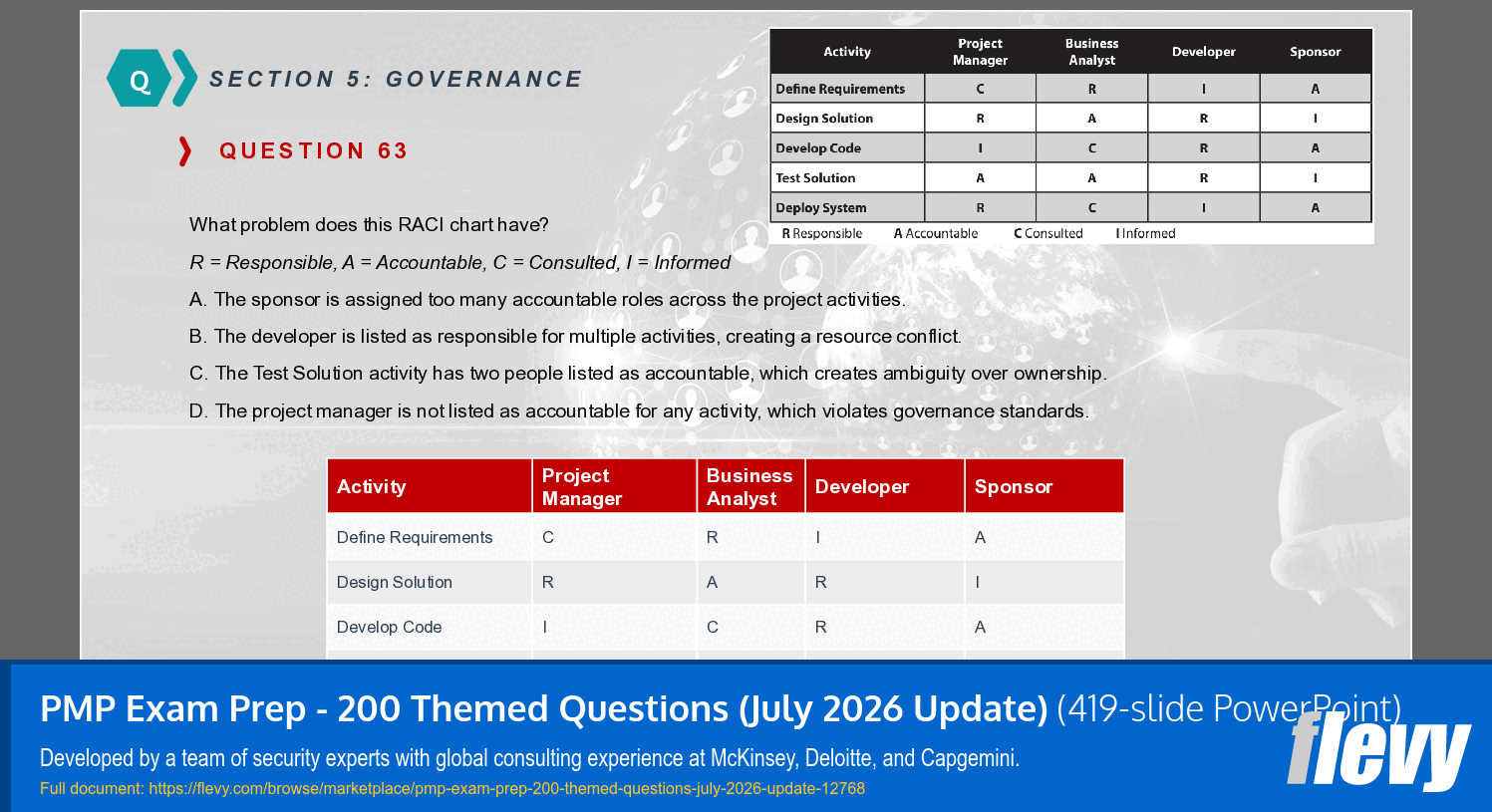
Covers: the project charter, opportunity cost, RACI chart rules (single accountable per activity), dispute resolution (negotiate first), contract types (T&M for evolving scope), make-or-buy analysis, change control board, quality assurance vs. quality control, risk vs. issue classification, tacit vs. explicit knowledge, work performance reports, lessons learned archiving, after-action reviews, storytelling for tacit knowledge transfer, and the project canvas.
Section 6: Project Scope (Q76–Q90)
Scope baseline (scope statement + WBS + WBS dictionary), product scope vs. project scope, Validate Scope vs. Monitor & Control Scope vs. Manage Quality, requirements traceability matrix, work packages vs. control accounts, product backlog as agile scope container, definition of done, variance analysis vs. trend analysis, control charts (rule of seven), and Pareto charts.
Section 7: Project Schedule (Q91–Q105)
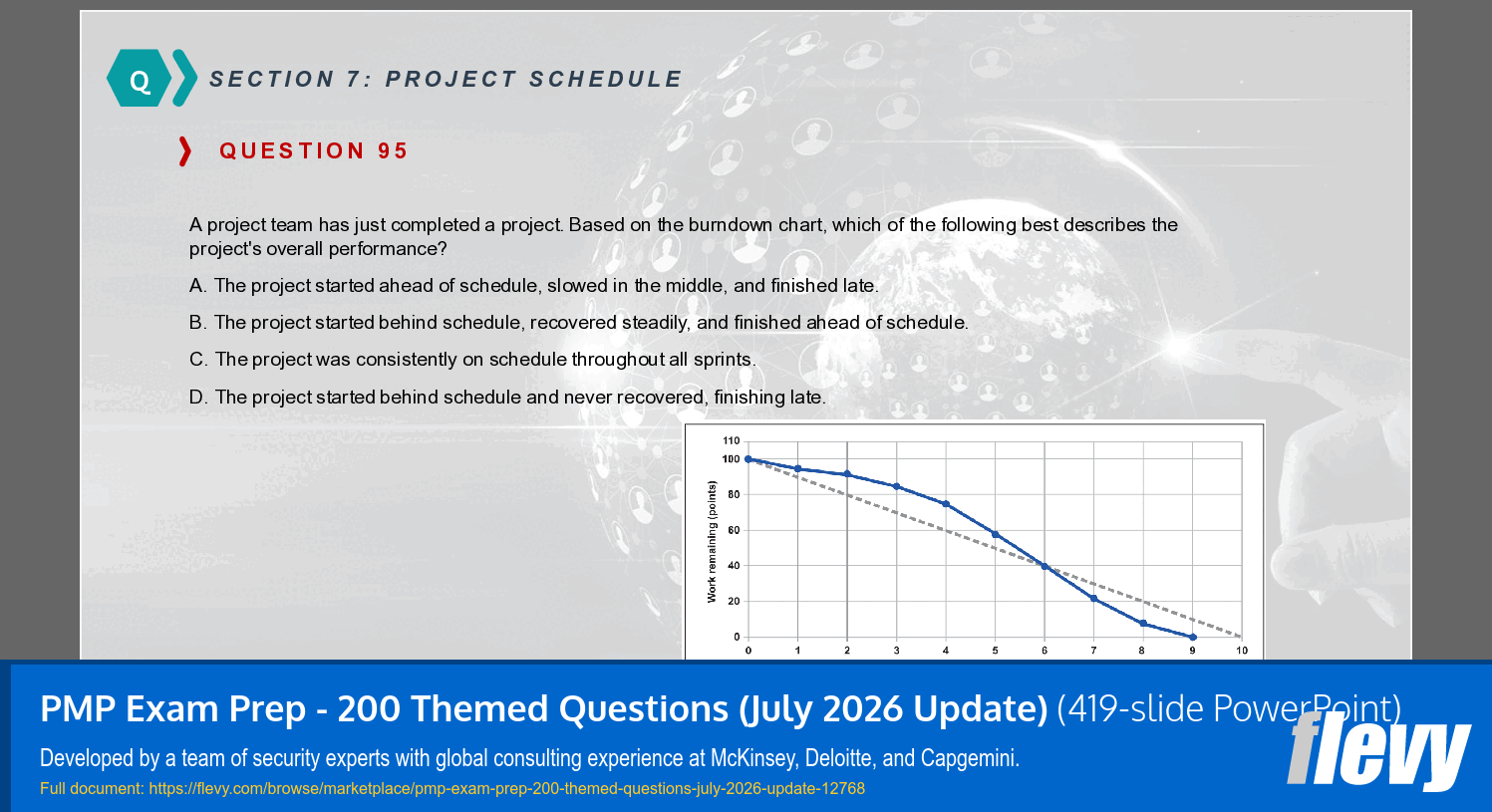
Critical path and float, crashing vs. fast-tracking, dependency types (Finish-to-Finish, Start-to-Start, etc.), lag vs. lead, burndown charts, resource leveling vs. smoothing, PERT beta distribution, critical chain method, rolling wave planning, planning poker, Kanban cycle time (WIP ÷ throughput), milestone charts, and mandatory vs. discretionary dependencies.
Section 8: Project Finance (Q106–Q120)
Plan cost management, funding limit reconciliation, analogous vs. parametric vs. bottom-up vs. expert judgment estimating, basis of estimates, cost aggregation, cost baseline vs. total budget, contingency vs. management reserves, cost of quality (prevention vs. appraisal vs. failure), EVM interpretation (CPI, SPI, CV, TCPI).
Section 9: Stakeholder Management (Q121–Q135)
Stakeholder engagement matrix, sprint reviews as stakeholder feedback ceremonies, stakeholder engagement plan vs. communications plan, communication methods (push/pull/interactive), formal vs. informal communication, nonverbal communication cues, continuous stakeholder identification, salience model, power/interest grid, face-to-face communication for complex issues, effective vs. active listening, communication channels formula, and Monitor Communications process.
Section 10: Resource Management (Q136–Q150)
Conflict resolution (collaborate/problem-solve), Herzberg's two-factor theory, expert power, Tuckman's stages (norming), servant leadership removing impediments, negotiating with functional managers, emotional intelligence/self-regulation, Parkinson's Law, staff release plan, team charter co-creation, negotiating for resources, resource breakdown structure (RBS), Theory of Constraints, McGregor's Theory X, and value stream mapping.
Section 11: Risk Management (Q151–Q165)
Risk vs. issue classification, risk register vs. risk report, exploit vs. enhance vs. share vs. accept (opportunities), risk escalation, active vs. passive acceptance, contingent response strategies, known-unknowns vs. unknown-unknowns (resilience), Monte Carlo simulation, expected monetary value (EMV), risk-adjusted backlog, risk-based spikes, and workarounds.
Section 12: AI in Project Management (Q166–Q175) – New for 2026
Covers the updated exam's AI topics: reviewing/validating AI outputs, copyright ownership of AI-generated content, algorithmic bias in resource recommendations, AI as thought partner (augmentation vs. automation), data privacy and compliance with AI, overriding unsafe AI recommendations, and the Sustainability Pyramid (avoid → minimize → restore → compensate).
Section 13: Mindset Questions (Q176–Q190)
Integrative scenario-based questions testing: avoiding mandatory overtime, reporting ethical violations, substantive stakeholder responses, stopping work for safety hazards, coaching vs. replacing the product owner, protecting sprint timeboxes, piloting change before scaling, private performance conversations, routing scope requests through the product owner, holistic change impact analysis, tailoring monitoring to delivery approach (critical path vs. velocity), facilitating vision alignment sessions, establishing team norms for productive conflict, contract governance for unauthorized scope, and reinforcing product owner autonomy.
Section 14: Ethics and Exam Tips (Q191–Q200)
Ethical scenarios: formal deliverable acceptance, reporting vendor fraud, honest estimating (no inflated buffers), accepting modest gifts, transparent stakeholder reporting, refusing facilitation fees (bribery), reporting timesheet fraud, honest vendor assessments, rejecting quid-pro-quo employment offers, and correcting submitted financial errors.
Key Updates for July 2026
1. AI in Project Management (Section 12) – A brand-new section reflecting PMI's latest exam updates covering AI ethics, data privacy, algorithmic bias, and sustainability.
2. Sustainability Integration – Questions on the Sustainability Pyramid and triple bottom line are woven into Section 12 and broader mindset questions.
3. Hybrid and Adaptive Emphasis – Stronger coverage of when to blend predictive and agile approaches.
4. Updated EVM and Risk Calculations – Realistic numerical scenarios requiring EVM interpretation and EMV calculations.
This resource serves as a standalone exam prep tool with detailed "why the other options are incorrect" explanations for every question, designed to build both knowledge and exam-taking strategy.
Quick Reference Summary
Section 1: Key Project Management Terms – Q1–Q20
Section 2: Principles & Mindset – Q21–Q35
Section 3: Agile & Hybrid – Q36–Q50
Section 4: PM Process – Q51–Q60
Section 5: Governance – Q61–Q75
Section 6: Project Scope – Q76–Q90
Section 7: Project Schedule – Q91–Q105
Section 8: Project Finance – Q106–Q120
Section 9: Stakeholder Management – Q121–Q135
Section 10: Resource Management – Q136–Q150
Section 11: Risk Management – Q151–Q165
Section 12: AI in PM (New) – Q166–Q175
Section 13: Mindset Questions – Q176–Q190
Section 14: Ethics & Exam Tips – Q191–Q200
Got a question about the product? Email us at support@flevy.com or ask the author directly by using the "Ask the Author a Question" form. If you cannot view the preview above this document description, go here to view the large preview instead.
Source: Best Practices in PMP PowerPoint Slides: PMP Exam Prep - 200 Themed Questions (July 2026 Update) PowerPoint (PPTX) Presentation Slide Deck, RadVector Consulting




























