
 Click main image to view in full screen. Unlock all 19 preview images:
PMP Exam Preparation - Full Exam Training – PowerPoint PPTX Template
PowerPoint (PPTX) + supplemental PDF 872 Slides


PMP PPT TEMPLATE DESCRIPTION
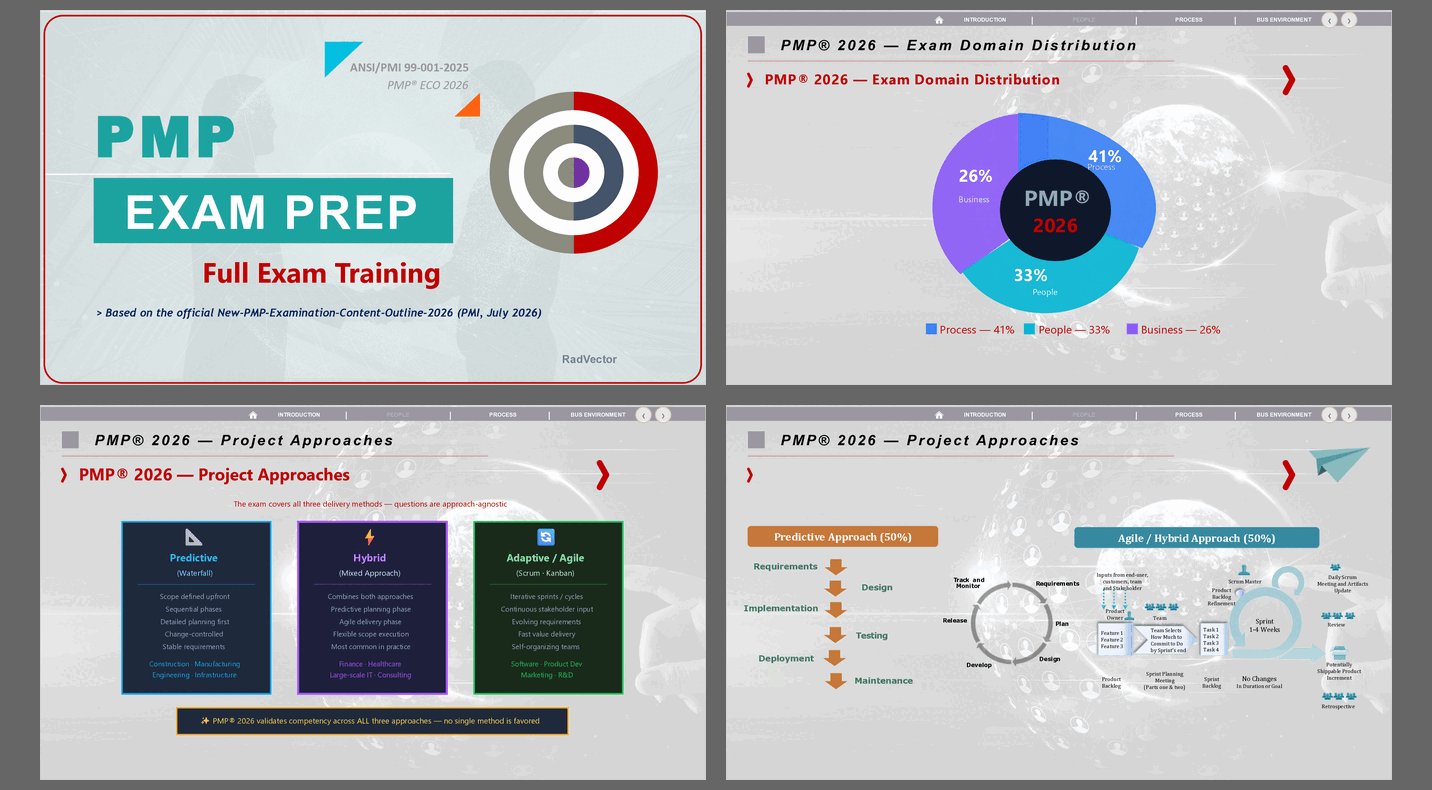
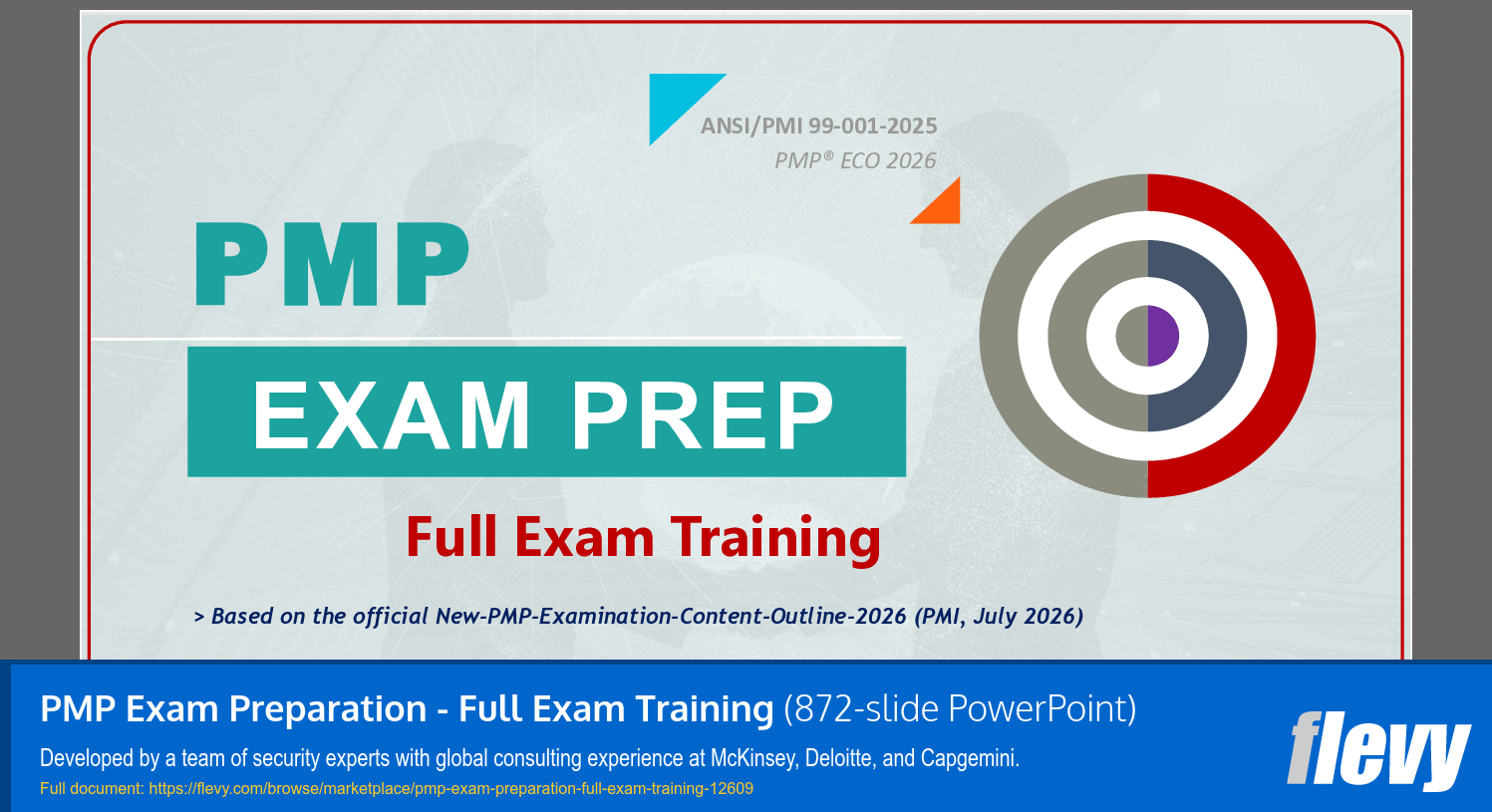
PMP® Exam Preparation – Complete Training Presentation (2026 ECO)
Overview
This presentation is a comprehensive, 872-slide training deck aligned to the ANSI/PMI 99-001-2025 PMP® Examination Content Outline (ECO) 2026, effective July 2026. It serves as an all-in-one exam preparation resource covering every domain, task, and enabler prescribed by the Project Management Institute (PMI) for the updated PMP® certification exam. Designed with a modular, enabler-by-enabler structure, the deck is equally suited for instructor-led classroom delivery, self-paced study, or corporate training programmes.
The presentation ships with a companion Instructor Guide – a complete, slide-by-slide teaching document that tells the trainer exactly what to say, ask and do on every slide. It is included with the deck and is described in full below.
Instructor Guide – Included with This Presentation
The Instructor Guide (`PMP_Instructor_Teaching_Guide.pdf`, 318 pages, A4) is supplied as a companion to the 872-slide deck and is intended for anyone delivering the course. It is written in the first person as a set of personal delivery notes, so the trainer can pick it up and teach from it directly.
Every one of the 872 slides has its own entry containing:
• On screen – a short description of what the slide actually shows (table dimensions and column headings, length of a numbered list, presence of a call-out), so the trainer knows what the room is looking at.
• Objective – what participants should be able to do once the slide has been delivered.
• I say – the explanation to give, together with guidance on how to work the slide: when to board an empty grid and let the room fill it, when to take numbered points one at a time and ask participants to supply the reasoning, and when to teach by example instead of describing a diagram.
• I ask – a discussion question drawn from the slide's topic, used to open the floor and surface prior experience.
• Watch for – the misconception participants predictably bring to the topic, with the correction to apply in the moment.
• Board work – a live exercise suggestion wherever a table, matrix or framework deserves hands-on practice rather than presentation.
• Next – a transition line into the following slide, keeping the delivery continuous.
Exam Blueprint and Structure
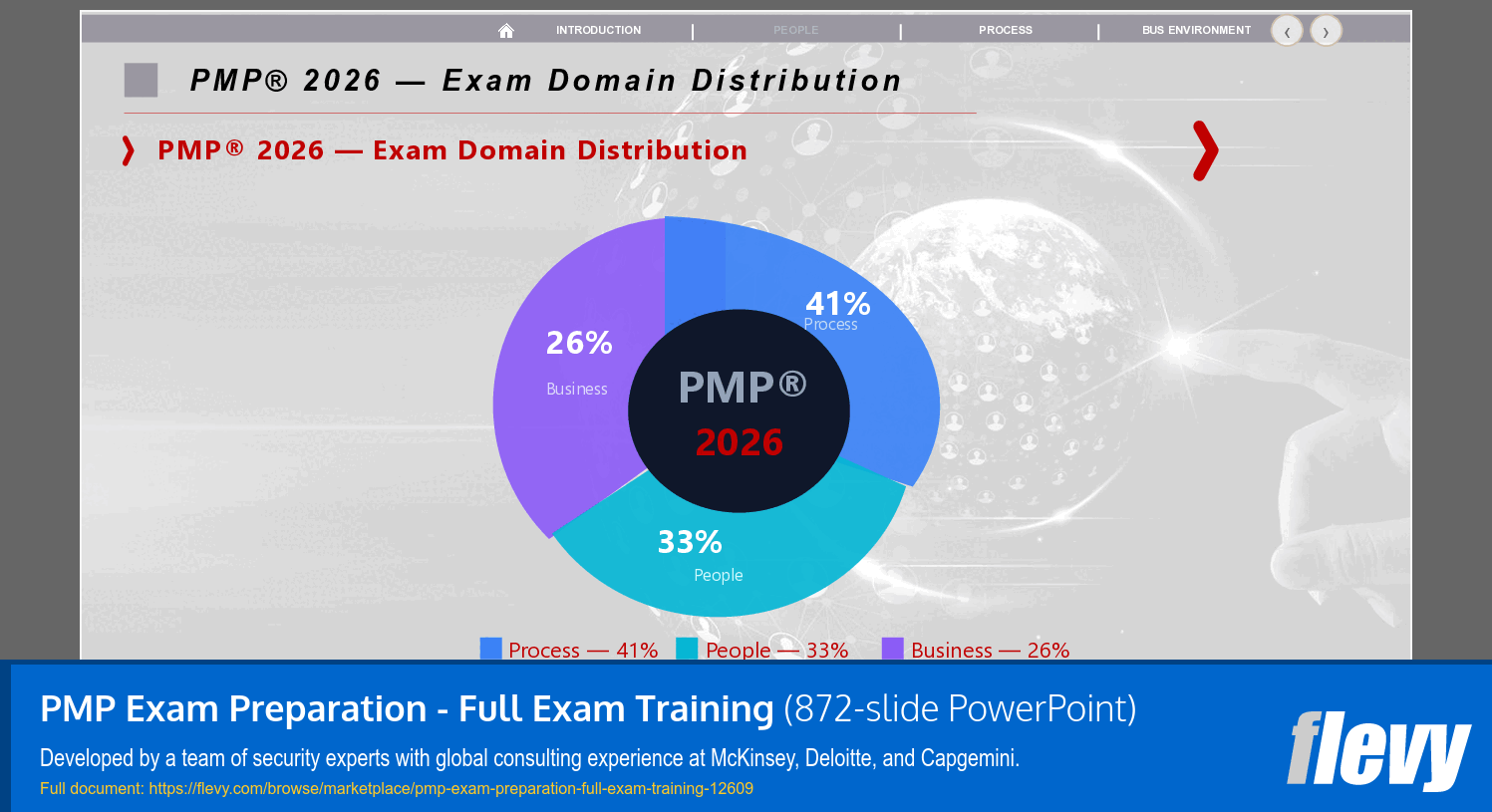
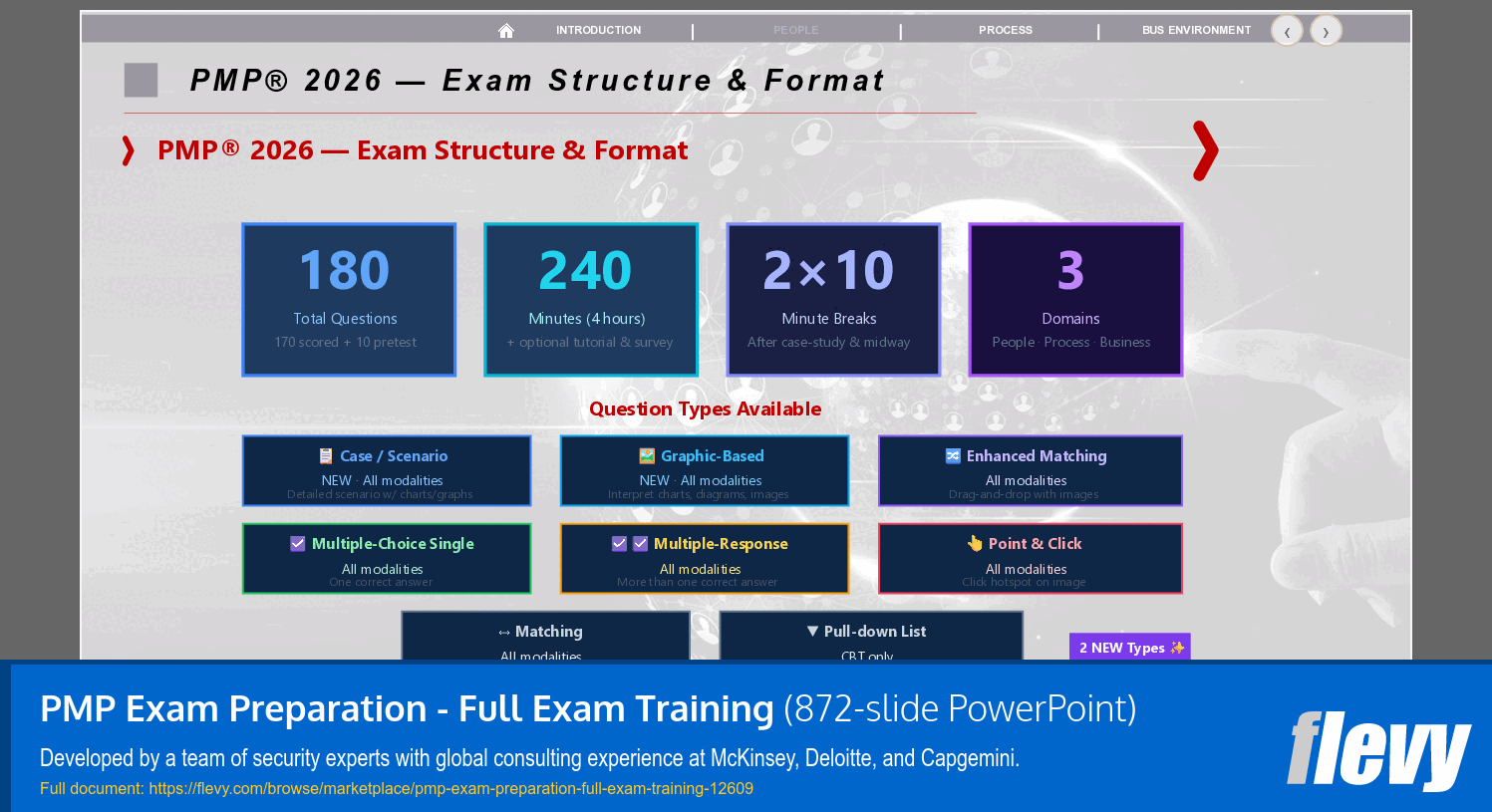
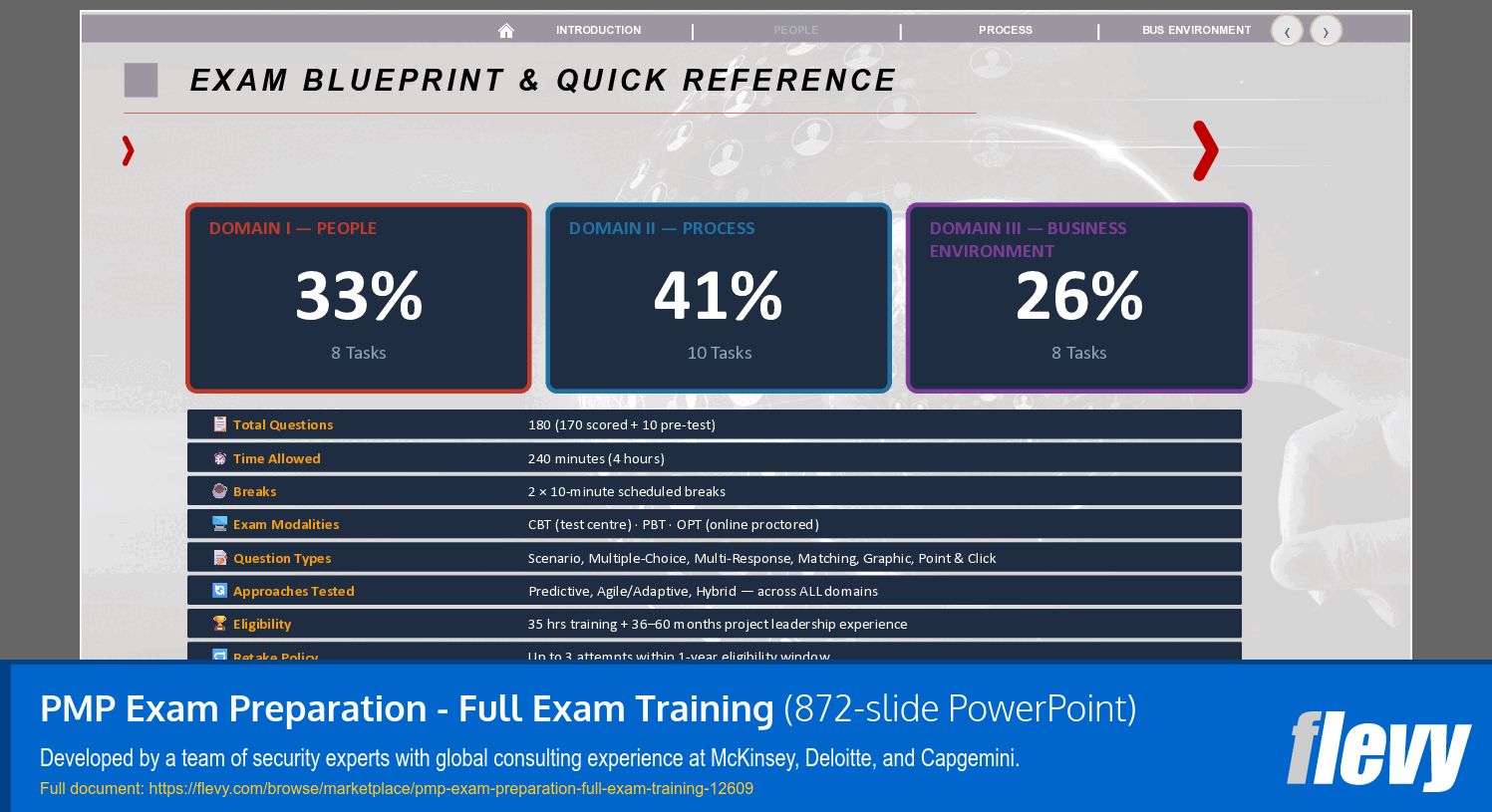
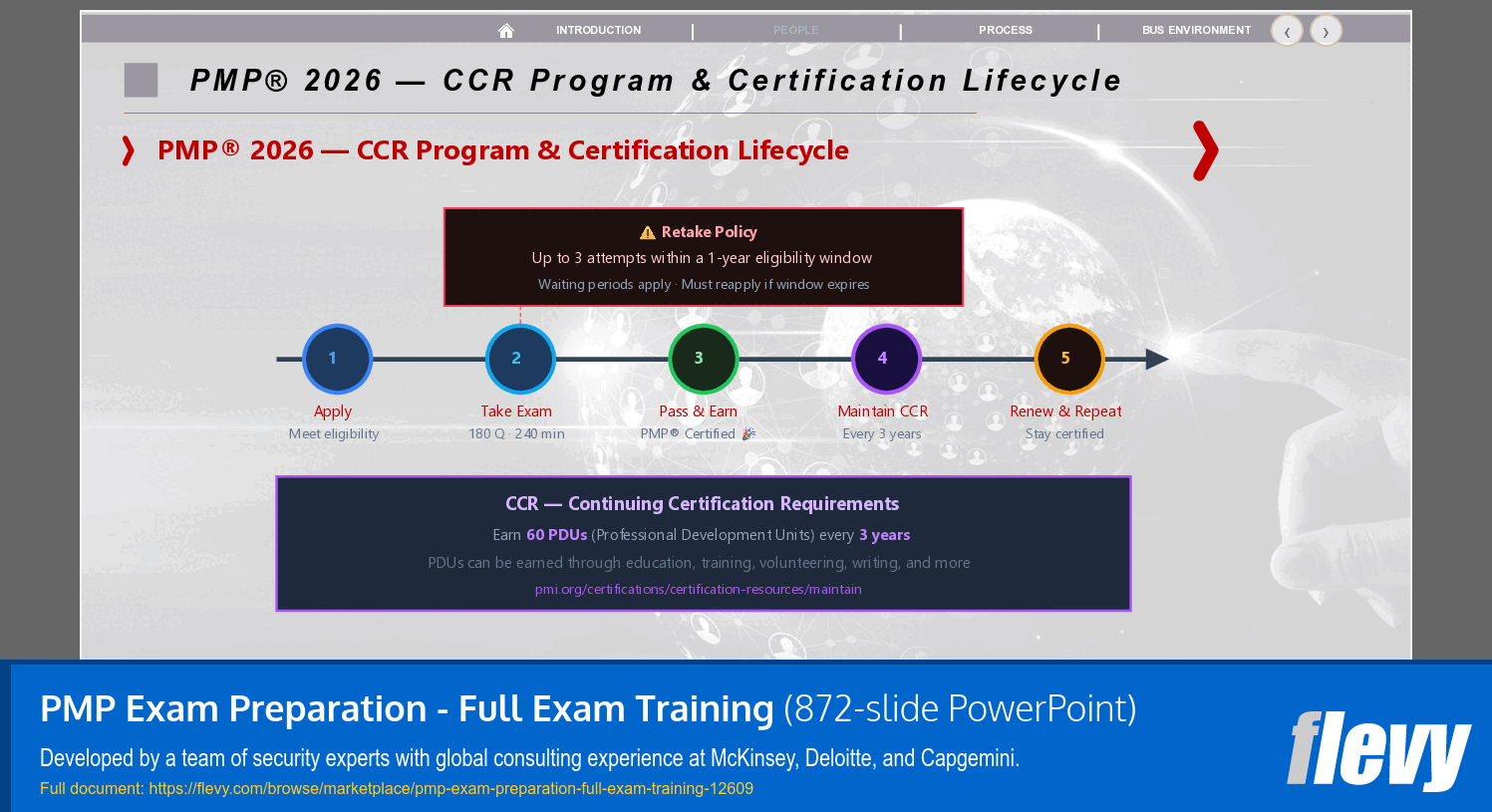
The presentation opens with a complete breakdown of the PMP® 2026 exam format: 180 questions (170 scored plus 10 pretest) delivered over 240 minutes with two scheduled 10-minute breaks. It details the three-domain distribution – People (33%), Process (41%), and Business Environment (26%) – and explains the eight question types now available, including two newly introduced formats: case/scenario-based questions with charts and graphs, and graphic-based items requiring interpretation of diagrams and images. Eligibility requirements across four education tiers, the Continuing Certification Requirements (CCR) programme mandating 60 Professional Development Units every three years, and the retake policy of up to three attempts within a one-year eligibility window are all clearly presented.
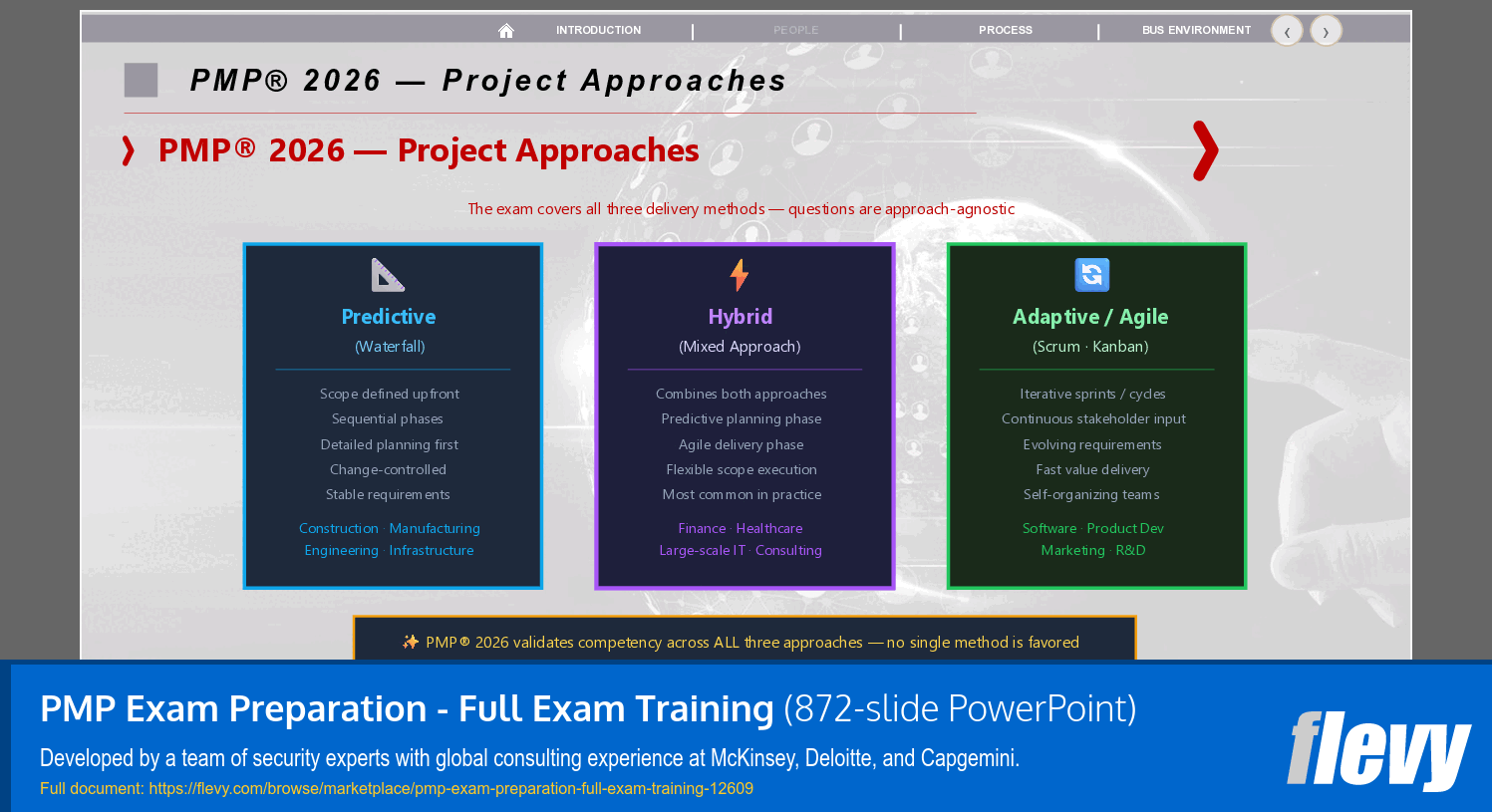
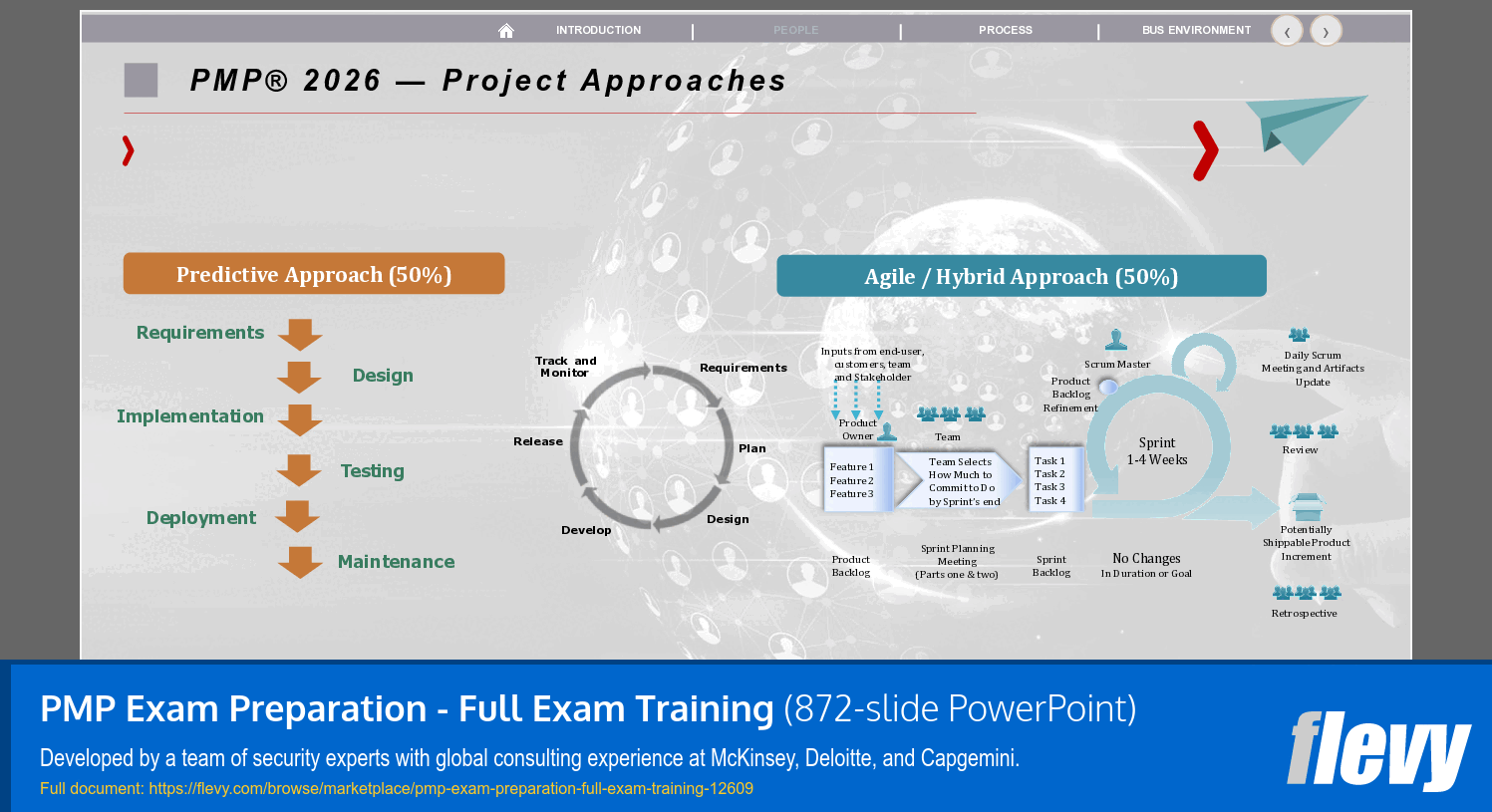
A particularly valuable early section addresses the three project delivery approaches tested – predictive (waterfall), adaptive/agile (Scrum, Kanban), and hybrid – emphasising that the exam is approach-agnostic and validates competency across all three methodologies.
Domain I – People (33% of Exam)
Spanning 8 tasks and 39 enablers, this domain focuses on the interpersonal and leadership competencies essential for modern project managers. The tasks progress logically from establishing foundational alignment through to sustaining team performance:
Task I.1 – Develop a Common Vision: Covers creating, promoting, and maintaining a shared project vision; diagnosing root causes of vision misalignment; and linking vision to measurable outcomes.
Task I.2 – Manage Conflicts: Addresses conflict identification, resolution strategies (collaborating, compromising, forcing, avoiding, smoothing), and the role of the project manager as mediator.
Task I.3 – Lead the Project Team: Explores servant leadership, emotional intelligence, team development models (Tuckman), motivation theories, delegation, and creating psychological safety.
Task I.4 – Engage Stakeholders: Covers stakeholder identification, analysis (power/interest grid, salience model), engagement planning, and building trust-based relationships.
Task I.5 – Align Stakeholder Expectations: Focuses on expectation setting, managing assumptions, negotiating trade-offs, and maintaining alignment throughout the project lifecycle.
Task I.6 – Manage Stakeholder Expectations: Addresses ongoing expectation monitoring, handling changing expectations, and using feedback loops to detect and correct misalignment.
Task I.7 – Help Ensure Knowledge Transfer: Covers capturing tacit and explicit knowledge, lessons learned processes, mentoring, and preventing knowledge loss during team transitions.
Task I.8 – Plan and Manage Communication: Explores communication models, channel selection, communication management plans, virtual team communication, and stakeholder-specific messaging.
Domain II – Process (41% of Exam)
The largest domain, with 10 tasks and 64 enablers, covers the technical project management processes that constitute the core of delivery execution:
Task II.1 – Develop an Integrated Project Management Plan and Plan Delivery: Nine enablers covering needs assessment, methodology selection, critical information requirements, execution strategy, integrated plan creation, effort estimation, dependency analysis, plan maintenance, and data-driven decision-making.
Task II.2 – Develop and Manage Project Scope: Scope planning, requirements collection, WBS creation, scope baseline management, and scope creep control.
Task II.3 – Help Ensure Value-Based Delivery: Prioritisation techniques (MoSCoW, Kano, weighted scoring), backlog management, MVP definition, and continuous value validation.
Task II.4 – Plan and Manage Resources: Resource estimation, skills assessment, resource breakdown structures, capacity planning, and resource optimisation (levelling and smoothing).
Task II.5 – Plan and Manage Procurement: Make-or-buy analysis, contract types (fixed-price, T&M, cost-reimbursable), vendor selection, and procurement closure.
Task II.6 – Plan and Manage Finance: Cost estimation techniques, budget determination, earned value management (EVM), variance analysis, and financial forecasting.
Task II.7 – Plan and Optimize Quality of Products/Deliverables: Quality planning, quality assurance vs. quality control, cost of quality, testing strategies, and continuous improvement tools.
Task II.8 – Plan and Manage Schedule: Activity definition, sequencing (PDM, dependencies), duration estimation techniques, critical path method, schedule compression (fast-tracking, crashing), and schedule baseline management.
Task II.9 – Evaluate Project Status: Performance measurement, status reporting, milestone tracking, variance and trend analysis, and forecasting with burndown/burnup charts.
Task II.10 – Manage Project Closure: Administrative closure, deliverable handover, final acceptance, contract closure, lessons learned, and project archives.
Domain III – Business Environment (26% of Exam)
Eight tasks and 35 enablers connect project execution to organisational strategy, governance, and the external environment:
Task III.1 – Define and Establish Project Governance: Governance structures, decision-making frameworks, success metrics, and escalation paths.
Task III.2 – Plan and Manage Project Compliance: Legal and regulatory requirements, environmental and sustainability standards, data protection, and audit readiness.
Task III.3 – Manage and Control Changes: Change control processes, CCB management, integrated change control, configuration management, and maintaining audit trails.
Task III.4 – Remove Impediments and Manage Issues: Impediment identification and impact assessment, prioritisation, intervention strategies, root cause analysis, and the risk-to-issue transition process.
Task III.5 – Plan and Manage Risk: Risk identification techniques, qualitative and quantitative analysis (P×I matrix, EMV, Monte Carlo), response strategies for threats and opportunities, risk register maintenance, and agile risk management.
Task III.6 – Continuous Improvement: Retrospectives, process improvement methodologies, quality metrics, and embedding a learning culture.
Task III.7 – Support Organizational Change: Change management models, stakeholder adoption strategies, training and transition planning, and benefits realisation.
Task III.8 – Evaluate External Business Environment Changes: Environmental scanning, market and regulatory monitoring, and adapting project strategy to external shifts.
Pedagogical Design
Each enabler follows a consistent instructional pattern: a "Why This Matters" contextual hook, clearly stated learning objectives, core content with diagrams and frameworks, agile-specific considerations where applicable, and exam tips highlighting common traps. The deck incorporates cross-cutting themes emphasised in the 2026 ECO – sustainability, diversity and inclusion, digital transformation, and ethical decision-making – woven throughout rather than siloed into separate sections. The final slides include a cross-cutting themes summary and an exam quick-reference card, making the deck useful as both a teaching tool and a last-minute revision aid.
Got a question about the product? Email us at support@flevy.com or ask the author directly by using the "Ask the Author a Question" form. If you cannot view the preview above this document description, go here to view the large preview instead.
Source: Best Practices in PMP PowerPoint Slides: PMP Exam Preparation - Full Exam Training PowerPoint (PPTX) Presentation Slide Deck, RadVector Consulting




























