
 Click main image to view in full screen. Unlock all 17 preview images:
PCI DSS v4.0 in Practice Play Book & TOOLKIT – PDF
PDF document + Zip archive file (ZIP) 101 Pages


CYBER SECURITY PDF DESCRIPTION
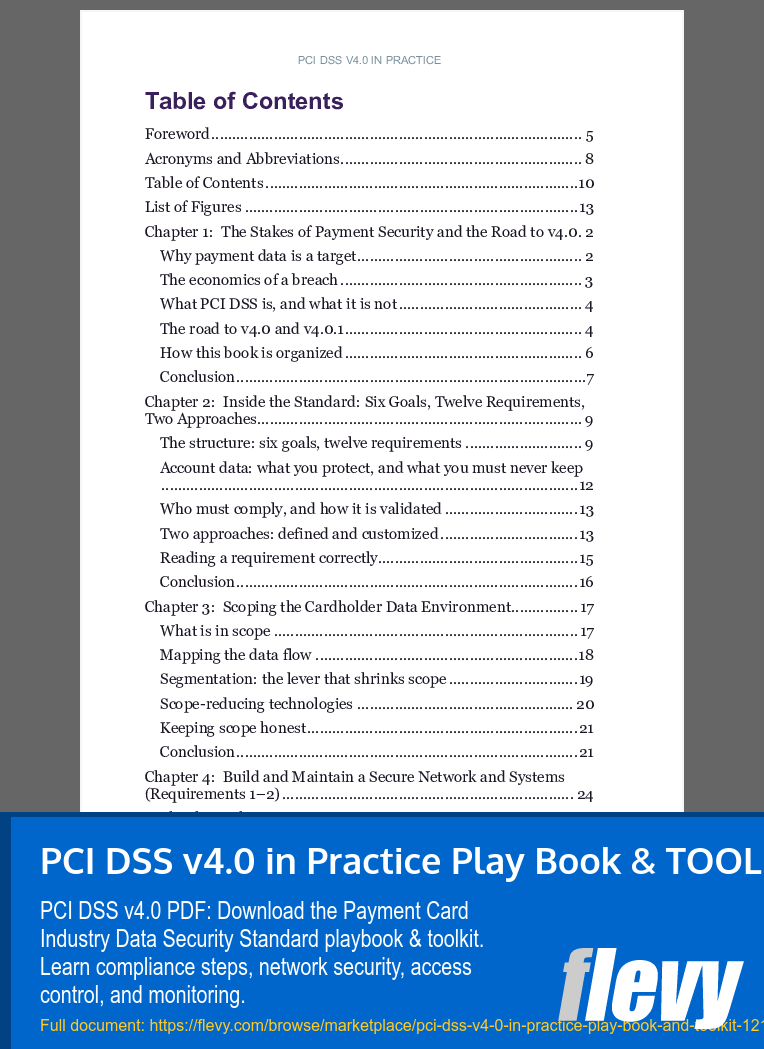
Table of Contents
Foreword 5
Acronyms and Abbreviations 8
Table of Contents 10
List of Figures 13
Chapter 1: The Stakes of Payment Security and the Road to v4.0 2
Why payment data is a target 2
The economics of a breach 3
What PCI DSS is, and what it is not 4
The road to v4.0 and v4.0.1 4
How this book is organized 6
Conclusion 7
Chapter 2: Inside the Standard: Six Goals, Twelve Requirements, Two Approaches 9
The structure: six goals, twelve requirements 9
Account data: what you protect, and what you must never keep 12
Who must comply, and how it is validated 13
Two approaches: defined and customized 13
Reading a requirement correctly 15
Conclusion 16
Chapter 3: Scoping the Cardholder Data Environment 17
What is in scope 17
Mapping the data flow 18
Segmentation: the lever that shrinks scope 19
Scope-reducing technologies 20
Keeping scope honest 21
Conclusion 21
Chapter 4: Build and Maintain a Secure Network and Systems (Requirements 1–2) 24
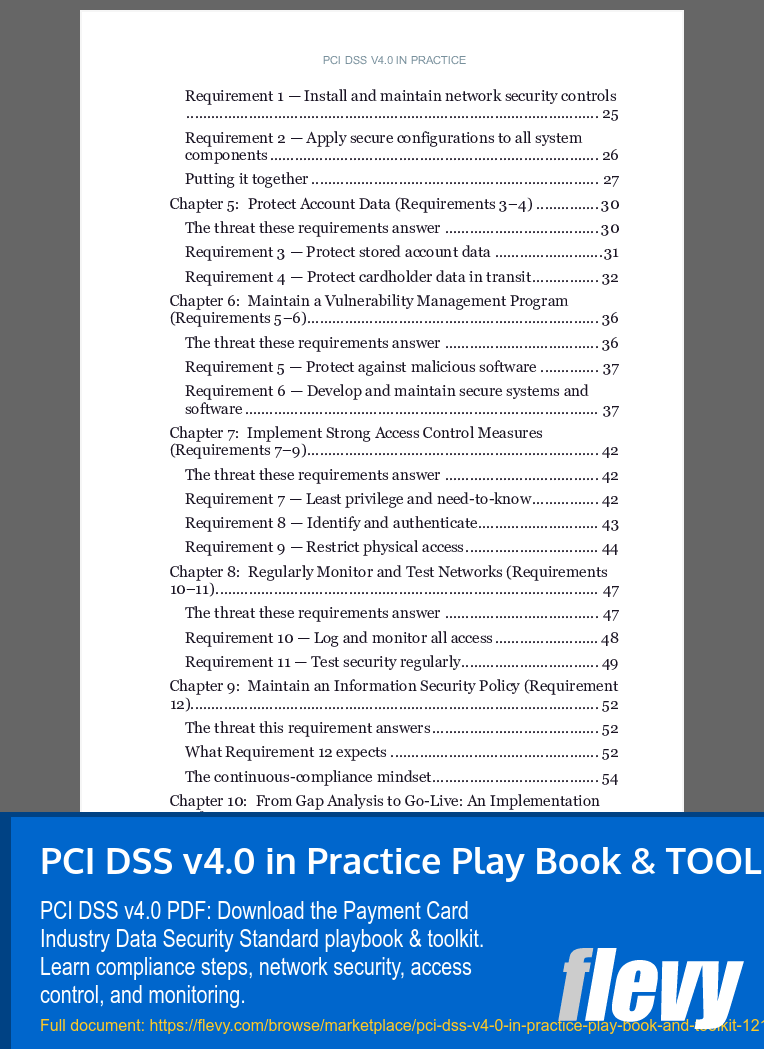
The threat these requirements answer 24
Requirement 1 – Install and maintain network security controls 25
Requirement 2 – Apply secure configurations to all system components 26
Putting it together 27
Chapter 5: Protect Account Data (Requirements 3–4) 30
The threat these requirements answer 30
Requirement 3 – Protect stored account data 31
Requirement 4 – Protect cardholder data in transit 32
Chapter 6: Maintain a Vulnerability Management Program (Requirements 5–6) 36
The threat these requirements answer 36
Requirement 5 – Protect against malicious software 37
Requirement 6 – Develop and maintain secure systems and software 37
Chapter 7: Implement Strong Access Control Measures (Requirements 7–9) 42
The threat these requirements answer 42
Requirement 7 – Least privilege and need-to-know 42
Requirement 8 – Identify and authenticate 43
Requirement 9 – Restrict physical access 44
Chapter 8: Regularly Monitor and Test Networks (Requirements 10–11) 47
The threat these requirements answer 47
Requirement 10 – Log and monitor all access 48
Requirement 11 – Test security regularly 49
Chapter 9: Maintain an Information Security Policy (Requirement 12) 52
The threat this requirement answers 52
What Requirement 12 expects 52
The continuous-compliance mindset 54
Chapter 10: From Gap Analysis to Go-Live: An Implementation Roadmap 57
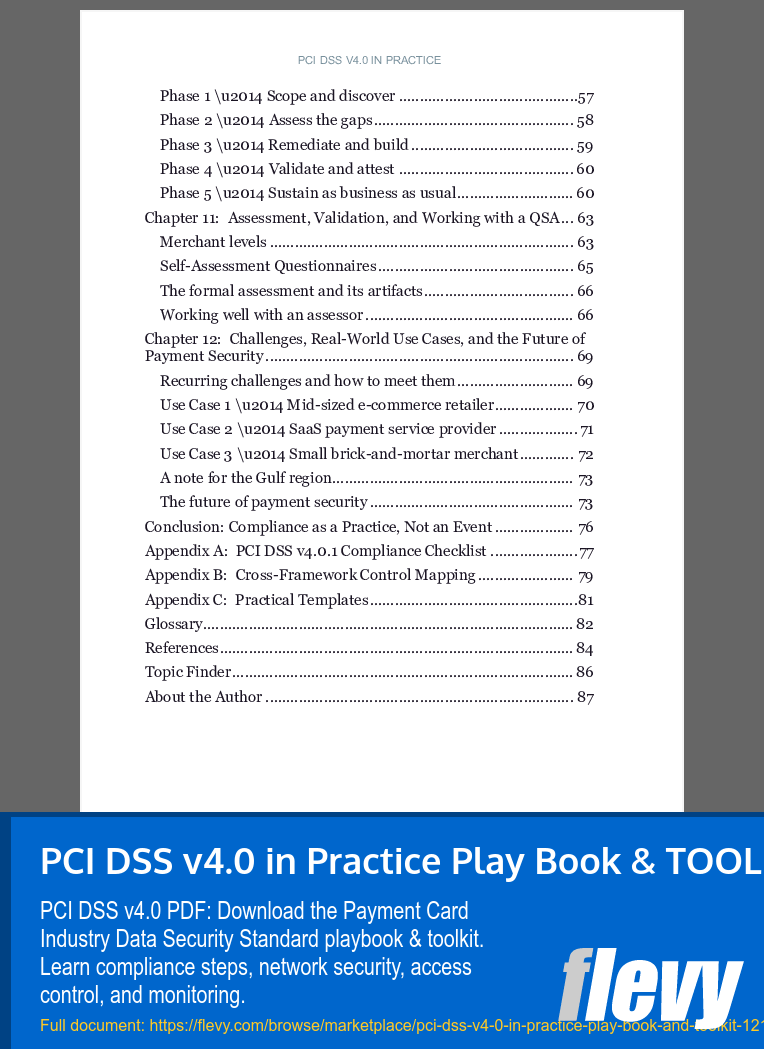
Phase 1 u2014 Scope and discover 57
Phase 2 u2014 Assess the gaps 58
Phase 3 u2014 Remediate and build 59
Phase 4 u2014 Validate and attest 60
Phase 5 u2014 Sustain as business as usual 60
Chapter 11: Assessment, Validation, and Working with a QSA 63
Merchant levels 63
Self-Assessment Questionnaires 65
The formal assessment and its artifacts 66
Working well with an assessor 66
Chapter 12: Challenges, Real-World Use Cases, and the Future of Payment Security 69
Recurring challenges and how to meet them 69
Use Case 1 u2014 Mid-sized e-commerce retailer 70
Use Case 2 u2014 SaaS payment service provider 71
Use Case 3 u2014 Small brick-and-mortar merchant 72
A note for the Gulf region 73
The future of payment security 73
Conclusion: Compliance as a Practice, Not an Event 76
Appendix A: PCI DSS v4.0.1 Compliance Checklist 77
Appendix B: Cross-Framework Control Mapping 79
Appendix C: Practical Templates 81
Glossary 82
References 84
Topic Finder 86
About the Author 87
Got a question about the product? Email us at support@flevy.com or ask the author directly by using the "Ask the Author a Question" form. If you cannot view the preview above this document description, go here to view the large preview instead.
Source: Best Practices in Cyber Security PDF: PCI DSS v4.0 in Practice Play Book & TOOLKIT PDF (PDF) Document, Mohamed Alshamey
ABOUT THE AUTHOR

Senior Consultant in Cybersecurity GRC, Data Governance, Cybersecurity, Privacy, and Data Management, with over 20 years of experience in information technology, consulting, training, and technical capacity building. holds a PhD. In AI & Data Privacy, he has a master's degree in cybersecurity and is currently pursuing research focused on data privacy. possesses extensive expertise in ... [read more]
Ask the Author a Question
You must be logged in to contact the author.




























