
Organization Theory & Design - Organizations & Org Design   63-slide PPT PowerPoint presentation slide deck (PPTX)
$55.00

Organization Theory & Design - Organizations & Org Design (63-slide PPT PowerPoint presentation slide deck (PPTX)) Preview Image
Log in to unlock full preview.
Organization Theory & Design - Organizations & Org Design (63-slide PPT PowerPoint presentation slide deck (PPTX)) Preview Image
Arrow   Click main image to view in full screen.

Organization Theory & Design - Organizations & Org Design (PowerPoint PPTX Slide Deck)

PowerPoint (PPTX) 63 Slides

$55.00
Developed by a team of experts with global consulting experience at McKinsey, Deloitte, and Capgemini.
Add to Cart


Immediate download
Fully editable PowerPoint
Free lifetime updates

BENEFITS OF THIS POWERPOINT DOCUMENT

  1. Provides a deeper look at the challenges today's managers and organizations face
  2. Introduces the concepts of efficiency and effectiveness and describe the most common approach to measuring organizational performance
  3. Examines how organization theory can help people manage complex organizations in a rapidly changing world

ORGANIZATIONAL DESIGN PPT DESCRIPTION

Editor Summary 63-slide PowerPoint presentation on Organization Theory & Design presenting frameworks, templates, case studies, and tools for diagnosing and redesigning organizational structures. Read more

"The purpose of organizational design is to improve the business maturity from functioning to firm to delight and ultimately, achieve the high-performance business result."
— Pearl Zhu

Embarking on the Odyssey of Organizational Design:

The canvas of organizational design unfurls before us, offering a profound exploration of contemporary organizations and their intricate architectures. Organization design, a discipline steeped in the wisdom of scholars and the vitality of living organizations, beckons us to decipher its practical significance. Beyond mere theory, it is a beacon guiding managers to illuminate the path of understanding, diagnosis, and response to the dynamic tapestry of organizational needs and challenges.

Charting the Course: Objectives of This Presentation:

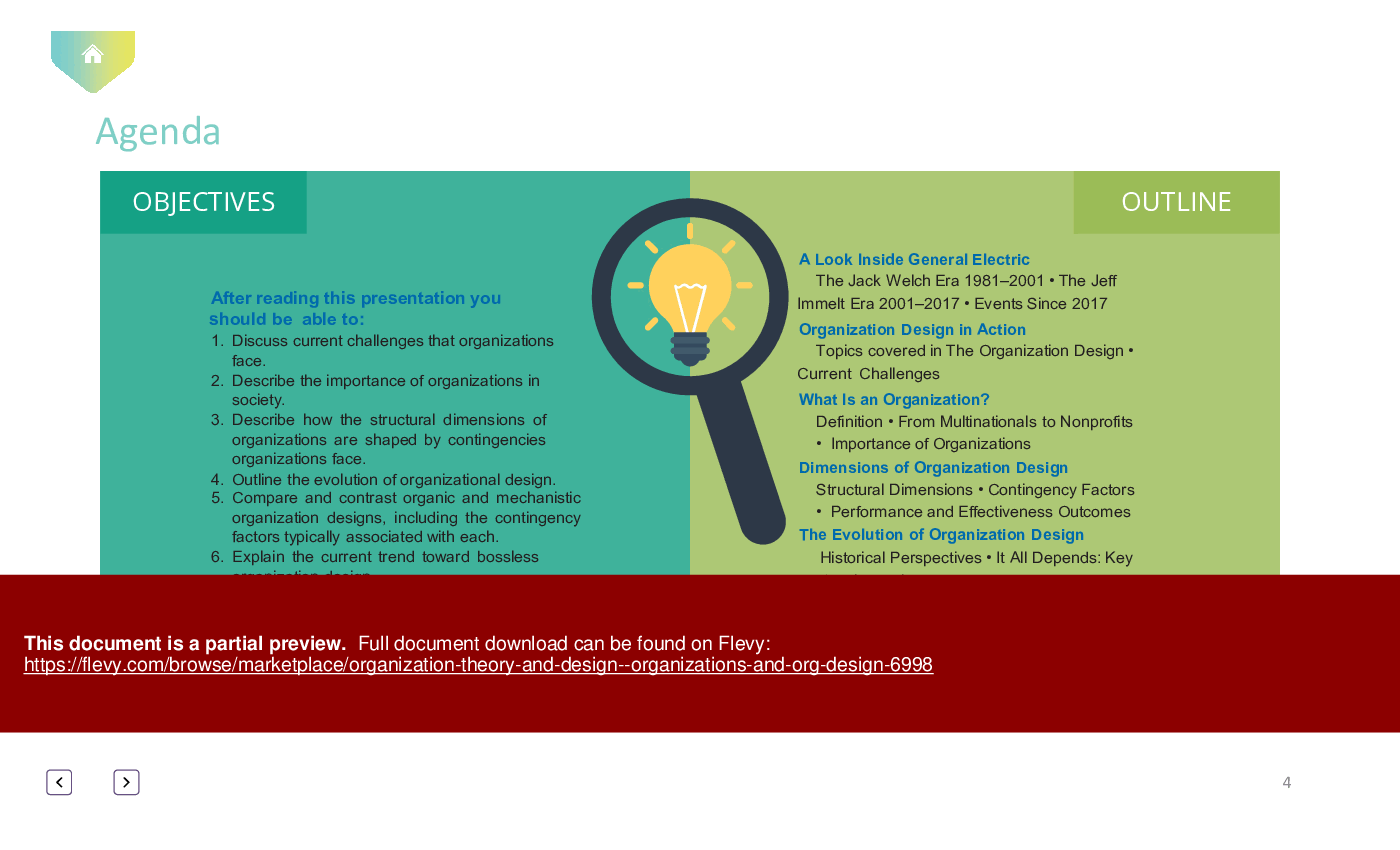
Our odyssey is characterized by a quest to unravel the challenges that contemporary managers and organizations grapple with. It commences by defining organizations as open systems, introducing foundational concepts for the description and analysis of organizational structures, and illuminating the dimensions that shape them. Furthermore, it explores the notions of efficiency, effectiveness, and common paradigms for measuring organizational performance. On our journey, we trace the historical evolution of organization design, distinguish between mechanistic and organic designs, and glimpse the relevance of organization theory in navigating the labyrinth of complex organizations in a swiftly changing world.

The Compass to Navigate the Landscape of Organizational Theory & Design:

This 63-Slide PowerPoint document serves as your compass, guiding you through the labyrinth of organizational theory and design. It is not a mere document but a versatile tool for customization, enriched with impactful figures, diagrams, ice-breakers, pictures, and more. It provides a holistic view of the intricate concepts that underpin Organization Theory & Design, helping you navigate the terrain of contemporary organizations with acumen and insight.

Got a question about the product? Email us at support@flevy.com or ask the author directly by using the "Ask the Author a Question" form. If you cannot view the preview above this document description, go here to view the large preview instead.

MARCUS OVERVIEW

This synopsis was written by Marcus [?] based on the analysis of the full 63-slide presentation.


Executive Summary
This presentation on Organization Theory & Design provides a comprehensive exploration of organizational structures and their evolution. It equips managers with the necessary frameworks to understand and address contemporary challenges in organizational design. By examining case studies like General Electric, the presentation highlights the impact of effective organizational design on performance and adaptability. Users will gain insights into the importance of aligning organizational structures with strategic goals, fostering innovation, and responding to external pressures.

Who This Is For and When to Use
•  Corporate executives seeking to enhance organizational effectiveness
•  Change management leaders implementing new organizational structures
•  Consultants advising on organizational design and performance improvement
•  HR professionals focused on employee engagement and culture transformation

Best-fit moments to use this deck:
•  During strategic planning sessions to align organizational design with business objectives
•  When diagnosing organizational challenges and identifying areas for improvement
•  In workshops aimed at fostering innovation and agility within teams

Learning Objectives
•  Discuss current challenges organizations face in a rapidly changing environment
•  Describe the significance of organizational structures in achieving business goals
•  Analyze how structural dimensions are influenced by contingency factors
•  Outline the historical evolution of organizational design practices
•  Compare and contrast mechanistic and organic organizational designs
•  Explain the trend towards bossless organizational structures

Table of Contents
•  Introduction to Organization Design (page 3)
•  Current Organizational Challenges (page 4)
•  Structural Dimensions of Organizations (page 35)
•  Contingency Factors Influencing Design (page 41)
•  The Evolution of Organization Design (page 46)
•  Mechanistic vs. Organic Designs (page 55)
•  The Emerging Bossless Design Trend (page 60)

Primary Topics Covered
•  Current Challenges - Organizations today face globalization, intense competition, and sustainability pressures that require adaptive structures.
•  Structural Dimensions - Key dimensions include formalization, specialization, hierarchy of authority, complexity, and centralization, which shape organizational effectiveness.
•  Contingency Factors - Factors such as size, technology, environment, and culture influence how organizations are structured and managed.
•  Evolution of Organization Design - Historical perspectives reveal how organizational design has adapted to societal changes and market demands.
•  Mechanistic vs. Organic Designs - Mechanistic designs focus on efficiency and stability, while organic designs prioritize flexibility and innovation.
•  Bossless Design Trend - Emerging organizations adopt decentralized structures that empower employees and enhance collaboration.

Deliverables, Templates, and Tools
•  Framework for analyzing organizational challenges and designing effective structures
•  Templates for assessing structural dimensions and contingency factors
•  Case study examples illustrating successful organizational transformations
•  Guidelines for implementing bossless organizational structures
•  Tools for measuring organizational performance and effectiveness

Slide Highlights
•  Overview of the evolution of organizational design with historical context
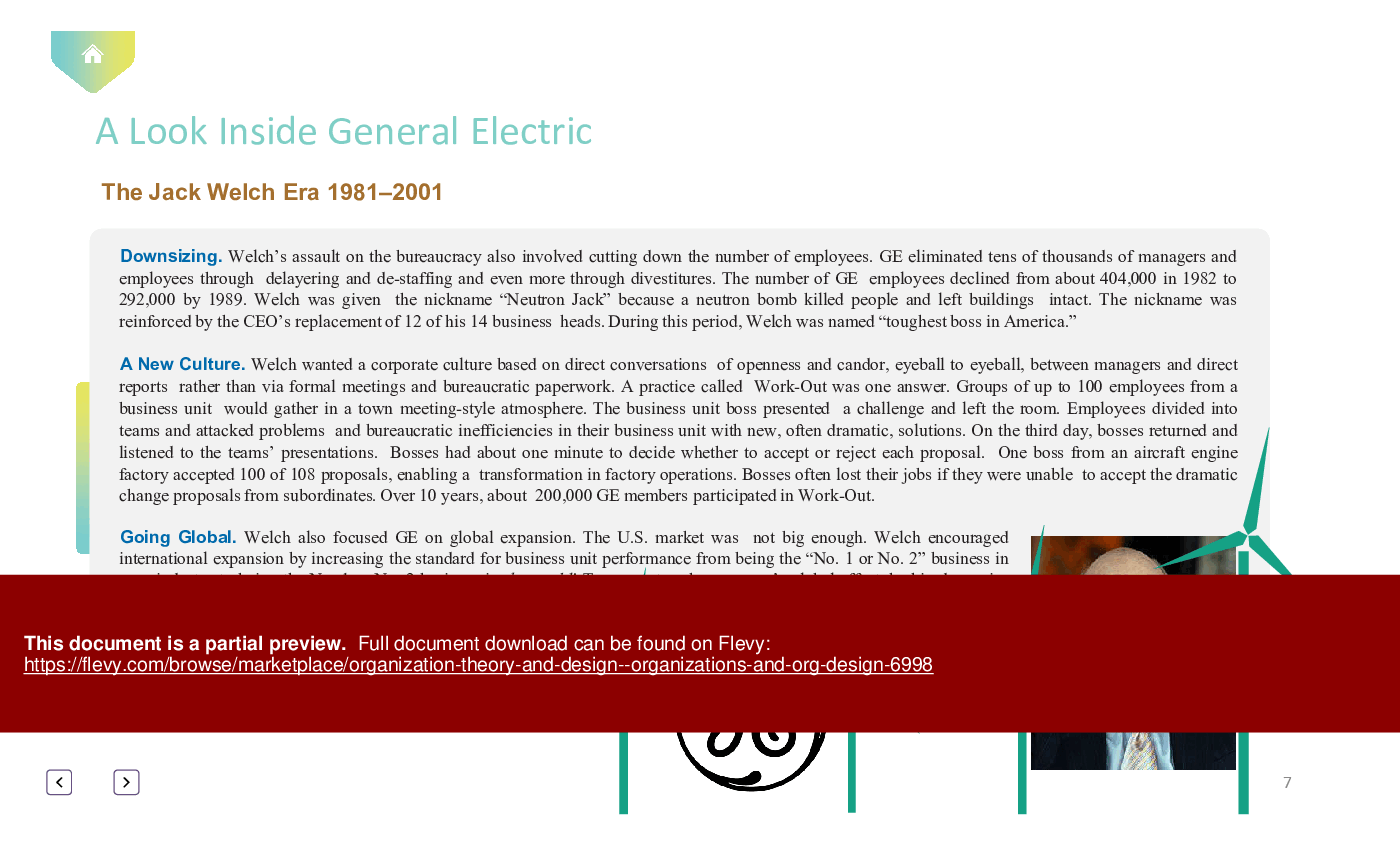
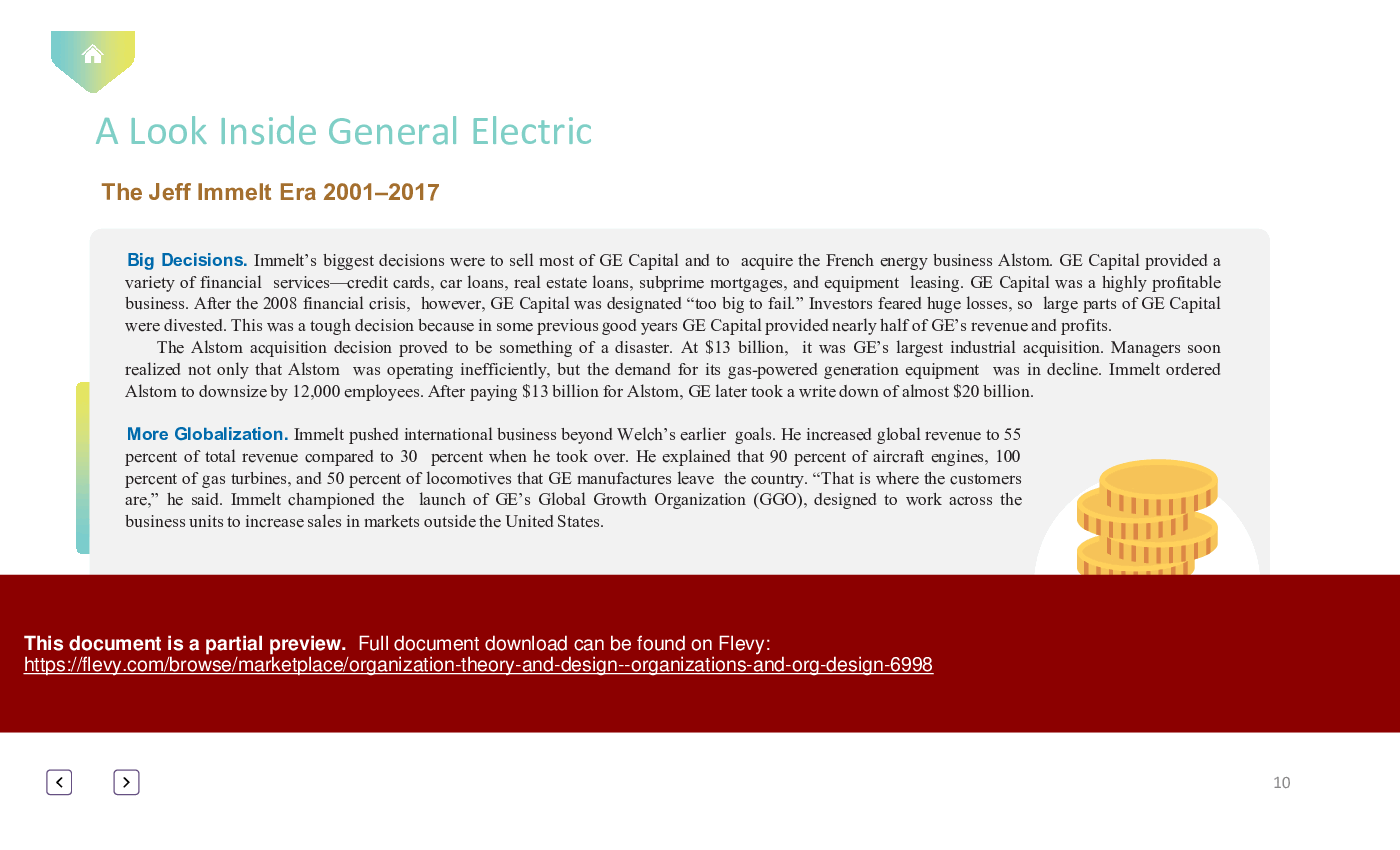
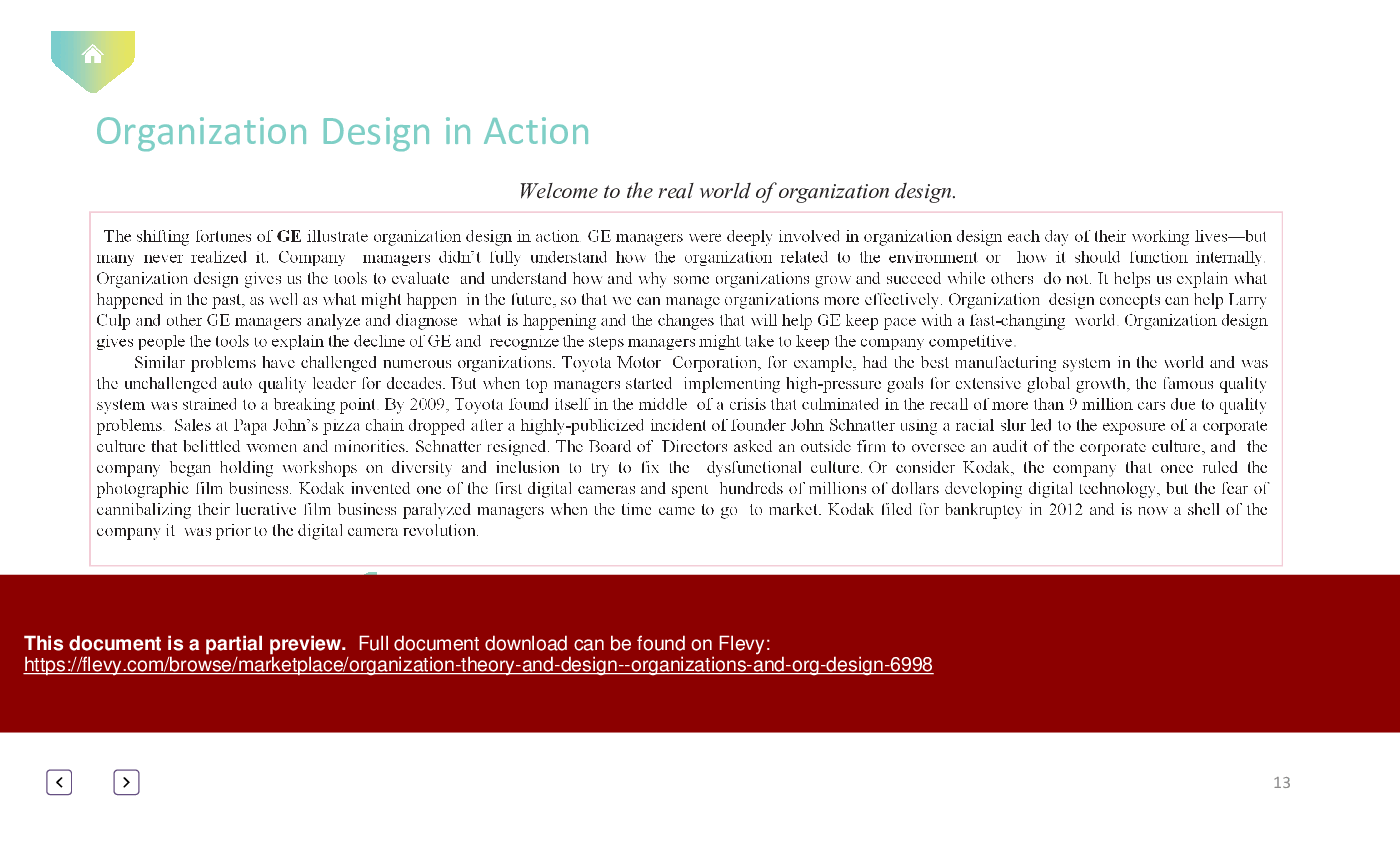
•  Case study analysis of General Electric's organizational changes under different CEOs
•  Visual representations of mechanistic vs. organic designs
•  Insights into the emerging trend of bossless organizations and their operational benefits
•  Key challenges organizations face today and strategies for addressing them

Potential Workshop Agenda
Introduction to Organization Design (30 minutes)
•  Overview of organizational theory and its relevance today
•  Discussion on current challenges organizations face

Analyzing Structural Dimensions (60 minutes)
•  Interactive session on identifying structural dimensions in participants' organizations
•  Group activity to assess contingency factors influencing design decisions

Exploring Mechanistic vs. Organic Designs (45 minutes)
•  Case study analysis of successful organizations
•  Discussion on the implications of design choices on performance

Implementing Bossless Structures (30 minutes)
•  Strategies for transitioning to a bossless organization
•  Best practices for fostering collaboration and innovation

Customization Guidance
•  Tailor the presentation to reflect specific organizational goals and challenges
•  Adjust case study examples to align with the audience's industry context
•  Incorporate relevant metrics and terminology specific to the organization’s culture

Secondary Topics Covered
•  The role of technology in shaping organizational design
•  Ethical considerations in organizational management
•  The impact of globalization on organizational structures
•  Strategies for enhancing employee engagement and satisfaction
•  The importance of adaptability in organizational design

Topic FAQ

What are the key structural dimensions I should assess when redesigning an organization?

Structural dimensions commonly assessed include formalization, specialization, hierarchy of authority, complexity, and centralization. Evaluating these helps determine where to increase flexibility or control and which dimensions to adjust to support strategy; the deck’s assessment templates focus on these 5 dimensions.

How do contingency factors influence the choice between mechanistic and organic designs?

Contingency factors such as organization size, technology, external environment, and culture determine whether stability and efficiency (mechanistic) or flexibility and adaptability (organic) are more appropriate. The presentation links these factors to design choices, using size, technology, environment, and culture as primary contingencies.

What practical steps support a transition to a bossless organization?

Practical steps include clarifying decision rights, redesigning collaboration processes, empowering teams with authority, and establishing performance measures and governance suited to decentralization. The deck offers guidelines for implementing bossless structures and strategies to foster collaboration and employee empowerment.

How can I structure a workshop to evaluate organizational design options?

A workshop can open with an overview of organization theory, include interactive exercises to map structural dimensions, group activities to assess contingency factors, case-study analysis, and a session on implementation options. The product provides a sample workshop agenda with timed modules spanning introduction through implementation.

What should I look for when choosing an organizational design slide deck or toolkit?

Prioritize materials that link structure to strategy, include diagnostic frameworks for structural dimensions and contingency factors, offer templates for assessment, case studies for practical insight, and implementation guidance; the Organization Theory & Design - Organizations & Org Design deck explicitly offers these components.

Are slide templates and tools in org-design kits worth the cost for internal teams?

Templates can accelerate diagnostic work, standardize assessments across teams, and provide ready visuals for stakeholder briefings; value depends on reuse frequency and project scope. This product delivers templates, assessment tools, case studies, and guidelines in a 63-slide PowerPoint package.

After redesign, what measures indicate the organization is performing better?

Measure alignment with strategic goals, stakeholder satisfaction, productivity or throughput metrics, and indicators of adaptability or innovation. The presentation lists performance metrics and tools for measuring organizational effectiveness to support post-redesign evaluation using specific performance measures.

Which historical perspectives are useful when explaining design choices to leaders?

Tracing the evolution of organization design—from rigid industrial-era mechanistic models to contemporary adaptive and bossless approaches—helps contextualize choices and risks. The deck includes historical context and evolution of organization design to aid executive briefings on design rationale.

Document FAQ
These are questions addressed within this presentation.

What is organizational design?
Organizational design refers to the process of structuring an organization to achieve its goals effectively and efficiently. It involves aligning the organization’s structure with its strategy and external environment.

Why is understanding organizational design important?
Understanding organizational design is crucial for identifying how to improve performance, adapt to changes, and meet the needs of stakeholders effectively.

What are the key structural dimensions of organizations?
Key structural dimensions include formalization, specialization, hierarchy of authority, complexity, and centralization, which collectively influence how an organization operates.

How do contingency factors affect organizational design?
Contingency factors such as size, technology, environment, and culture shape the appropriate organizational structure and management practices needed for effectiveness.

What are mechanistic and organic designs?
Mechanistic designs are characterized by a rigid hierarchy, formal rules, and centralized decision-making, while organic designs are more flexible, decentralized, and adaptive to change.

What is the trend towards bossless organizations?
The trend towards bossless organizations emphasizes decentralization, collaboration, and employee empowerment, allowing teams to operate without traditional managerial hierarchies.

How can organizations measure effectiveness?
Organizations can measure effectiveness through performance metrics, stakeholder satisfaction, and alignment with strategic goals.

What challenges do organizations face today?
Organizations today face challenges such as globalization, competition, sustainability pressures, and the need for rapid adaptability to changing market conditions.

Glossary
•  Organization Design - The process of structuring an organization to achieve its goals effectively.
•  Mechanistic Design - An organizational structure characterized by a rigid hierarchy and centralized decision-making.
•  Organic Design - A flexible organizational structure that emphasizes collaboration and decentralized decision-making.
•  Contingency Factors - External and internal elements that influence organizational structure and effectiveness.
•  Formalization - The extent to which rules and procedures are documented within an organization.
•  Specialization - The degree to which tasks are divided into separate jobs within an organization.
•  Hierarchy of Authority - The arrangement of individuals within an organization according to levels of authority.
•  Complexity - The number of distinct departments or activities within an organization.
•  Centralization - The degree to which decision-making authority is concentrated at the top levels of an organization.
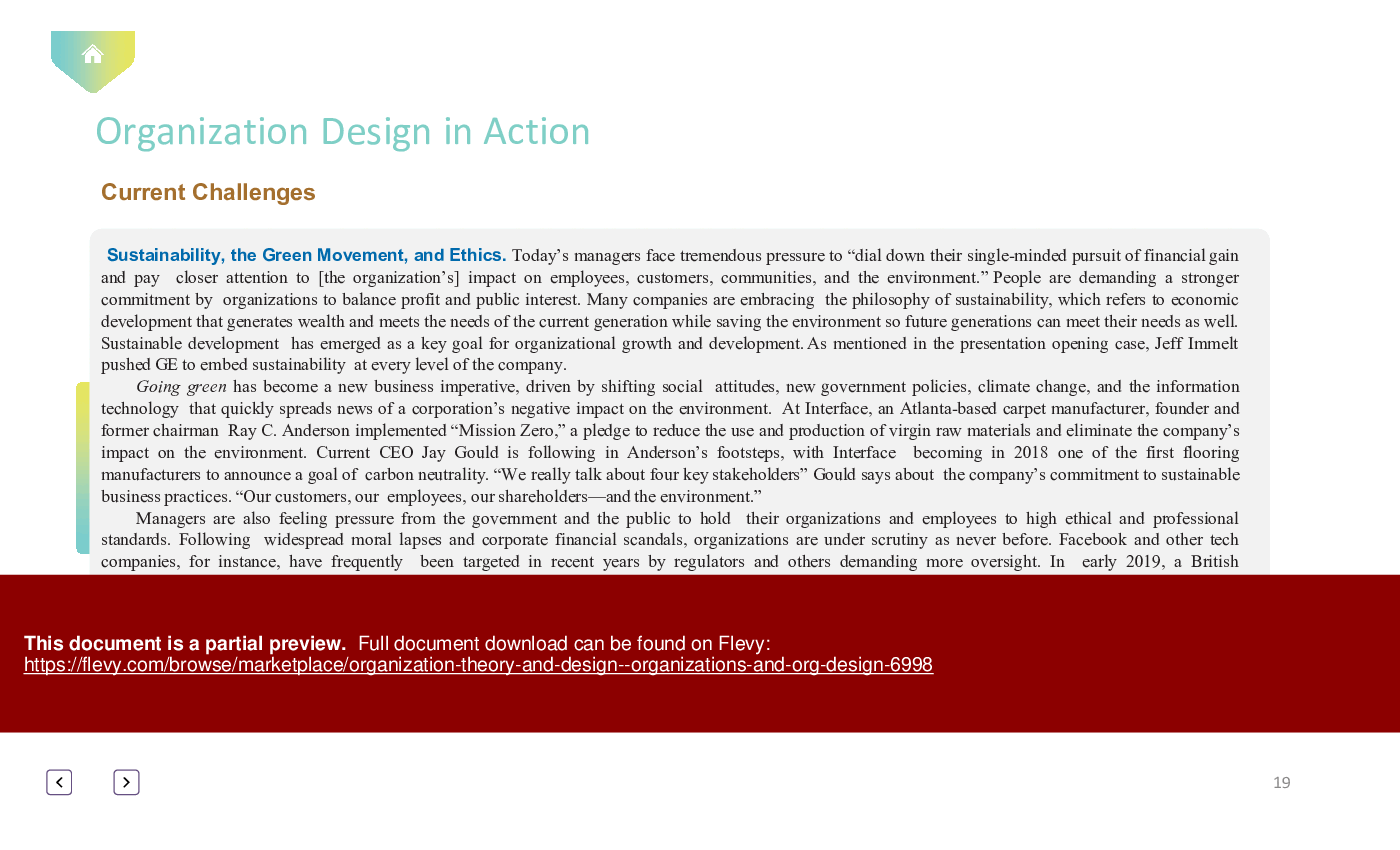
•  Sustainability - The practice of meeting present needs without compromising the ability of future generations to meet their own needs.
•  Bossless Organization - A structure where there are no formal titles or hierarchies, and employees work collaboratively.
•  Stakeholder - Any individual or group that has an interest in the outcomes of an organization.
•  Performance Metrics - Measurements used to assess the effectiveness and efficiency of an organization.
•  Adaptability - The ability of an organization to adjust to changes in its environment.
•  Employee Empowerment - Granting employees the authority to make decisions and take actions within their roles.
•  Innovation - The process of developing new ideas, products, or methods to improve organizational performance.
•  Globalization - The process of increasing interconnectedness among countries and organizations.
•  Ethics - The principles governing the conduct of individuals and organizations in their interactions with stakeholders.
•  Organizational Culture - The shared values, beliefs, and norms that shape the behavior of individuals within an organization.
•  Digital Transformation - The integration of digital technology into all areas of a business, fundamentally changing how it operates and delivers value to customers.
•  Knowledge-Based Work - Work that primarily involves the use of knowledge and expertise to create value.
•  Agility - The ability of an organization to move quickly and easily in response to changes.
•  Collaboration - Working together across departments and teams to achieve common goals.

Source: Best Practices in Organizational Design PowerPoint Slides: Organization Theory & Design - Organizations & Org Design PowerPoint (PPTX) Presentation Slide Deck, RadVector Consulting


$55.00
Developed by a team of experts with global consulting experience at McKinsey, Deloitte, and Capgemini.
Add to Cart
  

ABOUT THE AUTHOR

Additional documents from author: 182

We are a group of aviation experts & specialists (PhDs, Engineers, Pilots, Navigators, ...), leaders in helping organizations to transform their business performance using Methodologies and Principles of Lean, Agile, Six Sigma, and Innovation.

Ask the Author a Question

You must be logged in to contact the author.

Click here to log in Click here register

Did you know?
The average daily rate of a McKinsey consultant is $6,625 (not including expenses). The average price of a Flevy document is $65.


Trusted by over 10,000+ Client Organizations
Since 2012, we have provided business templates to over 10,000 businesses and organizations of all sizes, from startups and small businesses to the Fortune 100, in over 130 countries.
AT&T GE Cisco Intel IBM Coke Dell Toyota HP Nike Samsung Microsoft Astrazeneca JP Morgan KPMG Walgreens Walmart 3M Kaiser Oracle SAP Google E&Y Volvo Bosch Merck Fedex Shell Amgen Eli Lilly Roche AIG Abbott Amazon PwC T-Mobile Broadcom Bayer Pearson Titleist ConEd Pfizer NTT Data Schwab


Read Customer Testimonials

 
"Flevy.com has proven to be an invaluable resource library to our Independent Management Consultancy, supporting and enabling us to better serve our enterprise clients.

The value derived from our [FlevyPro] subscription in terms of the business it has helped to gain far exceeds the investment made, making a subscription a no-brainer for any growing consultancy – or in-house strategy team."

– Dean Carlton, Chief Transformation Officer, Global Village Transformations Pty Ltd.
 
"The wide selection of frameworks is very useful to me as an independent consultant. In fact, it rivals what I had at my disposal at Big 4 Consulting firms in terms of efficacy and organization."

– Julia T., Consulting Firm Owner (Former Manager at Deloitte and Capgemini)
 
"Flevy is our 'go to' resource for management material, at an affordable cost. The Flevy library is comprehensive and the content deep, and typically provides a great foundation for us to further develop and tailor our own service offer."

– Chris McCann, Founder at Resilient.World
 
"As an Independent Management Consultant, I find Flevy to add great value as a source of best practices, templates and information on new trends. Flevy has matured and the quality and quantity of the library is excellent. Lastly the price charged is reasonable, creating a win-win value for "

– Jim Schoen, Principal at FRC Group
 
"Flevy is now a part of my business routine. I visit Flevy at least 3 times each month.

Flevy has become my preferred learning source, because what it provides is practical, current, and useful in this era where the business world is being rewritten.

In today's environment where there are so "

– Omar Hernán Montes Parra, CEO at Quantum SFE
 
"As a young consulting firm, requests for input from clients vary and it's sometimes impossible to provide expert solutions across a broad spectrum of requirements. That was before I discovered Flevy.com.

Through subscription to this invaluable site of a plethora of topics that are key and crucial to consulting, I "

– Nishi Singh, Strategist and MD at NSP Consultants
 
"As a small business owner, the resource material available from FlevyPro has proven to be invaluable. The ability to search for material on demand based our project events and client requirements was great for me and proved very beneficial to my clients. Importantly, being able to easily edit and tailor "

– Michael Duff, Managing Director at Change Strategy (UK)
 
"One of the great discoveries that I have made for my business is the Flevy library of training materials.

As a Lean Transformation Expert, I am always making presentations to clients on a variety of topics: Training, Transformation, Total Productive Maintenance, Culture, Coaching, Tools, Leadership Behavior, etc. Flevy "

– Ed Kemmerling, Senior Lean Transformation Expert at PMG


Customers Also Bought These Documents


Customers Also Like These Documents

Explore Templates on Related Management Topics


Your Recently Viewed Documents
Download our FREE Organization, Change, & Culture, Templates

Download our free compilation of 50+ slides and templates on Organizational Design, Change Management, and Corporate Culture. Methodologies include ADKAR, Burke-Litwin Change Model, McKinsey 7-S, Competing Values Framework, etc.










