
MoSCoW Method   28-slide PPT PowerPoint presentation slide deck (PPTX)
$29.00

MoSCoW  Method (28-slide PPT PowerPoint presentation slide deck (PPTX)) Preview Image
Log in to unlock full preview.
MoSCoW  Method (28-slide PPT PowerPoint presentation slide deck (PPTX)) Preview Image
Arrow   Click main image to view in full screen.

MoSCoW Method (PowerPoint PPTX Slide Deck)

PowerPoint (PPTX) 28 Slides FlevyPro Document

#2 in Decision Making $29.00
FlevyPro price: FREE (included in subscription)
This framework is developed by a team of former McKinsey and Big 4 consultants. The presentation follows the headline-body-bumper slide format used by global consulting firms.
Add to Cart


Immediate download
Free lifetime updates

PROJECT MANAGEMENT PPT DESCRIPTION

Editor Summary The MoSCoW Method is a 28-slide PowerPoint (PPTX) by LearnPPT Consulting that explains the 4 prioritization categories: Must Have, Should Have, Could Have, and Won't Have. Read more

Organizations in manufacturing, healthcare, and technology often encounter project delays due to several factors including intricate processes, budget overruns due to poor resource management, and unmet objectives caused by changing priorities. These common issues underscore the importance of effective prioritization strategies like the MoSCoW Method.

The MoSCoW Method, pioneered by Dai Clegg in the 1990s, provides a systematic way to prioritize requirements, focusing on critical elements first, while allowing for flexibility. This approach enables organizations to align project goals with strategic objectives, manage timelines and budgets more effectively, and improve the organizations' overall performance.

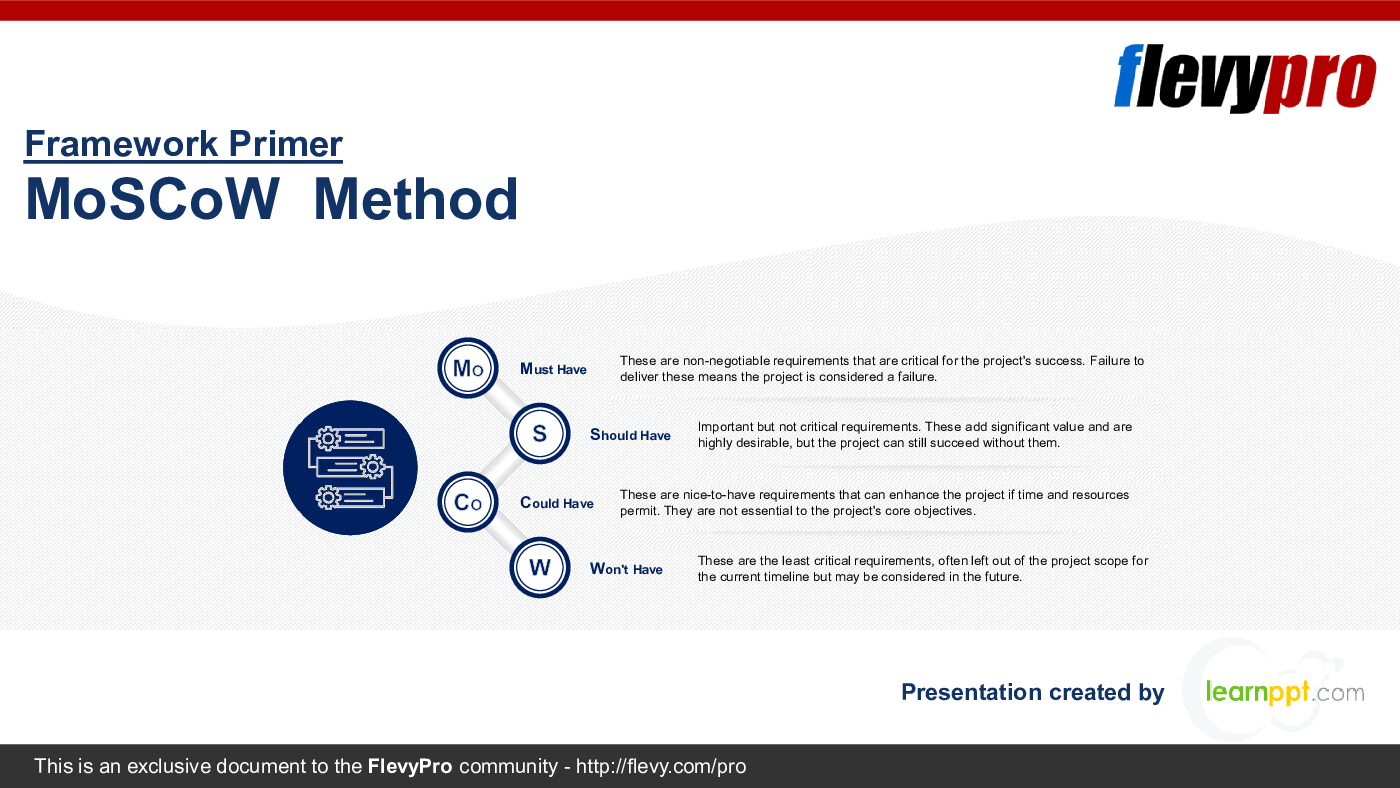
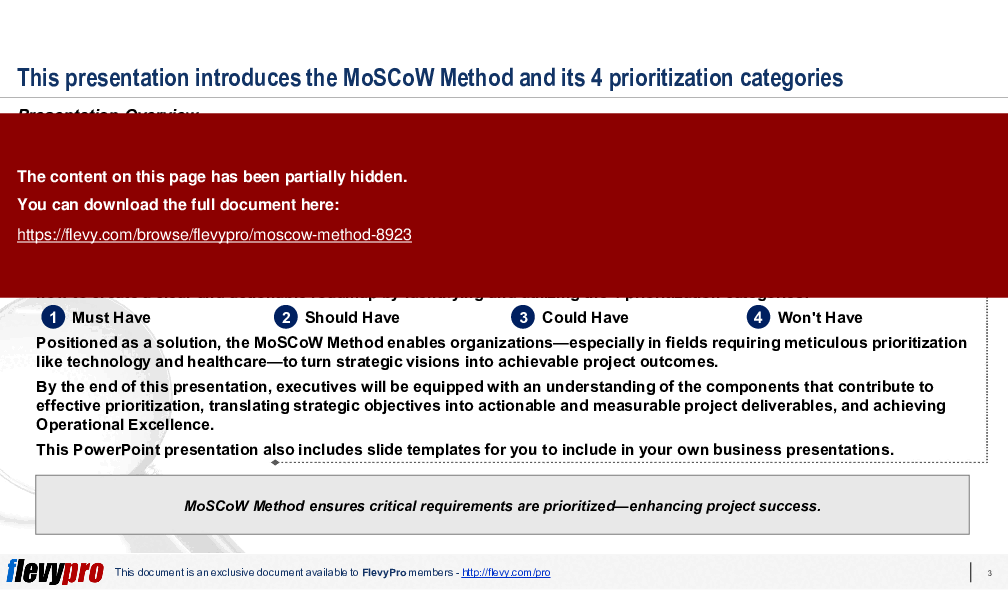
In this presentation, we will explore the MoSCoW Method, focusing on best practices for implementation. We will demonstrate how to create a clear and actionable roadmap by identifying and utilizing the 4 prioritization categories:

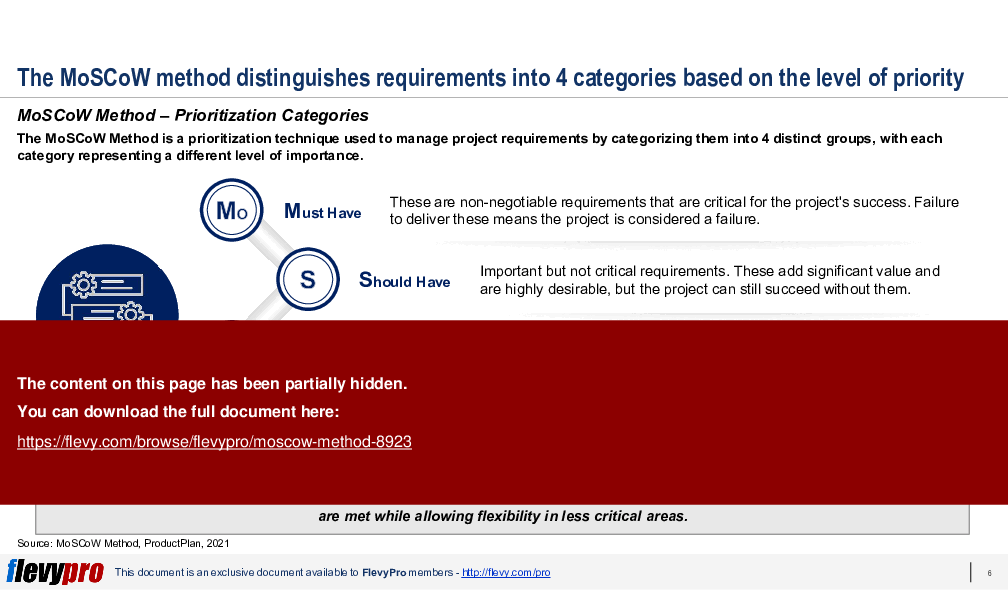
[Mo] Must Have – These are non-negotiable requirements that are critical for the project's success. Failure to deliver these means the project is considered a failure.

[S] Should Have – Important but not critical requirements. These add significant value and are highly desirable, but the project can still succeed without them.

[Co] Could Have – These are nice-to-have requirements that can enhance the project if time and resources permit. They are not essential to the project's core objectives.

[W] Won't Have – These are the least critical requirements, often left out of the project scope for the current timeline but may be considered in the future.

Positioned as a solution, the MoSCoW Method enables organizations—especially in fields requiring meticulous prioritization like technology and healthcare—to turn strategic visions into achievable project outcomes.

By the end of this presentation, executives will be equipped with an understanding of the components that contribute to effective prioritization, translating strategic objectives into actionable and measurable project deliverables, and achieving Operational Excellence.

This PowerPoint presentation also includes slide templates for you to include in your own business presentations.

The MoSCoW Method is not just a prioritization tool; it's a strategic framework that empowers teams to focus on what truly matters in their projects. By leveraging this method, organizations can streamline their decision-making processes and enhance collaboration among stakeholders, ensuring that critical tasks are completed efficiently and effectively.

Got a question about this document? Email us at flevypro@flevy.com.

MARCUS OVERVIEW

This synopsis was written by Marcus [?] based on the analysis of the full 28-slide presentation.


Executive Summary
The MoSCoW Method PowerPoint presentation serves as a comprehensive guide for project prioritization, focusing on the 4 essential categories: Must Have, Should Have, Could Have, and Won't Have. Designed for corporate executives and project managers, this presentation outlines how to effectively implement the MoSCoW Method to enhance project success by ensuring that critical requirements are prioritized. By utilizing this framework, organizations can align project goals with strategic objectives, manage timelines and budgets more effectively, and improve overall performance. The presentation also includes templates for seamless integration into business presentations.

Who This Is For and When to Use
•  Project Managers overseeing project prioritization and execution
•  Business Analysts responsible for requirement gathering and analysis
•  Executives aiming to align project outcomes with strategic goals
•  Teams in manufacturing, healthcare, and technology sectors facing project delays
•  Stakeholders involved in project governance and decision-making

Best-fit moments to use this deck:
•  During project kickoff meetings to establish prioritization frameworks
•  In strategic planning sessions to align project goals with organizational objectives
•  When addressing project delays or budget overruns to refocus priorities
•  For training sessions on effective project management techniques

Learning Objectives
•  Define the MoSCoW Method and its 4 prioritization categories
•  Build a clear roadmap for project deliverables using the MoSCoW framework
•  Establish criteria for categorizing project requirements effectively
•  Identify and prioritize critical tasks to enhance project outcomes
•  Communicate project priorities to stakeholders for alignment and buy-in
•  Implement best practices for using the MoSCoW Method in both Agile and Waterfall projects

Table of Contents
•  Overview (page 3)
•  MoSCoW Method (page 5)
•  MoSCoW Prioritization Categories (page 6)
•  MoSCoW Method Implementation (page 15)
•  Slide Design Structure & Templates (page 19)

Primary Topics Covered
•  MoSCoW Method Overview - Introduces the MoSCoW Method as a prioritization technique for managing project requirements effectively.
•  Prioritization Categories - Details the 4 categories: Must Have, Should Have, Could Have, and Won't Have, and their significance in project management.
•  Implementation Best Practices - Discusses strategies for effectively integrating the MoSCoW Method into both Agile and Waterfall project management frameworks.
•  Stakeholder Engagement - Emphasizes the importance of involving stakeholders early to ensure alignment on project priorities.
•  Case Study - Provides a practical example of Verizon's implementation of the MoSCoW Method and its impact on project outcomes.
•  Slide Design Templates - Offers templates for structuring presentations using the MoSCoW framework.

Deliverables, Templates, and Tools
•  MoSCoW prioritization template for categorizing project requirements
•  Stakeholder engagement workshop agenda template
•  Best practices checklist for implementing the MoSCoW Method
•  Case study format for documenting project outcomes using the MoSCoW Method
•  Slide design templates for presenting MoSCoW prioritization results
•  Evaluation criteria framework for assessing project requirements

Slide Highlights
•  Overview of the MoSCoW Method and its significance in project management
•  Visual representation of the 4 prioritization categories
•  Step-by-step guide for implementing the MoSCoW Method in project management
•  Case study slide showcasing Verizon's successful application of the MoSCoW Method
•  Template slides for easy integration into existing presentations

Potential Workshop Agenda
Introduction to MoSCoW Method (30 minutes)
•  Overview of the MoSCoW Method and its benefits
•  Discussion on the importance of prioritization in project management

Hands-on Prioritization Exercise (60 minutes)
•  Participants categorize project requirements using the MoSCoW framework
•  Group discussion on challenges and best practices

Stakeholder Engagement Strategies (30 minutes)
•  Techniques for effective stakeholder communication and alignment
•  Review of case studies and real-world applications

Wrap-up and Q&A (30 minutes)
•  Recap of key takeaways
•  Open floor for questions and further discussion

Customization Guidance
•  Tailor the prioritization categories to fit specific project needs and organizational goals
•  Adjust the stakeholder engagement strategies based on team dynamics and project scope
•  Modify templates to align with company branding and presentation standards
•  Incorporate specific project examples to enhance relatability and engagement

Secondary Topics Covered
•  Agile vs. Waterfall project management methodologies
•  Techniques for effective stakeholder communication
•  Strategies for managing project scope and budget constraints
•  Tools for tracking project progress and prioritization

Topic FAQ

What are the 4 MoSCoW prioritization categories and how do they differ?

The MoSCoW categories are Must Have (non-negotiable requirements critical to project success), Should Have (important, but not essential), Could Have (desirable if time and resources allow), and Won't Have (excluded from the current scope). These categories help teams rank features based on impact and necessity across 4 categories.

How can teams apply the MoSCoW Method in Agile and Waterfall projects?

The MoSCoW Method can be adapted to iterative Agile backlogs by labeling backlog items as Must/Should/Could/Won’t and used in Waterfall during requirements definition and scope control to determine core deliverables. The presentation highlights applicability to both Agile and Waterfall methodologies and includes implementation guidance for each context.

How should I define a "Must Have" requirement for my project?

Define Must Have requirements as those whose absence would render the project a failure or prevent delivery of the core objective. Use clear criteria—regulatory necessity, contractual obligation, or critical business function—and validate with stakeholders to confirm Must Have classification.

What common mistakes should I avoid when using MoSCoW prioritization?

Common mistakes include failing to involve key stakeholders, lacking explicit evaluation criteria, and misclassifying requirements without trade-off discussion. Prevent these by using a stakeholder engagement agenda, an evaluation criteria framework, and documented categorization decisions for transparency and alignment.

What should I look for in a MoSCoW prioritization template before buying one?

Look for templates that allow clear labeling of Must/Should/Could/Won’t items, include evaluation criteria for consistent categorization, provide stakeholder workshop materials, and offer presentation-ready slides. Flevy's MoSCoW Method includes a prioritization template, evaluation criteria framework, and slide design templates as deliverables.

How much time should I plan for a MoSCoW stakeholder workshop to prioritize requirements?

A practical workshop agenda in the deck suggests a 30-minute introduction, 60-minute hands-on prioritization exercise, 30-minute stakeholder engagement strategies, and 30-minute wrap-up and Q&A, totaling about 150 minutes for a single session.

I need to reprioritize scope after a budget cut — what practical steps should I take?

Reassess requirements with stakeholders, apply the MoSCoW categories to identify non-negotiables, use evaluation criteria to rank items, and document deferred Won't Have items for future consideration. The Flevy MoSCoW Method provides a prioritization template and best-practices checklist to guide this process.

Which roles should be involved when applying MoSCoW to a healthcare IT project?

Include the project manager to lead prioritization, business analysts to map and categorize requirements, executives to align priorities with strategy, and key clinical or operational stakeholders for domain validation. The deck also supplies a stakeholder engagement workshop agenda template to structure these sessions.

Document FAQ
These are questions addressed within this presentation.

What is the MoSCoW Method?
The MoSCoW Method is a prioritization framework that categorizes project requirements into 4 groups: Must Have, Should Have, Could Have, and Won't Have, to facilitate effective project management.

How can the MoSCoW Method improve project outcomes?
By prioritizing critical requirements, the MoSCoW Method helps ensure that essential tasks are completed first, aligning project goals with strategic objectives and improving overall performance.

Who should be involved in the prioritization process?
All stakeholders, including project managers, business analysts, and team members, should be involved to ensure alignment and buy-in on project priorities.

Can the MoSCoW Method be used in Agile projects?
Yes, the MoSCoW Method is highly adaptable and can be effectively implemented in both Agile and Waterfall project management frameworks.

What are the benefits of using the MoSCoW Method?
Benefits include improved resource allocation, better alignment with strategic goals, enhanced stakeholder satisfaction, and a clearer focus on critical project tasks.

How do I categorize requirements using the MoSCoW Method?
Requirements are categorized based on their importance to the project's success, with Must Have being non-negotiable, Should Have adding significant value, Could Have being nice-to-have, and Won't Have being deferred.

What is a practical example of the MoSCoW Method in action?
The case study of Verizon illustrates how the MoSCoW Method was used to prioritize tasks for developing a new customer service platform, leading to timely delivery and improved stakeholder satisfaction.

How can I integrate the MoSCoW Method into my existing project management practices?
Utilize the provided templates and best practices to adapt the MoSCoW Method to your specific project needs, ensuring stakeholder engagement and alignment throughout the process.

Glossary
•  MoSCoW Method - A prioritization technique categorizing project requirements into Must Have, Should Have, Could Have, and Won't Have.
•  Must Have - Non-negotiable requirements critical for project success.
•  Should Have - Important requirements that add value, but are not critical.
•  Could Have - Desirable enhancements that are not essential.
•  Won't Have - Requirements excluded from the current project scope.
•  Stakeholder Engagement - Involving relevant parties in the decision-making process to ensure alignment.
•  Agile Methodology - An iterative approach to project management emphasizing flexibility and customer feedback.
•  Waterfall Methodology - A sequential project management approach where phases are completed one after another.
•  Prioritization - The process of ranking tasks or requirements based on their importance.
•  Project Management - The discipline of planning, executing, and overseeing projects to achieve specific goals.
•  Resource Allocation - The process of assigning available resources in an efficient manner.
•  Scope Management - The process of defining and controlling what is included and excluded in the project.
•  Budget Constraints - Limitations on the financial resources available for a project.
•  Requirements Gathering - The process of collecting and defining the needs of stakeholders for a project.
•  Performance Improvement - Enhancing the efficiency and effectiveness of project outcomes.
•  Project Deliverables - Specific outcomes or outputs that are produced as part of a project.
•  Operational Excellence - The execution of the business strategy more consistently and reliably than the competition.
•  Consensus-Building - The process of reaching agreement among stakeholders.
•  Feedback Loop - A system where outputs are used as inputs for future actions or decisions.
•  Task Prioritization - The process of determining the order in which tasks should be completed based on their importance and urgency.

PROJECT MANAGEMENT PPT SLIDES

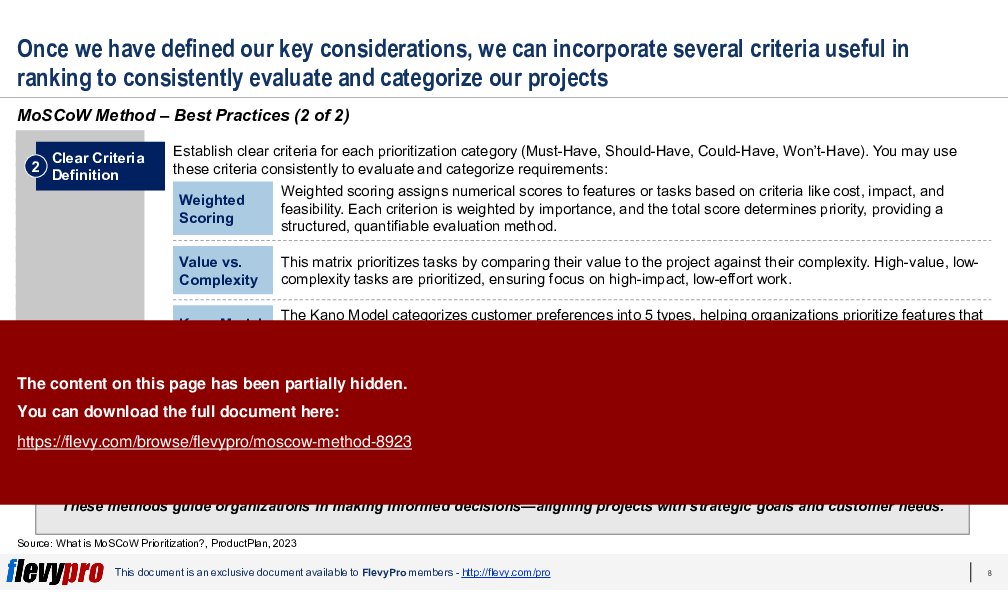
Prioritization Framework: MoSCoW Method Overview

Verizon Case Study: MoSCoW Method Implementation Insights

Defining 'Won't Have' Requirements in Prioritization

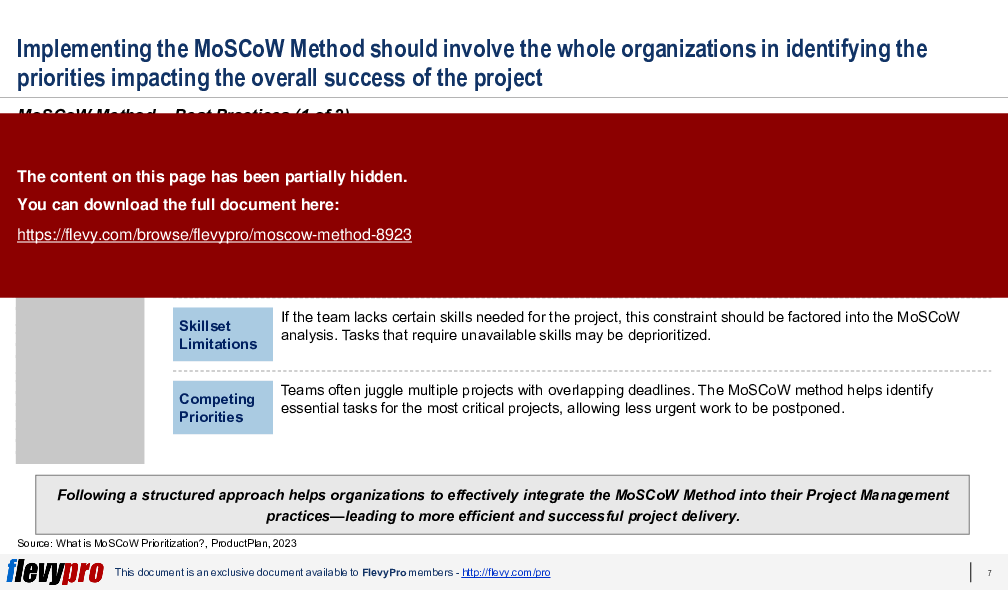
Best Practices for MoSCoW Method in Waterfall Projects

Source: Best Practices in Decision Making, Project Management PowerPoint Slides: MoSCoW Method PowerPoint (PPTX) Presentation Slide Deck, LearnPPT Consulting


$29.00
FlevyPro price: FREE (included in subscription)
This framework is developed by a team of former McKinsey and Big 4 consultants. The presentation follows the headline-body-bumper slide format used by global consulting firms.
Add to Cart
  

Did you need more documents?

Consider a FlevyPro subscription from $39/month. View plans here.

For $10.00 more, you can download this document plus 2 more FlevyPro documents. That's just $13 each.

ABOUT FLEVYPRO

This document is part of the FlevyPro Library, a curated knowledge base of documents for our FlevyPro subscribers.

FlevyPro is a subscription service for on-demand business frameworks and analysis tools. FlevyPro subscribers receive access to an exclusive library of curated business documents—business framework primers, presentation templates, Lean Six Sigma tools, and more—among other exclusive benefits.

Click here to learn more about FlevyPro and its benefits.

Did you know?
The average daily rate of a McKinsey consultant is $6,625 (not including expenses). The average price of a Flevy document is $65.


Trusted by over 10,000+ Client Organizations
Since 2012, we have provided business templates to over 10,000 businesses and organizations of all sizes, from startups and small businesses to the Fortune 100, in over 130 countries.
AT&T GE Cisco Intel IBM Coke Dell Toyota HP Nike Samsung Microsoft Astrazeneca JP Morgan KPMG Walgreens Walmart 3M Kaiser Oracle SAP Google E&Y Volvo Bosch Merck Fedex Shell Amgen Eli Lilly Roche AIG Abbott Amazon PwC T-Mobile Broadcom Bayer Pearson Titleist ConEd Pfizer NTT Data Schwab


Read Customer Testimonials

 
"As an Independent Management Consultant, I find Flevy to add great value as a source of best practices, templates and information on new trends. Flevy has matured and the quality and quantity of the library is excellent. Lastly the price charged is reasonable, creating a win-win value for "

– Jim Schoen, Principal at FRC Group
 
"FlevyPro provides business frameworks from many of the global giants in management consulting that allow you to provide best in class solutions for your clients."

– David Harris, Managing Director at Futures Strategy
 
"If you are looking for great resources to save time with your business presentations, Flevy is truly a value-added resource. Flevy has done all the work for you and we will continue to utilize Flevy as a source to extract up-to-date information and data for our virtual and onsite presentations!"

– Debbi Saffo, President at The NiKhar Group
 
"The wide selection of frameworks is very useful to me as an independent consultant. In fact, it rivals what I had at my disposal at Big 4 Consulting firms in terms of efficacy and organization."

– Julia T., Consulting Firm Owner (Former Manager at Deloitte and Capgemini)
 
"As a consulting firm, we had been creating subject matter training materials for our people and found the excellent materials on Flevy, which saved us 100's of hours of re-creating what already exists on the Flevy materials we purchased."

– Michael Evans, Managing Director at Newport LLC
 
"I have used Flevy services for a number of years and have never, ever been disappointed. As a matter of fact, David and his team continue, time after time, to impress me with their willingness to assist and in the real sense of the word. I have concluded in fact "

– Roberto Pelliccia, Senior Executive in International Hospitality
 
"Flevy is now a part of my business routine. I visit Flevy at least 3 times each month.

Flevy has become my preferred learning source, because what it provides is practical, current, and useful in this era where the business world is being rewritten.

In today's environment where there are so "

– Omar Hernán Montes Parra, CEO at Quantum SFE
 
"One of the great discoveries that I have made for my business is the Flevy library of training materials.

As a Lean Transformation Expert, I am always making presentations to clients on a variety of topics: Training, Transformation, Total Productive Maintenance, Culture, Coaching, Tools, Leadership Behavior, etc. Flevy "

– Ed Kemmerling, Senior Lean Transformation Expert at PMG


Customers Also Bought These Documents


Customers Also Like These Documents

Explore Templates on Related Management Topics


Your Recently Viewed Documents
Receive our FREE presentation on Operational Excellence

This 50-slide presentation provides a high-level introduction to the 4 Building Blocks of Operational Excellence. Achieving OpEx requires the implementation of a Business Execution System that integrates these 4 building blocks.