
Unlocking the Power of Marketing Knowledge
A Path to Mastery
This Marketing Study Guide is an invaluable resource meticulously crafted to facilitate a profound understanding and effective preparation for marketing-related courses, exams, or projects. It serves as a structured roadmap, condensing key concepts, theories, and practical applications into a user-friendly format. Its purpose is to empower students and learners in mastering the intricacies of marketing.
Your Key to Success
Whether used for exam preparation, course supplementation, or deepening marketing knowledge, this well-structured study guide significantly enhances the learning experience. In the ever-evolving field of marketing, study guides provide a strong foundation that enables learners to remain current with industry trends and practices. This, in turn, equips them for success in academic pursuits and future marketing endeavors.
Course Objectives:
1. Sustaining Customer Relationships: Unveil marketing strategies that nurture lasting customer connections.
2. Value Proposition Mastery: Craft compelling value propositions rooted in statistical analysis.
3. Merit Assessment: Evaluate the tangible and intangible benefits of offerings.
4. Pricing Power: Analyze the impact of pricing on performance ratios and profitability.
5. Retail vs. Wholesale Logistics: Compare the logistics intricacies of retailers and wholesalers.
6. Integrated Marketing Critique: Offer constructive critiques of a company's integrated marketing communications.
7. Global Marketing Ethics: Assess global marketing decisions through a lens of local and ethical considerations.
A Multifaceted Learning Companion
This 109-slide study guide accommodates diverse learning styles, allowing engagement with the material at one's preferred pace and method. It's your key to unlocking the world of marketing and achieving mastery in this dynamic field.
Got a question about the product? Email us at support@flevy.com or ask the author directly by using the "Ask the Author a Question" form. If you cannot view the preview above this document description, go here to view the large preview instead.
Executive Summary
The Marketing Study Guide is an essential resource designed to equip professionals with the knowledge and tools necessary for effective marketing strategies. Developed by a team of experts with extensive consulting experience at McKinsey, Deloitte, and Capgemini, this guide covers critical aspects of marketing, including customer relationship management, value proposition creation, pricing strategies, and integrated marketing communications. Users will gain insights into assessing both tangible and intangible merits of offerings, enabling them to make informed decisions that enhance profitability and market positioning.
Who This Is For and When to Use
• Marketing executives and managers responsible for strategic planning and execution
• Business analysts focused on market research and consumer behavior
• Product managers involved in product development and lifecycle management
• Sales professionals looking to enhance their understanding of marketing principles
Best-fit moments to use this deck:
• During strategic planning sessions to align marketing objectives with business goals
• When developing new marketing campaigns or evaluating existing ones
• For training sessions aimed at enhancing team knowledge on marketing fundamentals
• In workshops focused on customer relationship management and value proposition development
Learning Objectives
• Define marketing strategies that sustain customer relationships
• Create a compelling value proposition based on statistical analysis
• Assess the tangible and intangible merits of a product offering
• Analyze the impact of pricing on performance ratios and profitability
• Compare logistics between retailers and wholesalers
• Critique a company’s integrated marketing communications strategy
• Evaluate global marketing decisions considering local and ethical factors
Table of Contents
• Marketing Overview (page 1)
• Research and Buying Behaviors (page 2)
• Research and Development (page 3)
• Pricing and Profit (page 4)
• Distribution Channels (page 5)
• Integrated Marketing and Sales (page 6)
• Ethics and Globalization (page 7)
Primary Topics Covered
• Marketing Strategies - Techniques for building and sustaining customer relationships through effective marketing practices.
• Value Proposition Creation - Methods for developing a value proposition that meets customer needs based on data analysis.
• SWOT Analysis - A framework for assessing strengths, weaknesses, opportunities, and threats in marketing contexts.
• Pricing Strategies - Approaches for setting prices based on competition, customer perceptions, and cost considerations.
• Distribution Channels - Insights into the logistics and efficiency of various distribution methods, including direct and indirect channels.
• Integrated Marketing Communications - Strategies for ensuring consistent messaging across all marketing channels to enhance brand perception.
Deliverables, Templates, and Tools
• SWOT analysis template for evaluating marketing strategies
• Value proposition development framework
• Pricing strategy worksheet to assess various pricing models
• Distribution channel analysis tool for comparing logistics options
• Integrated marketing communications checklist for campaign planning
• Customer relationship management (CRM) guidelines for enhancing customer loyalty
Slide Highlights
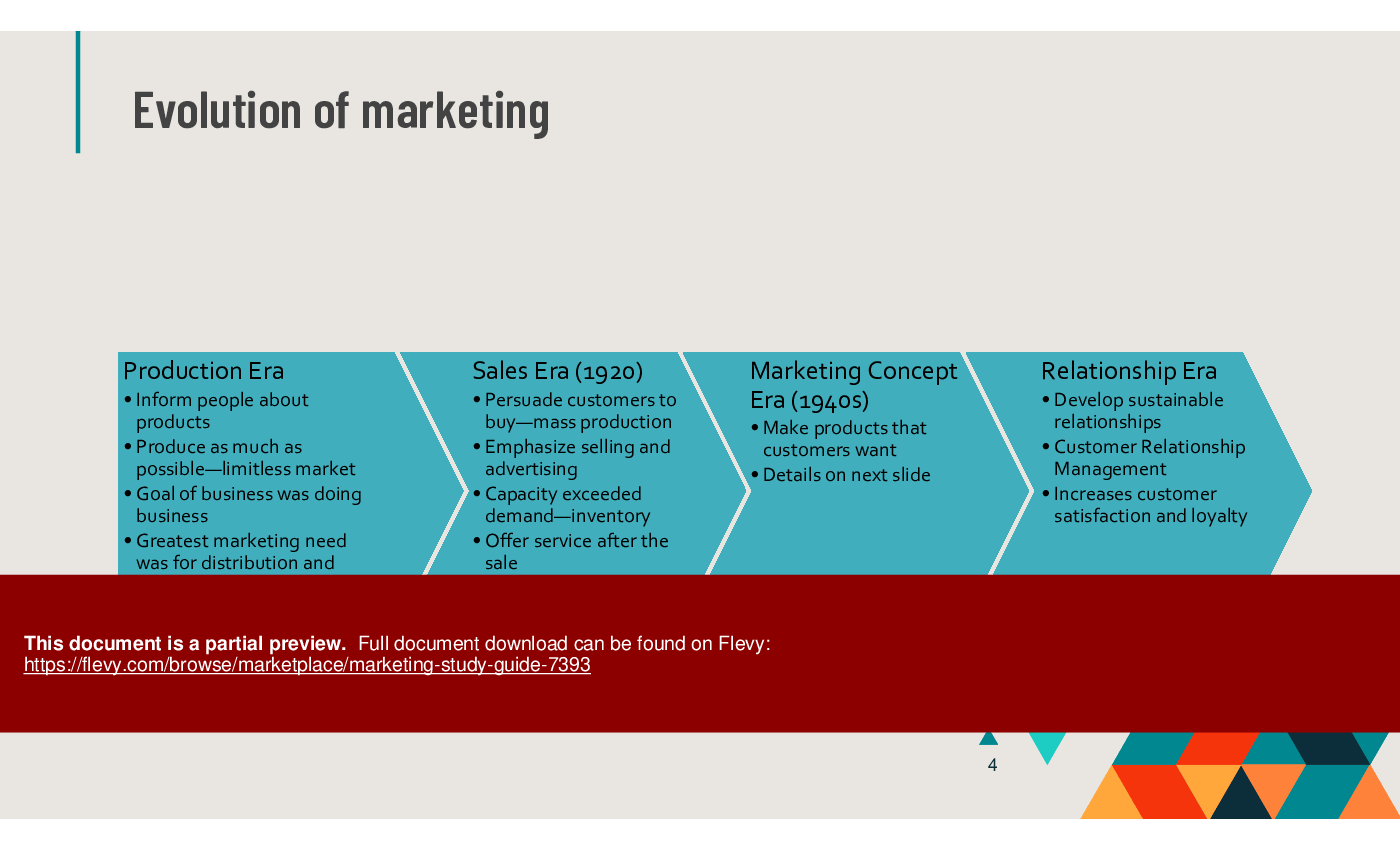
• Overview of the evolution of marketing from the production era to the relationship era
• Detailed SWOT analysis framework for strategic marketing planning
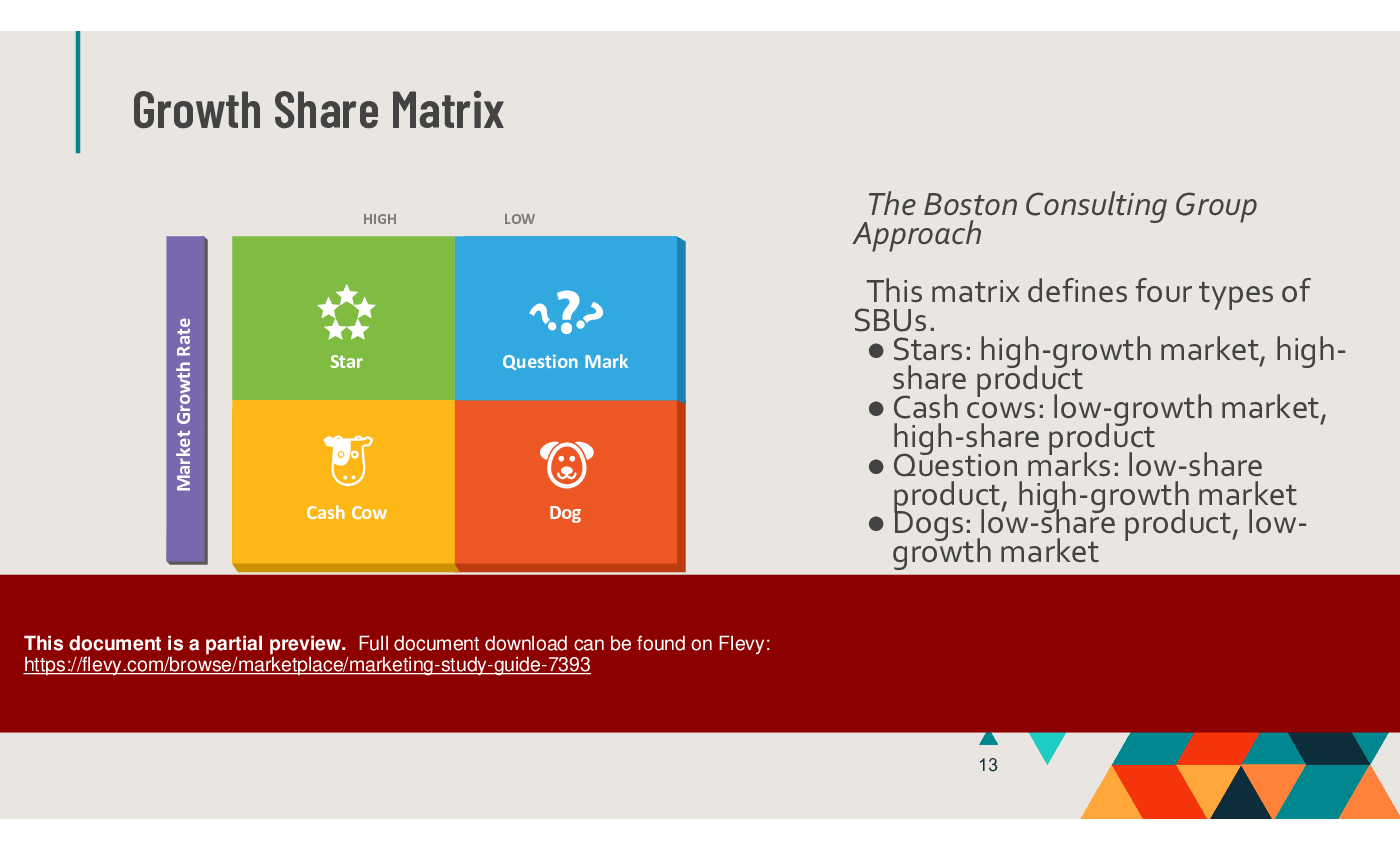
• Visual representation of the Boston Consulting Group's Growth Share Matrix
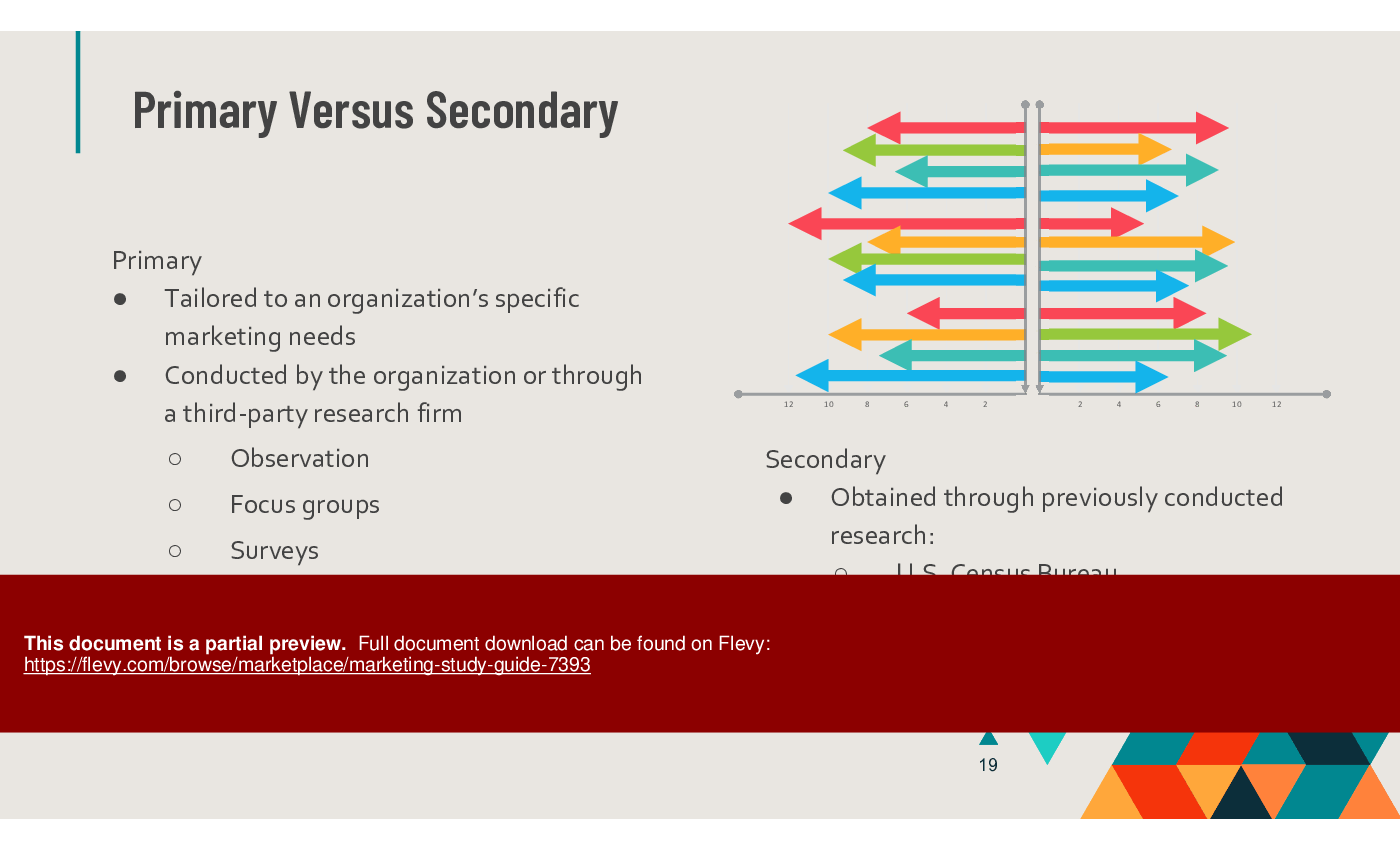
• Comparative analysis of primary versus secondary research methods
• Insights into consumer buying behavior and decision-making processes
Potential Workshop Agenda
Marketing Strategy Development Session (90 minutes)
• Discuss current marketing strategies and their effectiveness
• Identify areas for improvement based on SWOT analysis
• Develop actionable plans to enhance customer relationships
Value Proposition Workshop (60 minutes)
• Review existing value propositions and their alignment with customer needs
• Create new value propositions using statistical analysis
• Present and critique proposed value propositions
Pricing Strategy Discussion (45 minutes)
• Analyze current pricing strategies and their impact on profitability
• Explore alternative pricing models and their potential benefits
• Develop a pricing strategy framework for future products
Customization Guidance
• Tailor the marketing strategies to align with specific industry needs and customer demographics
• Adjust the SWOT analysis framework to reflect unique organizational strengths and weaknesses
• Modify pricing strategies based on competitive landscape and consumer behavior insights
• Adapt integrated marketing communications plans to suit regional market preferences and cultural considerations
Secondary Topics Covered
• Consumer behavior analysis and its impact on marketing strategies
• The role of technology in modern marketing practices
• Ethical considerations in marketing and their implications for brand reputation
• Global marketing strategies and their adaptation to local markets
Topic FAQ
Document FAQ
These are questions addressed within this presentation.
What is the primary focus of the Marketing Study Guide?
The guide focuses on equipping professionals with the knowledge and tools necessary for effective marketing strategies, including customer relationship management and value proposition development.
Who can benefit from this guide?
Marketing executives, business analysts, product managers, and sales professionals can all benefit from the insights and frameworks provided in this guide.
How does the guide address pricing strategies?
It provides various approaches for setting prices based on competition, customer perceptions, and cost considerations, helping users to make informed pricing decisions.
What is the significance of the SWOT analysis in marketing?
SWOT analysis helps organizations assess their internal strengths and weaknesses, as well as external opportunities and threats, enabling better strategic planning.
How can this guide assist in developing a value proposition?
The guide outlines methods for creating a compelling value proposition based on statistical analysis, ensuring alignment with customer needs.
What role does integrated marketing communications play?
Integrated marketing communications ensure consistent messaging across all marketing channels, enhancing brand perception and customer engagement.
How can the guide be customized for specific industries?
Users can tailor marketing strategies, SWOT analyses, and pricing models to reflect the unique characteristics and demands of their specific industry.
What are the key learning outcomes from this guide?
Users will learn to define marketing strategies, create value propositions, assess product merits, analyze pricing impacts, and evaluate global marketing decisions.
Glossary
• Value Proposition - A statement that outlines the unique benefits and value a product offers to customers.
• SWOT Analysis - A strategic planning tool used to identify strengths, weaknesses, opportunities, and threats.
• Integrated Marketing Communications - A strategy that ensures all marketing communications are consistent and relevant to the target audience.
• Customer Relationship Management (CRM) - A system for managing a company's interactions with current and potential customers.
• Market Segmentation - The process of dividing a market into distinct groups of buyers with different needs or characteristics.
• Pricing Strategy - The method used by a company to price its products or services based on various factors.
• Distribution Channels - The paths through which products or services flow from the producer to the consumer.
• Consumer Behavior - The study of how individuals make decisions to spend their available resources on consumption-related items.
• Ethical Marketing - Marketing practices that consider the moral implications of marketing strategies and actions.
• Global Marketing - The process of adjusting marketing strategies to accommodate the unique characteristics of different international markets.
• Brand Equity - The value added to a product by having a well-known brand name.
• Market Research - The systematic gathering, recording, and analyzing of data about customers, competitors, and the market.
Source: Best Practices in Marketing Plan Development, Brand Strategy PowerPoint Slides: Marketing Study Guide PowerPoint (PPTX) Presentation Slide Deck, RadVector Consulting
|
Download our FREE Strategy & Transformation Framework Templates
Download our free compilation of 50+ Strategy & Transformation slides and templates. Frameworks include McKinsey 7-S, Balanced Scorecard, Disruptive Innovation, BCG Curve, and many more. |










