What are the core Agile principles I should teach teams first?
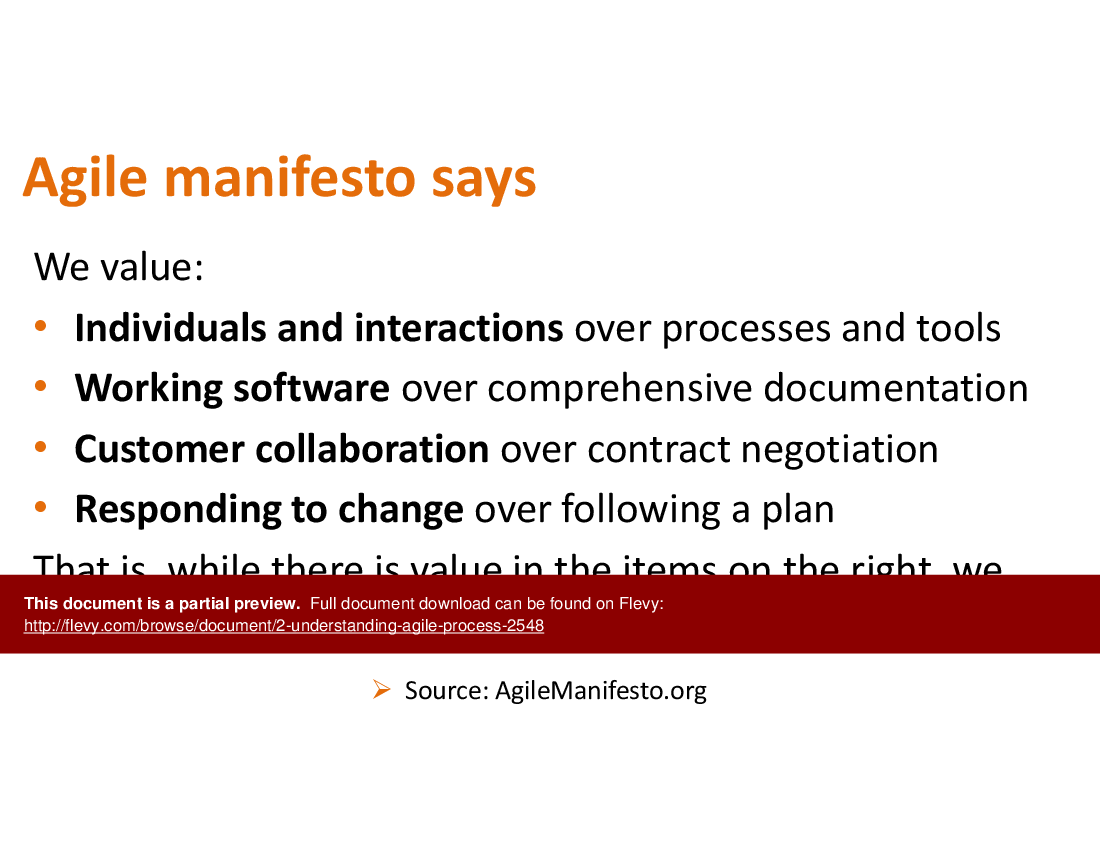
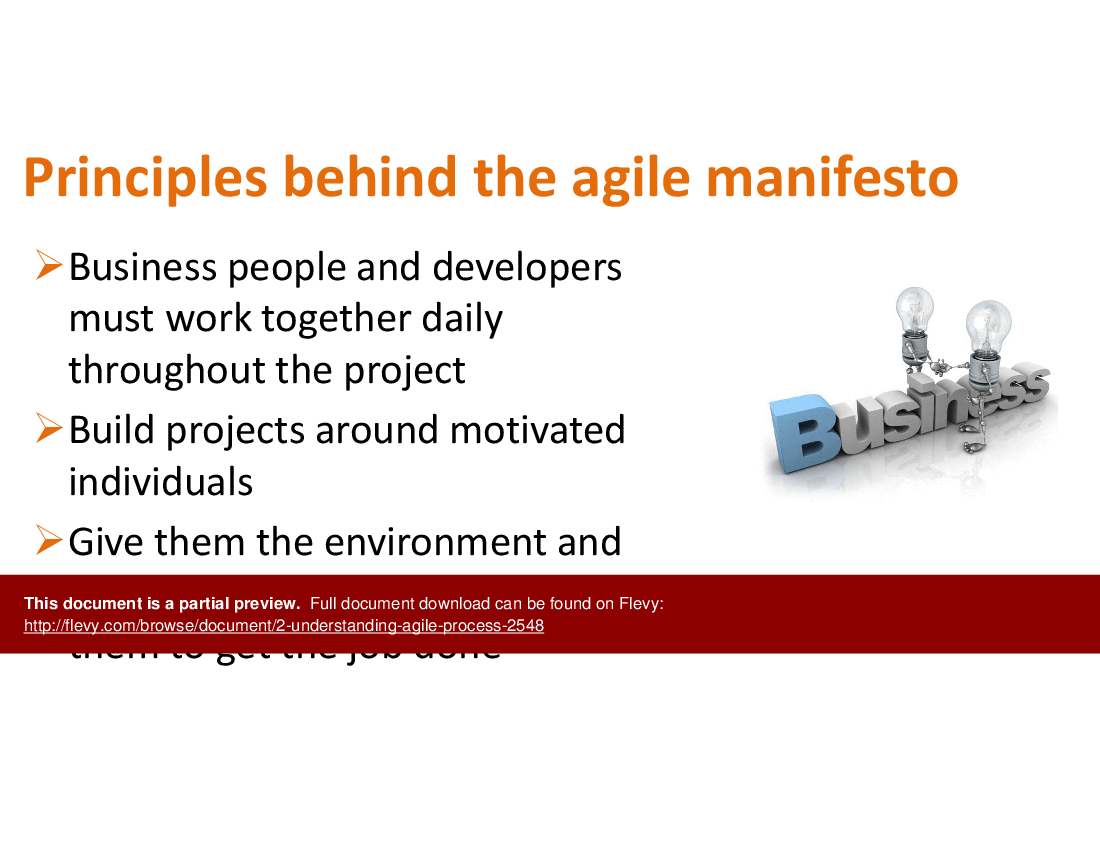
Agile emphasizes iterative development, delivering value incrementally, adapting to changing requirements, and close collaboration between stakeholders and teams. It also prioritizes frequent feedback and continuous improvement through regular ceremonies like sprint reviews and retrospectives, highlighting iterative development as a central attribute.
How are roles defined in Scrum and who does what?
Scrum defines 3 primary roles: the Product Owner (prioritizes and owns the product backlog), the Scrum Master (facilitates the process and removes impediments), and Team Members (deliver the work). Agile Module 2: Understanding Agile Process outlines responsibilities for each of these roles and their interactions, naming Product Owner, Scrum Master, and Team Members.
How long should sprints be and what activities occur in a sprint?
A sprint is a time-boxed period in which the team completes a set of user stories; typical durations are one to 4 weeks. Key sprint activities include sprint planning, execution of sprint backlog tasks, daily stand-ups, sprint review with stakeholders, and a retrospective for improvement, lasting 1–4 weeks.
How do I write effective user stories and acceptance criteria?
Effective user stories are short descriptions from the end-user perspective that state what the user needs and why. They should include clear acceptance criteria to define when a story is complete. Practical practice uses a structured user story template to capture the who, what, and why and acceptance conditions, ending with a user story template.
What should I look for when buying an Agile training deck or module?
Look for content that covers Agile principles and the Agile Manifesto, a clear Scrum overview, roles and responsibilities, user story guidance, sprint planning and execution, and included artifacts or templates such as sprint backlogs and burn down charts. Agile Module 2: Understanding Agile Process includes these sections and tools, including a burn down chart.
How long should I plan for workshops to introduce Scrum to a team?
Workshop length depends on scope: an introductory Agile session can be about 60 minutes, a roles-and-user-story workshop around 90 minutes, and a hands-on sprint planning and execution session about 120 minutes. The product provides a suggested agenda that maps to 60, 90, and 120 minute sessions, with the longest at 120 minutes.
How can retrospectives be structured to improve team performance?
Retrospectives are held at the end of each sprint to reflect on what went well, what didn’t, and actionable improvements. Use a structured retrospective template to capture observations, assign owners for improvement actions, and follow up in subsequent sprints to maintain continuous improvement, using a retrospective template.
Are templates like sprint backlogs and task boards worth using instead of building from scratch?
Prebuilt templates standardize artifacts, reduce setup time, and help teams adopt consistent practices such as tracking scope and progress. Common templates include sprint backlog templates, task board templates, burn down/up charts, and a Definition of Done checklist; Agile Module 2: Understanding Agile Process provides a sprint backlog template.



 Click main image to view in full screen. Unlock all 24 preview images:




























