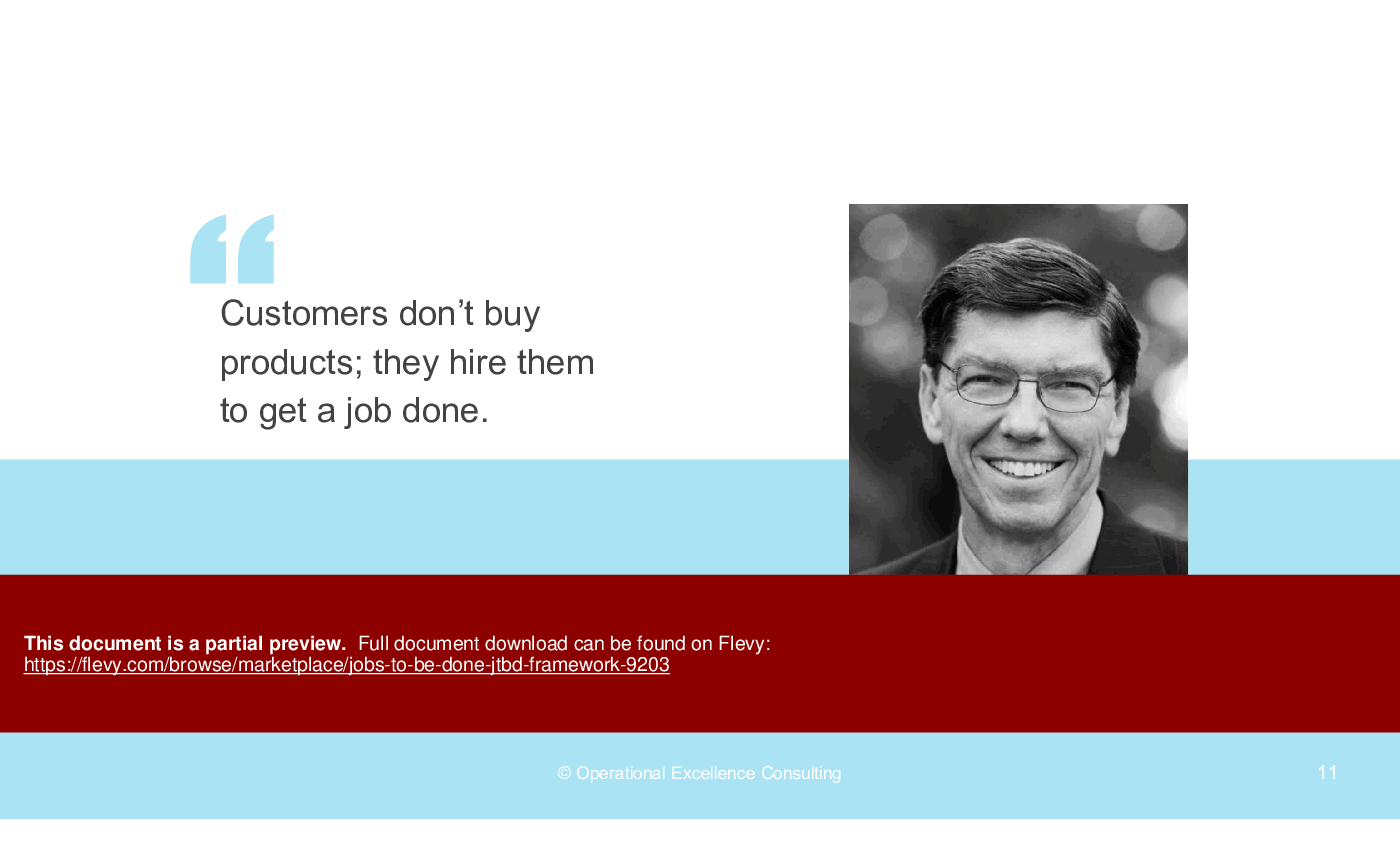

In today's competitive market, success goes beyond having a great product—it's about solving real customer problems in a way that deeply resonates with their needs and priorities. The Jobs-to-be-Done (JTBD) framework is a powerful approach that shifts the focus from products and features to understanding the actual "jobs" that customers want to accomplish. Developed by innovation expert Clayton Christensen and refined by JTBD strategist Tony Ulwick, this framework empowers companies to build customer-centric solutions by focusing on what drives purchase decisions and long-term product loyalty.

This slide deck delivers an in-depth exploration of the JTBD framework, equipping you with tools and insights to unlock customer value. Learn how to identify and define core functional, emotional, and social jobs through the JTBD Needs Framework, Job Map, and Outcome-Driven Innovation (ODI). With these unique JTBD techniques, teams can design products that fit seamlessly into customers' lives, delivering measurable value and driving satisfaction.
To bring these concepts to life, the deck includes a step-by-step guide for filling out the JTBD Canvas, illustrated with a real-world example of a meal kit delivery service. See how to map the core job-to-be-done, consumption jobs, and related jobs, while pinpointing over-served and under-served customer needs. The JTBD Canvas example helps clarify how each section captures different dimensions of customer priorities, guiding your team to create products that customers will truly value.
Additionally, this deck covers best practices, common pitfalls, and practical case studies, making JTBD implementation clear and actionable across various business functions. Designed for business leaders, strategists, product managers, marketers, and innovation teams, this slide deck serves as a practical guide for transforming customer insights into strategic action.
Key Benefits of JTBD:
✅ Customer-Centric Design: Solutions are built around what matters most to customers, enhancing satisfaction and loyalty.
✅ Clear Focus for Innovation: JTBD enables teams to prioritize features and improvements that drive the highest value.
✅ Strategic Clarity: JTBD fosters cross-functional alignment, helping teams work toward shared customer-centered goals.
LEARNING OBJECTIVES
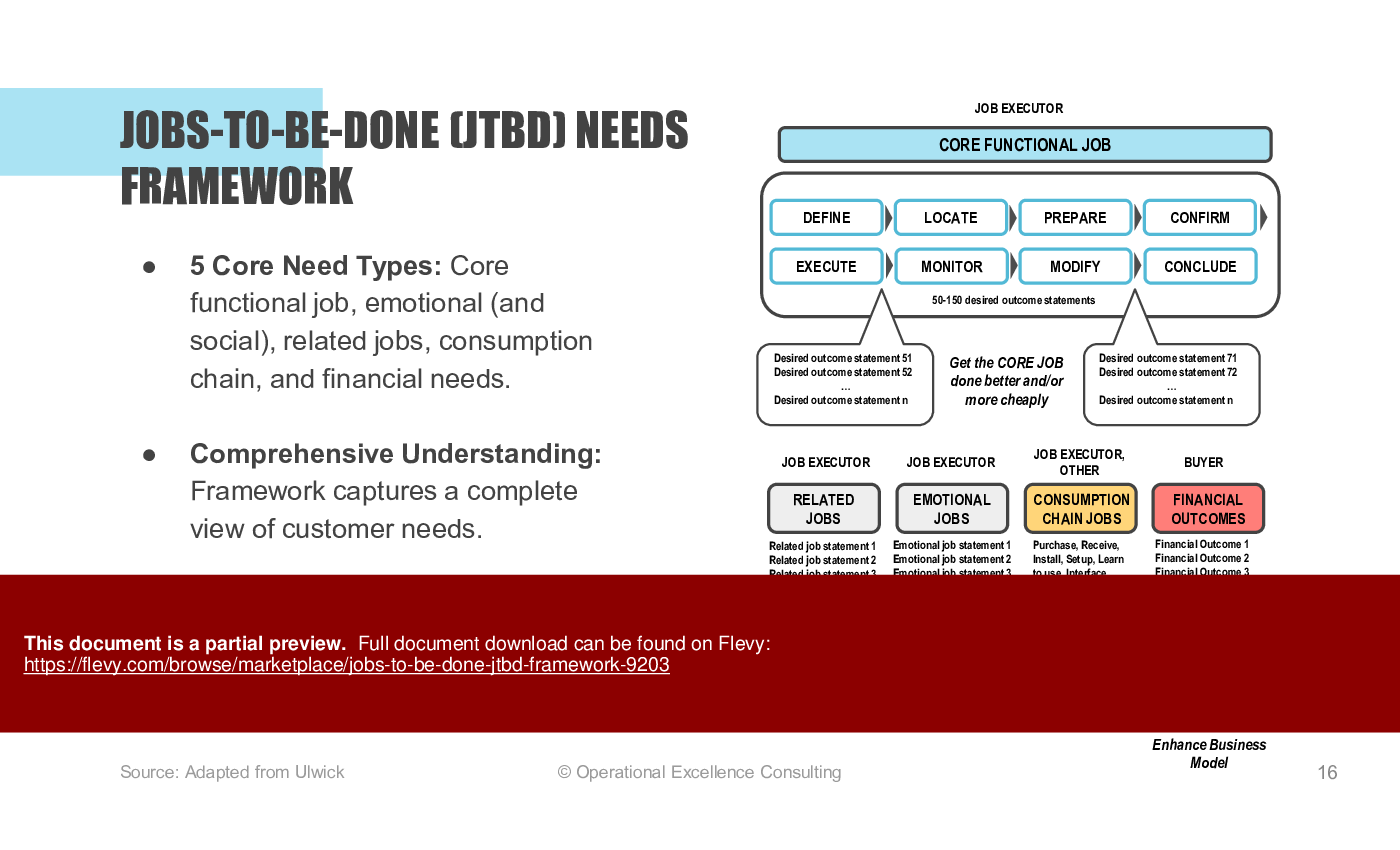
1. Gain a solid understanding of the Jobs-to-Be-Done framework and the five types of customer needs that influence decision-making.
2. Familiarize with each ODI step, from defining the customer and their job to identifying opportunities and formulating customer-aligned strategies.
3. Recognize best practices for JTBD implementation, avoid common pitfalls, and use strategies to drive successful, customer-centric innovation in your organization.
CONTENTS
1. Introduction, Theories and Foundations
2. JTBD Growth Matrix
3. Process of Outcome-Driven Innovation (ODI)
4. Practical Applications and Case Studies
5. JTBD Tools and Techniques
6. Myths and Pitfalls of JTBD
7. Best Practices, Do's and Don'ts
8. Challenges and Strategies for Success
Got a question about the product? Email us at support@flevy.com or ask the author directly by using the "Ask the Author a Question" form. If you cannot view the preview above this document description, go here to view the large preview instead.
Executive Summary
The Jobs-To-Be-Done (JTBD) Framework presentation is designed to equip organizations with a robust methodology for understanding customer needs and driving innovation. Developed by seasoned management consultants, this framework emphasizes a customer-centric approach, enabling teams to align products and services with the specific jobs customers are trying to accomplish. By utilizing the JTBD framework, organizations can enhance their innovation processes, reduce the risk of product failure, and ultimately achieve predictable success in meeting customer demands.
Who This Is For and When to Use
• Product Development Teams focused on aligning offerings with customer needs
• Marketing Professionals aiming to create targeted messaging based on customer jobs
• Innovation Leaders seeking structured methodologies for driving customer-centric innovation
• Management Consultants looking to implement effective frameworks in client organizations
Best-fit moments to use this deck:
• During product development phases to ensure alignment with customer needs
• In strategic planning sessions focused on innovation and market positioning
• For training workshops aimed at enhancing team understanding of customer-centric methodologies
Learning Objectives
• Define the Jobs-To-Be-Done framework and its significance in innovation
• Build actionable strategies for identifying and addressing customer needs
• Establish best practices for implementing JTBD within an organization
• Recognize common pitfalls in traditional innovation approaches and how to avoid them
• Familiarize with the Outcome-Driven Innovation (ODI) process and its application
Table of Contents
• Introduction, Theories and Foundations (page 5)
• JTBD Growth Matrix (page 23)
• Process of Outcome-Driven Innovation (ODI) (page 35)
• Practical Applications and Case Studies (page 61)
• JTBD Tools and Techniques (page 71)
• Myths and Pitfalls of JTBD (page 116)
• Best Practices, Do’s and Don’ts (page 122)
• Challenges and Strategies for Success (page 135)
Primary Topics Covered
• JTBD Framework - A structured approach to understanding customer needs, emphasizing the jobs customers are trying to accomplish.
• Outcome-Driven Innovation (ODI) - A systematic process that applies JTBD insights to develop solutions aligned with customer-defined needs.
• JTBD Growth Strategy Matrix - A tool for identifying paths to growth based on customer needs and market positioning.
• Common Pitfalls in Traditional Innovation - Insights into why many innovations fail and how JTBD addresses these challenges.
• Best Practices for Implementing JTBD - Guidelines for capturing customer needs, defining job statements, and prioritizing outcomes.
Deliverables, Templates, and Tools
• Job Statement Formula template for defining customer jobs clearly
• Job Map template for structuring the customer journey and identifying key actions
• Opportunity Algorithm for prioritizing customer needs based on importance and satisfaction
• Opportunity Landscape visual for mapping customer needs against satisfaction levels
• JTBD Canvas for organizing customer needs around the jobs they want to accomplish
Slide Highlights
• Overview of the JTBD framework and its importance in innovation
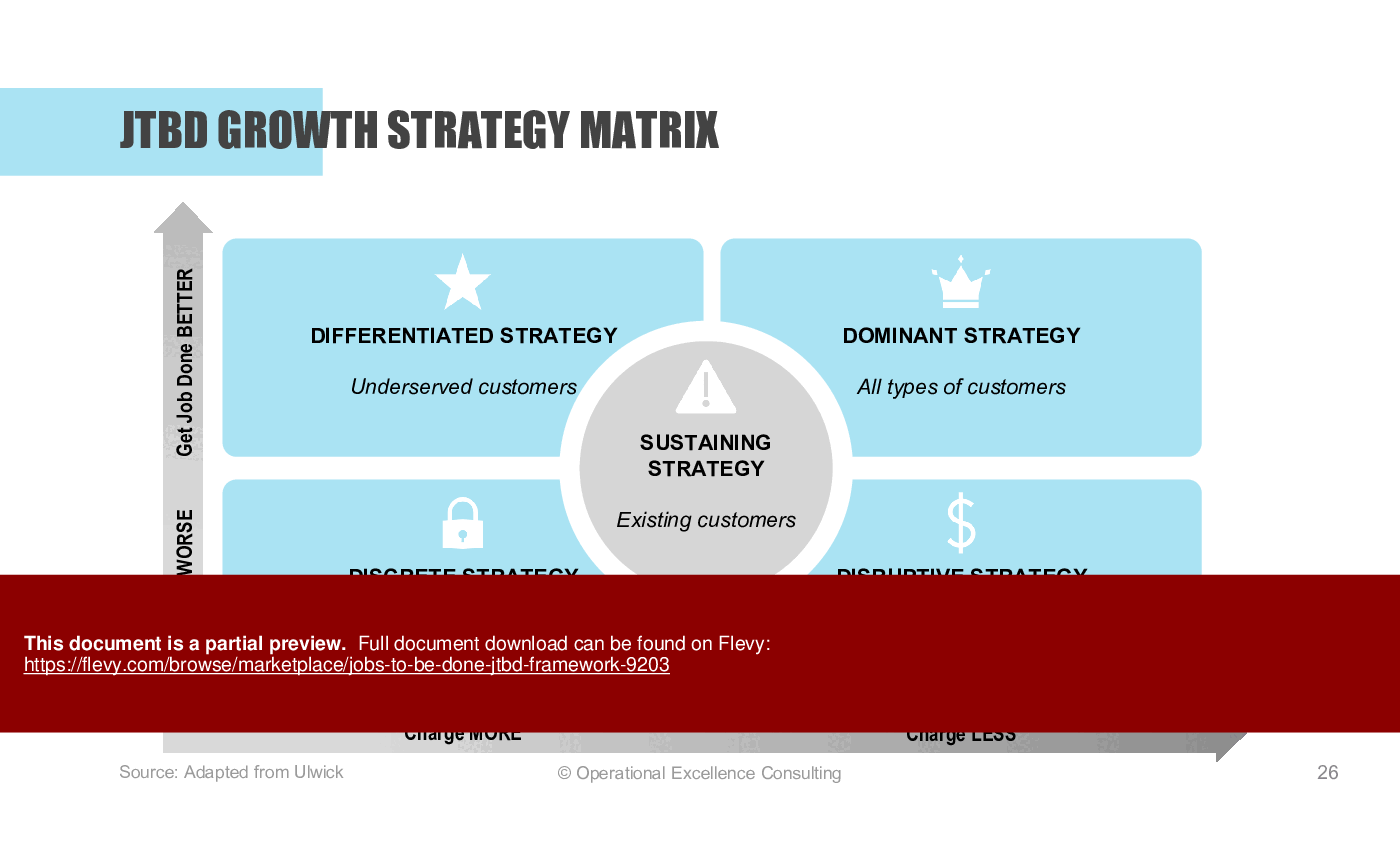
• The JTBD Growth Strategy Matrix illustrating 5 paths to growth
• Case studies showcasing successful application of JTBD in companies like Apple and Spotify
• Common myths and pitfalls associated with JTBD to avoid
• Best practices for capturing customer needs and defining measurable outcomes
Potential Workshop Agenda
Introduction to JTBD (30 minutes)
• Overview of the JTBD framework and its significance
• Discussion on customer-centric innovation
Hands-On Activity: Mapping Customer Jobs (60 minutes)
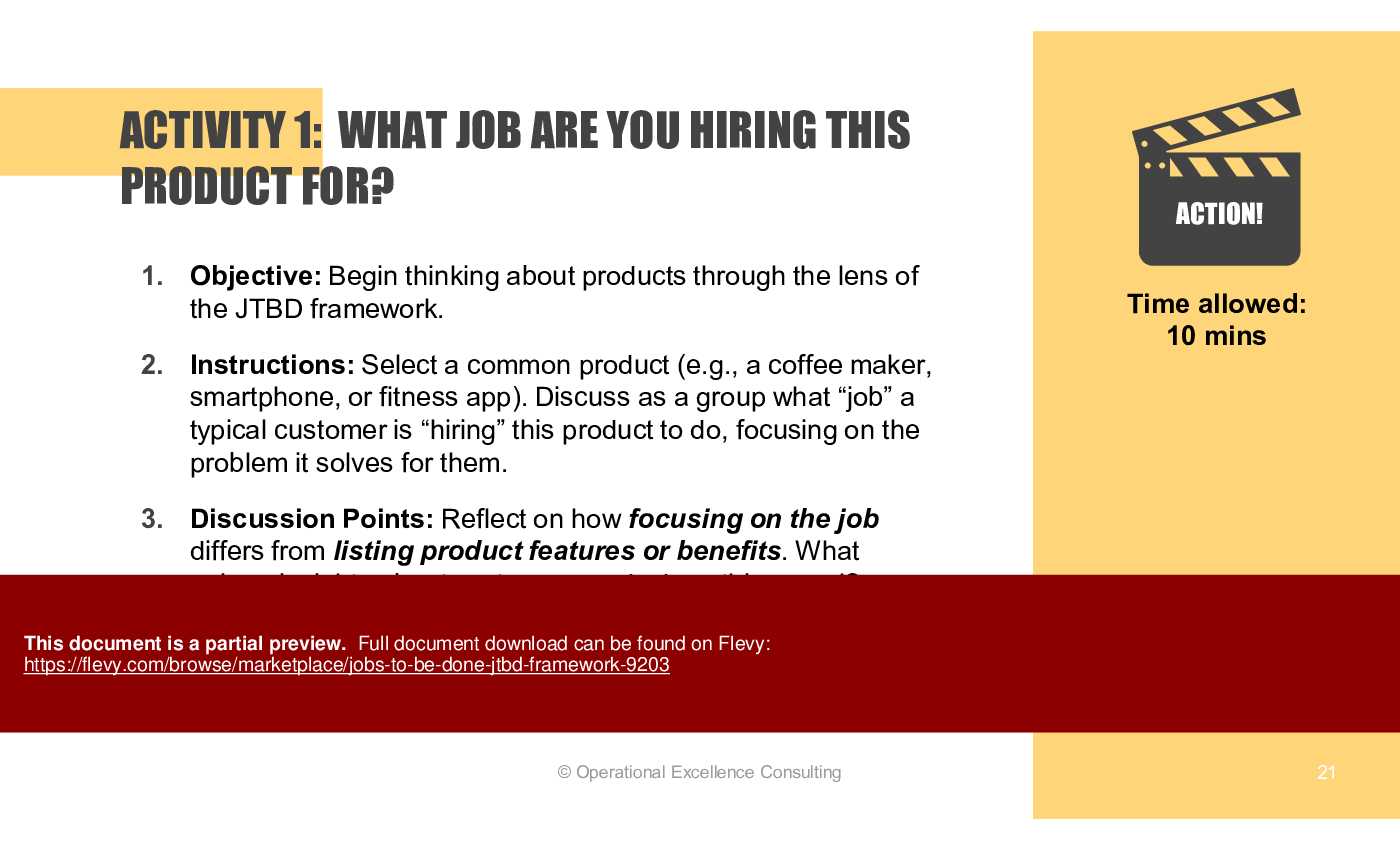
• Participants select a product and map out the jobs customers are hiring it for
• Group discussions on insights gained from the mapping process
Implementing JTBD in Your Organization (90 minutes)
• Strategies for integrating JTBD into product development and marketing
• Identifying common pitfalls and how to overcome them
Customization Guidance
• Tailor job statements to reflect specific customer contexts and needs
• Adjust templates to fit the unique processes of your organization
• Incorporate industry-specific examples to enhance relevance
Secondary Topics Covered
• Emotional and social dimensions of customer needs
• The role of cross-functional teams in successful JTBD implementation
• Continuous learning and adaptation of JTBD insights
FAQ
What is the Jobs-To-Be-Done framework?
The JTBD framework focuses on understanding the specific jobs customers are trying to accomplish, allowing organizations to align their products and services accordingly.
How does JTBD improve innovation success rates?
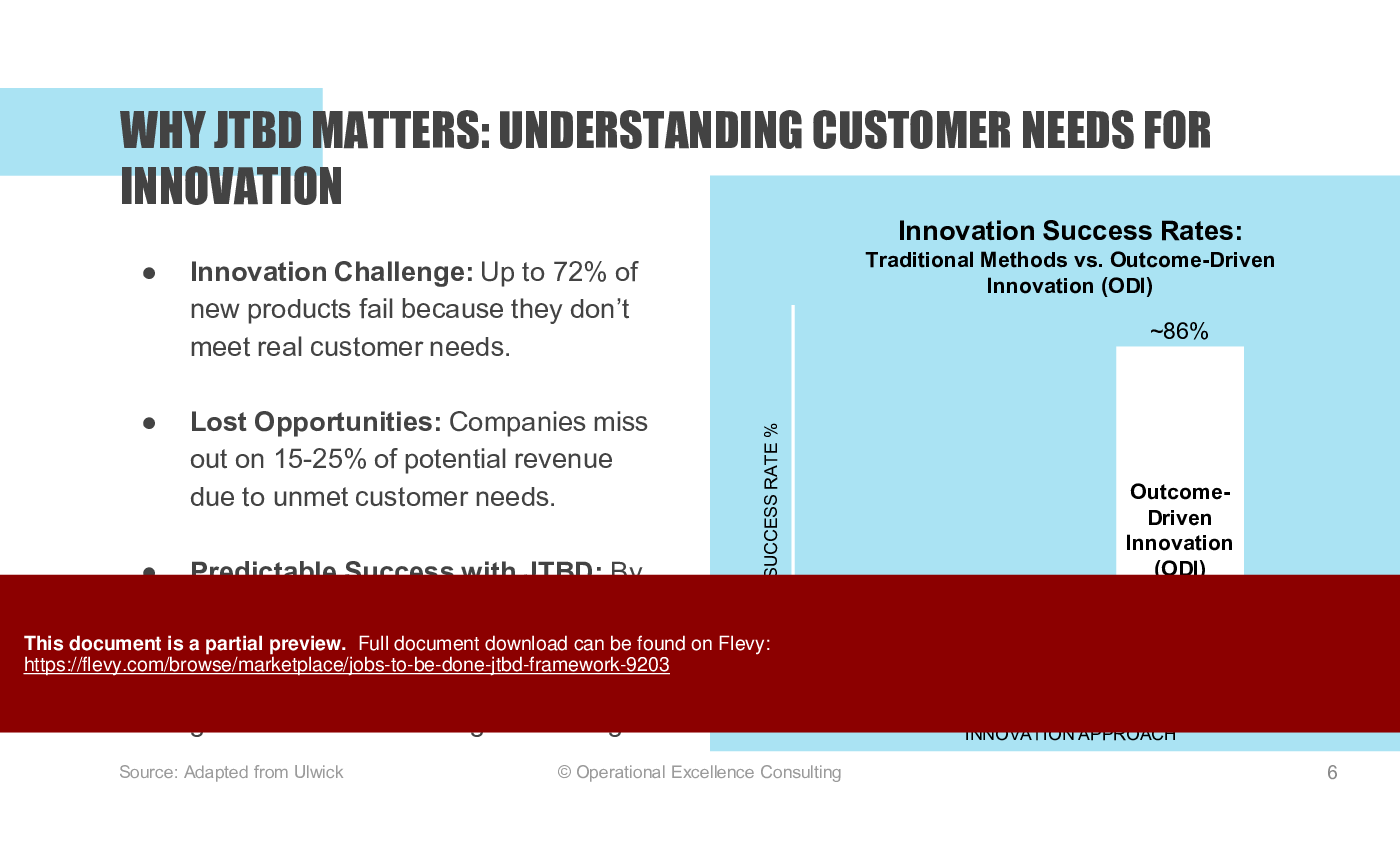
By concentrating on real customer needs and desired outcomes, JTBD reduces the guesswork in innovation, leading to more successful product launches.
Can JTBD be applied across different functions?
Yes, JTBD is applicable to various functions, including marketing, product development, and customer support, ensuring cohesive alignment around customer needs.
What are common pitfalls in traditional innovation methods?
Traditional methods often rely on assumptions and surface-level insights, leading to misaligned products that do not meet customer needs.
How can teams prioritize customer needs effectively?
Using tools like the Opportunity Algorithm, teams can objectively rank customer needs based on importance and satisfaction to identify high-impact opportunities.
What is the Outcome-Driven Innovation (ODI) process?
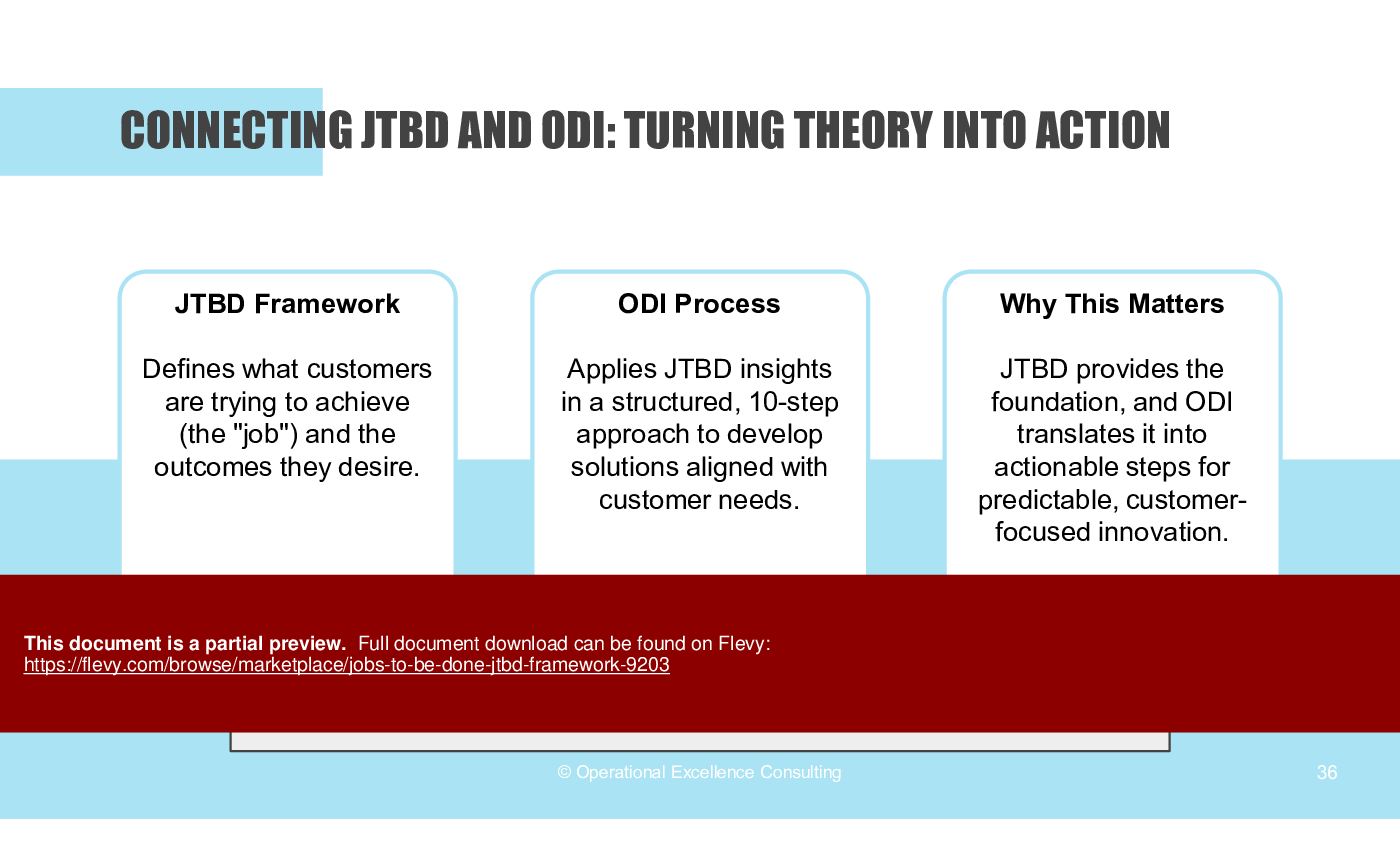
ODI is a structured, 10-step approach that applies JTBD insights to develop solutions that align with customer-defined needs.
How often should JTBD insights be updated?
Regular updates are essential as customer needs and market conditions evolve, ensuring that insights remain relevant and actionable.
What is the significance of emotional and social needs in JTBD?
Addressing emotional and social dimensions enhances the customer experience and ensures that solutions resonate on a deeper level.
How can organizations ensure cross-functional alignment in JTBD implementation?
By sharing insights across teams and fostering a common language around JTBD, organizations can ensure cohesive strategies and customer-focused outcomes.
Glossary
• Jobs-To-Be-Done (JTBD) - A framework for understanding customer needs based on the jobs they are trying to accomplish.
• Outcome-Driven Innovation (ODI) - A structured process for developing solutions aligned with customer-defined needs.
• Job Statement - A clear definition of the customer’s core job in actionable terms.
• Opportunity Algorithm - A formula used to prioritize customer needs based on importance and satisfaction.
• Job Map - A visual representation of the steps a customer takes to complete a job.
• Opportunity Landscape - A visual tool for mapping customer needs against satisfaction levels.
• JTBD Canvas - A framework for organizing customer needs around the jobs they want to accomplish.
• Emotional Jobs - The emotional needs or desires customers have when completing a job.
• Cross-Functional Alignment - The coordination and collaboration between different departments to ensure consistent strategies.
• Market Segmentation - The process of dividing customers into distinct groups based on unmet needs rather than demographics.
• Table Stakes - Essential requirements that must be met to satisfy basic customer expectations.
• Under-served Outcomes - Customer needs that are not fully addressed and represent opportunities for improvement.
• Over-served Outcomes - Aspects of a product or service that are addressed too well, leading to unnecessary complexity.
Source: Best Practices in Jobs-to-Be-Done PowerPoint Slides: Jobs-To-Be-Done (JTBD) Framework PowerPoint (PPTX) Presentation Slide Deck, Operational Excellence Consulting
|
Download our FREE Strategy & Transformation Framework Templates
Download our free compilation of 50+ Strategy & Transformation slides and templates. Frameworks include McKinsey 7-S, Balanced Scorecard, Disruptive Innovation, BCG Curve, and many more. |