
Many organizations have jumped onto the Lean bandwagon to eliminate waste with the aim of creating customer value, improving quality, reducing costs and shortening lead time.
To eliminate waste, we must first find or discover them. However, for many people who have become so used to their manufacturing or workplace environment, finding waste or identifying what activities constitute waste may be a difficult exercise.
This presentation teaches you how to discover waste. Waste are all around us, and they include all those extraneous and counterproductive assumptions, attitudes, activities, materials, machines, operations and processes.
This presentation can be used to educate your management and staff on the four models that can be used to systematically discover waste on the shopfloor. To be able to discover waste is the first step towards its elimination. This training material can also be used to supplement your Lean Manufacturing, Gemba Walk, Kaizen, 5S and TPM training materials.


||||||||||||||||||||||||||||||||||||||||||||||||||||||||||||||||||||||||||||||||||||||||||||||||||||||||||||||||||||||||||||||||||||||||||||||||||||||
This training package includes:
1. Identifying Waste training presentation (PowerPoint format)
2. Eight Wastes of Lean poster (PDF format, in color and monochrome, printable in A3 size)
||||||||||||||||||||||||||||||||||||||||||||||||||||||||||||||||||||||||||||||||||||||||||||||||||||||||||||||||||||||||||||||||||||||||||||||||||||||
LEARNING OBJECTIVES
1. Discover waste in your work environment.
2. Learn how to remove waste.
3. Learn how to prevent waste.
CONTENTS
1. What is Waste?
• What is Value?
• What is Value-added?
• What is Waste?
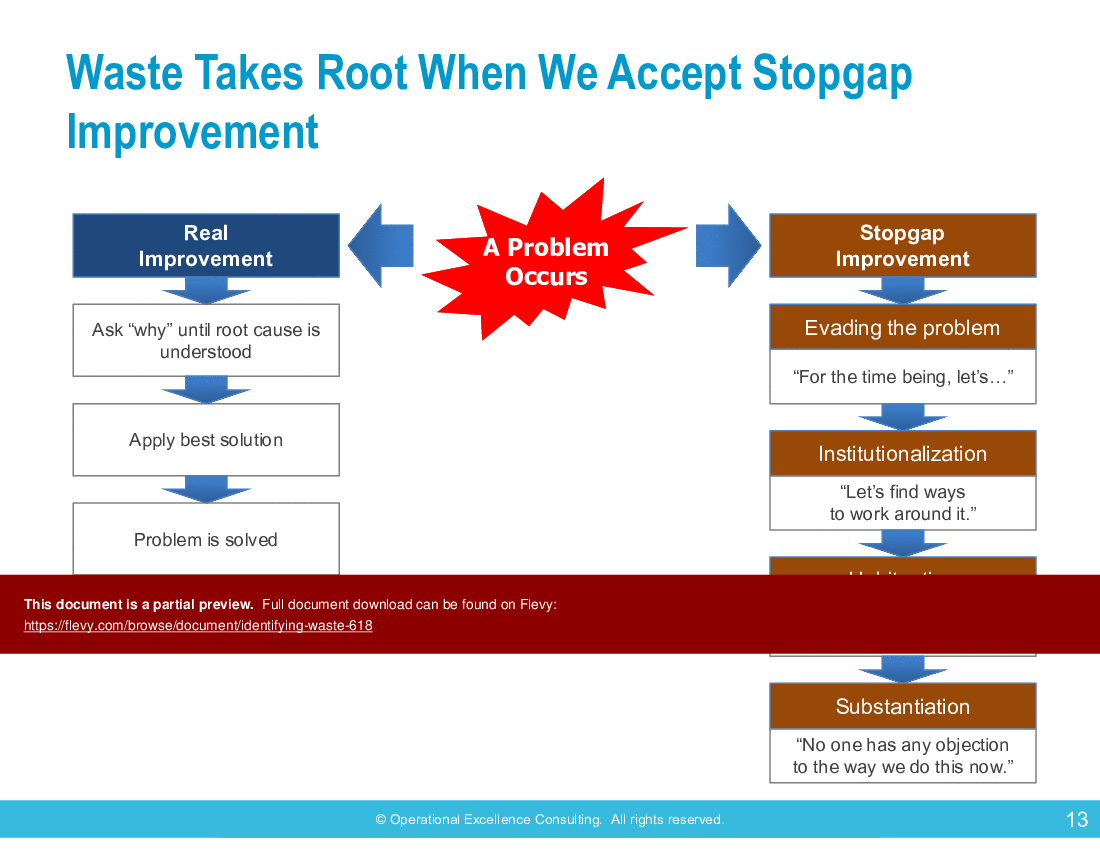
• How Does Waste Take Root?
• Waste Take Root When We Accept Stopgap Improvement
• Benefits of Identifying & Eliminating Waste
2. The Classification of Waste
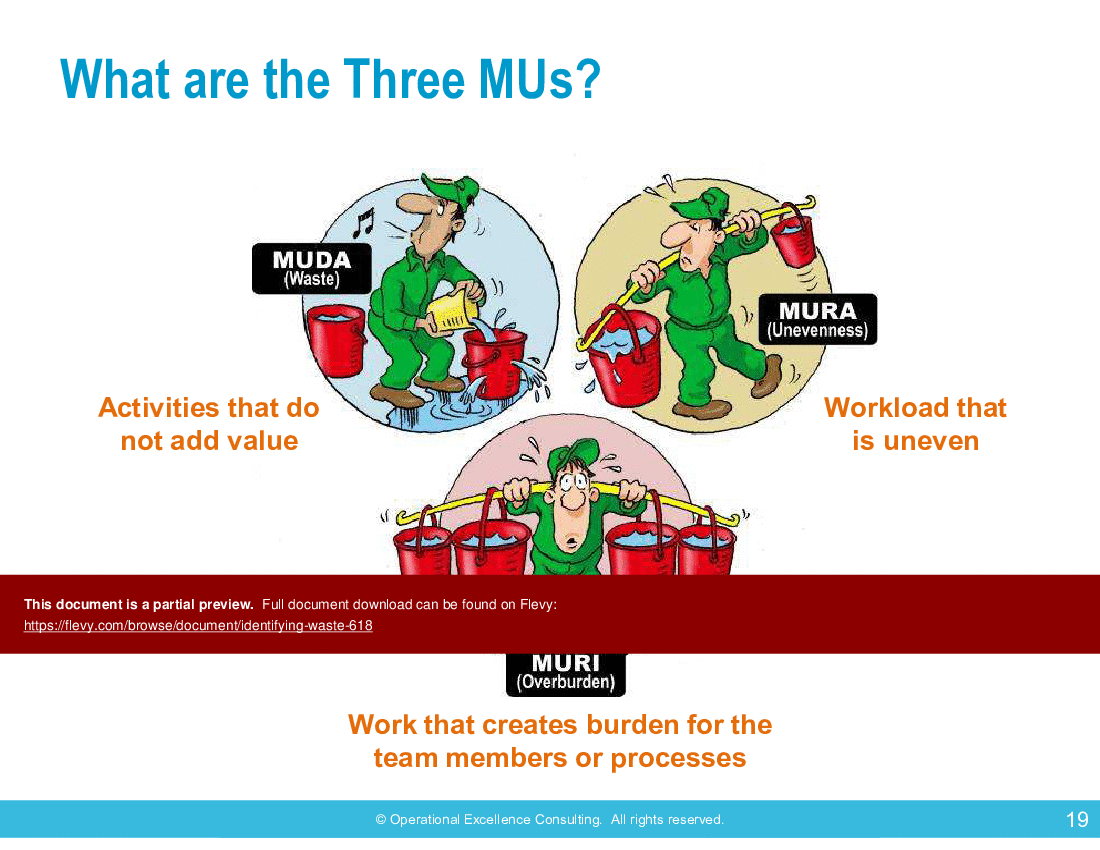
• The Three MUs: Muda, Mura and Muri
• The 5M + Q + S
• The Flow of Goods
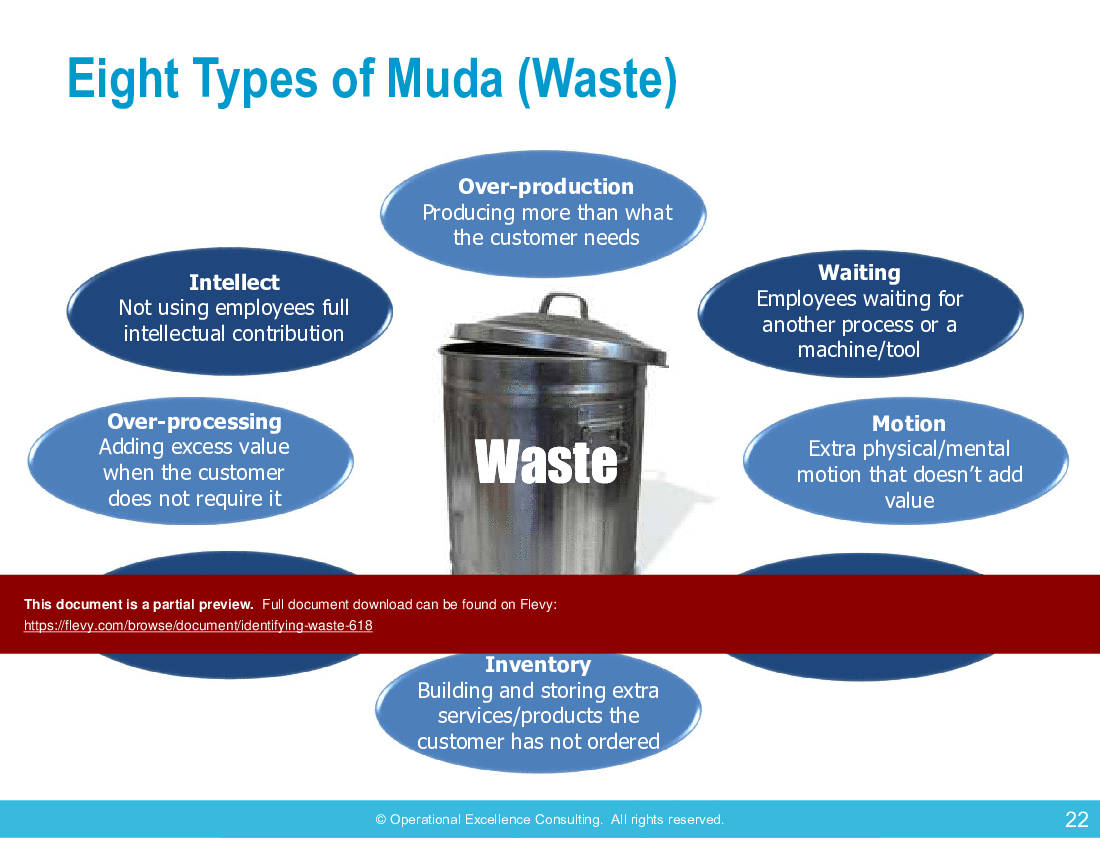
• The Eight Types of Waste (Manufacturing)
• The Eight Types of Waste (Service/Office)
3. How to Discover Waste
• Three Approaches to Discover Waste
• Using the Back Door
• Bringing Latent Waste to the Surface
• Analyzing Current Conditions
• Value Stream Mapping
• Value-added Flow Chart
• Flow Analysis Chart
4. How to Remove Waste
• Adopt the Necessary Attitude
• Remove Waste in the Movement of Goods
• Remove Waste in the Actions of People
• Remove Waste in the Way People, Goods and Machines Are Combined
5. How to Prevent Waste
• Standardization
• Visual Controls
• Auditory Controls
• 5W + 1H
This presentation covers the three MUs: Muda, Mura, and Muri, and their impact on operations. It includes practical exercises to help your team identify and eliminate waste in real-world scenarios.
Got a question about the product? Email us at support@flevy.com or ask the author directly by using the "Ask the Author a Question" form. If you cannot view the preview above this document description, go here to view the large preview instead.
Executive Summary
The "Identifying Waste" presentation is a vital resource for organizations aiming to enhance operational efficiency through the elimination of waste. Developed by a Certified Lean Six Sigma Black Belt with extensive experience at leading firms, this training deck provides a structured approach to recognizing and mitigating waste in various processes. It covers essential concepts such as the definition of waste, its classification, and practical methods for discovering, removing, and preventing waste. By utilizing this presentation, corporate executives and consultants can foster a culture of continuous improvement, ultimately leading to increased productivity and customer satisfaction.
Who This Is For and When to Use
• Operations managers seeking to optimize workflows and reduce inefficiencies
• Lean practitioners focused on implementing waste reduction strategies
• Quality assurance teams aiming to enhance product and service quality
• Training and development professionals responsible for employee education on Lean principles
Best-fit moments to use this deck:
• During Lean training sessions for new employees
• In workshops aimed at process improvement initiatives
• When conducting assessments of current operational practices
Learning Objectives
• Discover waste in your work environment
• Learn how to remove waste effectively
• Learn how to prevent waste from recurring
• Understand the classification of waste and its impact on operations
• Apply practical tools for waste identification and elimination
• Foster a culture of continuous improvement within teams
Table of Contents
• What is Waste? (page 3)
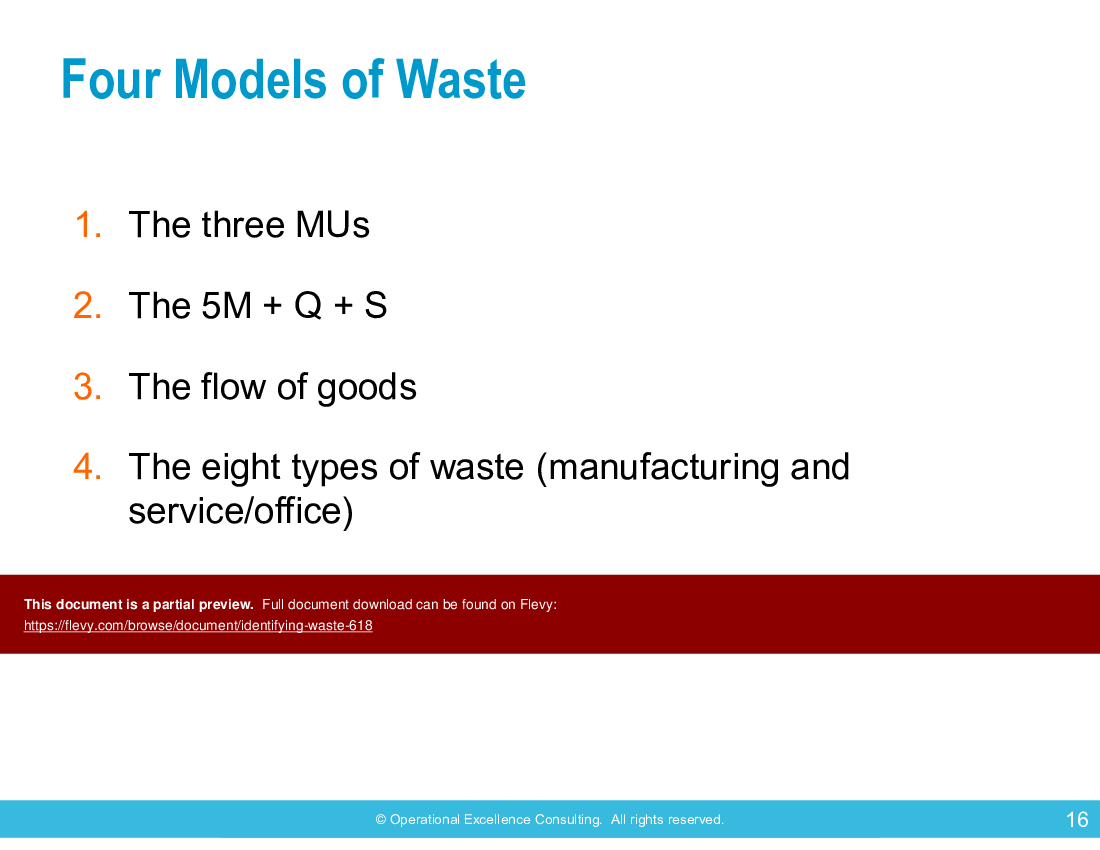
• Waste Classification: Four Models of Waste (page 16)
• How to Discover Waste (page 94)
• How to Remove Waste (page 119)
• How to Prevent Waste (page 161)
Primary Topics Covered
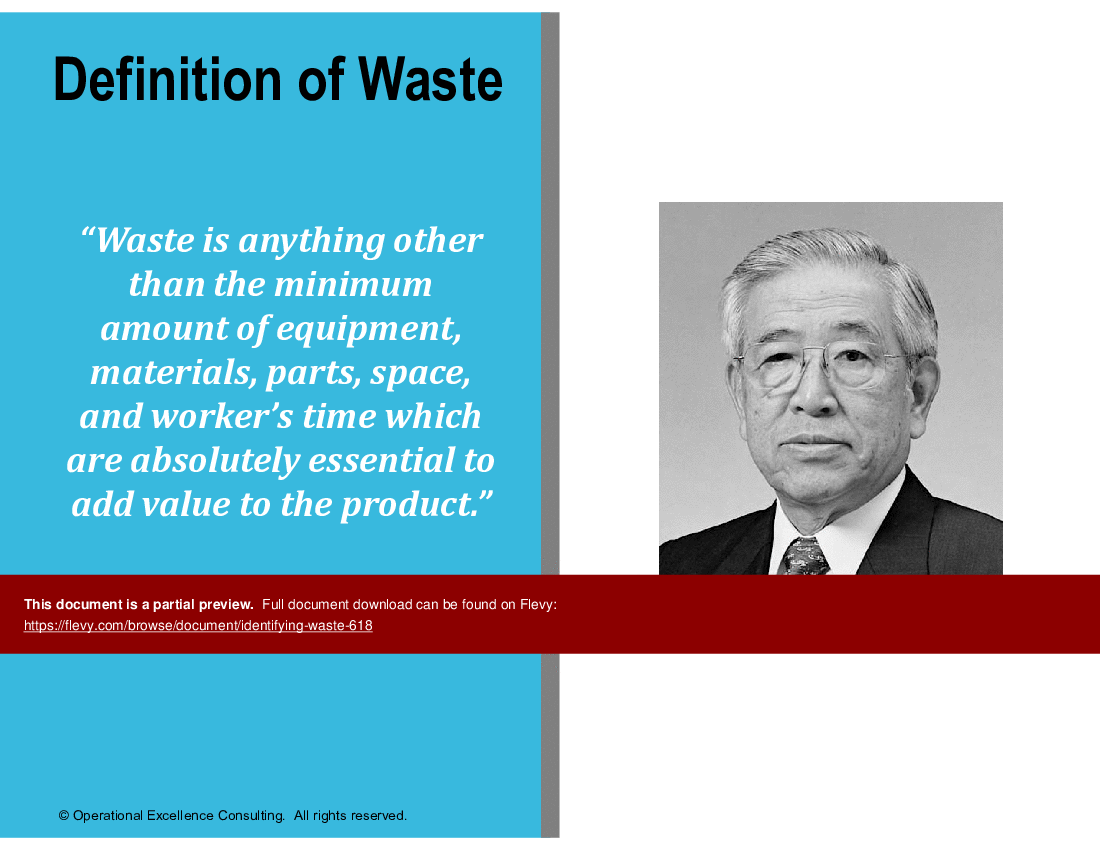
• Definition of Waste - Waste is defined as any activity that does not add value to a product or service, leading to unnecessary costs and time.
• Waste Classification - The presentation outlines 4 models of waste, including the Three MUs (Muda, Mura, Muri) and the 5M + Q + S framework.
• Discovery Techniques - Methods for identifying waste include using the "back door" approach and analyzing current conditions through tools like Value Stream Mapping.
• Elimination Strategies - Practical guidelines for removing waste in movement, actions, and the combination of people, goods, and machines.
• Prevention Methods - Techniques such as standardization, visual controls, and the 5W + 1H approach to maintain a waste-free environment.
Deliverables, Templates, and Tools
• Waste-finding checklists for various types of waste
• Value Stream Mapping templates for visualizing processes
• Flow Analysis Charts to identify waste in production flows
• Guidelines for implementing standard operating procedures (SOPs)
Slide Highlights
• Overview of the Eight Types of Waste, including Overproduction, Waiting, and Defects
• Visual representations of the flow of goods and waste identification techniques
• Case studies demonstrating successful waste reduction initiatives
• Interactive exercises for participants to identify waste in their environments
Potential Workshop Agenda
Introduction to Waste Identification (30 minutes)
• Overview of waste and its impact on operations
• Discussion on the importance of waste elimination
Waste Classification and Discovery Techniques (60 minutes)
• Review of the 4 models of waste
• Hands-on activity using Value Stream Mapping
Strategies for Waste Removal (45 minutes)
• Group discussion on practical elimination strategies
• Case study analysis
Preventing Waste in Operations (30 minutes)
• Overview of standardization and visual controls
• Action planning for implementing learned strategies
Customization Guidance
• Tailor the presentation to include specific case studies relevant to your organization’s industry.
• Adjust terminology and examples to align with your company’s operational language.
• Incorporate internal metrics and benchmarks for measuring waste reduction success.
Secondary Topics Covered
• The role of leadership in fostering a waste-free culture
• Techniques for engaging employees in waste identification efforts
• The impact of technology on waste reduction initiatives
FAQ
What is the primary goal of identifying waste?
The primary goal is to enhance operational efficiency by eliminating non-value-added activities that incur costs and time.
How can this presentation be customized for my organization?
The presentation can be tailored by incorporating specific examples, metrics, and case studies relevant to your industry and operational practices.
What tools are included for waste identification?
The presentation includes waste-finding checklists, Value Stream Mapping templates, and Flow Analysis Charts to facilitate waste identification and analysis.
How can I engage my team in waste reduction efforts?
Encourage team participation through interactive workshops, hands-on activities, and open discussions about waste identification and elimination strategies.
What are the benefits of eliminating waste?
Eliminating waste leads to reduced operational costs, improved product quality, enhanced customer satisfaction, and increased employee morale.
How often should waste identification be conducted?
Waste identification should be a continuous process, integrated into regular operational reviews and improvement initiatives.
What is the significance of the 5W + 1H approach?
The 5W + 1H approach encourages deep inquiry into processes, helping teams uncover root causes of waste and develop effective solutions.
How can I measure the success of waste reduction initiatives?
Success can be measured through key performance indicators (KPIs) such as reduced cycle times, decreased costs, and improved quality metrics.
Glossary
• Muda - Waste that does not add value to a product or service.
• Mura - Unevenness or inconsistency in processes.
• Muri - Overburdening of people or machines.
• Value Stream Mapping - A visual tool for analyzing the flow of materials and information in a process.
• Flow Analysis Chart - A chart that tracks the flow of materials along the production process.
• Standard Operating Procedures (SOPs) - Documented procedures that outline how to perform tasks consistently.
• Kanban - A scheduling system for lean and just-in-time production.
• Continuous Improvement - Ongoing efforts to enhance products, services, or processes.
• Lean Production - A systematic method for waste minimization within a manufacturing system.
• Visual Controls - Tools used to communicate information visually in the workplace.
• 5W + 1H - A problem-solving technique that involves asking "What," "Why," "Where," "When," "Who," and "How."
• Defects - Errors or flaws in products or services that require rework or correction.
• Overproduction - Producing more than what is needed, leading to excess inventory.
• Waiting - Idle time when resources are not being utilized effectively.
• Intellectual Waste - Underutilization of employee skills and creativity in problem-solving.
Source: Best Practices in Waste Identification PowerPoint Slides: Identifying Waste PowerPoint (PPTX) Presentation Slide Deck, Operational Excellence Consulting
This document is available as part of the following discounted bundle(s):
Save %!
Kaizen Consultant Toolkit
This bundle contains 5 total documents. See all the documents to the right.
|
Receive our FREE presentation on Operational Excellence
This 50-slide presentation provides a high-level introduction to the 4 Building Blocks of Operational Excellence. Achieving OpEx requires the implementation of a Business Execution System that integrates these 4 building blocks. |