

BENEFITS OF THIS POWERPOINT DOCUMENT
- Learn the tools and technique of Jidoka to reduce defect costs.
- Enhance your Lean transformation with the Jidoka approach to developing a company-wide quality culture.
LEAN PPT DESCRIPTION
Editor Summary
83-slide PowerPoint presentation Jidoka provides training on autonomation and Lean manufacturing techniques, developed by a Certified Lean Six Sigma Black Belt with experience at Microsoft, IBM, and Panasonic.
Read more
Covers core topics: introduction to Jidoka, tools (Andon, Andon cord, fixed-position stops, Poka-yoke, sensors), the four-step Jidoka process, and developing a Jidoka system. Includes 5 implementation deliverables such as a Jidoka implementation plan template and Poka-yoke checklist. Sold as a digital download on Flevy with immediate digital download.
Use this presentation when teams must introduce built-in quality and stop-the-line practices—typical triggers include high defect rates, starting a continuous improvement program, or formalizing visual management and error-proofing approaches.
Operations managers designing line-stop protocols and Andon board layouts for production lines.
Quality assurance specialists creating Poka-yoke checklists and defect-prevention controls for assembly workstations.
Continuous improvement leads mapping root causes and defining countermeasures using a root cause analysis framework.
Training professionals building Lean onboarding sessions and workshop agendas with slide content and templates.
The four-step detect-stop-fix-investigate sequence aligns with Lean/Toyota Production System practice.
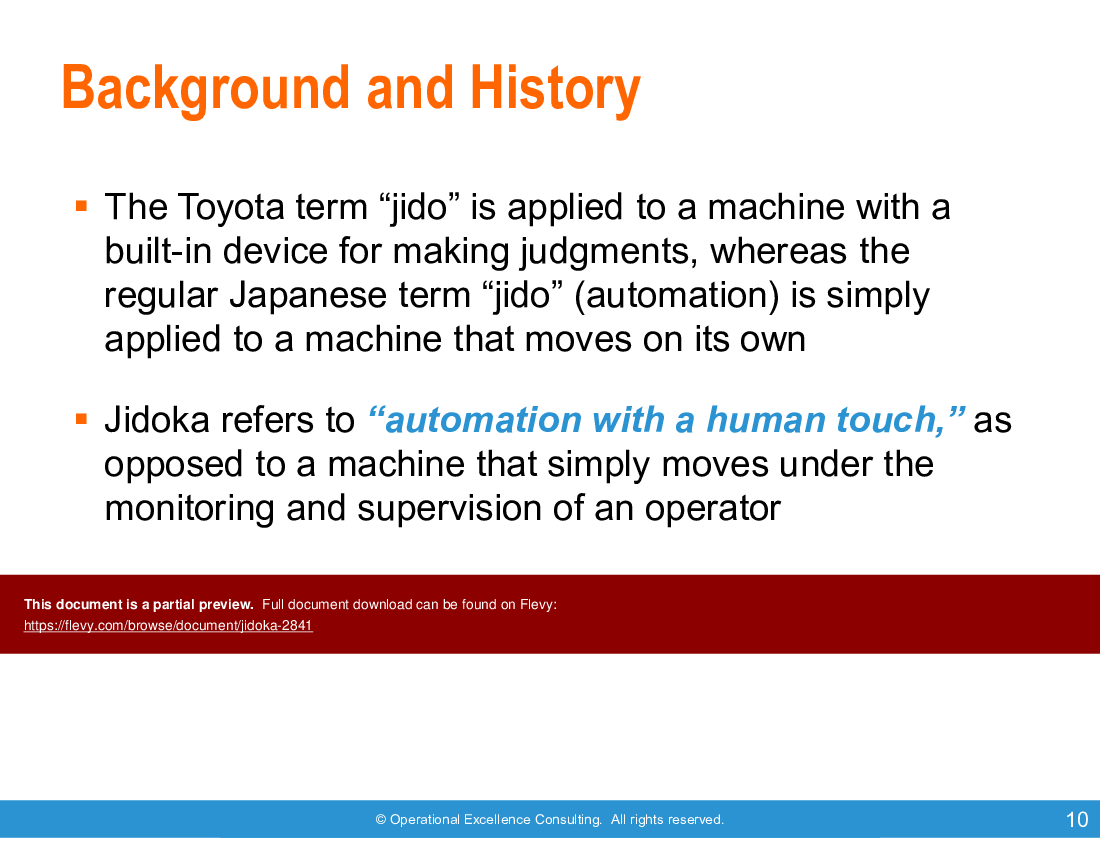
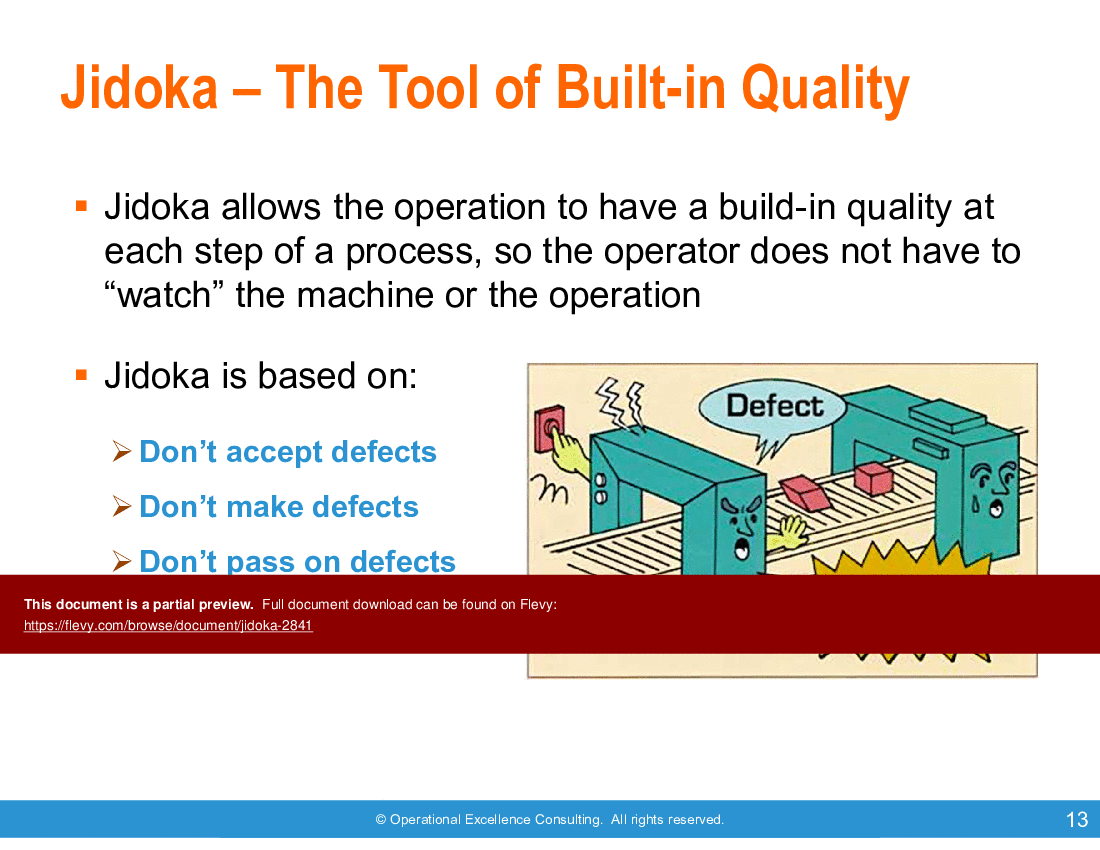
Jidoka is a technique to provide machines and operators with the ability to detect when an abnormal condition has occurred and immediately stop the work. Also known as autonomation, meaning "automation with human intelligence", Jidoka is the tool of built-in quality and supports just-in-time production. With an effective Jidoka system in place, companies can ensure that defects are not passed on to the customer, equipment breakdown is prevented and operators can work on multiple machines instead of wasting their time watching them.
In this training presentation, you will learn the key concept and principles of Jidoka, understand the tools and the four-step process of Jidoka, as well as gain insights on developing an effective Jidoka system.
LEARNING OBJECTIVES
1. Understand the key concept and principles of Jidoka.
2. Familiarize with the tools of Jidoka.
3. Define the four steps of a Jidoka process.
4. Acquire knowledge on developing a Jidoka system.
CONTENTS
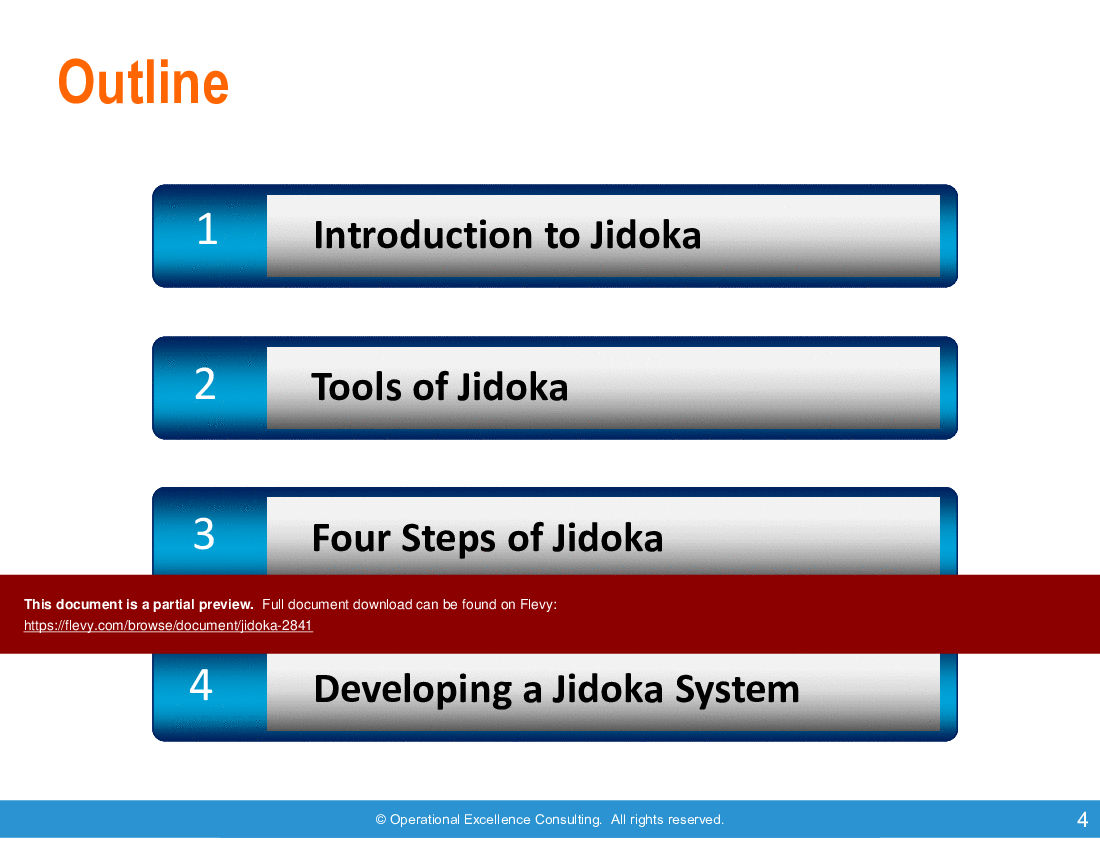
1. Introduction to Jidoka
• Introduction to Jidoka
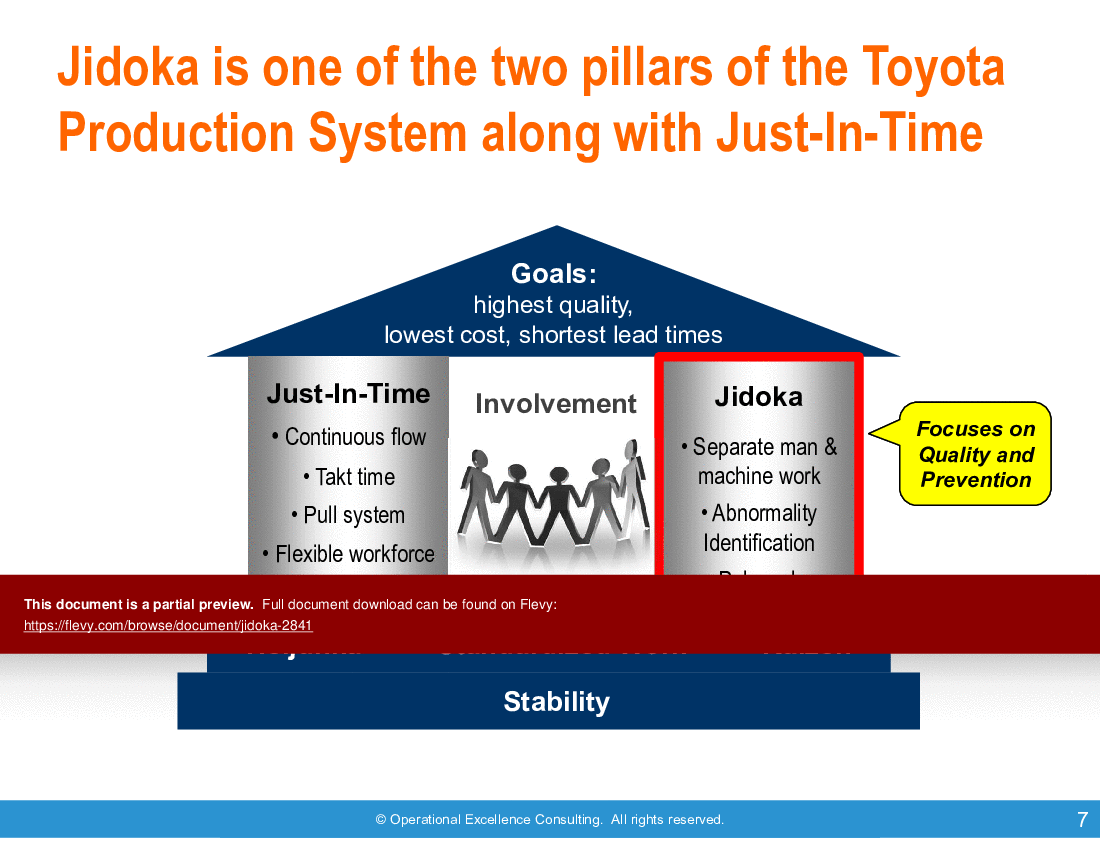
• Jidoka is one of the two pillars of TPS
• Background and history
• What is Jidoka?
• Jidoka – The tool of built-in quality
• Principles of Jidoka
• Automation vs. Jidoka
• Concept of Jidoka
• Benefits of practicing Jidoka
2. Tools of Jidoka
• Tools of Jidoka
• Andon
• Andon cord
• Fixed-position stop
• Poka-yoke
• Sensors
3. Four Steps of Jidoka
• Four steps of Jidoka
• Step 1: Detect the abnormality
• Step 2: Stop the equipment or line
• Step 3: Fix the immediate condition
• Step 4: Investigate root cause and install countermeasure
4. Developing a Jidoka System
• How to identify opportunities for Jidoka
• Developing a Jidoka system
• Minimizing manual labor
• Introduction of mechanization
• Automation
• Jidoka (Autonomation)
• Jidoka summary
This presentation covers the essential tools like Andon, Poka-yoke, and warning sensors, providing practical examples and applications. It also includes detailed steps on developing a Jidoka system, from identifying opportunities to implementing automation and mechanization.
Got a question about the product? Email us at support@flevy.com or ask the author directly by using the "Ask the Author a Question" form. If you cannot view the preview above this document description, go here to view the large preview instead.
MARCUS OVERVIEW
This synopsis was written by Marcus
[?] based on the analysis of the full 83-slide presentation.
Executive Summary
The Jidoka presentation is a vital resource for organizations aiming to enhance operational efficiency through the principles of Lean Manufacturing. Developed by a Certified Lean Six Sigma Black Belt with extensive experience at leading firms, this presentation provides a thorough understanding of Jidoka, also known as autonomation. It equips teams with the knowledge to detect abnormalities in processes, stop production to address issues, and implement preventive measures. By mastering Jidoka, organizations can achieve higher quality outputs, reduce defects, and foster a culture of continuous improvement.
Who This Is For and When to Use
• Operations managers seeking to implement Lean methodologies
• Quality assurance teams focused on defect prevention
• Continuous improvement leaders aiming to enhance process efficiency
• Training and development professionals responsible for workforce education
Best-fit moments to use this deck:
• During Lean training sessions for new employees
• When initiating a continuous improvement program
• In workshops focused on quality control and defect prevention
• For teams looking to enhance their understanding of Lean principles
Learning Objectives
• Understand the key concepts and principles of Jidoka
• Familiarize with the tools of Jidoka
• Define the 4 steps of a Jidoka process
• Acquire knowledge on developing a Jidoka system
Table of Contents
• Introduction to Jidoka (page 6)
• Tools of Jidoka (page 21)
• Four Steps of Jidoka (page 54)
• Developing a Jidoka System (page 70)
Primary Topics Covered
• Introduction to Jidoka - Jidoka is a technique that empowers machines and operators to detect abnormalities and halt production, ensuring quality control.
• Tools of Jidoka - Key tools include Andon, Andon cords, fixed-position stops, Poka-yoke, and sensors that facilitate immediate problem detection and resolution.
• Four Steps of Jidoka - The process involves detecting abnormalities, stopping the line, fixing immediate conditions, and investigating root causes to prevent future occurrences.
• Developing a Jidoka System - This section outlines how to identify opportunities for Jidoka, minimize manual labor, and automate processes effectively.
Deliverables, Templates, and Tools
• Jidoka implementation plan template
• Poka-yoke design checklist for error-proofing processes
• Andon board setup guide for visual management
• Fixed-position stop protocol for assembly lines
• Root cause analysis framework for continuous improvement
Slide Highlights
• Overview of Jidoka principles emphasizing quality and prevention
• Visual representation of the Jidoka process flow
• Examples of effective Poka-yoke implementations
• Case studies illustrating the benefits of Jidoka in manufacturing settings
Potential Workshop Agenda
Jidoka Introduction Session (60 minutes)
• Discuss the principles of Jidoka and its importance
• Review tools and techniques used in Jidoka
Jidoka Implementation Workshop (90 minutes)
• Identify opportunities for Jidoka in current processes
• Develop a plan for integrating Jidoka principles into daily operations
Customization Guidance
• Tailor the Jidoka implementation plan to fit specific operational contexts
• Adjust examples and case studies to reflect industry-specific challenges
• Incorporate organizational terminology and metrics into training materials
Secondary Topics Covered
• Historical background of Jidoka and its development
• Comparison between traditional automation and Jidoka
• The role of management in fostering a Jidoka culture
Topic FAQ
What are the 4 steps of a Jidoka process?
Jidoka's 4 steps are: detect the abnormality, stop the equipment or line, fix the immediate condition, and investigate root cause and install countermeasure. These steps prioritize immediate containment and long-term prevention and are presented as the core sequence in the material covering the four-step Jidoka process.
What tools are commonly used to implement Jidoka on a production line?
Common Jidoka tools include visual Andon systems and Andon cords, fixed-position stops, Poka-yoke error-proofing devices, and sensors for real-time detection. These tools enable immediate problem signaling and containment and are listed among the primary tools of Jidoka such as Andon and Poka-yoke.
How does Jidoka differ from traditional automation?
Jidoka, or autonomation, combines automation with human intelligence so machines or operators detect abnormalities and stop work, enabling built-in quality and just-in-time production. Unlike full automation that runs regardless of defects, Jidoka stops to allow fixing and root-cause work, reflecting the autonomation concept and built-in quality.
What should I consider when choosing a Jidoka training deck for my team?
Evaluate whether the deck explains core concepts, details tools like Andon and Poka-yoke, provides implementation templates, and includes workshop agendas and customization guidance. Also check practical deliverables and format; Flevy's Jidoka is a PowerPoint file with 83 slides and templates such as a Poka-yoke design checklist.
How much time should I allocate for a Jidoka workshop with my team?
Typical workshop structures in the material outline a 60-minute Jidoka introduction session covering principles and tools, and a 90-minute implementation workshop for identifying opportunities and drafting integration plans. Plan for at least those separate sessions—60 minutes for intro and 90 minutes for implementation work.
I need to reduce defects on an assembly line—what immediate steps does Jidoka recommend?
Immediate Jidoka steps are to detect the abnormality quickly, stop the line or equipment to prevent defect propagation, fix the immediate condition to restore safe operation, then investigate root causes and install countermeasures to prevent recurrence, following the four-step Jidoka sequence.
Can Jidoka be adapted for non-manufacturing processes like services or admin workflows?
The presentation emphasizes identifying opportunities and tailoring examples and case studies to industry-specific challenges, so adaptation is possible by mapping detection, stop, and error-proofing concepts to service processes. The material includes customization guidance and an implementation plan template to support such tailoring.
What templates or tools help sustain a Jidoka system over time?
Sustaining Jidoka relies on structured artifacts such as a Jidoka implementation plan template, a Poka-yoke design checklist, an Andon board setup guide, a fixed-position stop protocol, and a root cause analysis framework, all of which are listed among the deliverables provided in the presentation.
Document FAQ
These are questions addressed within this presentation.
What is Jidoka?
Jidoka refers to the ability of machines to detect problems and stop automatically, allowing operators to focus on value-added tasks.
How does Jidoka improve quality?
By stopping production at the first sign of a defect, Jidoka prevents defective products from moving through the process, ensuring higher quality outputs.
What tools are essential for implementing Jidoka?
Key tools include Andon systems for visual management, Poka-yoke for error-proofing, and sensors for real-time monitoring.
What are the 4 steps of the Jidoka process?
The 4 steps are: detect the abnormality, stop the equipment, fix the immediate condition, and investigate the root cause.
How can Jidoka be integrated into existing processes?
Jidoka can be integrated by identifying waste, implementing visual management tools, and training staff on the principles of Lean.
What is the role of management in Jidoka?
Management plays a crucial role in fostering a culture of continuous improvement and ensuring that Jidoka principles are adhered to across the organization.
Glossary
•
Jidoka - Automation with a human touch, allowing machines to detect problems and stop autonomously.
•
Andon - A visual signal system that indicates the status of production lines.
•
Poka-yoke - Error-proofing techniques designed to prevent mistakes in processes.
•
Fixed-position stop - A designated point in the production line where work stops if abnormalities are detected.
•
Autonomation - A term synonymous with Jidoka, emphasizing intelligent automation.
•
Root cause analysis - A method for identifying the underlying causes of problems to prevent recurrence.
•
Continuous improvement - Ongoing efforts to enhance products, services, or processes.
•
Lean Manufacturing - A production practice that considers the expenditure of resources in any aspect other than the direct creation of value for the end customer to be wasteful and thus a target for elimination.
•
Value stream mapping - A visual tool used to analyze and design the flow of materials and information required to bring a product to a consumer.
•
Defect - Any instance where a product or service fails to meet quality standards.

•
Waste - Any activity that consumes resources, but does not add value to the product or service.
•
Takt time - The maximum allowable time to produce a product to meet customer demand.
•
Kanban - A scheduling system that helps determine what to produce, when to produce it, and how much to produce.
•
Standardized work - A detailed description of the work sequence that is to be followed to produce a product or service.
•
Heijunka - A technique for leveling production by reducing waste and ensuring a smooth workflow.
•
Kaizen - A Japanese term meaning "change for better," referring to activities that continuously improve all functions and involve all employees.
•
Abnormality - Any deviation from the expected process or outcome that requires attention.
•
Quality control - The process of ensuring that products meet specified requirements and standards.
•
Defect prevention - Strategies and practices aimed at eliminating the causes of defects in products and processes.
•
Process efficiency - A measure of how well a process converts inputs into outputs with minimal waste.
Source: Best Practices in Lean, Jidoka PowerPoint Slides: Jidoka PowerPoint (PPTX) Presentation Slide Deck, Operational Excellence Consulting